Saint John the Evangelist
Kerkstraat z/n
3080 Tervuren
Church | XIV | Gothic | Catholic Church


Map
Opening hours
01 January - 31 December
Mon 9.00 - 17.00
Tue 9.00 - 17.00
Wed 9.00 - 17.00
Thu 9.00 - 17.00
Fri 9.00 - 17.00
Sat 9.00 - 17.00
Sun 9.00 - 17.00
Guided tour
toerisme@tervuren.be
heemkundetervuren@gmail.com
Religious offices
Description
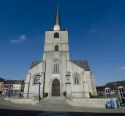
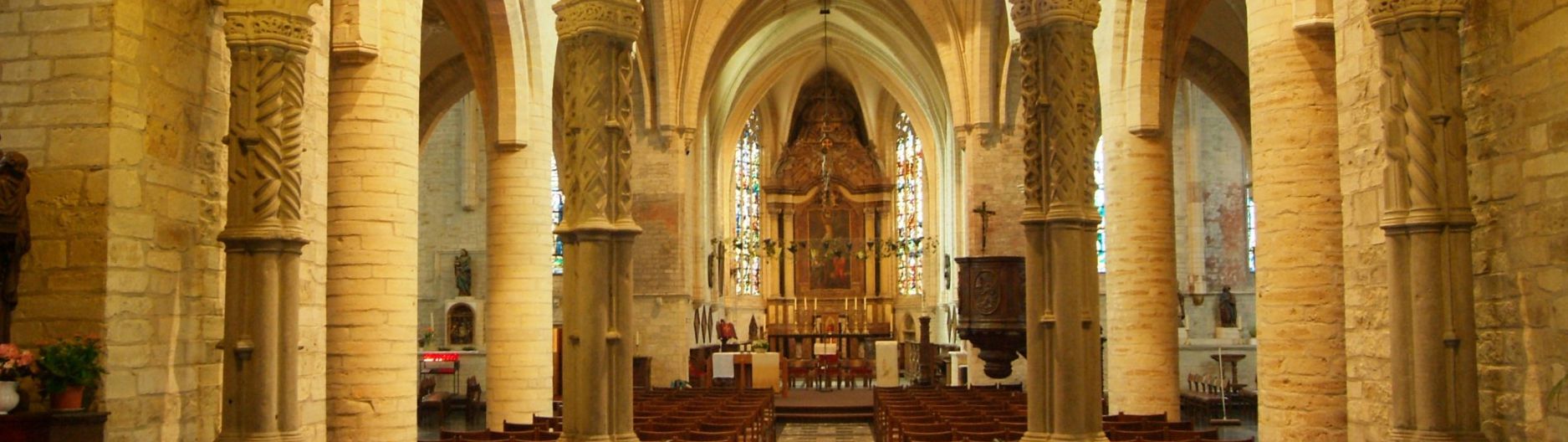
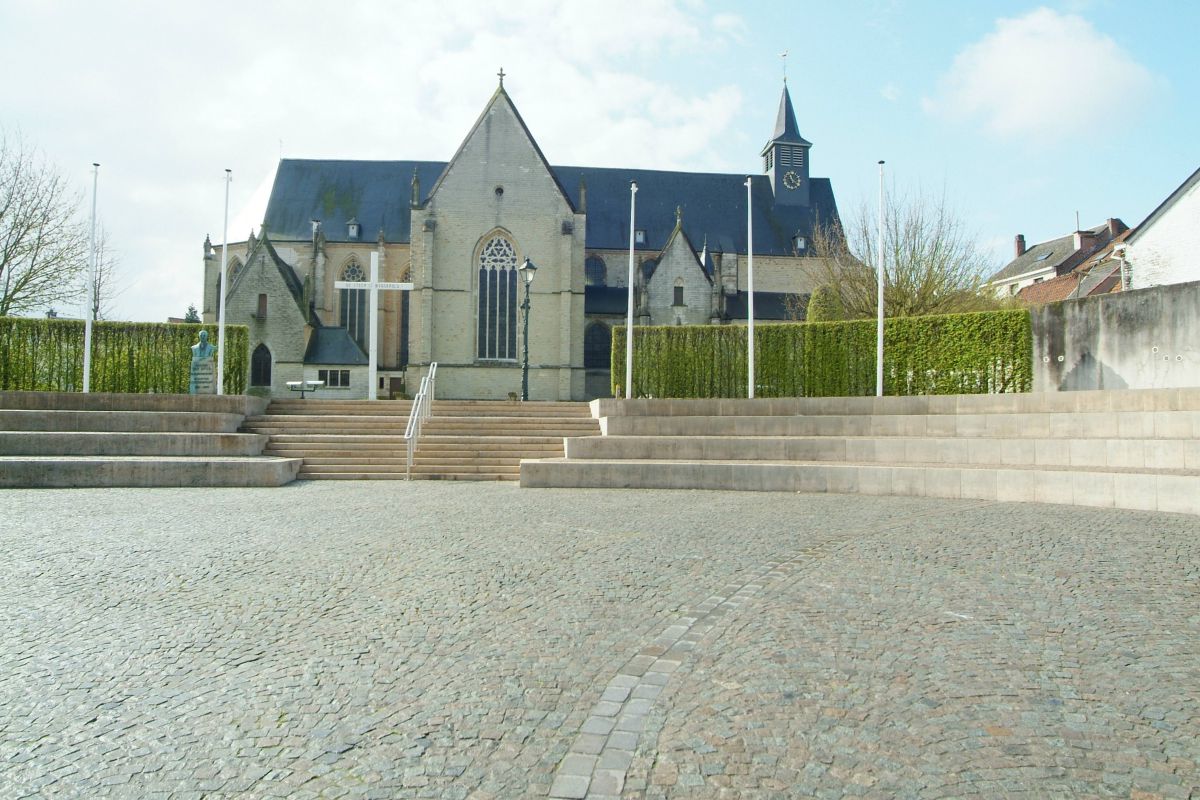
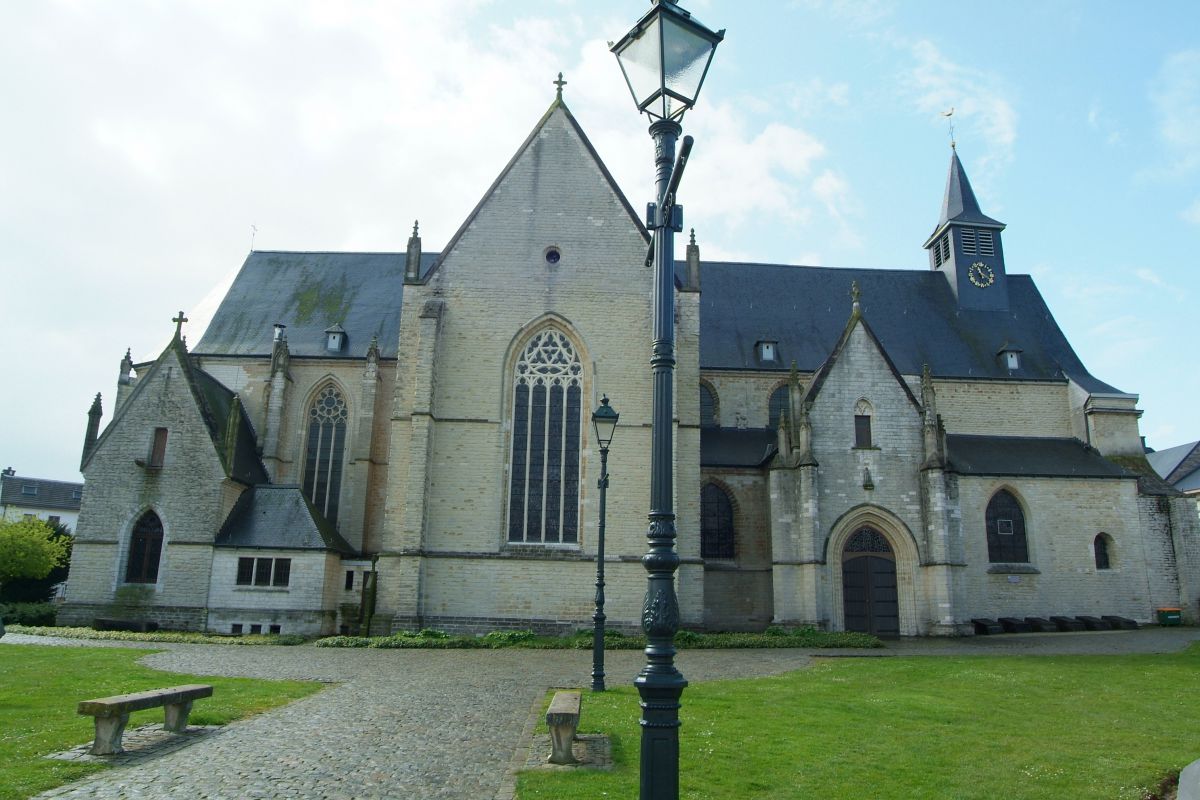
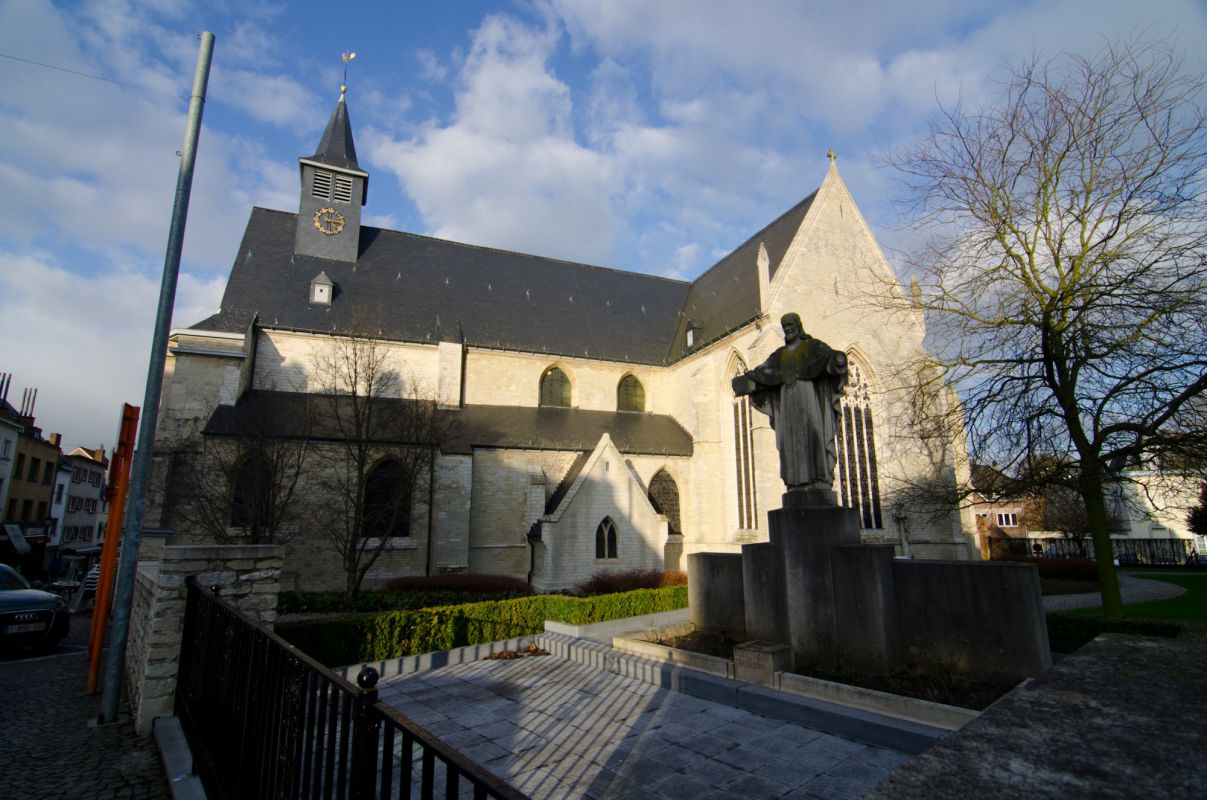
Henry 1st, Duke of Brabant, had a small church built in the courtyard of his castle between 1200 and 1225. Over time the master builders integrated exquisitely old and new, the Romanesque and the Gothic to form a beautiful architectural ensemble.
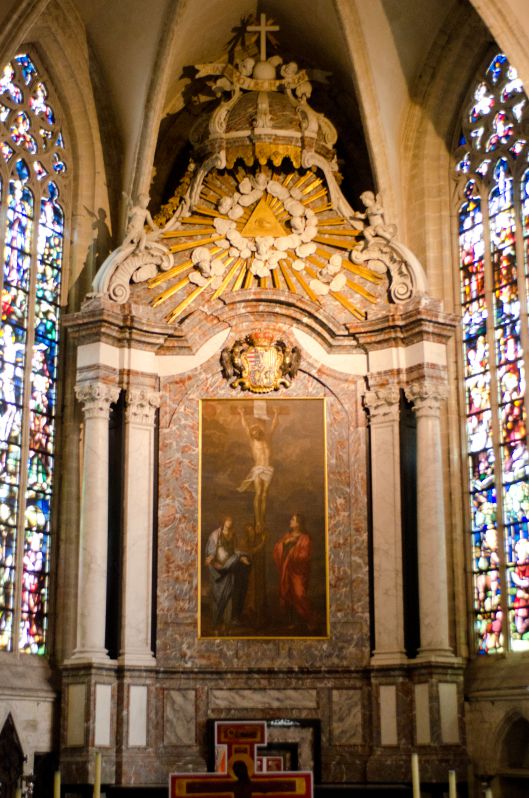
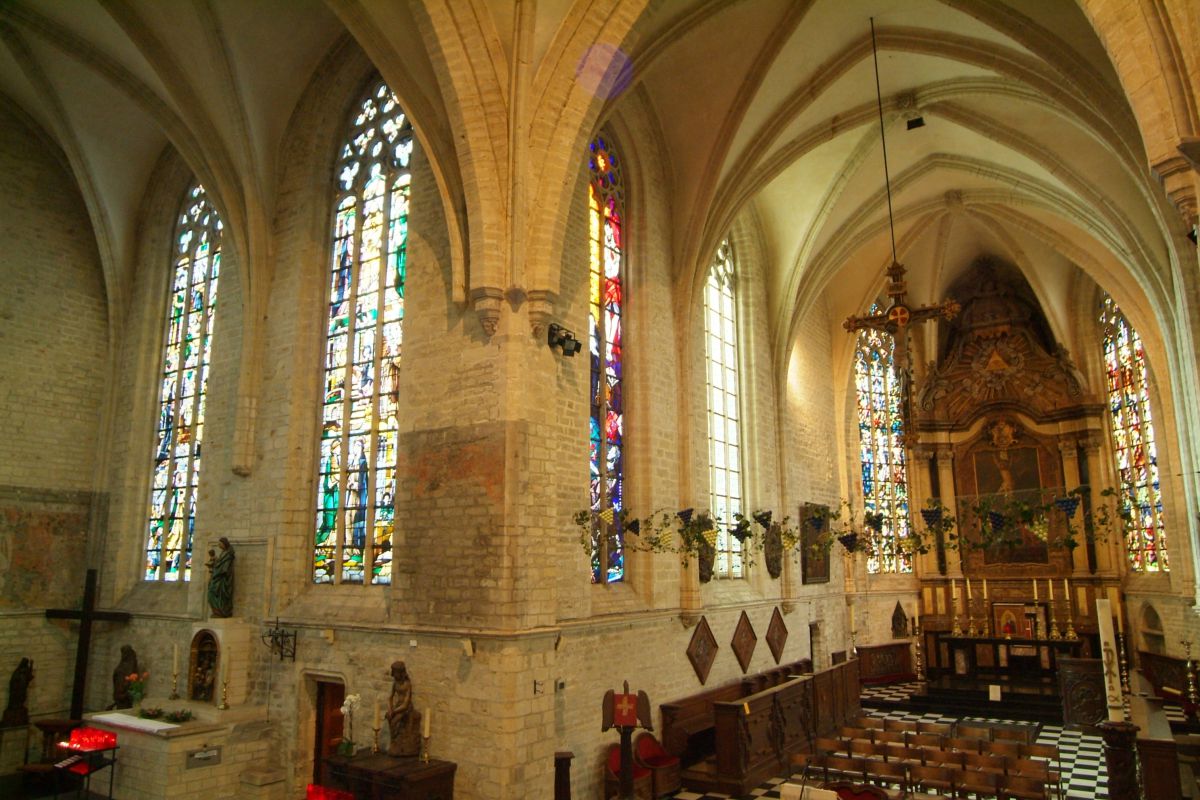
Some rococo additions were made to the church in the 18th century; a Gothic window was built to house a baroque altar (1761). Around 1948 the cure Davidts, wanting to return to pure gothic, restored the church but left the baroque altar untouched.
As the church belonged personally to the dukes of Brabant until 1280 it is not surprising to find the tombs of three dukes in the choir of the church: Antoine of Burgundy (+1415), John 4th (+1427) and Phillippe de Saint Pol (+1430).
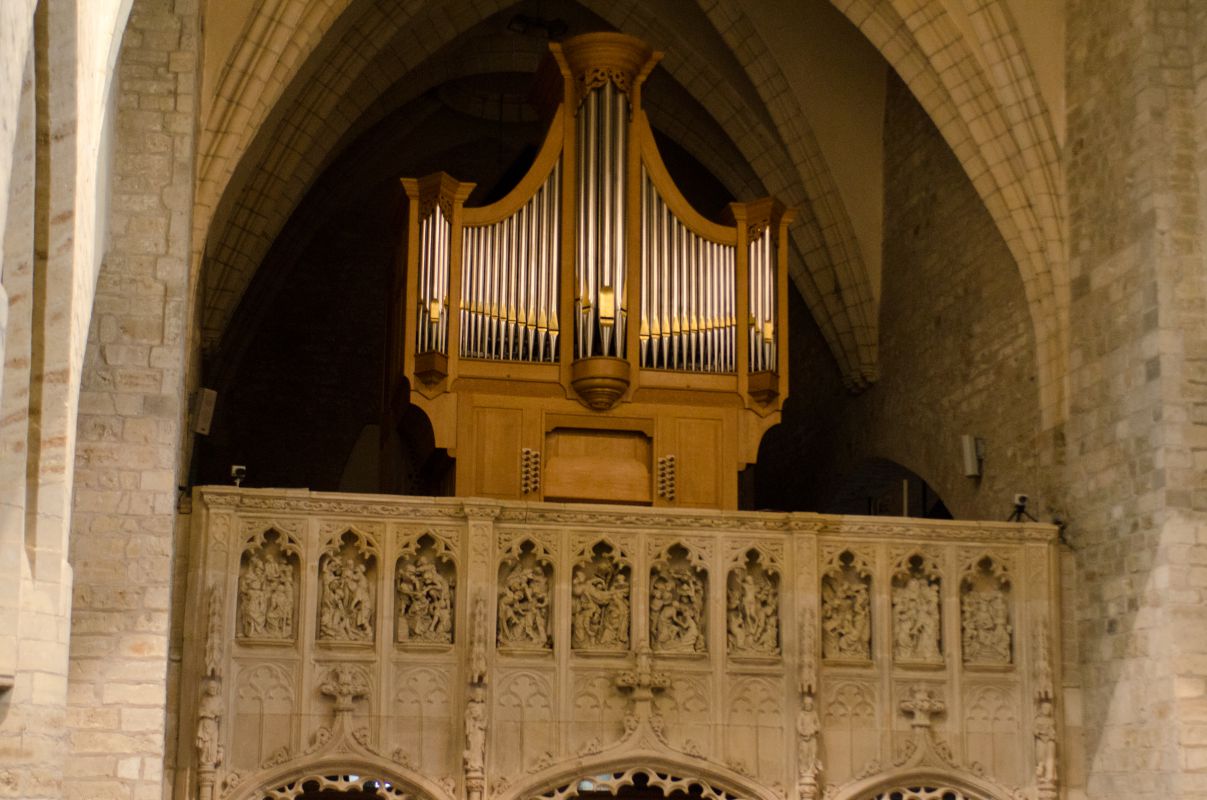
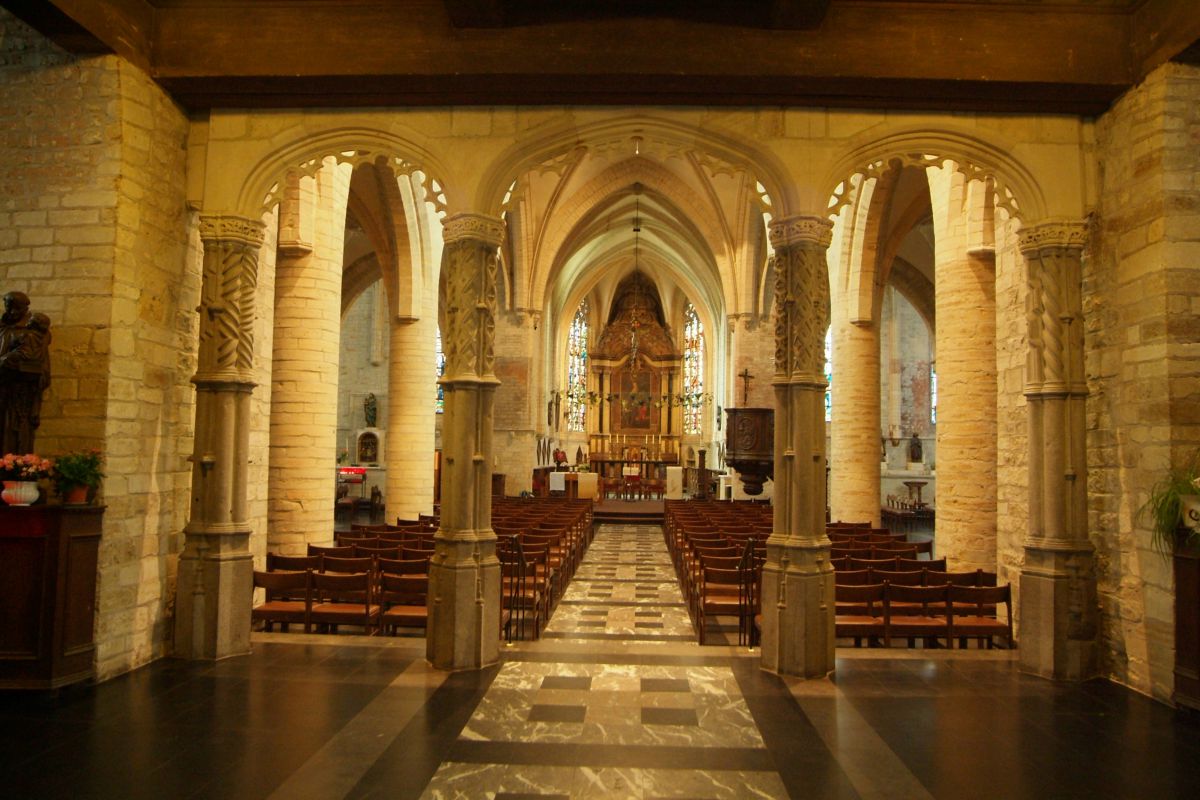
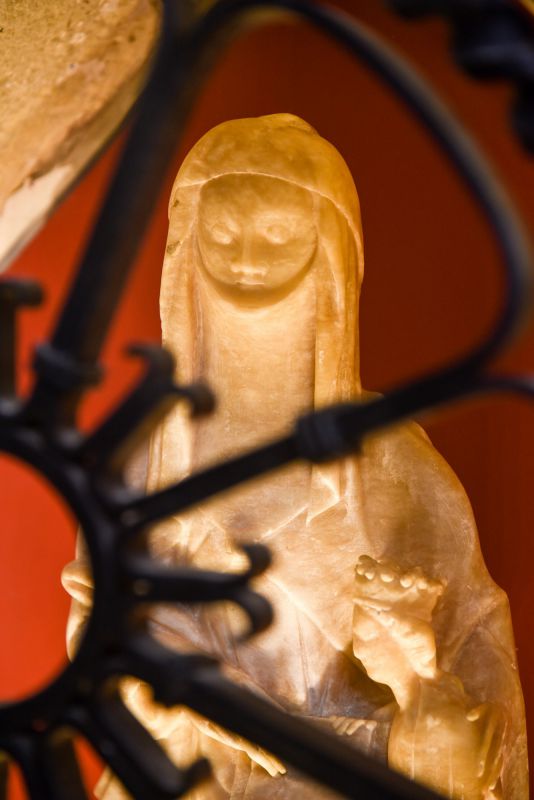
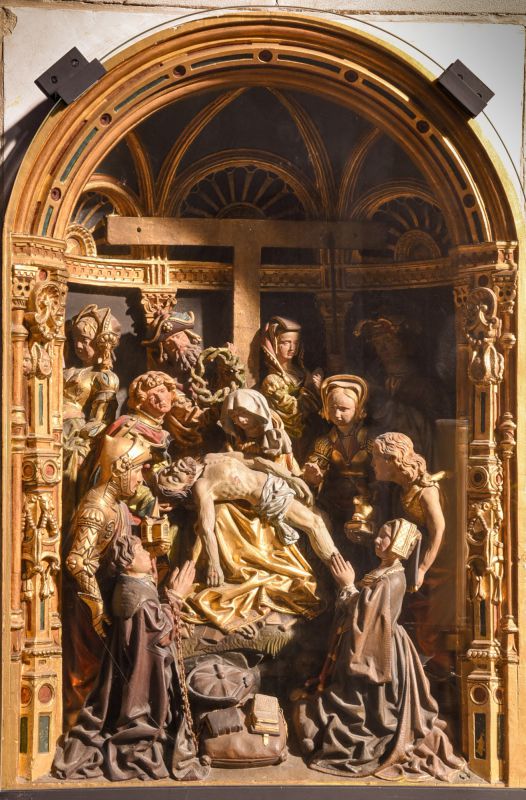
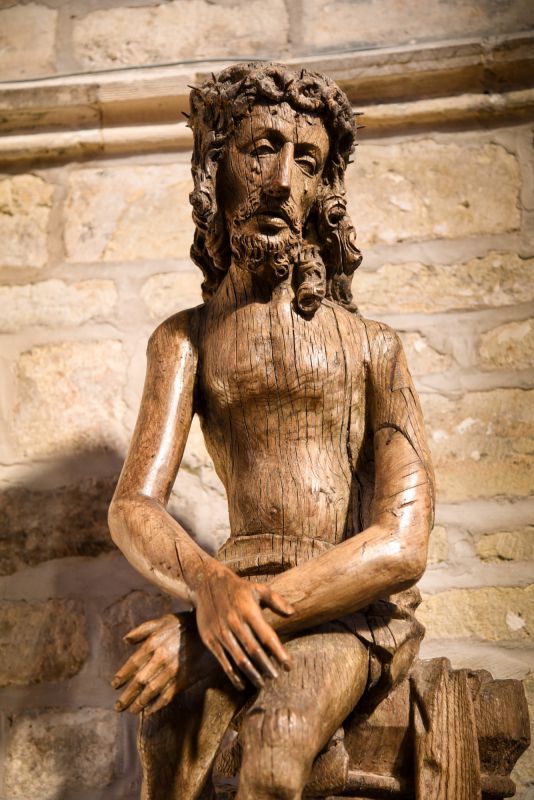
In addition the church has some very beautiful Gothic accessories, the dead Christ in polychrome stone, remnants of frescoes in the transept and a superb rood screen whose three panels decorated with ten biblical paintings must be seen.

Photos


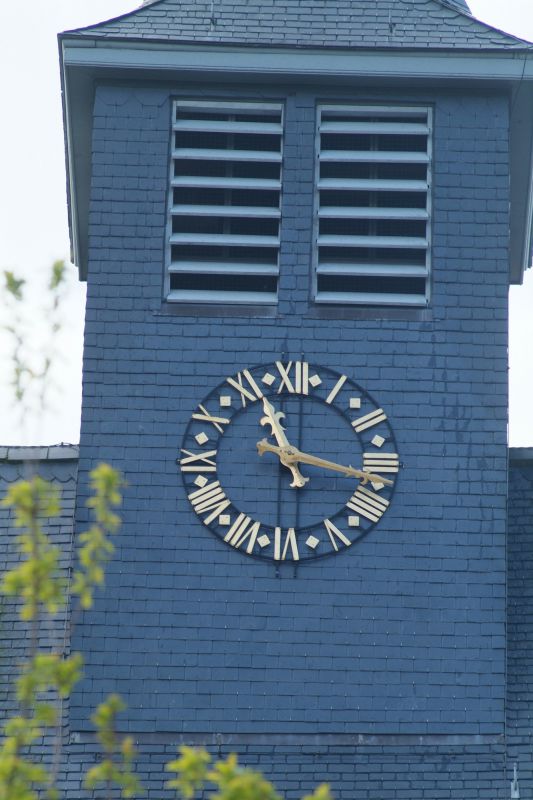
Remarkable elements
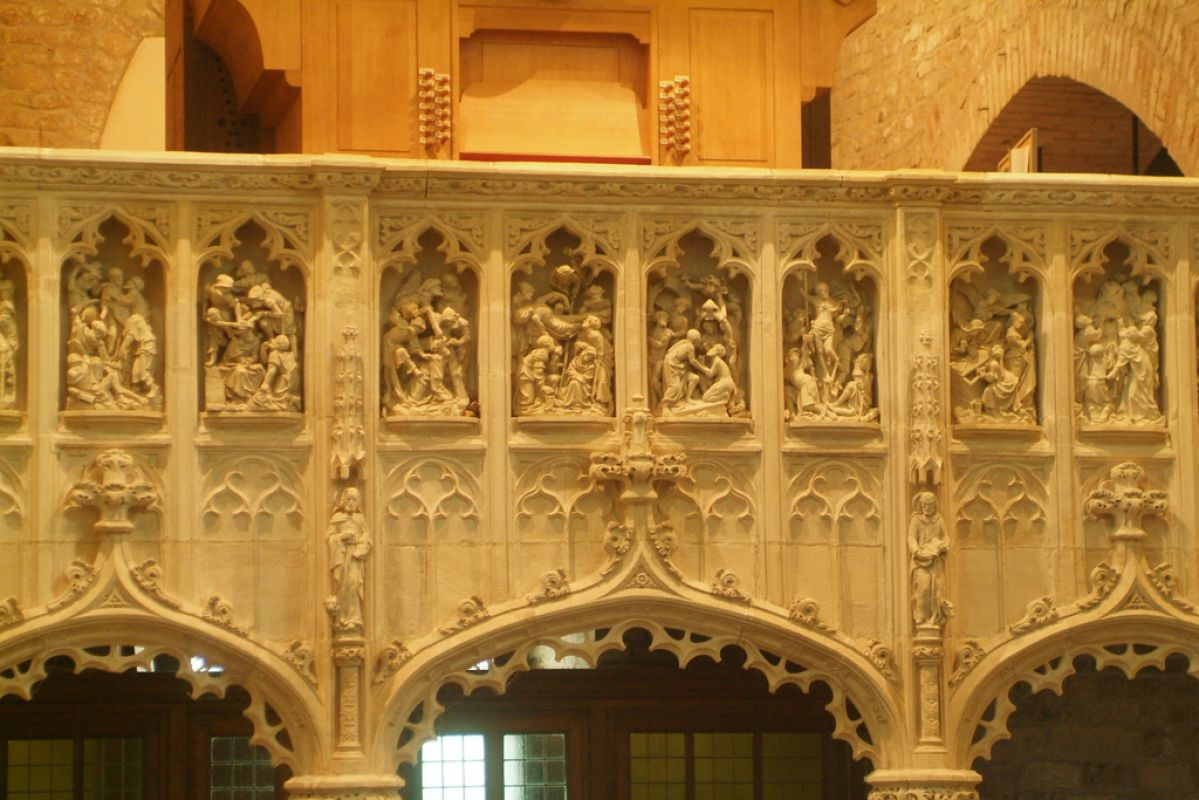
Rood screen
The late Gothic rood screen once marked the choir housing the Dukes of Brabant’s mausoleum. It shows ten Passion scenes. Built in 1525 by the Keldermans brothers from Leuven, it was dismantled in 1739 and only rebuilt at the back of the church in 1948. Quarry marks remain on the columns. Most rood screens vanished during iconoclasm and under the Council of Trent’s influence, making them rare.
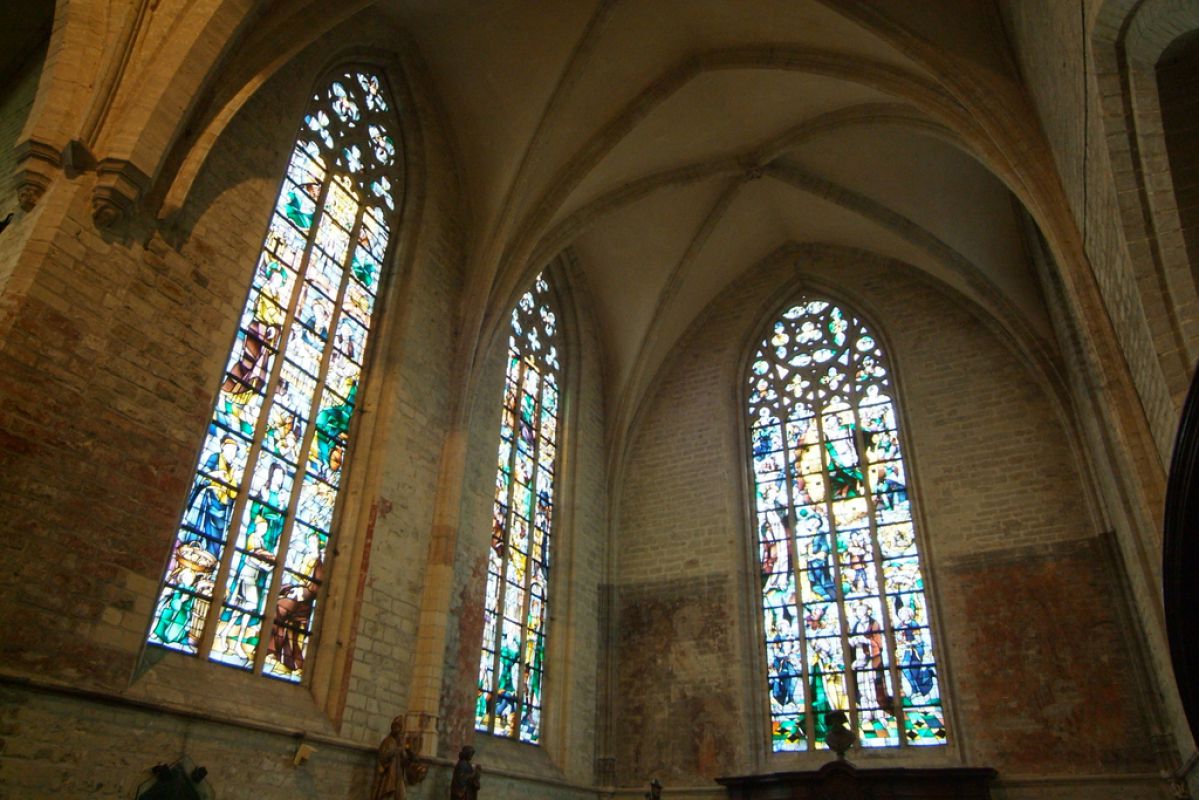
Murals
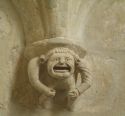
The church was once very colourful in the Middle Ages. Traces of polychrome on corbels and 15th century murals illustrating the Bible and the Gospel remain. The murals were plastered over in 1647, long after the Council of Trent called for their removal. The plaster was taken off in 1948 during a Gothic restoration. Though badly damaged, the murals have recently been the focus of new restoration efforts.
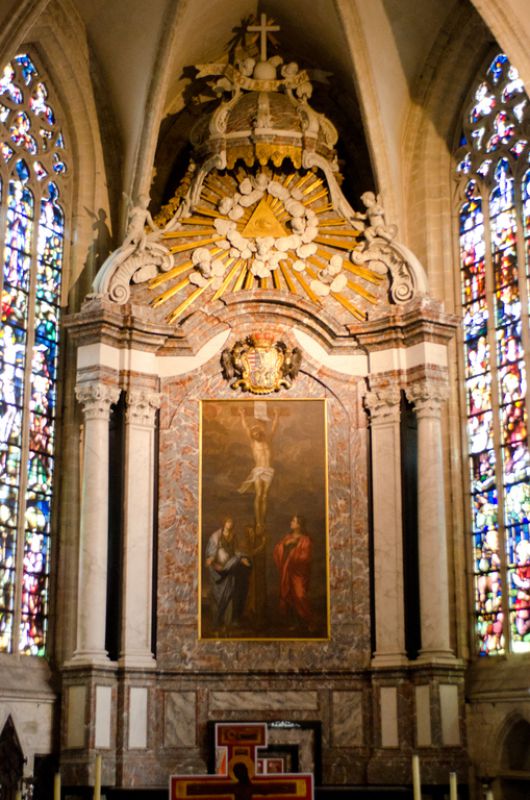
Portico altar
The church became baroque after the religious wars. Frans Vanderborght and Niclaes van Mons made the painted marble portico altar in 1761. Stained glass windows replaced the side porches in 1947. The coat of arms of Prince Charles of Lorreine adorns the top of the altar since 1769. It was installed on the celebration of his 25th anniversary as governor of the Austrian Netherlands. The Calvary is an anonymous painting that originally came from a monastery or abbey church.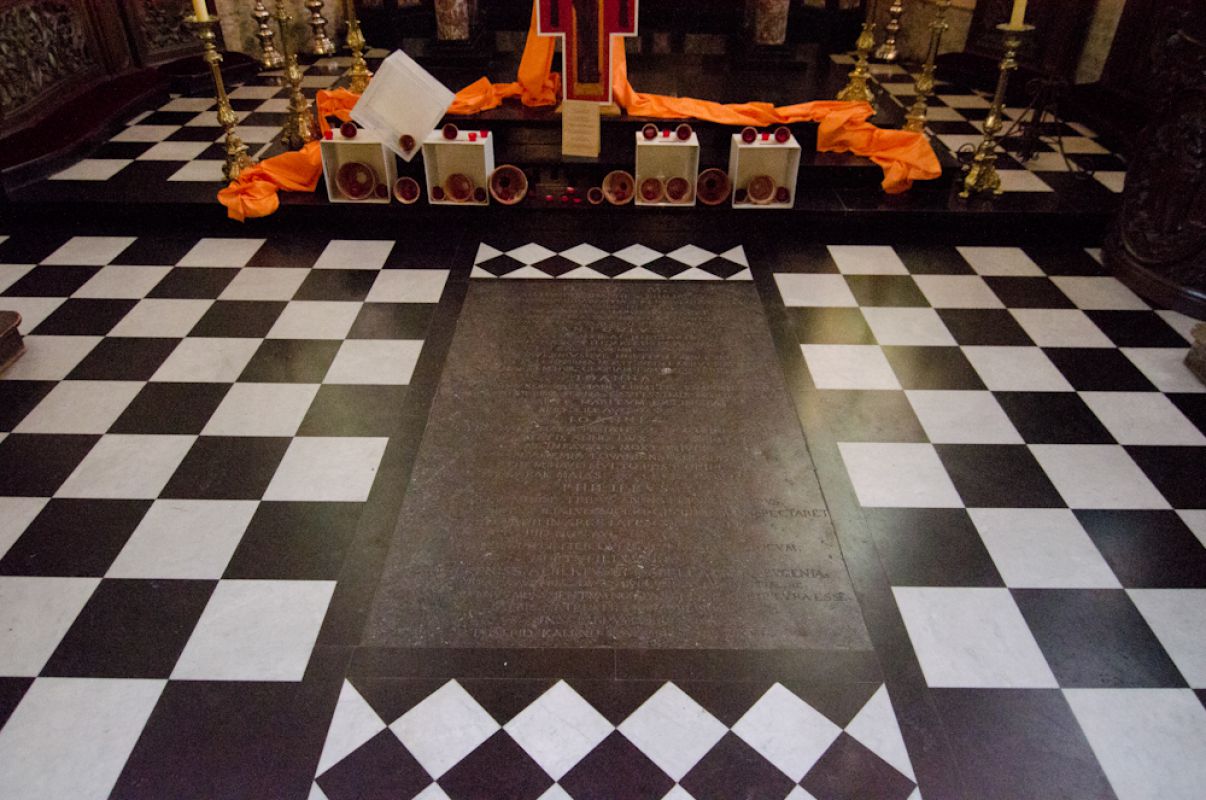
Tombstone Dukes of Brabants
The last Dukes of Brabant were laid to rest in the crypt under the choir between 1407 and 1430: Anthony of Burgundy and Johanna of Saint Pol, their suns Jan IV (founder of the university of Leuven) and Philip of Saint Pol. Their mausoleum was destroyed in the 16th century. In 1621, the Archduke Albrecht an Isabella ordered this tombstone to be walled at its current location with a text by Ericeus Puteanus, successor of Justus Lipsius at the university of Leuven.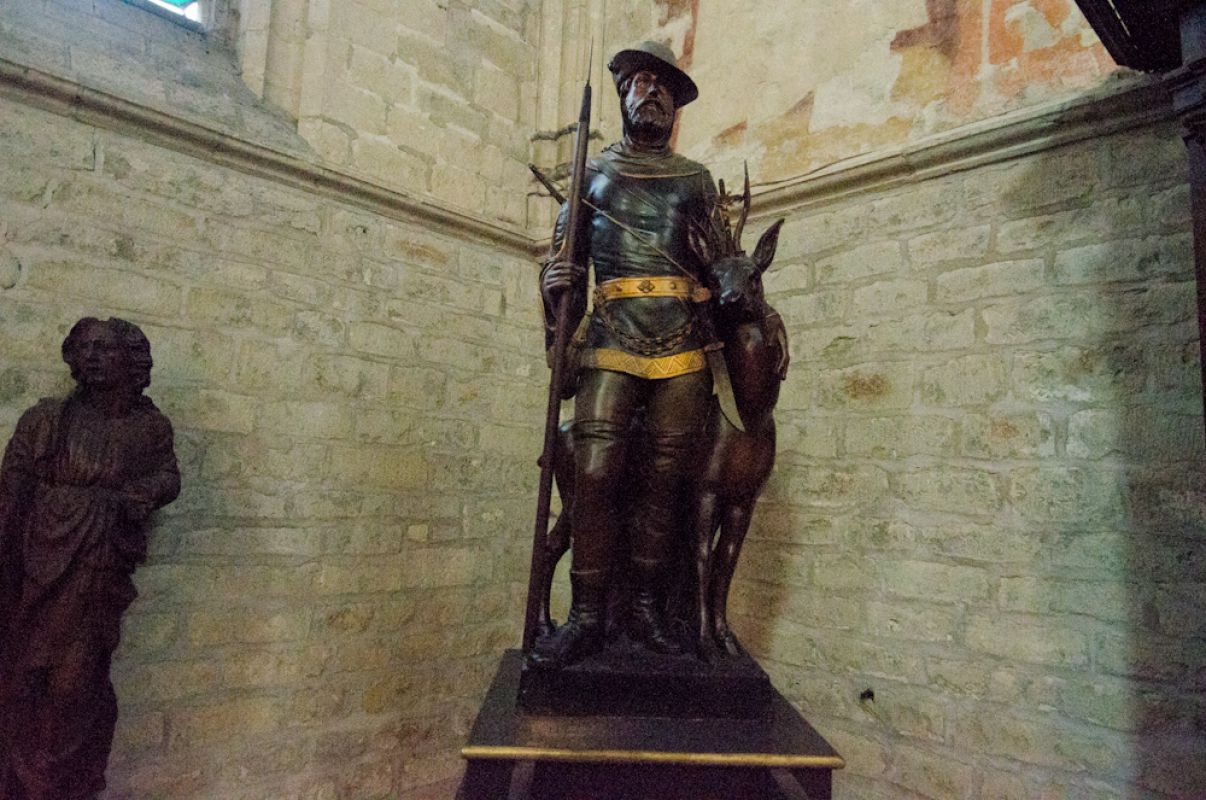
Saint Hubert
Saint Hubert died in 727 in Tervuren. He is depicted in one of the stained glass windows of the choir, on a corbel in the southern transept, on the pulpit, on the Saint Hubert’s altar, as a hunter in a plaster cast from 1867 and in a niche in the northern porch.There is a mural illustrating his conversion in the northern transept. It was created in 1400-1450 and serves as a good indicator of the fact that his worship probably increased in the 16th century.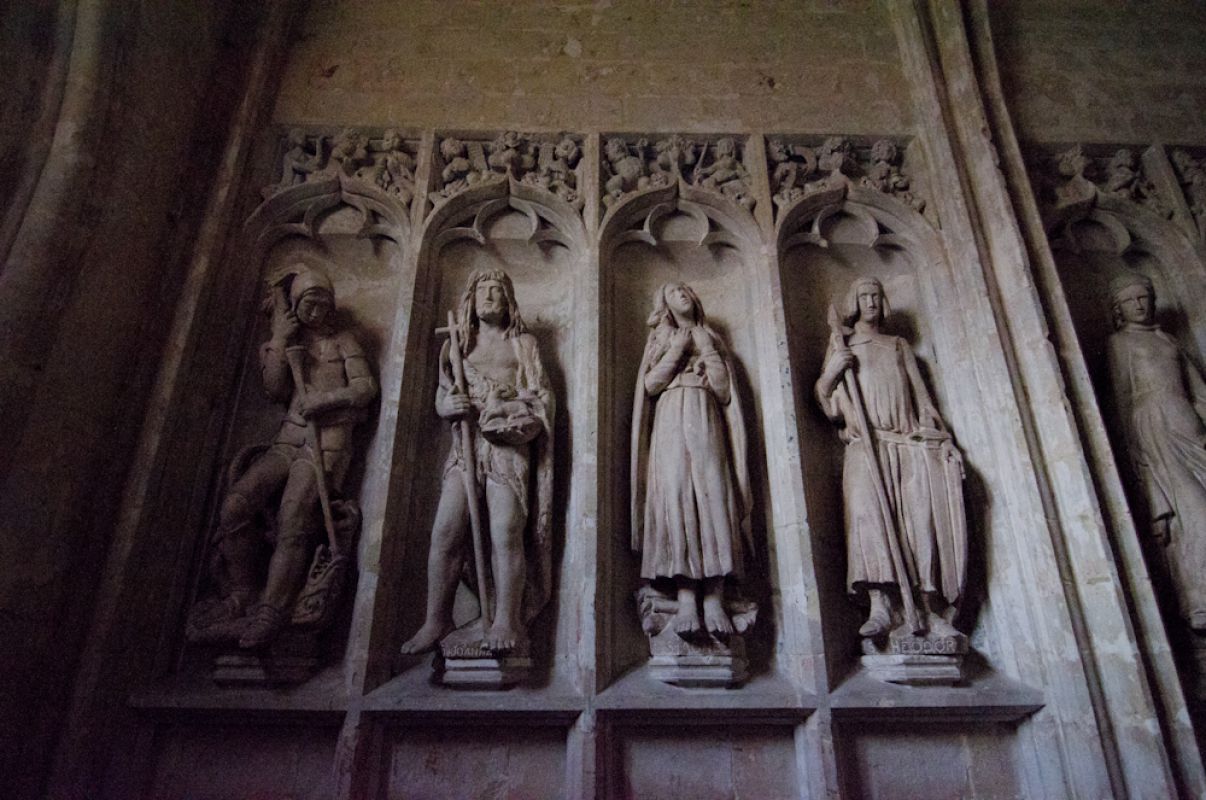
Northern porch
The northern porch was heavily damaged by iconoclasts in 1572. The saints’ statues, donated in 1950, stand in niches, some with restored upper parts. The porch also features sculptures of apostles, prophets, animals, angels and monsters, some dating to the 15th century. Outside, near the porch, lie seven Congolese who died in Tervuren in 1897 during the World Exhibition.