
Saint Michael
Place du Général de Gaulle
59148 Flines-lez-Râches
Church | X-XI-XII-XIV-XV-XVI-XIX | Romanesque | Catholic Church


Map
Opening hours
01 March - 30 April
Mon 7.30 - 19.00
Tue 7.30 - 19.00
Wed 7.30 - 19.00
Thu 7.30 - 19.00
Fri 7.30 - 19.00
Sat 7.30 - 19.00
Sun 7.30 - 19.00
01 May - 30 September
Mon 7.30 - 20.30
Tue 7.30 - 20.30
Wed 7.30 - 20.30
Thu 7.30 - 20.30
Fri 7.30 - 20.30
Sat 7.30 - 20.30
Sun 7.30 - 20.30
01 October - 31 October
Mon 7.30 - 19.00
Tue 7.30 - 19.00
Wed 7.30 - 19.00
Thu 7.30 - 19.00
Fri 7.30 - 19.00
Sat 7.30 - 19.00
Sun 7.30 - 19.00
01 November - 28 February
Mon 8.00 - 17.00
Tue 8.00 - 17.00
Wed 8.00 - 17.00
Thu 8.00 - 17.00
Fri 8.00 - 17.00
Sat 8.00 - 17.00
Sun 8.00 - 17.00
Guided tour
Description
The Church of Saint-Michel is considered one of the oldest churches in northern France. Its origins date back to the Carolingian period, with an initial wooden structure surrounded by a cemetery. The dedication to Saint Michael also appears to date from this period, as the archangel was particularly venerated at that time.
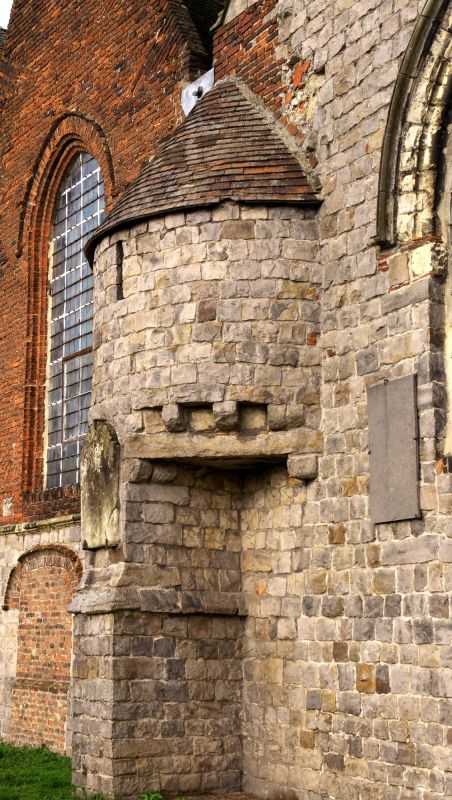
In the 10th and 11th centuries, a Romanesque stone building was constructed on a basilica plan, with a nave and aisles. In the 12th century, the bell-tower porch was built on the western façade, reflecting a regional architectural tradition. In the 13th and 14th centuries, the church was enlarged, notably with the addition of a watchtower, which was probably decorative or intended to provide access to the attic. The chancel and the north chapels were built in the 15th and 16th centuries.
In 1520, a fire ravaged the building, leading to further restoration work.
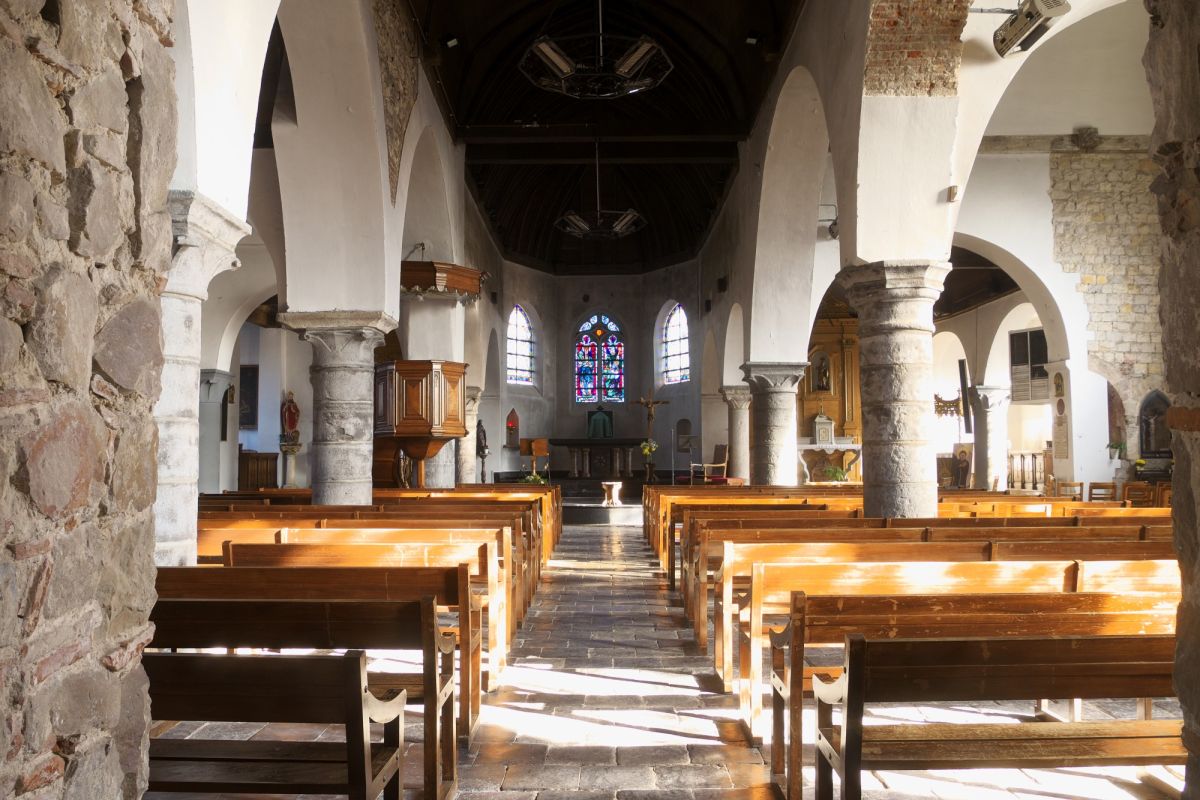
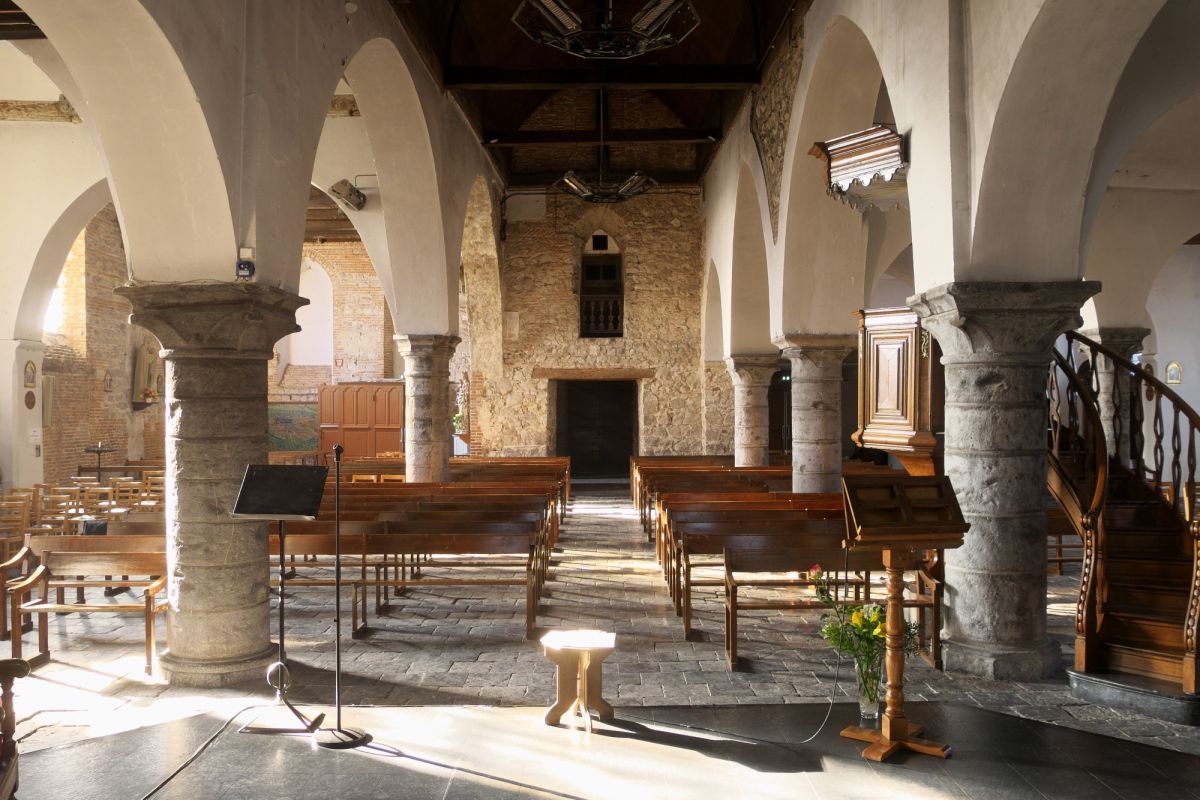
In the 19th century, population growth led to a further extension, giving the church its current hall church layout. The 20th and 21st centuries were then marked by several restoration campaigns.
Having been remodelled and extended on numerous occasions, Saint-Michel Church now features a diverse architectural style, bearing witness to over a millennium of history.
Translated with DeepL.com (free version)

Photos


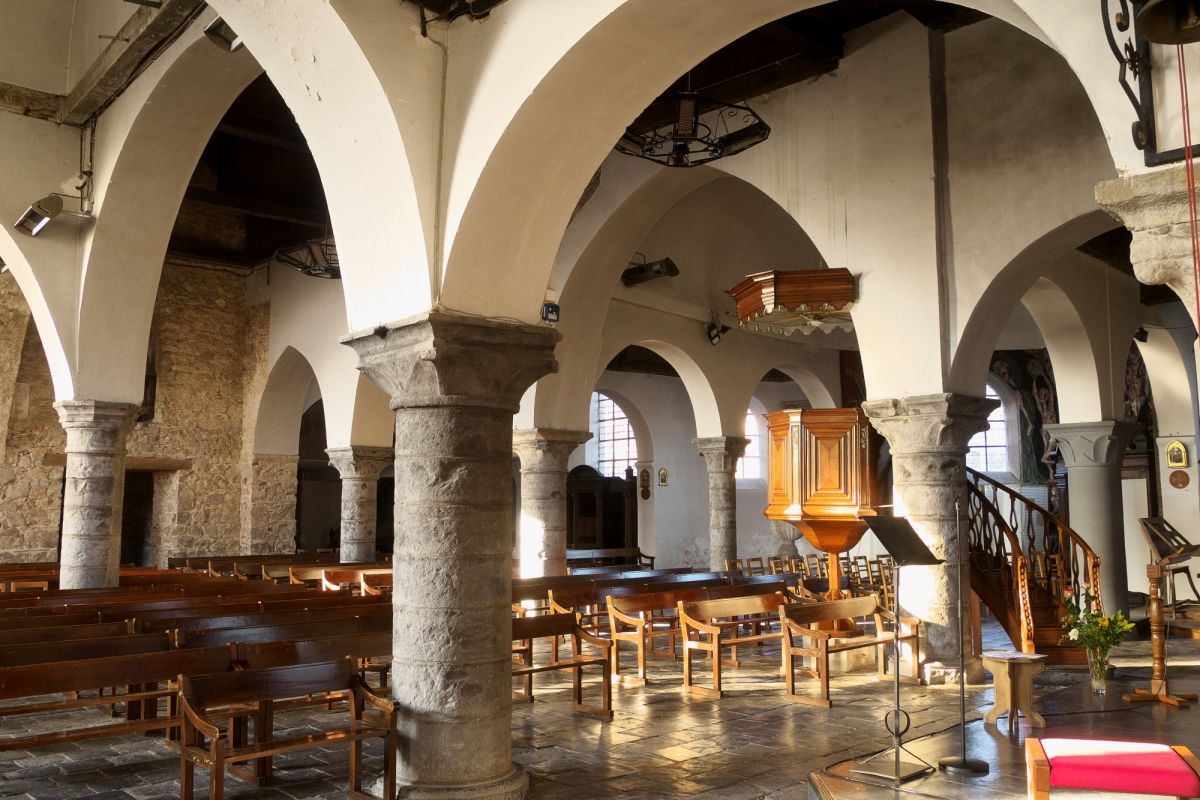


Remarkable elements
Choir stained-glass window
Installed in 1948, this stained-glass window depicts Our Lady of Flines in one lancet and, in the other, Countess Marguerite of Constantinople presenting the Abbey of Flines – founded in the 13th century – to Saint Bernard. The mullion bears the coat of arms of the Cistercian abbey, featuring the Lion of Flanders, under whose jurisdiction the lands of Flines fell. Destroyed during the Revolution, the abbey served as the burial place for several Counts of Flanders.

Braces
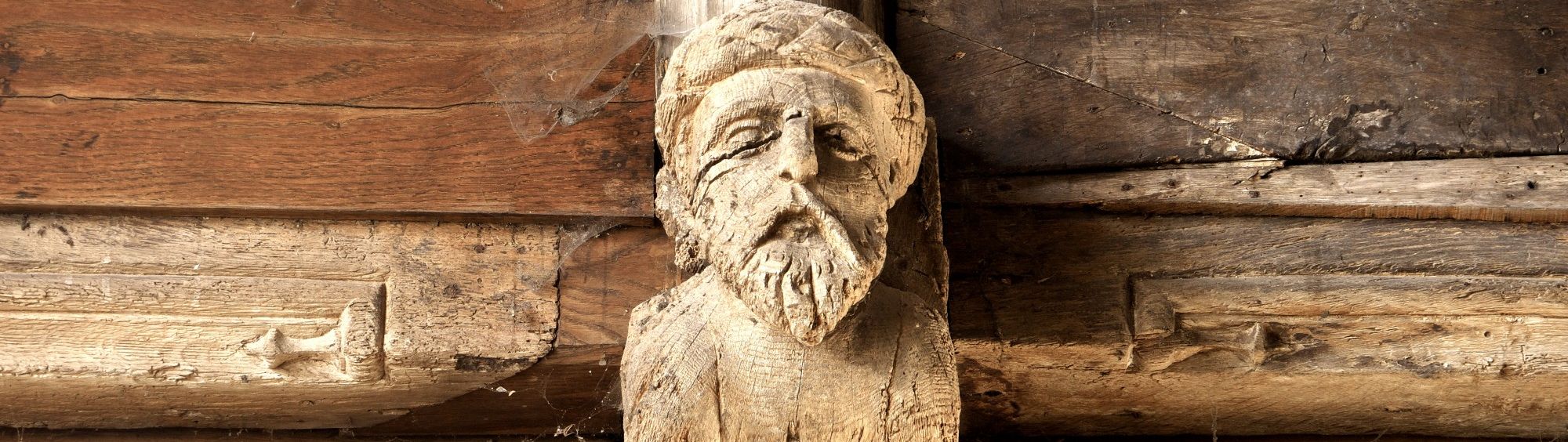
Beneath the roof structure, several carved braces are visible. These wooden pieces, intended to reinforce the structure, were often decorated from the 15th century onwards in Hainaut and the Oise. Dating from the late 15th or early 16th century, these depict anonymous figures or coats of arms, bearing witness to the care taken in the building’s decoration.
Baptismal font
This sandstone baptismal font dates from 1554. In the Renaissance style, it features an ovoid basin adorned with a floral motif, resting on a small column decorated with palm leaves. This column rests on a rectangular base adorned with carved cherubs, motifs characteristic of the Renaissance. The domed metal lid completes this ensemble, which is characteristic of the period.

18th-century furnishings
The church at Flines-lez-Râches houses a rich collection of 18th-century furnishings. Louis XV-style confessionals stand alongside the woodwork of the side altars, the northern one dedicated to the Virgin Mary and the southern one to Saint Michael, the church’s patron saint. The pulpit, with its clean lines, and the choir stalls, adorned with cherubs and plant motifs, also date from this period. A richly carved Rococo-style processional canopy completes the ensemble.

Columns
The church has twelve columns, eight of which, made of Tournai blue stone, were first constructed as early as the 12th century. Their capitals feature a plant motif comprising four leaves and crochets at the corners. Whilst they follow this same design language, each capital has a unique decoration. The other four columns, built in the 19th century during the church’s extension, are imitations of these.
Contemporary fresco
In one of the chapels, in 1990, at the request of the local residents, the artist Philippe Aïni created a contemporary fresco intended to introduce a modern work of art into this thousand-year-old church. Inspired by the New Testament, it combines painting and sculpture and depicts nearly 90 figures. The work provoked strong reactions and was defaced. Although threatened with demolition, it is still partially visible today.


