
Saint Stephen
Dorpsstraat
3730 Hoeselt
Church | XI-XVIII | Classical | Catholic Church


Map
Opening hours
01 January - 31 December
Mon 10.00 - 17.00
Tue 10.00 - 17.00
Wed 10.00 - 17.00
Thu 10.00 - 17.00
Fri 10.00 - 17.00
Sat 10.00 - 17.00
Sun 10.00 - 17.00
Religious offices
Description
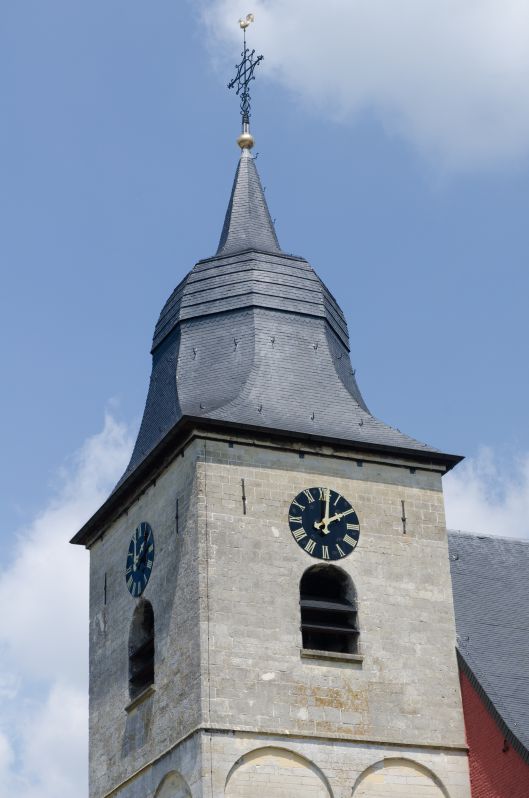
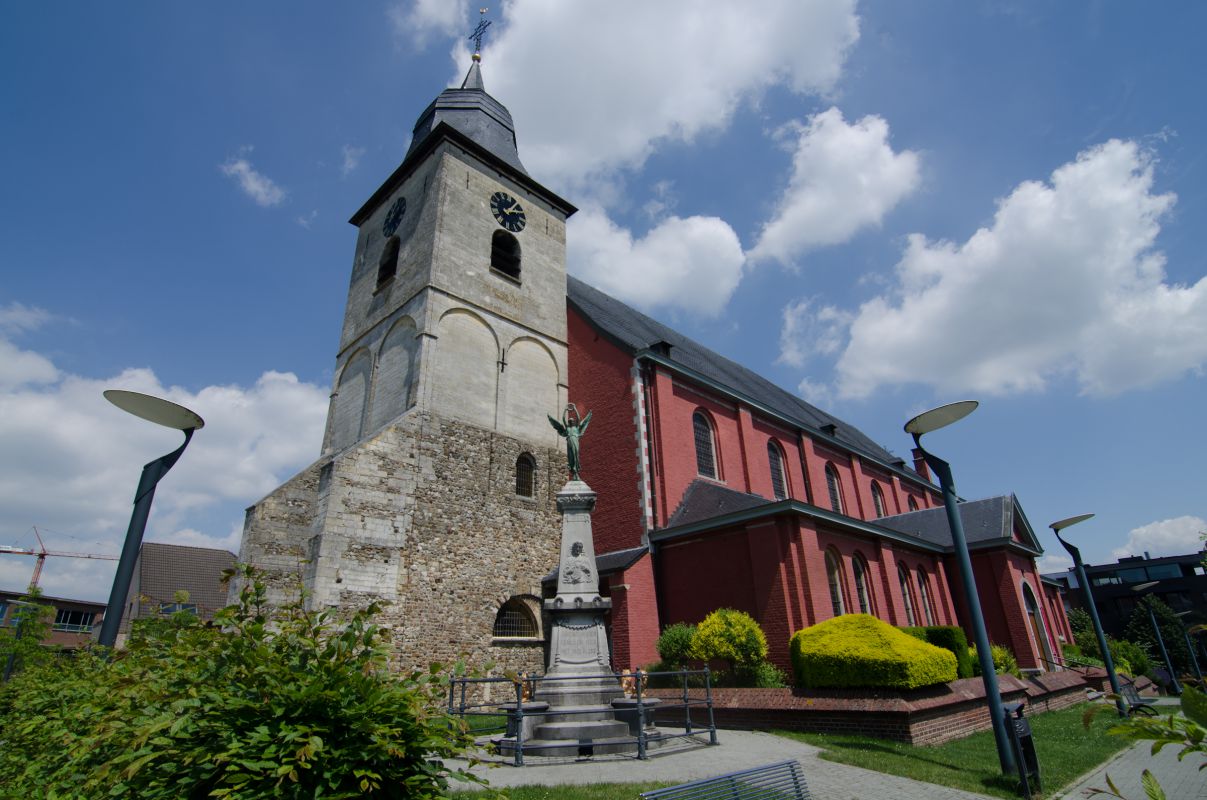
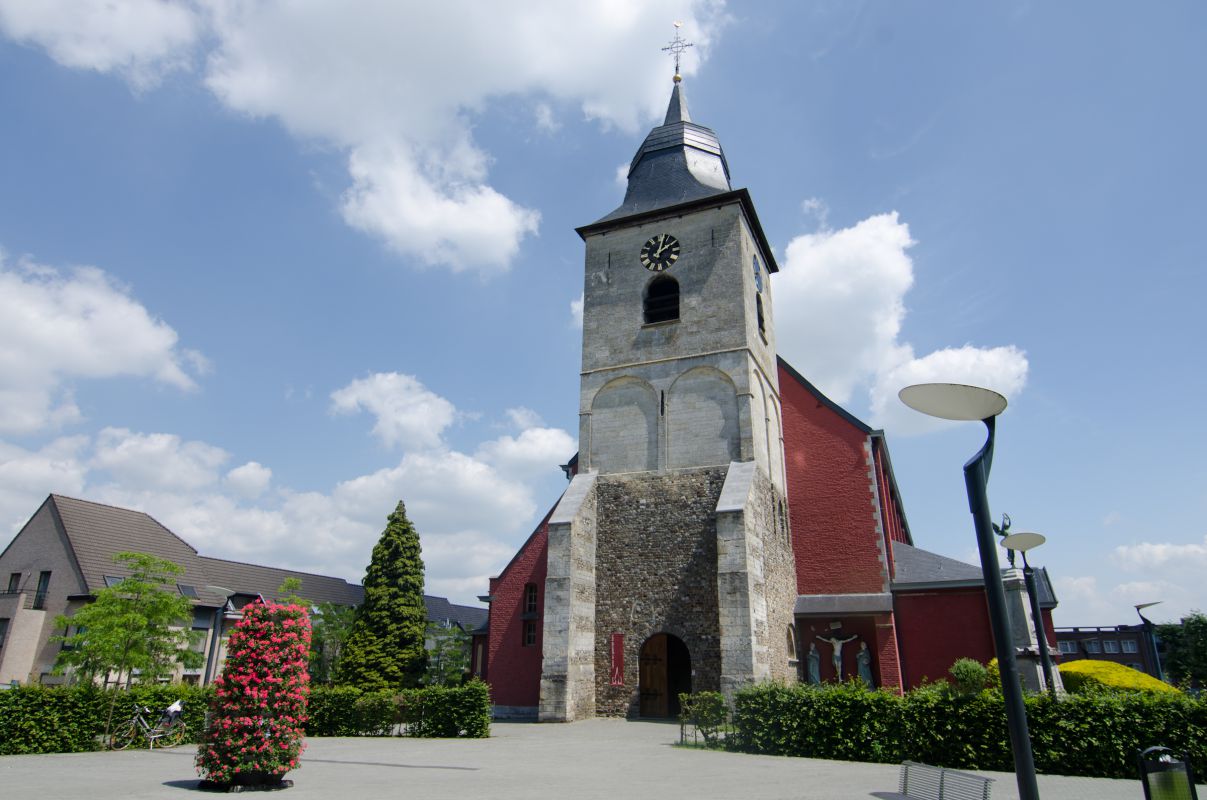
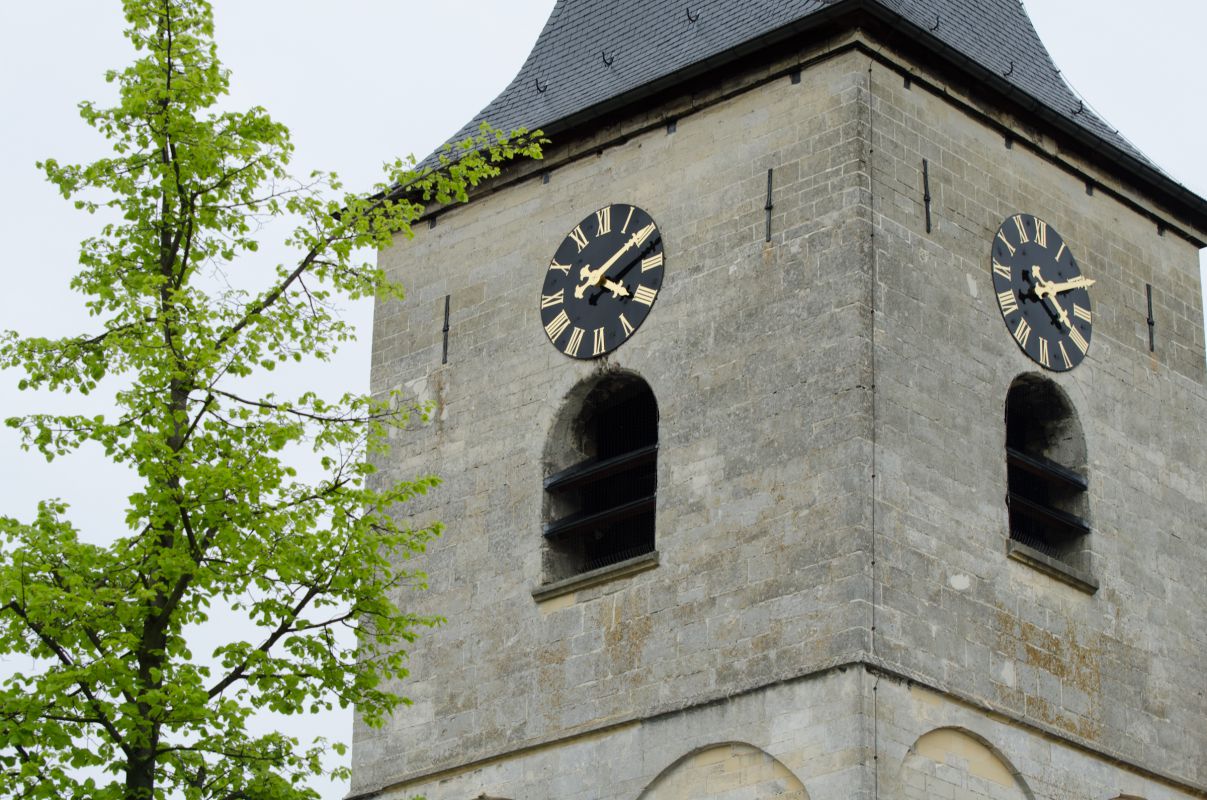
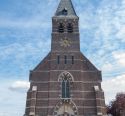
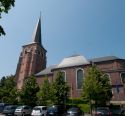
The church’s history is well recorded. After its 2008 restoration, an illustrated volume was published describing all old and new elements, still available in the church today. The tower’s foundation is pre Roman, dating to the 11th century, with old brickwork and fifteen types of stone, some reused from local Roman villas. On this base, a Roman Gothic structure in marlstone was built around 1250.
The original church was replaced in 1766 by a Classicist brick building with a single nave, later topped with an Austrian style baroque spire. Due to population growth, the church was lengthened by one third in 1896 and expanded again in 1932 with two aisles.
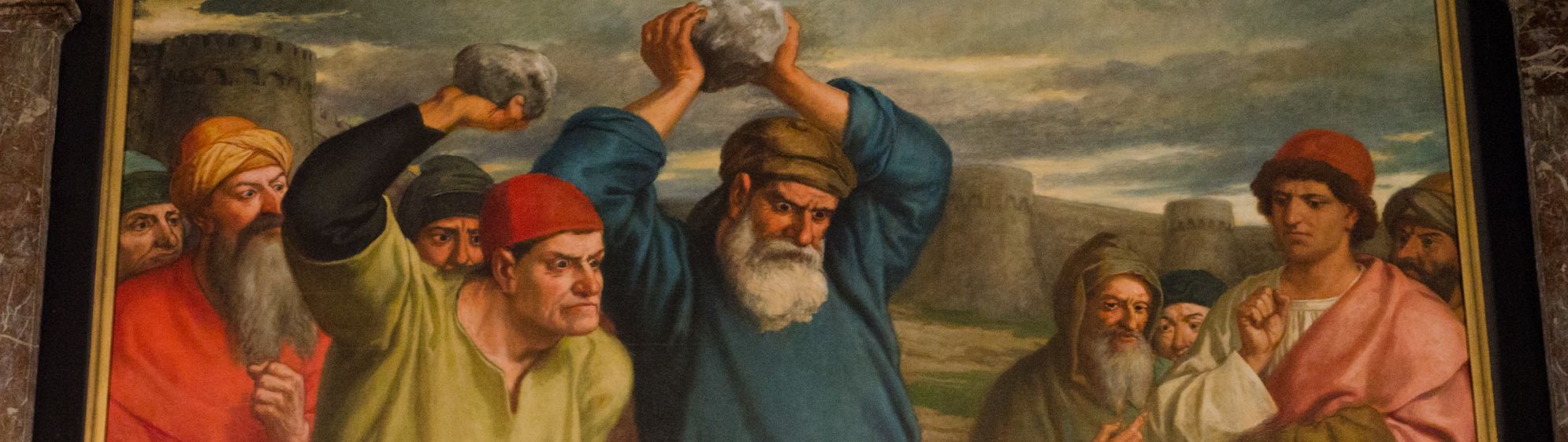
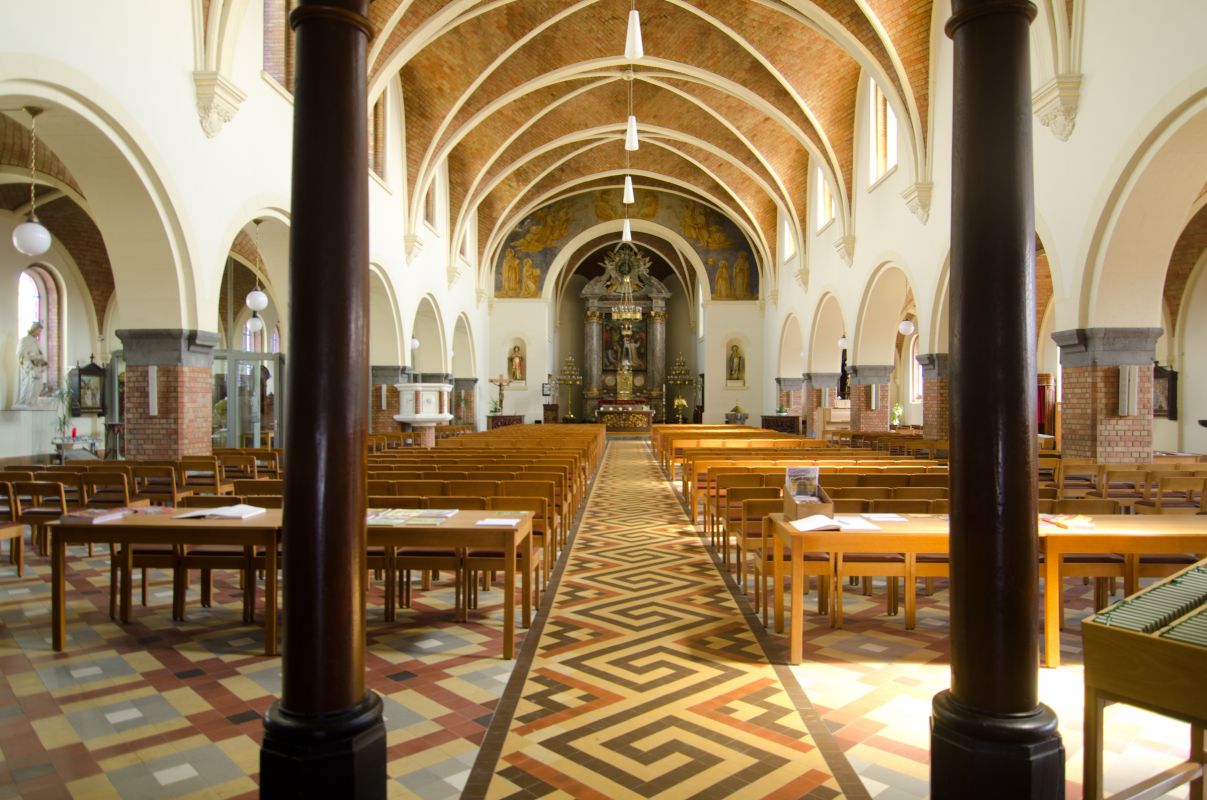
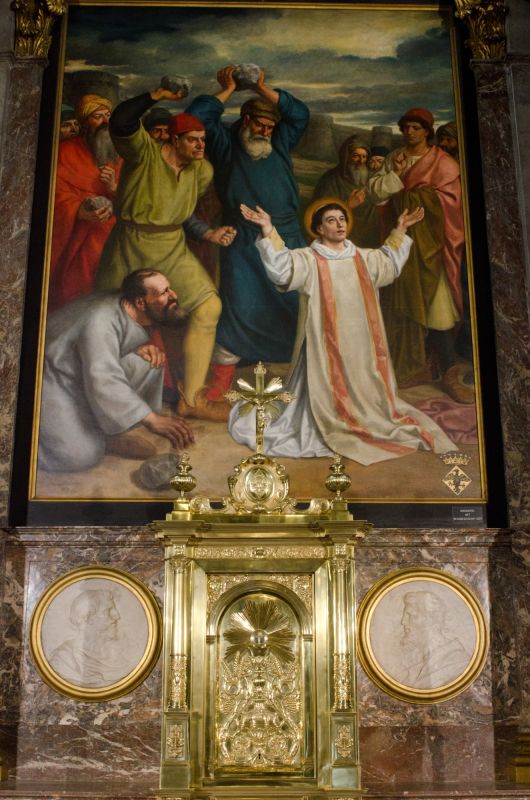
Inside, the 1689 high altar stands out. It originally came from St Paul’s Cathedral in Liège, and its white marble medallions of Peter and Paul were sculpted by Jean Delcour. The 18th century stalls also come from Liège, from the church of St John the Evangelist. The Deposition painting in the jube is from the workshop of Rubens, while The Stoning of St Stephen on the left is by Jean Detrixhe.
German master carpenter Carl Weyskopf crafted the side altars, confessionals, and the communion rail, now integrated into the altar and lectern. The oak reliquary dates to the 17th century. The early Gothic baptismal font (c. 1250) features four characteristic heads, and the fish on its lid is one of Christianity’s oldest symbols.
The crowned eagle on the tabernacle refers to the church’s major benefactors, the de Brouckmans family, whose former estate—now a school—stands beside the church.
Source: Geschiedkundige Kring Hoeselt - Samenvatting over St-Stefanuskerk. (www.sint-stefanus.be)
KIKIRPA : Photo-library online
See the treasures of this church online on erfgoedplus.be

Photos


Media
Remarkable elements
High altar
The altar was built in 1689 for the St Paul's Church in Liège and in 1876 transferred to Hoeselt. There are two white marble medallions on the left and right of the tabernacle, made by Jean Delcour (1631-1707). The altar painting, the martyrdom of St. Stephen, was painted in 1877 by Louis Hendrix.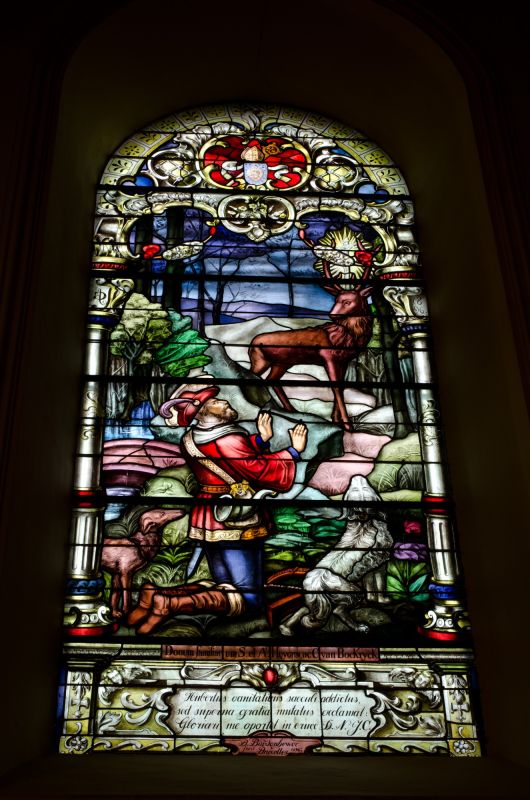
Stained-glass windows
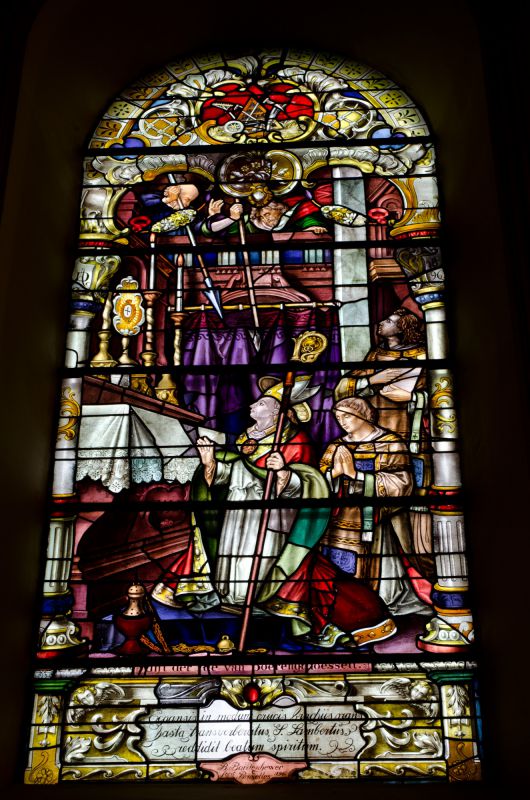
Four decorative stained-glass windows, made in 1896 by the Brussels glazier Bertrand Bardenhewer. The two windows on the south side depict scenes from the life of Lambert. The legend of Hubert is illustrated on the two windows on the north side.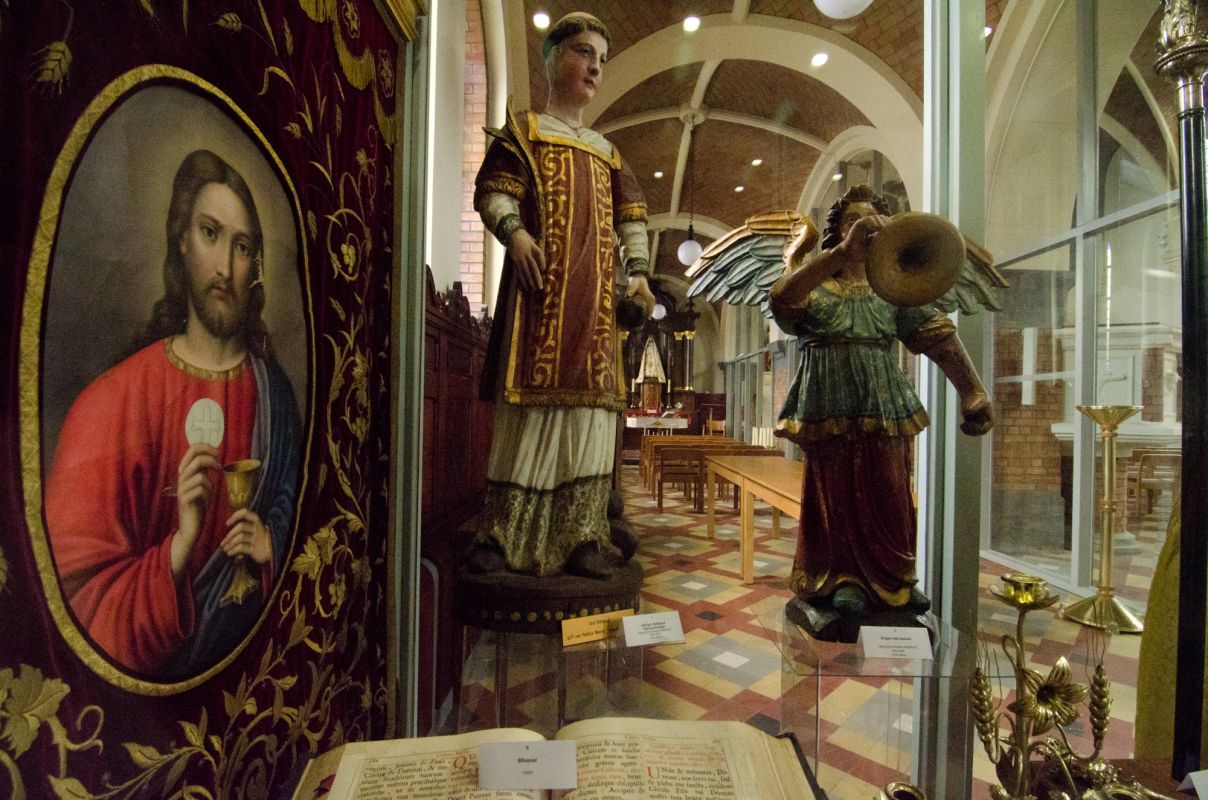
Treasure room
During restoration works in 2008, a burglarproof room was arranged inside the church. Two wooden statues (Saint Stephen and Angel with Trumpet) and various beautiful liturgical objects are preserved and displayed in this room.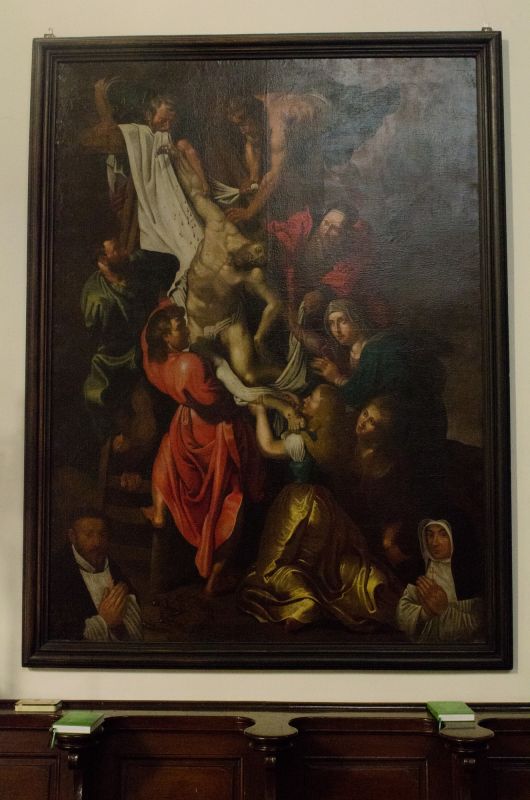
Paintings
On the left in the jube hangs a painting that depicts the Stoning of St Stephen, made by the painter Jean Detrixhe Liège in 1713. On the right hangs a painting that represents the Deposition. This painting was created in the studio of Rubens (17th century).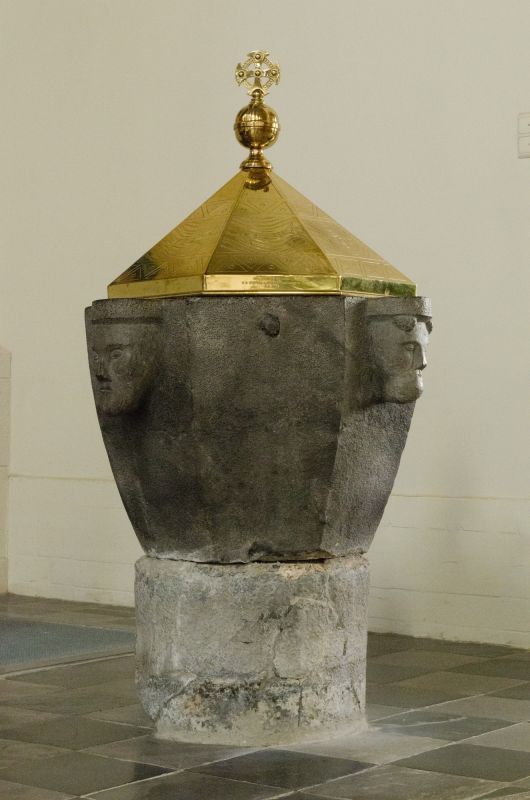
Baptismal font
Early Gothic baptismal font from around 1250 with Romanesque features. Four heads appear on the corners of the heavy bluestone basin: a man, a woman, an old man, and a devil. Romanesque fonts often show four similar heads symbolizing the four rivers of Paradise and the four evangelists: Geon–Matthew, Tigris–Mark, Euphrates–Luke, Physon–John. The fish on the cover is an ancient Christian symbol.

Organ
The organ was built in 1768 by Henri Möseler from Liège. Since then it has undergone many changes. In 1870 the firm Pereboom & Leyser from Maastricht completely rebuilt the organ. A new digital organ was installed in March 2011, with the console in the front of the church.
Nearby


Circuit
Hermits, lords and saints
Rulers and saints, Religious heritage around Alden Biesen (bicycle route 3) - This route shows that religious heritage doesn't have to be boring: lively stories and legends, a beautiful hidden hermitage and some beautiful historical churches and castles.
In the footsteps of the priest
Rulers and saints, religious heritage around Alden Biesen (car tour 1) - Less sporty? Or is it raining cats and dogs? We have connected the most interesting sights with a route adapted to the car (in Dutch).