Saint Philip
Rue des Récollets
5600 Philippeville
Church | 1559 | Neoromanesque | Catholic Church

Map
Opening hours
01 April - 31 October
Mon -
Tue -
Wed -
Thu -
Fri -
Sat 9.00 - 18.00
Sun 9.00 - 18.00
01 November - 31 March
Mon -
Tue -
Wed -
Thu -
Fri -
Sat 9.00 - 17.00
Sun 9.00 - 17.00
and every day during school holidays and public holidays.
Guided tour
+32 471 90 55 84
Religious offices
Sunday 10.45 am
Description
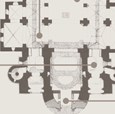
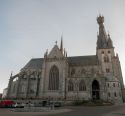
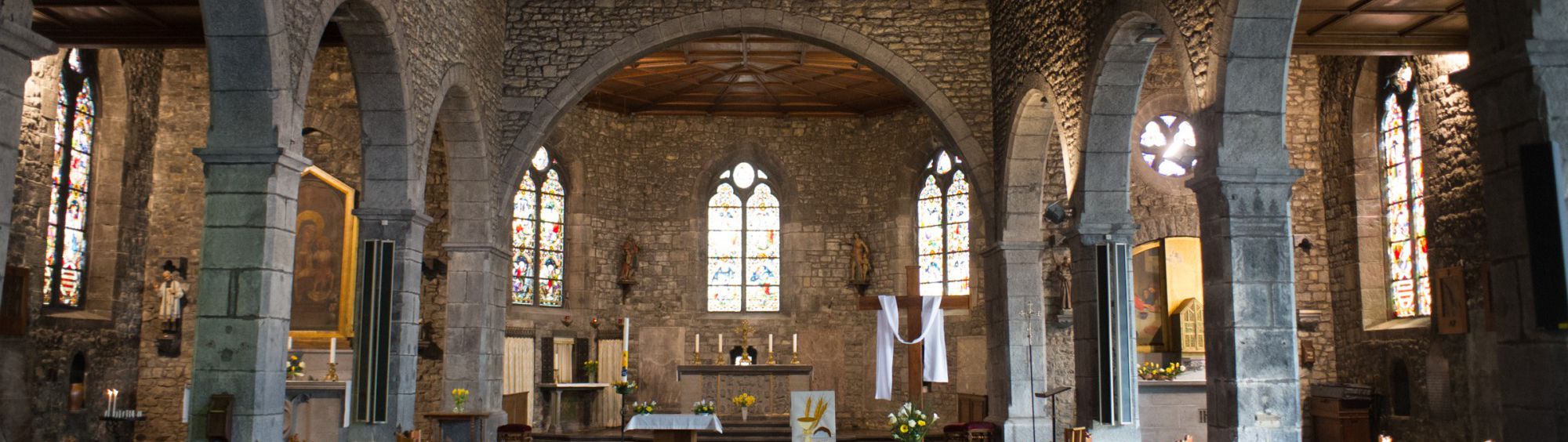
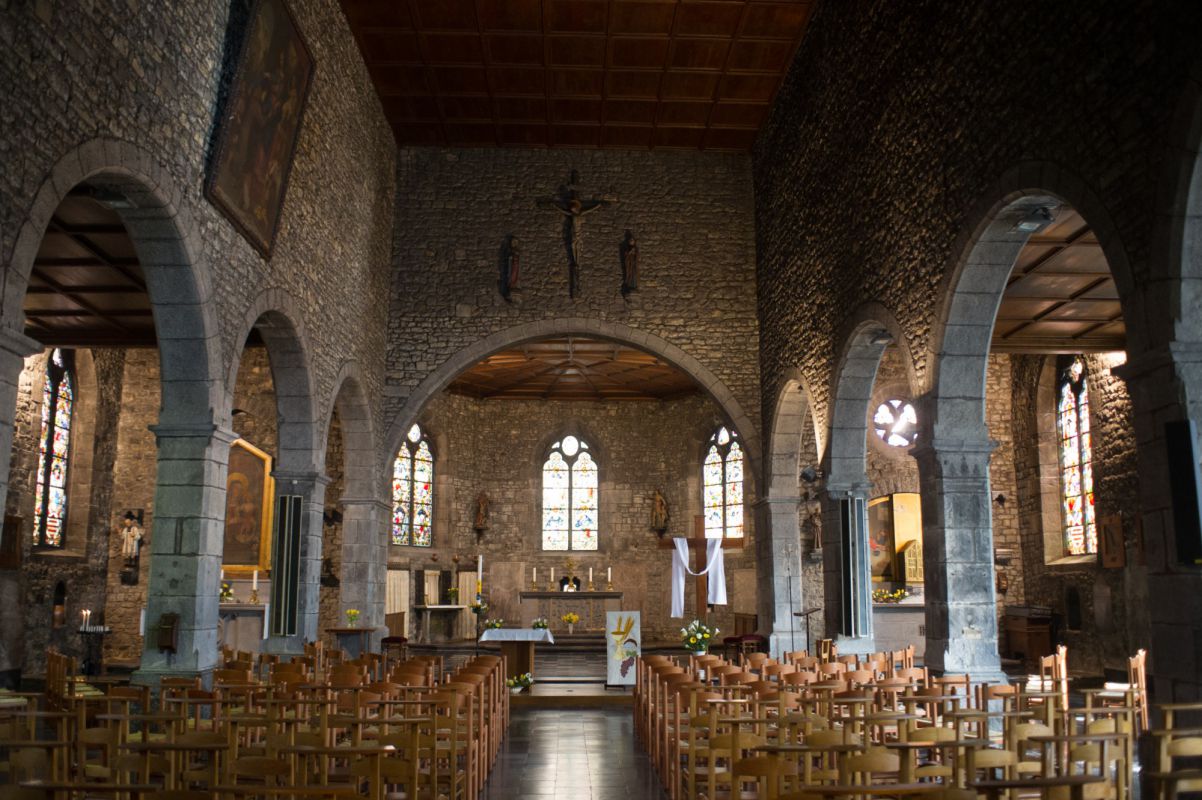
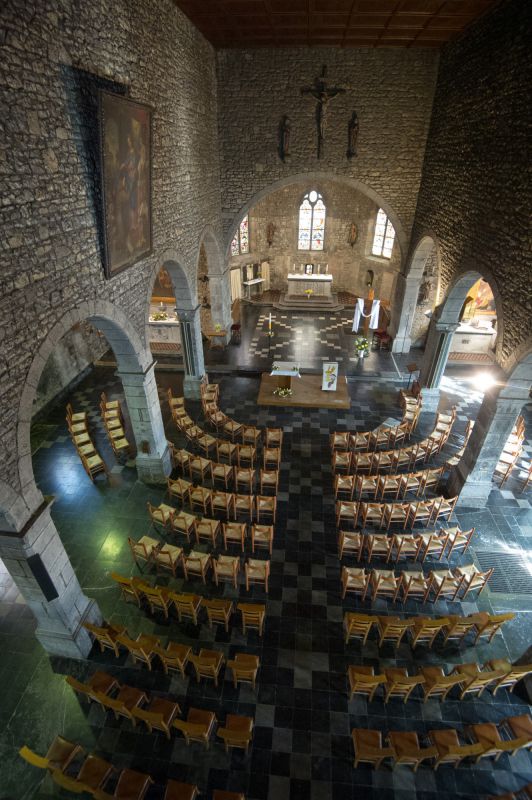
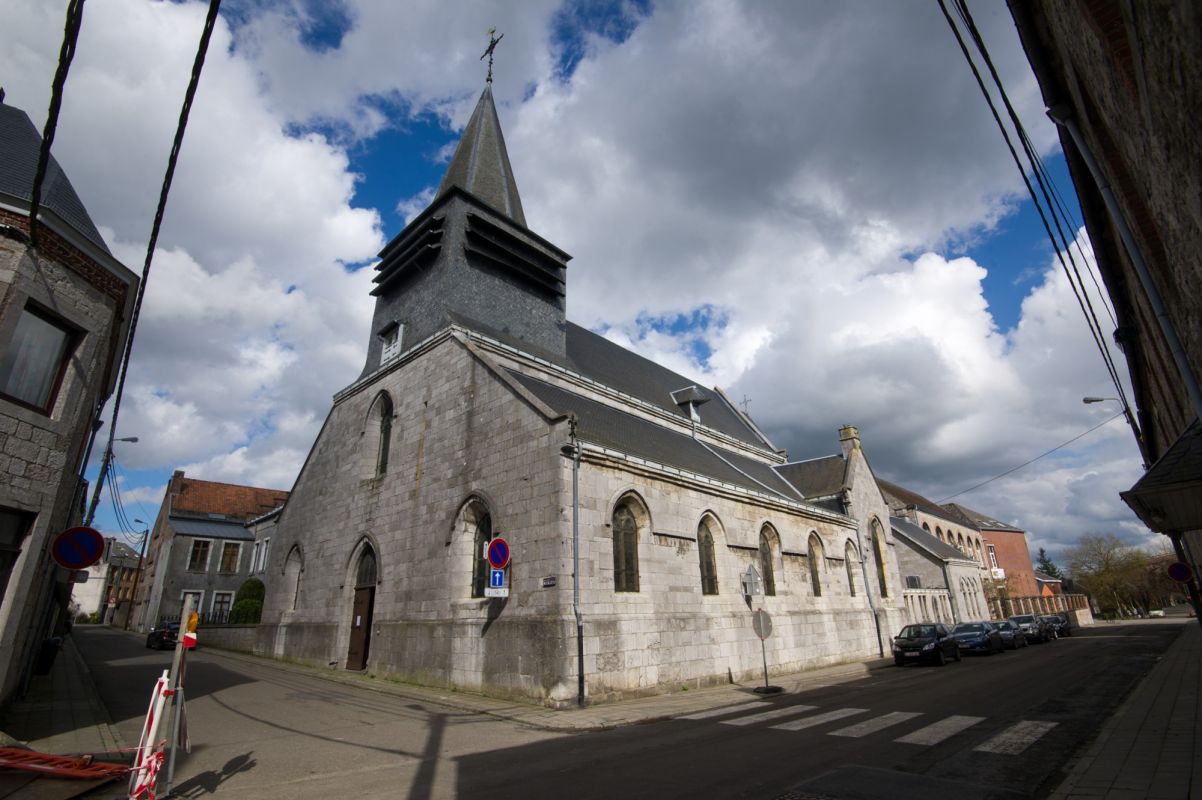
The church is listed classically under the patronage of he who gave his name to the town: Philip. The building, which has undergone several alterations, is made up of three naves and five bays. Mainly due to the half-light it has an atmosphere of peace and devotion.
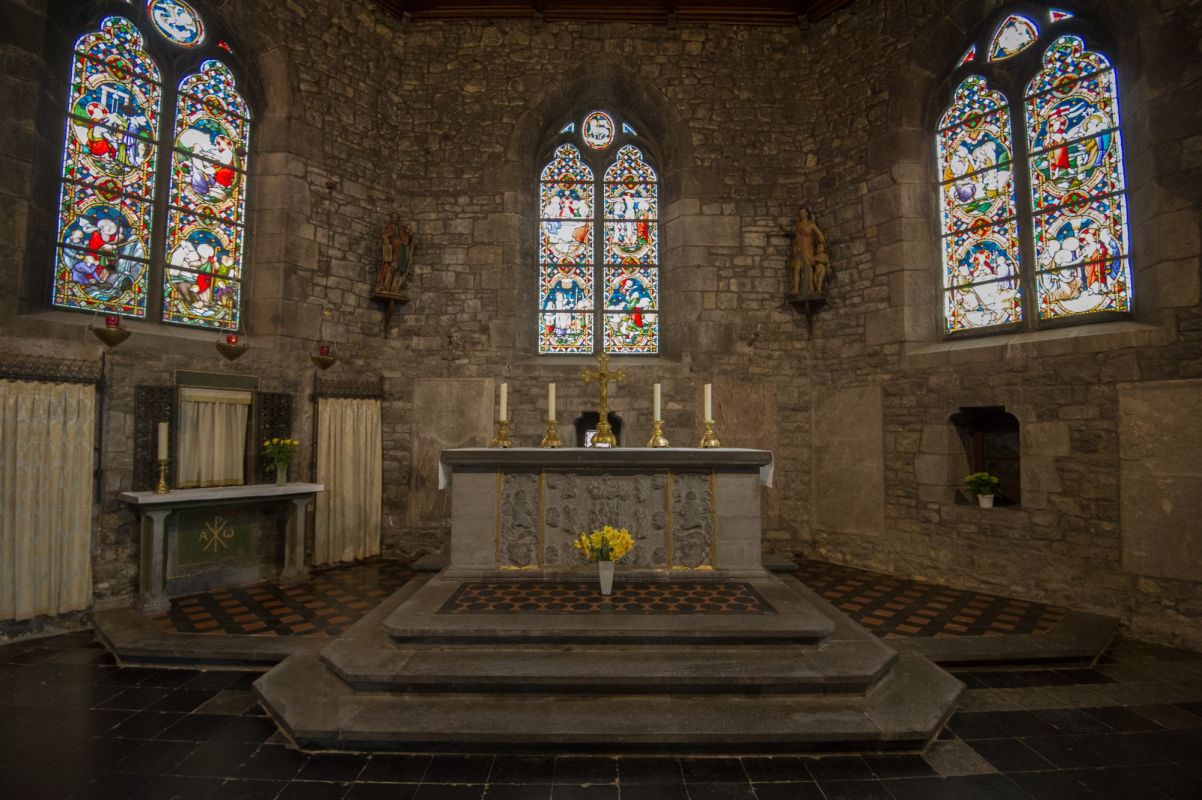
The decor is sober. The high altar and its bas-relief are particularly noteworthy. Above the altar in the left nave is the altarpiece of the Virgin Mary, a copy of a painting attributed to Giovanni Cimabue. There is another interesting painting on the left wall of the central nave: The apparition of Mary to Saint Bernadin attributed to Gasper De Craeyer.
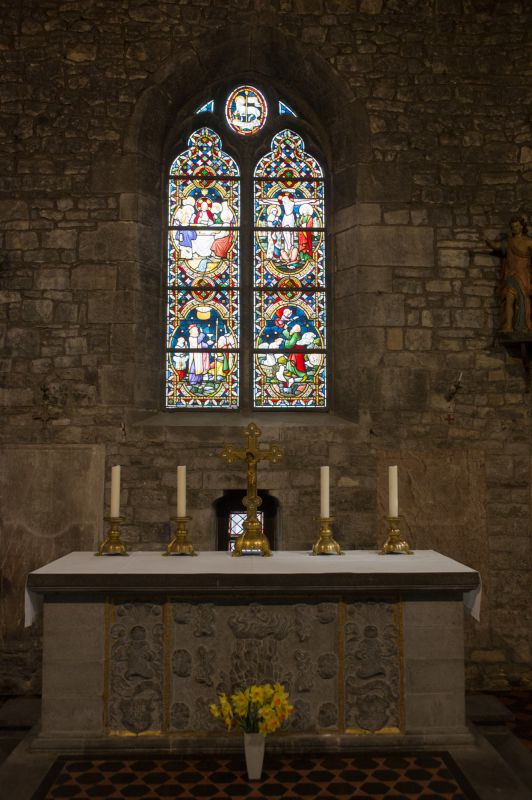
The stained glass windows depicting biblical scenes are the work of Camille Ganton.
Inside there are numerous tombstones of which that of Martin Colbert, killed at the battle of Walcourt, the son of the great Colbert , Louis XIV’s minister. It’s in the wall of the right nave.
KIKIRPA : Photo-library online

Photos


Remarkable elements
The church
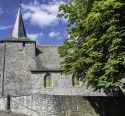
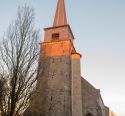
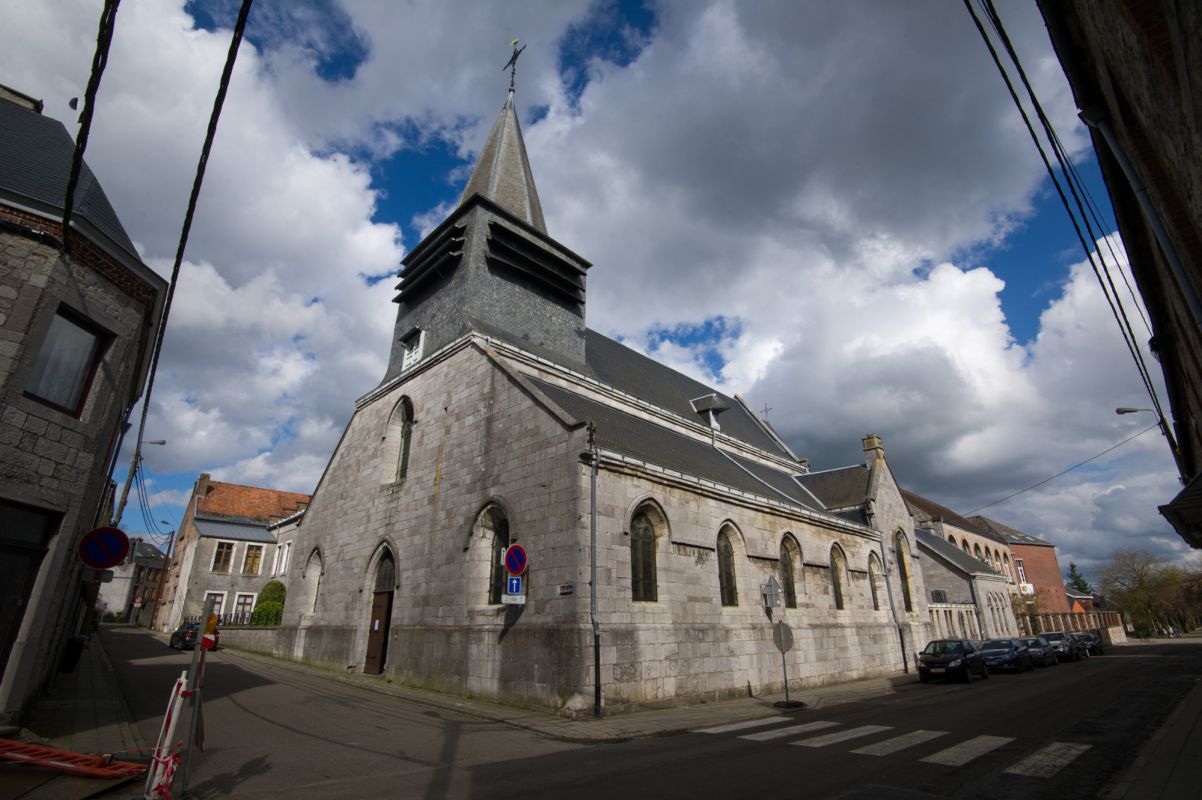
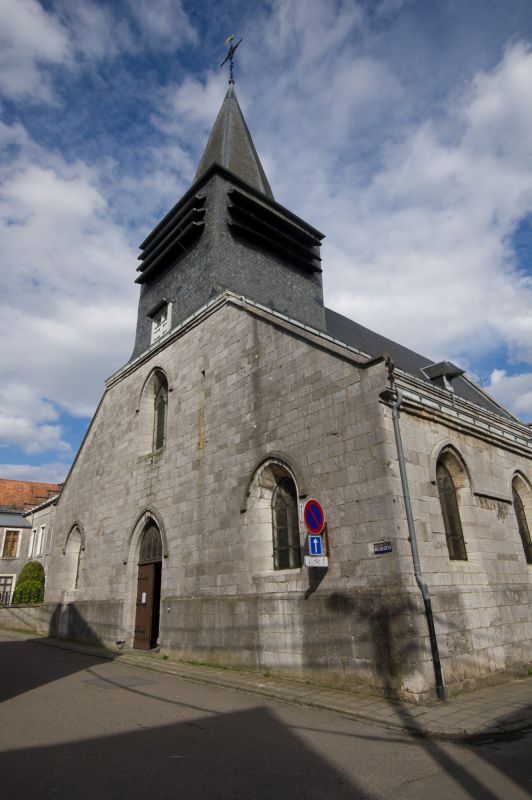
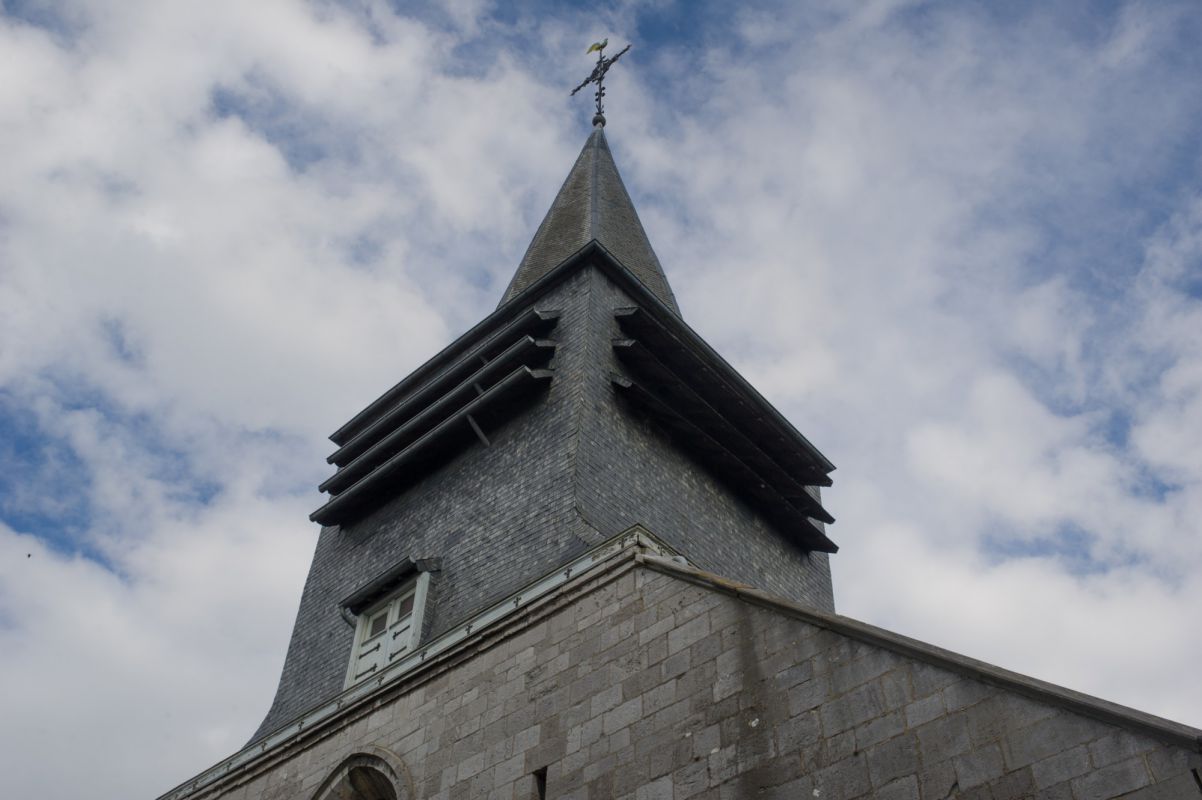
This low, solid church has a short tower designed to avoid cannon fire. Long used as a military chapel for the garrison (1556), it is built of limestone with chamfered bases, three naves and five bays. Two thick columns, each bearing stones with Latin inscriptions, support the 1598 tower. Above is a ribbed masonry vault. The interior has changed over time, with the last major redesign in 1906.
The main altar
It is a gift from Mr. notary Eugène Gérard, mayor of Philippeville from 1911 to 1924. On the front of the altar is a bas-relief representing seven heads blowing wind on a flaming rock whose foot is immersed in water. Coats of arms are placed on both sides. They are those of Lazarus de Schwendi, first governor of Philippeville in 1556.
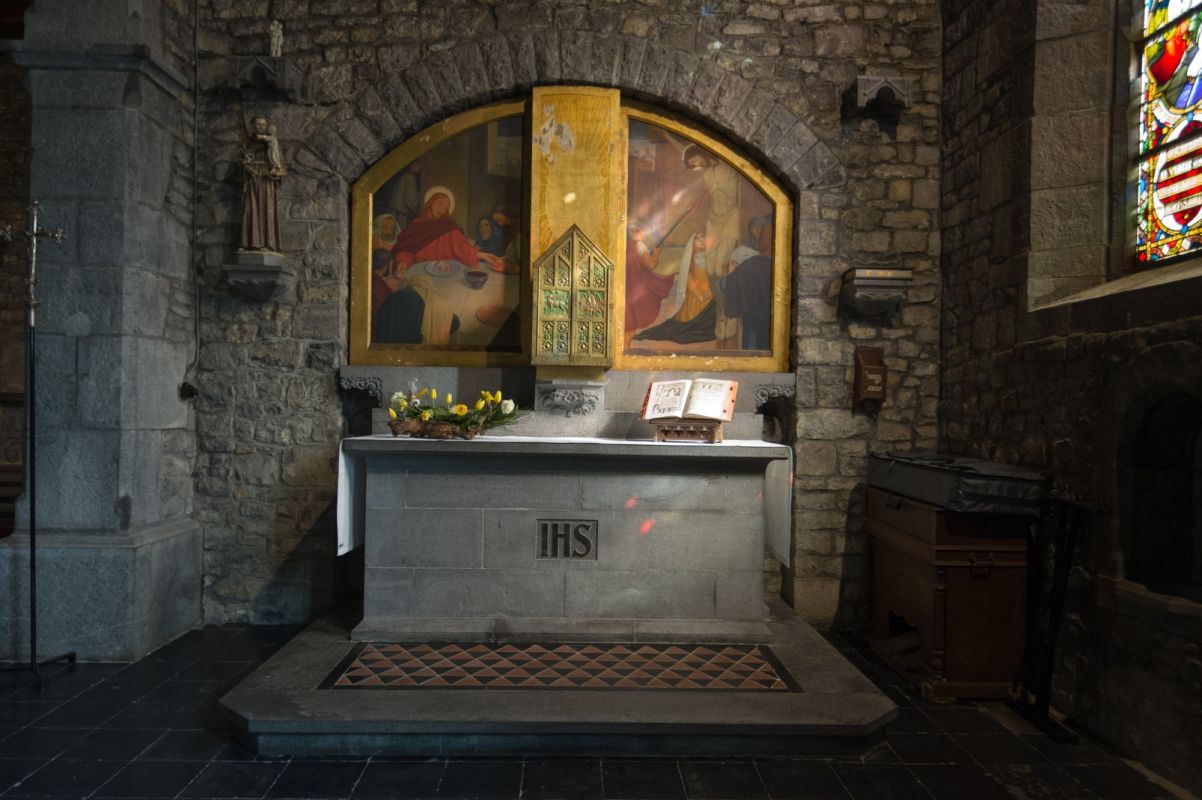
The altars of the two side aisles
In the left aisle, on the altar, there is an altarpiece representing Our Lady carrying the Child Jesus. This painting, a copy of a work attributed to Giovanni Cimabue, was donated by the vicar general Benoît Charlier, a child of Philippeville. In the right aisle above the altar is a painting by J.Fallois from Maredsos. To the left it represents the Last Supper, and to the right the Crucified Christ.

The stained glass windows
All stained glass windows were created by Camille Ganton (1879–1946), a Ghent painter glazier known for his signature ‘Ganton Defoin and a little bear.’ The choir windows depict Old and New Testament scenes and the four evangelists. Other windows show Jesus’ birth, the Holy Family, Joseph’s death, Christ’s final moments, Saints Peter, Paul, Michael, John the Baptist, and Christ with Mary and Philippus.
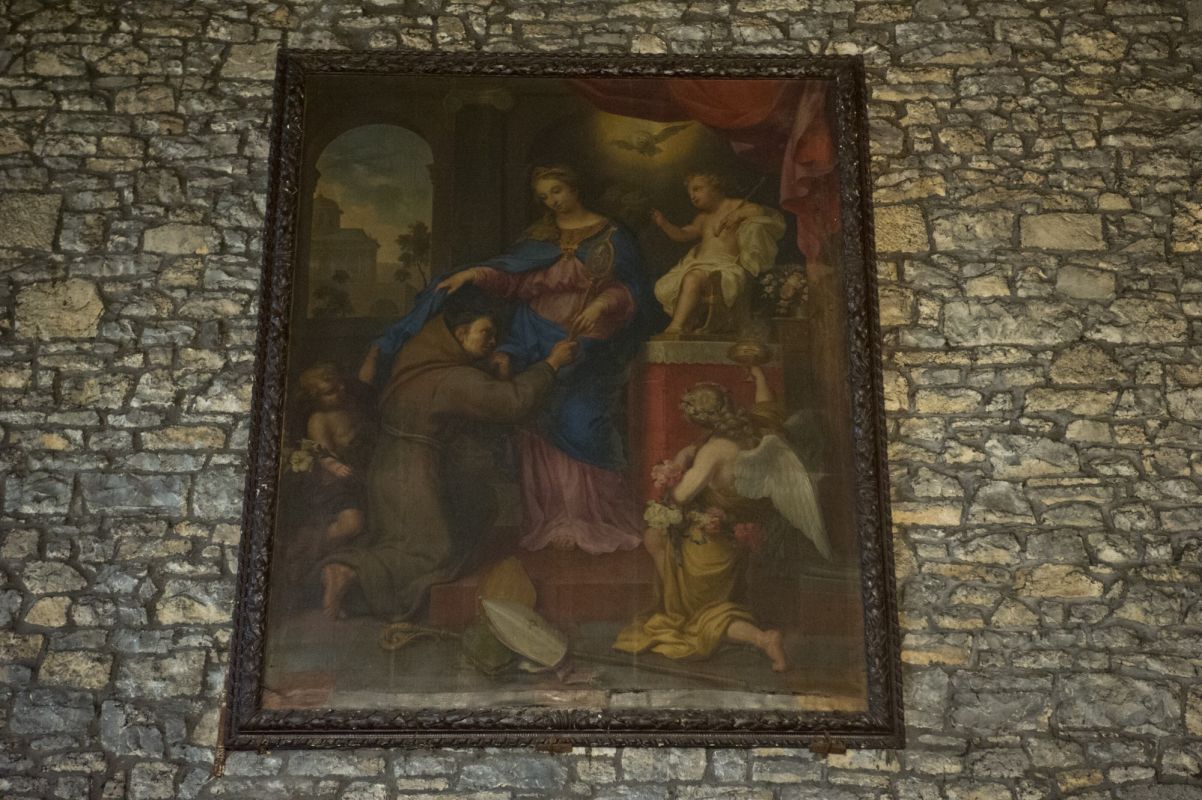
The 3 paintings
The painting on the left wall of the nave shows the apparition of Mary to Bernardus van Siënna. It is a work by Gaspard de Crayer and was restored in 1888 by Henry Le Roy.
The two canvases on the wall opposite the altar, of which the artists are unknown, show, one, the Mystical Marriage of St. Catherine of Siënna, the other a scene of the Nativity.
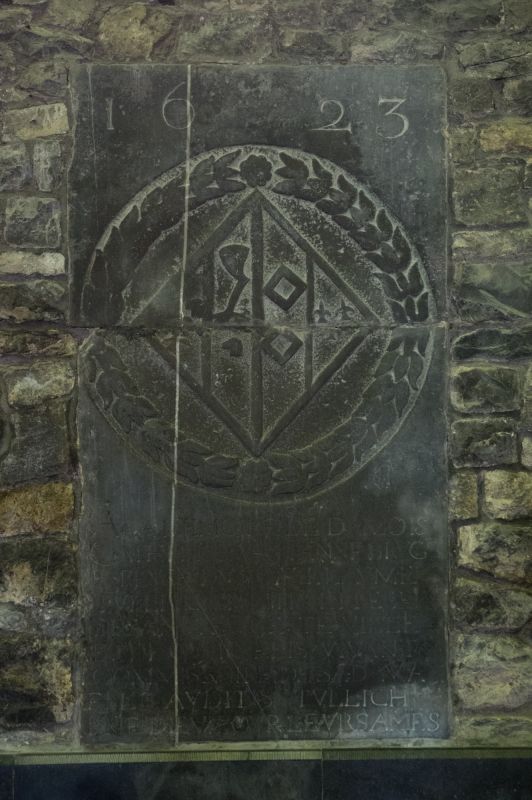
The tombstones
34 tombstones are embedded in the church wall or in the floor. Some were damaged during the period of the Revolution to remove any trace of the kingdom. One of these stones (in the right aisle) refers to the death of Antoine Martin Colbert, son of Jean-Baptiste Colbert, Minister of Louis XIV, who died in the military hospital at Philippeville after having been hurt during the Battle of Walcourt.