Saint Nicholas
Hameau de Marchipont
59990 Rombies-et-Marchipont
Church | 1718 | Baroque, Neoromanesque | Catholic Church


Map
Opening hours
01 July - 31 July
Mon -
Tue -
Wed -
Thu -
Fri 14.30 - 17.00
Sat 14.30 - 17.00
Sun -
23 August - 21 September
Mon -
Tue -
Wed -
Thu -
Fri 14.30 - 17.00
Sat 14.30 - 17.00
Sun -
Guided tour
+33 6 15 67 44 35
Religious offices
Saturday 6.30 pm
Description
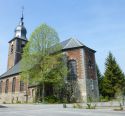
Marchipont was situated on the other side of the frontier, and was attached to the French villageof Rombies in 1806 by Napoleon 1st, in this way becoming a hamlet in the village with two churches - St. Remy in Rombies and St. Nicholas in Marchipont. As well as its natural environment the village has interesting civilian buildings : the offices of the old Customs post ; 18th and 19th century farms, and a watermill dating back to 1779, with its mill stones and mechanism, and classified as a Historical Monument in 1992.
There are numerous chapels along the country lanes of the village which bear witness to the Compostelle pilgrimage which passes this way ; the church of St. Nicolas in the hamlet of Marchipont was one of the halts.
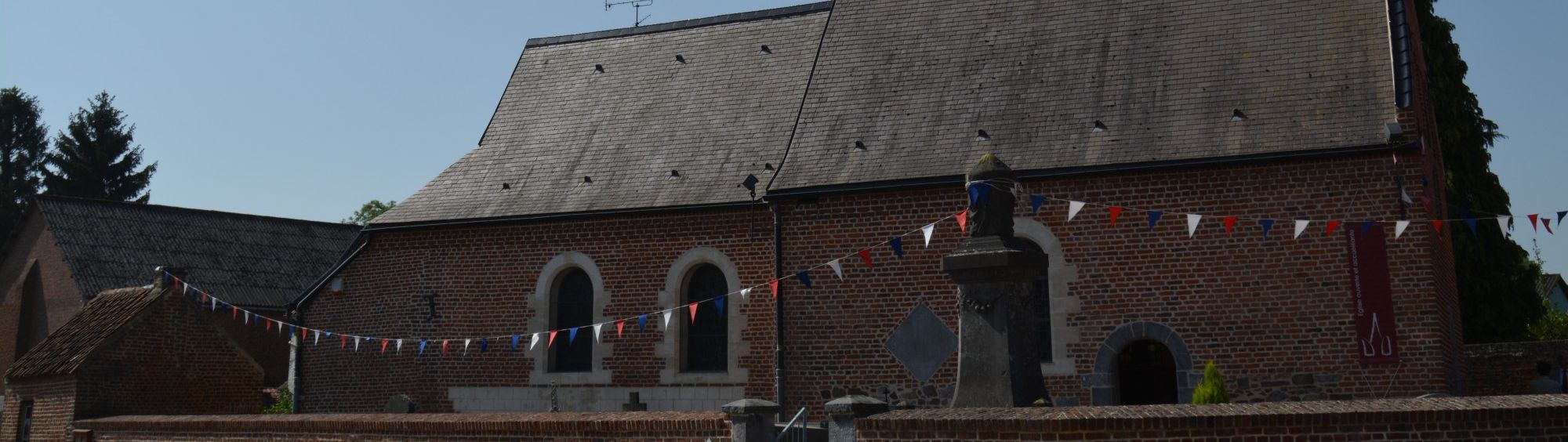
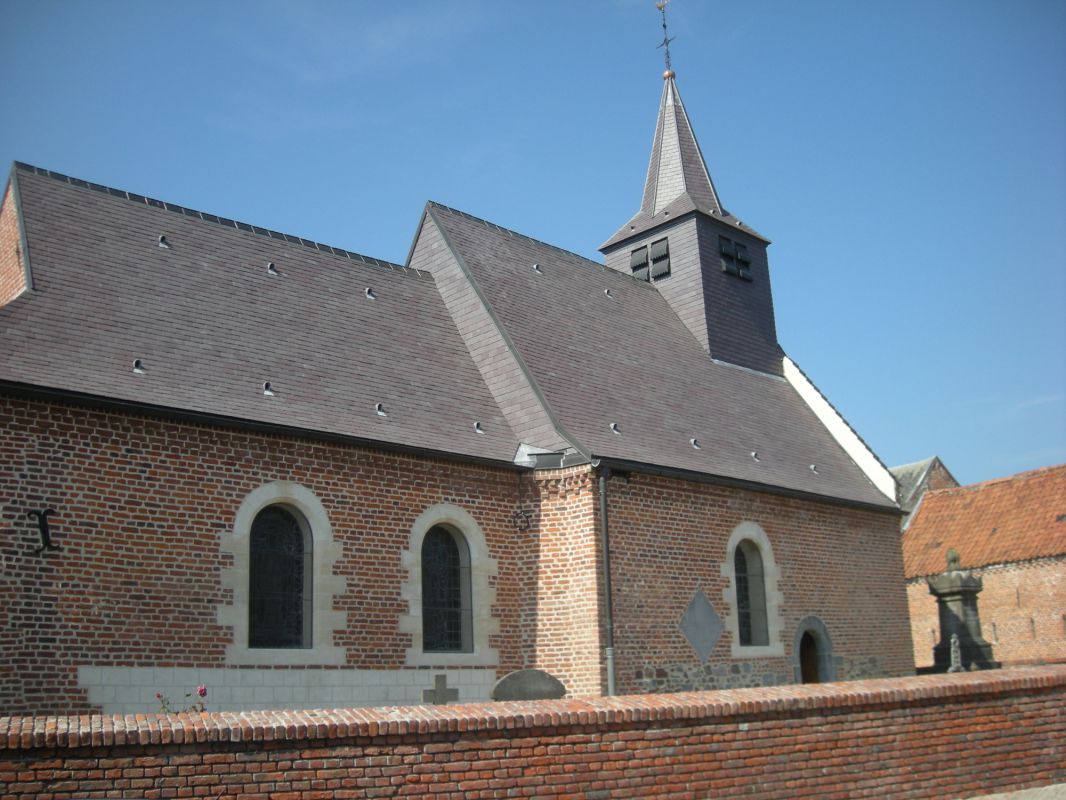
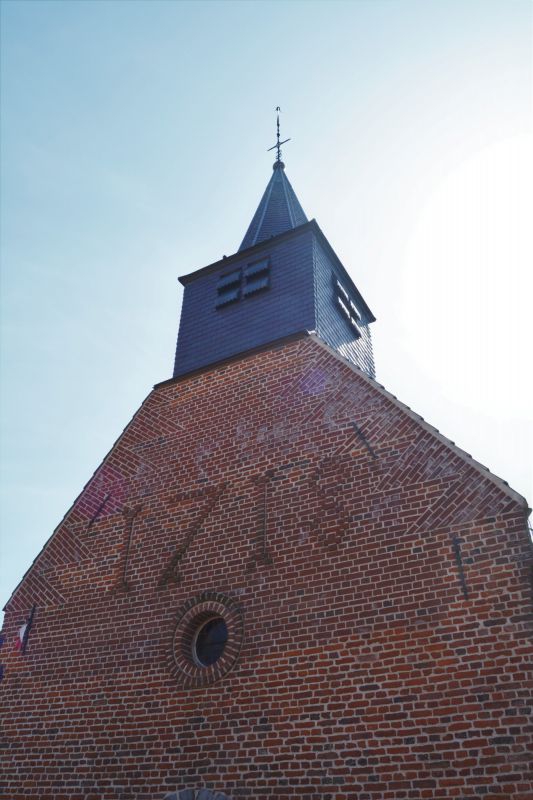
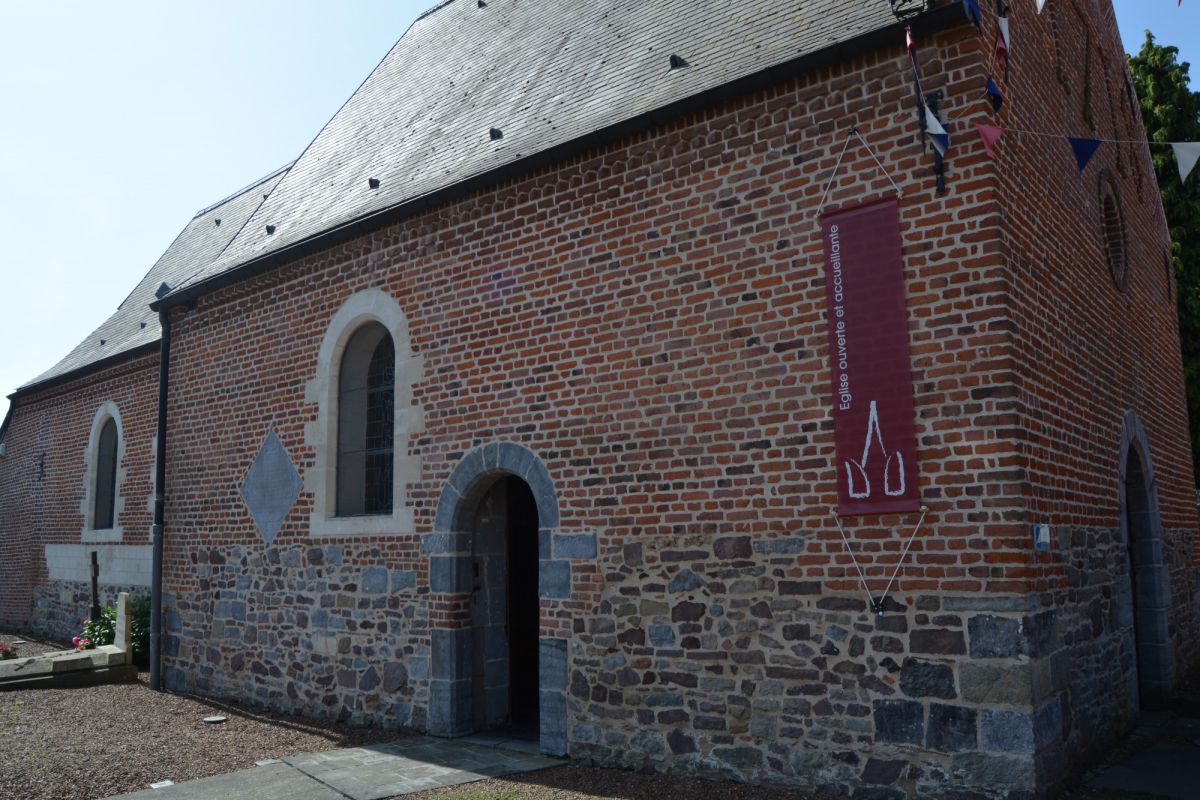
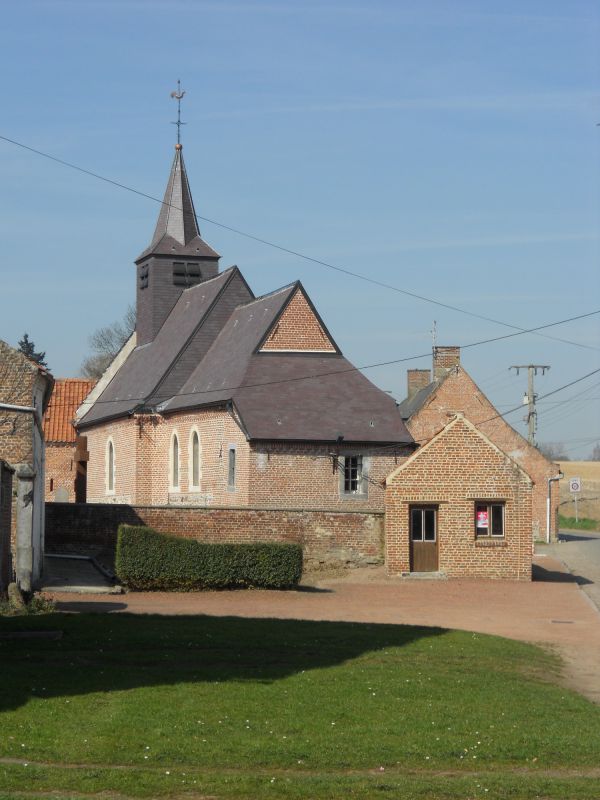
This church, destroyed and rebuilt over the centuries due to conflicts between France and the Low Countries is mentionned as early as the 13th century, but the present church of red brick was rebuilt again in 1718, as can be seen in the inscription on the facade and a stone sealed in the north wall.
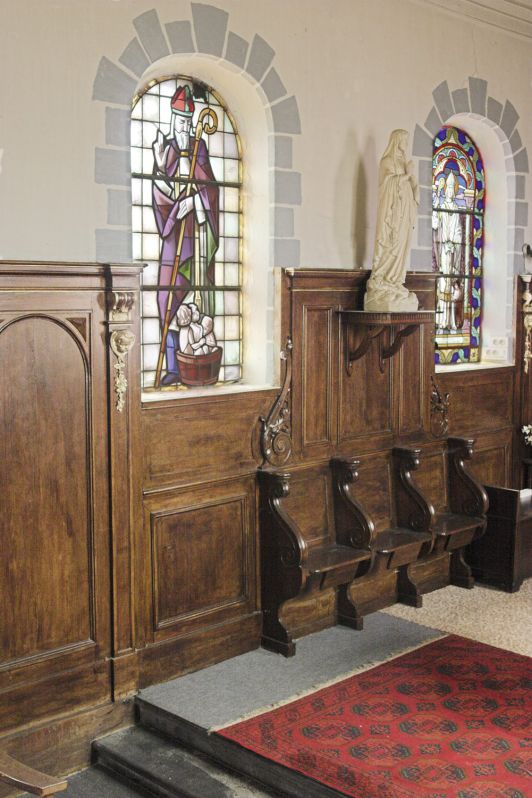
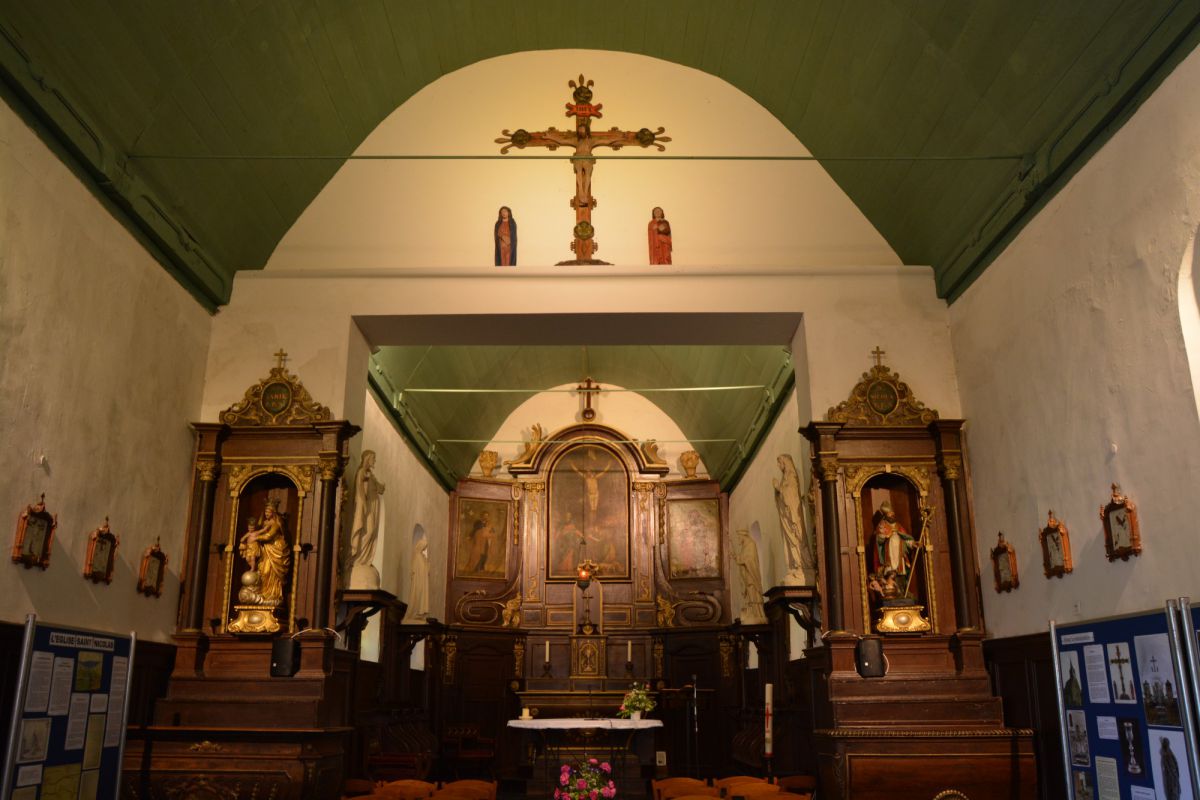
Recently restored with the help of the local historical association CHARM, the church has a particular atmosphere due to its architecture and the richness of its 18th century furnishings.

Photos

Remarkable elements
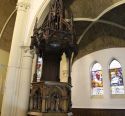
The pulpit
Also known as the pulpit of truth, the pulpit was used by the priest to preach. Many disappeared during the liturgical reforms of the 1960s and 1970s, but the one in Rombies has remained intact. Dating from the 18th century, the front of the pulpit features the Good Shepherd, symbolising Christ the Saviour, a fairly rare representation compared to Christ the Teacher surrounded by the evangelists.
Christ on the cross
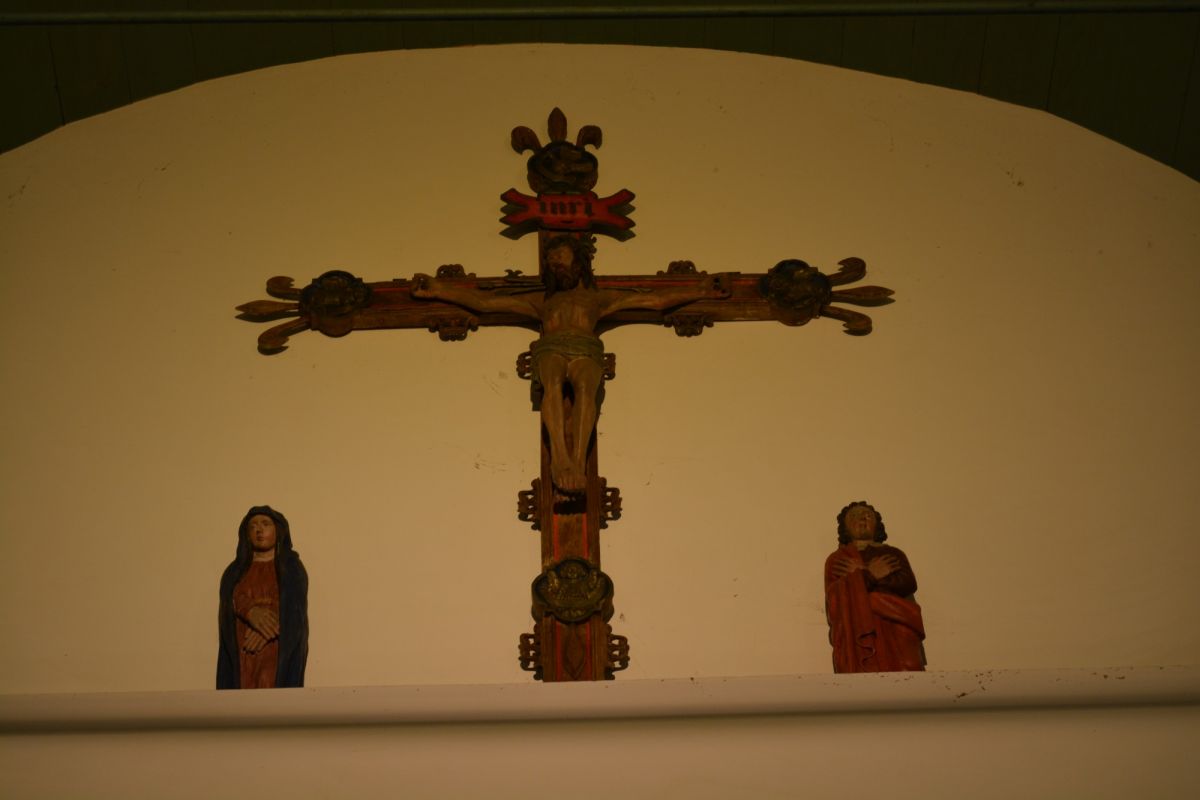
Hanging high above the entrance to the choir, this beautiful statue is typical of 16th-century regional sculpture. There are still many such statues in the Valenciennes and Avesnes regions. One must imagine it as it was originally, painted in bright colours.
The Descent from the Cross
The painting at the back of the choir depicts Christ being taken down from the cross. It was painted in the 19th century and is a copy of a work by the Antwerp painter Peter Paul Rubens.
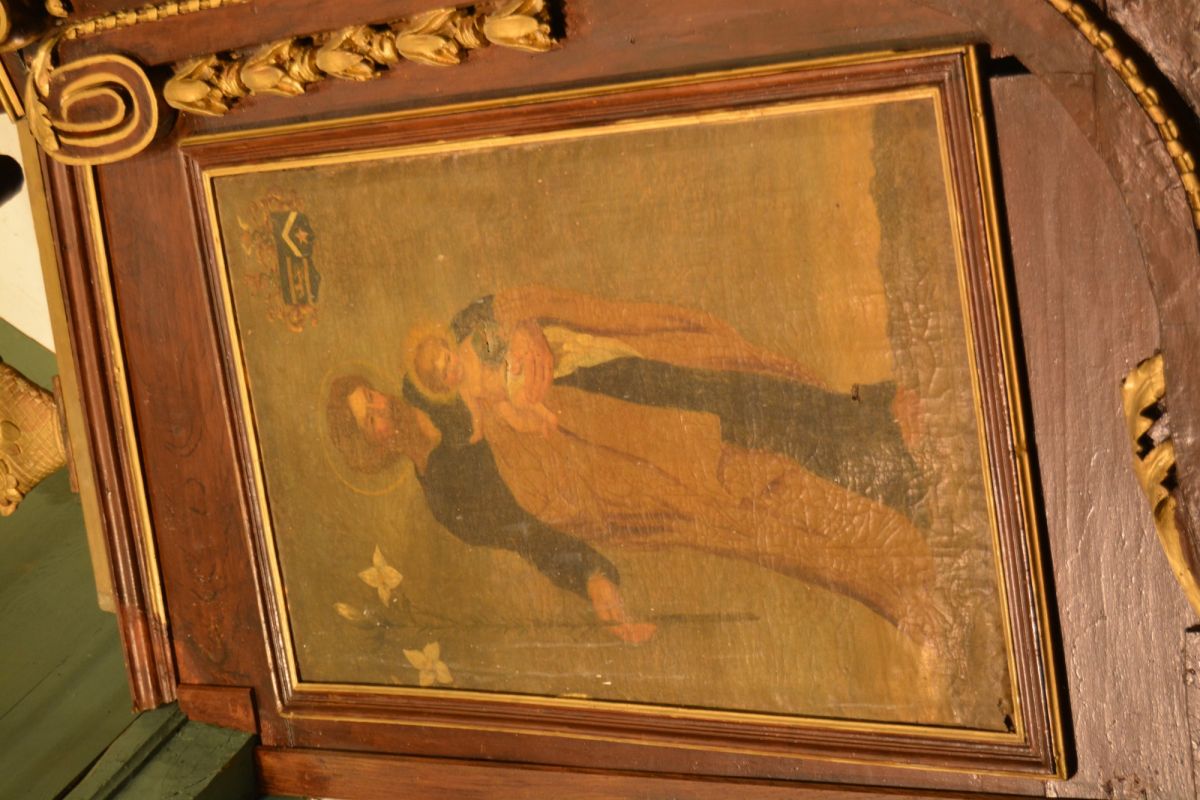
The side altarpieces
At the end of the left aisle, as in all churches in the region, there is an altar dedicated to the Virgin Mary. It is decorated with a 19th-century painting depicting her ascending to heaven, inspired by the Spanish painter Esteban Murillo.
On the other side, the altar is dedicated to Saint Rémy, patron saint of the church, who is seen baptising Clovis, King of the Franks, in the year 496.

The altars in the side aisles
In the centre of the side aisles are two altars dedicated to the Sacred Heart of Jesus and Saint Thérèse of the Child Jesus, devotions that remain very popular today. What makes Rombies unique are these altars from the 1930s, remarkable examples of Art Deco. Long disparaged, this style has now been rehabilitated. Like the pulpit, they escaped the liturgical reform. Was this by chance or divine protection ?