Saint Martin
Place de Ghlin 28
7011 Ghlin (Mons)
Church | 1878 | Neogothic | Catholic Church


Map
Opening hours
01 January - 31 December
Mon 8.30 - 12.00
Tue 8.30 - 12.00
Wed 8.30 - 12.00
Thu 8.30 - 12.00
Fri 8.30 - 12.00
Sat 8.30 - 12.00
Sun 8.30 - 12.00
Religious offices
Description
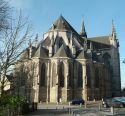
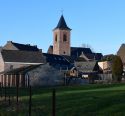
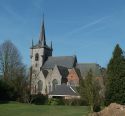
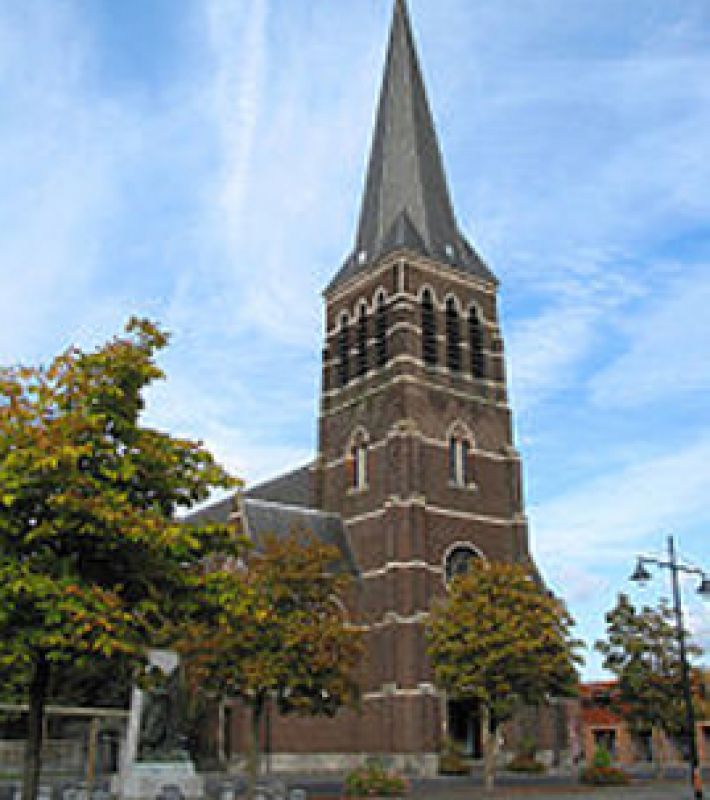
The church of Saint Martin was built in 1877-1878, replacing an old one that had become too small. The architect was Guillaume Müller (1833-1907) from Roeulx. He was also the architect of several other churches in the region (Saint Nicholas in Le Roeulx, Saint Martin in Trivières, Saint Michael in Graty).
The church was restored in 1959-1960 and 2022-2023.
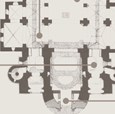
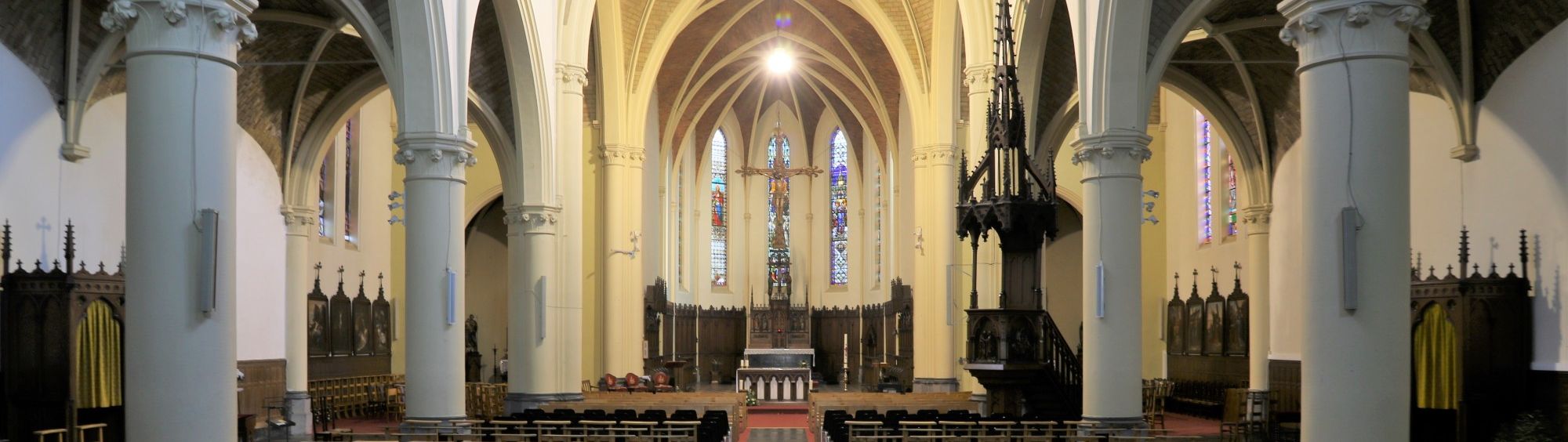
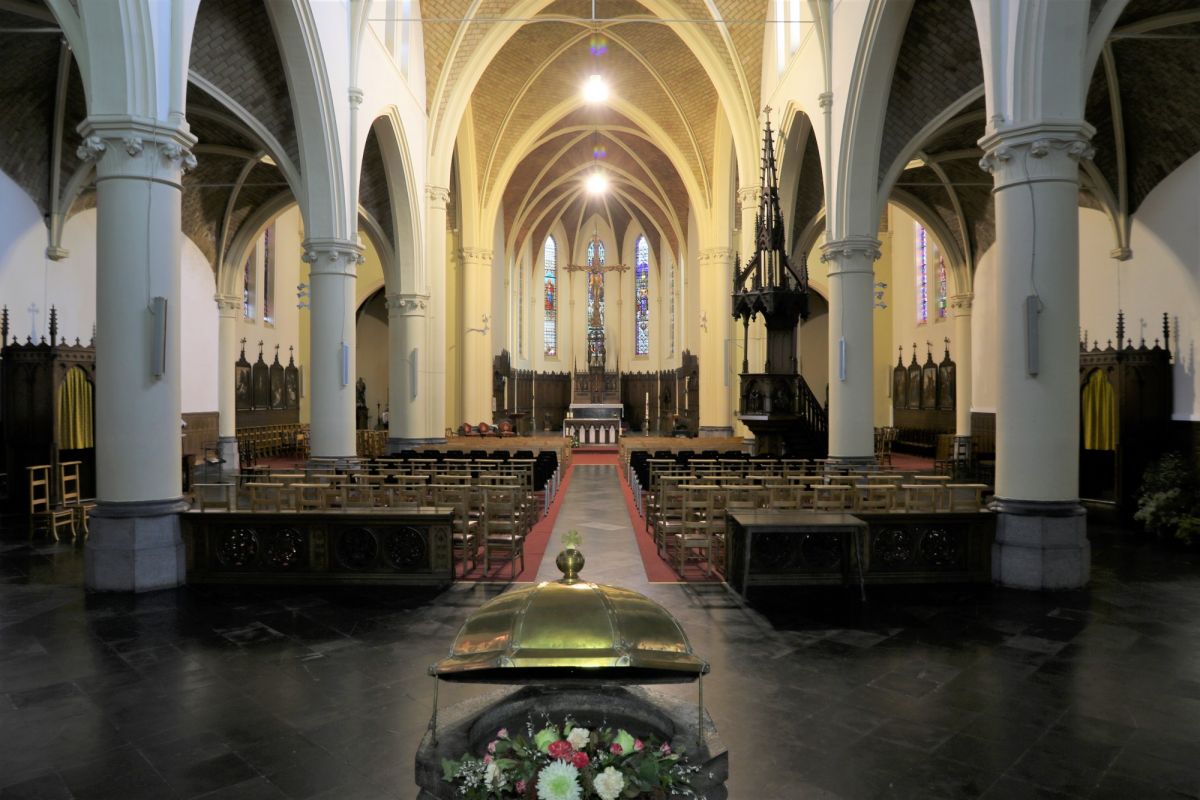
It is a neo-Gothic cross-shaped church built of brick and stone. It has a square tower on the south side, 30 metres high, topped by a 28-metre high spire; a triple nave of four bays, a transept and a choir with a five-sided chevet. The facing is made of bricks, with ashlars from the old church. Inside, the columns are made of hard French stone, known as Morley stone, with capitals with leafy hooks made of blue stone from Soignies and Ecaussinnes.
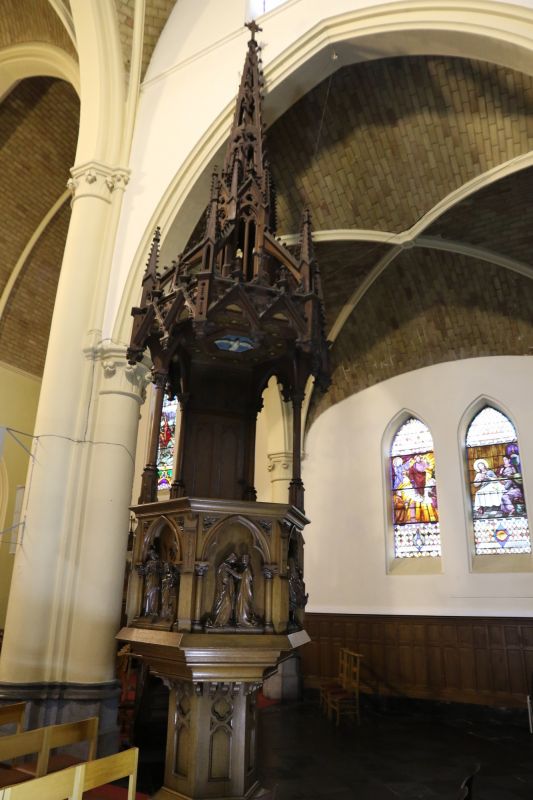
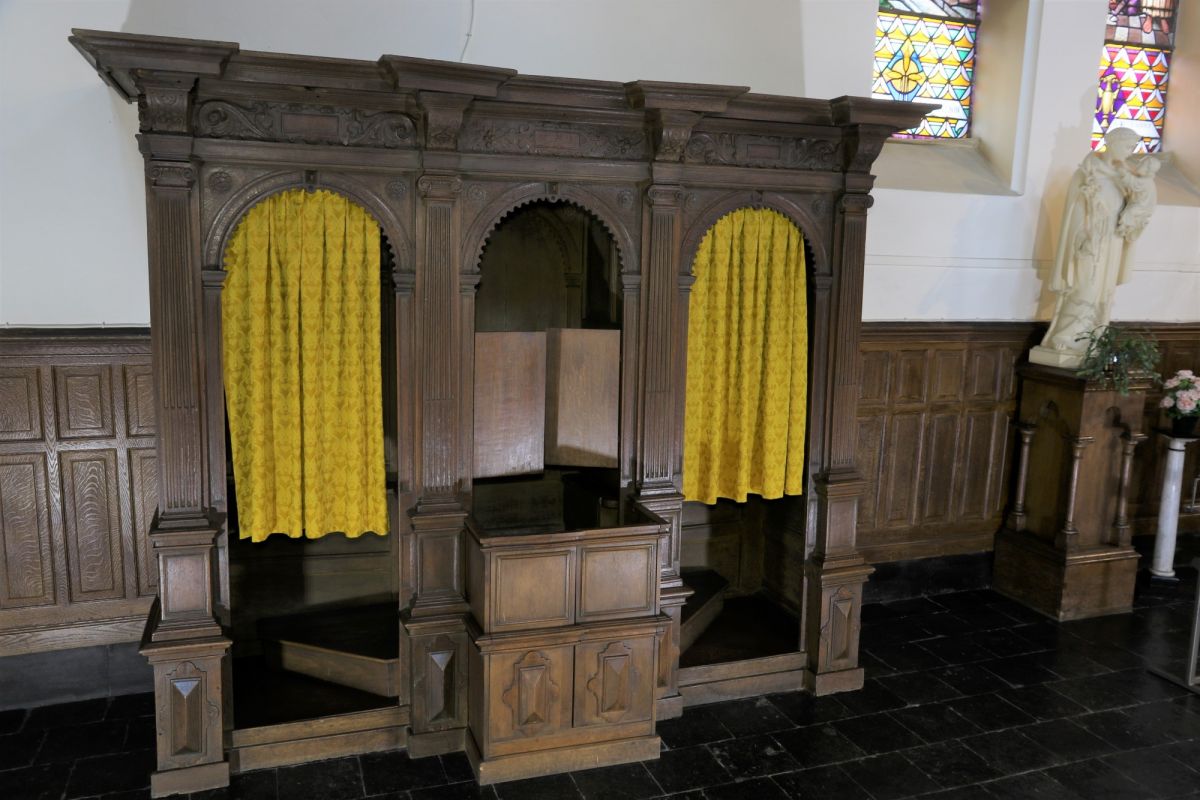
The church has remarkable neo-Gothic furniture: the high altar and the choir stalls, the side altars, the pulpit, two confessionals and the communion bench.
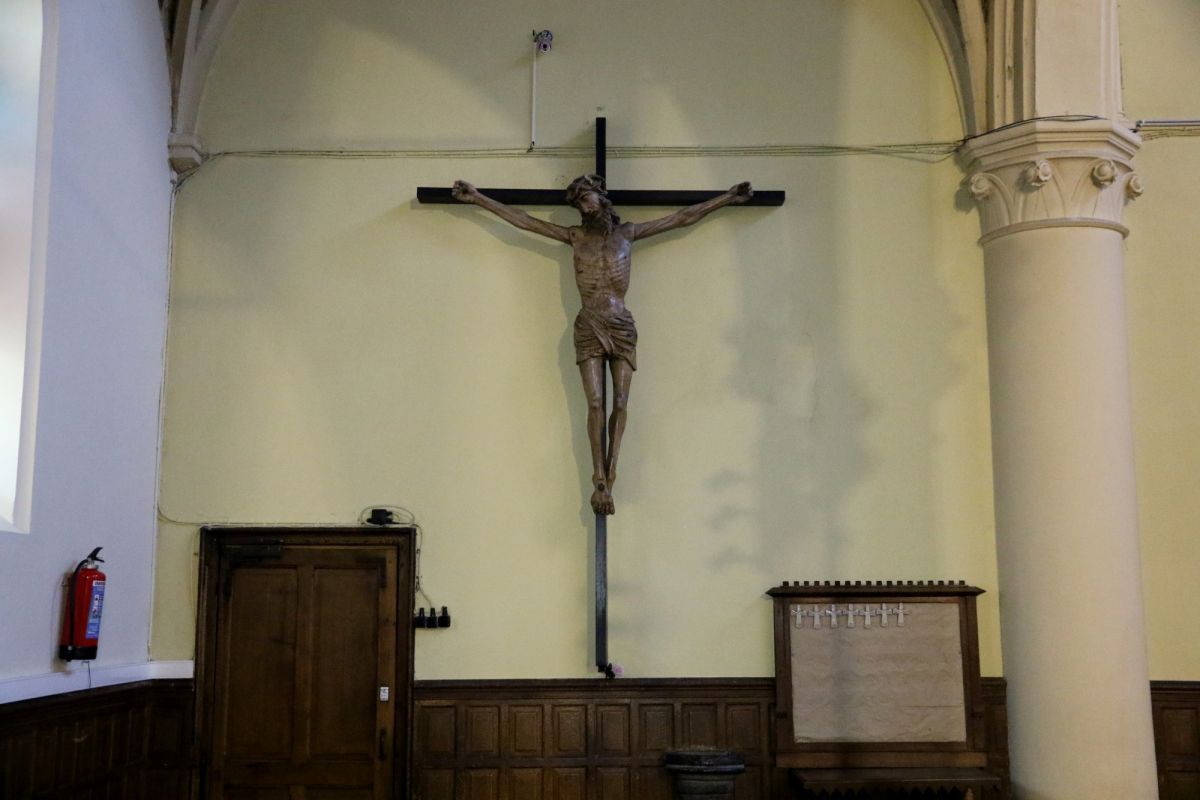
Several remarkable stained glass windows adorn the choir and the naves. Also noteworthy are the triumphal cross and the large Gothic cross from the old church, dating from the 15th century.
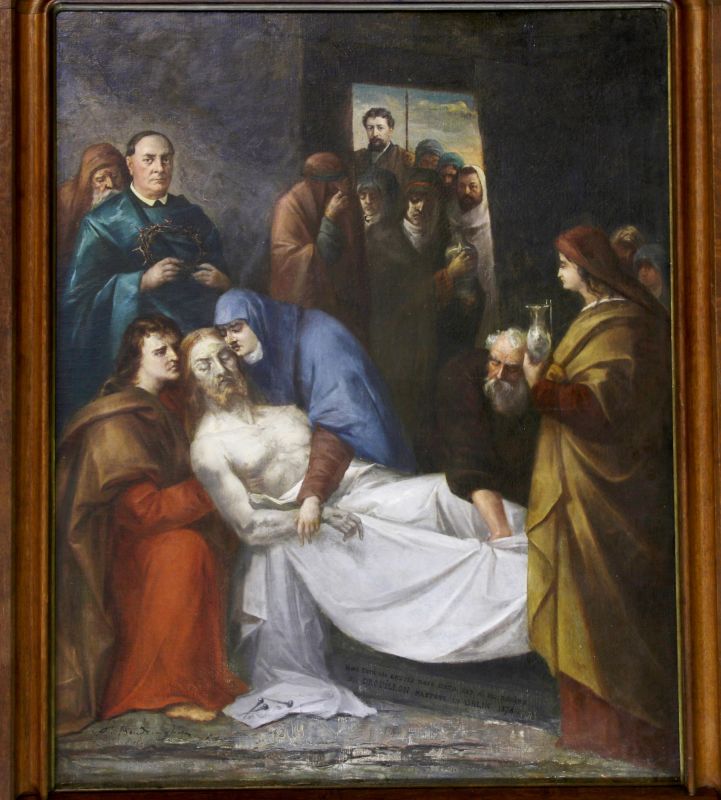
Other remarkable elements are the Way of the Cross, painted by Florimond Baudrenghien, and the baptismal font.
KIKIRPA : Photo-library online
Photos




Remarkable elements
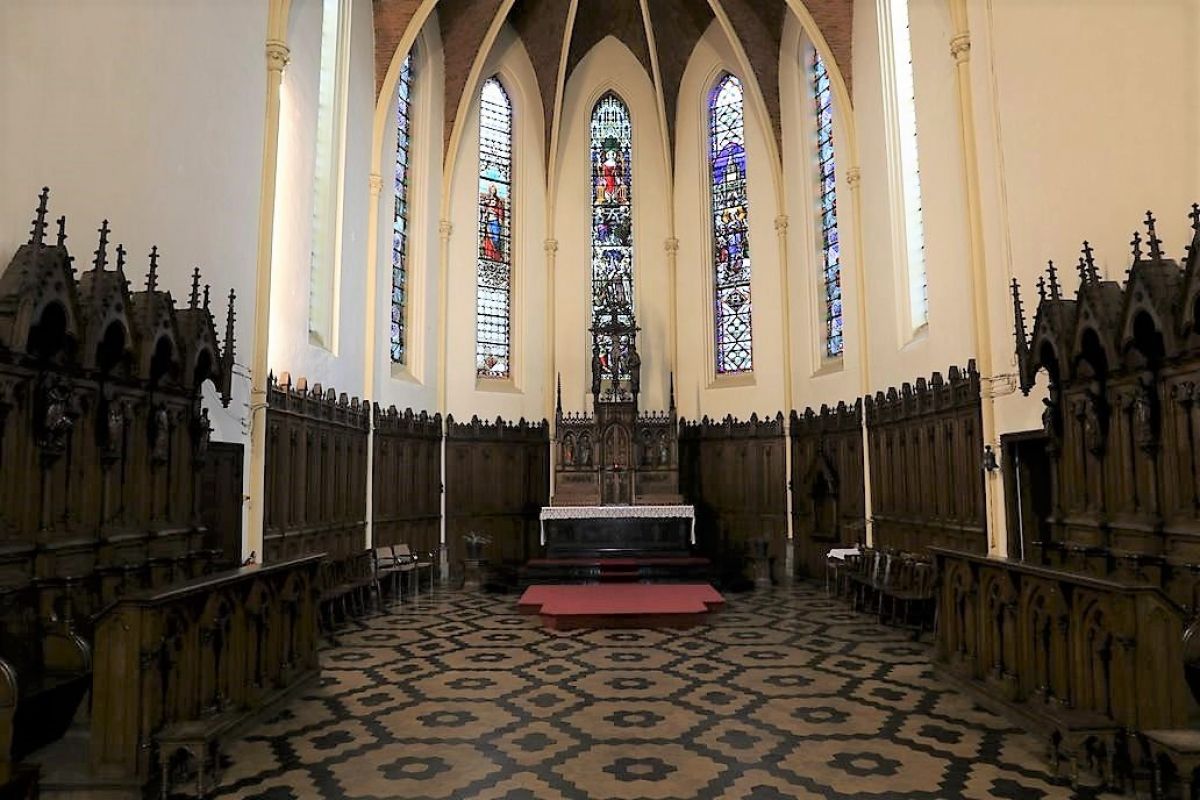
Neo-Gothic choir
The choir features neo-Gothic elements. The high altar, by the Saint-Luc Ghent workshop after Baron de Béthune’s designs, is black marble with gold highlights. The oak tabernacle and exposition throne show grapes and thuriferous angels, topped by a calvary with the de Croÿ and d’Ursel coats of arms. Polychrome statues depict the four evangelists. Two oak stalls with ten saint statues and sculpted oak wall panels complete the choir.
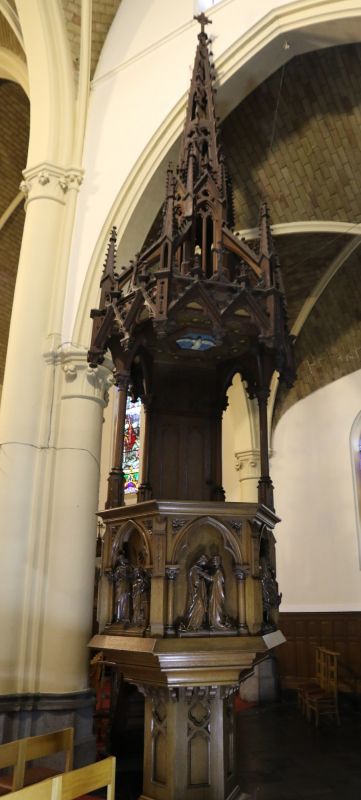
Neo-Gothic furniture
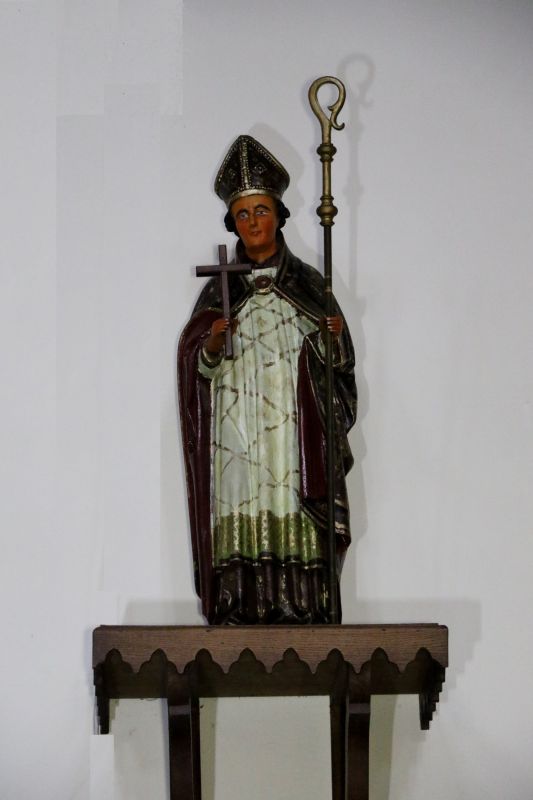
The side altars are dedicated to the Virgin of the Immaculate Conception and St Martin. The Virgin’s statue is signed Meyer et Cie, 1877. The oak pulpit, like the altars, was made by Sint-Lukas Ghent, with five high reliefs (Marriage, Annunciation, Visitation, Flight to Egypt, Coronation) and restored in 2020. Three oak confessionals by Joseph Maréchal (1884–1892) and the oak communion bench (1877–1887) with 12 medallions complete the ensemble.

Stained glass windows
The church has many stained glass windows. In the choir, five large windows from the 1880s depict Christ on the throne, Mary and Joseph, four saints presenting the church, and Pentecost; left, the Sacred Heart (Siraut arms), right, Mary slaying the dragon (Patoul arms). The left transept shows the Virgin’s life and Saint Teresa’s death (1930s, Art Nouveau). Above the entrance, a contemporary window by Bernard Tirtiaux (2015).

Stations of the Cross
Given by parish priest Drouillon, these paintings are by Florimond Baudrenghien (1840–1881) from Melles. His self-portrait appears in the 14th station alongside Curé Drouillon. The first two paintings date from 1877, the others from 1878; even-numbered signed and dated on the right, odd-numbered on the left. Canvases (124×86 cm) set in neo-Gothic oak frames (233×124 cm). Restored by Fernand Gommaerts and again in 2012 by Paul Duquesnoy.
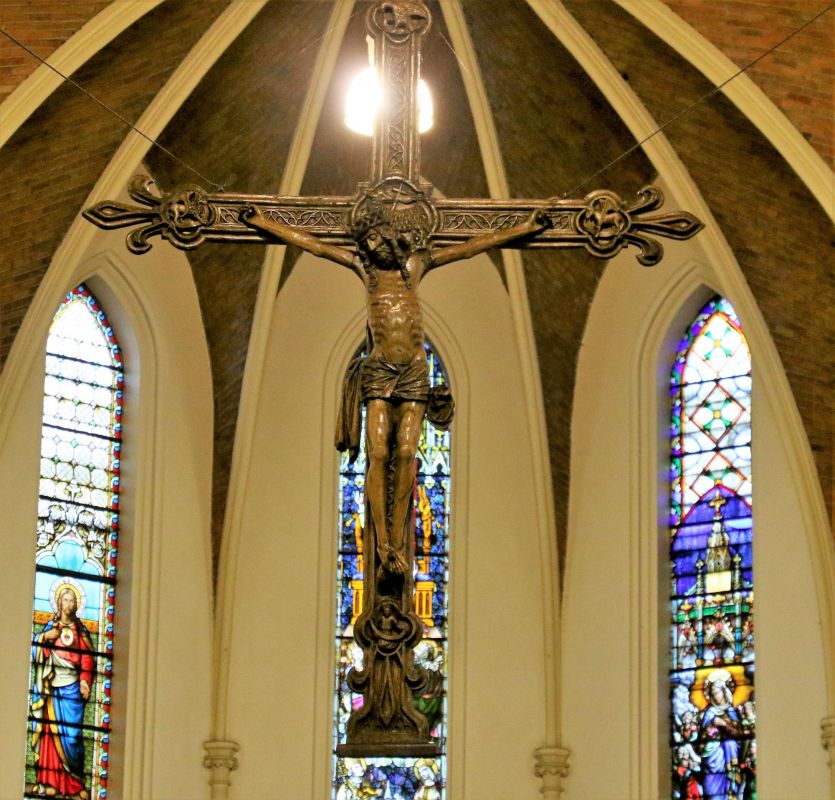
Triumphal cross
Unknown origin. Oak statue, Gothic style. It dates from the end of the 15th - beginning of the 16th century. It was restored in 1960 and hung in the front of the choir in 1968. The symbols of the four evangelists are represented at the ends of the cross.
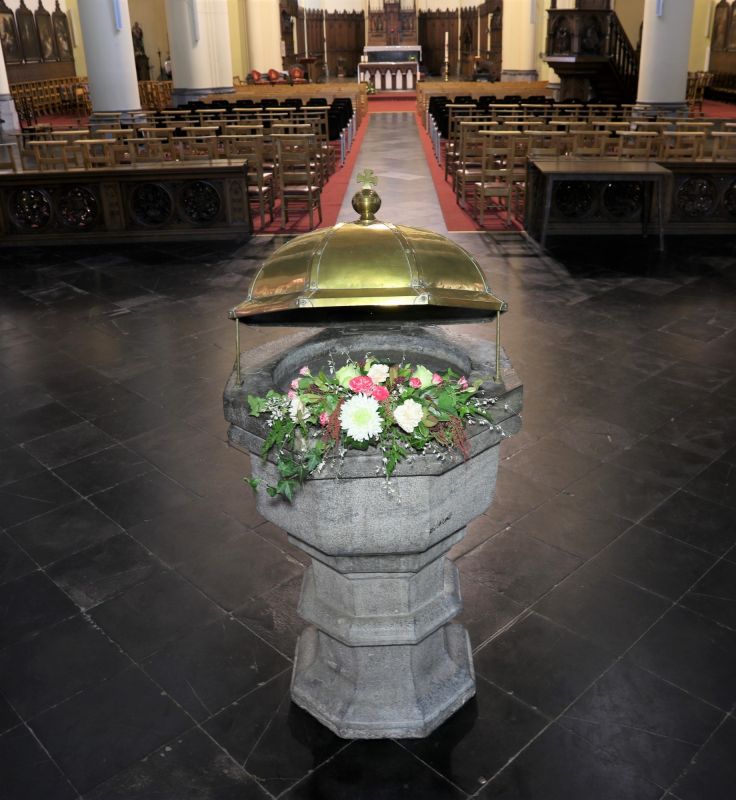
Baptismal font
From the old church. The base is made of bluestone and is in the 16th century Gothic style. The lid is a brassware item donated in 1925 by Baron Jacques Bonaert and his wife, Jeanne de Pierpont. The lid bears the coats of arms of the two families.