Saint Martin
Rue de l'Eglise
59216 Beugnies
Church | 1879 | Neoromanesque | Catholic Church


Map
Opening hours
Guided tour
Religious offices
one Saturday a month :
Summer 6 pm
Winter 5 pm
Description
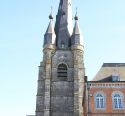
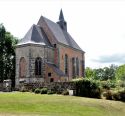
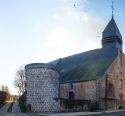
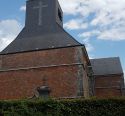
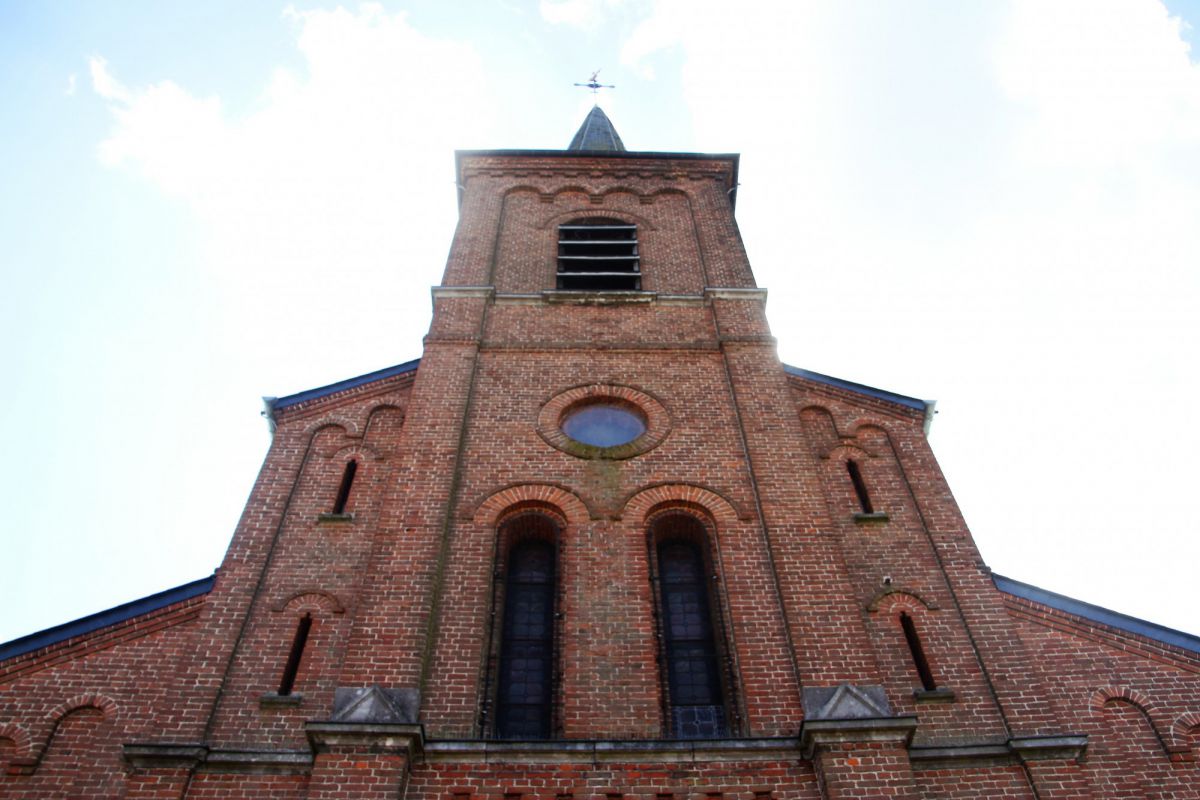
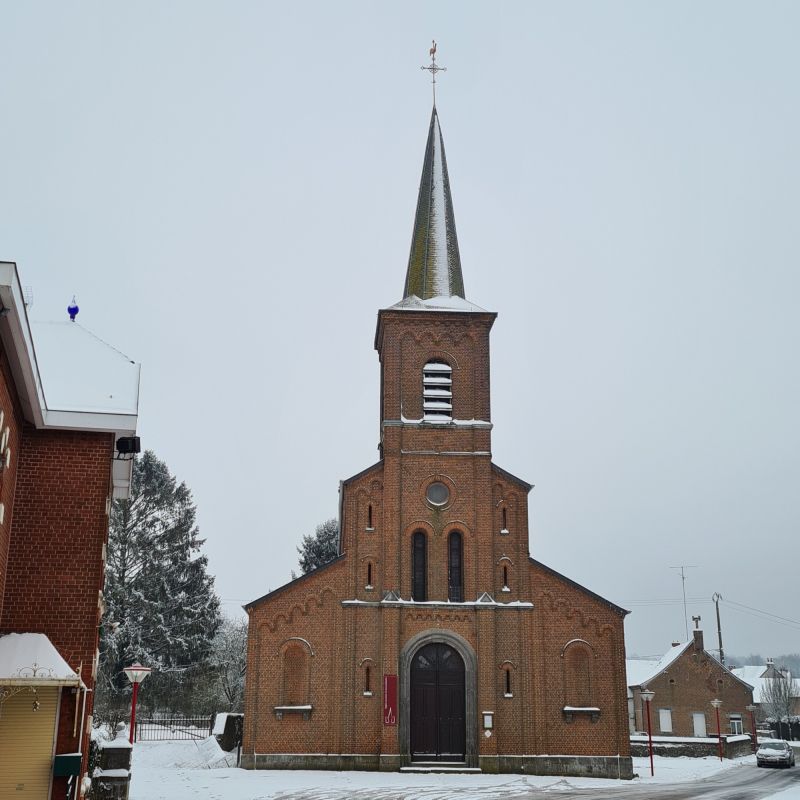
Built beside the road, the church of St.Martin, welcomes the visitor from the back of a large square which enables the whole of the building and the details of its brick masonry using the classical motives of Romanesque architecture to be seen.
Before entering the church, do not hesitate to make a detour through the village square beside the church and view the early 20th century dance pavilion, a rare, preserved popular inheritance.
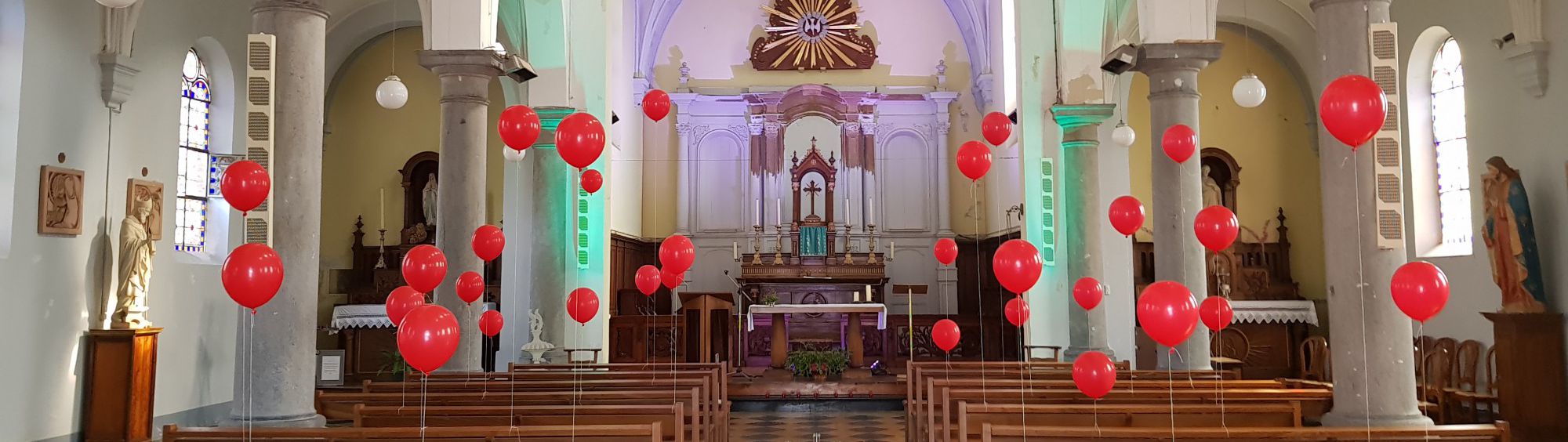
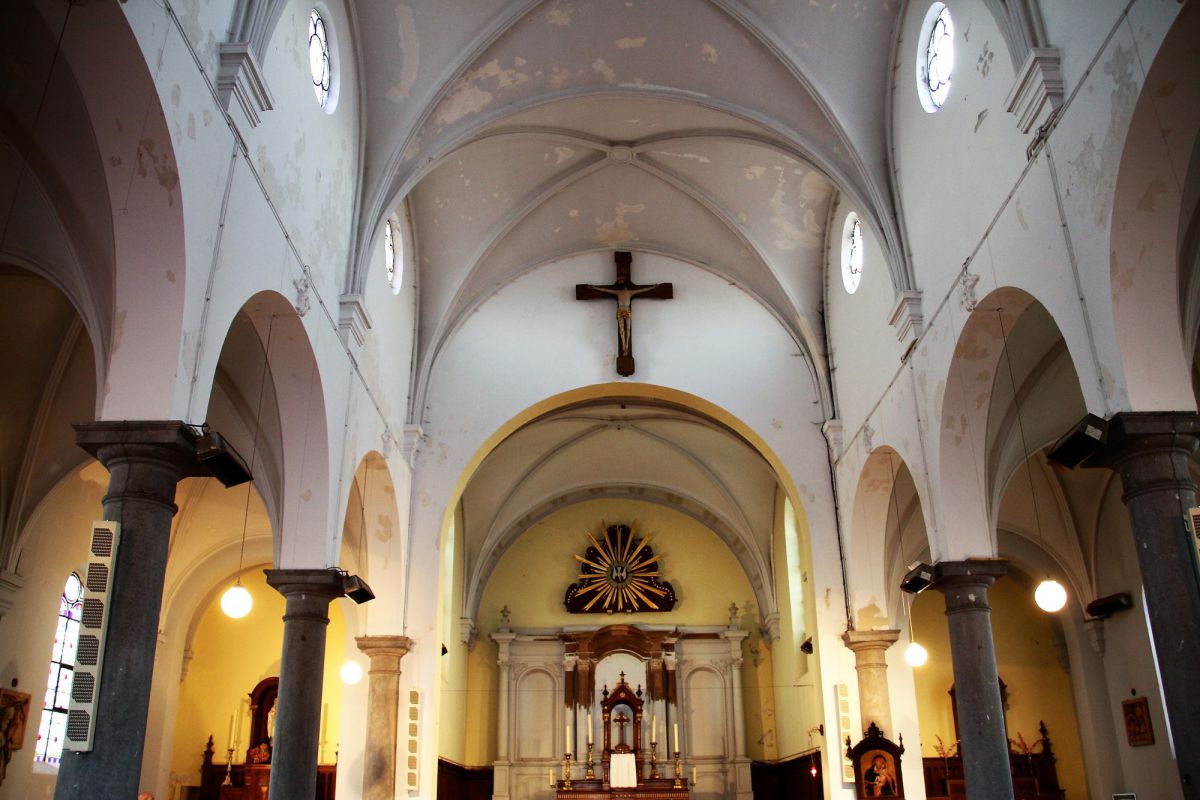
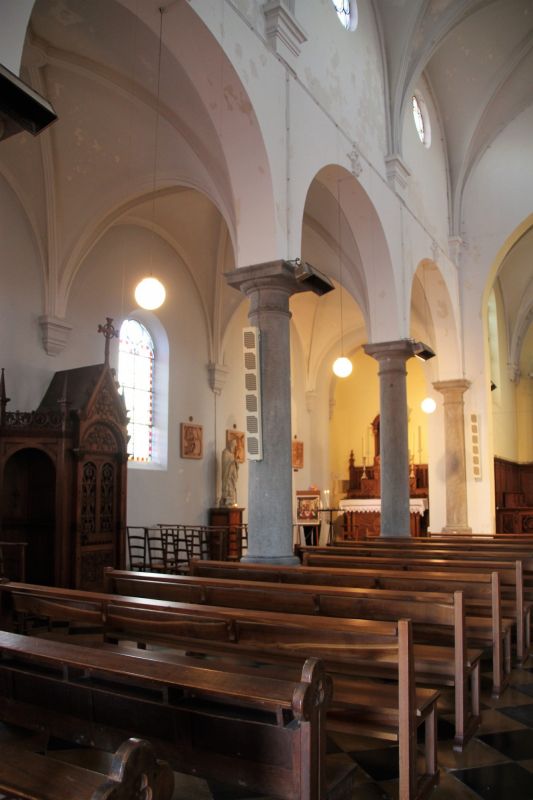
Within the church, the visitor is surprised by the luminosity which valorises the magnificent columns of Soignies stone with their Toscan capitals.
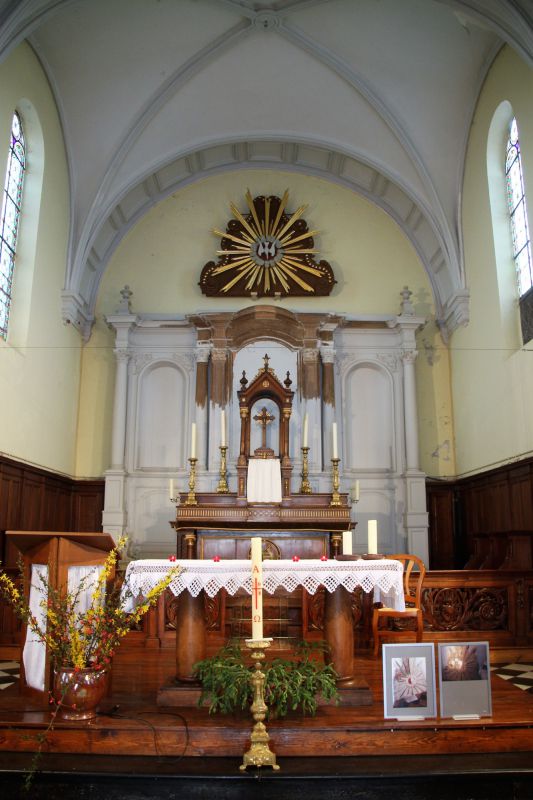
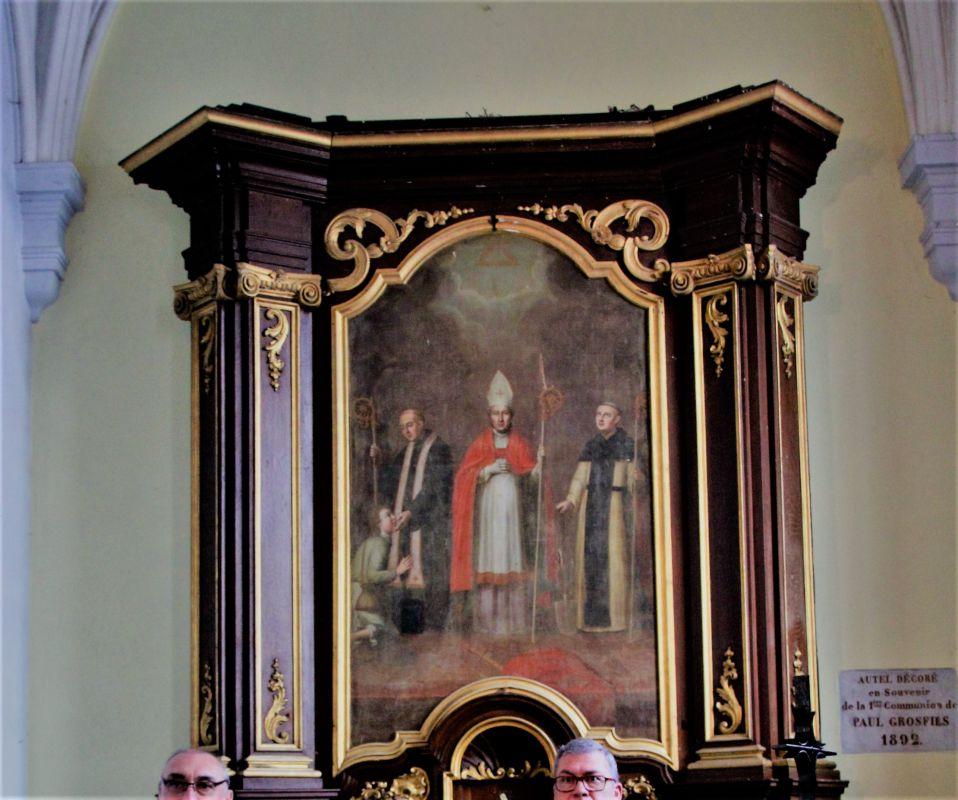
In the sanctuary is a 16th century reredos dominated by the dove of the Holy Spirit in glory. In one of the side chapels there is a curious painting of St. Martin with two priests, one of whom is St. Fiacre recognisable with his spade and patron saint of gardeners. The fine realisation of the doors of the confessional can also be remarked.
A neo- Romanesque 19th century church can be discovered behind its red-brick walls, always animated and alive, thanks to the association of St. Martin of Beugnies, who regularly propose exhibitions and activities.

Photos

Remarkable elements
The choir altarpiece
This is the most spectacular feature of the church. It is made of wood and dates from the 17th century. It is said to have come from the former abbey of Crespin, near Valenciennes. It had been repainted grey, which robbed it of all its character. In 2022 it was restored, and its original colours – faux marble and gilding – were reinstated.
Altarpiece of St Firmin
Two altarpieces flank the choir. The one on the left features a 19th-century painting depicting the Baptism of Christ. The one on the right contains a 17th-century work depicting Saint Martin, the church’s patron saint, flanked by Saint Benedict and Saint Marcou, reputed to cure scrofula. This painting bears witness to the spread of the cult of Saint Marcou, originally from the Cotentin region, as far as Hainaut and Germany.
The Stations of the Cross
This set of fourteen Stations of the Cross, carved in bas-relief, recounts the Passion of Christ. Created by Georges Serraz (1883–1964), a renowned sculptor of religious statuary, it demonstrates his craftsmanship and expressive style. The artist is also the creator of numerous monumental works in France, including the Christ figure in the Church of Christ the King in Wattrelos and a polychrome Way of the Cross in Côte-d’Or.

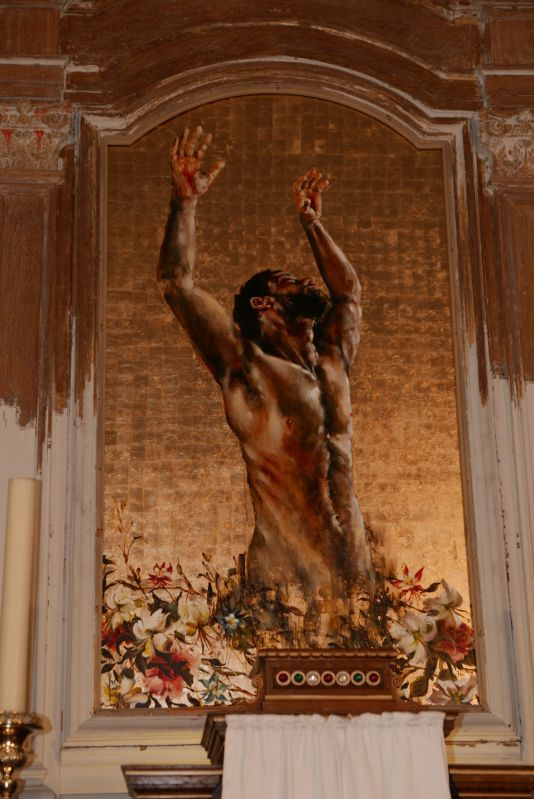
The Ascension
This is the painting that adorns the central section of the choir altarpiece; it was painted in 2020 by Hugo Laruelle.
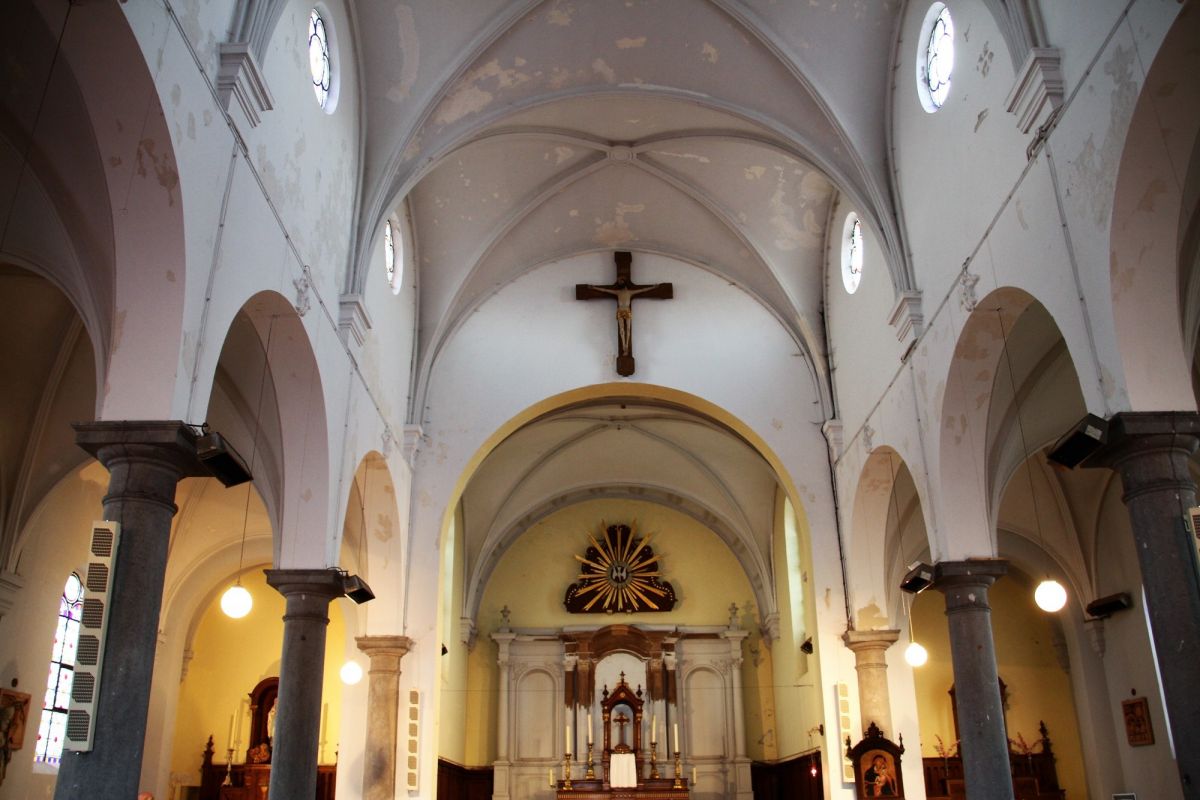
Christ on the Cross
You have to look up to see it, at the top of the arch at the entrance to the choir. It does not look like much at first glance, especially as it has been repainted over its original colour, and yet it is the oldest in the church. It is typical of the region’s 16th-century sculpture, with its thick crown of thorns.