Saint Gertrude
J.B. Van Langenhaeckestraat 11
9400 Appelterre - Eichem (Ninove)
Church | 1899 - 1909 | Neoclassical | Catholic Church


Map
Opening hours
01 January - 31 December
Mon 9.00 - 17.00
Tue 9.00 - 17.00
Wed 9.00 - 17.00
Thu 9.00 - 17.00
Fri 9.00 - 17.00
Sat 9.00 - 17.00
Sun 9.00 - 17.00
Religious offices
Description
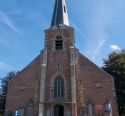
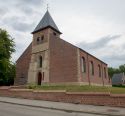
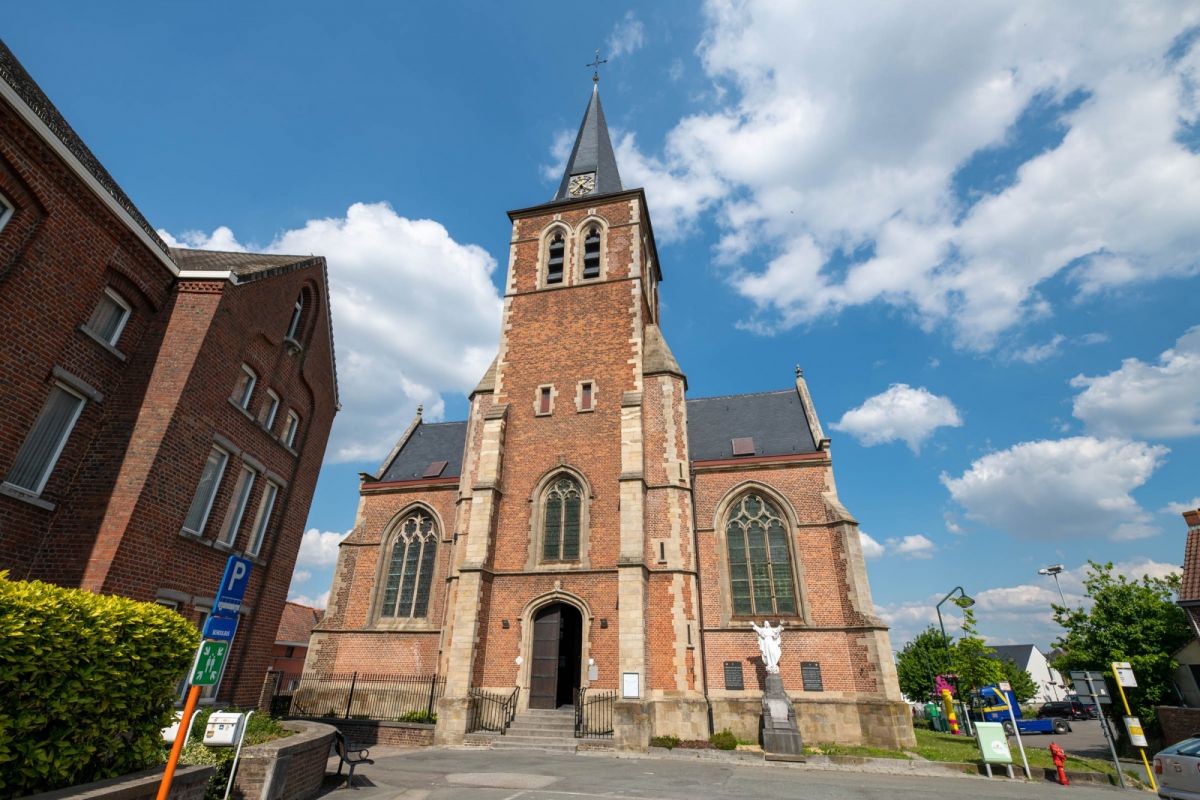
The church, donated by the abbey of Nivelles around 1487, preserves from its earliest phase only the high choir in white marble and grey natural stone. The present building arose through two construction phases, in 1899 and 1906 1909, giving the village a 31 metre long church with a three aisled nave of four bays and a 45 metre tower in the style of the period.
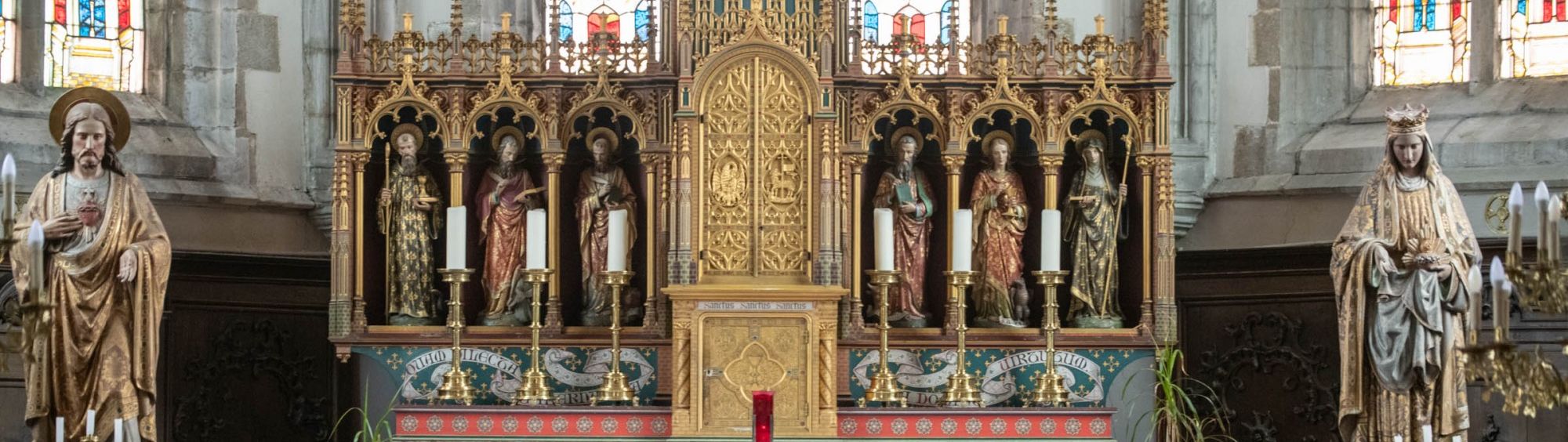
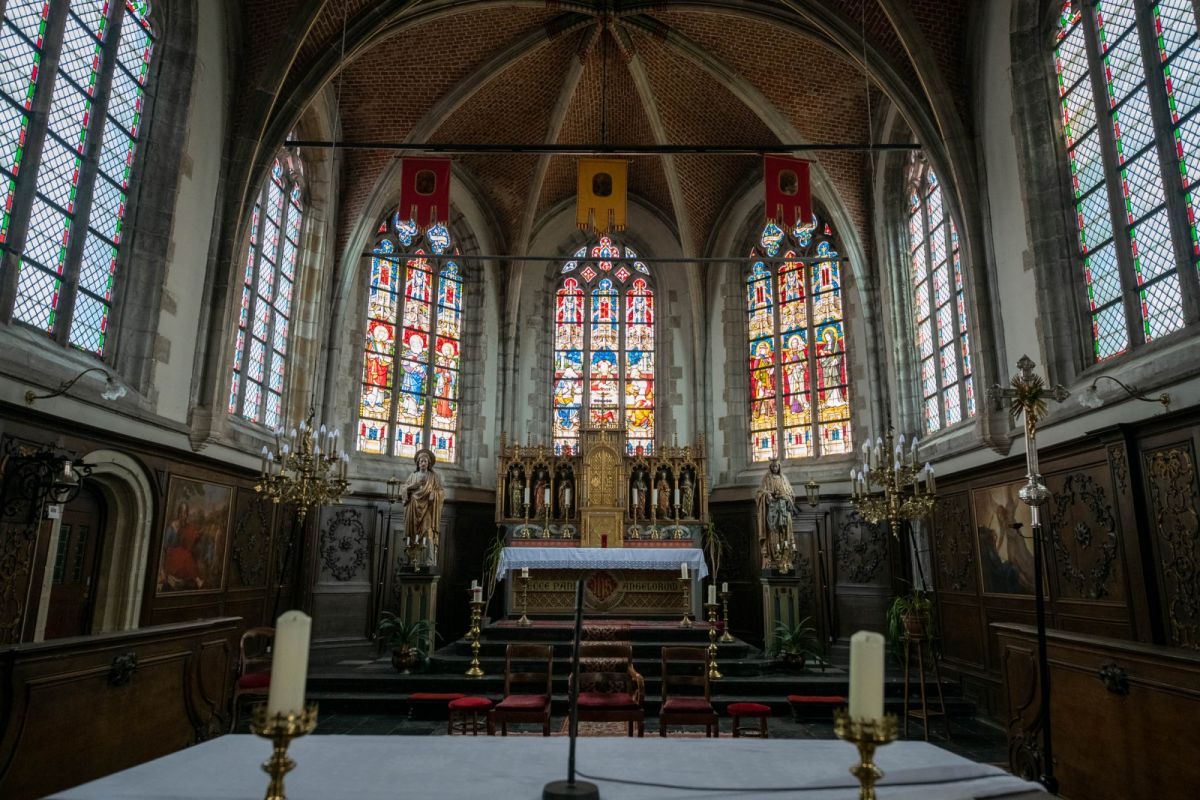
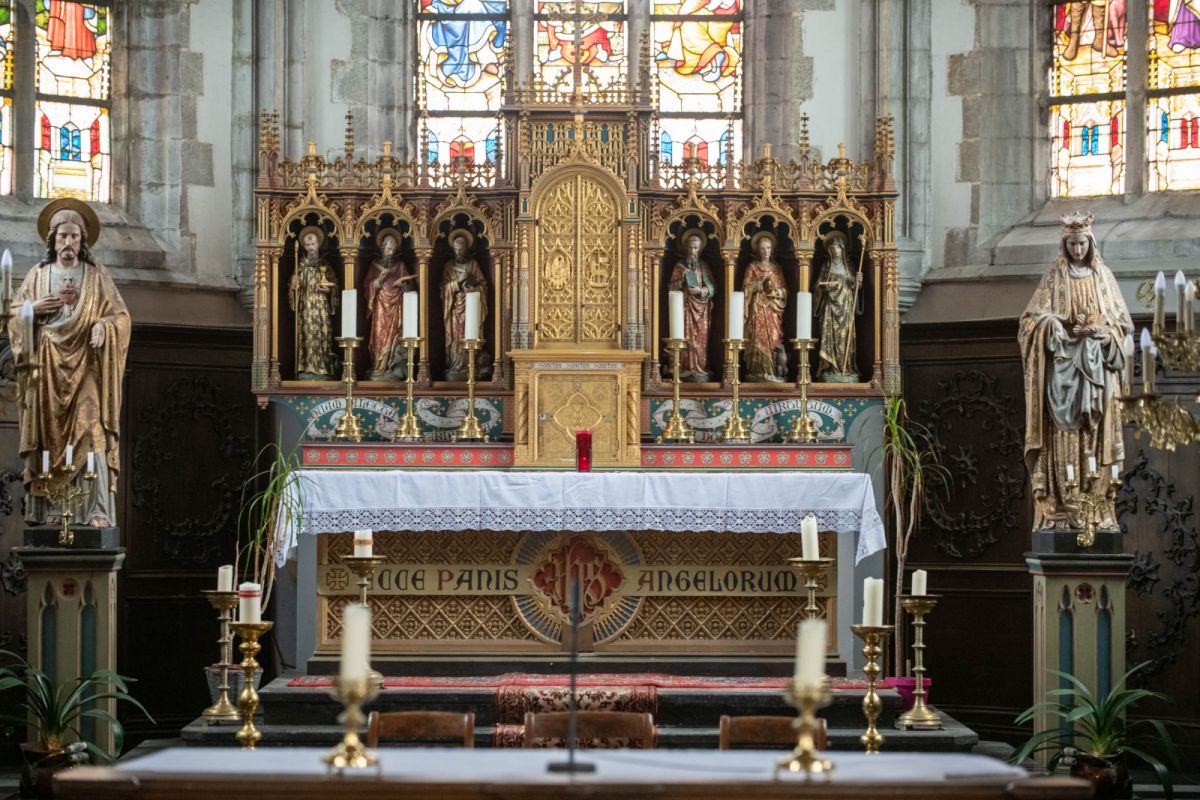
Local families contributed significantly to the interior: the high altar with six statues, including Saint Gertrude; stained glass windows such as Our Lady of the Seven Sorrows and the disciples of Emmaus, partly donated anonymously; an older pulpit (1764); and a younger organ (1924, restored 1963).
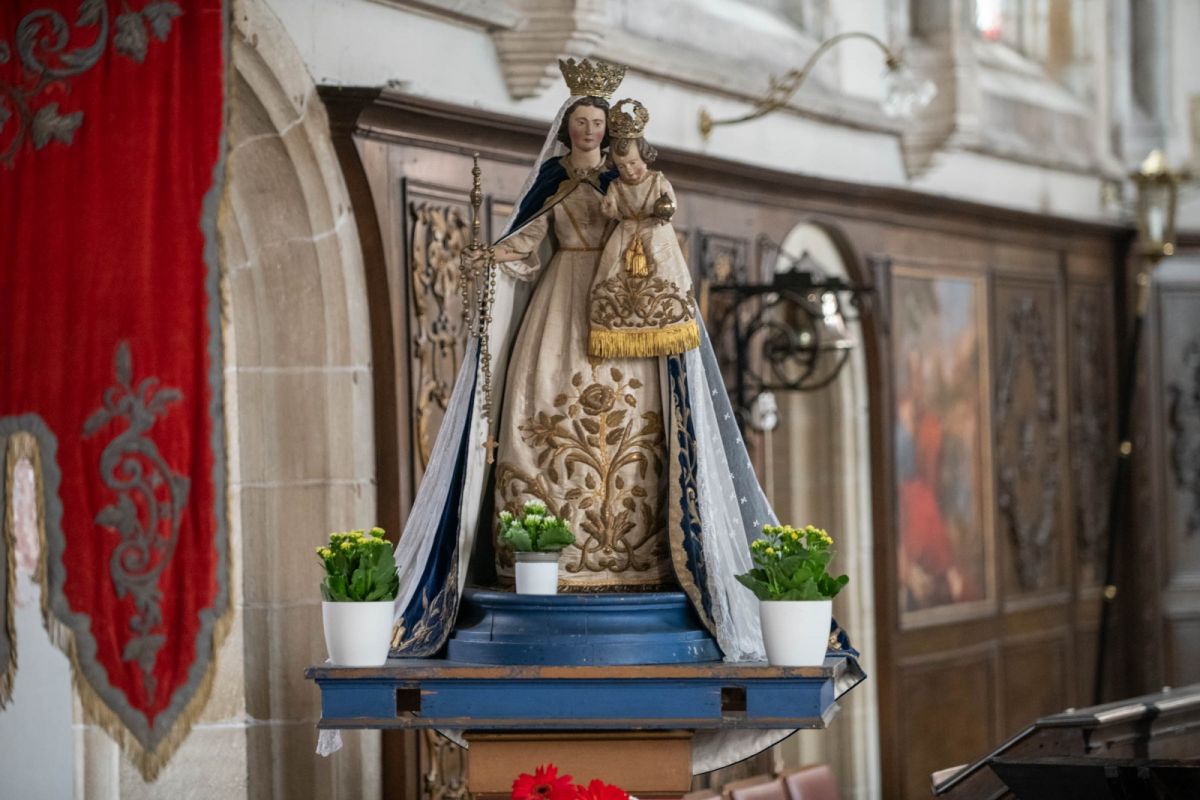
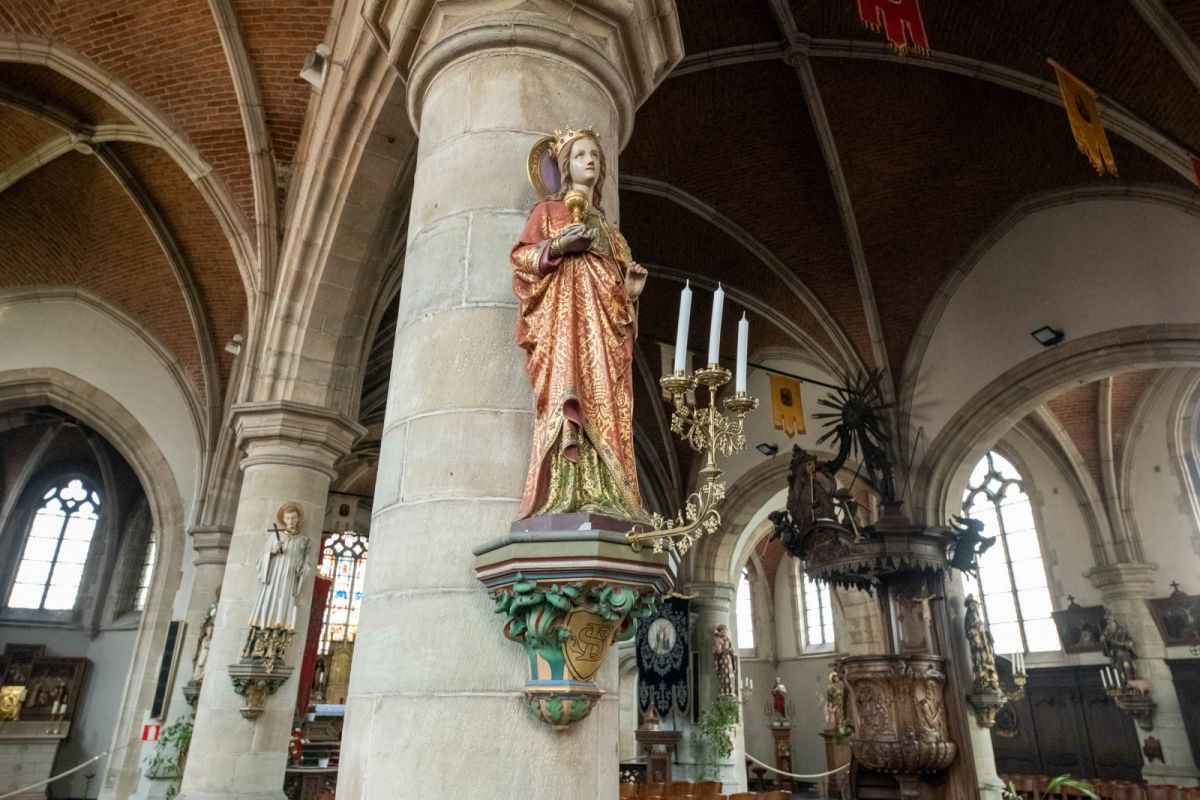
Each side chapel has its own altar. The nave is divided into a women’s and a men’s side, each with six statues; Gertrude and Apolonia stand on the men’s side. The Way of the Cross paintings are by Joseph Meganck (1867), and the choir includes an Our Lady of the Rosary attributed to Van Cleef the Elder or G. De Crayer.
Appelterre’s past as a tobacco growing village is recalled by Willy Ronsmans’s statue of the planter on the square. Local farmsteads contributed to improving the Belgian draught horse. The Kapittelhof farmstead (1637), classified, was largely destroyed by fire in August 2019.

Photos



Remarkable elements
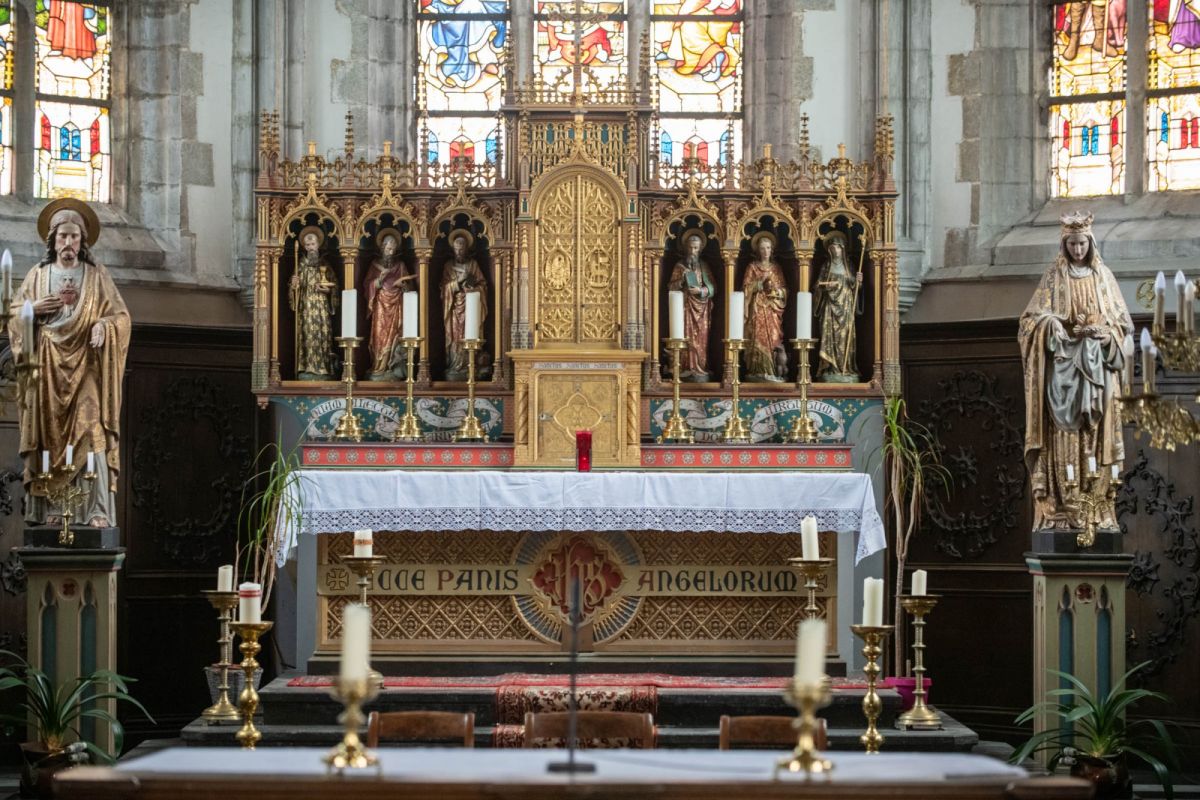
High altar
Produced by the Ghent sculptor Mathias Zens for 5,000 fr., the high altar was donated by Benediktus Josephus Schollaert and dedicated to Saint Gertrude of Nivelles. It contains relics of Saint Adauctus, Saint Benedict of Nursia and Saint Felix of Valois. The high altar shows, left, Saint Benedict, Saint Matthew and Saint Mark; right, Saint Luke, Saint John and Saint Gertrude of Nivelles.
The pulpit
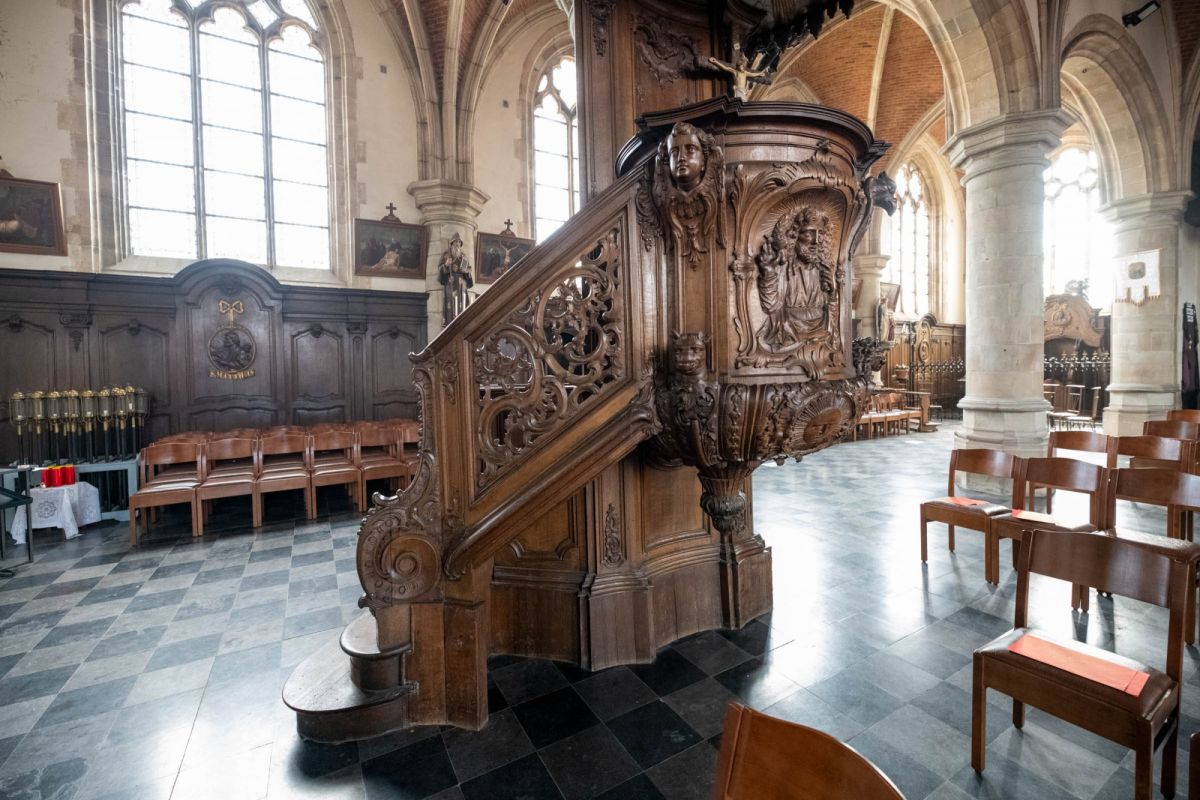
The pulpit was produced by Sir Nicholas Bonnet of Nivelles in the year 1764. The sounding board is crowned by the statue of Saint Gertrude of Nivelles and trumpet-blowing angels. The tub is decorated on the corners with the symbols of the four evangelists: the bull (Luke), the human (Matthew), the lion (Mark), and the eagle (John). The tub consists of panels with reliefs of the Good Shepherd and Saint John the Baptist. Below the tub, one can see the sun, the symbol of Christ.

Organ
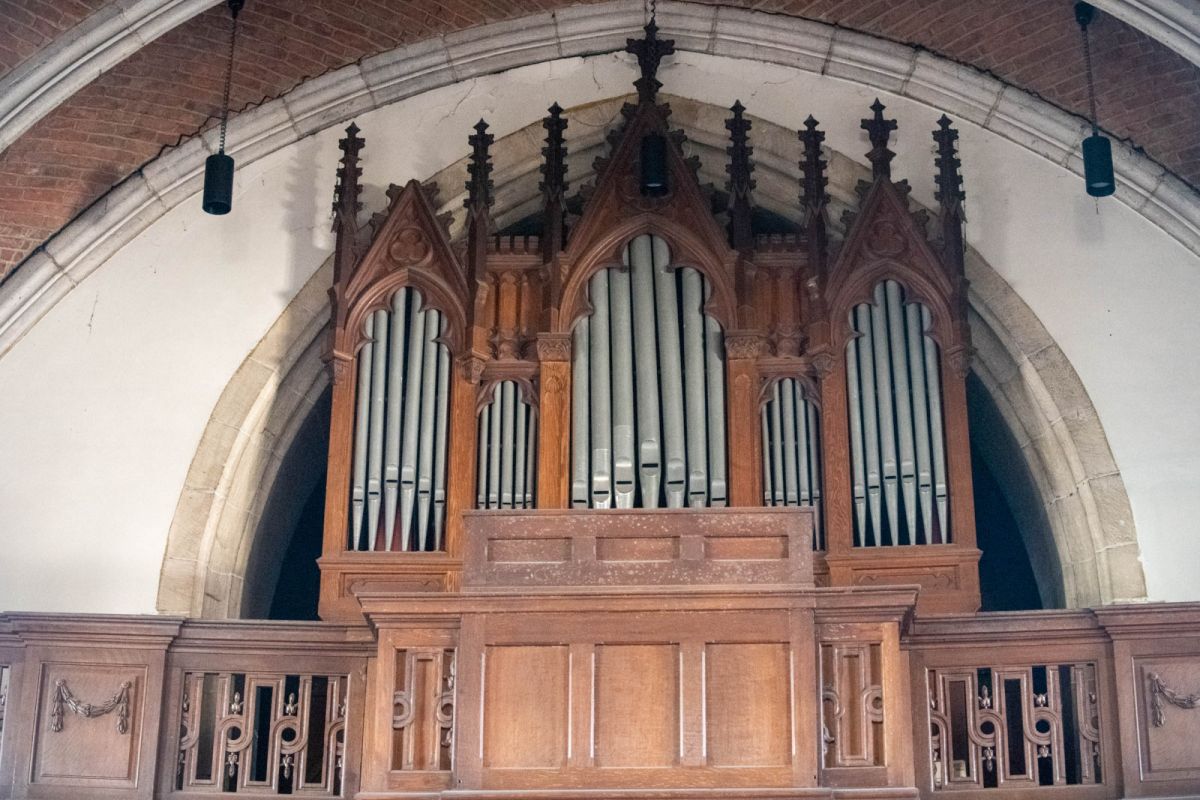
The organ, gifted by mayor Jules Vanderschueren and Miss Irma Vanderschueren, was built in 1924 by Léon and Gustave Daem for 36,250 fr., plus 6,300 fr. for the closet and fan. Inaugurated on 22 March 1925, it was played by Léandre Vilain of the Ghent Conservatory. It has 29 front pipes (2.80 m to 1.10 m), 12 full stops, two 56 note keyboards and a 27 note pedal; metal pipes contain 50% tin.
Tower clock
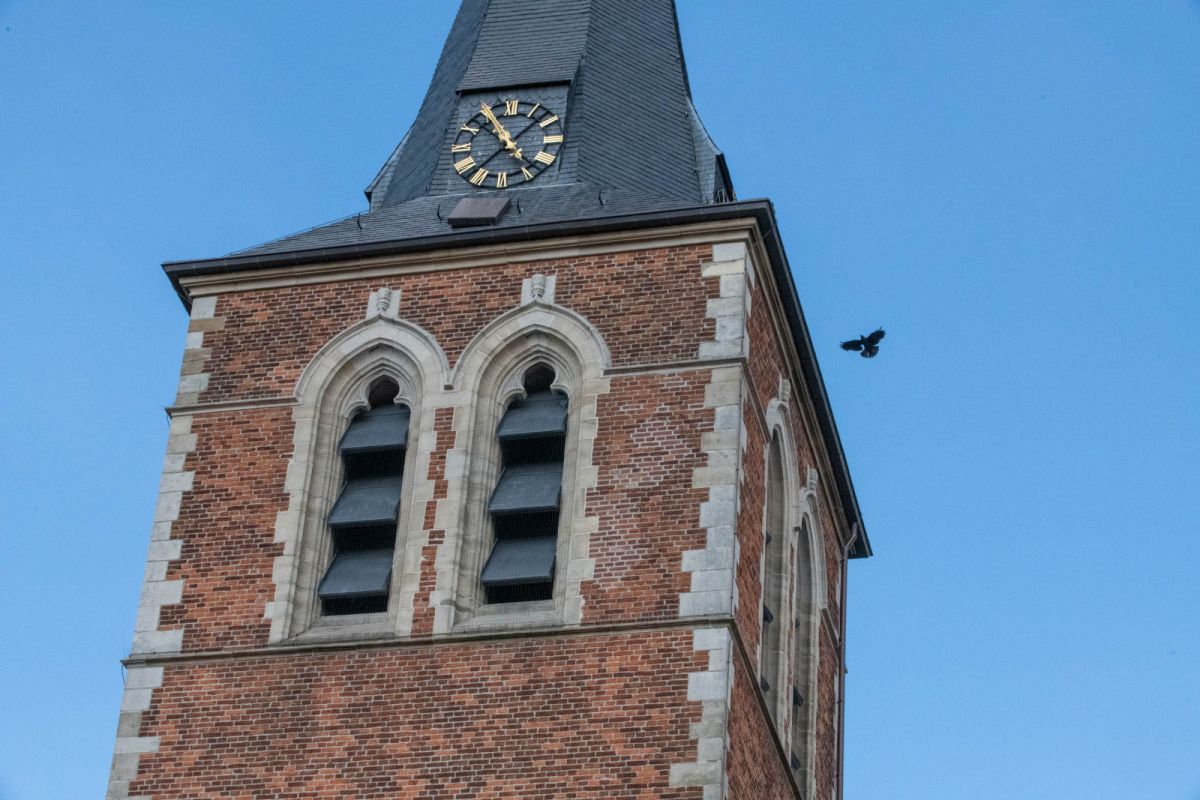
The clock, cast in 1836 by A. Ludovicus Vanaerschodt Vandengheyn of Leuven, weighs 750 kg and measures 95 cm by 85 cm. It shows Saint Gertrude, Saint Roch and Our Lady (Pietà) in bass relief. Godfather was mayor Benediktus Schollaert; godmother Theresia Buydens; pastor E.H. J.B. Van Damme. Electrified in 1927 by Casteleyn for 34,500 fr., its ringing system was renewed in 1964 by Jérome De Visscher.

Right side chapel
In this side chapel, one can find a stone altar with a reredos on it depicting Saint Anne, Our Lady, and Saint Joachim. Fenced in to the right and the left by an angel with a sign. On the altar, there’s a copper altar cross with a height of 56 cm and an arm width of 26 cm. Next to it, there are six copper candlesticks with tiny merlons at the top, 40 cm high and with two knots on the stem.
Left side chapel
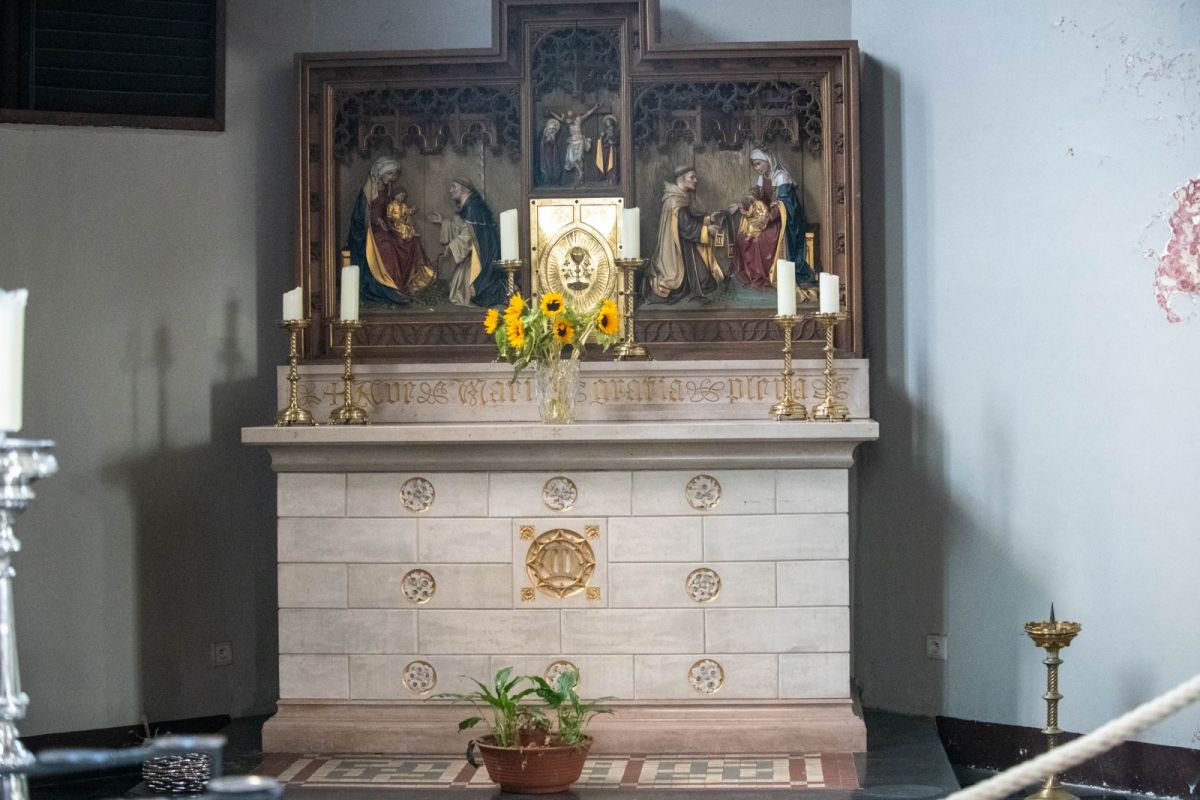
The left side chapel has a stone altar with reredos and a central tabernacle topped by a small Breton Calvary. Its copper engraved door is set with eleven semicircular gemstones. The side scenes show Our Lady giving the scapular to Saint Simon Stock and the rosary to Saint Dominic. Six copper candlesticks, identical to those on the right altar, complete the ensemble.