Our Lady of the Assumption
Kerkplein
9400 Ninove
Abbey church | XVIII-XIX | Baroque | Catholic Church


Map
Opening hours
01 January - 31 December
Mon 9.00 - 17.00
Tue 9.00 - 17.00
Wed 9.00 - 17.00
Thu 9.00 - 17.00
Fri 9.00 - 17.00
Sat 9.00 - 17.00
Sun 9.00 - 17.00
Pilgrimage to Sint Cornelius
Guided tour
+32 54 33 20 25
vandaele.alexander@gmail.be
Religious offices
Description
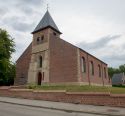
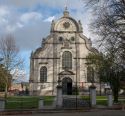
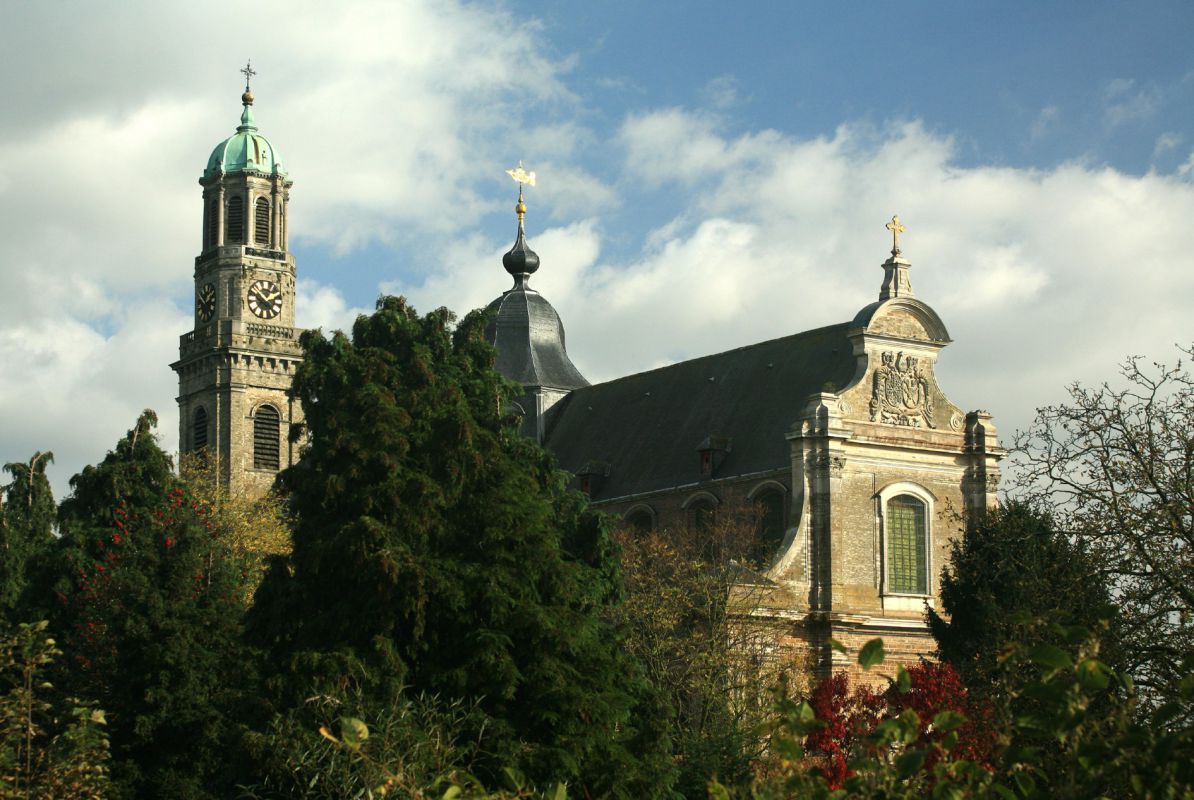
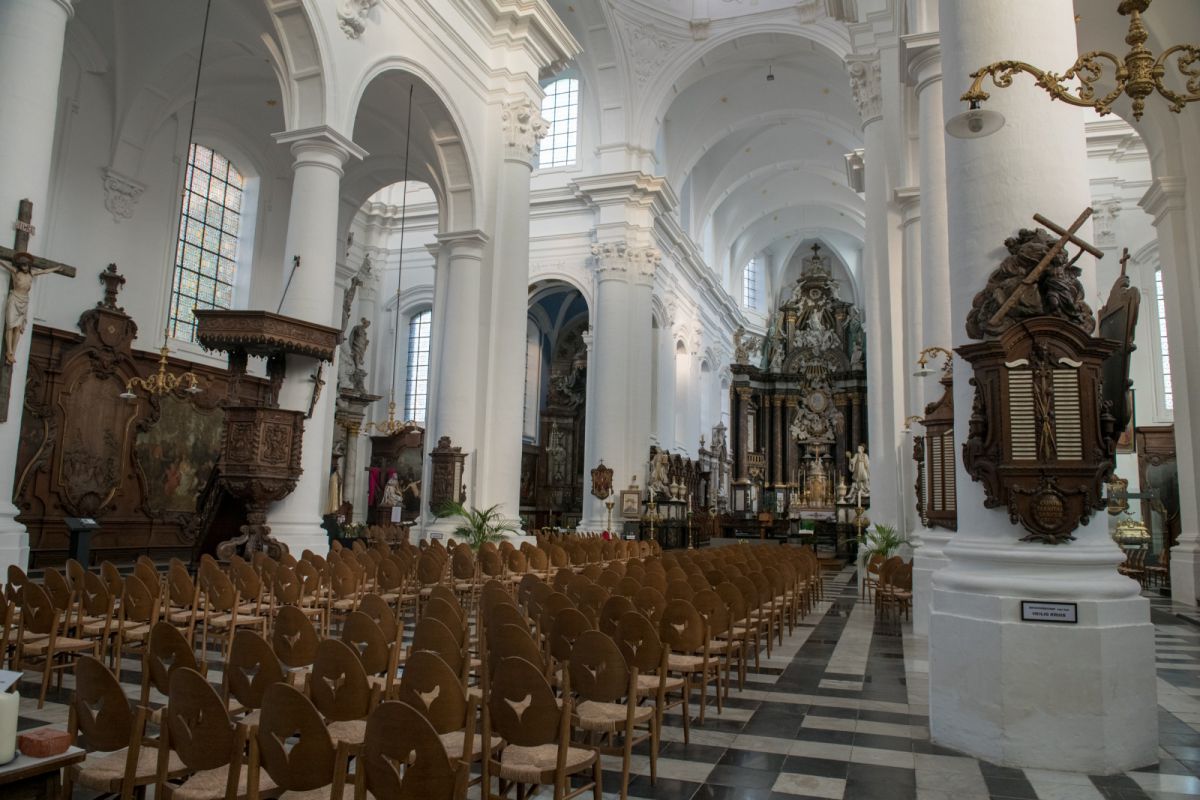
This Baroque church with three naves, of brick and Lede sandstone, was consecrated in 1727 as the church of the abbey Saint Cornelius & Saint Cyprian, of the Premonstratensians, after an architectural history of 100 years. Since 1813 it has served as a parish church, but before the Abbot Ferdinand Vander Haeghen had envisaged a dual use of the church: the choir and the transept would serve as the abbey church, while the nave would receive the pilgrims.
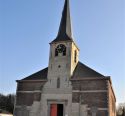
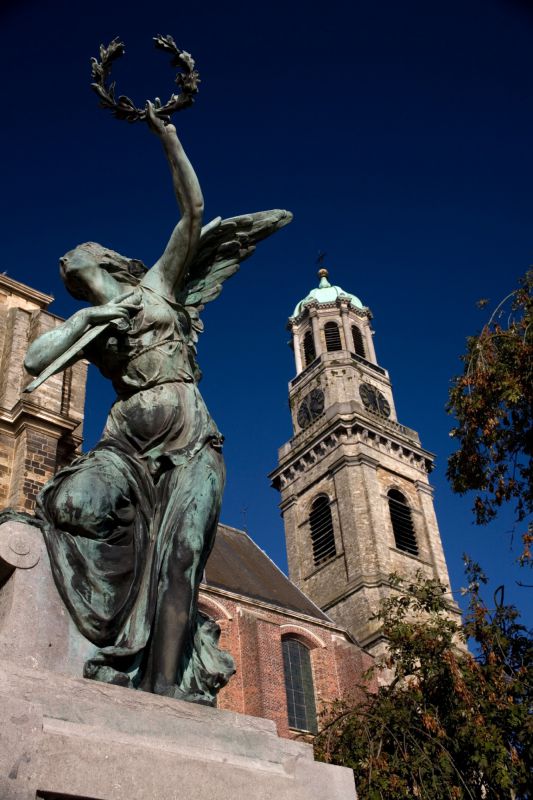
The square tower and its hexagonal lantern were added only in 1825-1844 by the architect Lodewijk Roelandt (1786-1864).
This church is one of the most important houses of prayer in the country. Culturally, it is the most complete creation in the entire region of Dendre thanks to its richly decorated interior and its surprising homogeneity.
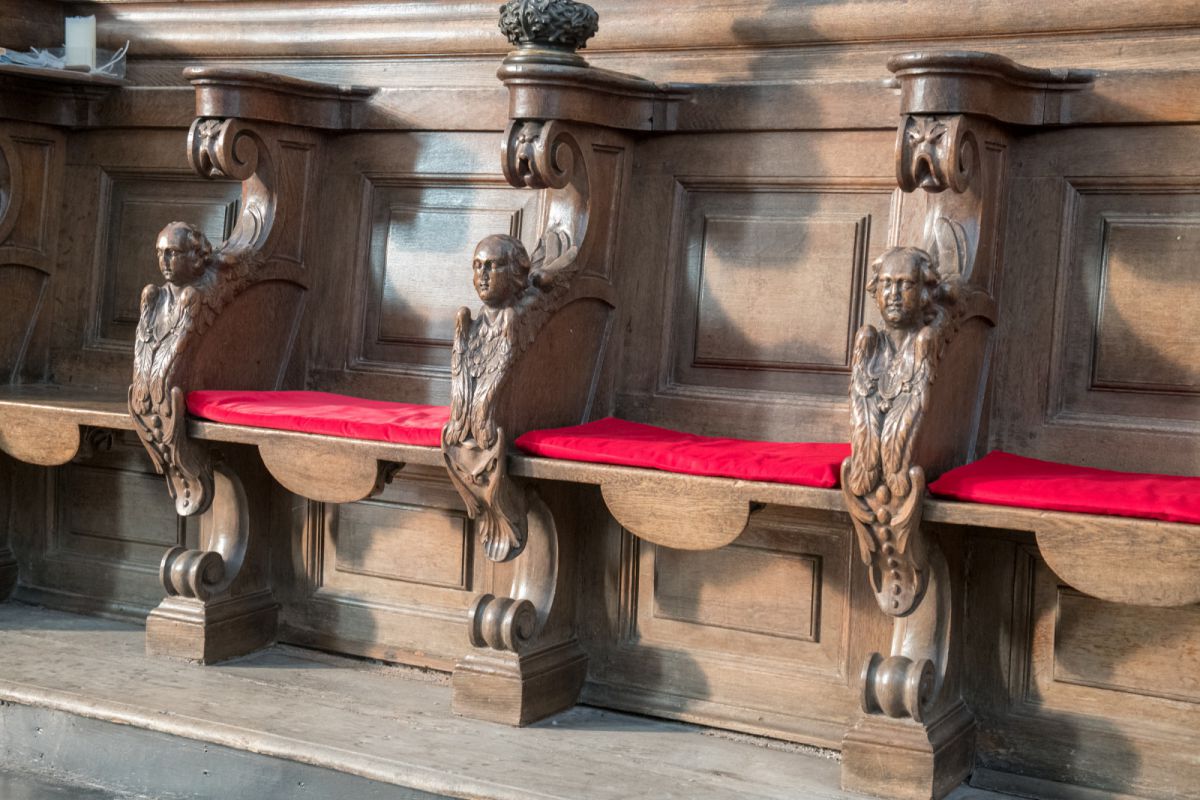
The stalls of the choir and the cathedra date from the 17th century and come from the old parish church, destroyed in 1816-1828. The remainder of the decoration, in the Baroque style and the Regency style, came into being under the direction of Abbot Vander Haeghen during the first half of the 18th century.
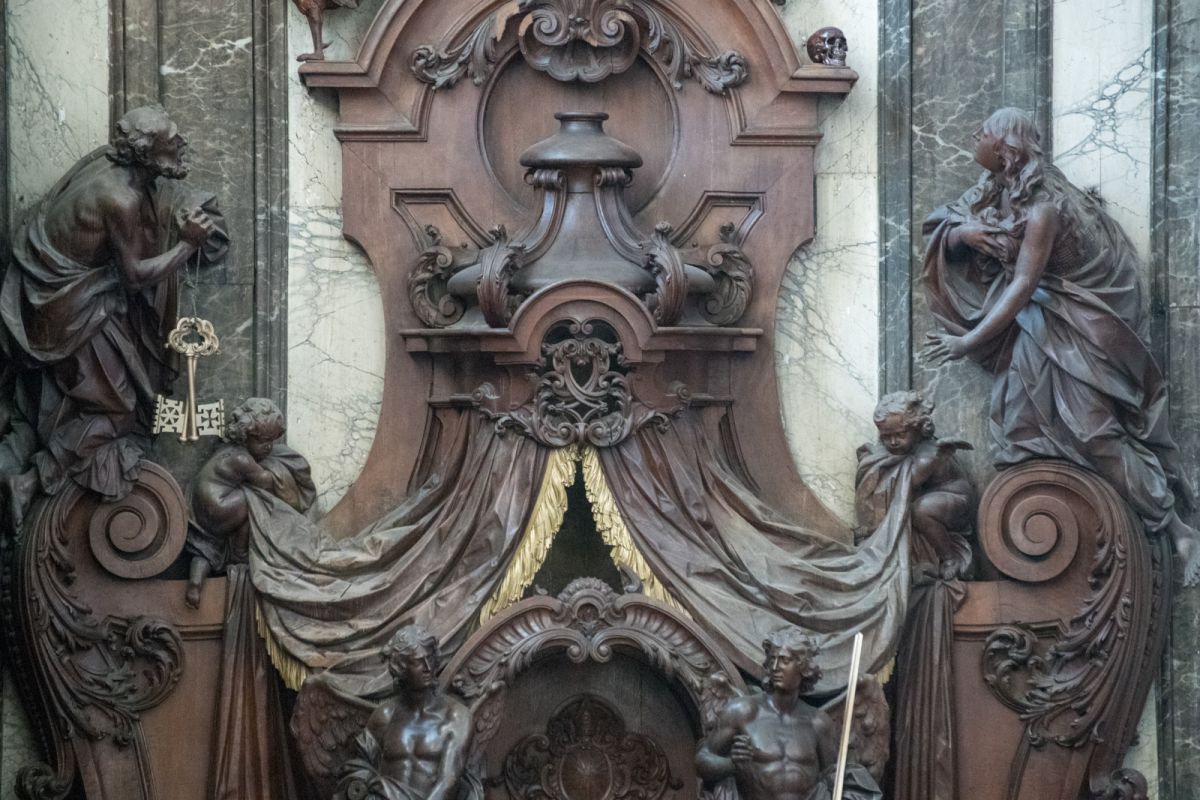
Thus the church owes its renown to the remarkable set of panelling, ordered in 1736 from the Mechelen sculptor Theodore Verhaegen who executed one of the two sumptuous confessionals, as well as the wainscoting of the lateral naves that include ten scenes from the life of Saint Cornelius and Saint Cyprian, to whom the ancient abbey was consecrated.
The lower part of the central dome, adorned with splendid stuccos, should also be admired.
KIKIRPA : Photo-library online

Photos







Media
Remarkable elements

The panelling of the side aisles
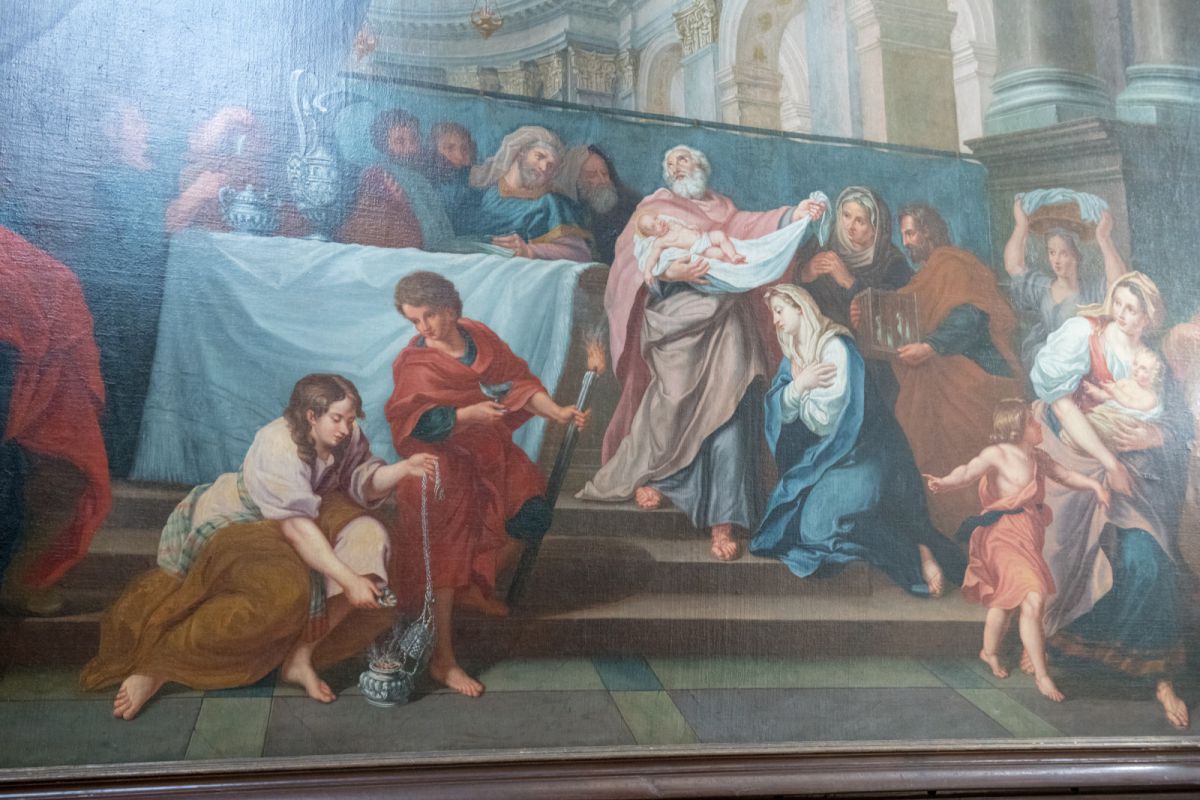
On entering the church, visitors are struck by the oak panelling of the side aisles, with four large paintings alternating with six sculpted bas reliefs in Regency frames. The south side shows ten key events from St Cornelius’s life; the north side ten from St Cyprian’s, patrons with Our Lady. Booklets on the chairs give detailed information on all artworks, freely consultable throughout the church.

Relic shrine of St. Cornelius and St. Cyprian
The reliquary of St Cornelius and St Cyprian, made by Brussels masters (1643 1644) in gilded copper and driven silver, has the shape of a baroque sarcophagus on claw feet, richly adorned with acanthus and angels. Each side shows reliefs of torture, glorification and intervention of the saints. The silver covered relic horn atop dates from 1586. Long carried in processions, the shrine remains central to Whitsun worship.

Choir
The choir of this former abbey church is strongly expanded and fitted with richly decorated oak stalls transferred from a temporary chapel in 1638. At its entrance stands a mid 18th century oak communion bench with four historical reliefs. ‘Hope, Faith and Love’ appear both in the marble choral lectern and in the marbled, gilded high altar. High above it rises the image of Mary’s Assumption, patroness since 1813.

Altar dedicated to Our Lady
In a side chapel extending the northern transept stands a marbled and gilded wood altar (1730), first dedicated to the Holy Trinity and St Joseph. After 1812, when the abbey church became a parish church, it was rededicated to Our Lady. The white marble statue of Our Lady with the Child (18th century) is remarkable; hidden by Ninove’s inhabitants during French rule, it was donated to the church in 1849.

Organ
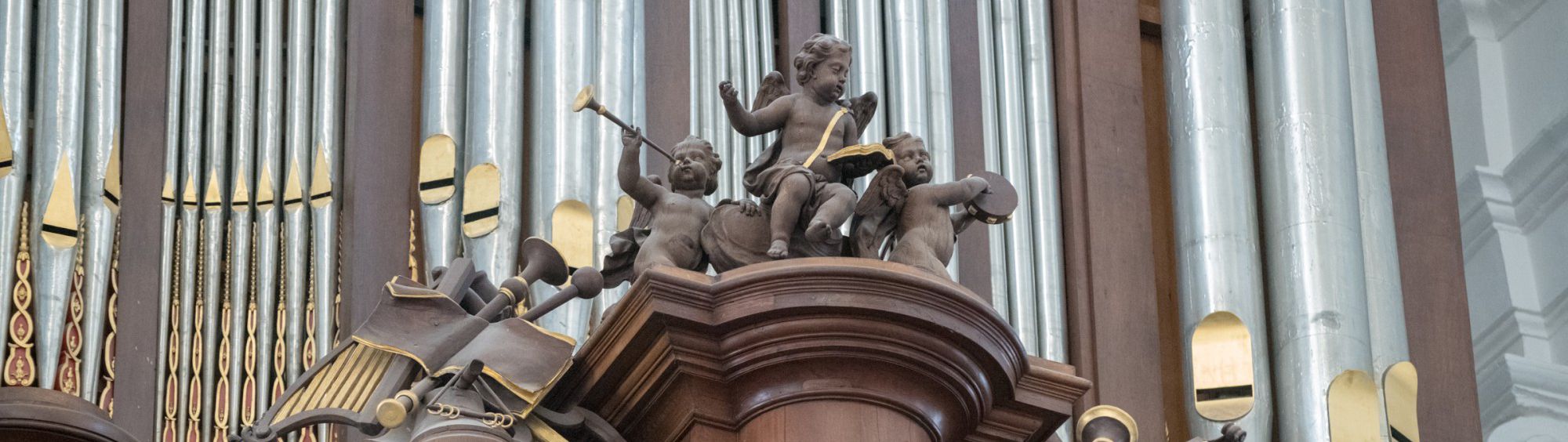
The former abbey church of Ninove houses one of the largest and finest baroque organs of the Southern Netherlands. Built by J.B. de Forceville in 1728 and expanded with an echo work by Gilles le Blas in 1752, it features rich sculptural décor: instruments, music making angels and saintly medallions, with St Cecilia seated atop the central pipes. Restorations since 1978 renewed interest, leading to digital recordings and a stamp.

Confessionnal
The oak confessional (1736 1738) left of the organ spans the full aisle width and shows high quality Regency plasticity. Its iconography expresses confession: the priest’s throne flanked by two life sized angels under a pleated canopy; above, kneeling Saint Peter and penitent Mary Magdalene with their attributes; on the crown, Christ Salvator Mundi with open hands of mercy.