Saint Peter
Rue de l'Eglise
62217 Wailly
Church | 1928 | | Catholic Church
Map
Opening hours
01 January - 31 December
Mon 9.00 - 17.00
Tue 9.00 - 17.00
Wed 9.00 - 17.00
Thu 9.00 - 17.00
Fri 9.00 - 17.00
Sat 9.00 - 17.00
Sun 9.00 - 17.00
Religious offices
every second Wednedsday : 7 pm
Description
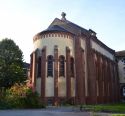
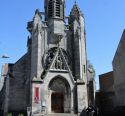
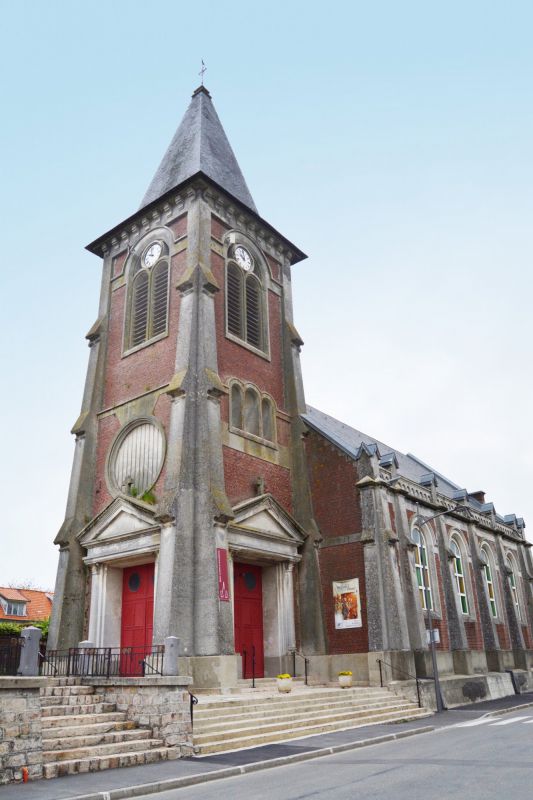
A gothic church in local white stone has stood in Wailly since the 13th century. It was destroyed during the second half of the 17th century, and rebuilt in brick during th following century, except for its stone tower which had been preserved. But the church was entirely destroyed during the First World War. After the conflict a new brick church was built, in a very eclectic style but with a strong Art Deco influence.
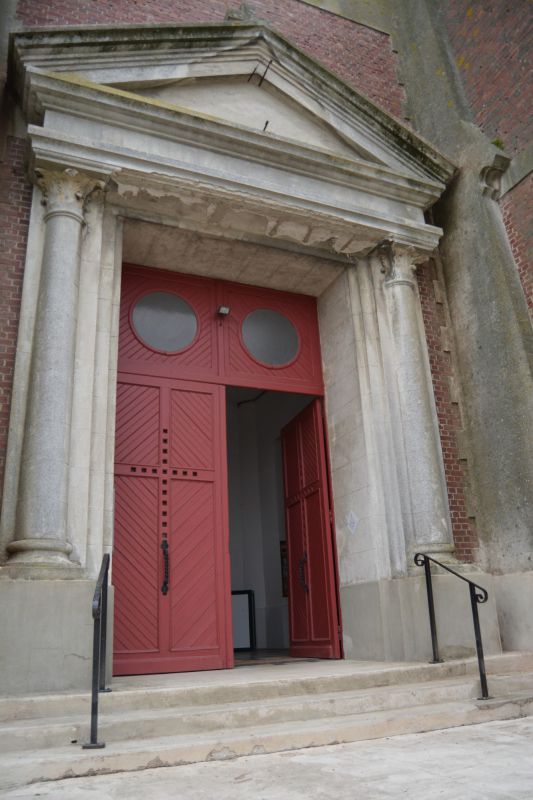
An unusual archictectural particularity can be immediately seen : the presence of two identical porches, in the neo-classical style with columns and triangular pediments, which correspond with the two church doors. It is said that during the 18th century this enabled two rival families to enter the church without having to greet each other, and to sit on either side of the nave. When the church was rebuilt in the 20th century the model of the two porches was kept, to underline the originality of the building.
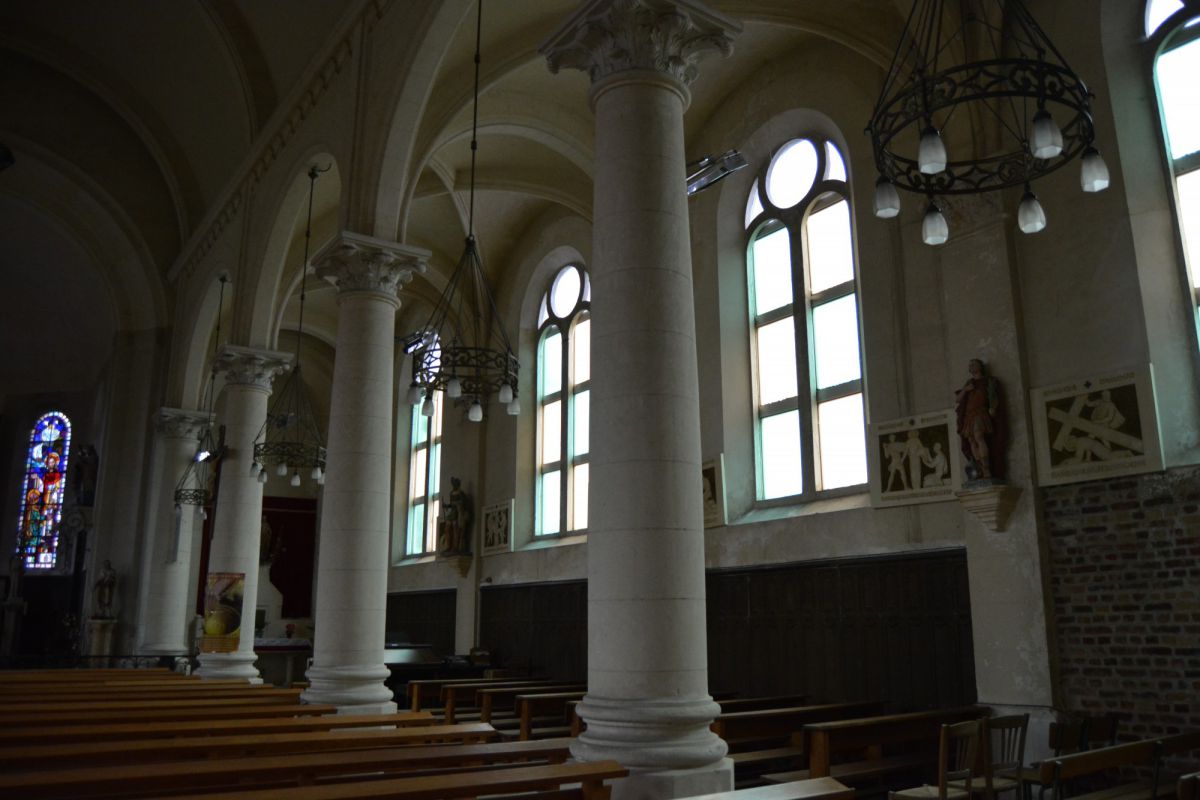
Within the church , the visitor is struck by the lines of columns which guide the eyes towards the sanctuary. All the characteristics of the Art Deco style are to be found in the church furnishings – the altar, pulpit, confessional Way of the Cross, and even the light fixtures. The luminosity of the interior valorises it all.


Photos


Remarkable elements
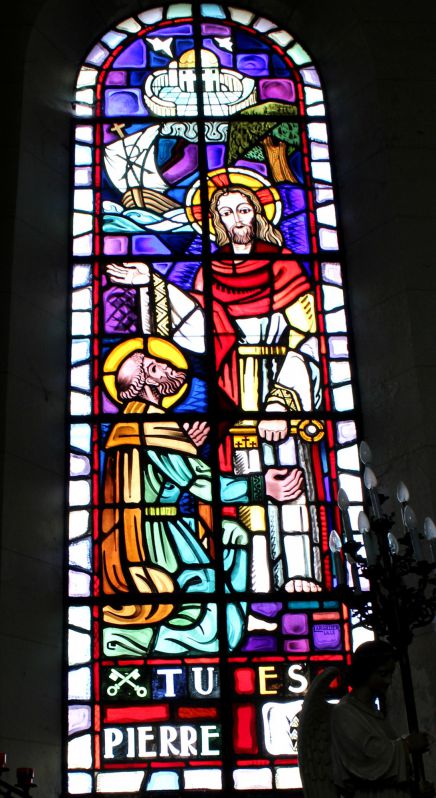
The stained glass windows
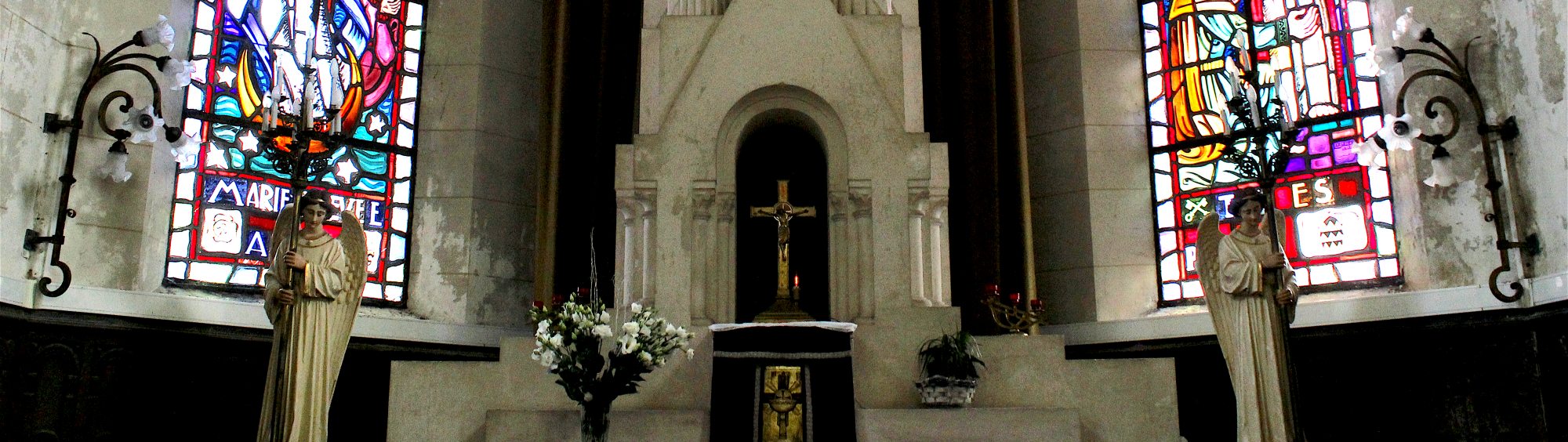
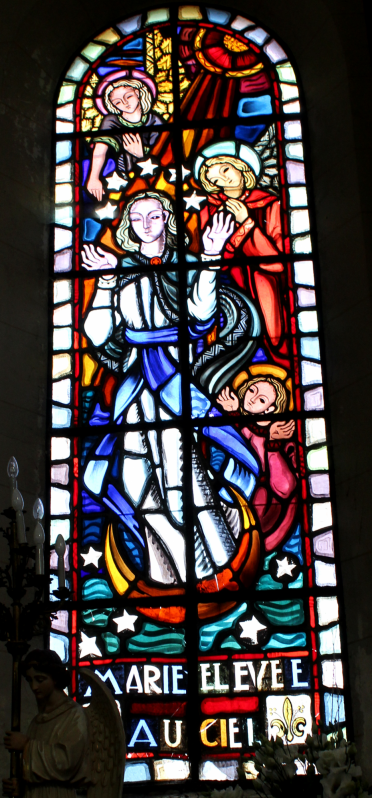
These two stained glass windows, created by Largillier in Lille between the two world wars, are the only ones in the church. The one to the left of the altar depicts the Virgin Mary, with the inscription ‘Mary raised to heaven’. The one on the right depicts Saint Peter surrounded by his symbols, with Christ's words ‘You are Peter’. These stained glass windows echo the two side altars dedicated to Mary and Saint Peter.
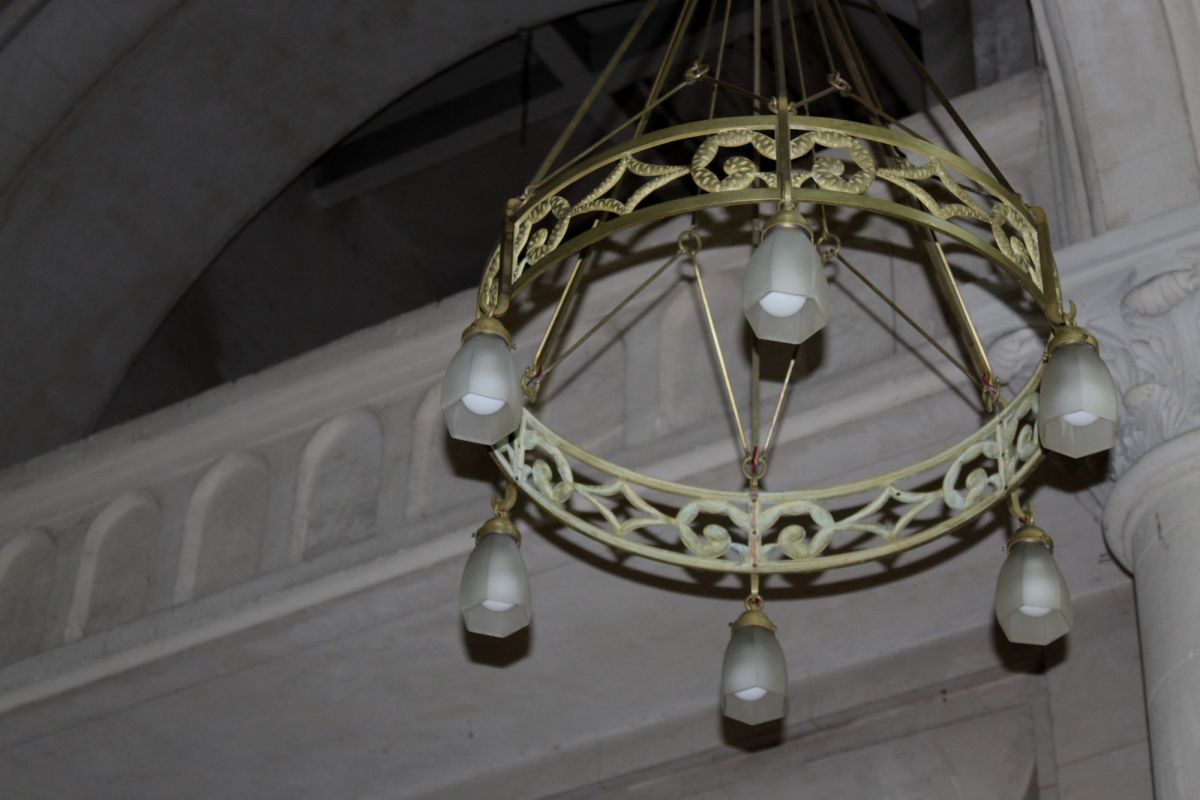
The chandeliers
These Art Deco chandeliers are made of bronze, adorned with floral ornaments and decorated with geometric patterns. Dating from 1931, they were commissioned from craftsmen in Arras.

The tombstone
At the entrance to the church, we can see a tombstone bearing the coat of arms of the Le Gentil family, whose members were lieutenants and bailiffs of Arrouaise, the abbey to which Wailly belonged. Until 1758, their burial place was at the foot of the altar of the Virgin Mary, but it was then moved outside to the south corner of the tower.
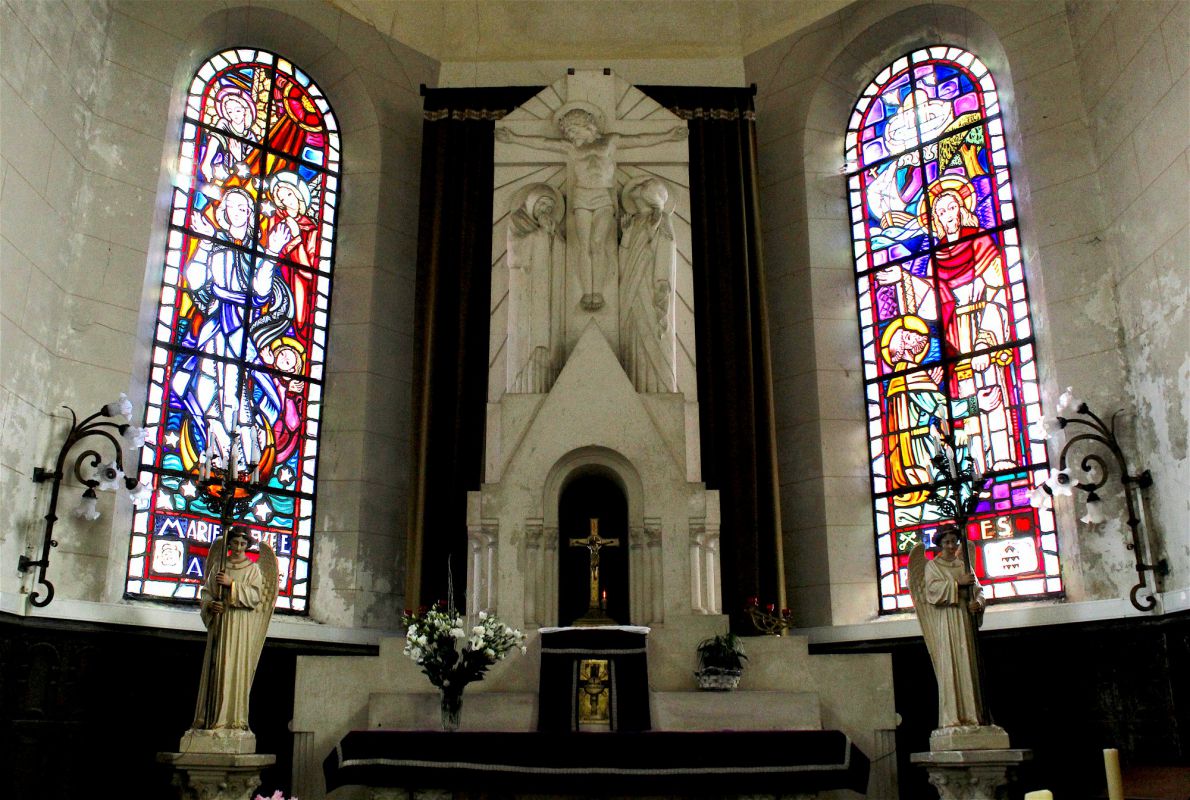
The altar
This altar is Art Deco in style, as are the confessional and the pulpit. It dates from the reconstruction in 1931. The sober altarpiece is carved with a bas-relief depicting the crucifixion of Christ, surrounded by the Virgin Mary and Saint John. The whole ensemble plays on perfect symmetry, reinforced by the side altars of Mary and Saint Peter.
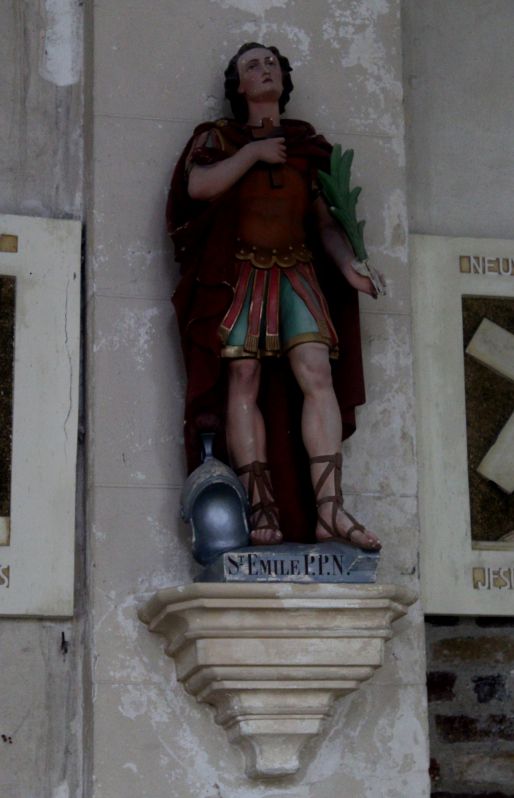
The statue of Saint Émile
Twenty statues dating from the 1950s can be seen in this church. Many popular saints are represented, including Saint Émile. Dressed in ancient Roman costume, this Émile undoubtedly refers to the six men from Wally bearing this name who distinguished themselves during the Great War.
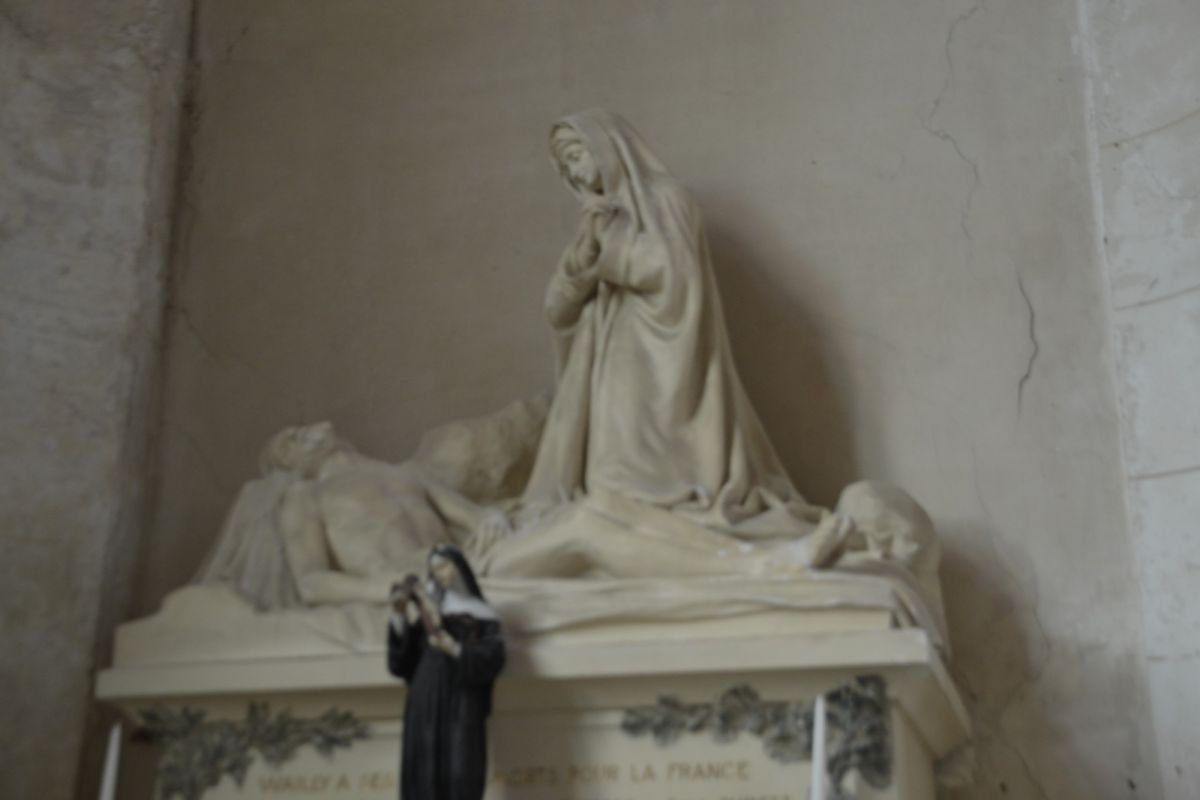
The war memorial
This Pietà was sculpted by Mr Desvergnes to pay tribute to the soldiers from Wailly who died during the First World War. This representation is very common for war memorials, even secular ones, with the Virgin Mary symbolising the Motherland mourning her children who died in battle.