Saint John the Baptist
1 bis Rue Wacquez Glasson
62000 Arras
Church | XX | Neogothic | Catholic Church


Map
Opening hours
01 January - 31 December
Mon 9.00 - 19.00
Tue 9.00 - 19.00
Wed 9.00 - 19.00
Thu 9.00 - 19.00
Fri 9.00 - 19.00
Sat 9.00 - 19.00
Sun 9.00 - 19.00
Religious offices
week : 1 pm
Saturday : 10 am
Sunday : 6.30 pm
Description
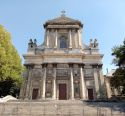
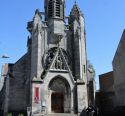
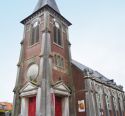
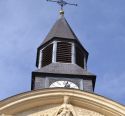
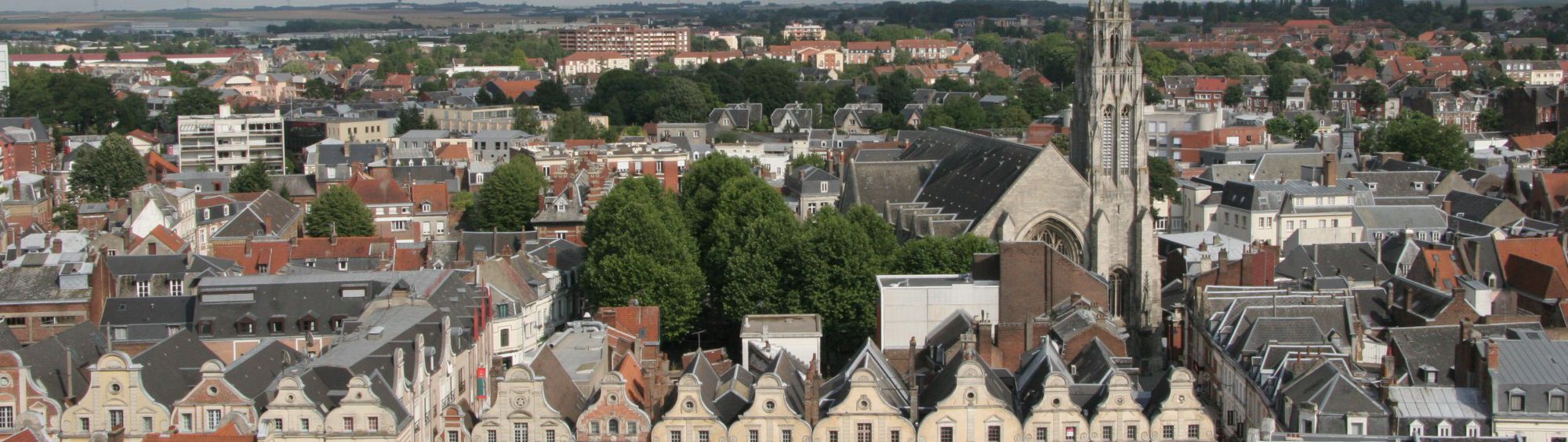
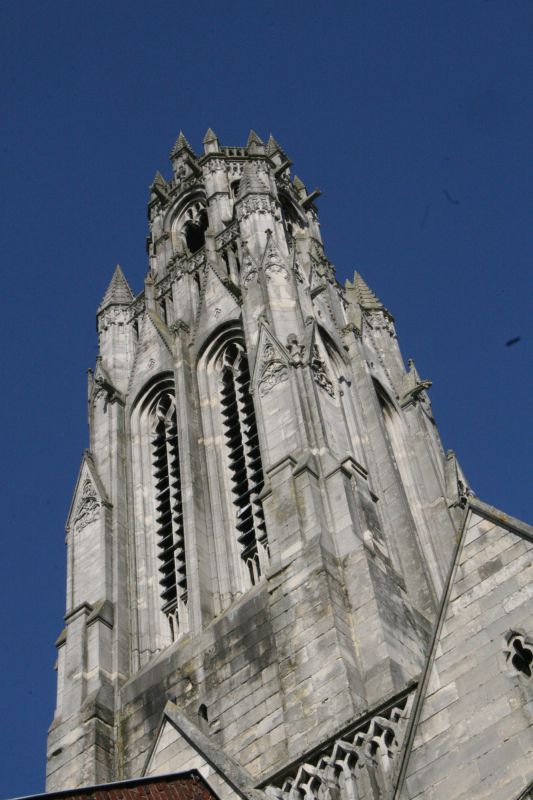
Situated a few yards from the Town Belfry, the belfry of the church of Saint John the Baptist dominates the town, competing with the Town Belfry and the cathedral.
Built during the 16th century, under the patronage of Saint Nicolas in the Moats, replacing a church in the moats where Saint Thomas à Becket had preached, it was saved from destruction during the French Revolution because it became the ‘Temple of Reason’.
It was the temporary cathedral between 1803 and 1833. In 1915 it was burnt down in the bombings of the town, causing the death of two heroic firemen (Wacquez and Glasson). The nearby road bears their names.
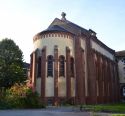
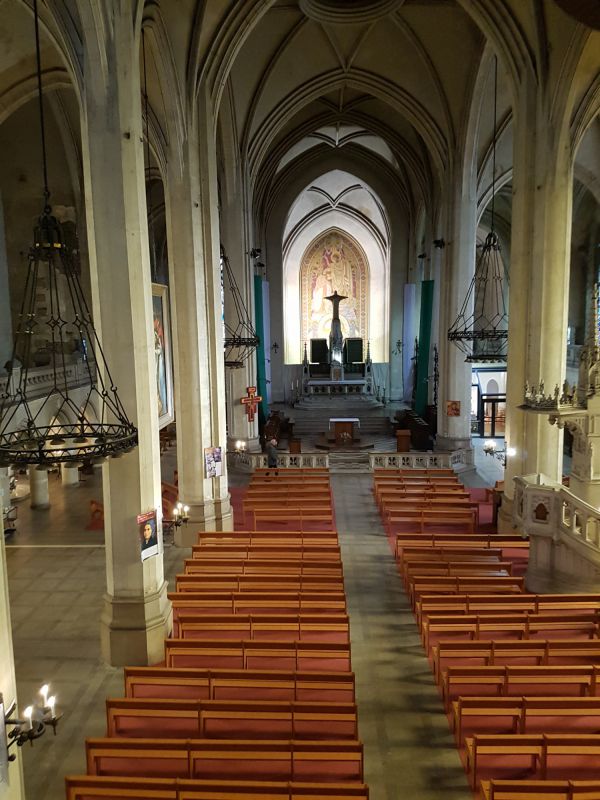
Its reconstruction in the neo-gothic style is the work of the architect Mulard, following the plans of Henri Mazet. The architects chose walls of reinforced concrete and brick, faced with stone.
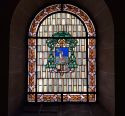
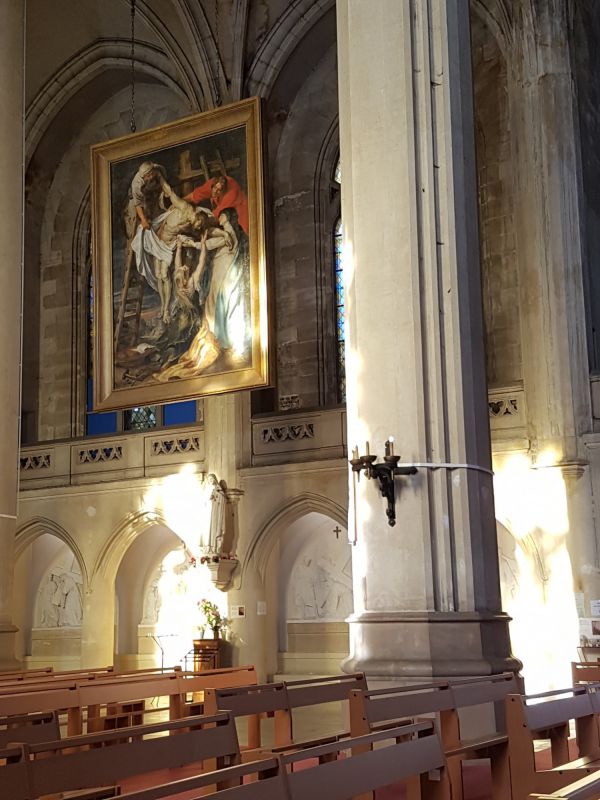
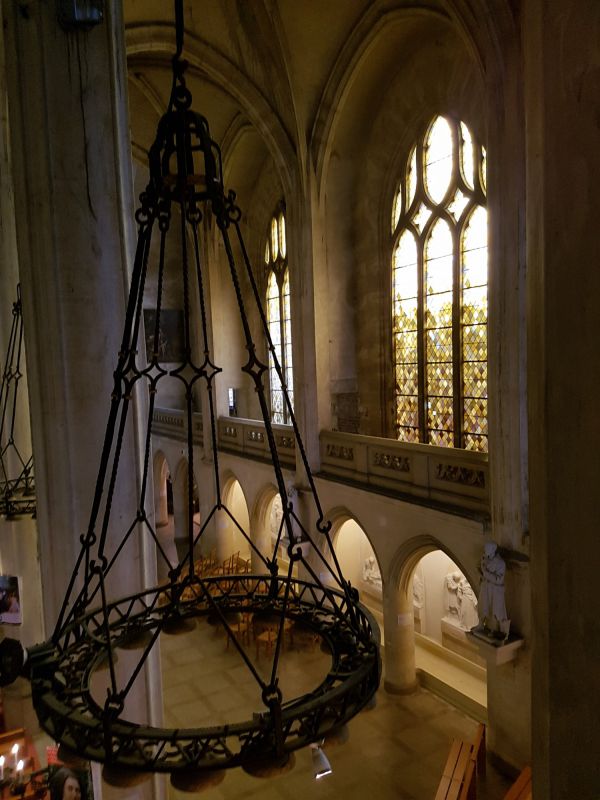
The nave, lit by contemporary stained glass windows, is famous for the monumental painting of “The Descent from the Cross” by Peter-Paul Rubens (1625), ordered by the monks of St.Vaast Abbey for their church.
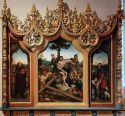
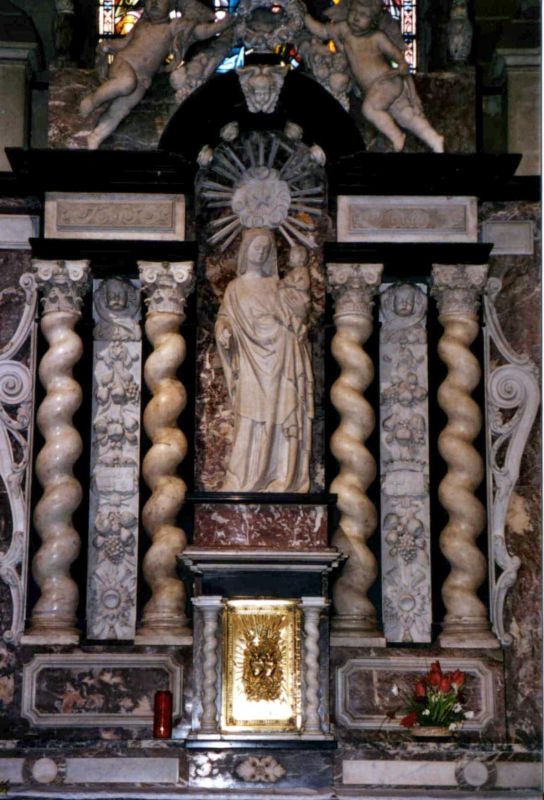
The retable of the north-side altar is also remarkable, saved from the chapel of the ‘Saint Chandelle’ situated on the Place des Heros and destroyed in 1792. In the centre is the oldest statue representing Notre Dame des Ardents (14th century) : a Virgin and Child, carrying the miraculous candle.
See the video

Photos

Remarkable elements

Descent from the Cross ( Rubens)
This Descent from the Cross is the work of the great master Peter-Paul Rubens (1577-1640) and is one of the few paintings by the painter visible outside museums or private collections. The work, which illustrates all the master's talent and know-how, was commissioned by Saint-Vaast Abbey in the 1610s.
After the Revolution and before the First World War, it was exhibited in Arras Cathedral.
Translated with www.DeepL.com/Translator (free version)
Altar, 17th century altarpiece and statue of Our Lady
The Baroque altarpiece, carved from black and pink marble, dates from the 17th century and comes from the former Chapel of the Ardents, which stood on Place des Héros and was destroyed in 1792. The statue of the Virgin and Child is one of the oldest depictions of Our Lady of the Ardents. It dates from the 16th century and holds the miraculous candle of the Ardents, which the Virgin gave to two minstrels in 1109. The wax from this candle was used to heal those suffering from the ‘mal des ardents’.
Translated with www.DeepL.com/Translator (free version)

Marouflaged canvas by Hollart
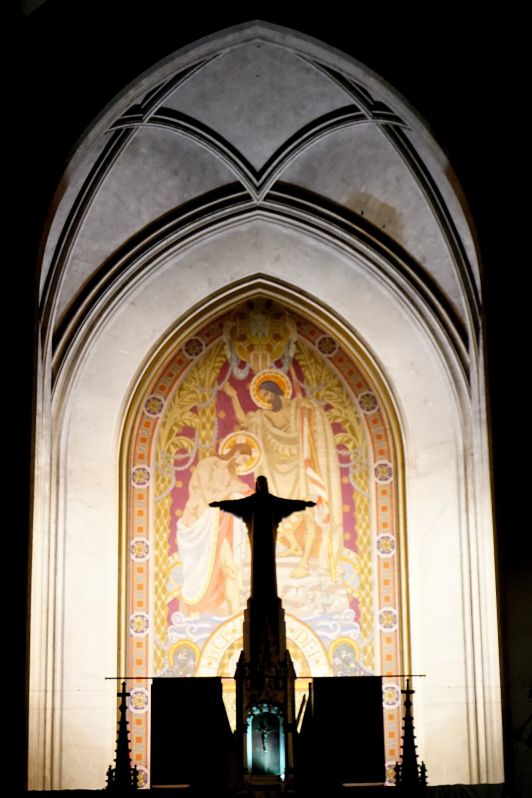
Behind the statue of the Sacred Heart, in the chancel, hangs a mounted canvas by Hollart depicting the baptism of Christ. Charles Hollart was a painter from Arras in the early 20th century, regarded as a master of Art Deco in the fields of portraiture and religious subjects. His works can be found in the council chamber at Arras Town Hall and in the cathedral.
Translated with www.DeepL.com/Translator (free version)

St Cecilia’s stained-glass window
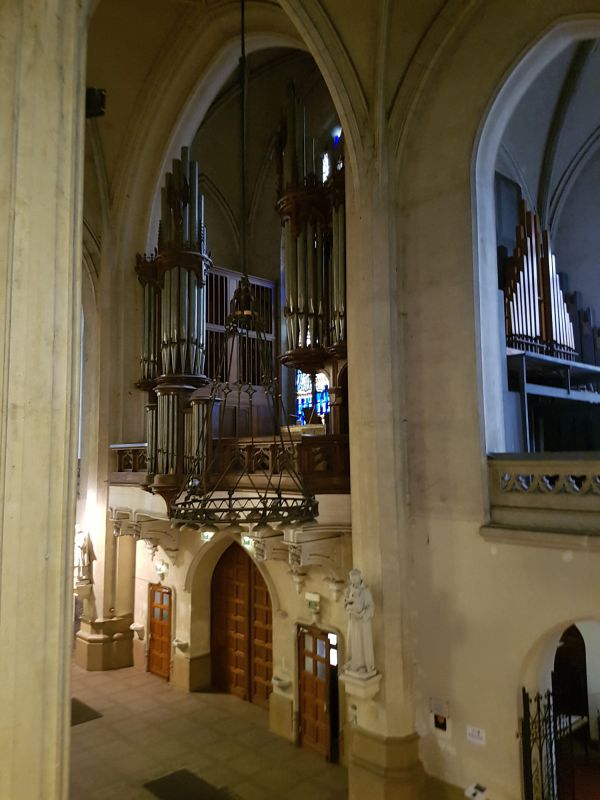
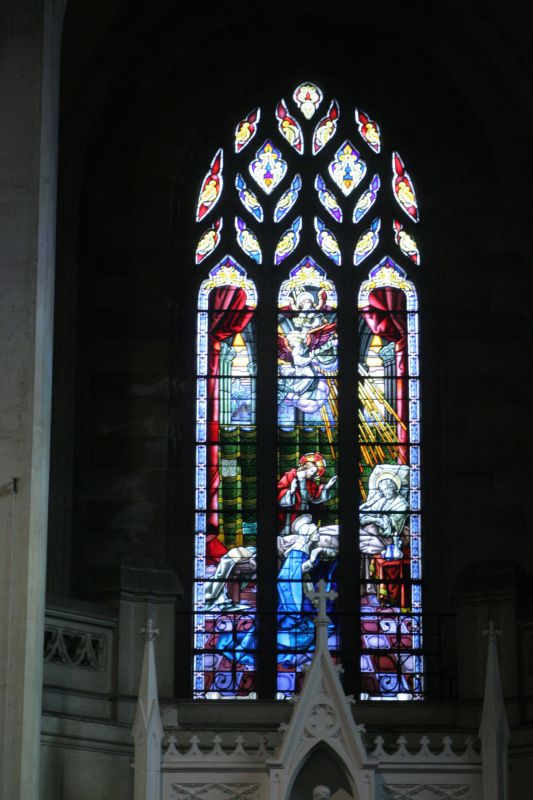
On the west façade, a stained-glass window dating from 1934 depicts St Cecilia, the patron saint of musicians. It is a work by Tambouret, based on a design by Charles Hollart.
Translated with www.DeepL.com/Translator (free version)
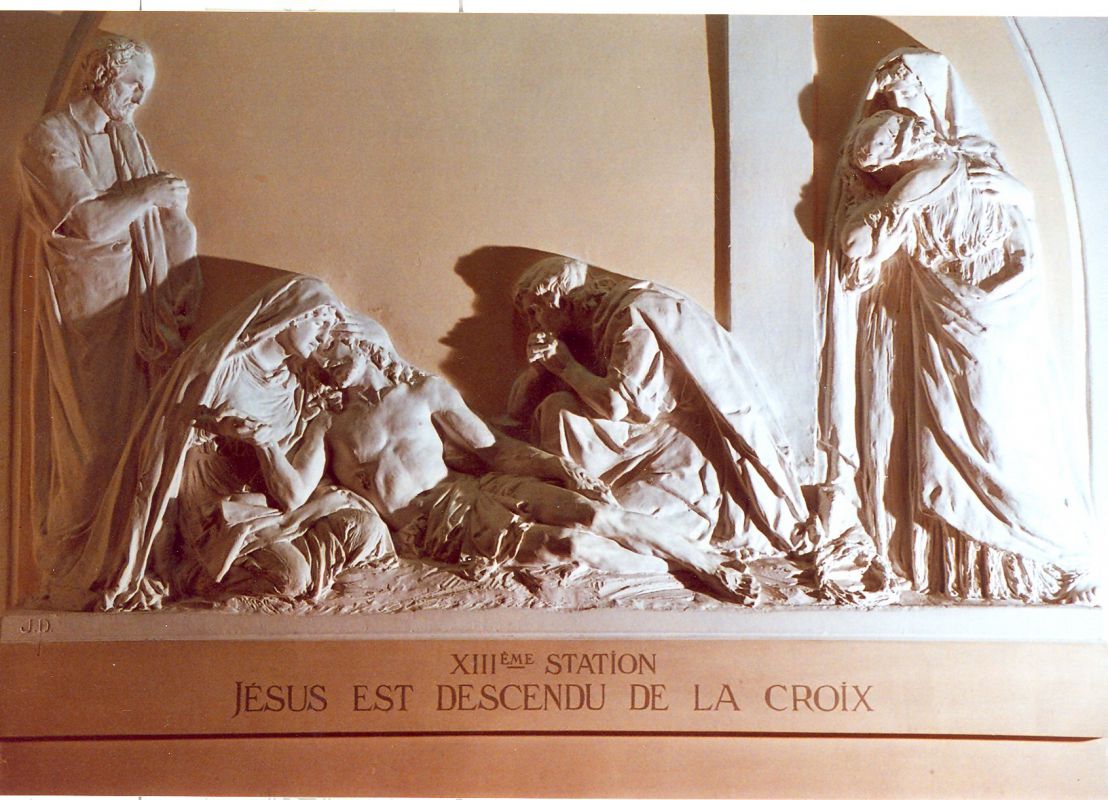
Artworks by Louis Déchin
The Stations of the Cross are carved in bas-relief, featuring life-size figures. The fourteenth station is by Jules Dechin (1869–1947), a sculptor from Lille who studied at the École des Beaux-Arts in Lille and later in Paris.
Translated with www.DeepL.com/Translator (free version)

The stained-glass windows of the Evangelists
Near the chancel are four stained-glass windows dating from the second half of the 20th century, depicting the symbols of the four Evangelists: the man represents Saint Matthew, the lion Saint Mark, the bull Saint Luke and the eagle Saint John. They are signed by Max Ingrand (1908–1969), the renowned French master glassmaker.
Translated with www.DeepL.com/Translator (free version)