Saint-Martin
Place de l'Hôtel de Ville
61290 Longny-au-Perche
Church | XV | Gothic | Catholic Church


Map
Opening hours
01 November - 31 March
Mon 9.00 - 17.00
Tue 9.00 - 17.00
Wed 9.00 - 17.00
Thu 9.00 - 17.00
Fri 9.00 - 17.00
Sat 9.00 - 17.00
Sun 9.00 - 17.00
01 April - 31 October
Mon 9.00 - 19.00
Tue 9.00 - 19.00
Wed 9.00 - 19.00
Thu 9.00 - 19.00
Fri 9.00 - 19.00
Sat 9.00 - 19.00
Sun 9.00 - 19.00
Religious offices
Description
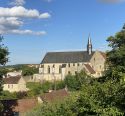
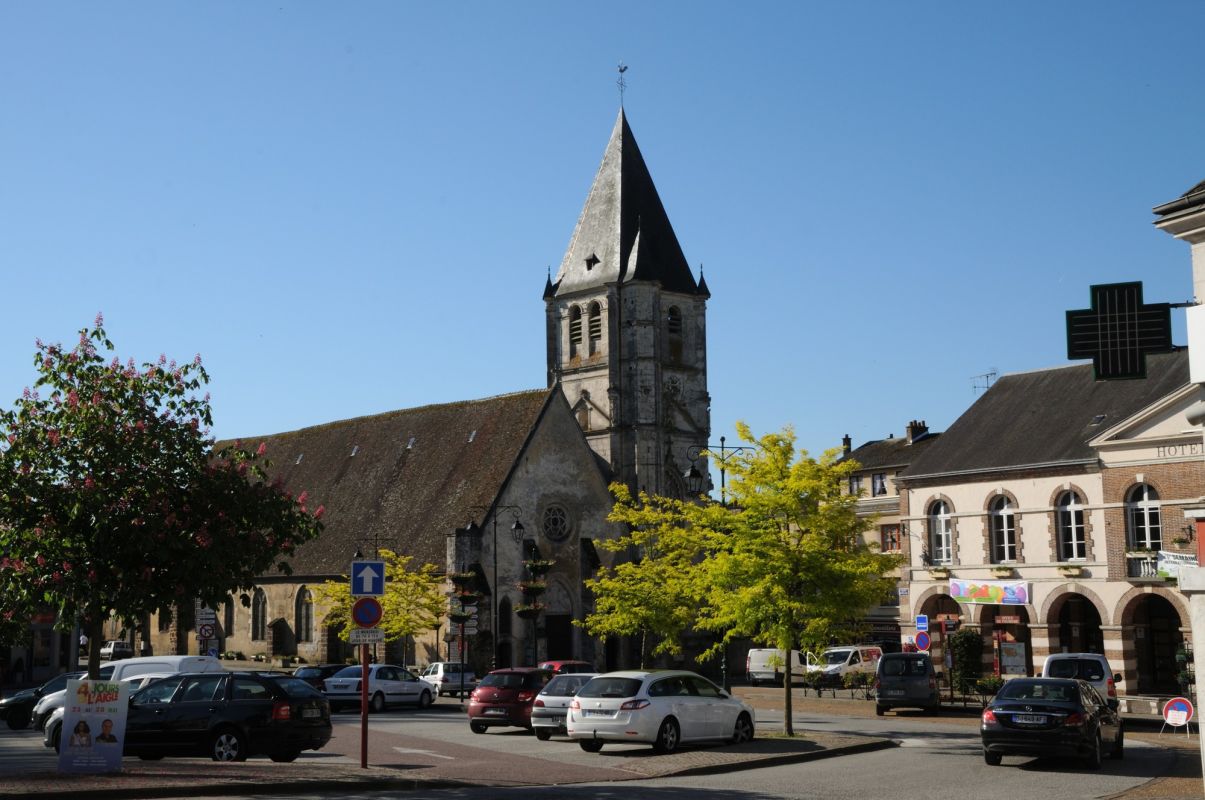
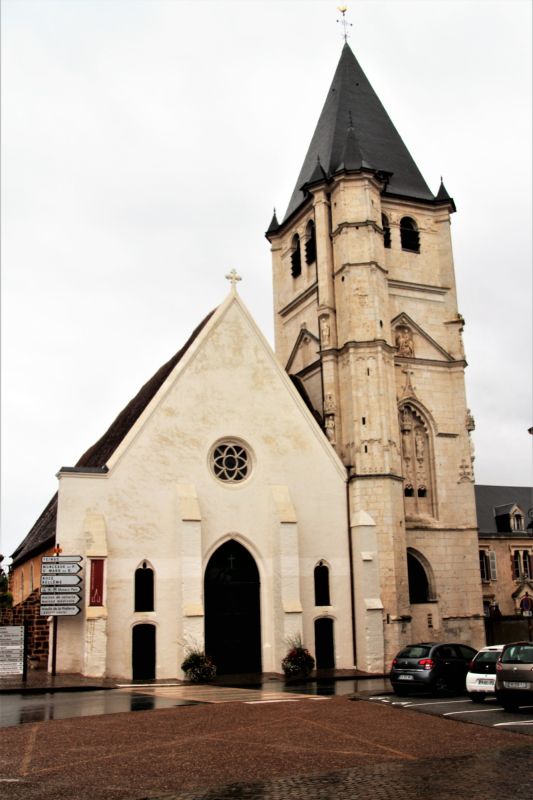
At the end of the 15th century, the decision was taken to build the church of Saint-Martin on the site of the former seigniorial chapel, which is now protected as a Historic Monument.
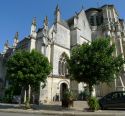
The church has a remarkable square tower in the flamboyant Gothic style, which still displays its rich original sculpted decoration on each side. One side features a statue of the church's patron saint, Saint Martin of Tours on horseback, symbolising Charity, while the other sides feature allegorical representations of Strength, Faith, Justice and Hope.
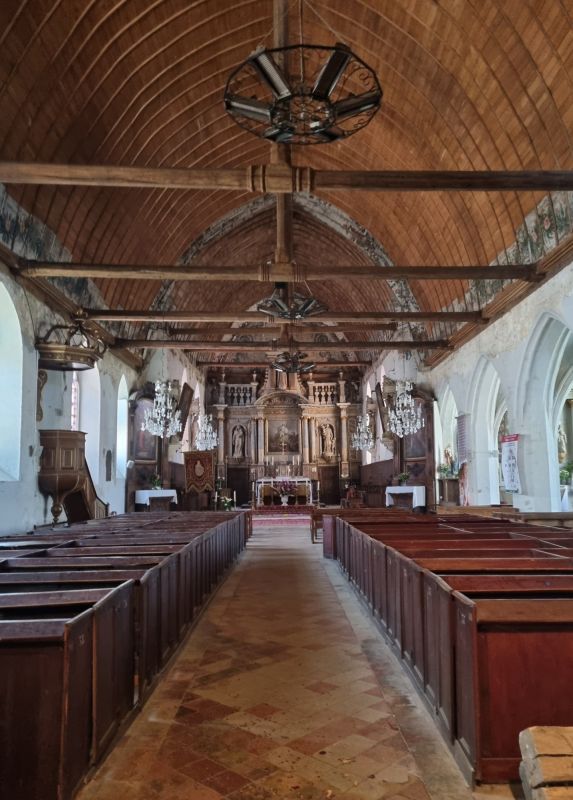
The church portal opens onto a wide nave that leads directly to the splendid high altar. Some of the furnishings, side altars, altarpieces and paintings come from the former Chartreuse de Val Dieu, which was destroyed during the French Revolution.
Don't forget to extend your visit to Longny-au-Perche with a visit to the chapel of Our Lady of Mercy, considered to be one of the most beautiful Renaissance chapels in the Perche region.


Photos
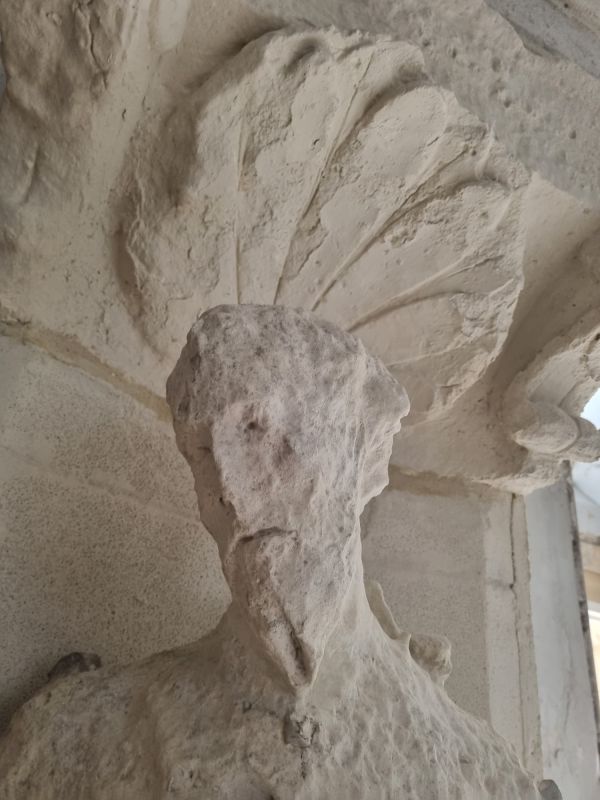
Remarkable elements
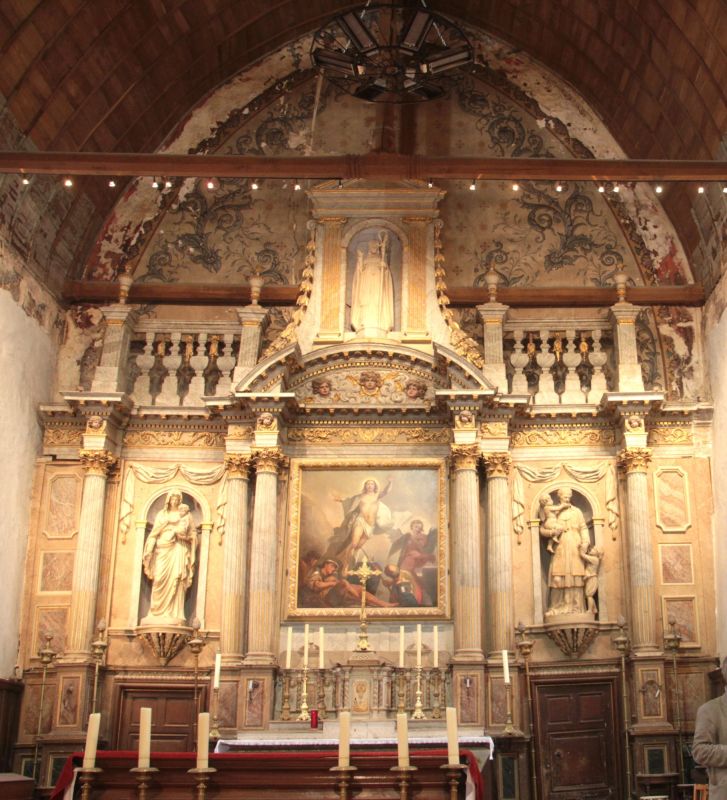
High altar
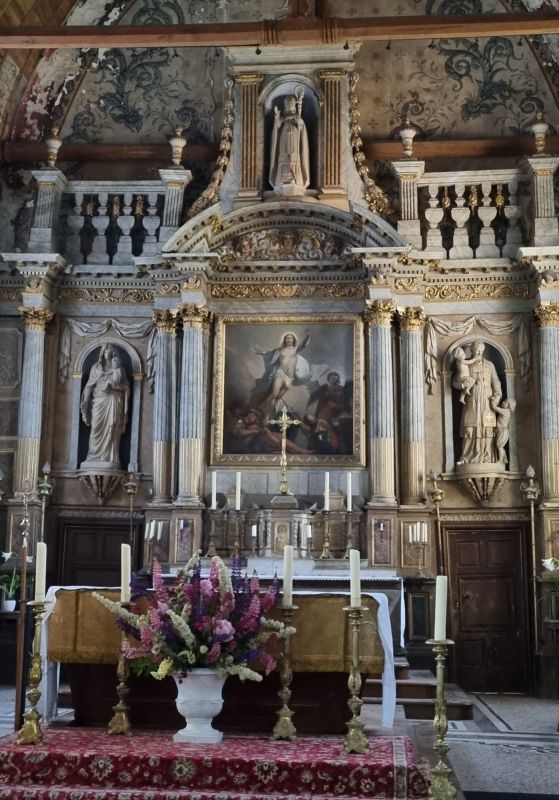
The high altar dates from the 18th century.
The painting depicts the Resurrection of Christ after Carle Van Loo.
To the left is a statue of the Blessed Virgin and to the right that of Saint Vincent de Paul.
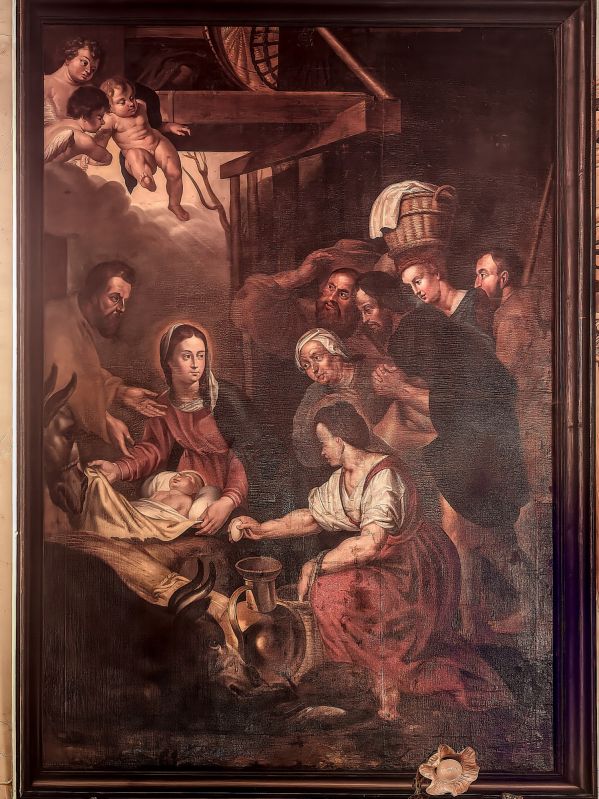
Paints
The paintings and altars at the top of the nave date from the 17th century and come from the Carthusian monastery of Val Dieu.
They represent :
- the Annunciation
- the Baptism of Christ
- the Adoration of the Shepherds, painted in 1619 in Caen, by Côme Duhey after Rubens.
- the Ecstasy of Saint Benedict, from the 18th century, based on a model by Jean Jouvenet.
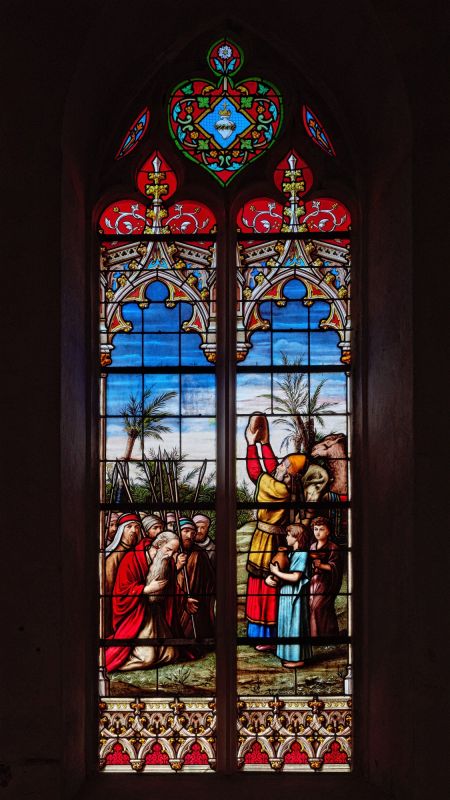
Stained glass
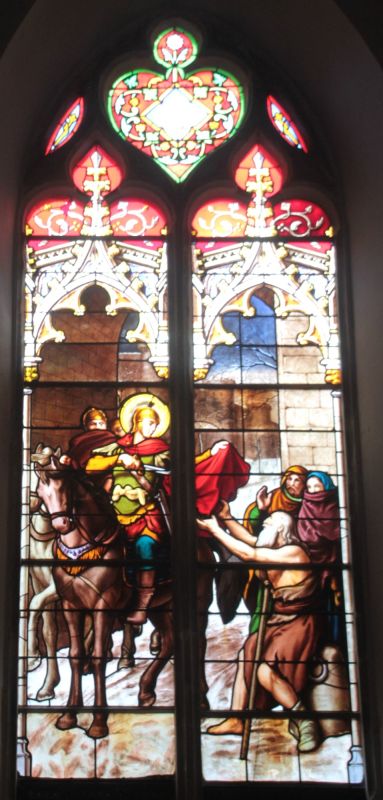
They are signed Haussaire de Reims and date from 1880.
These historiated stained glass windows present several scenes:
- Saint Martin giving his cloak to a beggar
- Christ appearing to Saint Martin and revealing to him that he was the beggar
- the sacrifice of Melchisedech, foreshadowing the Eucharist
- Saint Martin celebrating mass when a ball of fire appears above the altar. Up above, through the mass, souls are freed from purgatory.

Sculptures
The eroded sculptures come from the south-west corner of the bell tower. They date from the 17th century and were brought into the church during recent restoration work. To the left of the entrance is a representation of Justice, one of the cardinal virtues, and to the right is Saint John the Baptist.
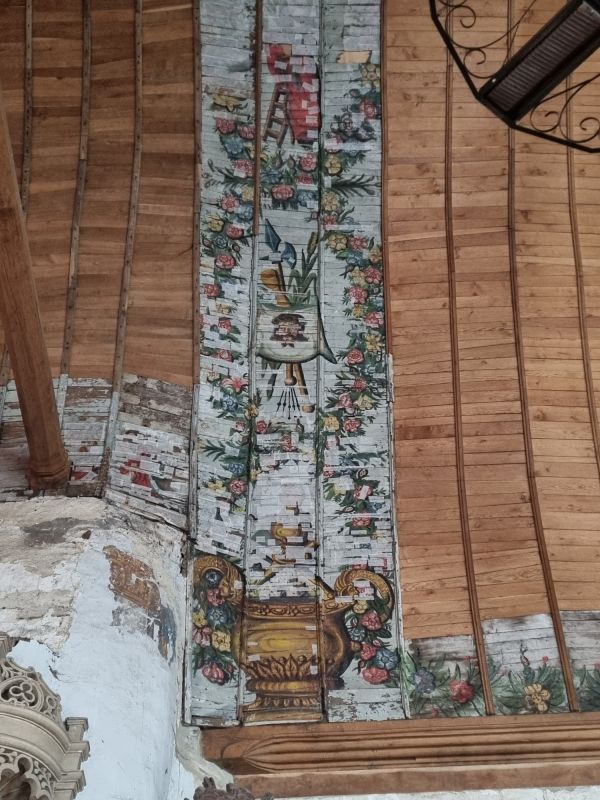
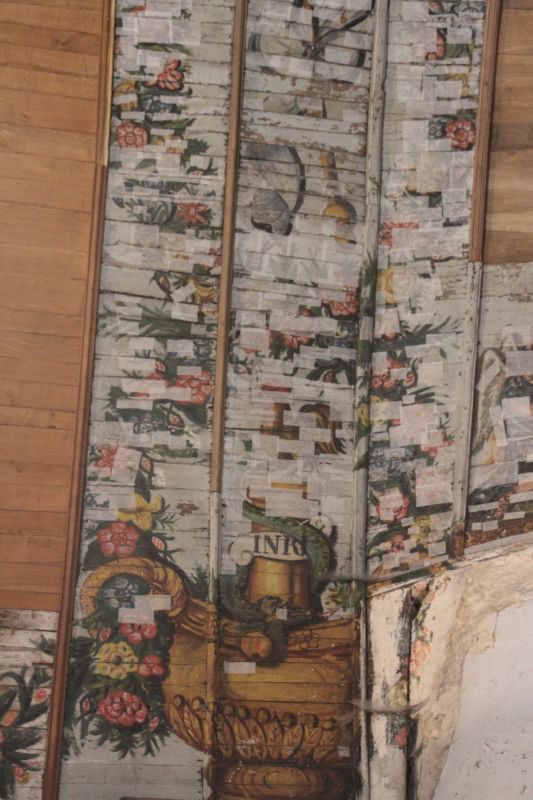
Painted decoration of the vault
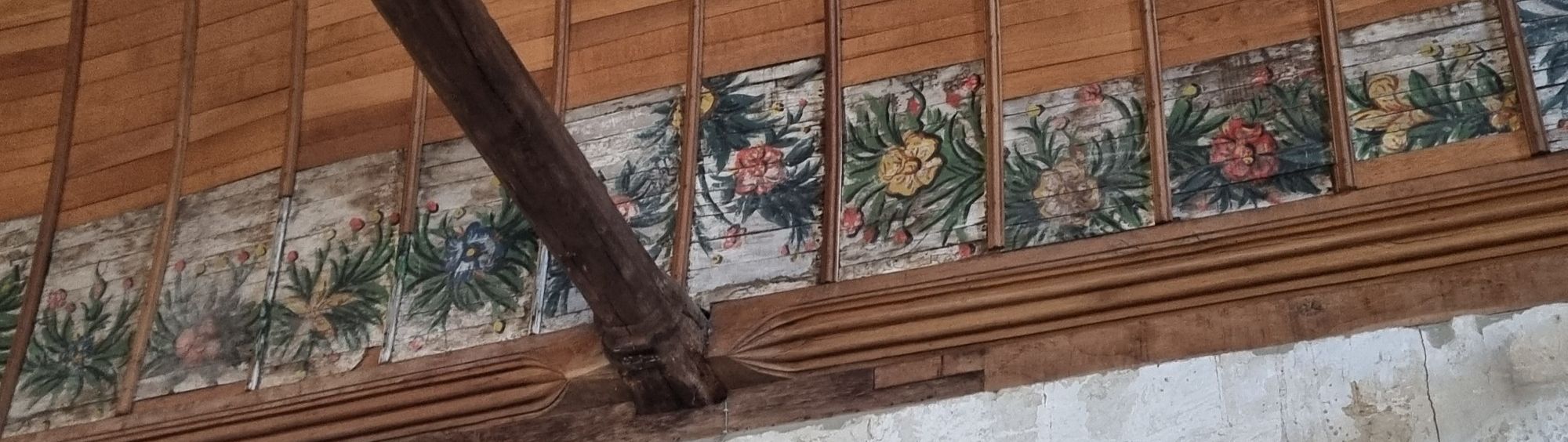
In 1994, demolition of the 19th-century plaster vault revealed a painted decoration commissioned in 1806. It consists of a frieze of floral garlands, cherubs and the instruments of the Passion (cross, crown of thorns).
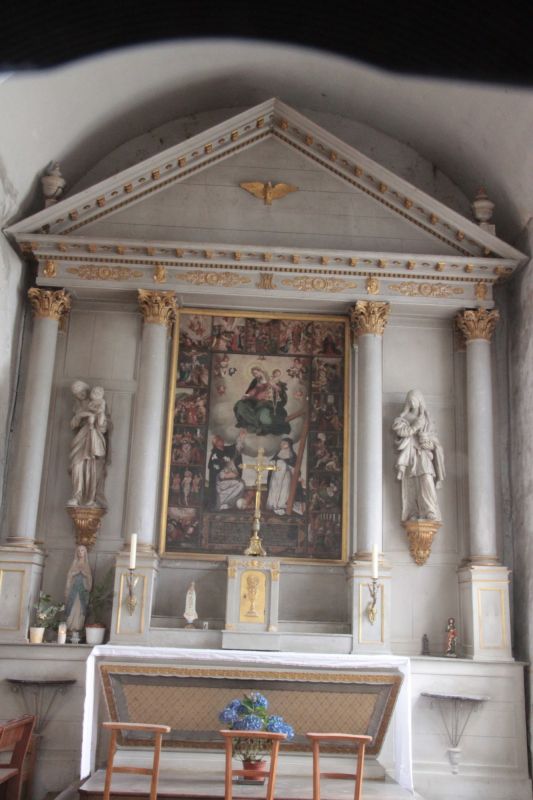
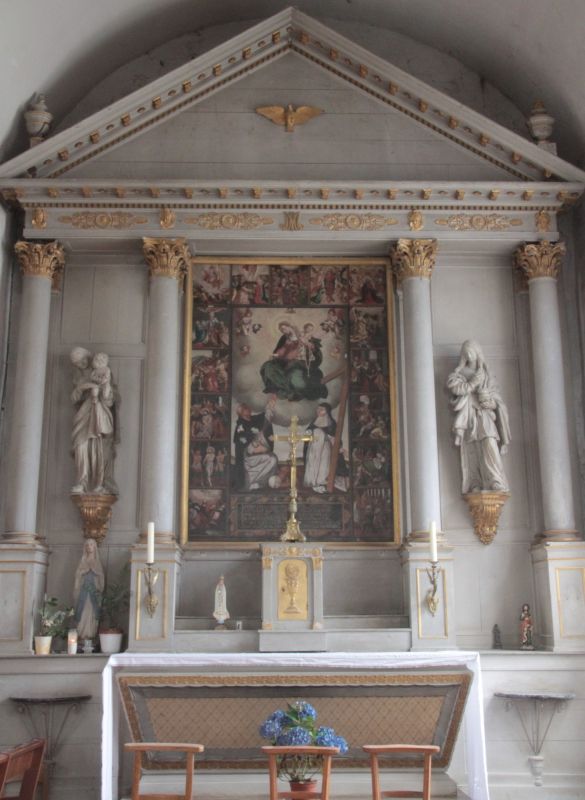
Altarpiece of the Rosary
The painting, dated 1629, depicts the Institution of the Rosary. The Virgin Mary offers the Rosary to Saint Dominic and Saint Catherine of Siena. The scene is surrounded by the joyful, sorrowful and glorious mysteries of Christ's life. The recitation of the Rosary is associated with the fight against all heresies.