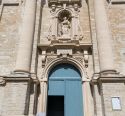

Saints Peter and Paul
Keizerstraat 1
2800 Mechelen
Church | 1694 | Baroque | Catholic Church

Map
Opening hours
01 April - 31 October
Mon -
Tue 13.00 - 17.00
Wed 13.00 - 17.00
Thu 13.00 - 17.00
Fri 13.00 - 17.00
Sat 13.00 - 17.00
Sun 13.00 - 17.00
01 November - 31 March
Mon -
Tue 13.00 - 16.00
Wed -
Thu 13.00 - 16.00
Fri 13.00 - 16.00
Sat 13.00 - 16.00
Sun 13.00 - 16.00
Guided tour
Religious offices
Description
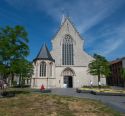
This church was built in 1670 by the Jesuit community of Malines and was first dedicated to Saint Ignatius and Saint Francis Xavier. Since 1659, The community possessed an important relic, a small bone from the arm of Saint Francis Xavier, a Jesuit apostle in India, the Moluccan islands and Japan. With is arm he is said to have baptized thousands of people. The swelling stream of pilgrims necessitated a bigger church.
After the order of Jesuits was abolished in the 18th century, the church became the parish church of Saint Peter and Saint Paul. The interior and its valuable pieces of art remained almost intact and is the oldest remaining fully intact interior designed by the Jesuits.
The rich interior immediately draws our intention. The side walls are covered with enormous paintings. Richly sculpted confessionals stand all around the walls. The presbetary abounds with statues and decorations. The restoration of the interior was finished in 2015 and can now again be admired in its full glory. The paintings will be restored at a later date.
Together with seven other churches, the church of Saint Peter and Paul is managed by Torens aan de Dijle, a non-profit organisation and by the town of Malines.
KIKIRPA : Photo-library online


Photos


Media
Remarkable elements

Marble statue of the Holy Mary
This statue in the left chapel is made by Maria Faydherbe, a female sculptor, which was highly unusual in the 17th century.

Confessionals
According to legend, the 14 confessionals were necessary because of the location of the church near the cattle market, as buying and selling was accompanies by a lot of lying and cheating. The real reason was the original function of this church as place of pilgrimage, and pilgrims had to be free of sin before being allowed to touch the many relics.

Pulpit
The finely sculpted pulpit symbolizes the missions of Saint Francis Xavier on the four continents (Oceania was not a continent in those days). Europe is depicted as a cornucopia and the book of wisdom.

Communion rail
Ten scenes depict the works of the missionary. In the first one, he carries a young Indian, symbol of his sacrifice. In the second one we see the symbols of a pilgrim: a pouch, staff and gourd and a hat, representing pilgrims traveling the world.

Crypt
The current restoration works will make the crypt more accessible. The crypt stretches over the entire width under the front of the church. It contains the graves of around 80 Jesuits who died in Malines in the 17th and 18th centuries.

Paintings
Ten large paintings show the life of Francis Xavier as missionary and miracle worker. In 1798 they were removed and rehung in the wrong order. Other works in the church also depict his life. The fourth painting on the left shows Francis in a baroque setting, kneeling before an Indian ruler and presenting a book, likely the Bible. The ruler’s feathered headdress marks him as “Indian” to Western viewers, though Francis worked in Asian India.