Saint Peter & Urban
Huiseplein
9750 Huise-Zingem (Kruisem)
Church | XIII/XIX | Neoromanesque | Catholic Church


Map
Opening hours
01 June - 30 September
Mon -
Tue -
Wed -
Thu -
Fri 10.00 - 16.00
Sat 10.00 - 16.00
Sun 10.00 - 16.00
Guided tour
+32 9 383 51 33
Religious offices
Description
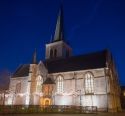
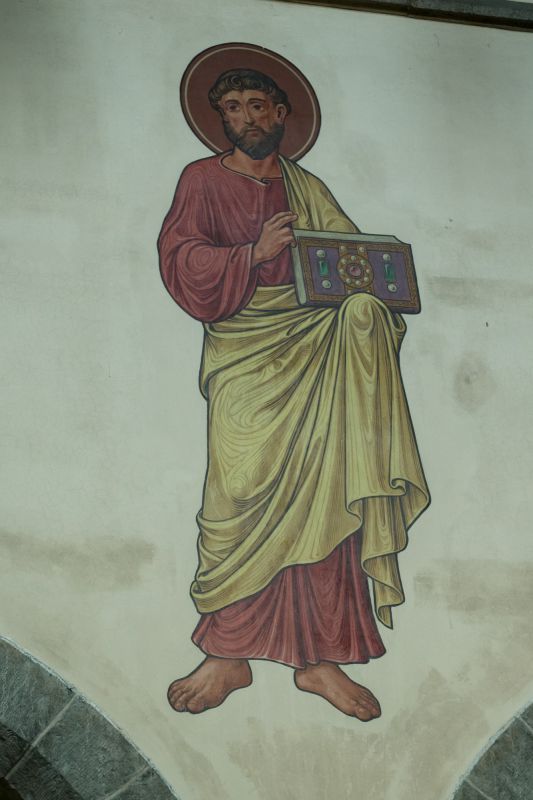
In 1889, architect Auguste Van Assche left his mark on the whole. He also designed the altars. The stained glass windows (G. Landon) represent Saint Peter, Saint Urban, and of course Saint Adalard of Corbie. In 1901, the interior was painted in Neo-Gothic style according to plans by Fr. Coppejans. Of these murals, only the apostles remain due to severe damage during the Second World War. In 1980, the rest was unfortunately painted over.
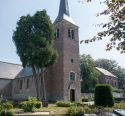
Around the church one can still find the old cemetery. Several 18th century tombstones were incorporated into the walls of the church entrance.
Moreover, spread throughout the village there are fifteen little chapels of the Ommegang. One can find a first chapel near the church, next to the Liberty Tree: a little pier chapel called “The Coronation of the Virgin Mary”.
Visit the website of the village of Zingem to learn all about their churches.
KIKIRPA : Photo-library online

Photos
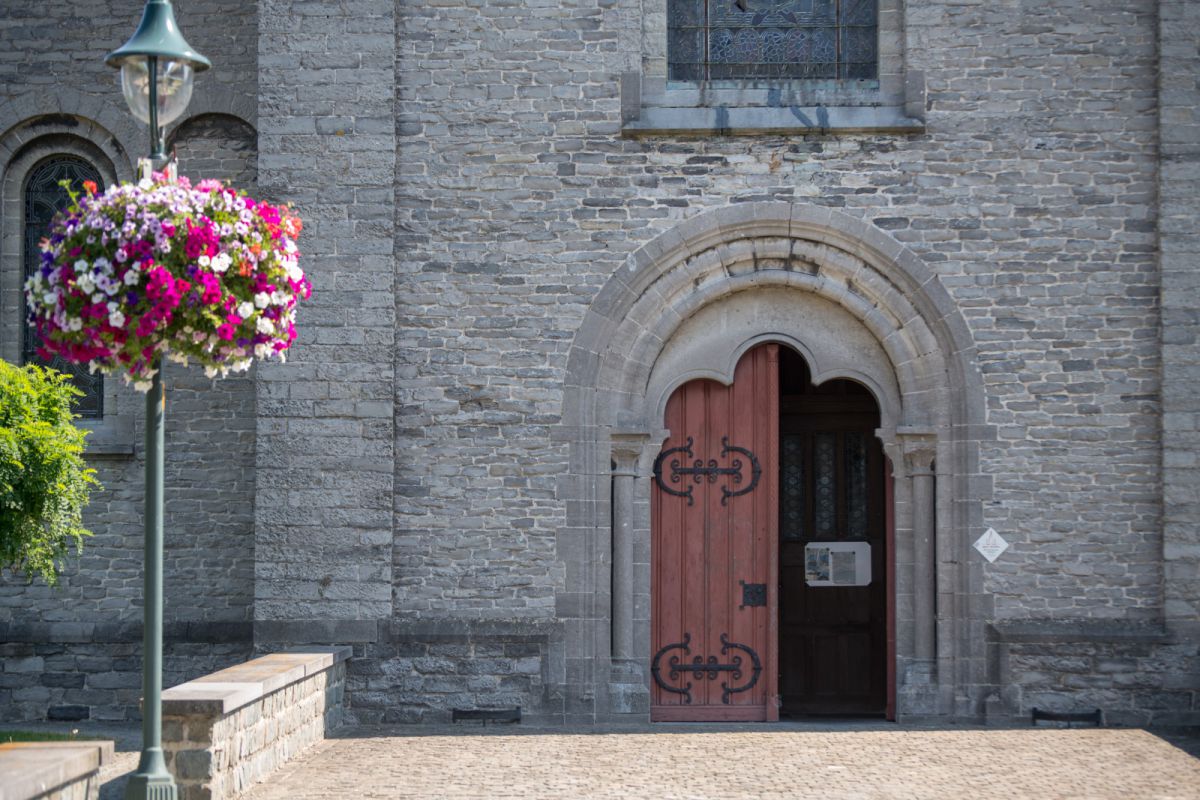
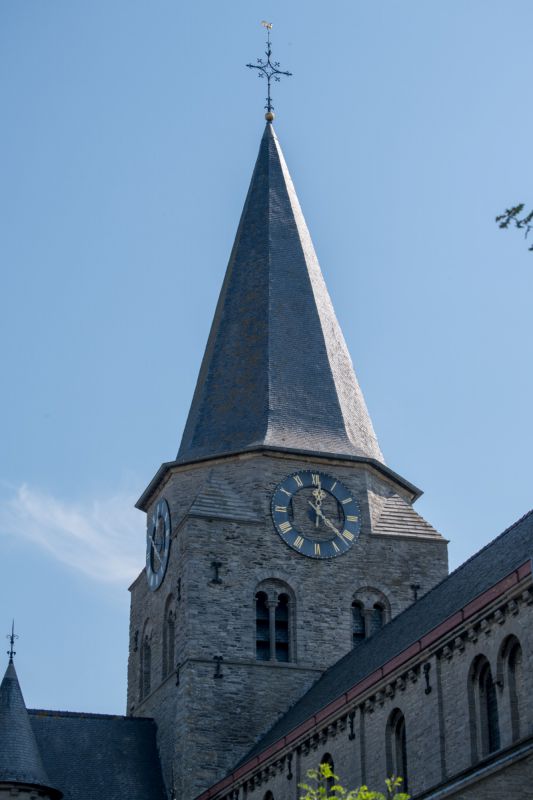
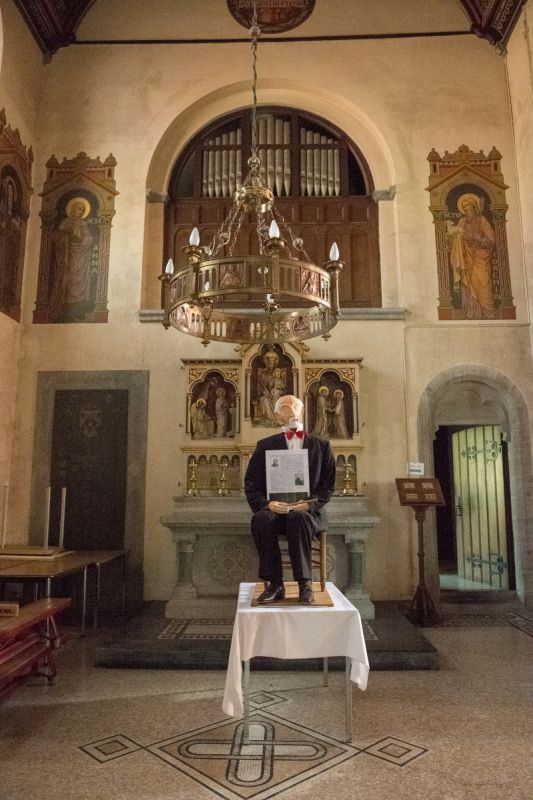


Remarkable elements

Saint Adalard
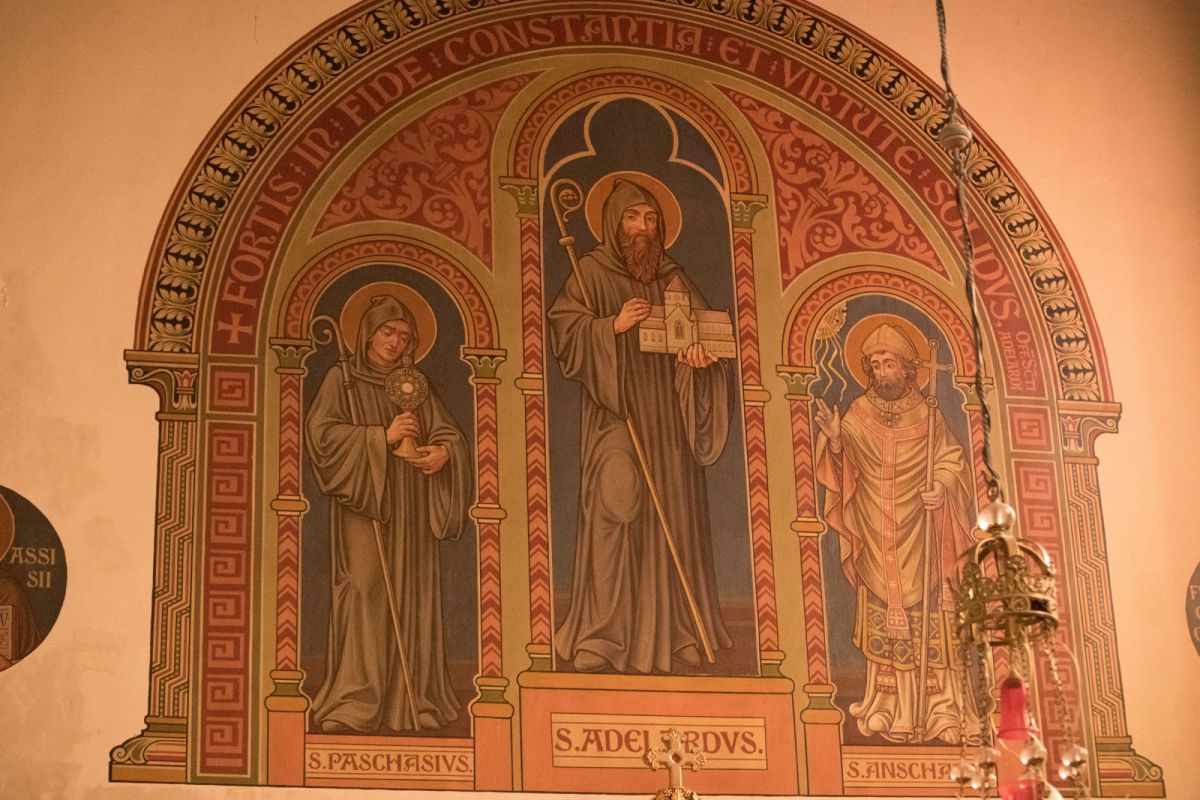
H. Adalard, nephew of Charlemagne and abbot of Corbie, is the local saint and patron of agriculture and horticulture, fitting for rural Huise. His cult revived in the late 19th century: his statue stands in the cemetery, and in the renovated church he appears on the south aisle altar with H. Peter and H. Urban. He is depicted both as abbot, with staff and monastery, and as agricultural saint with a sickle.

Our Lady with Child Jesus
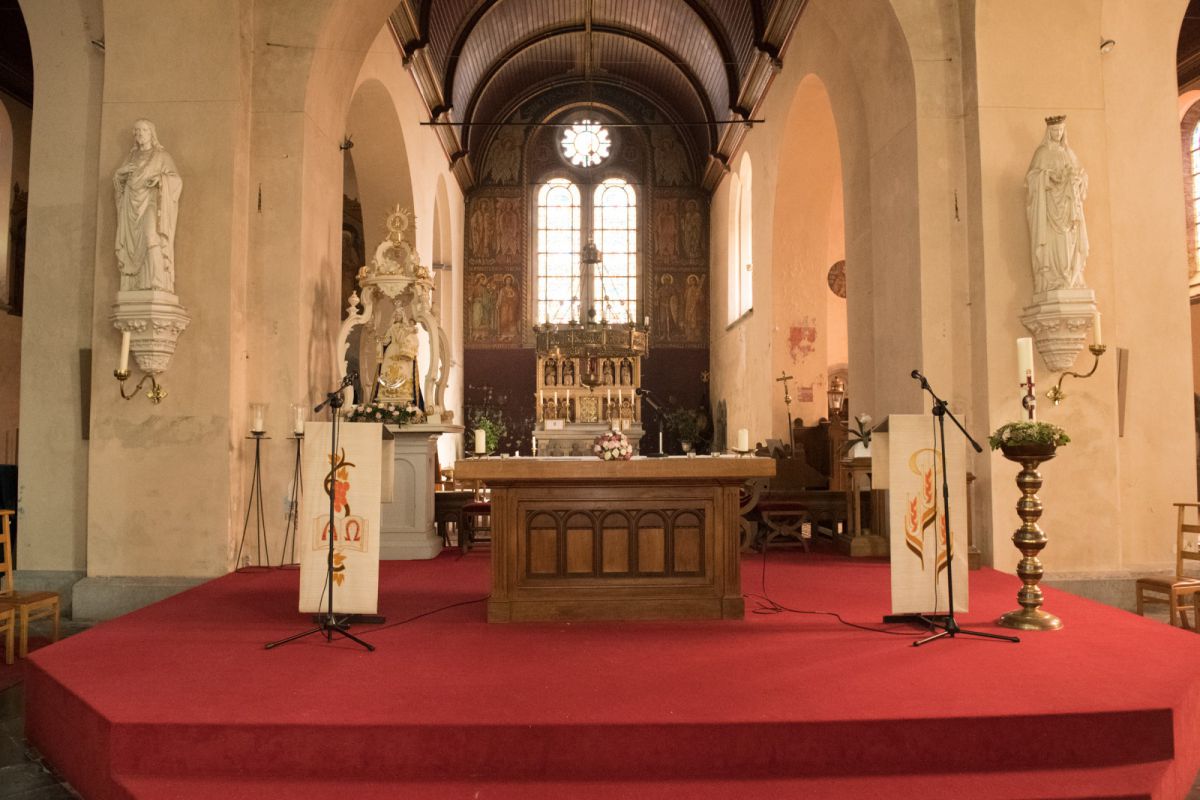
The statue of Our Lady with Child Jesus is an expression of the great worship of Mary in this region. It wears beautiful clothes and a silver crown and stands under a canopy. It was probably made in the 18th century. The statue, the clothing and the canopy were beautifully restored in 2013 by a private sponsor.

Main altar with stained-glass windows
The main altar from 1895 is made of painted stone in Romanesque style. Eight church fathers and, on the tabernacle, the four evangelists are depicted. The intention is clear: here the Good News of Christ is proclaimed and explained.
The two high stained-glass windows behind the altar were made by G. Ladon and depict scenes from the life of Christ. At the top is the Ascension (His feet are just visible!).
The murals show mighty angels.

Various tombstones
In the past, notables of the village were buried in the church. From 1800 this was no longer allowed. Some tombstones are embedded in the back of the church wall: you can see Vijvens, Thienpondt and Landrieu mentioned. In front of the northern aisle is the huge brass graveplate of the family della Faille d'Huysse. These barons were the mayors of Huise for 150 years.

Church treasures in display cabinet
No church without church treasures! Here are beautiful chalices and monstrances, partly from the 18th century, made of gilded silver. Special are the silver objects that were donated in the 18th century by the (congregations for) boys and girls of the village, but also by the weavers.

The Schyven organ
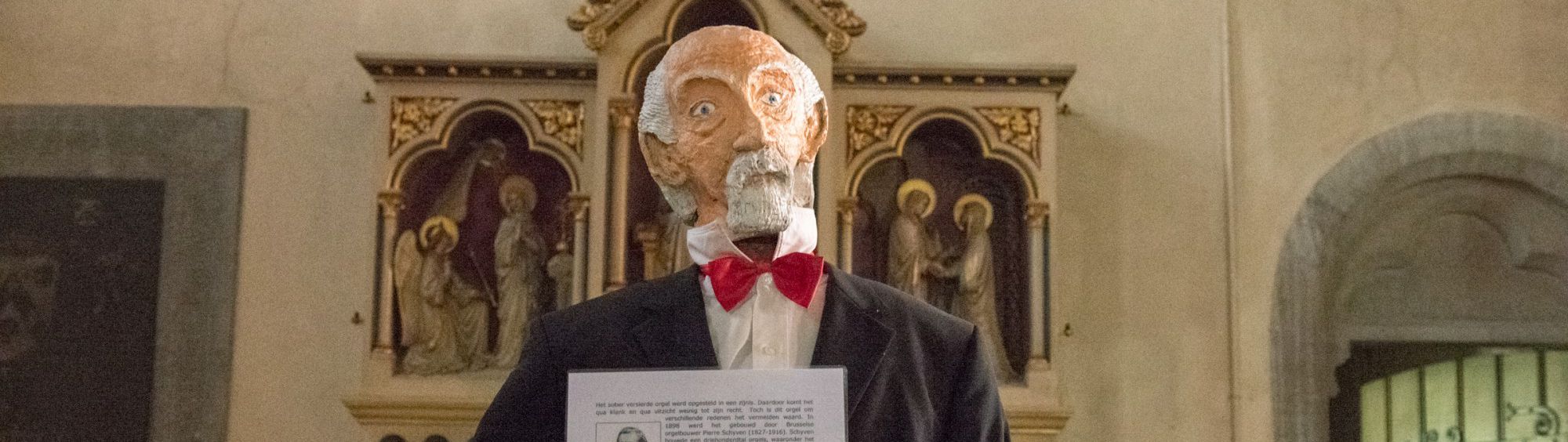
The Schyven organ from 1898 is a fine example of the 19th-century symphonic-orchestral romantic style for organs. It was built in Brussels after mediation by Frans-August Gevaert (1828-1908). This famous composer and music theorist was born and raised in Huise, in the house to the right of the church. He also paid for the bass pipes of the organ.