
Saint Nicholas of Myre
Grand-Place Pierre Delannoy
7850 Enghien
Church | 1310-1848 | Neogothic | Catholic Church


Map
Opening hours
01 January - 31 December
Mon 9.30 - 17.00
Tue 9.30 - 17.00
Wed 9.30 - 17.00
Thu 9.30 - 17.00
Fri 9.30 - 17.00
Sat 9.30 - 17.00
Sun 9.30 - 17.00
Chapel Our Lady of Messina :
Monday - Tuesday - Thursday - Friday : 6 pm - 7 pm
Religious offices
Saturday 5.30 pm
Sunday 11 am
EgliseInfo
Description
Although the origins of the church are little known it is certain that the main altar was consecrated in1347.Throughout the centuries the building has been sacked and burnt several times but fortunately it was restored to its original state during the 1960’s.
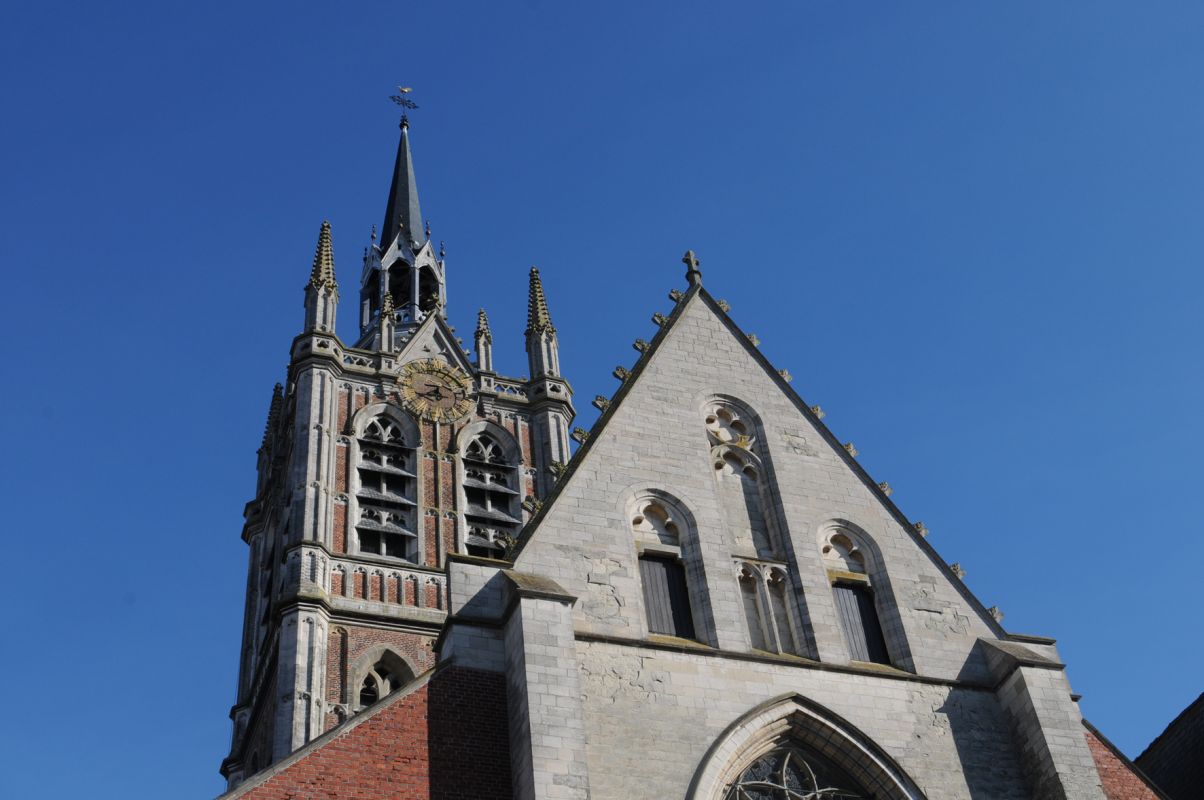
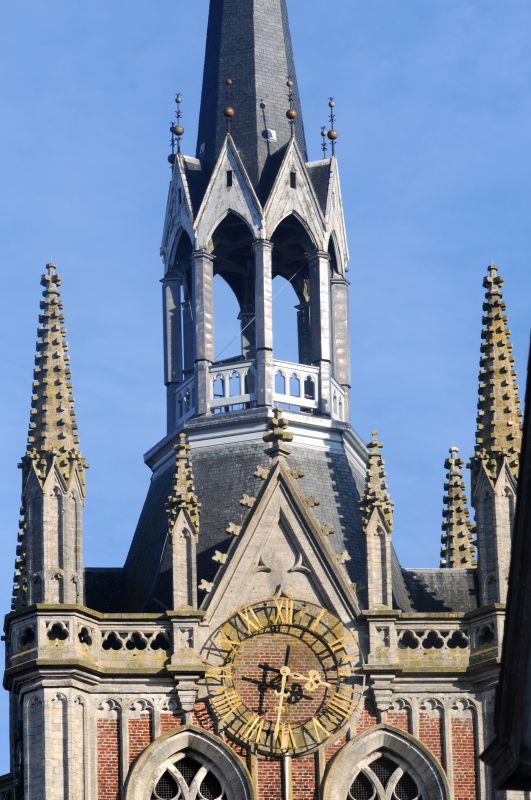
The Brabant style Gothic tower stands out with its ringing carillon. This is one of the oldest in Belgium with its 51 bells, of which the oldest dates from 1566. The small houses that used to surround the church have been cleared away. It was through these that the Dukes of Arenberg used to attend services so as not to mix with the common crowd. One can see here and there in the church the place that noble families like the Arenbergs, the princes of Croy and more recently the Empains occupied in Enghien.
There are several noteworthy items in the church, the most important being the superb 16th century altar piece from Antwerp in the chapel of Our Lady of Messina. In a series of detailed carved scenes this altar piece tells the story of Mary from the conception of her child and other episodes such as the visit of the three wise men, the circumcision and the assumption. It is worth taking the time to look at this closely as it tells a story in pictures. There are also numerous stained glass windows, some old and some contemporary by Max Ingrand (1964).There are some 15th century statues, baptismal fonts and a fine pulpit.

Photos



Remarkable elements
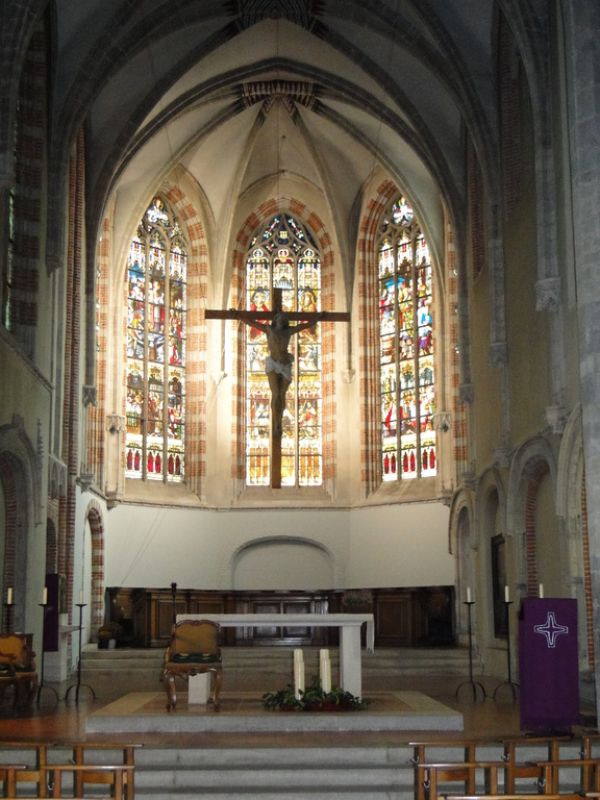
Choir and stained glass windows
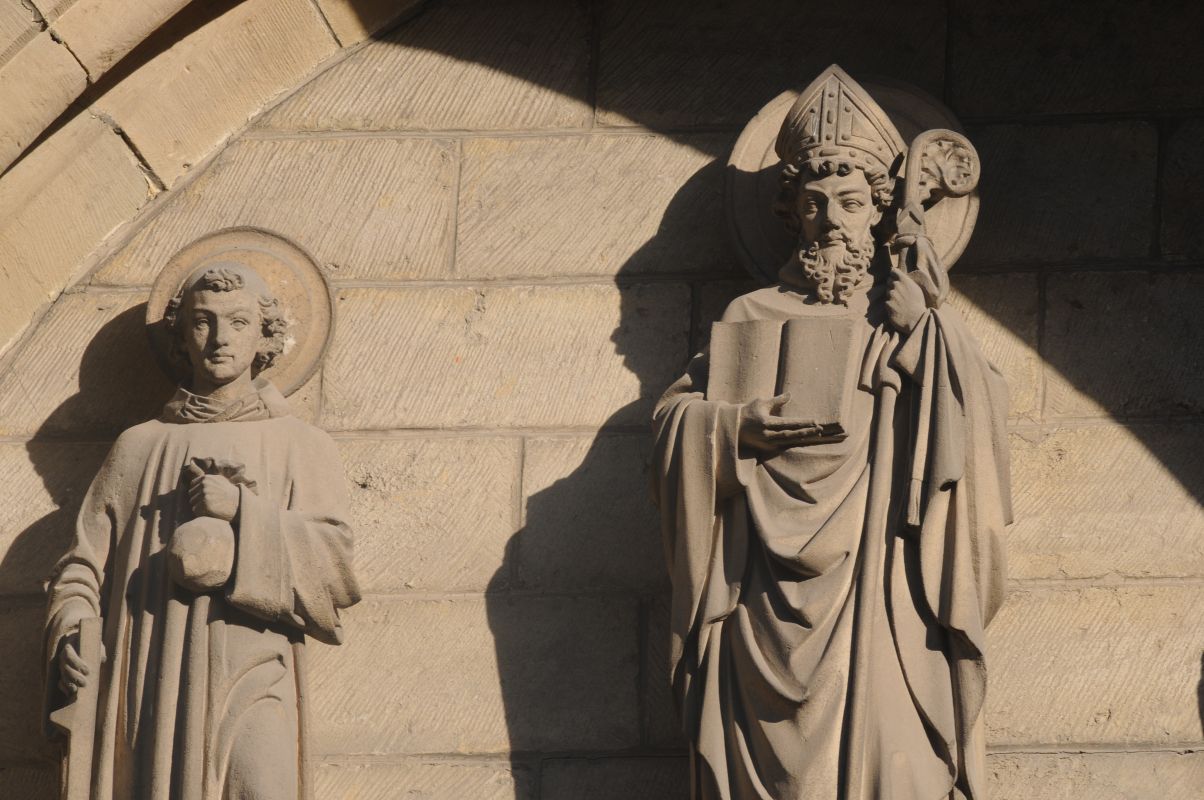
Built by the d’Enghien family and rebuilt by the Luxembourgs, the choir bears their coats of arms. Six stained glass windows depict the martyrdom of St. Sebastian, the 1580 assault on Enghien, St. Lawrence’s martyrdom and procession, the beheading of St. John the Baptist and the 1399 discovery of his statuette, St. Eloi visiting a goldsmith’s workshop and the 1431 renewal of the Brotherhood’s privileges, plus the Virgin’s crowning and St. Nicolas resurrecting the three children.

Chapel Our Lady of Messines and her altarpiece
St-Nicolas Church once had several chapels; three remain, the oldest being St. Eloi’s Chapel (early 12th c.), known as Our Lady of Messines. The Brotherhood of St. Eligius met here (13th c.). Max Ingrand’s stained glass (1962) shows the Nativity, Wedding at Cana, Calvary, and the Holy Spirit’s descent. The Altarpiece of the Virgin, a classified Treasure attributed to Moreau, depicts 125 figures; the predella shows Jesse’s tree, the center scenes from Mary’s life.
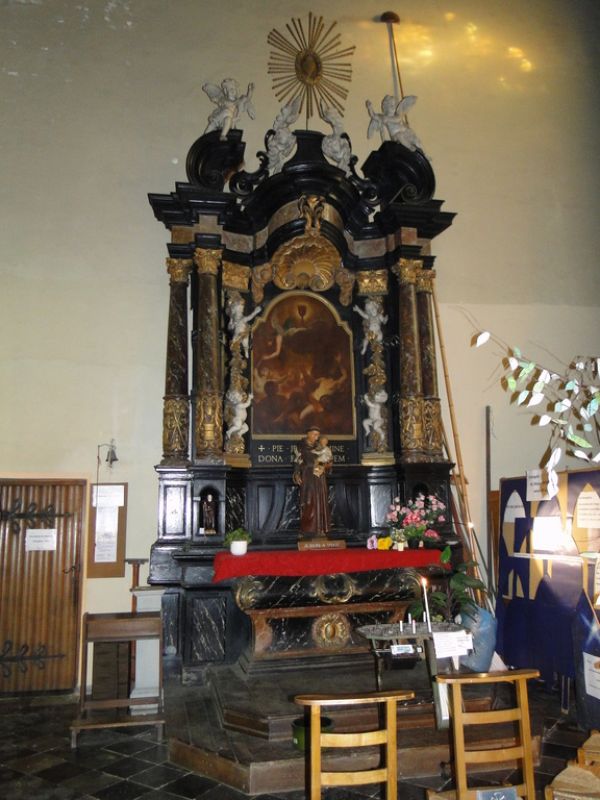
Chapel Saint Anna and her ceiling
In this chapel met the Chamber of Rhetoric, or Brotherhood of Saint Anne. The armorial stucco ceiling (1690) shows a dove as the Holy Spirit between Enghien’s coat of arms and the Rhetoricians’ emblem; between the Duke of Arenberg’s arms and his wife’s are a basket and flowers illustrating the motto “Penser y fault.” At the center, a tree grows from St. Anne’s bosom; at the top, the child Jesus holds a cross and a flower. The stained glass (1930–31) recalls the story of the stolen hosts.
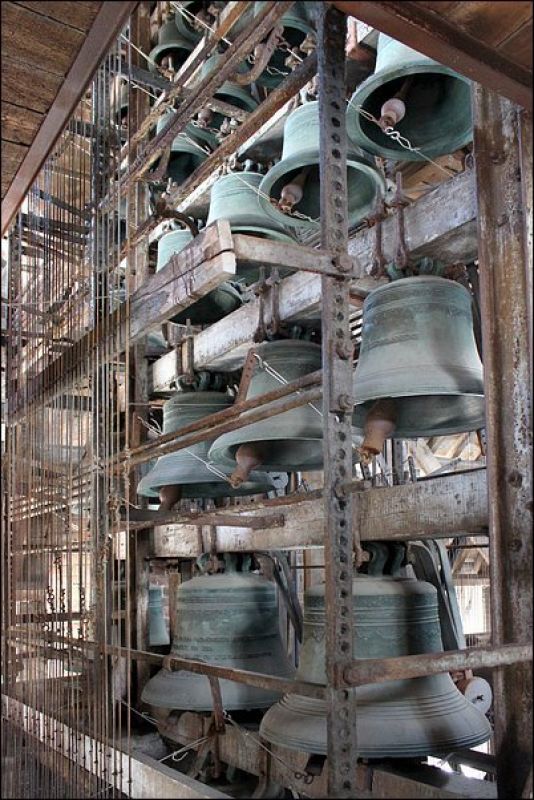
The church bells (bell tower)
The tower of the church had a carillon since the end of the 14th century. Restored and completed several times (in 1756, 1925 and 1955), it includes fifty-one bells. The clock dials and the drum of the automatic bronze carillon date from 1765 (Duméry). The mechanism was electrified in 1989. A complete restoration of the numerals and dials was carried out in November 2013.
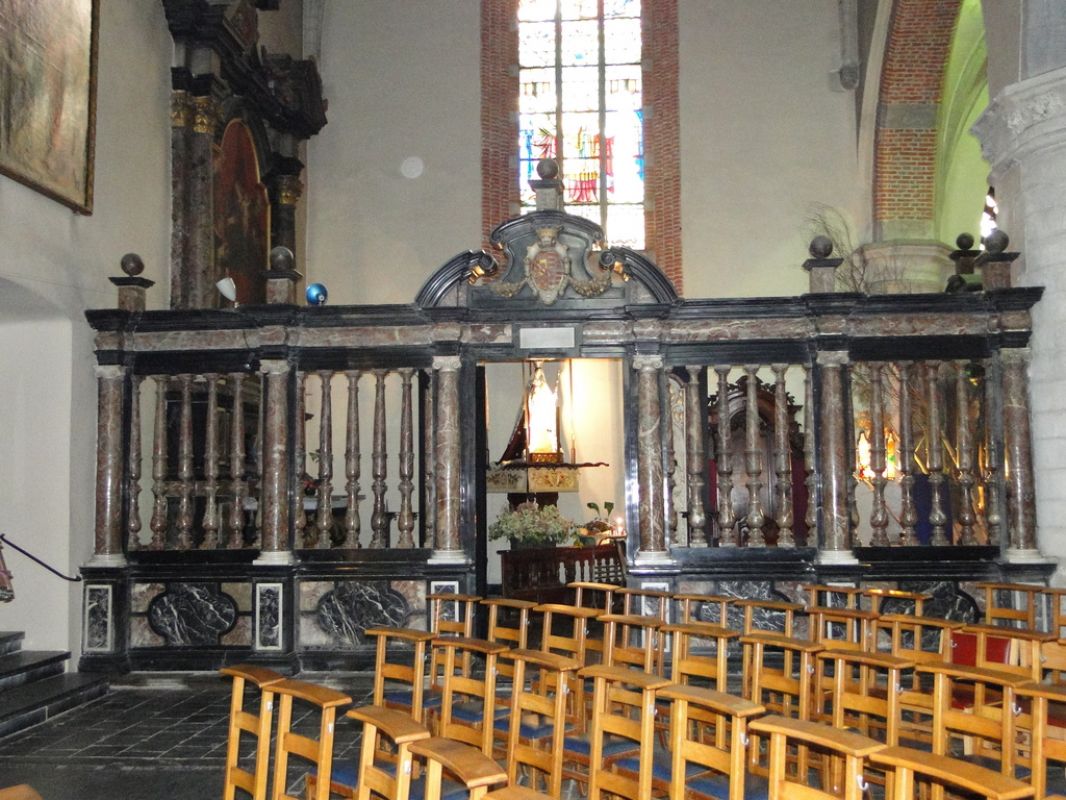
The chapel of Our Lady of the Rosary
The Chapel of Our Lady of the Rosary (1634) was gifted by Duchess Anne de Croy, whose coat of arms decorates the balustrade of 34 red marble columns. The panels copy doors from a similar balustrade in St. James Church, Antwerp. The painting (attributed to Antoine Van Huvelle, 1635) shows the Virgin holding the infant Jesus and offering the rosary to St. Dominic, with Duchess Anne kneeling. The 17th-century communion bench and confessional came from Enghien’s former beguinage chapel.
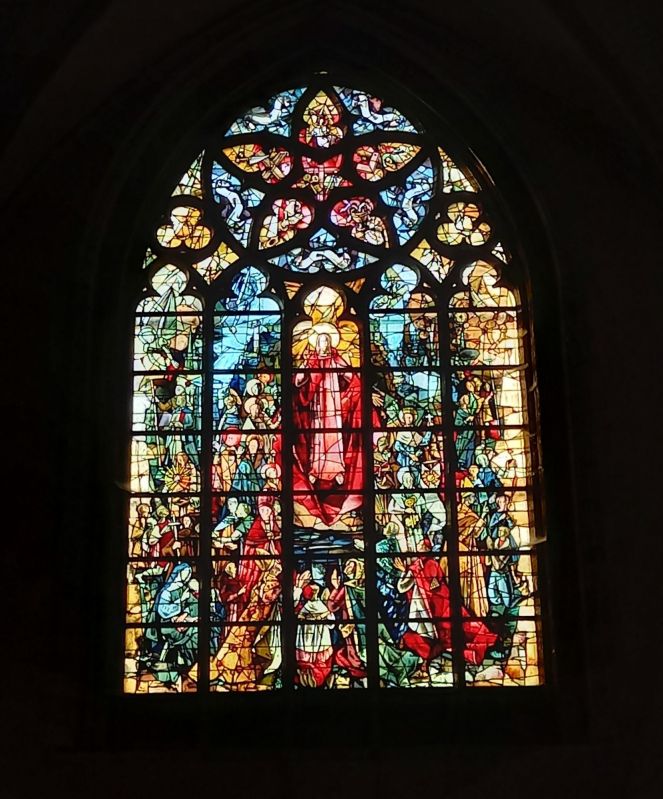
Large stained glass window
Above the main entrance, Max Ingrand's large stained glass window evokes the Apostolate (1964). In the rose window, the attributes of the apostles; in the centre, Christ sends Christians throughout the world; an apotheosis of faith, hope and charity... Remarkable stained glass window by the size and density of the subject as well as by the richness of the colours.
Events at
Saint Nicholas of Myre

Nearby


Circuit
The Middle Ages in the Haute Senne region (from Steenkerque to Enghien)
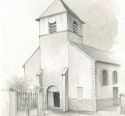
In Steenkerque, home of Guillaume de Gavres, the church will observe your actions. You will then pass on the road to Petit-Enghien before arriving in the medieval city of Enghien. You will meet Jonathas, Saint-Éloi and local lords.
The Middle Ages in the Haute Senne region (full circuit)
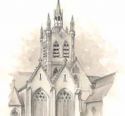
Proudly erected for centuries, churches are witnesses to local history. With castles and farms, they tell about an era and its customs. Are you more of a car person? Our fourth route offers you all the buildings in the program. A great way to learn everything about the region!