Saint Gery
Rue Ferrer - Place Communale
7190 Marche-lez-Ecaussinnes (Ecaussinnes)
Church | 1566-1777 | Gothic | Catholic Church


Map
Opening hours
01 January - 31 December
Mon -
Tue 9.00 - 16.00
Wed 9.00 - 16.00
Thu 9.00 - 16.00
Fri 9.00 - 16.00
Sat 9.00 - 16.00
Sun 9.00 - 16.00
Contact : Yves Dutrieux - fyn@skynet.be
+32 67 48 56 59 +32 495 78 12 83
Religious offices
every second Sunday 9.30 am
Description
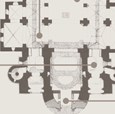
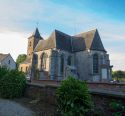
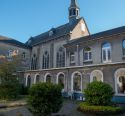
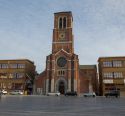
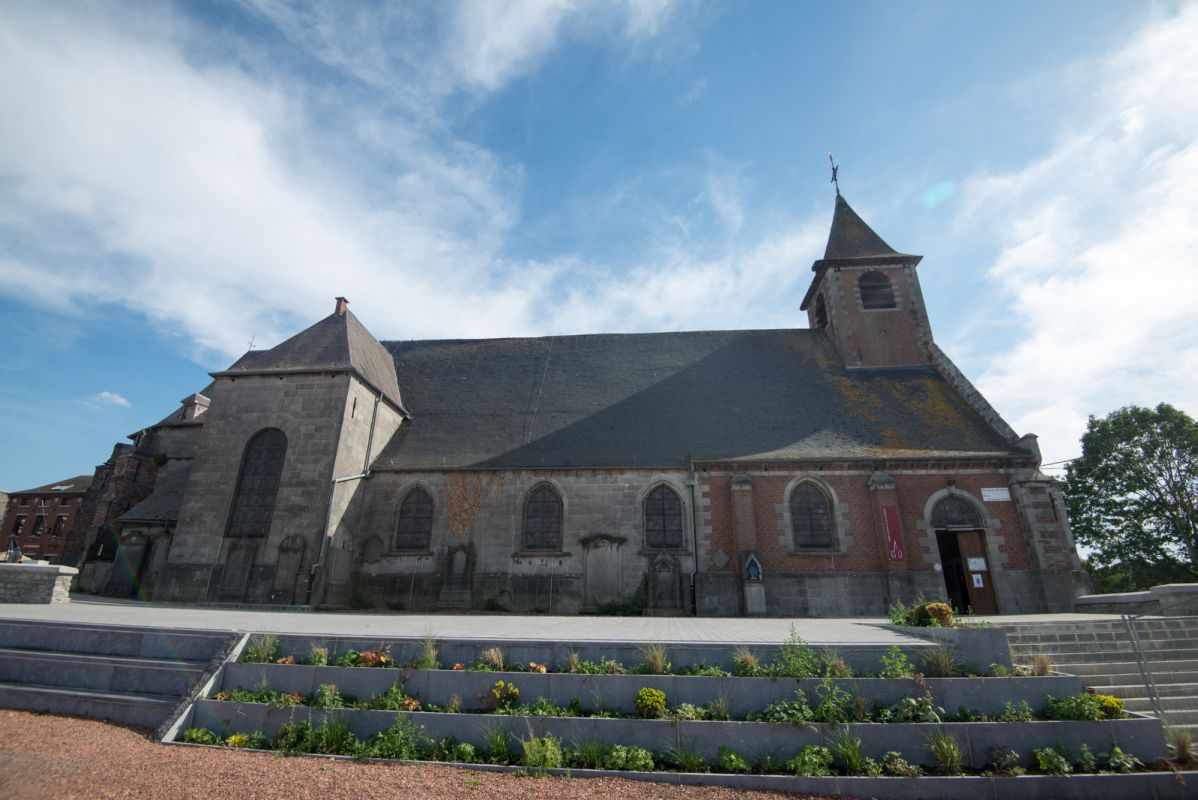
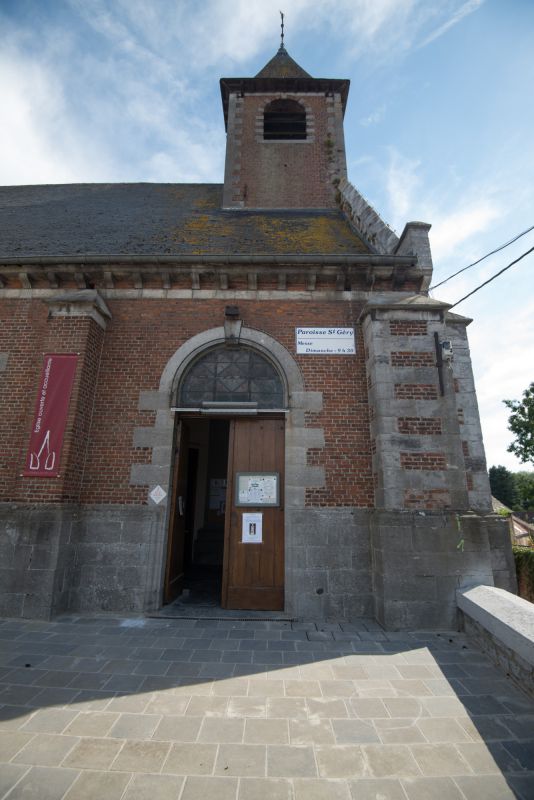
The ancient church was destroyed between 1510 and 1529.The present church was built in 1531. In 1777 the church was enlarged and given a new bell tower, unfortunately with walls of brick.
Outside, an old stone carries the inscription Anno 1573 Ecco panis. This represents the Eucharistic coat of arms which was found during the restoration of the church in 1930-32.
A restoration of the church began in 1899 : it started with the placing of stained glass windows and in 1900 with an overall refreshing of the paintwork. Around 1910 the graveyard around the church disappeared to make way for the “Grand-Place”. The bones were dug out and carried away to the fields of Mignault.
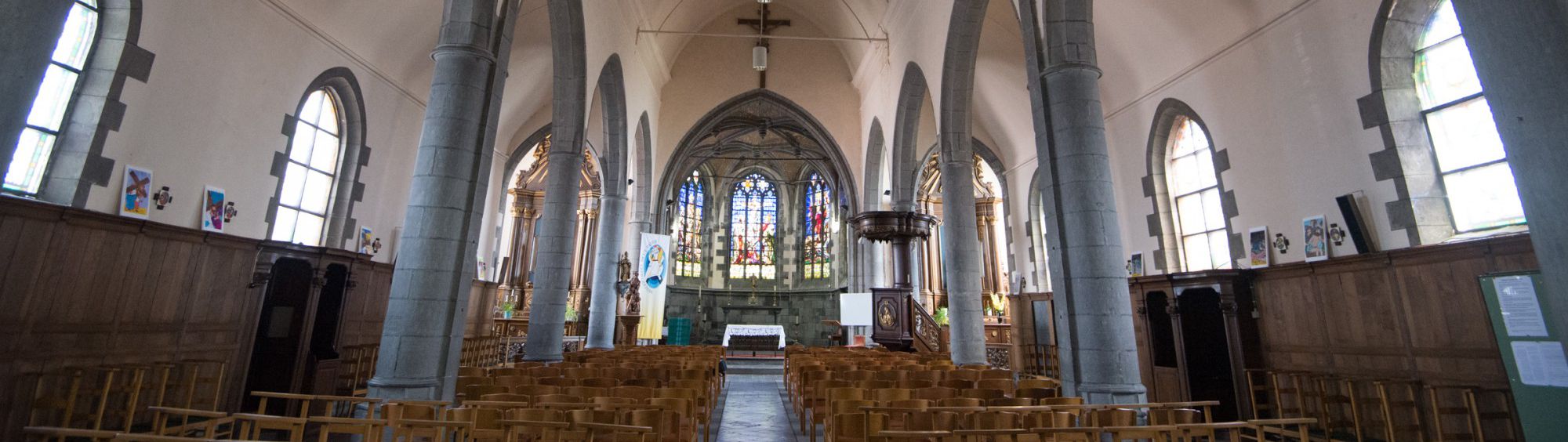
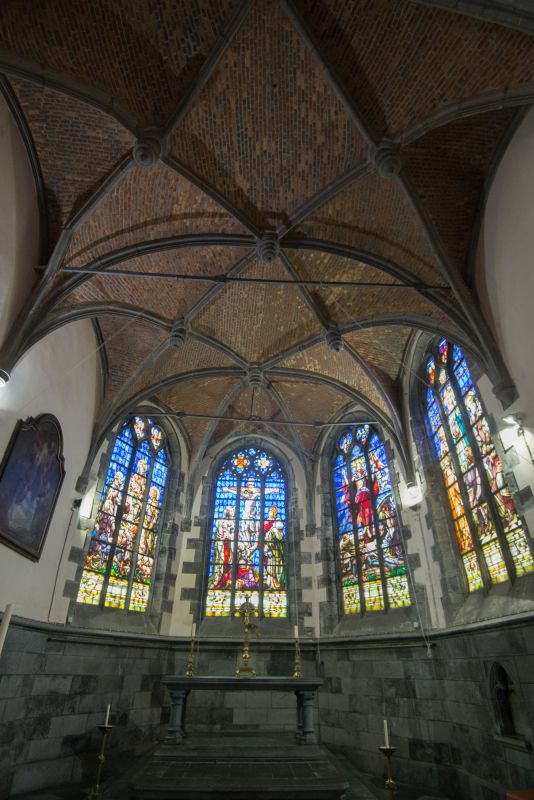
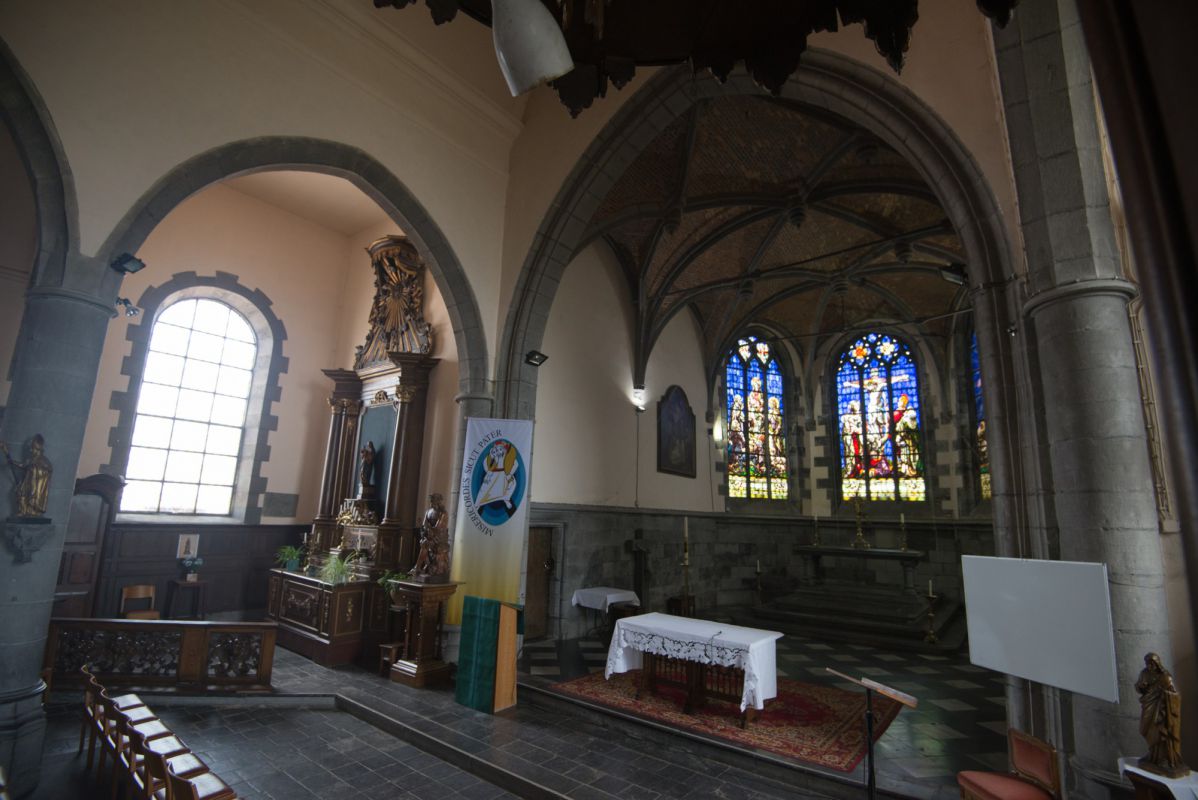
The abbot Jules Gailly achieved another restoration in 1930-32: the high altar and its monumental altarpiece, the base and the choir stalls were all in wood and in ruins. They were replaced by an altar and base in stone. Stained glass windows were bought to embellish the windows of the choir.
Everything, from the choir and transept to the tower and entrance, although lacking any outstanding originality, has style and distinction. The latest restoration work was completed in 2016.
KIKIRPA : Photo-library online

Photos



Remarkable elements
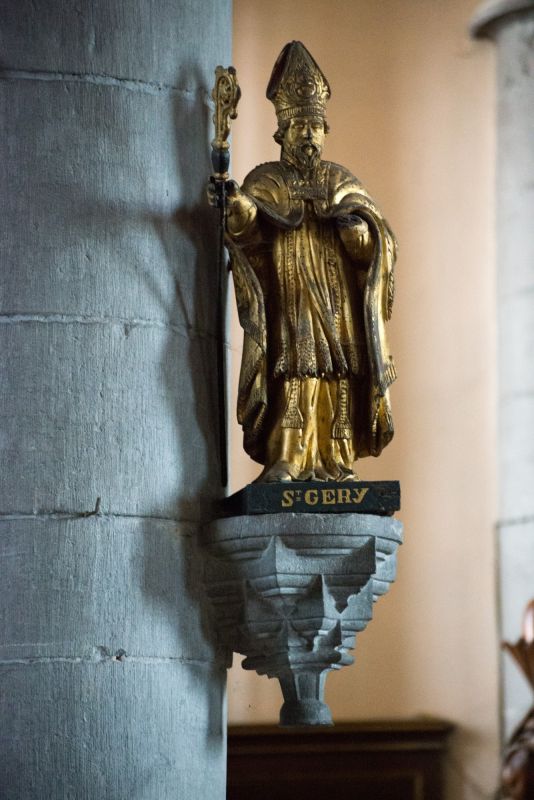
Statue of Saint Gaugericus
Saint Gaugericus, Bishop of Cambrai, the patron saint of the parish on his console with complex Gothic moulding.
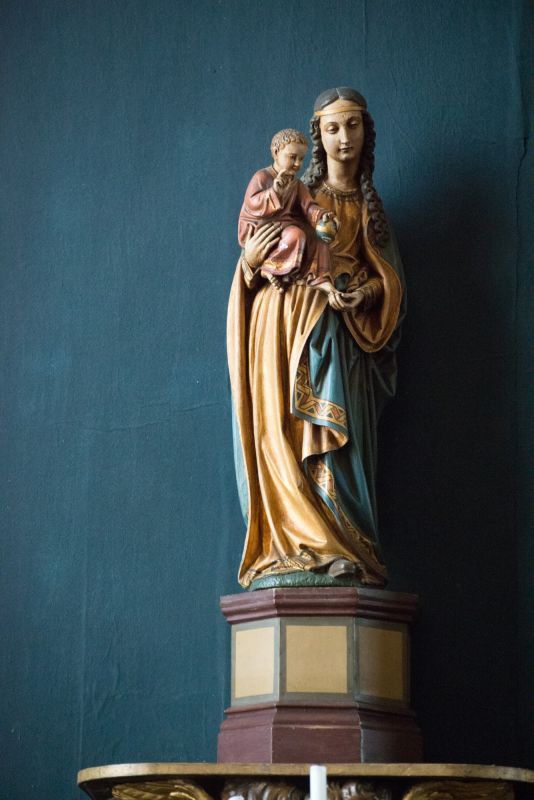
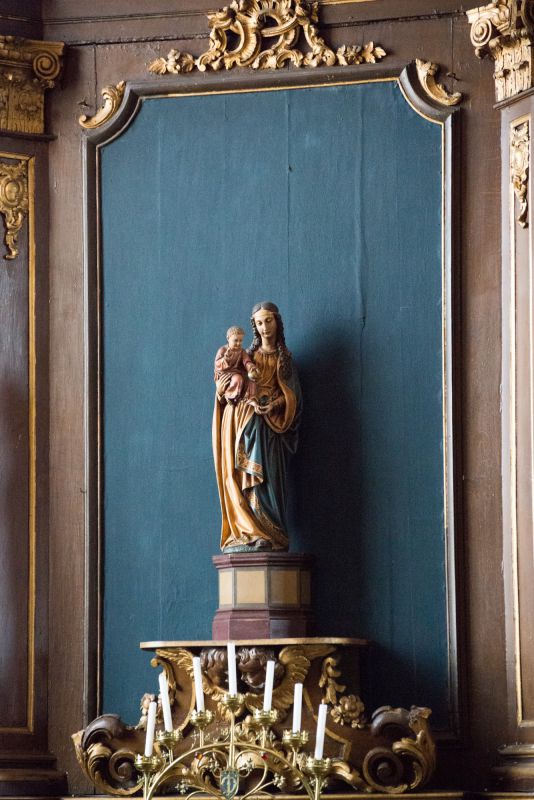
Our Lady of Marche
Our Lady of Marche, a polychrome sculpture from the 16th century, characterized by "swaying", that is, by a kind of imbalance in the attitude that offsets the body. Of great nobility of line, attitude and expression. It emerges from the physiognomy: dignity, greatness and affability.
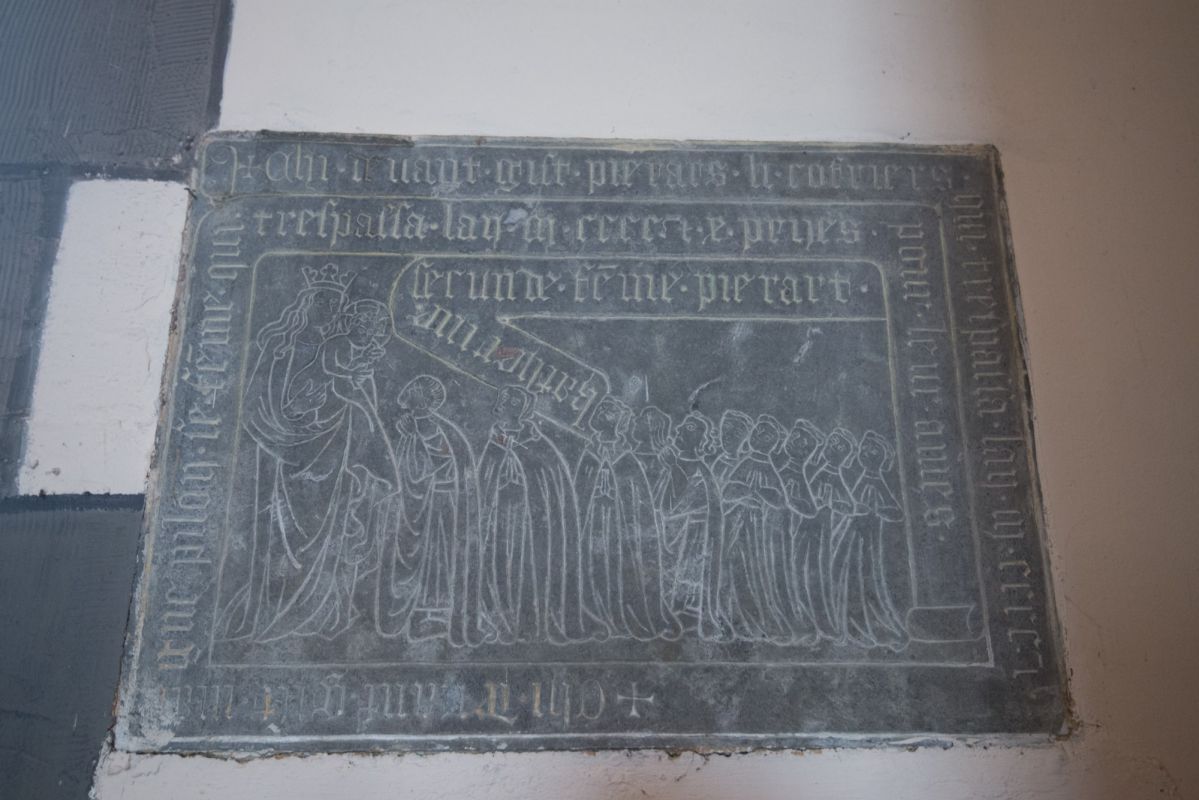
Bas-relief of the funeral monument of Pierrart li Coffrier
Bas-relief of Pierrart li Coffrier’s tomb († c.1441), showing Notre-Dame de Familleureux on one side and ten family members on the other. A 1685 register lists villages of the Virgin of the Family brotherhood, including Marche-lez-Ecaussinnes, from where inhabitants made pilgrimages. To this day, the people of Marche continue the annual pilgrimage to Familleureux every September 9, keeping the centuries-old tradition alive.
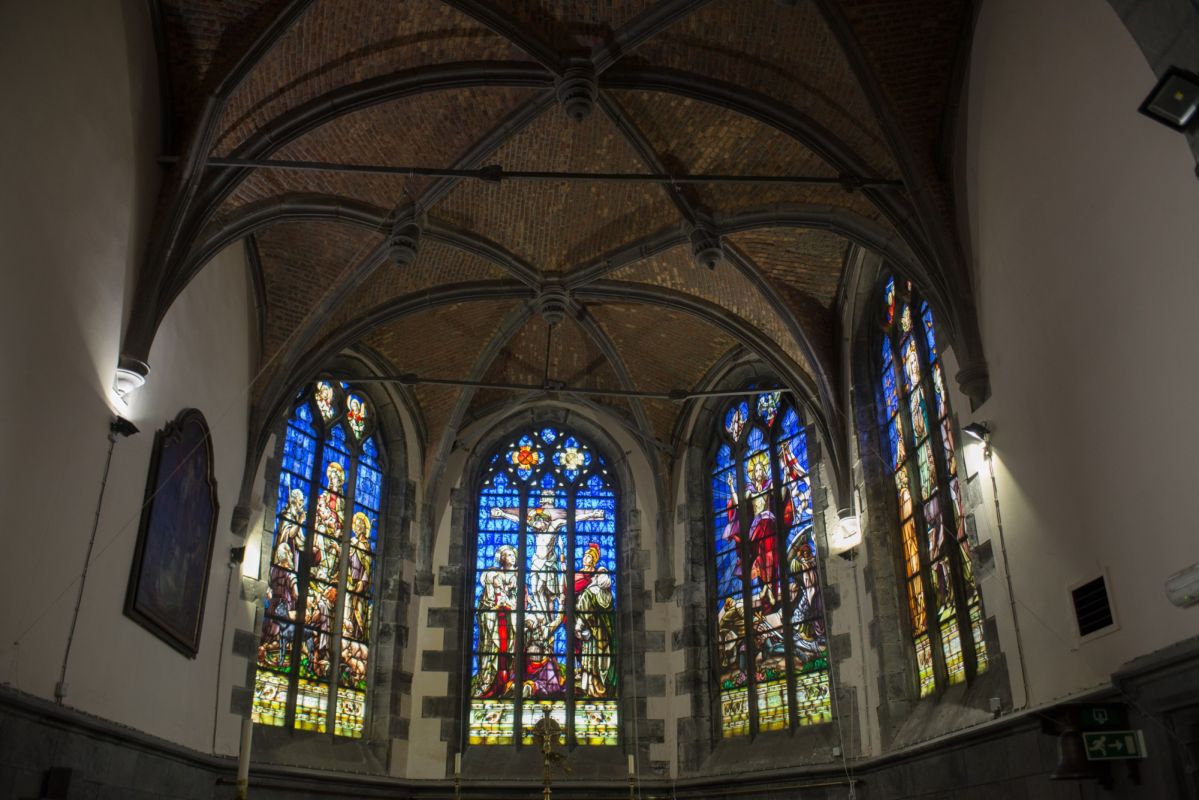
Choir and vault
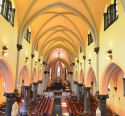
The choir, covered with a beautiful vault of vintage brick "1566" warheads, is built on a base bearing the mark of Jacquemart Boulle and Polet Moreau. Restored in 1931, the vault executed in gothico-Renaissance of the Plantagenet form, is one of the rare specimens of the genus in Belgium.
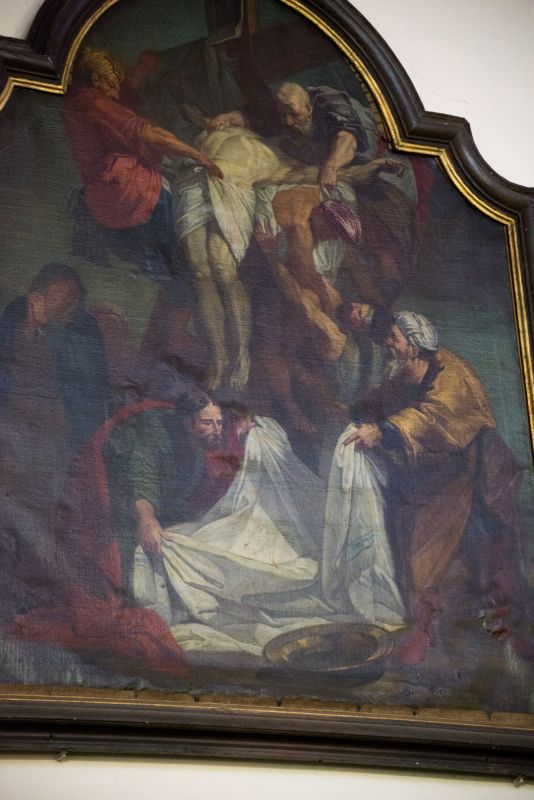
Painting "Descent from the Cross"
A painting "Descent from the Cross" by the Turinese master Disbecq, executed in 1732, is visible in the choir.
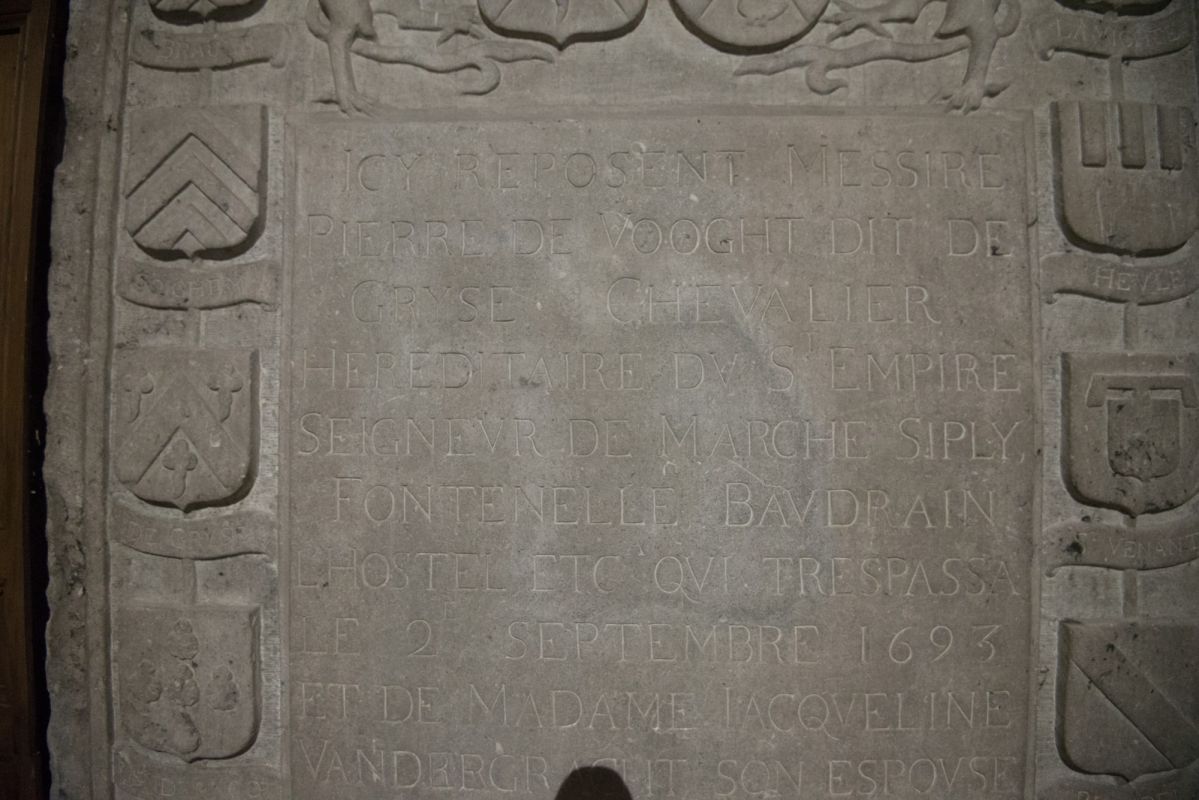
Thombstone of Pierre De Vooght
The large tombstone of Pierre De Vooght, called de Gryse, lord of Marche-lez-Ecaussinnes, lies behind the baptismal font. Discovered during renovation works after removing the old cemetery and leveling the square, the stone measures 2.80 × 1.50 × 0.25 m. Its finely carved surface bears an inscription naming Pierre De Vooght as hereditary knight of the Holy Roman Empire and lord of Marche, Siply, Fontenelle, and other estates.