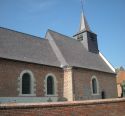
Saint Hugh and Saint Acarius
Place de l'abbaye - Rue Jean Jaurès
59198 Haspres
Abbey church | XI | Romanesque | Catholic Church


Map
Opening hours
01 January - 31 December
Mon 9.00 - 17.00
Tue 9.00 - 17.00
Wed 9.00 - 17.00
Thu 9.00 - 17.00
Fri 9.00 - 17.00
Sat 9.00 - 17.00
Sun 9.00 - 17.00
Guided tour
Religious offices
Description
There is little information about the first church which has reached our times, except a drawing by Josua de Grave dated 1711 on which can be seen the building with a square tower and steeple, and a chevet ending in an abside.
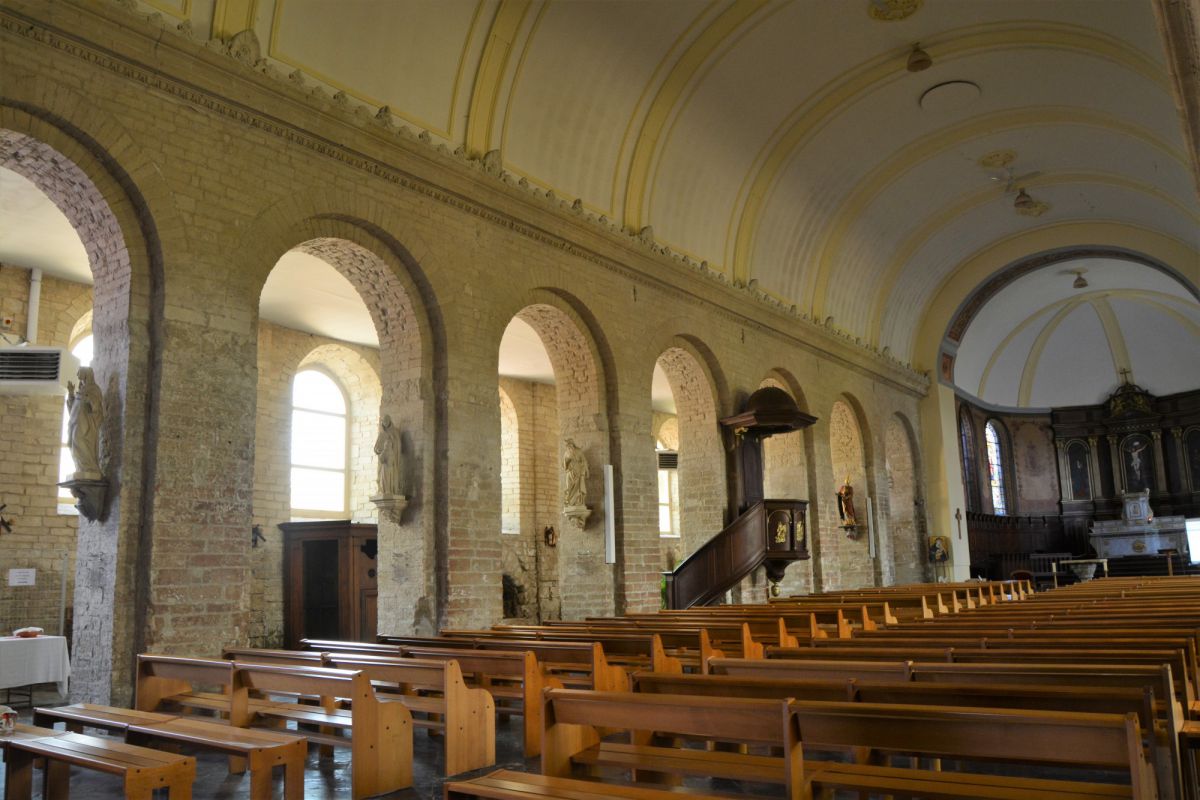
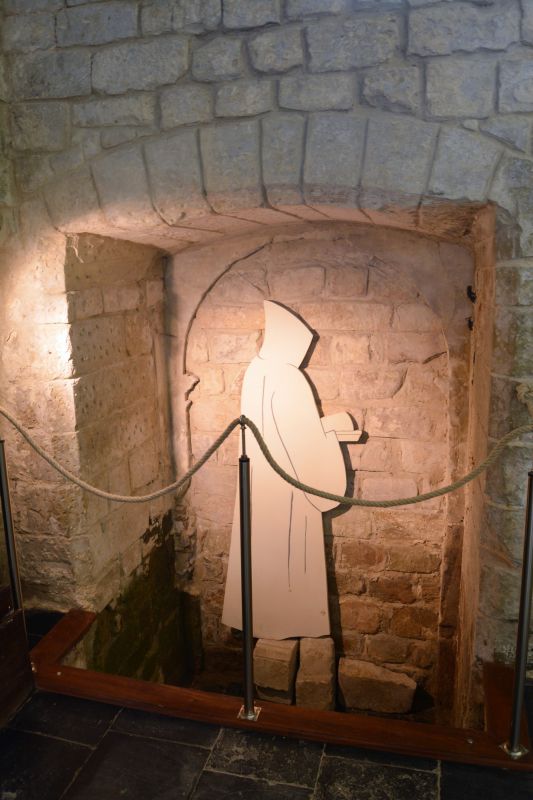
Destroyed during the Revolution, the church of early Norman structure was massively transformed during the 19th and 20th centuries. Among all the rebuilding, can be seen a passage behind the altar which probably gave access to the crypt of the original church.
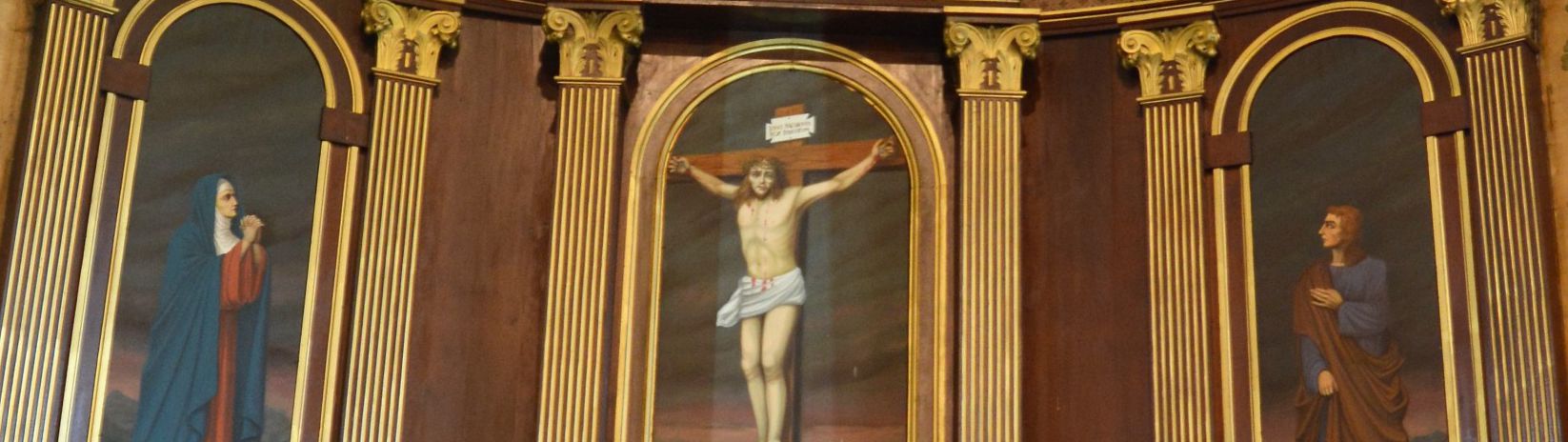
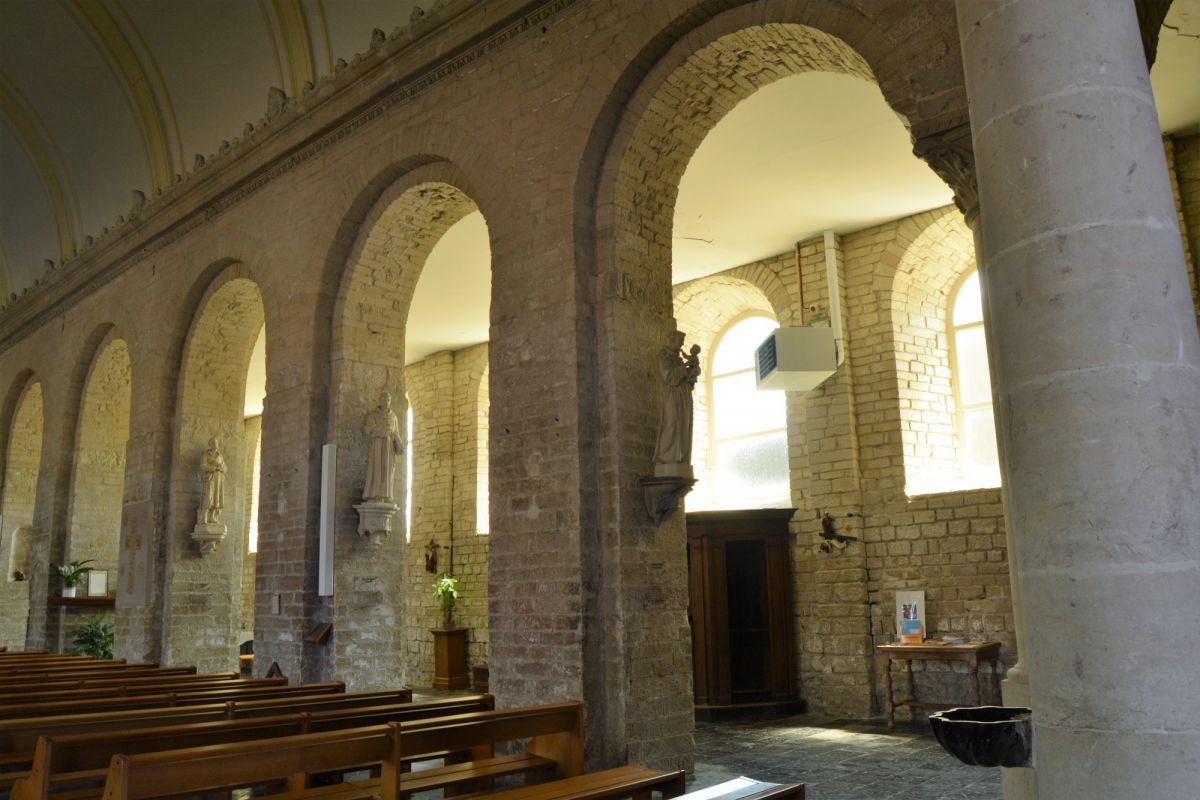
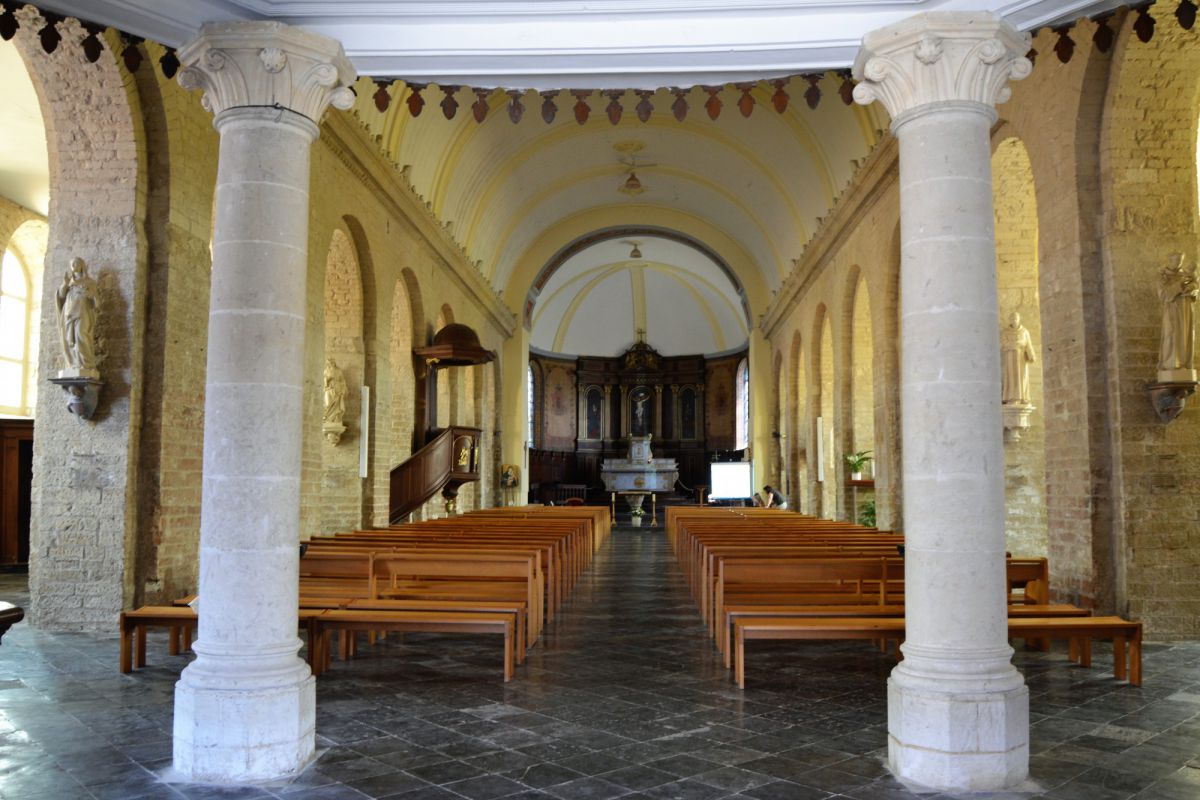
The present church dates from 1809 and has an intemporal style due to its architecture, its furnishings and unexpected elements which illustrate its eventful history.
Photos


Remarkable elements
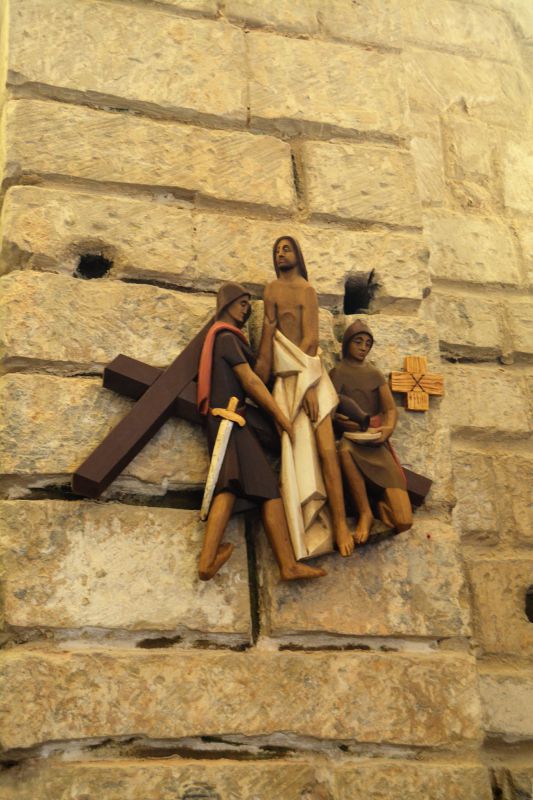
Way of the Cross
The old 19th-century plaster Way of the Cross crumbled to dust during restoration work in 1984. The one on display today is made of resin and comes from Bruges.
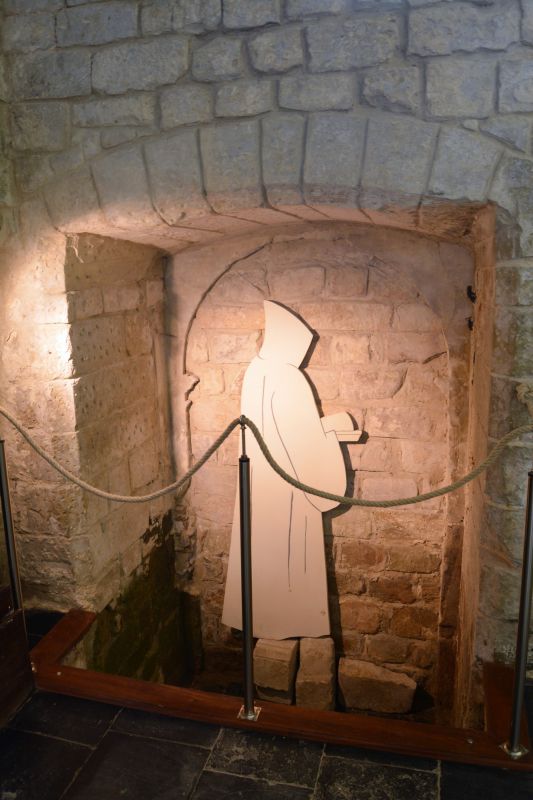
The monks' entrance
Discovered during the 1984 restoration, this door allowed the monks to go from the provost's residence to the church and vice versa. Although it is now blocked, a lintel above the archway on the outside bears the coat of arms of Philippe de Caverel, abbot of Saint-Vaast, to whom the provost's residence belonged.
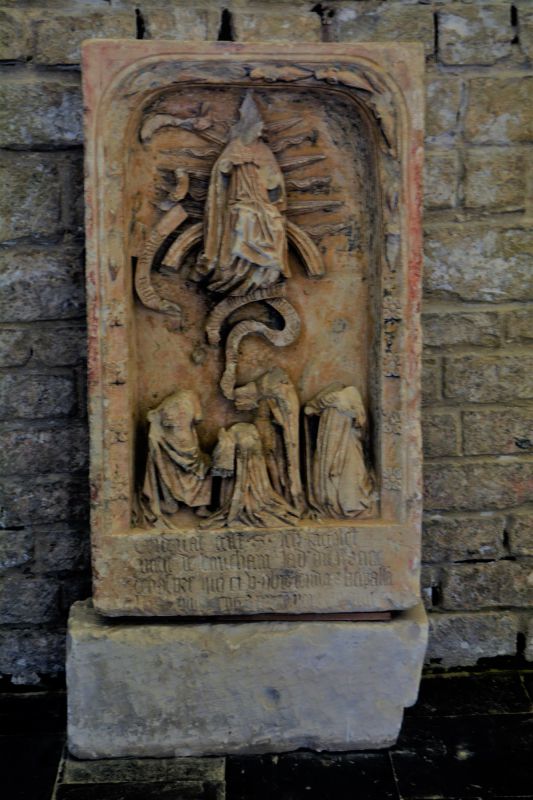
The tombstones
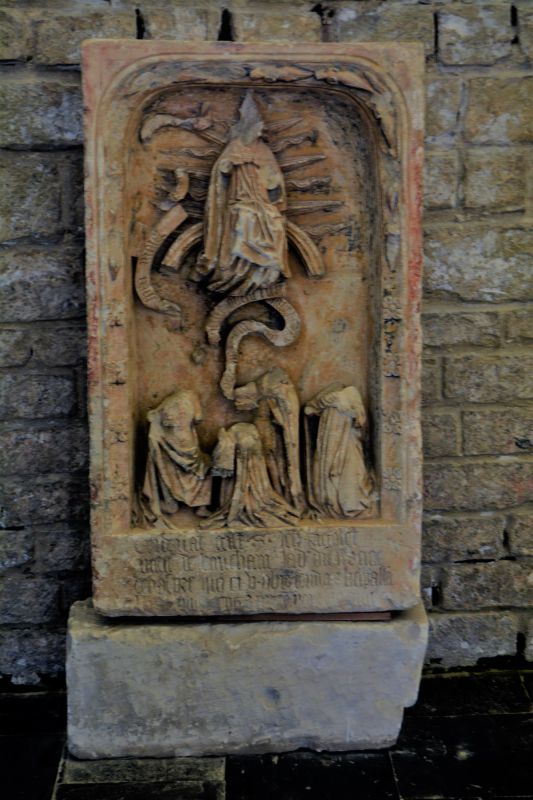
This tombstone, typical of the ex-votos of French Flanders and Hainaut in the 15th and 16th centuries, depicts the deceased, Jehan Rigolet, at the feet of Saint John the Baptist. Above, God the Father in majesty blesses the dead man. The heads of each figure have been deliberately damaged, either by Protestant iconoclasts in 1566 or by revolutionaries. Until 1776, it was common practice to be buried in the church, under the pew that one had occupied for years.
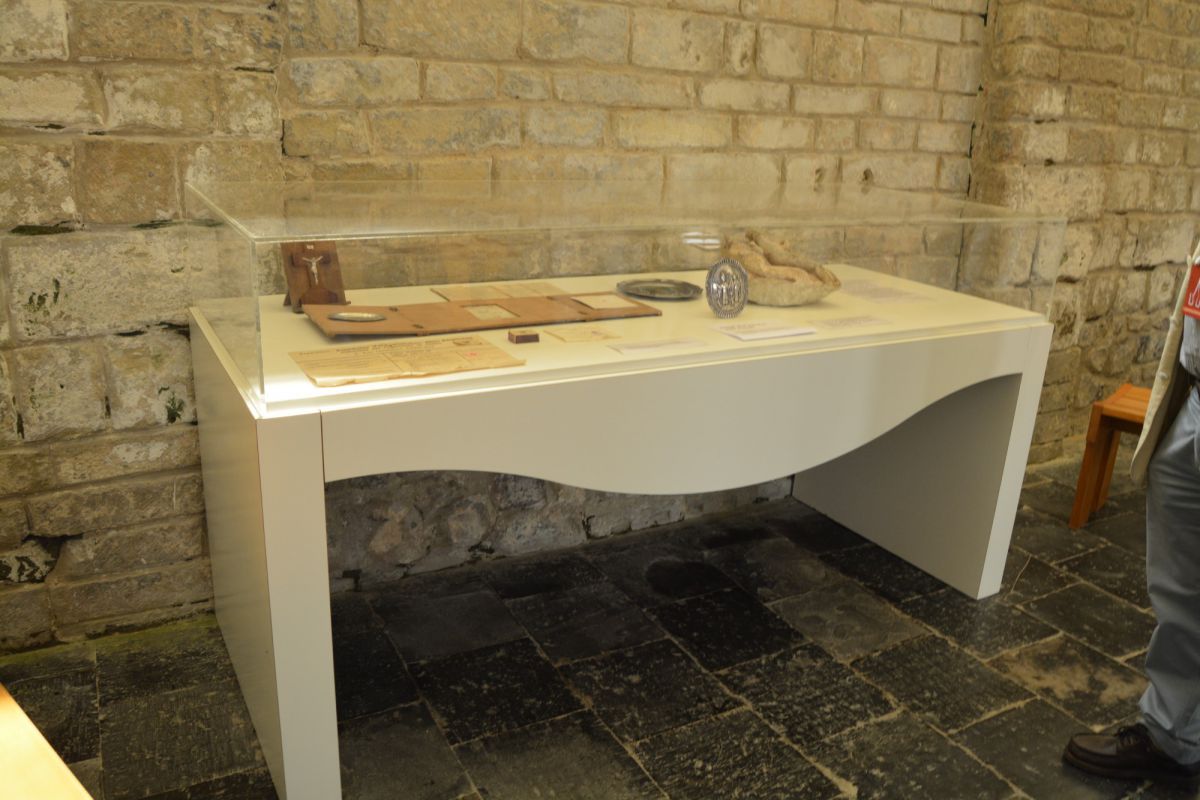
The display case
This display case contains objects found in the church during the 1984 restoration campaign. Among these objects is a peace kiss featuring the patron saints Hugues and Achaire. At their feet are two small figures, each topped with a spider, alluding to the disturbances caused by mentally ill people, formerly known as Saint Achaire's disease.
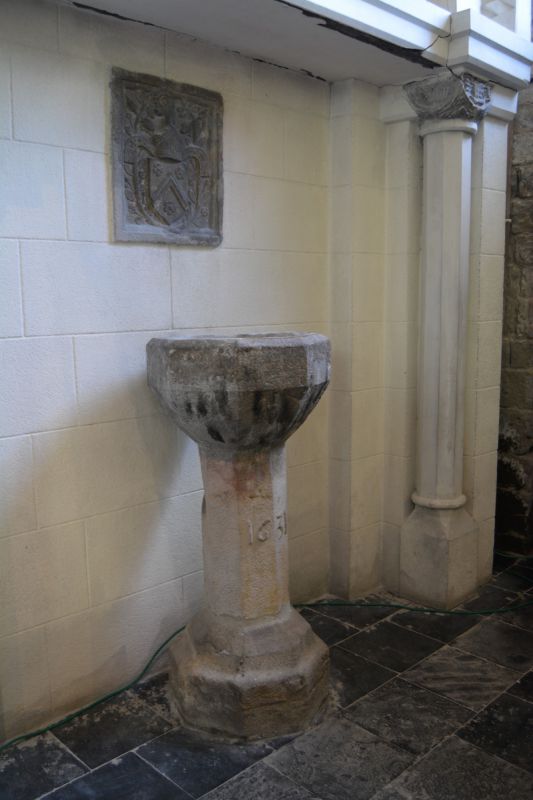
The baptismal font
Dating from 1631, the height of the provostship, it is carved from sandstone. In the centre is a cinquefoil, and on the wall next to it are the arms of Philippe de Caverel carved in stone.
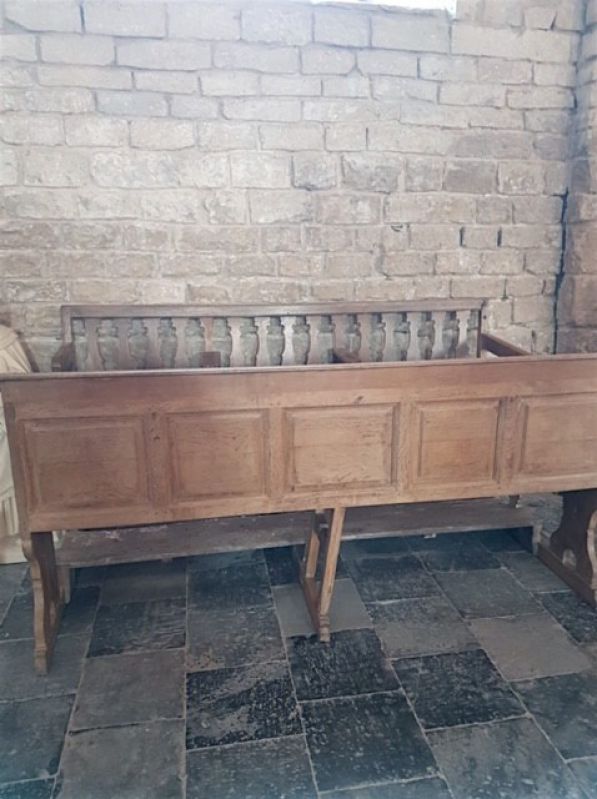
The works bench
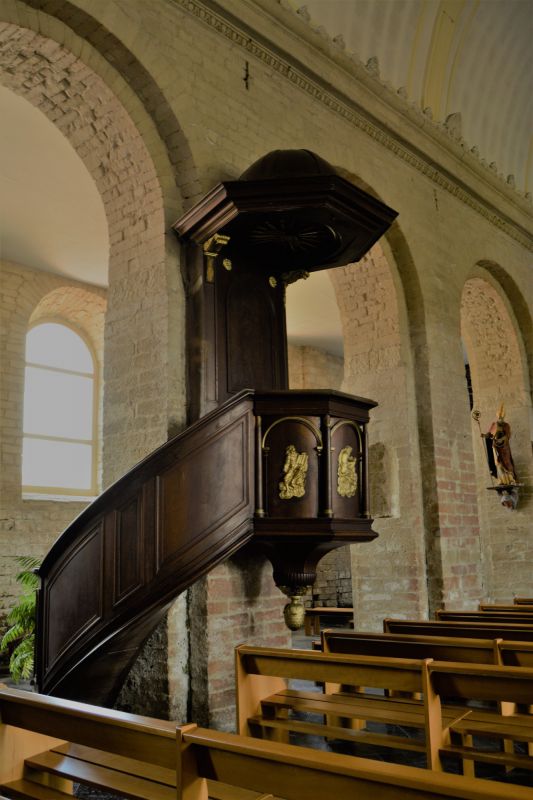
Usually located opposite the pulpit, the works bench is reserved for members of the church council (before the 1905 law, it included the parish priest and representatives of the municipality and parish. Since Vatican II, it has been replaced by the economic council). It was donated by the heirs of the Lestroille family, whose tombstone (dating from 1688) can be found on one of the pillars of the church.