Our Lady of the Annunciation
Place Brugmann
1050 Ixelles
Church | 1934 | Neoromanesque | Catholic Church


Map
Opening hours
01 March - 31 October
Mon 10.00 - 19.00
Tue 10.00 - 19.00
Wed 10.00 - 19.00
Thu 10.00 - 19.00
Fri 10.00 - 19.00
Sat 10.00 - 19.00
Sun 10.00 - 19.00
01 November - 28 February
Mon 10.00 - 17.00
Tue 10.00 - 17.00
Wed 10.00 - 17.00
Thu 10.00 - 17.00
Fri 10.00 - 17.00
Sat 10.00 - 17.00
Sun 10.00 - 17.00
Religious offices
during weekdays : 11 am (crypt)
Saturday : 6 pm • Sunday : 10 am
Description
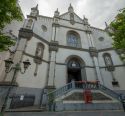
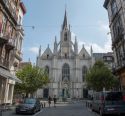
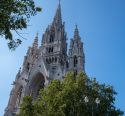
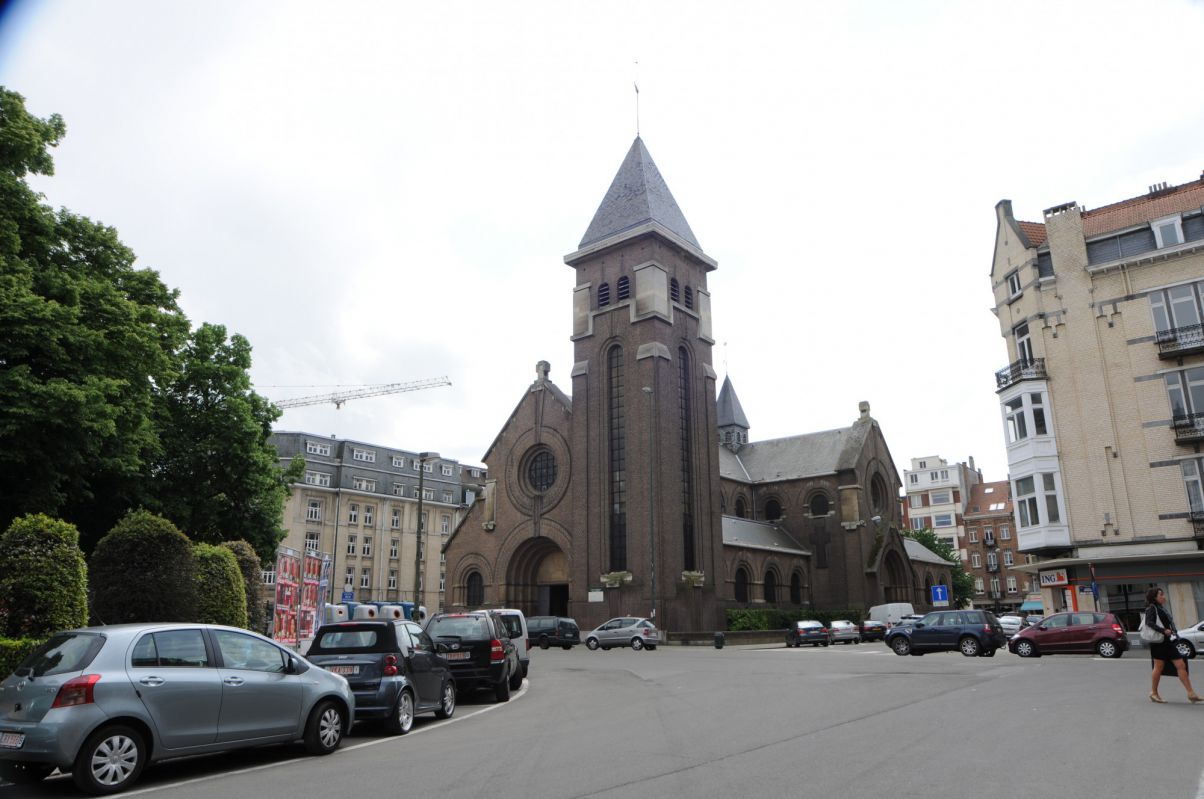
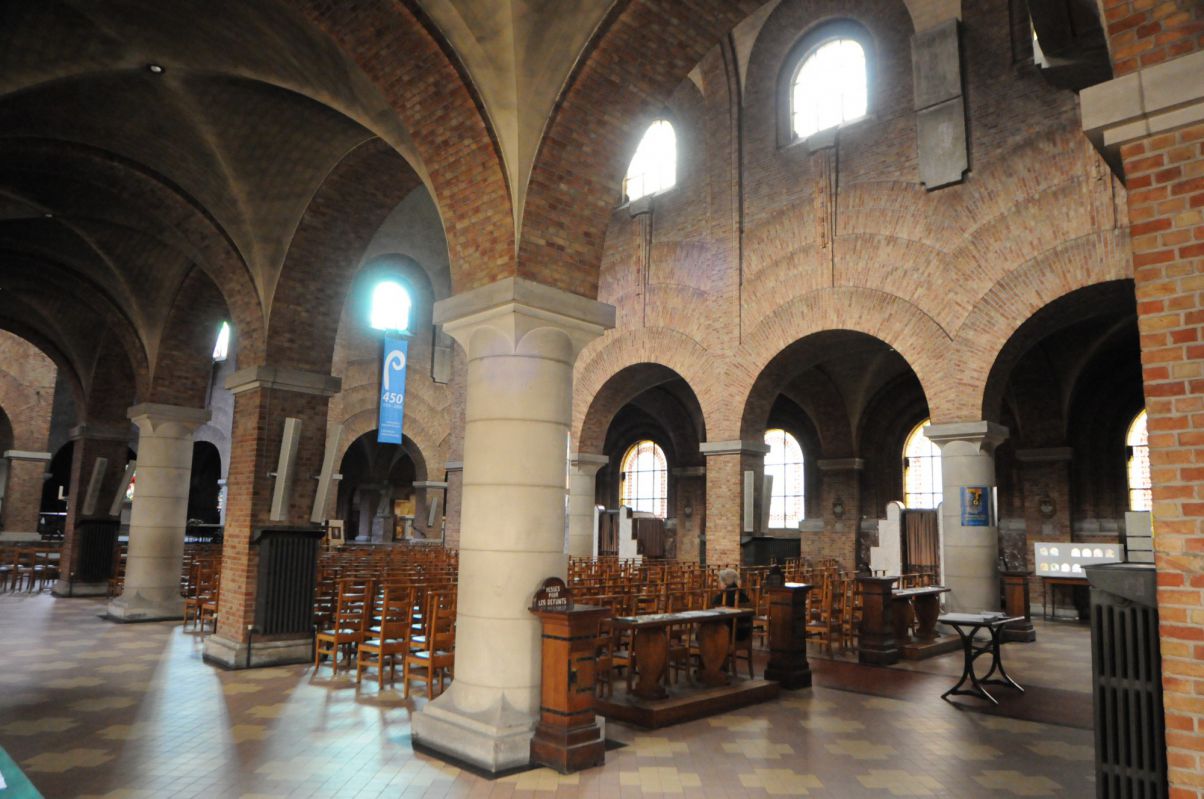
This church is located on a very animated Parisian like square with restaurants, a library and shops close by. It was built in the 1930’s in neo-Romanesque style thanks mainly to the donation of Frederic Brugmann , the nephew and successor of the landowner, George Brugmann after whom the square is named.
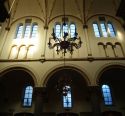
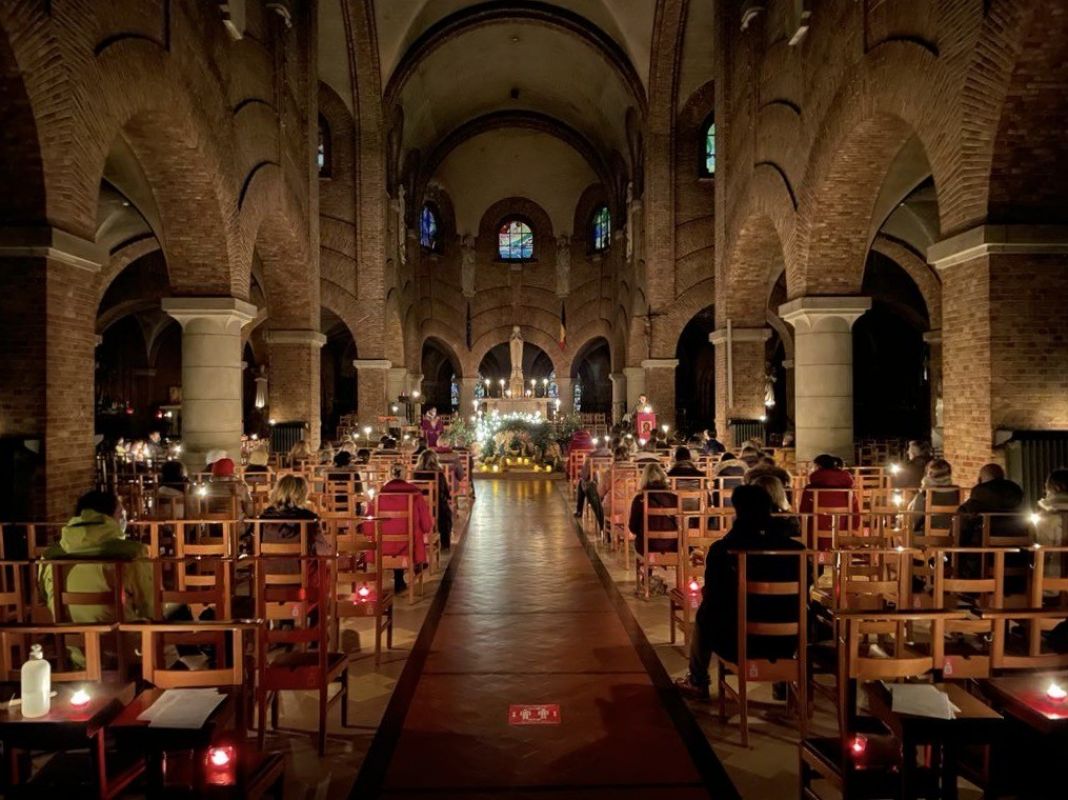
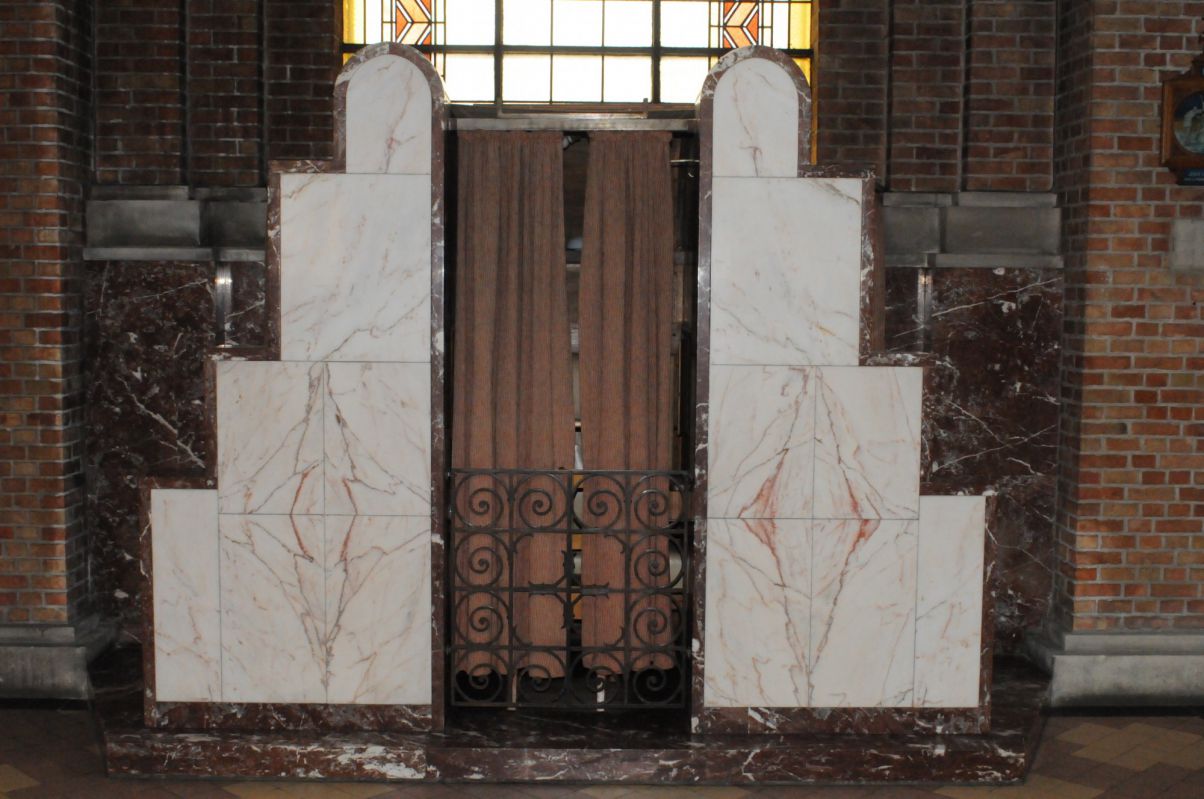
The interior is in red brick and the floor in mosaic tiling while the nave has alternate columns in white stone and in brick. In the choir there is a statue of the Virgin in white stone. Large organs. Some art-deco touches with its confessionals in red Carrara marble.
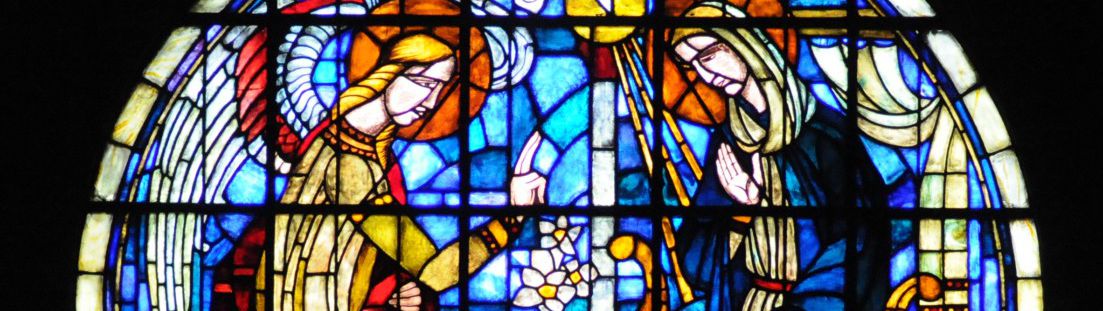
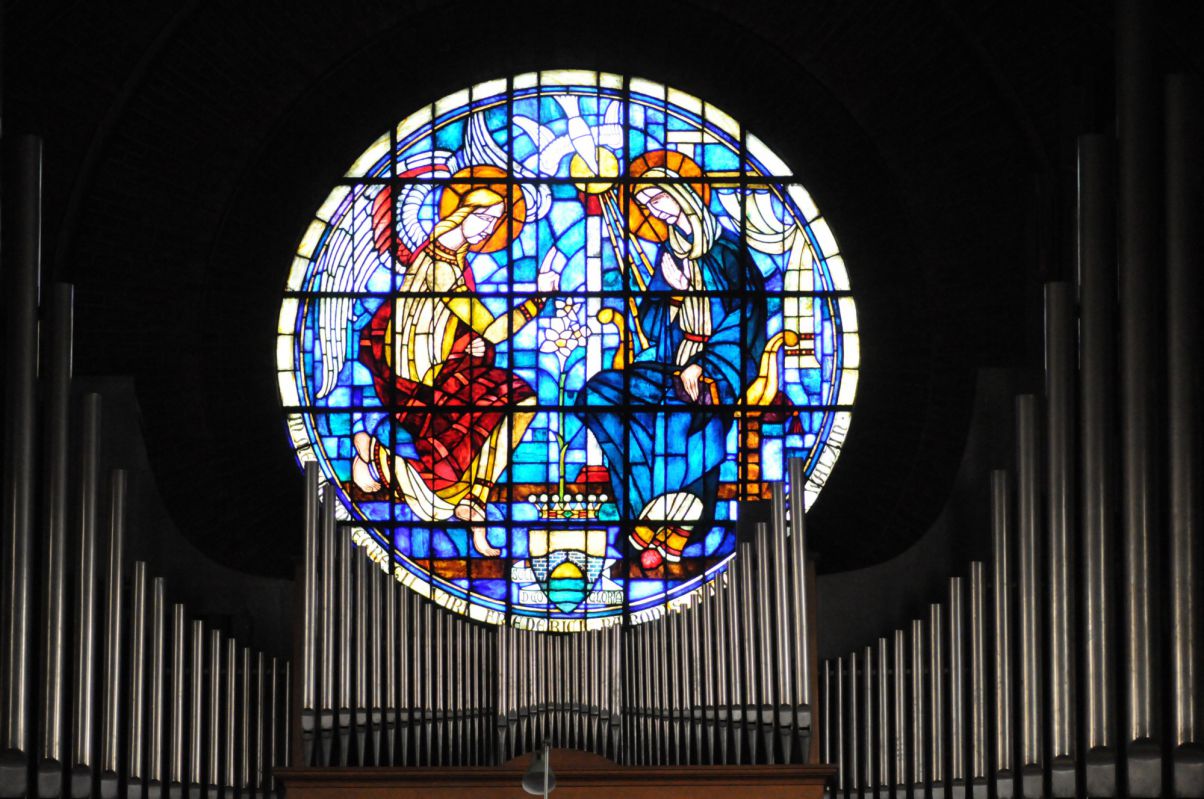
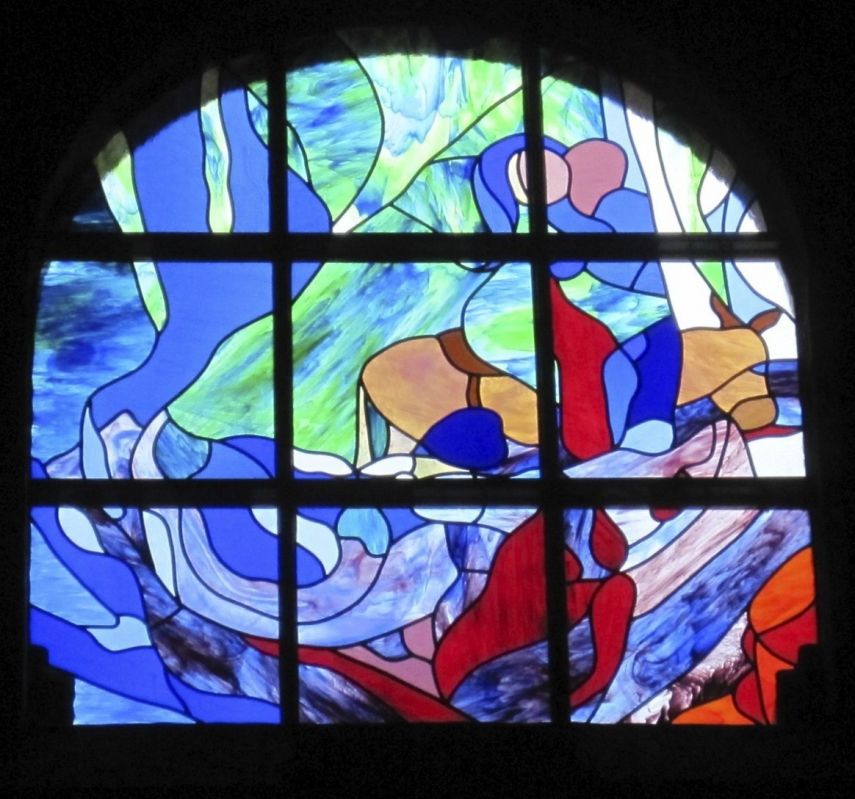
Beautiful stained glass in the choir and the rose window by Crespin and Colpaert but the main interest lies in the new stained glass windows created by the artist Jan Goris (15 are already in place, notably those in the choir, while 8 are yet to be installed). By their play on lines and superb pastel tones, recalling aquarelles, they symbolically evoke the main stages in the life of the Virgin from the Annunciation to the Assumption and events in the life of Jesus. They are like a meditation on the spiritual development of Mary and a master-work to be fully appreciated preferably with explanations by Jan Goris about his art.
Photos


Media
Remarkable elements
Stained glass windows
The stained glass windows were renewed in 2014, by Jan Goris. They are simple, a play of lines and colors in pastel tones reminiscent of watercolors. They punctuate the church above the choir and in the porch rosettes. The rosettes were designed at the time by Louis-Charles Crespin, and executed by the master glassmaker Florent-Prosper Colpaert.
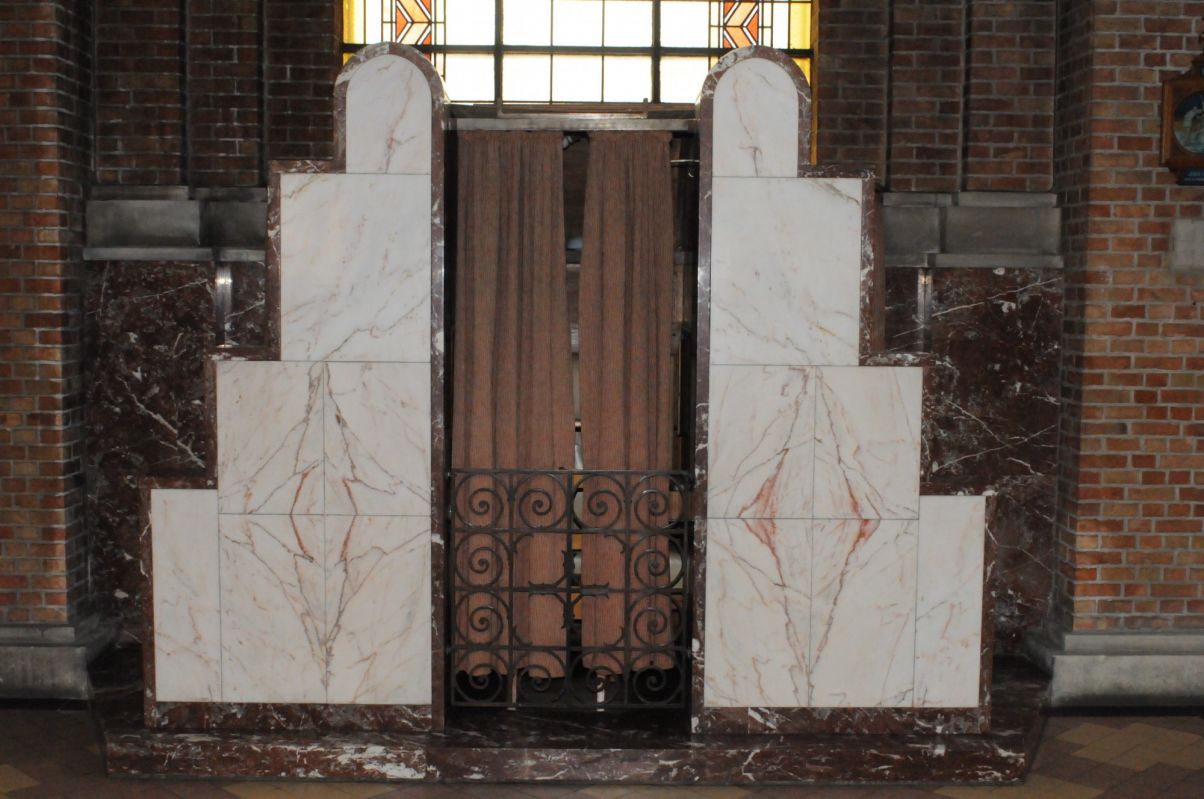
Confessionals
Cubist confessionals with an Art Deco touch, in royal red marble and Carrara, by Julien De Ridder.
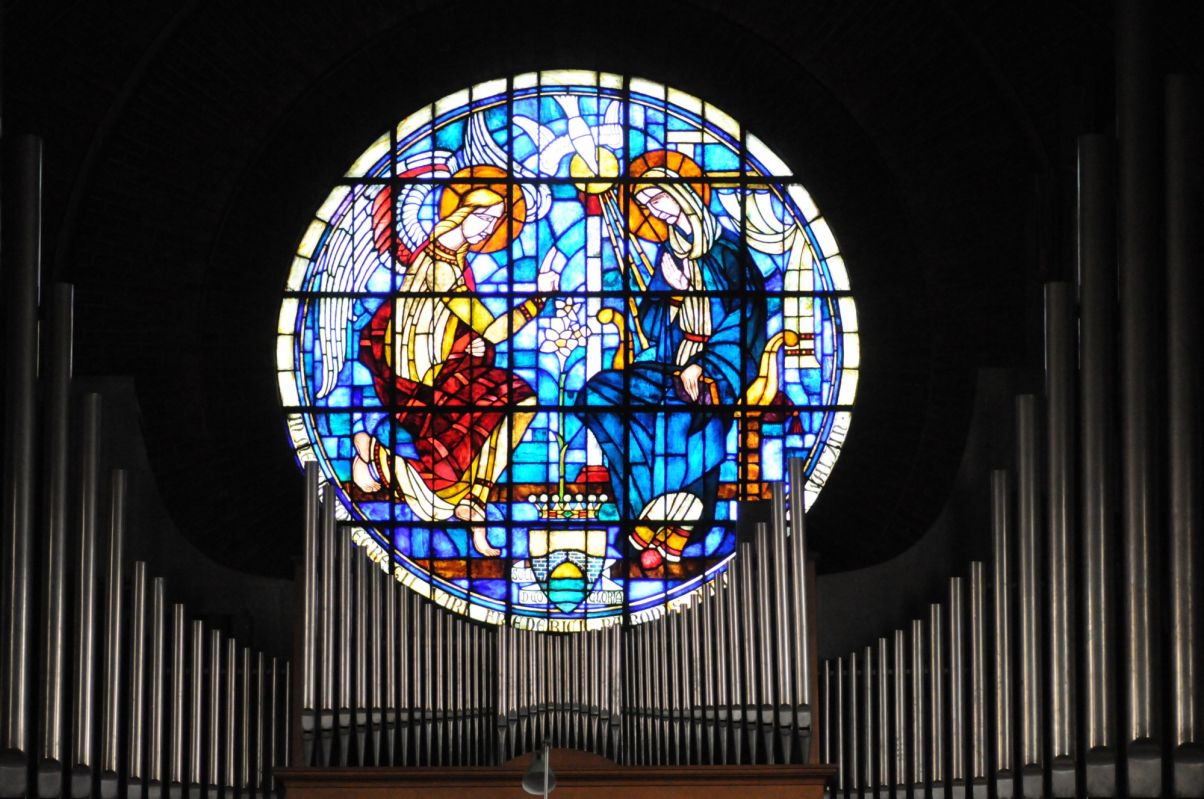
Organ
Originally a romantic organ, from the Slootmaeckers House in Brussels, in 1916. Restored in 1932, it was installed in 1934 in the new church by the firm Agneesens. In 1964, it is transformed according to a neoclassical aesthetic, by the House Stevens. It was enlarged and restored in a romantic style in 2000.
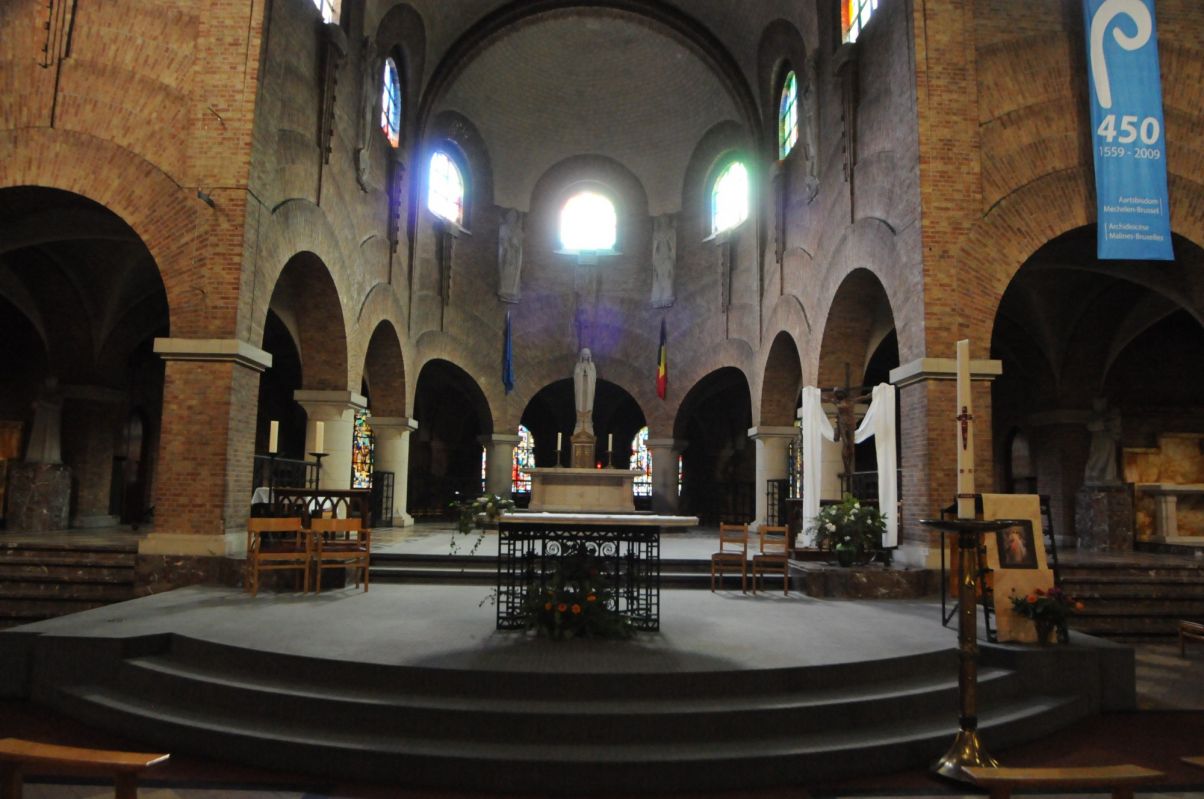
Sculptures
White stone statues (St. James, St. Peter, St. Andrew, St. John) by Pierre De Soete, 1934. Marble altar with Mary by Oscar Sinia, 1947. Green marble altar with copper grill and reliefs of St. Germaine and St. Fernand. Wooden sculptures: Christ on the cross (17th c.), two angels (18th c.), and a Calvary with Mary Magdalene (16th c.).
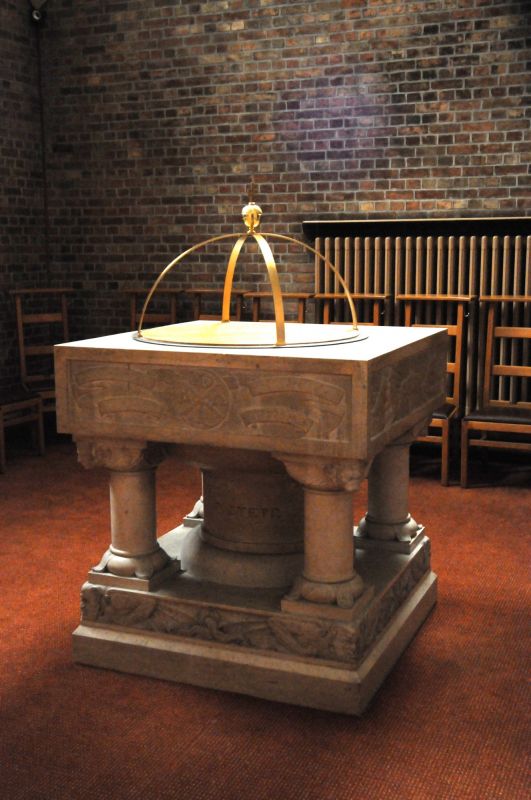
Baptismal font
Marble baptismal font with the inscription "C. J. J. Emerentiana Prins me dedit" and "Fl(oris). De Cuijper me fecit", 1934; copper lid also by De Cuijper but stolen in 2002 and since replaced by a new creation of the Slabbinck workshop (Bruges). The copper cover and ironwork framing the font, by René Torchebus, 1934, are missing.
Bell
Dating from the 18th century, cast by the House of Van den Gheyn and probably coming from the carillon of Saint-Jacques-sur-Coudenberg.
Remarkable tree
In the small green space behind the church is a Japanese cherry tree registered in the inventory of remarkable trees of Brussels-Capital since 2003.
Sources:
Inventory of Architectural Heritage
Wikipedia