Saint Cornelius
Brevierweg 8
9880 Aalter
Church | XII-XIII | Gothic | Catholic Church

Map
Opening hours
01 March - 30 October
Mon 9.00 - 18.00
Tue 9.00 - 18.00
Wed 9.00 - 18.00
Thu 9.00 - 18.00
Fri 9.00 - 18.00
Sat 9.00 - 18.00
Sun 9.00 - 18.00
01 November - 28 February
Mon 9.00 - 16.30
Tue 9.00 - 16.30
Wed 9.00 - 16.30
Thu 9.00 - 16.30
Fri 9.00 - 16.30
Sat 9.00 - 16.30
Sun 9.00 - 16.30
Religious offices
Description
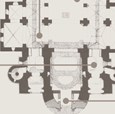
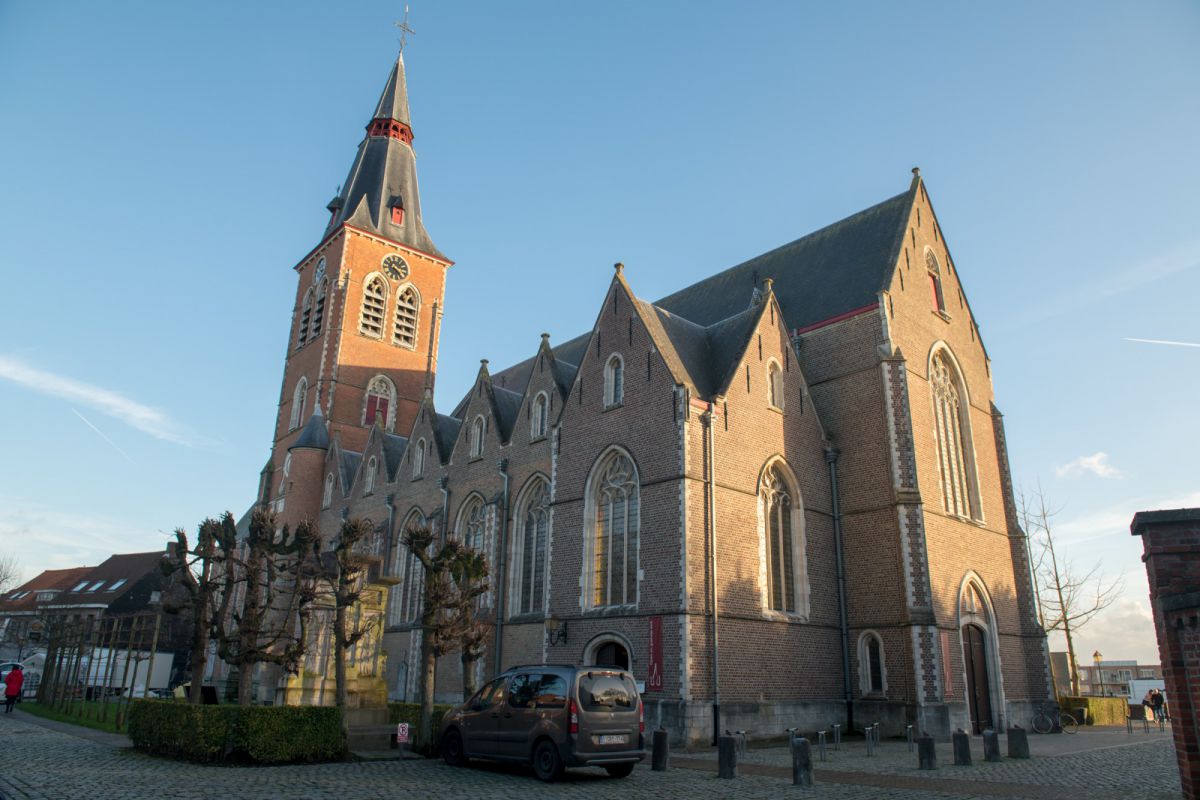
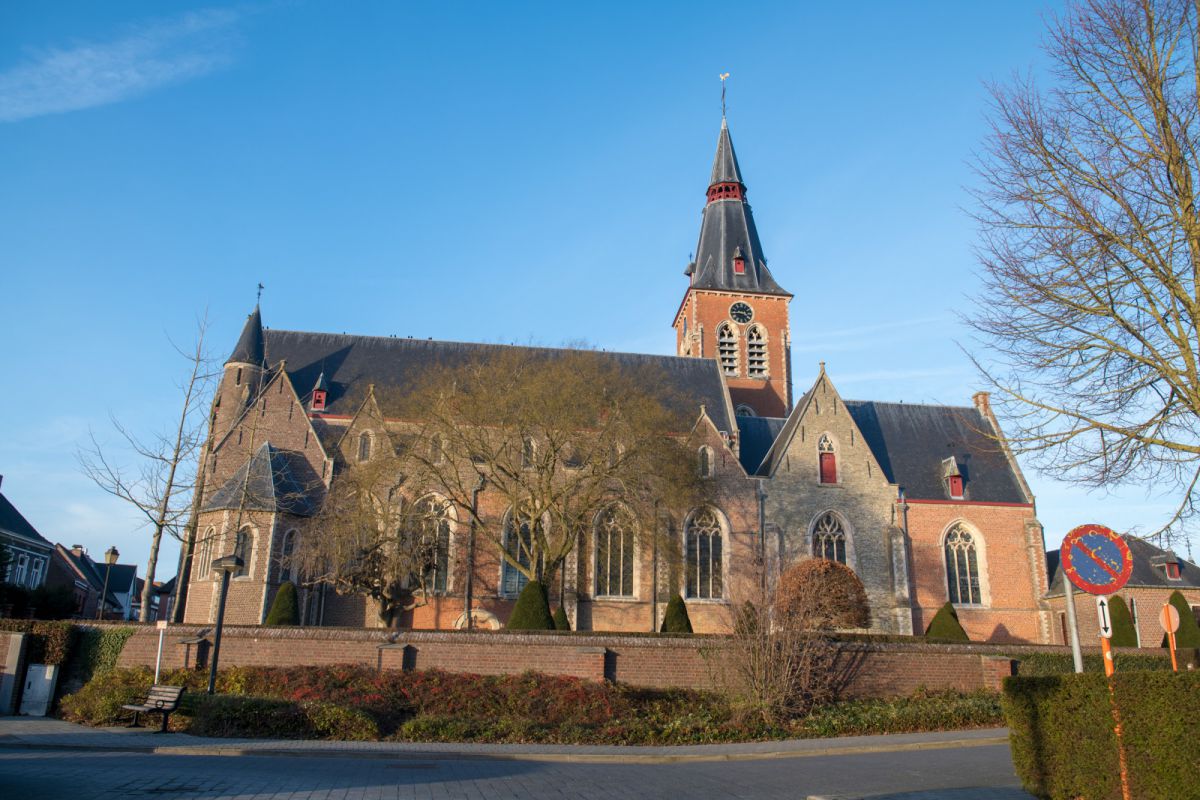
The oldest parts of the church date from the 12th and 13th centuries, though an earlier 9th century Carolingian church likely stood here. Its founders owned the estate of Haleftra, near today’s market square, a name thought to derive from the Germanic halahdrja, meaning juniper bush.
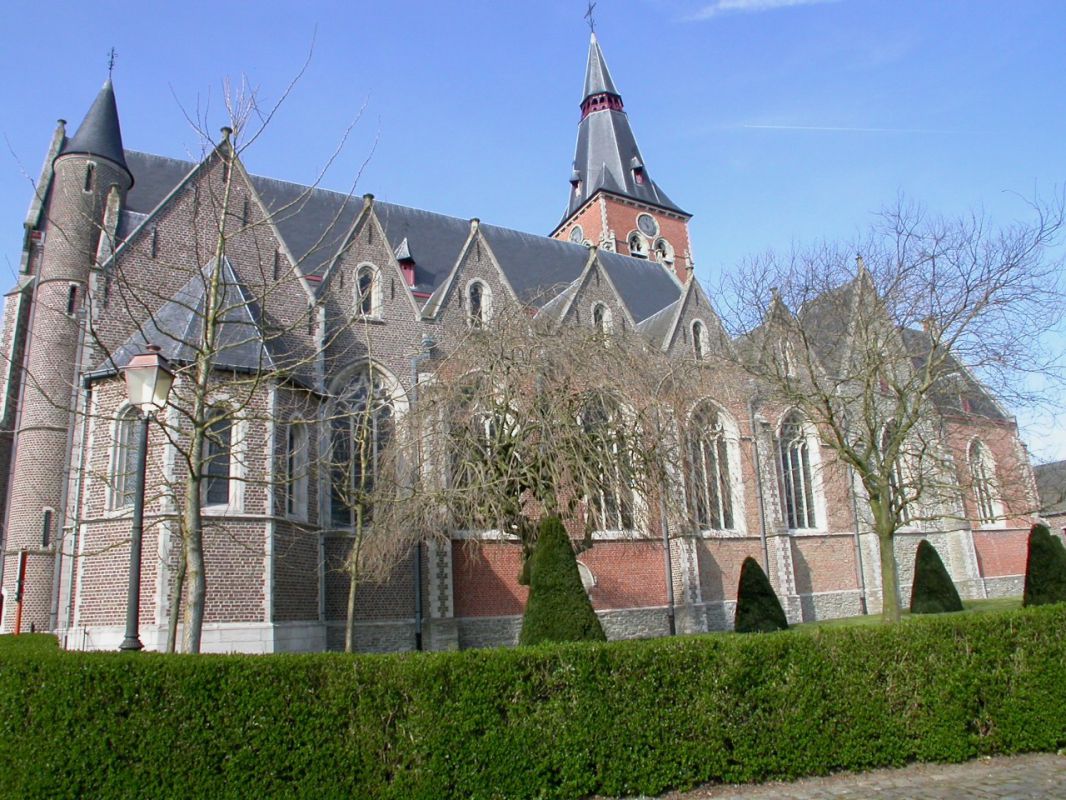
The church was destroyed during the 15th century religious wars. Reconstruction in late Gothic style began at the end of the 15th and continued into the early 16th century. Only the south transept, built in local brick, preserves traces of the 13th century structure.
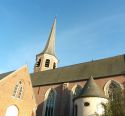
A major renovation in 1903 shaped the church’s current appearance: the steeple was raised to 46 m, two bays added, along with a new west wall and a baptistery. In 1918 retreating German troops demolished the tower, rebuilt three years later, as the inscription “Destructa 1918, Refecta 1921” records.
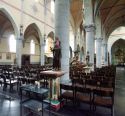
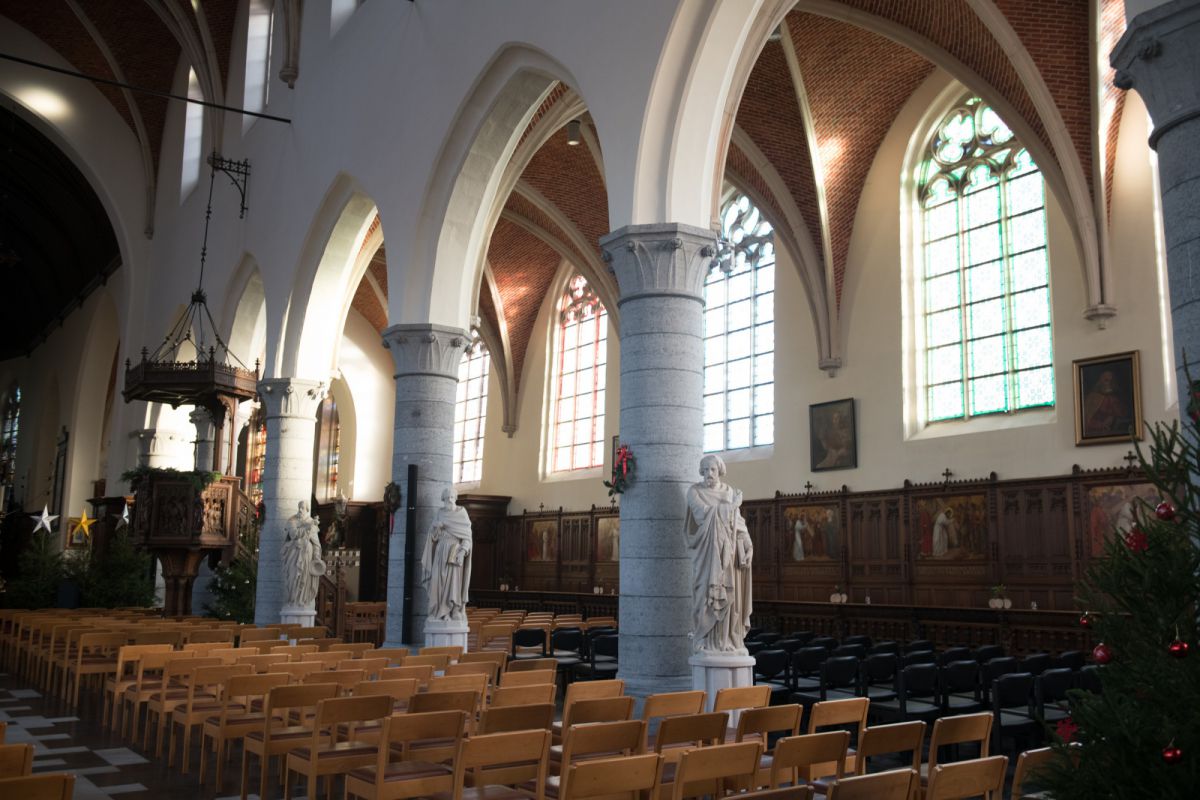
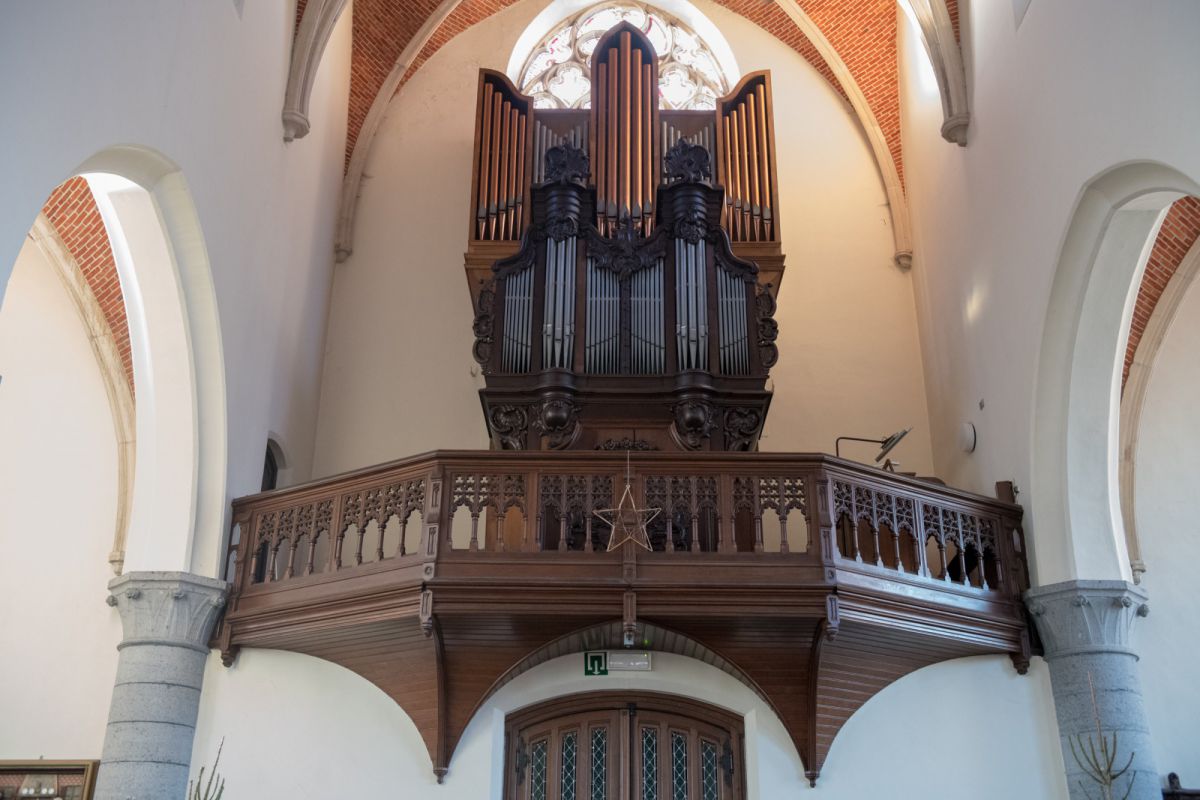
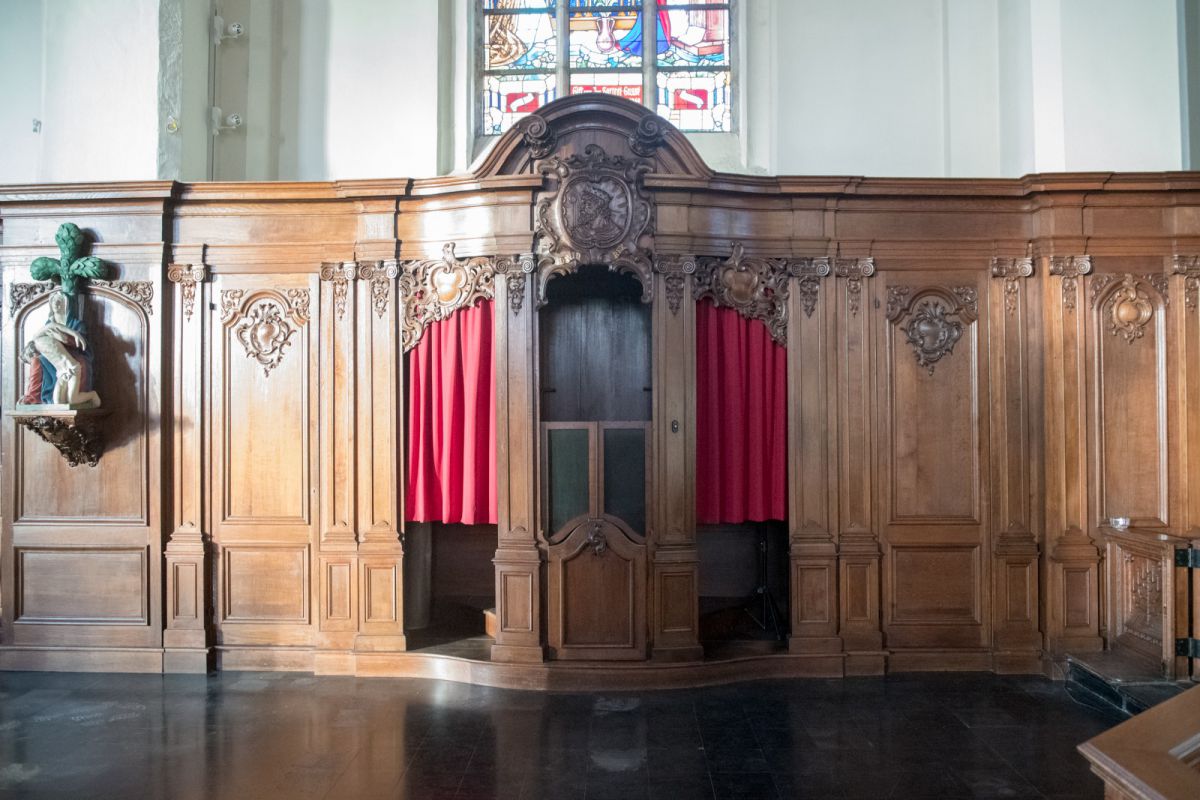
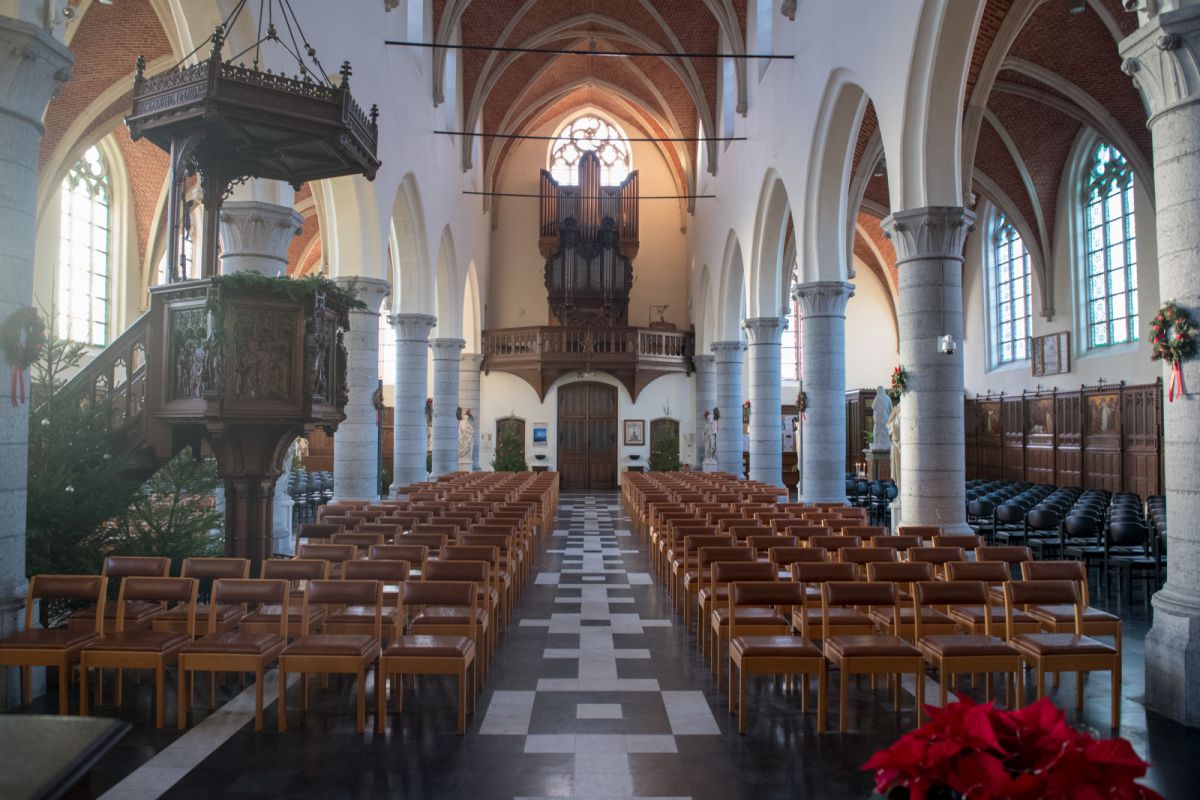
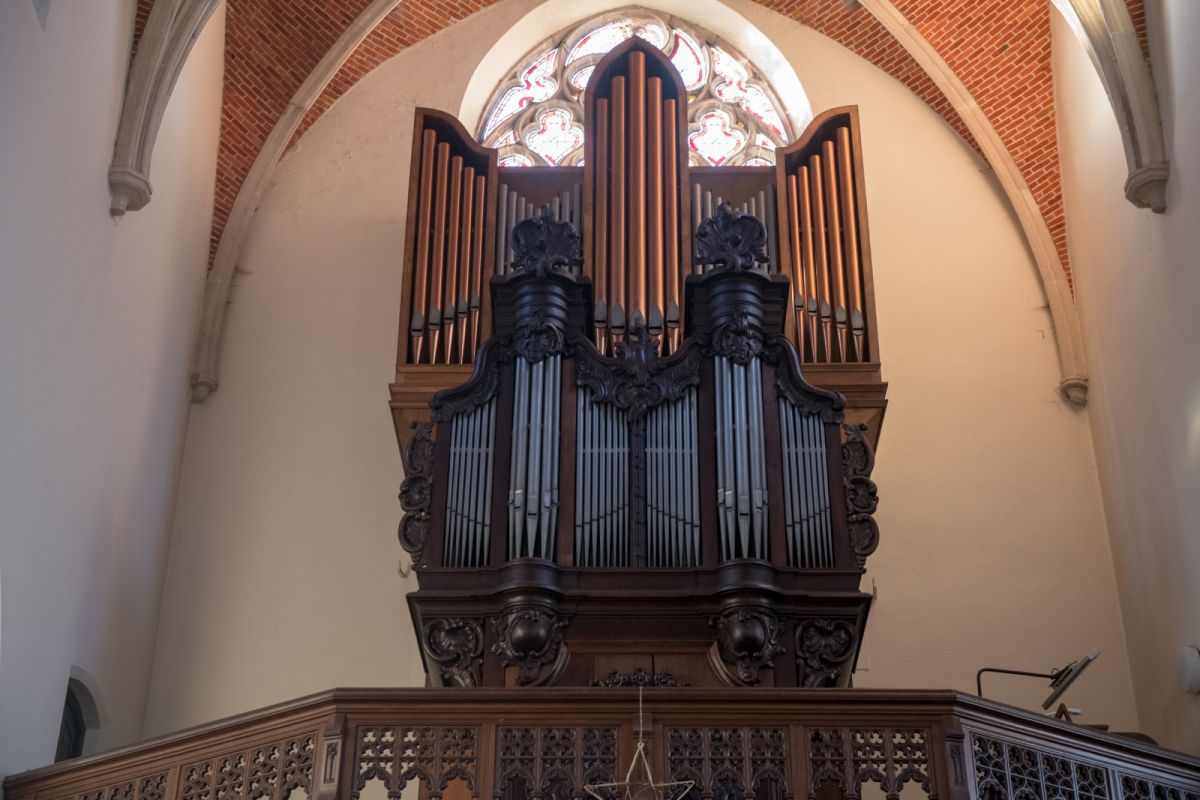
The 1903 neo Gothic style also defines the interior, designed by architect Goethals. Twelve neo Gothic stained glass windows adorn the chancel and chapels, created by Gust Ladon (10), Ganton Defoin (1) and Albert Mestdagh (1). The furnishings include a neo Gothic pulpit (1906), a communion rail (1907), and neo Gothic main and side altars (1907–1909) by E. Van den Eynde. Older pieces include an oak communion rail (1722), four oak confessionals, a partly preserved rococo organ cabinet (1754), an 18th century font, Stations of the Cross painted on copper (1923–1934), a bust of Saint Cornelius, and coats of arms in the chancel.
The north wall contains 18th and 19th century tombstones from the former churchyard. Outside, a commemorative cross honours soldiers and civilians who died in the First World War.
KIKIRPA : Photo-library online
Erfgoed databank
Video The bells of the Sint-Cornelius church in Aalter

Photos




Media
Remarkable elements
Organ
Pieter Van Peteghem (Ghent) built this organ in 1754. His family built several organs in the area. It was paid for by the parishioners in Aalter, but mostly by Sabine, sister of the local ruler Maximiliaan van Merode, prince of Rubempré.
Statue of St. Peter
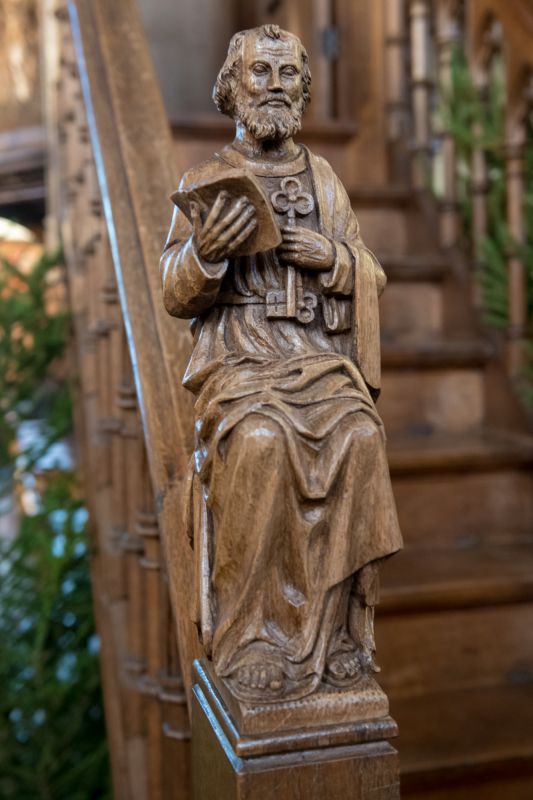
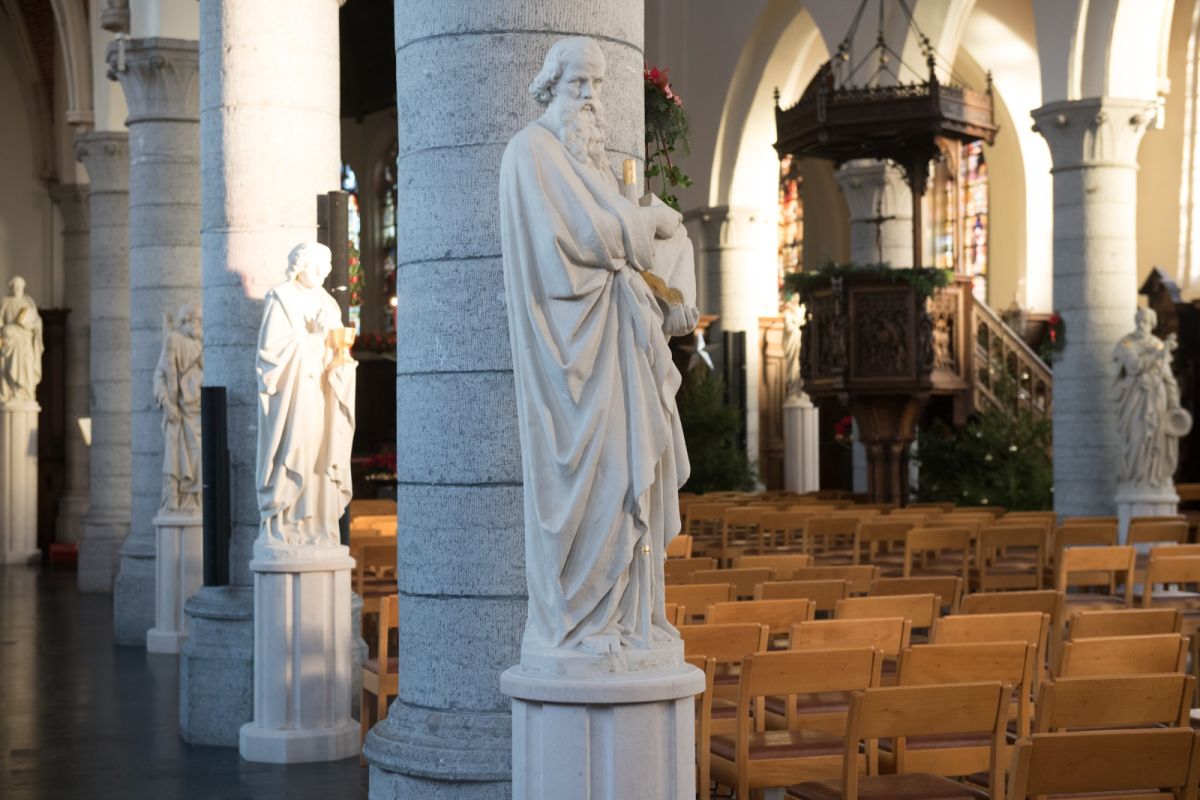
This statue on a pedestal is carved in sandstone from Burgundy. St. Peter holds a book with gilded edge in his left hand and gilded keys in the right. For Catholics he was the first pope, for the orthodox he was the first patriarch.

Stained glass window : Pieta
This window was made by Gust Ladon and placed in its frame in 1925. In central position we see the Holy Mary, Mother of Sorrows, with her son dying on the cross. Left is John the apostle carrying a crown of thorns and St. Elisabeth of Hungary. On the right is St. Francis of Assisi, St. Carolus Borromeus and Mary Magdalen.

Stained glass window : Cornelius
St. Cornelius, pope and martyr, is the patron saint. Above the St. Cornelius altar (1900) we see the biggest stained glass window in this church, divided in four light streams. In the third stream is St. Cornelius praying to the Holy Trinity to help the many pilgrims: women with children and agricultural workers with cattle.

Altar of St. Cornelius
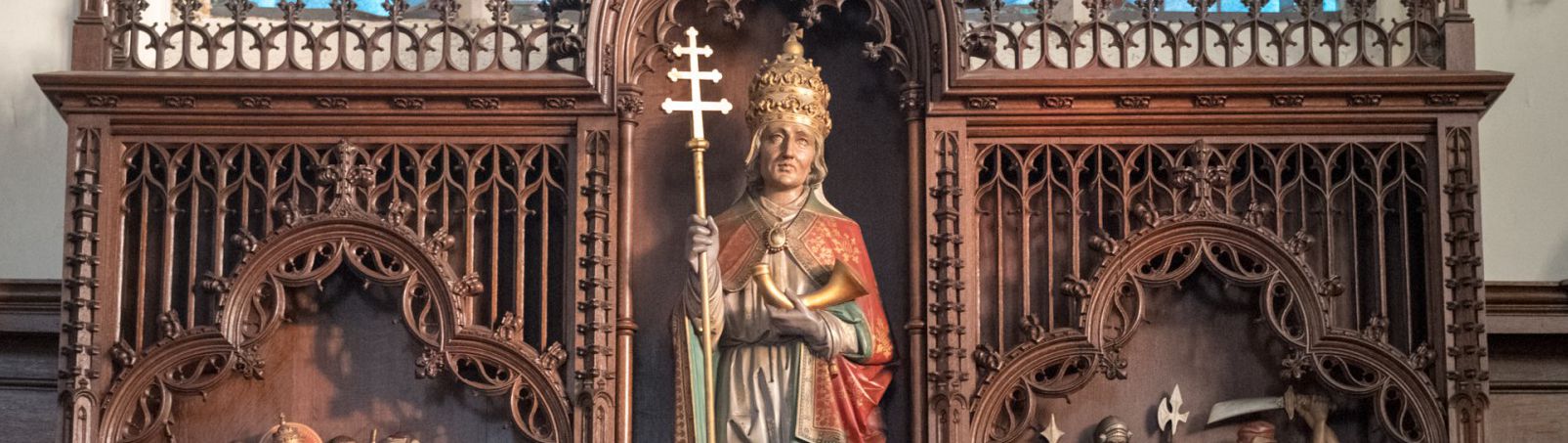
This marble altar has altarpieces in polychrome wood depicting the healing of a sick woman and the martyrdom of a saint. In the middle we see St. Cornelius as pope with the usual symbols: horn, tiara and the cross pastoral staff.

Confessional
The four confessionals survived the wars almost intact. This confessional was made by Ludovicus Jacobus Draevers in 1761. It is executed in rococo style with twisted columns and opulent decorations of angels. In the center top is a medallion of St. Peter, the “sinner” in the bible.