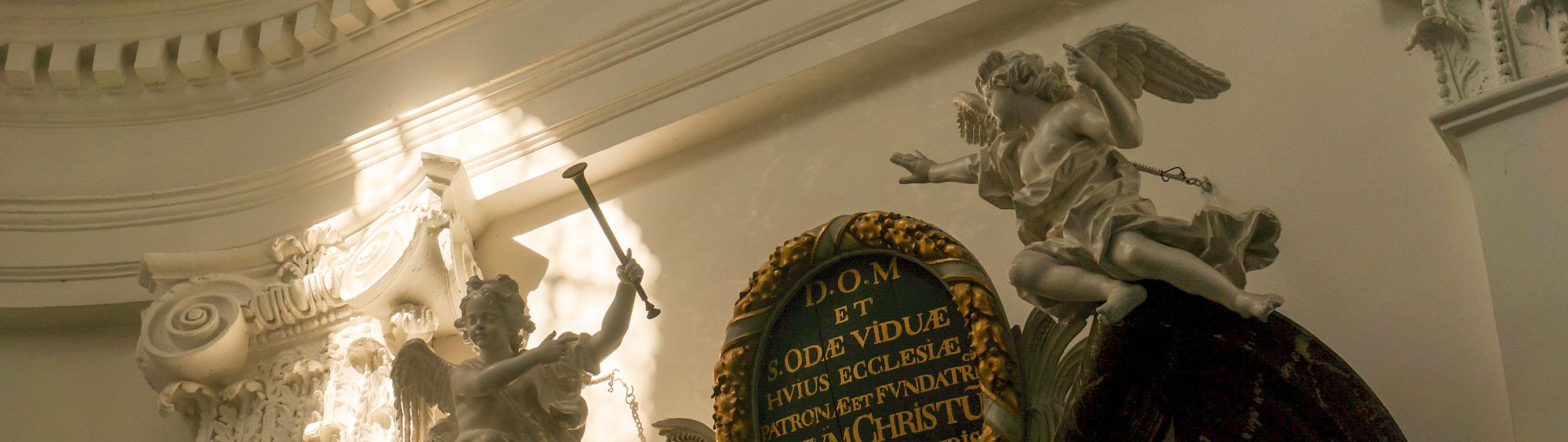
Saint George and Saint Ode
Place Sainte-Ode 2
4540 Amay
Collegiate Church | 1089 | Romanesque | Catholic Church


Map
Opening hours
01 May - 31 October
Mon -
Tue -
Wed -
Thu -
Fri -
Sat -
Sun 14.00 - 18.00
You can contact the Tourist Office, situated directly opposite the collegiate church.
Monday to Friday, 8.30 am to 12 noon and 2 pm to 4 pm (except public holidays).
Please contact us in advance: office.tourisme@amay.be | +32 85 31 44 48
Religious offices
Description
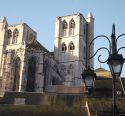
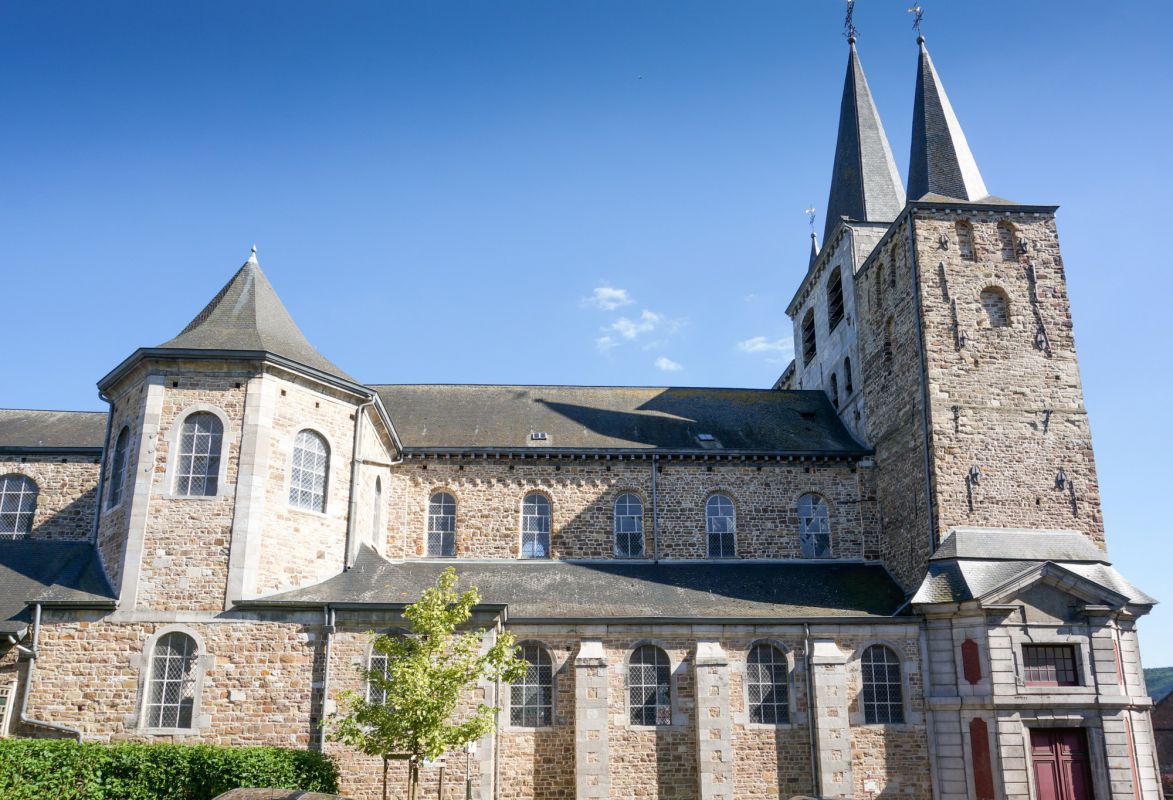
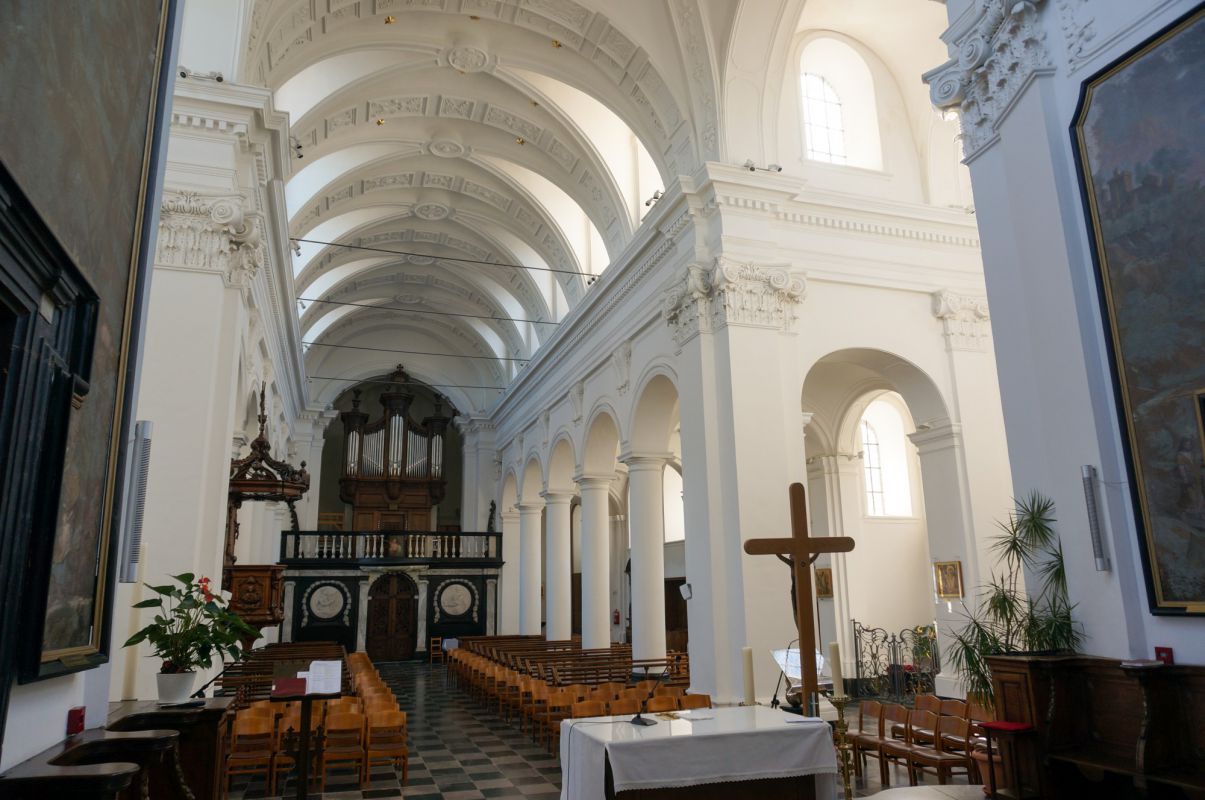
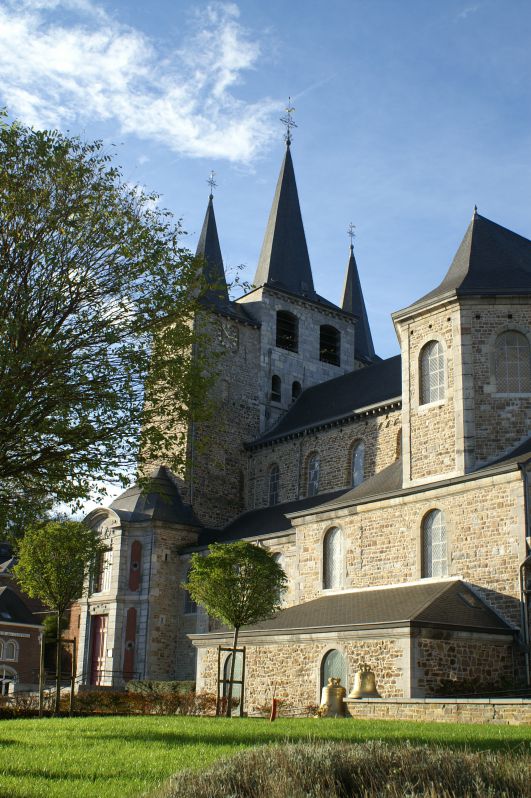
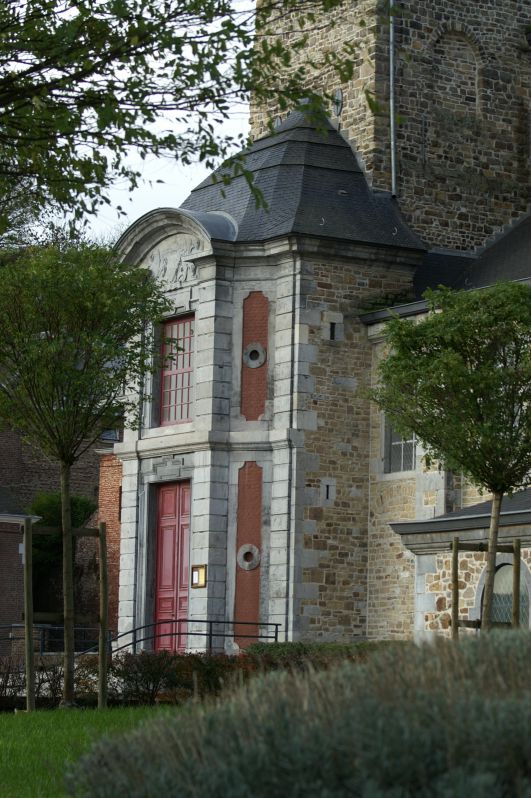
The building of Romanesque origin was built in the 11th century but underwent many transformations. The major works of the 18th century will give the church its current architectural aspect. The harsh nature of the origins has given way to a coherent and embellished profile.
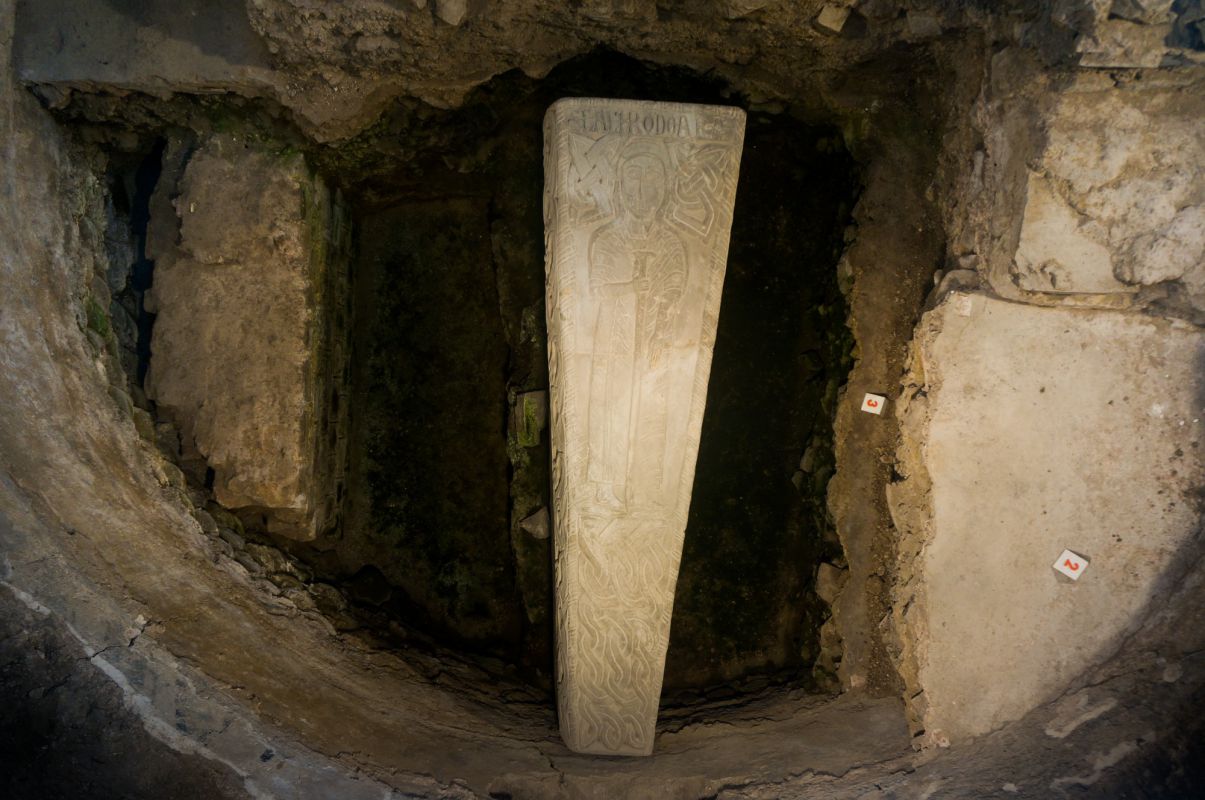
The church houses two Treasures recognised as part of the Wallonia-Brussels Federation's heritage: the superb Merovingian sarcophagus of Saint Chrodoara, which can be admired through a large glass opening in the choir, where it was discovered on 22 January 1977, and the shrine of Saint Ode, a masterpiece of 13th century Mosan goldsmithery.
This church is classified as an exceptional heritage site in Wallonia. It was completely restored between 1998 and 2001.


Photos


Media
Remarkable elements

Sarcophagus of sancta Chrodoara
The exceptional Merovingian sarcophagus of Sancta Chrodoara, likely from the 8th century, shows remarkable artistry. Discovered in 1977 beneath the collegiate church, it depicts a woman holding a staff, perhaps a sign of abbey authority. A Latin inscription praises Chrodoara as “noble, great and illustrious, enriching sanctuaries with her goods.” From the 11th century, she was venerated as Saint Ode.

Shrine of Saint Ode
A remarkable example of 13th century Mosan goldsmithing, the shrine has an oak core covered with copper, silver, enamel and stone. Tradition says Chrodoara, widow of the Duke of Aquitaine, settled in Amay in 589 and devoted herself to the Church. Buried there, her relics were moved by Bishop Floribert in the 8th century, then placed in this shrine around 1235. Since 2017, it has been displayed in the former chapter house.
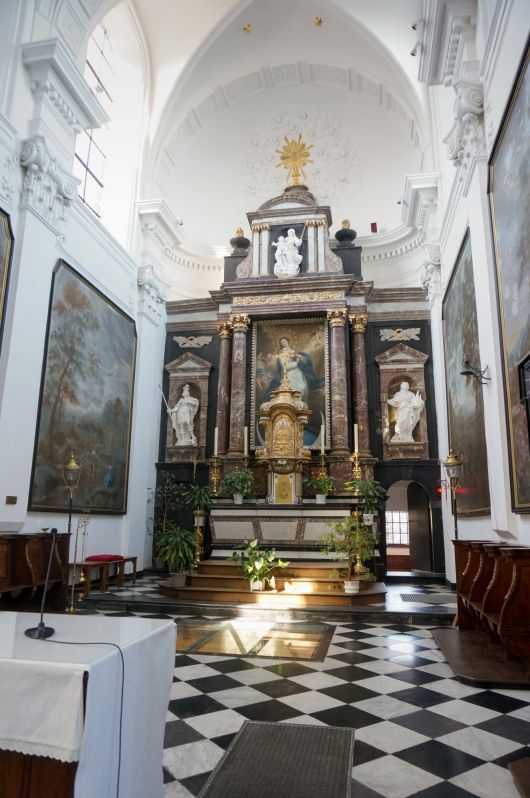
Monumental paintings of Fisen and Juppin
Four large paintings evoking episodes of the life of Christ hang on the walls of the choir. They are the work of two 18th century artists. The landscapes were painted by Jean-Baptiste Juppin (Namur, 1675 - 1729), while the characters were made by Englebert Fisen (Liège, 1655 - 1733), a very productive painter from Liège, a student of Bertholet Flémal.
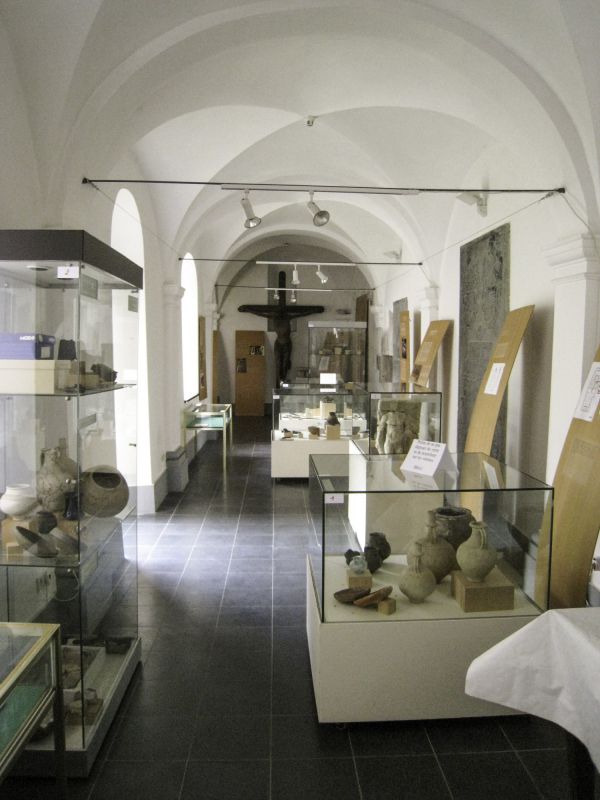
Cloister
The splendid eastern cloister (there are only seven in Western and Central Europe), probably of Romanesque origin and restored in the 18th century, houses the municipal museum which displays the archaeological finds discovered during the excavations of the Hesbaye-Condroz archaeological circle.

Way of the Cross
Magnificent contemporary work by the Amaytois artist Georges Leplat (1930-2010), Way of the Cross with 15 stations made with gold leaf using the iconic technique. Enhancing the building's interior radiance, her works enrich the collegiate's precious collection of works of art.

Religious art
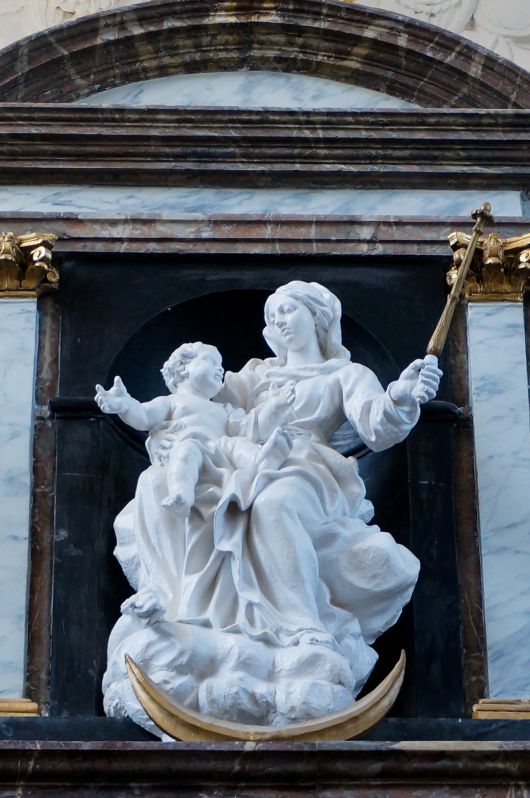
The collegiate church houses notable Christs, 17th–19th century furniture, Fisen’s Charity of Saint Ode and Deprez’s Saint Ode and the Beggar, statues from the 16th–20th centuries, liturgical ornaments, a 1685 rood screen, late 17th century altar saints, the 1866 Clerinx organ, Mélotte’s bas reliefs on Saint Barbe, and treasury silverware, missals, and antiphonaries.