
Saint Thomas of Canterbury
rue Saint Thomas
14480 Saint-Gabriel-Brécy (Creully-sur-Seulles)
Church | XII | Romanesque, Gothic | Catholic Church


Map
Opening hours
01 May - 31 October
Mon 9.00 - 19.00
Tue 9.00 - 19.00
Wed 9.00 - 19.00
Thu 9.00 - 19.00
Fri 9.00 - 19.00
Sat 9.00 - 19.00
Sun 9.00 - 19.00
01 November - 30 April
Mon 9.00 - 17.00
Tue 9.00 - 17.00
Wed 9.00 - 17.00
Thu 9.00 - 17.00
Fri 9.00 - 17.00
Sat 9.00 - 17.00
Sun 9.00 - 17.00
Description
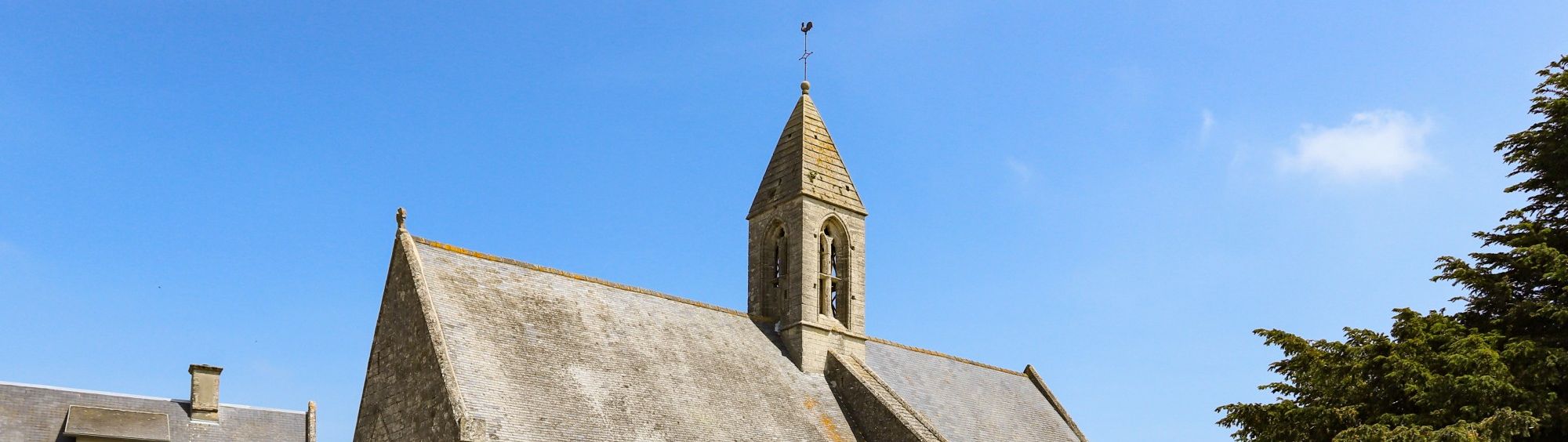
The parish church of Saint Thomas of Canterbury was built at the end of the 12th century. As the first mention of the parish of Saint Gabriel dates from the 11th century, it seems that before the 12th century it was the priory church which served also as the parish church.
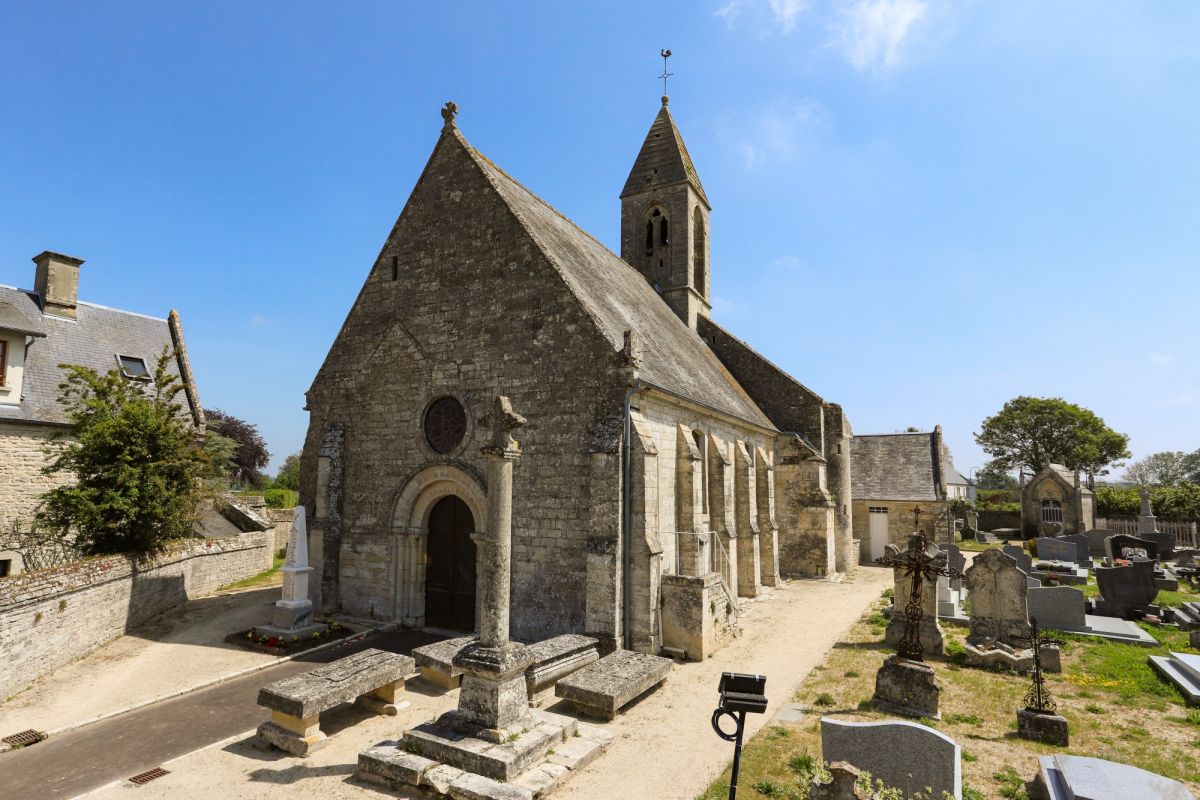
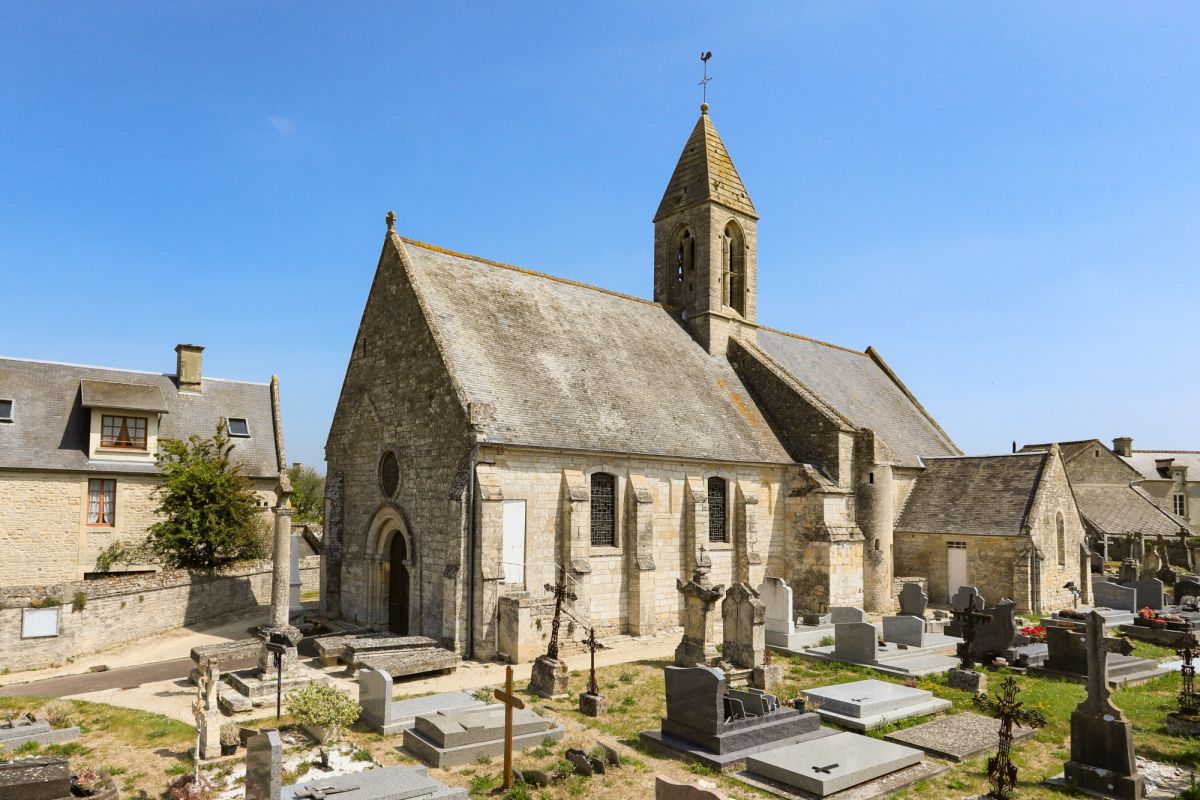
Built simply, with a nave and a sanctuary, the church of Saint Thomas has kept several interesting Romanesque elements : its flat chevet, a sun dial and the west front. The entry porch with a roman arch is the setting for surprising fantastic animals, directly from the medieval bestiary. On the south facade, the stairway leading up to the bell-tower is unique.
Inside, the nave and the choir are covered with 18th century wood-panelling, coming from the church of Brécy whose decoration was taken down during the Revolution. The vault between the choir and the nave supports the bell-tower in a surprising manner. In the choir the main-altar and its 18th century retable are still in the same place.
Photos


Remarkable elements
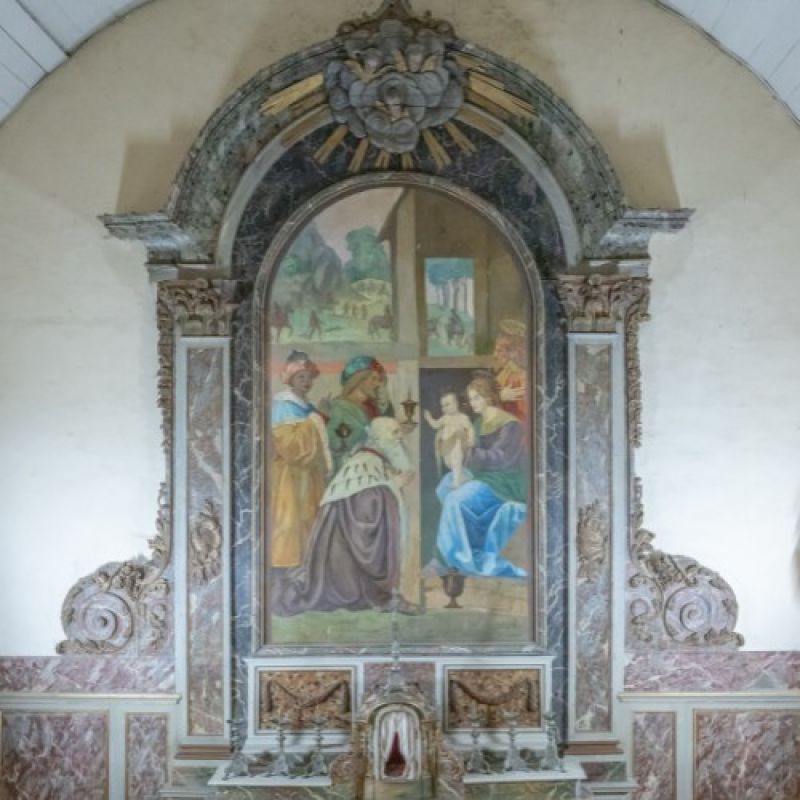
High altar ensemble
The curved altar and its painted and gilded wooden altarpiece with Corinthian capitals and foliage-adorned wings perfectly match their date of 1769. They replaced an altar made in 1698 by Thomas and Richard Saulet. The central painting is an Adoration of the Magi based on the work by Bernardino Luini kept at the Louvre. The painting is signed Guillot but undated.
Wood panelling in the chancel
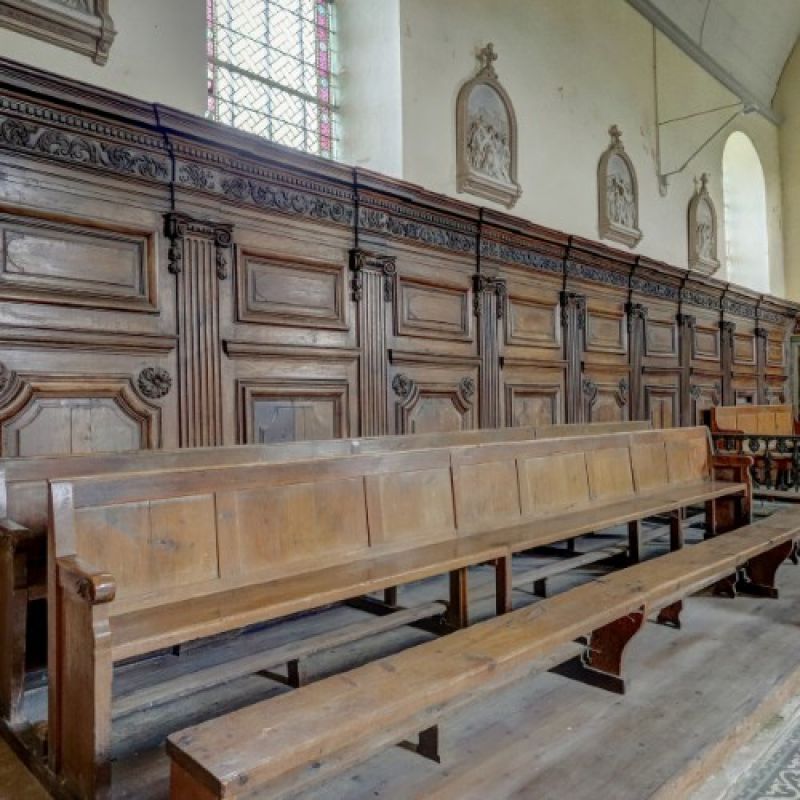
Dating from the 17th century. It alternates panels with imposing mouldings with Ionic pilasters featuring elegant leaf motifs. The upper frieze is finely carved, notably with monograms likely linked to the seigneurial family, as this panelling originates from the former church at Brécy, now the castle chapel. Of note is the almost invisible sacristy door, which blends seamlessly into the panelling.
Translated with DeepL.com (free version)
Side altars and their statues
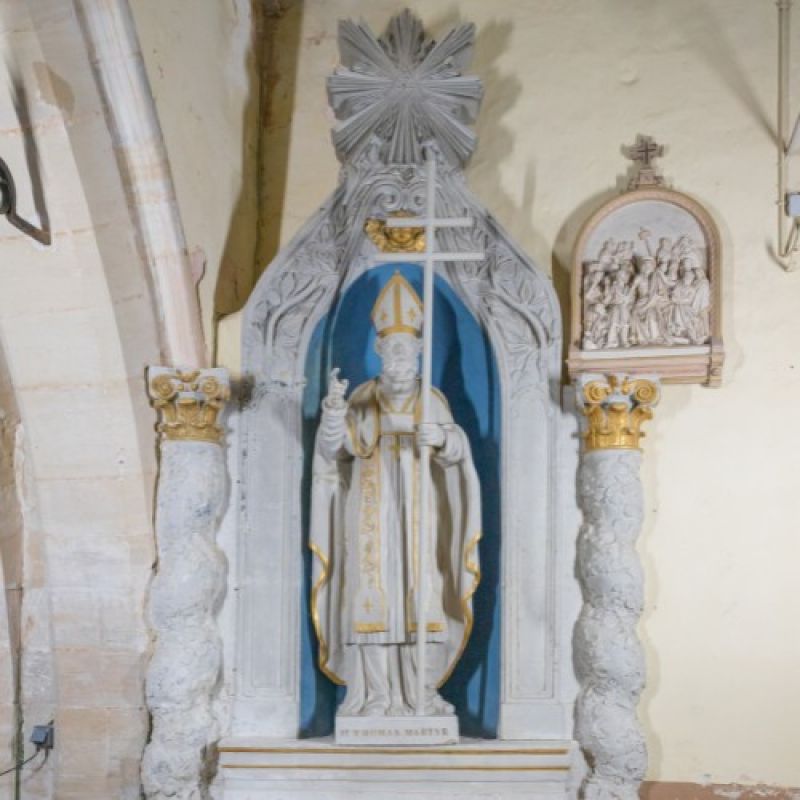
Built in limestone on either side of the nave, they have an atypical shape for the region. They can be dated to the late 18th or even 19th century. The beautiful twisted Corinthian columns flanking the altarpieces are thought to come from the former high altar. Two 18th-century statues feature on them: the Virgin and Child on the north side and Saint Thomas Becket, Archbishop of Canterbury and patron saint of the church, on the south side
Plaque commemorating the 1870 war
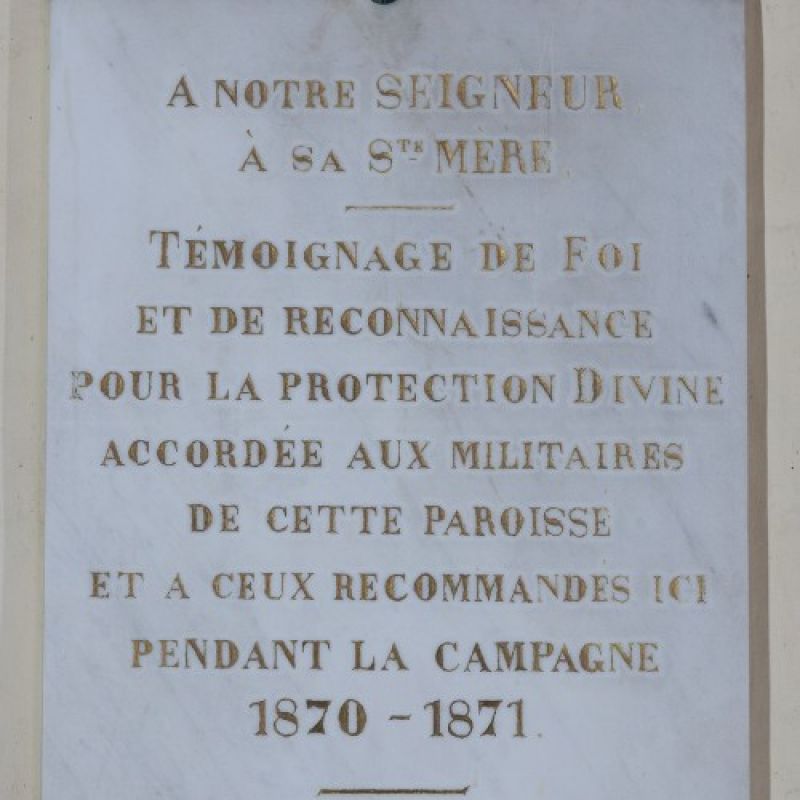
While plaques commemorating the Great War are common on the walls of churches in Calvados, those relating to the Franco-Prussian War of 1870 are much rarer. However, monuments linked to this conflict are the earliest examples of monuments paying tribute to those who died for their country. Logically, they are more numerous in northern and eastern France, near the conflict zones, but Calvados has a few.

Christ on the rood beam
This carved wooden Christ on the cross probably dates from the 17th century. It is attached to the rood beam that marks the entrance to the choir, the most sacred space in the sanctuary. In some churches, this feature is accompanied by a low wrought iron choir screen. While Christ is often alone in Bessin and Bocage, in Pays d'Auge he may be flanked by statues of Our Lady of Sorrows and Saint John the Evangelist.
Graves
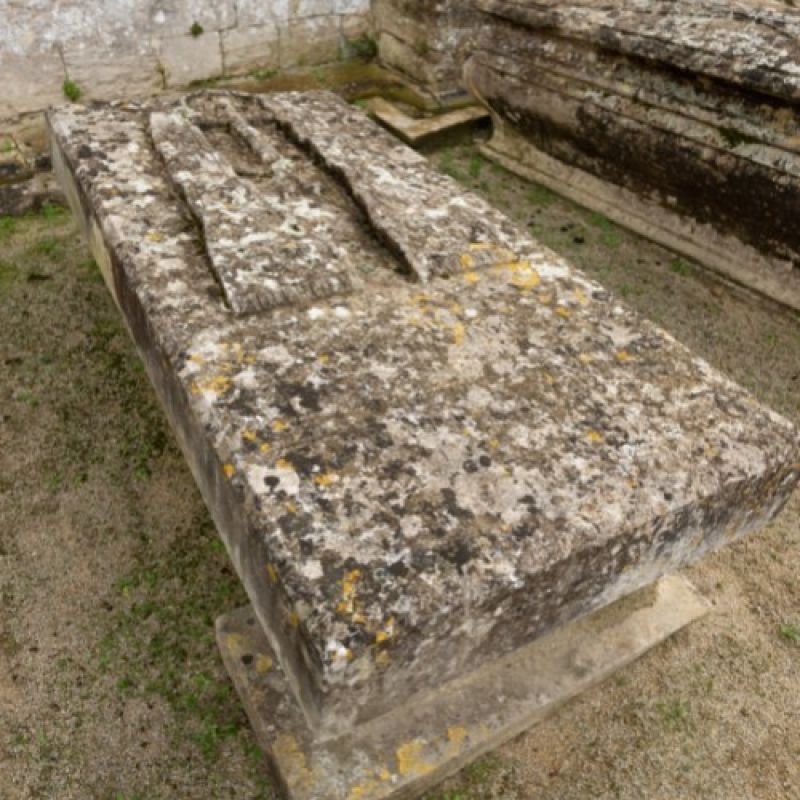
In the cemetery, near the church door, there is a series of rather unusual graves. Their epitaphs are no longer legible today – one of the drawbacks of our local limestone. However, the presence of carved decorations depicting ecclesiastical items – a pastoral stole, a crucifix and a maniple – logically reveals the role of their occupants: former parish priests, probably from the 19th century.
Translated with www.DeepL.com/Translator (free version)


