Saint Marien
Place de l’Eglise
57630 Vic-sur-Seille
Church | 1300 | Gothic, Neogothic | Catholic Church


Map
Opening hours
01 April - 31 October
Mon 10.00 - 19.00
Tue 10.00 - 19.00
Wed 10.00 - 19.00
Thu 10.00 - 19.00
Fri 10.00 - 19.00
Sat 10.00 - 19.00
Sun 10.00 - 19.00
01 November - 31 March
Mon 10.00 - 17.00
Tue 10.00 - 17.00
Wed 10.00 - 17.00
Thu 10.00 - 17.00
Fri 10.00 - 17.00
Sat 10.00 - 17.00
Sun 10.00 - 17.00
Sundays in June: Baroque music festival around the organ
Guided tour
Religious offices
2d and 4th Sunday of the month : 11 am
Description
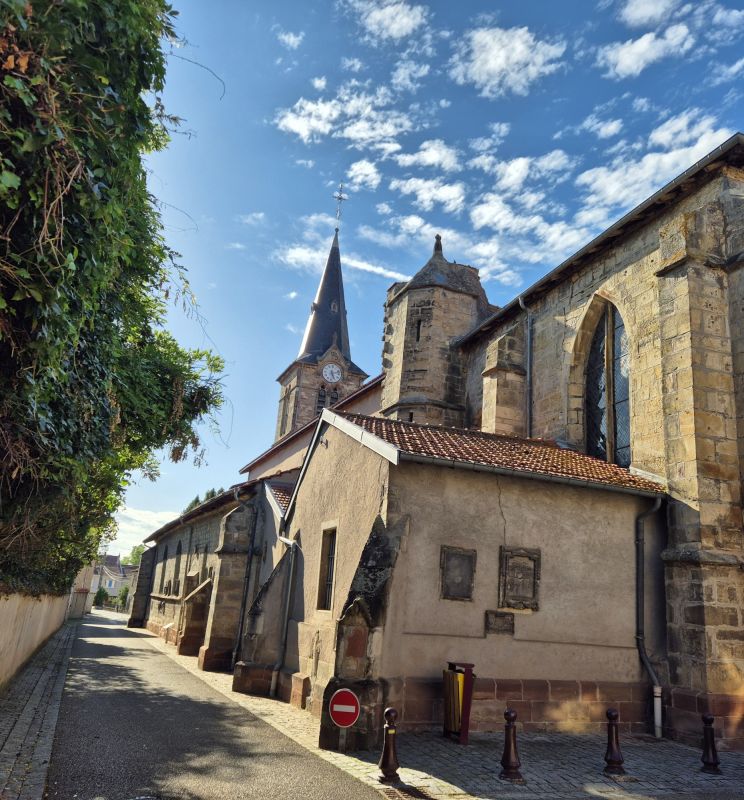
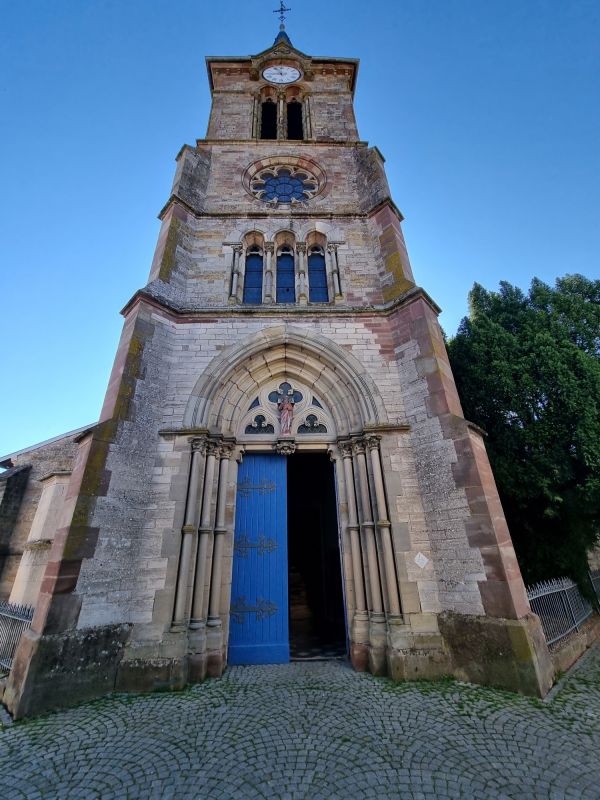
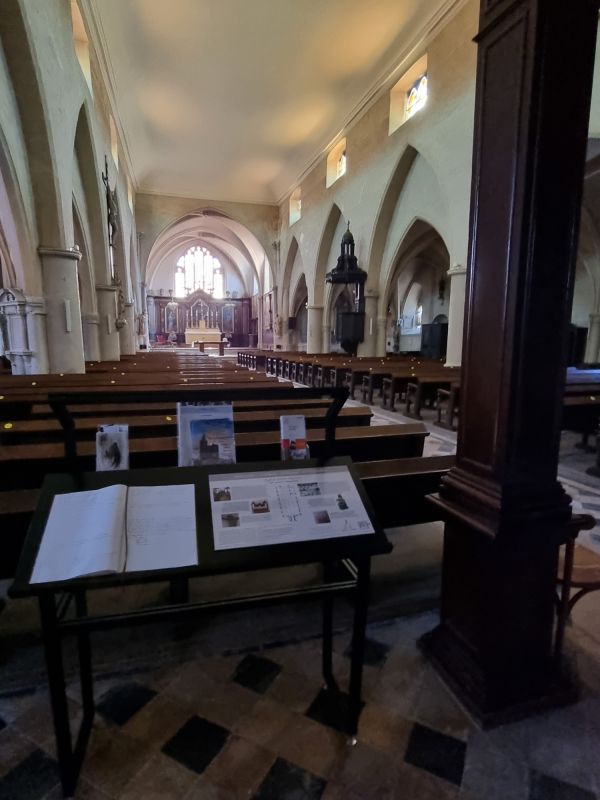
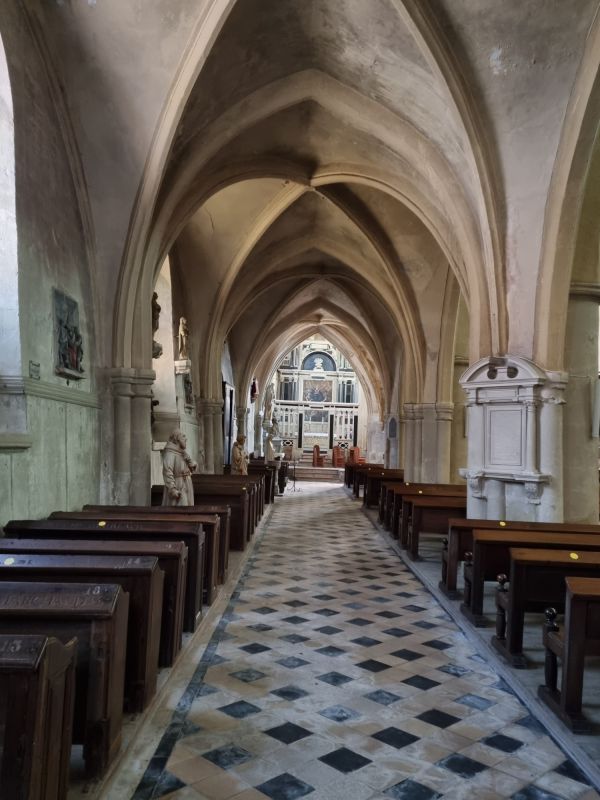
Vic's church has been the subject of many reconstructions: the choir collapsed twice, in the 15th and 16th centuries, and was rebuilt with a flat chevet (you can see it by going around the church). The nave was also transformed at the same time. Thus, of a typical Halle church in the region characterized by three vessels of equal height, it sees its aisles lowered to support the central part. The ceiling was installed in the 18th century to replace the collapsing vault. Finally, the reconstruction of the bell tower during the 19th century made a sentence of the Vicois revolutionaries who remained nevertheless very religious disappear: "the French people recognize the immortality of the soul".
Outside, on the south wall of the church are many limestone carved funerary monuments, testimony to the location of the former Old Master's cemetery. Inside, the chapel Our Lady of Good Help houses the remains of Vic's rich characters, particularly the Hoffelize family.
All these treasures that you will discover make the church listed as a Historical Monument since 2015.

Photos
Remarkable elements
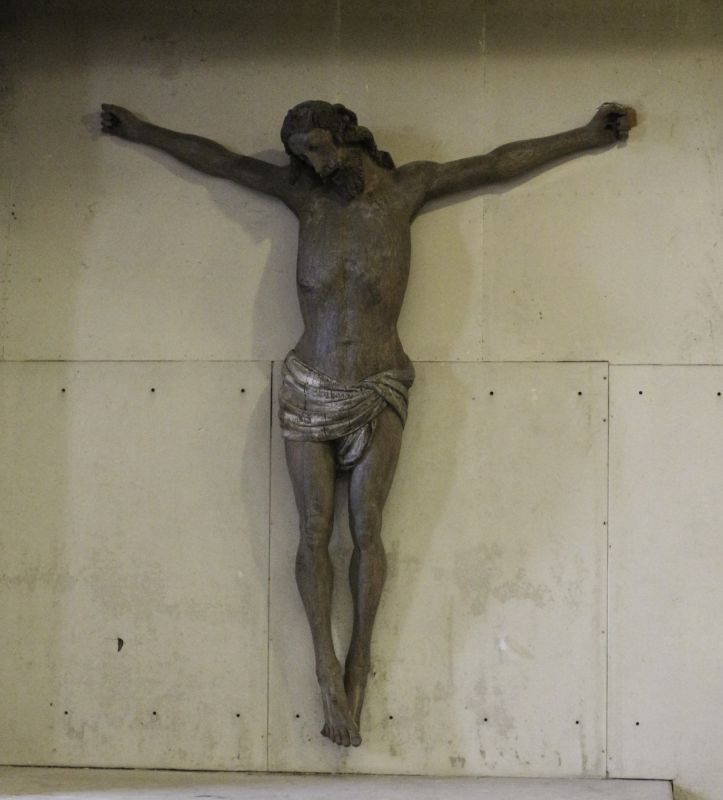
cross Christ in polychrome oak
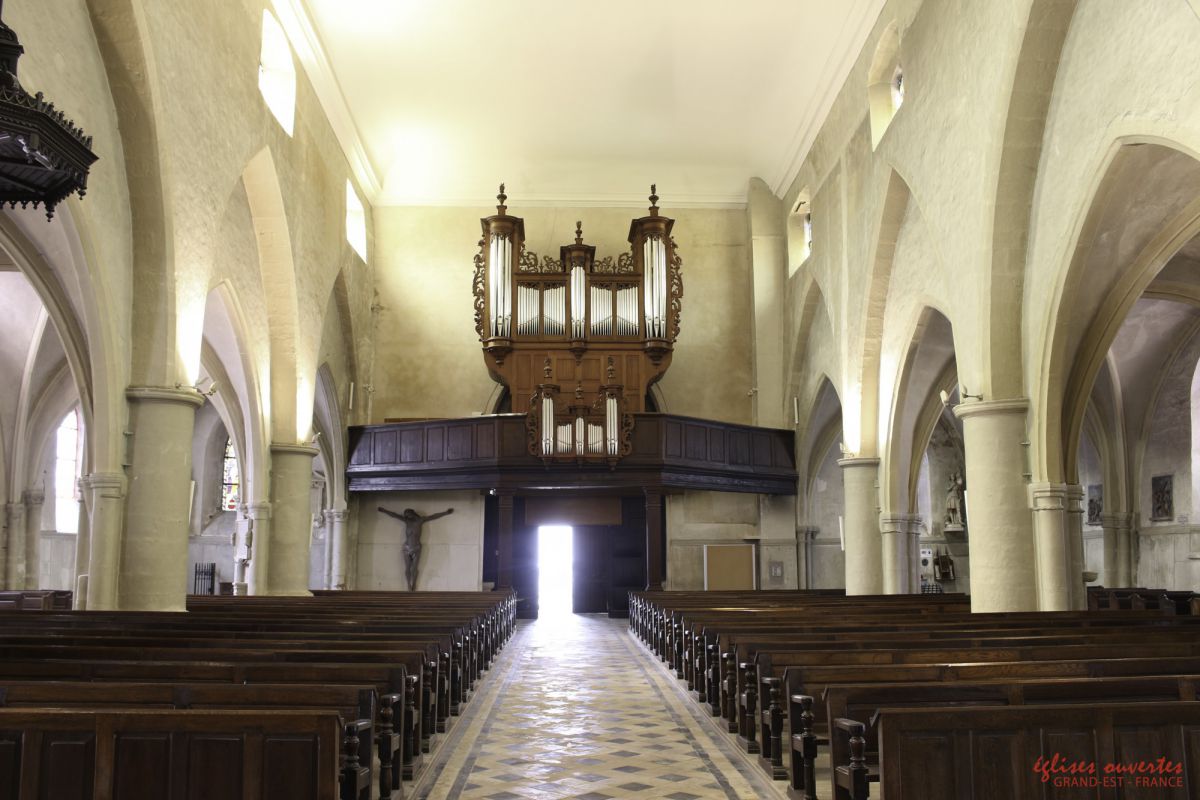
This cross Christ in polychrome oak was made at the end of the 15th or beginning of the 16th century. During the First World War Christ was protected by the inhabitants of Vic. The head and elements of the body were hidden in different parts of the church and village.
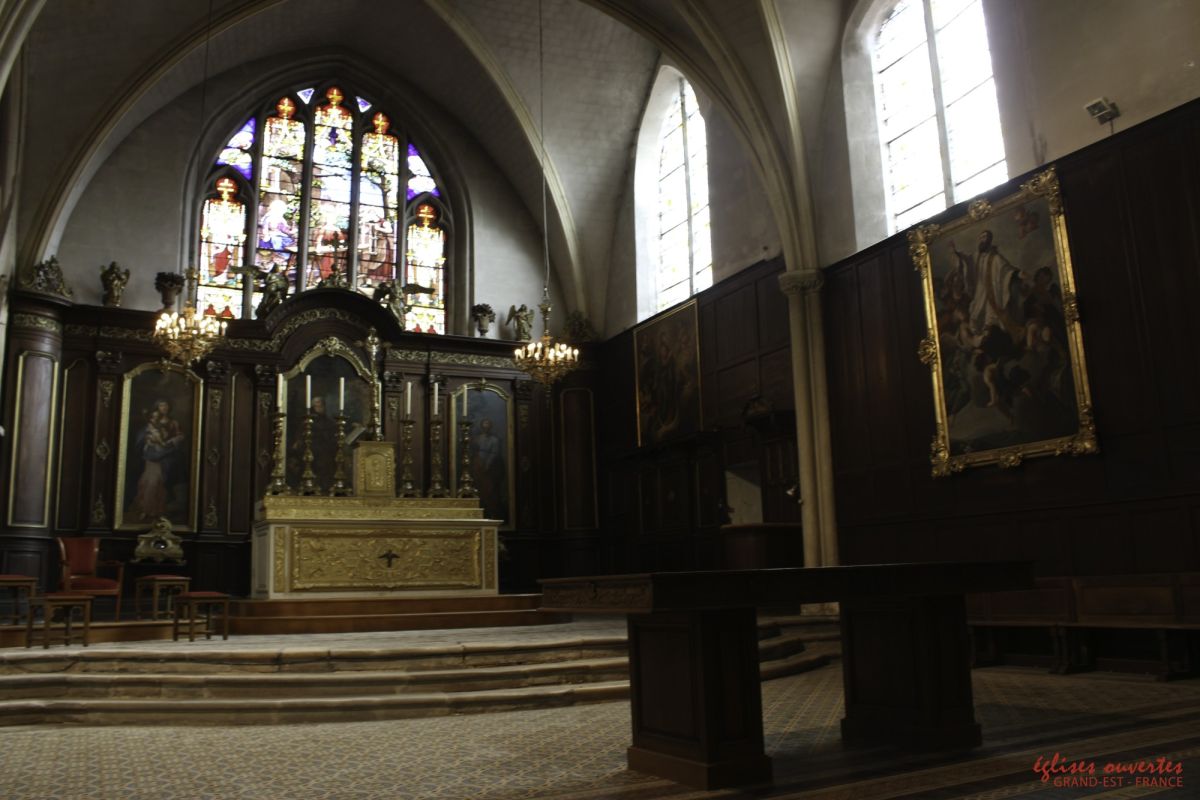
woodwork of the church choir
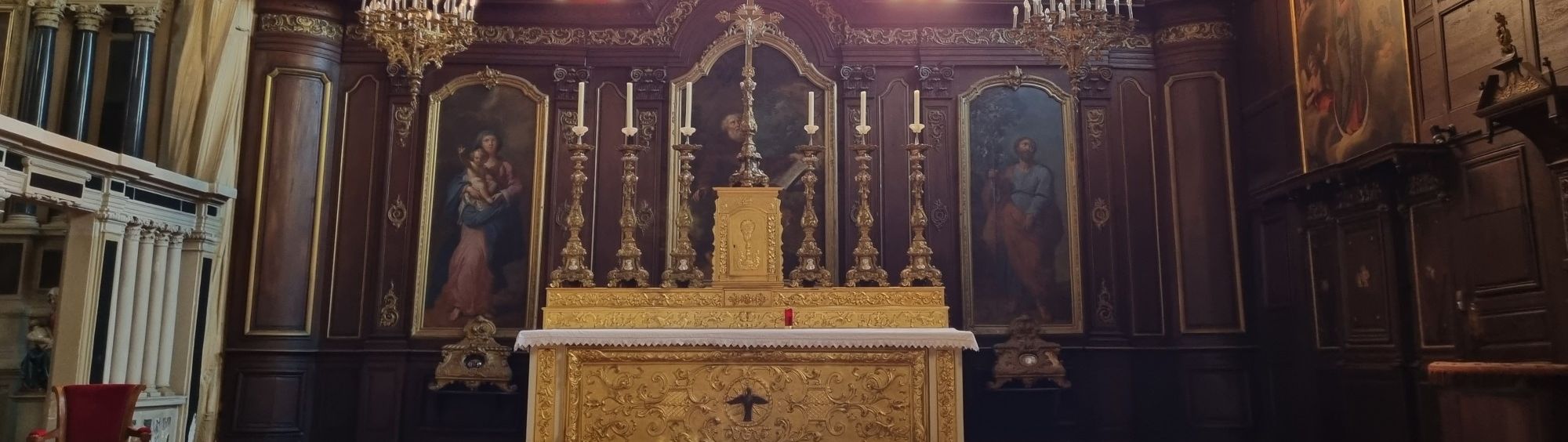
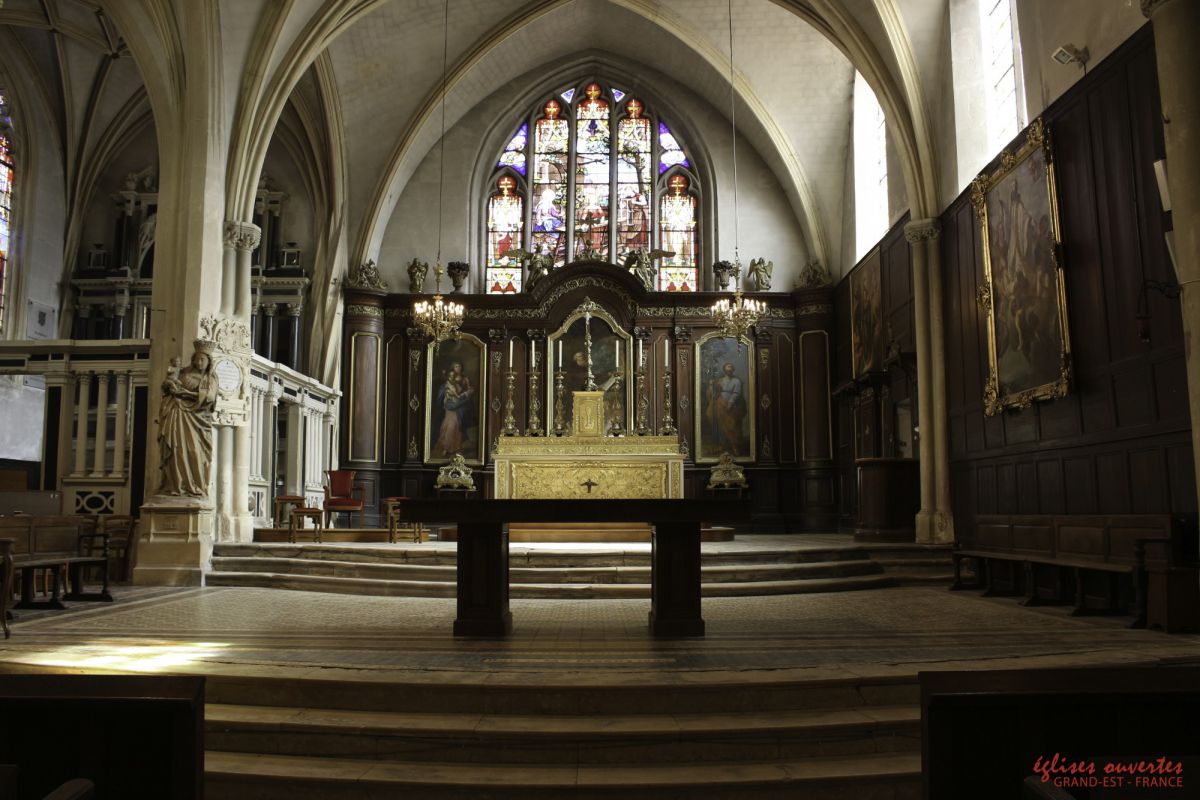
The woodwork in the choir comes from the former Premonstratensian abbey of Salival and illustrates the Louis XV style with its gilding, angels and original fire pots. Paintings complete the ensemble, including one depicting the Virgin Mary, Saint Joseph and Saint Mary, recognisable by the beehive and the bear. On the right, an apotheosis of Saint Pierre Fourier, carried to heaven by angels, served as a model for several famous works. On the left, a large statue of the Virgin Mary in Jaumont limestone, from Salival, stands out for the finesse of its 15th-century details.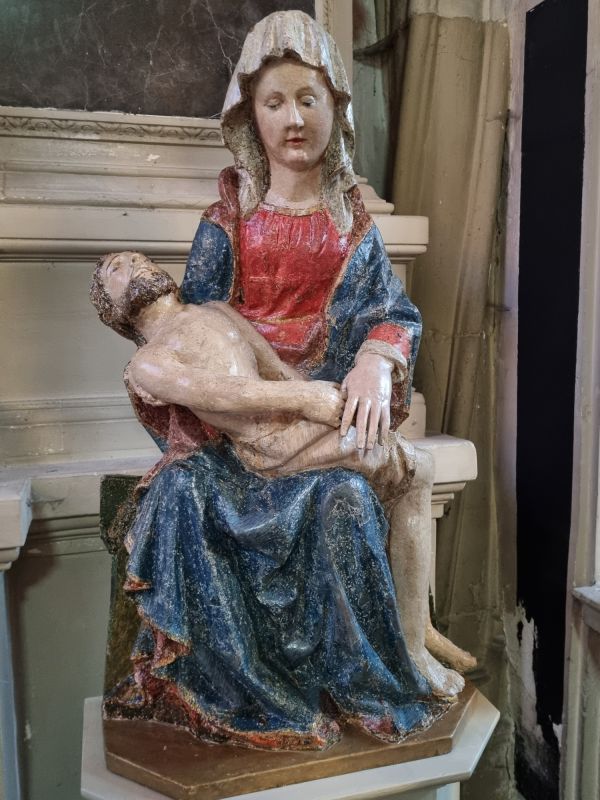
The Pietà
This 16th-century polychrome wooden Pietà depicts the Virgin Mary holding Christ after the Crucifixion, a theme of Germanic origin that was widely used in Lorraine. Gilded in the early 20th century, the statue was recently restored, revealing its original colours. The study carried out on this occasion provides valuable information on the techniques and pigments used by Renaissance sculptors.
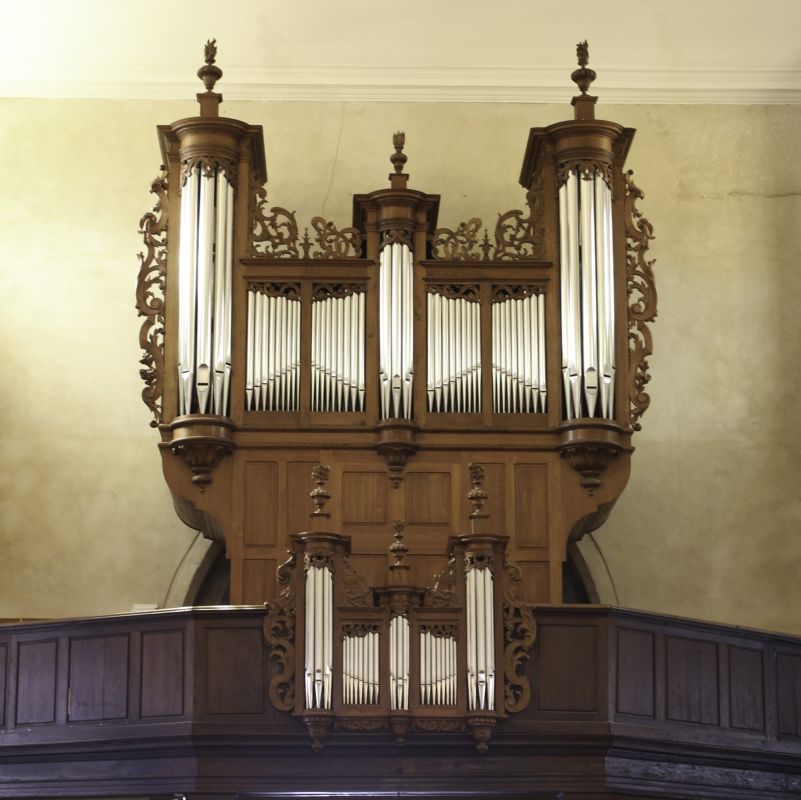
The organ
Built in 1750, the organ at Vic-sur-Seille is a Louis XV-style instrument. Rebuilt in 1953 by Blesi-Haerpfer, it was replaced in 1998 by a new organ made by Gaston Kern, installed behind the 17th-century case, which is listed as a historic monument. Inaugurated on 18 October 1998, the current instrument has three keyboards, twenty-nine stops and around 2,000 pipes.
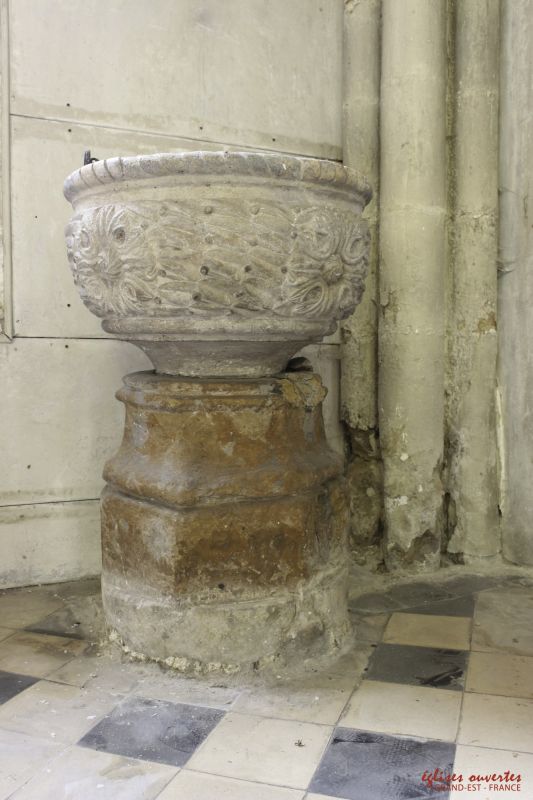
Baptismal font
This baptismal font is made of white limestone from the late sixteenth century. Its support is older, carved in ochre limestone in the 15th century. Many personalities from Vicenza were baptized here, including the famous painter Georges de La Tour, on March 14, 1953.
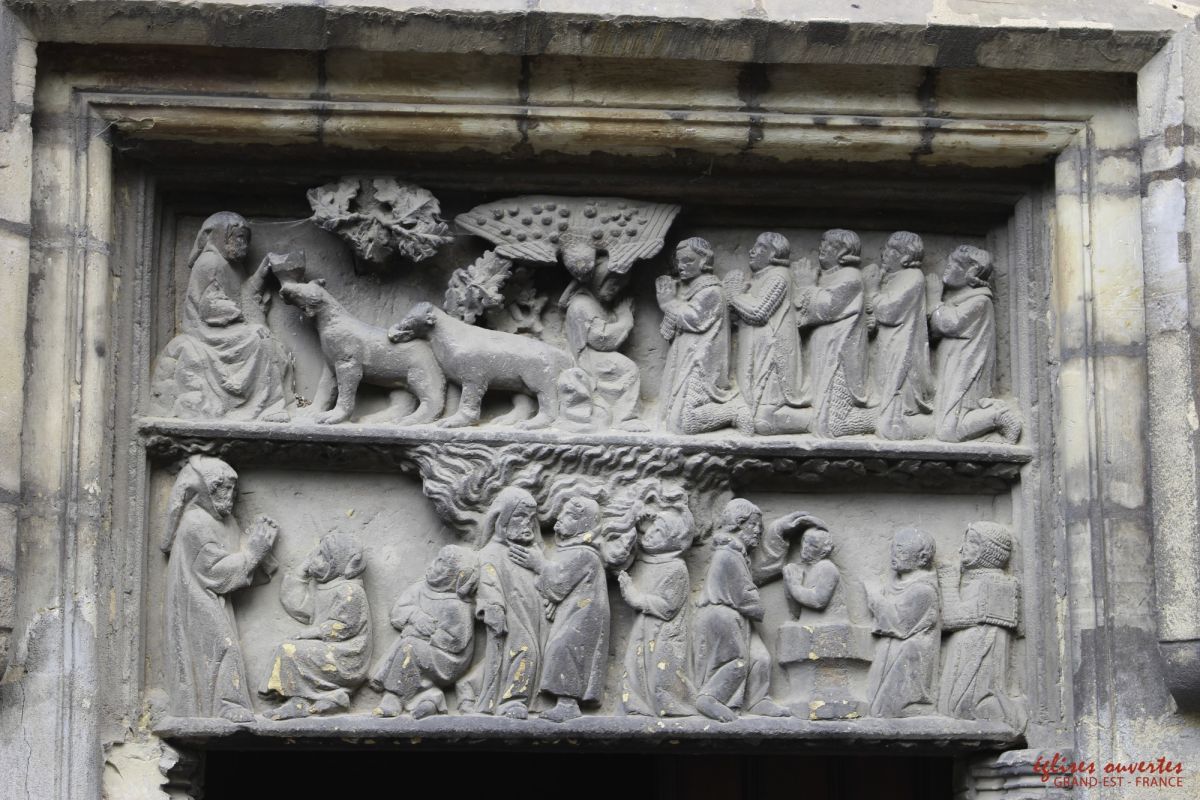
Tympanum
Dating from the late 13th or early 14th century, the carved tympanum tells the legend of Saint Marien, patron saint of the church. In two registers, it depicts the life of the 6th-century hermit: fed by bears, confessing soldiers under the dove of the Holy Spirit, teaching, receiving the repentance of looters and then baptising them. This sculpted narrative illustrates his spiritual and missionary role.