Holy Virgin
Rue J. Quintart
7063 Chaussée-Notre-Dame-Louvignies (Soignies)
Church | 1250 | Romanesque | Catholic Church


Map
Opening hours
01 June - 30 September
Mon -
Tue -
Wed -
Thu -
Fri -
Sat 14.00 - 20.00
Sun 14.00 - 18.00
Religious offices
Saturday : 6.30 pm
Description
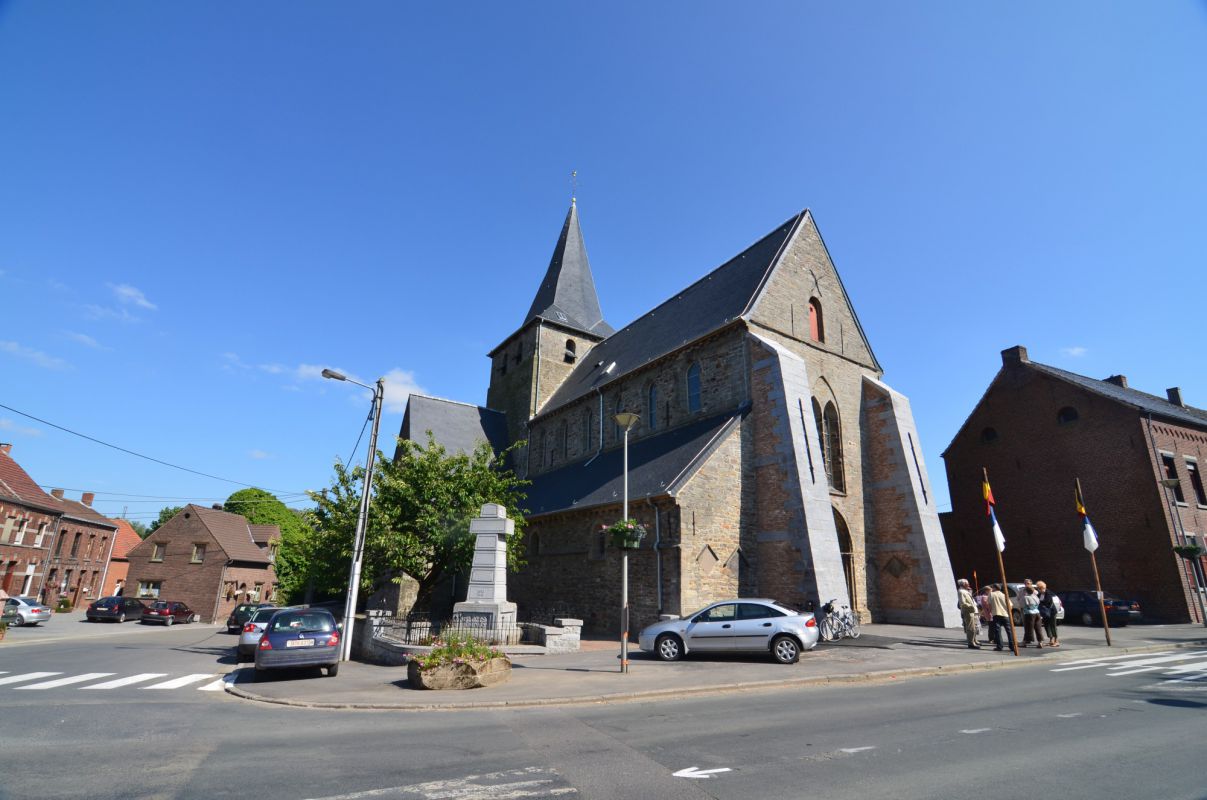
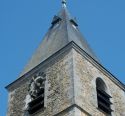
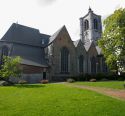
On an ancient Roman road, this very old (13th century) church in local quarried sandstone dedicated to the Virgin has both Romanesque and Gothic elements.
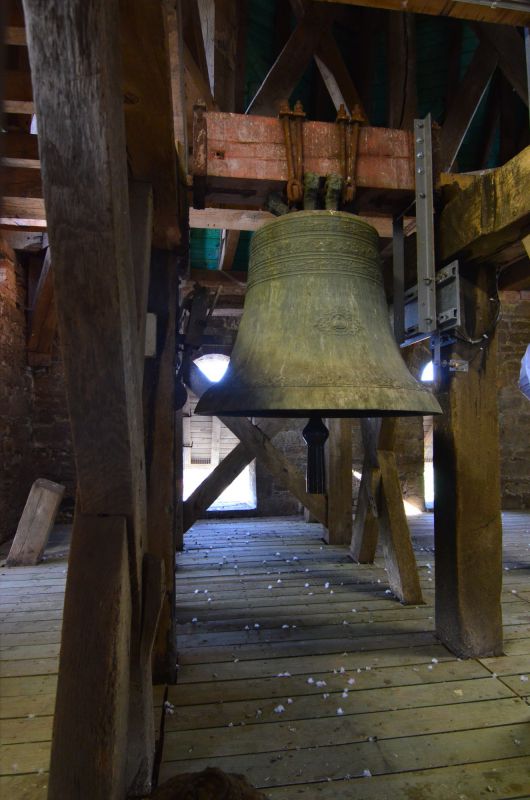
The original wooden framework was renovated in 2010. Modern dendrology has been able to date most of its oak to 1267.
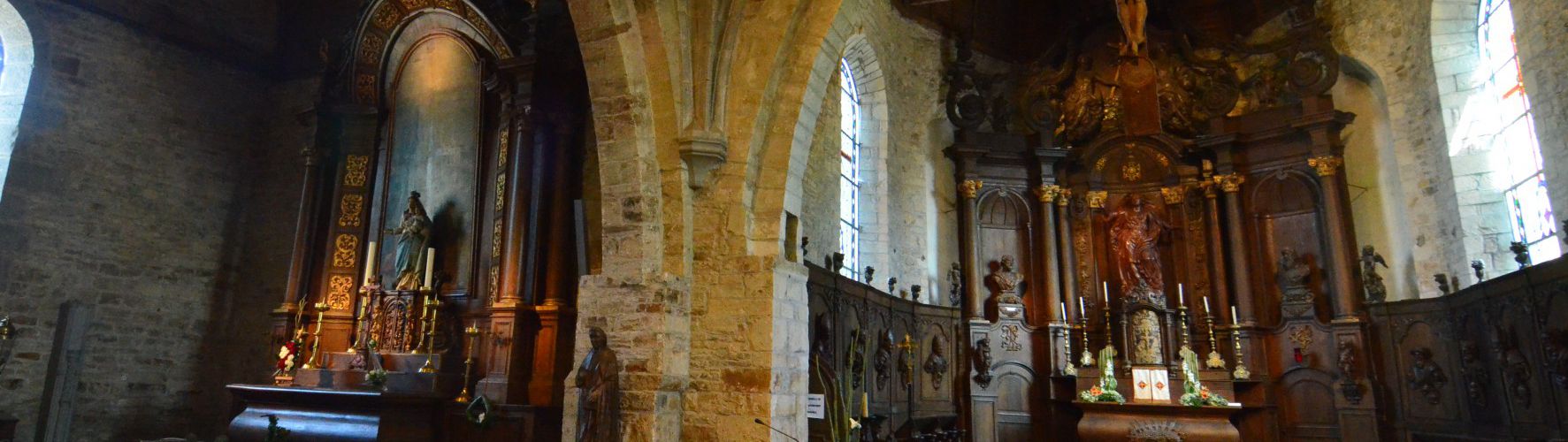
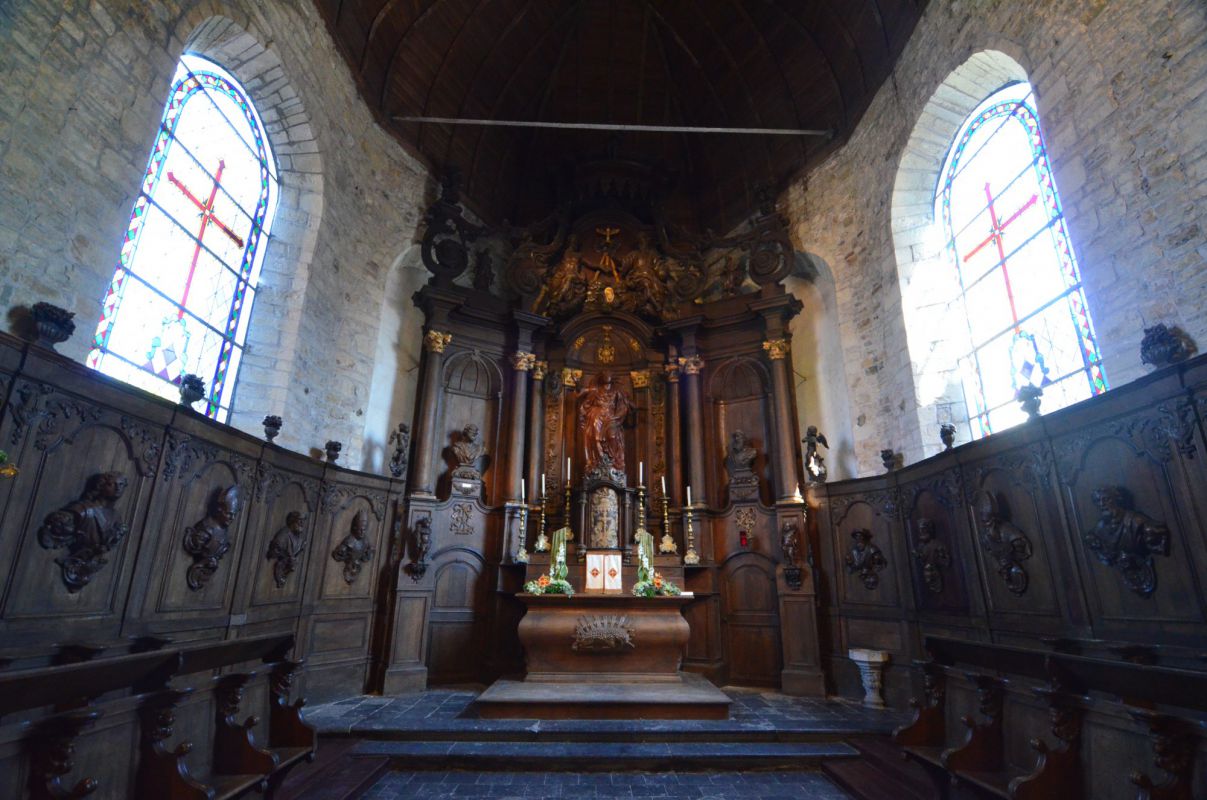
The choir is composed of stalls and a high altar, which came from the abbey of Cambron- Casteau. The local blue stone is omnipresent in the baptismal fonts, the holy water font, the paving stones and the tombstones. There is also a pulpit, two Louis XV confessionals and a 16th century benevolent God of Mercy.
KIKIRPA : Photo-library online

Photos



Remarkable elements

Choir panelling
The side walls of the choir are lined with fine panelling made of six oak, or oak-like, panels in the Regency or Louis XV style (18th century). Their exact origin is unknown, but they may come from the former Abbey of Saint-Pierre d’Hasnon near Valenciennes. The panels feature relief busts of the four Evangelists and several Church Fathers, including Saint Augustine, Saint Gregory the Great, Saint Jerome, Saint Hubert and Saint Ambrose.
Statues
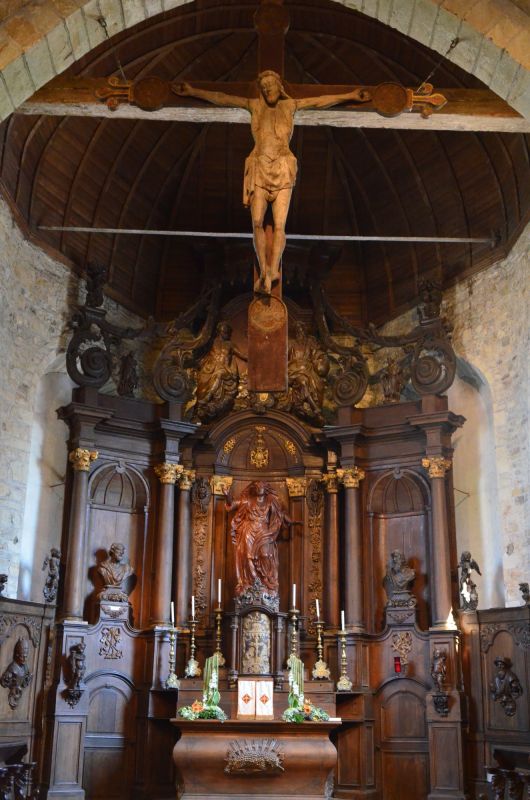
At the center of the main altar stands the statue of Our Lady of the Ascension, set within a false altarpiece framed by six Corinthian columns. The side niches contain the busts of the apostles Saint Peter and Saint Paul. Flanked by two putti are the statues of Saint Roch and Saint Anthony Abbot. Above, the Holy Trinity is depicted with God the Father holding a globe and Christ beside Him, clothed in a tunic with a bare upper body.
Massive tower
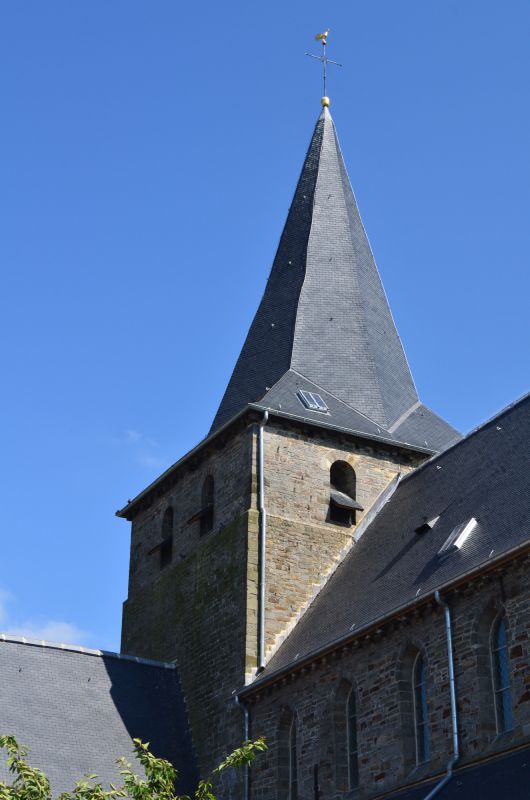
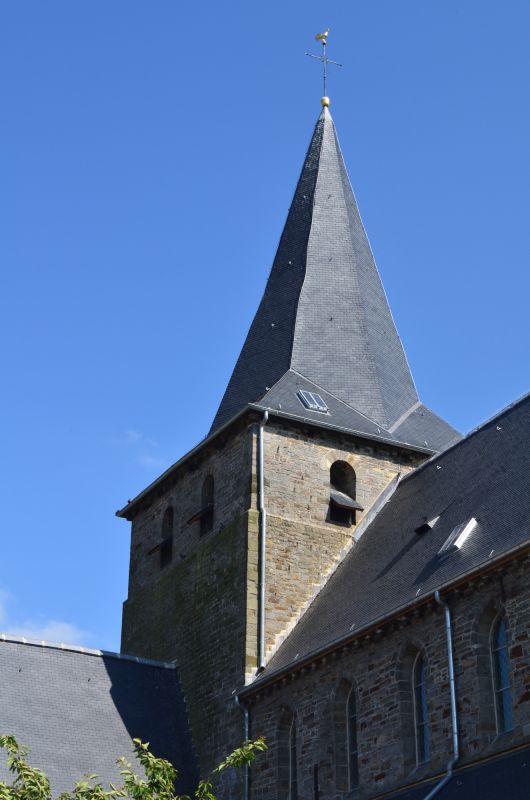
At the crossing of the transept stands a massive tower, the oldest part of the building, dating from the first half of the 13th century. It likely served as a refuge for villagers against roaming bands. Access to its first floor was through a hidden door in the choir. The transept arms, added later, give the church a Latin cross plan. The crossing opens onto a Gothic-inspired arch of red brick.
Organ
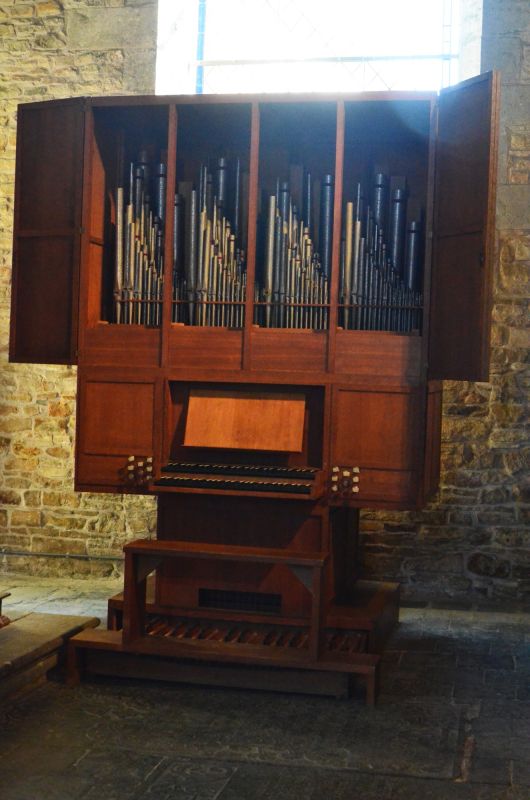
The pipe organ in the south transept features two 56-note manuals, a 30-note pedalboard and 14 stops. Built in 1969 by Patrick Collon for the Laeken Organ Manufactory, it was intended for the training of organists under Jean Defèche, professor at the Academy of Music and the Royal Conservatory of Mons. In 2011, it was installed in the Church of the Holy Virgin on the initiative of Father José Bouchez by the Thomas Organ Manufactory of Stavelot.

Fonts
The baptismal font consists of a blue limestone column topped with an octagonal basin, resting on a carved base. Made in the Hainaut Gothic style, it dates from the 15th century. The font basin is covered with a wooden lid of recent manufacture.
Tombstone of Mrs Elisabeth de Laire
Under the transept crossing lies the oldest tombstone of Soignies, that of Lady Elisabeth of Laire, who died in 1264. It shows her figure within a stylized religious aedicula. She has quietly watched over the church for over seven centuries. Though of minor nobility, she is elegantly dressed in a flowing gown with a rich mantle and holds a prayer book.
Nearby
Circuit
The Middle Ages in the Haute Senne region ( from Soignies to Horrues)
You will discover the Romanesque collegiate church and meet Saint Vincent. At Chaussée-Notre-Dame, it is the Lady of Laire who will be waiting for you. But before you get there, you can admire the landscape of the Haute Senne. Finally, in Horrues, you will learn more about Saint Martin, Saint Hubert and their emblematic animals.
The Middle Ages in the Haute Senne region (full circuit)
Proudly erected for centuries, churches are witnesses to local history. With castles and farms, they tell about an era and its customs. Are you more of a car person? Our fourth route offers you all the buildings in the program. A great way to learn everything about the region!