Saint Nicholas
Place Louis Lefèbvre
7063 Neufvilles (Soignies)
Church | 1777 | Classical | Catholic Church

Map
Opening hours
01 January - 31 December
Mon 14.00 - 17.00
Tue -
Wed 9.00 - 10.00
Thu -
Fri 14.00 - 17.00
Sat 9.00 - 17.00
Sun 9.00 - 17.00
Religious offices
Sunday 10.45 am
Description
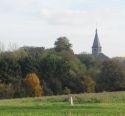
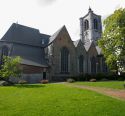
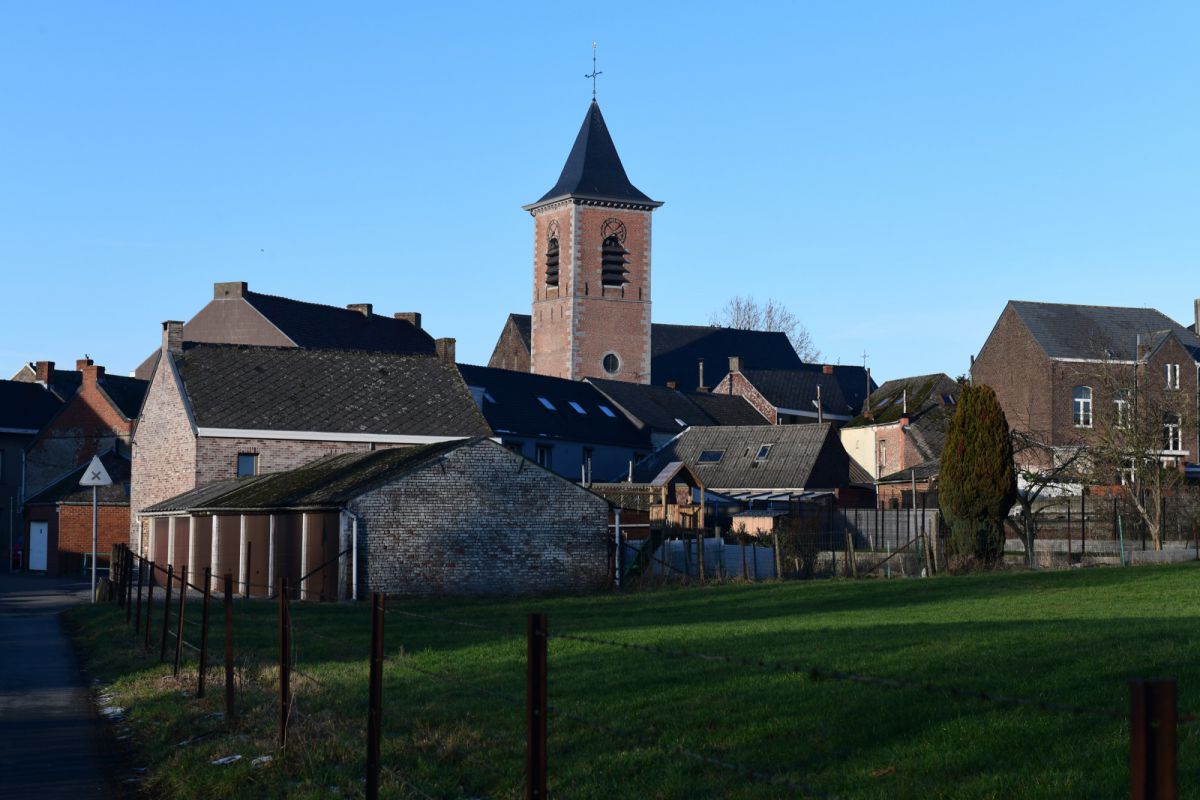
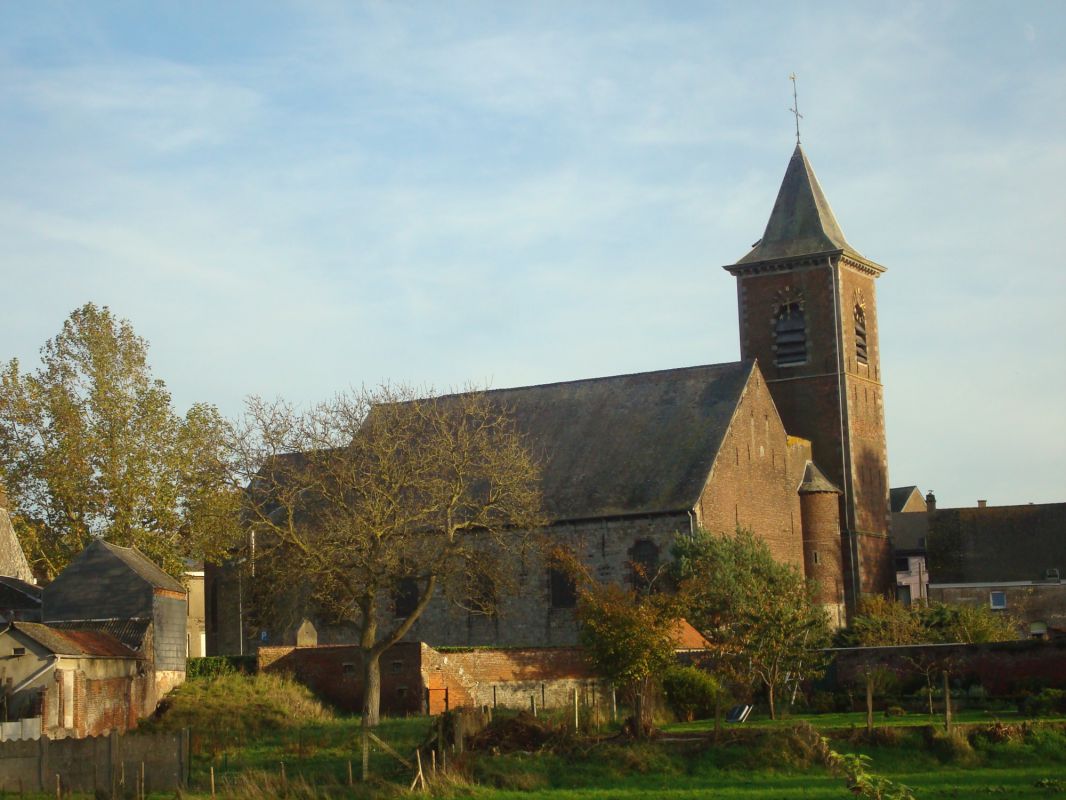
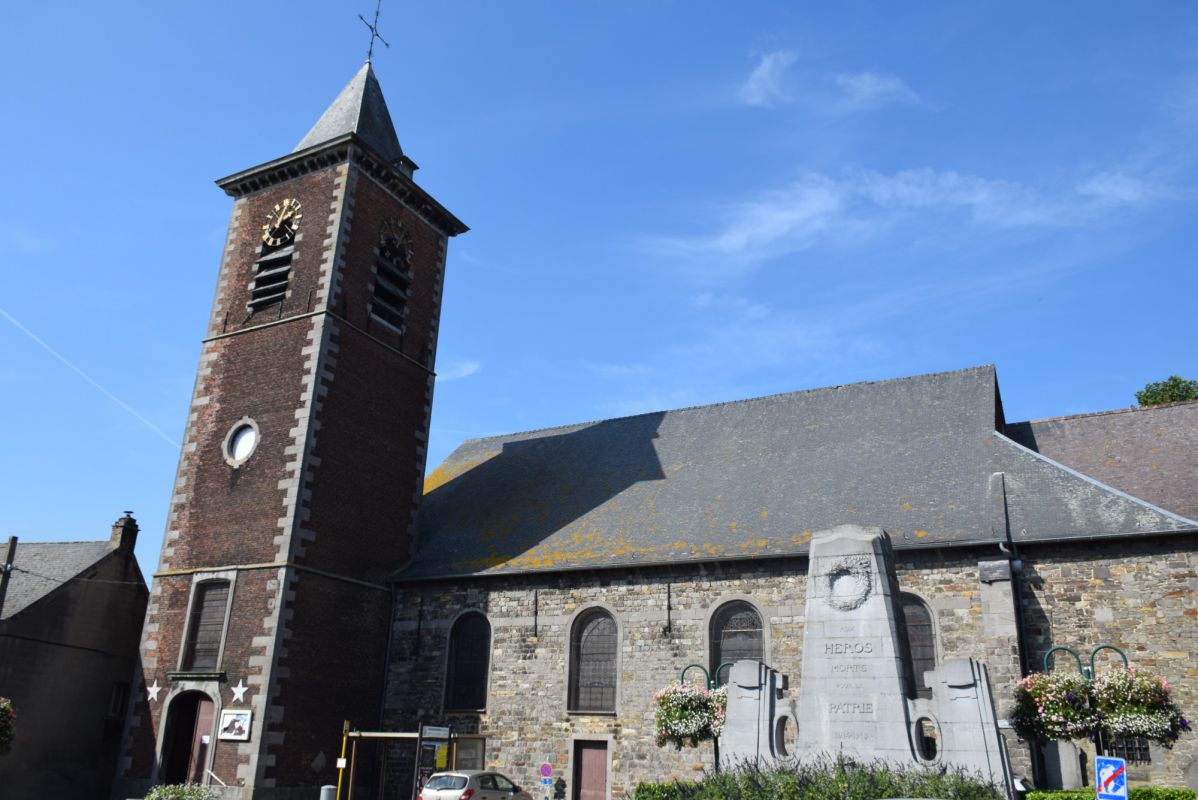
This charming church built mainly with the famous Hainaut blue stone from a local quarry is placed in the heart of the village. It’s of classical style and built in 1777. It has a high brick tower and funerary slabs on its outside walls.
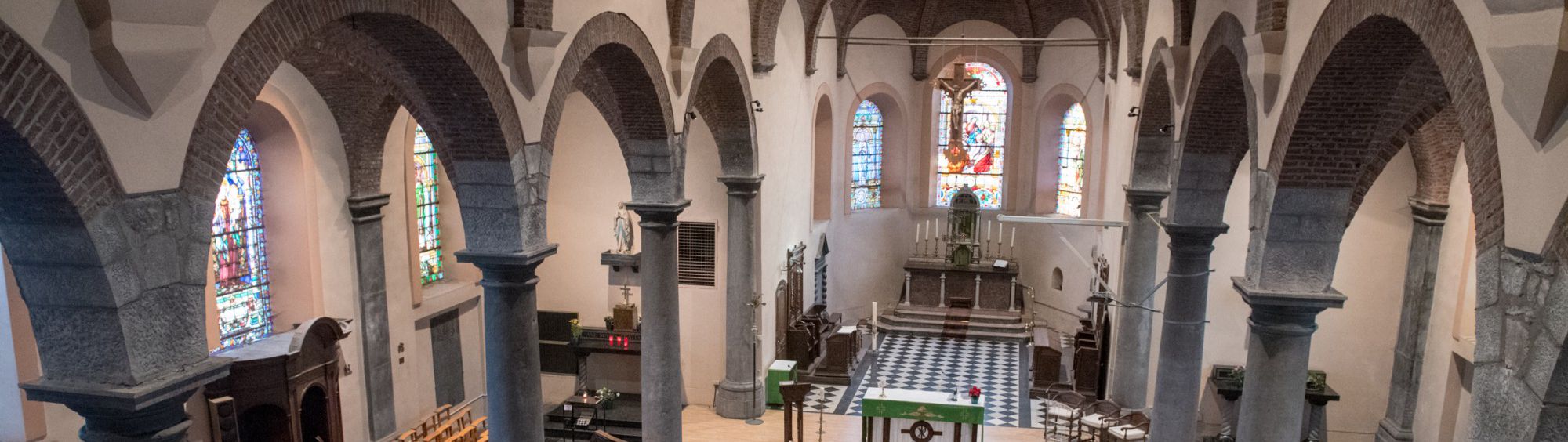
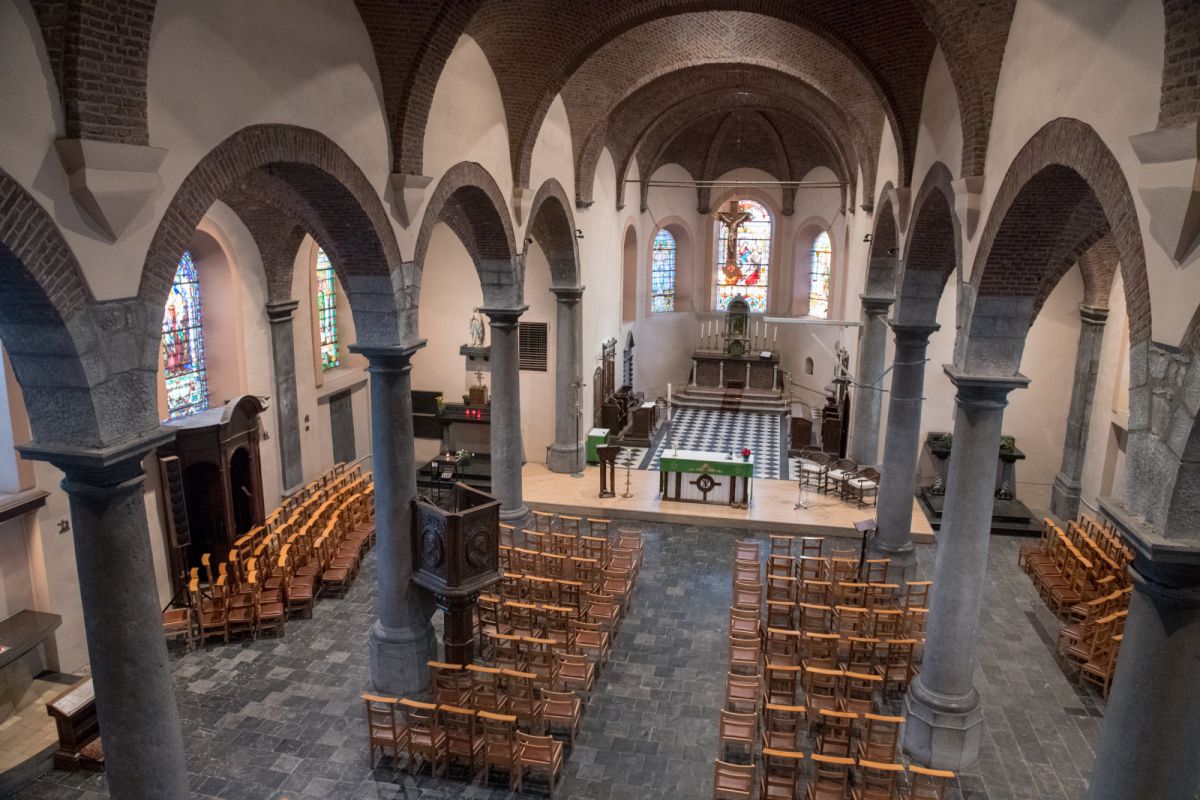
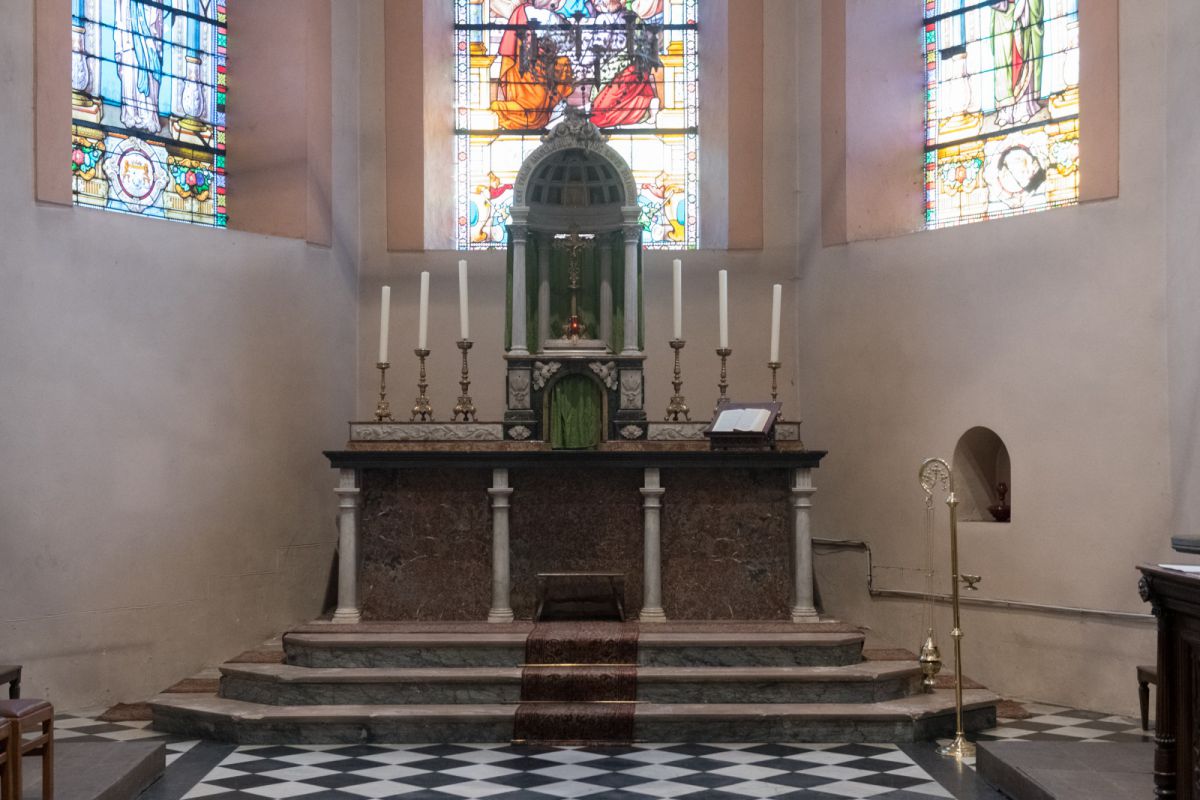
Inside, the choir is noteworthy especially the central stained glass window depicting the Last Supper and the stalls (1884) with arms in the form of lions. New since 2012 is the Way of the Cross in bare bronze which invites meditation.
Leaflet: L'église Saint-Nicolas de Neufvilles (FR)
KIKIRPA : Photo-library online
Photos



Remarkable elements
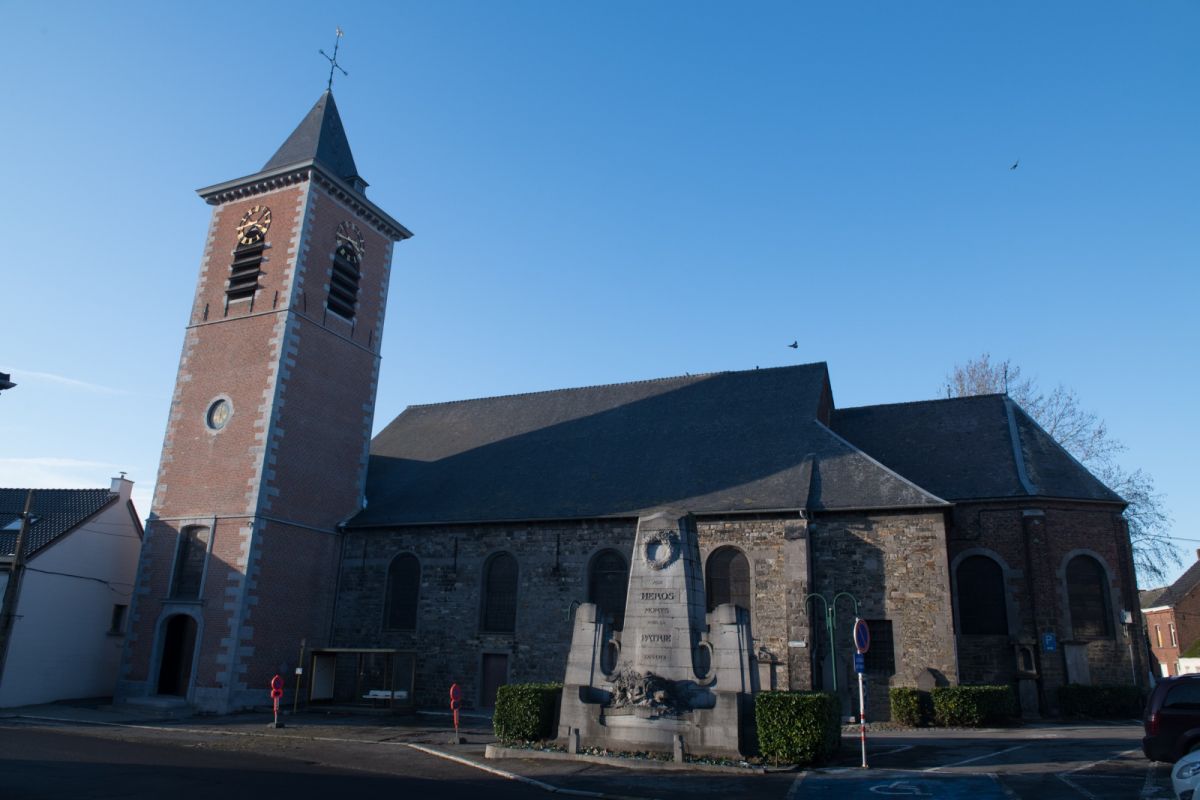
The church
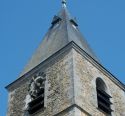
Planted on the village square, the parish church is a classic brick and rubble building, dated 1776 on the lowered tower door arch. Collateral walls, choir and tower bases are built of reused rubble. The high bell tower is brick, but blue stone stands out in the harp-style corner chains. About ten slabs and funeral stelae adorn the exterior. The tall off-center tower draws attention; its top floor has openings for bells under stone modillions.
The triumphal cross
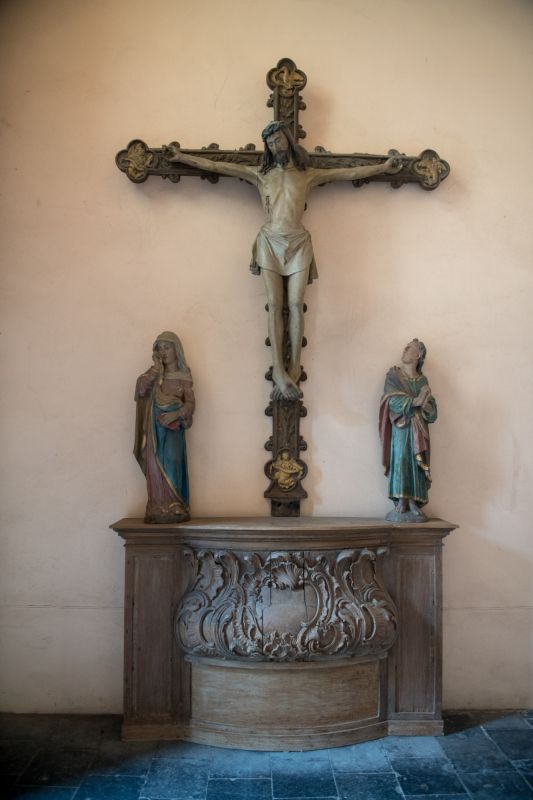
On a wooden pedestal stands the triumphal cross, dated around 1530, a major work of art in the church. The small four-lobed ends bear the four evangelists: John’s eagle, Matthew’s angel, Mark’s lion, and Luke’s bull. Christ with long hair spreads his arms horizontally; drops of blood streak his face. The Virgin and St. John wear draped 15th-century robes; Mary wipes her tears, and John turns to the Savior with a gaze full of tender sadness.
Fonts and Christ
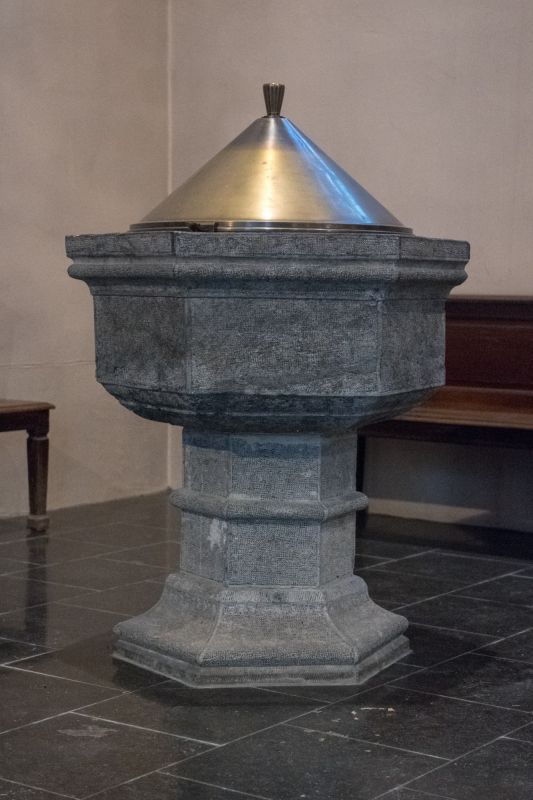
Close to the hexagonal baptismal font tank, from the early 16th century, Christ seated at Calvary would have been from the same period. It is made of polychrome stone. Painful, crowned with thorns, his forehead is wrinkled, his mouth pinched, his cheeks hollowed out and he looks in front of him. The joined wrists are linked by a rope.
Stained glass windows
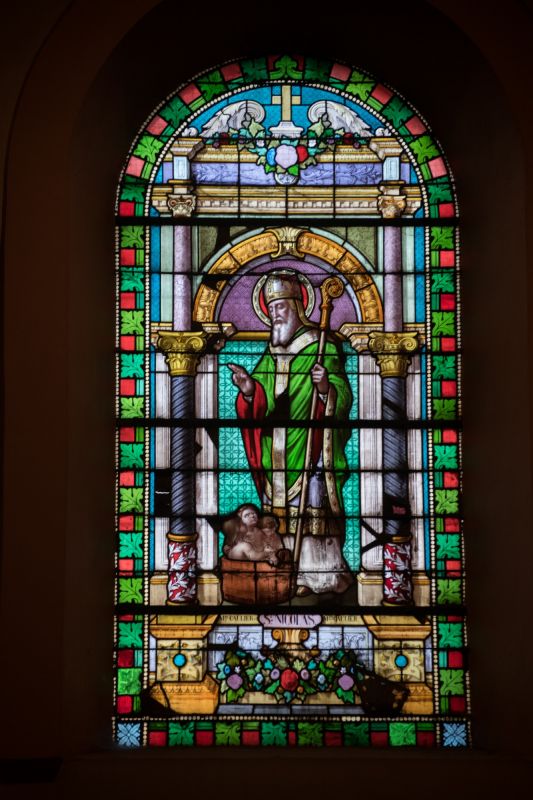
Most of the stained glass windows are decorated with very colourful figures of saints. In addition to a Saint Eloi, a Virgin with a fleur-de-lisé cloak, a last supper in the choir, we identify Saint Nicholas, patron saint of the parish. At the feet of the majestic bishop, a tank protects the three children he saved.
Stalls
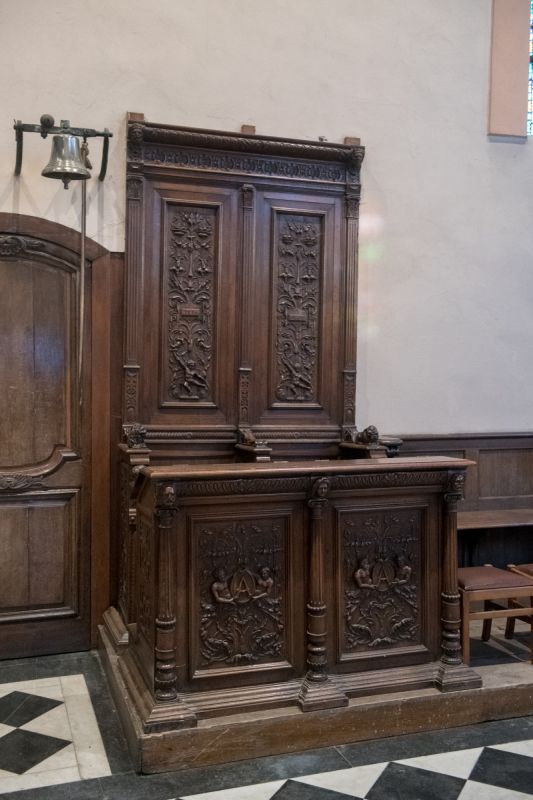
The stalls date from 1884. Lions decorate the armrests. On the face of the two God-prayers, angels of both sexes (!) carry a mandorla with a capital A written in the centre, reminiscent of "I am the Alpha and the Omega..."
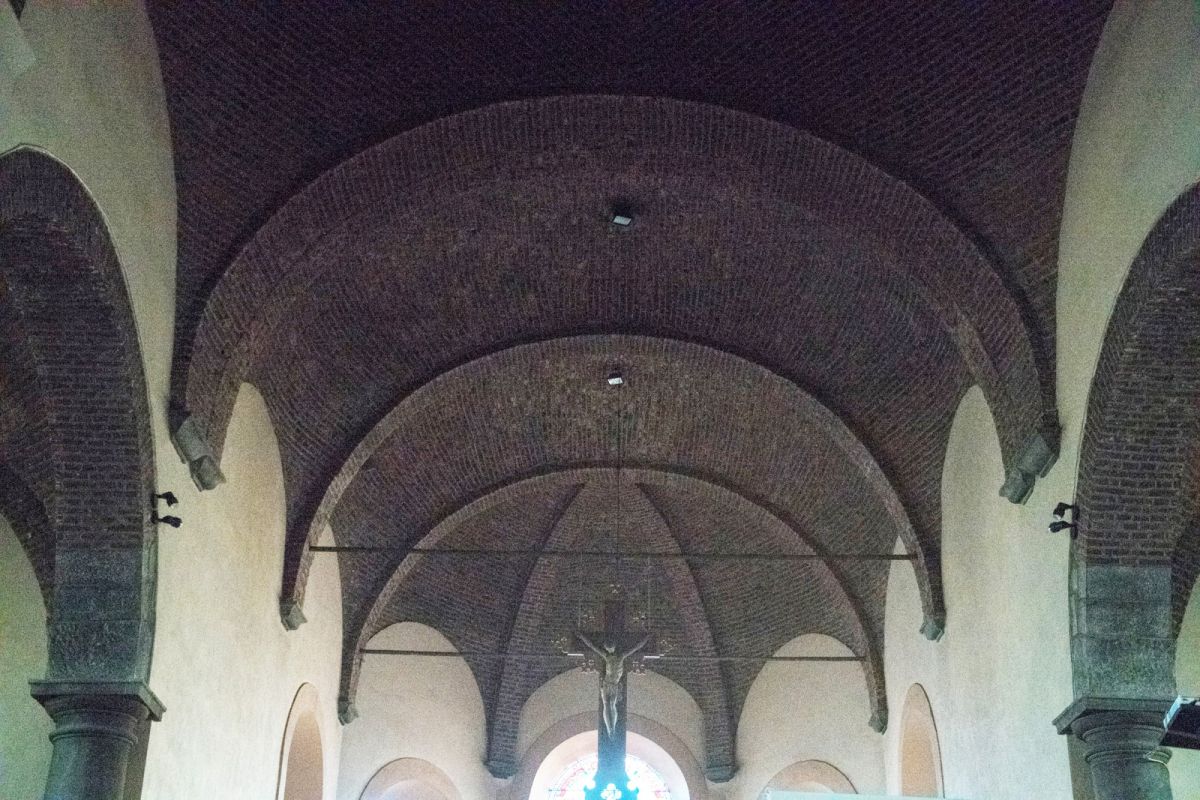
The vault
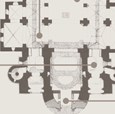
The church has five bays, separated by stone pillars of Tuscan style. Their dimension is remarkable. The vault, with naked bricks (1960) has the shape of a veil. It promotes the serious solemn impression that is characteristic of the whole interior.