Saint Hadelin
Place de l'Eglise
5561 Celles (Houyet)
Collegiate Church | XI | Romanesque | Catholic Church


Map
Opening hours
01 April - 31 October
Mon 9.30 - 18.00
Tue 9.30 - 18.00
Wed 9.30 - 18.00
Thu 9.30 - 18.00
Fri 9.30 - 18.00
Sat 9.30 - 18.00
Sun 9.30 - 18.00
01 November - 31 March
Mon 9.30 - 17.00
Tue 9.30 - 17.00
Wed 9.30 - 17.00
Thu 9.30 - 17.00
Fri 9.30 - 17.00
Sat 9.30 - 17.00
Sun 9.30 - 17.00
Guided tour
daily 9.30 am - 6 pm
asbl Tourisme et Culture de Celles +32 497 30 73 34
Religious offices
Sunday 11 am
Description
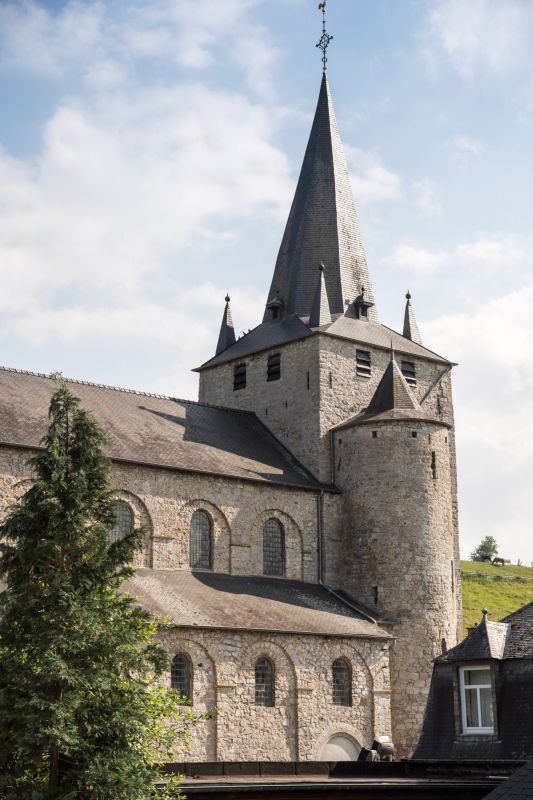
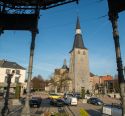
There are many good reasons for visiting this collegiate church. It is one of the most beautiful primitive Romanesque churches in the country. Moreover it is listed as a major heritage site in Wallonie.
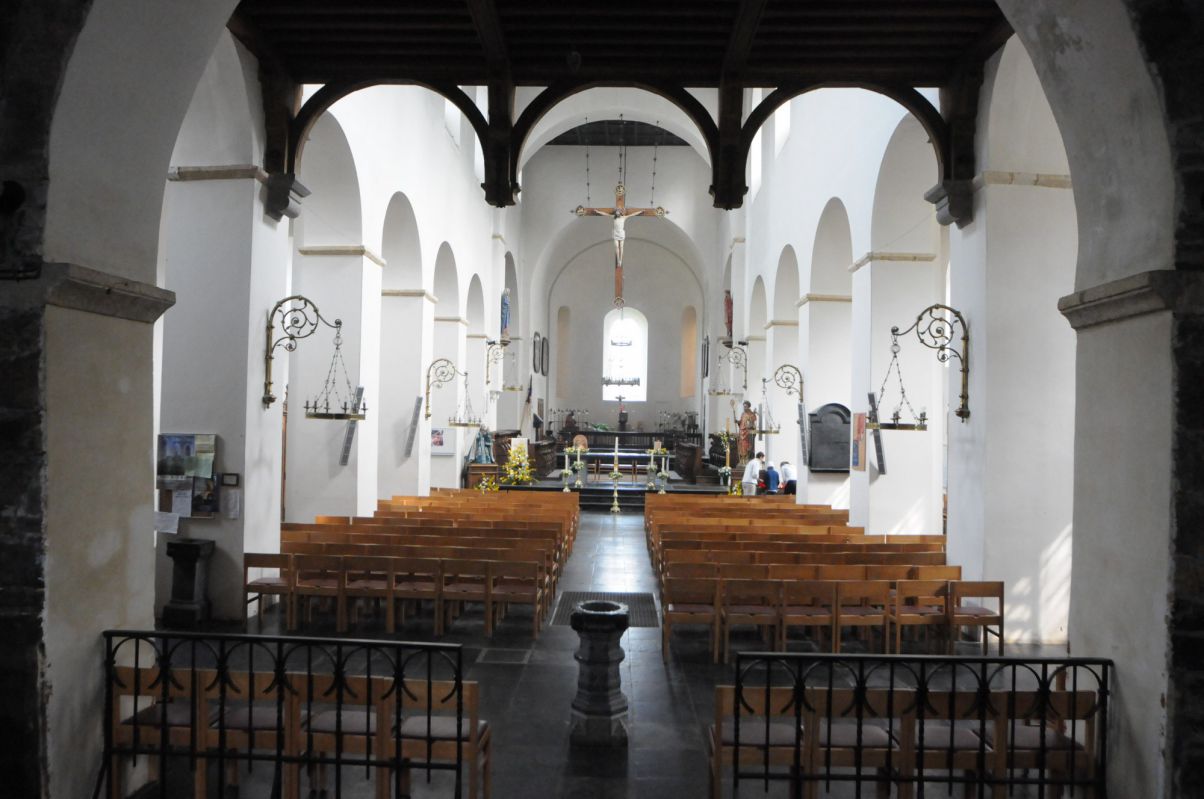
One can admire its imposing mass, notably its defensive tower. Inside the building is whitewashed, with beautiful 13th century wooden choir stalls where the canons used to sit. There are two crypts dating from the 7th and 12th centuries, stone tombs, of which those of the aristocracy of the area, the de Beauforts and the de Liedekerke-Beaufort, 13th century baptismal fonts and many beautiful statues of which those of Saint Hadelin who lived here in the 7th century.
A disciple of Saint Remaclus, Saint Hadelin christianised the region and founded a monastery. Many miracles being attributed to the saint, the village became an important pilgrimage site and the monks built this collegiate church in the 11th century and it has been changed little since. The memory of the saint lives on in the village as it is celebrated annually on the 3rd February or on the Sunday that follows.
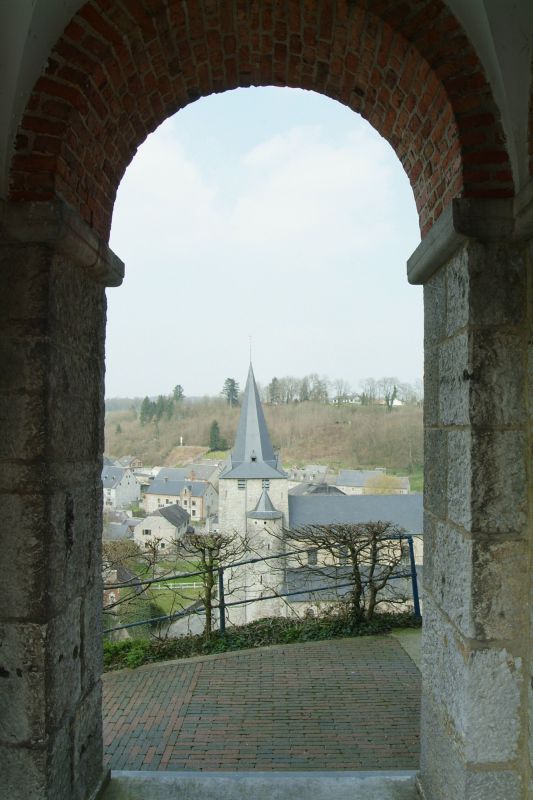
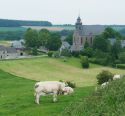
Finally the surroundings of the church are very pleasant: some fine village houses close by, an attractive stream, dominating the site, a building that used to be a Hermitage, opportunities for walks all justify the selection of Celles as “one of the most beautiful villages of Wallonie".
Les Plus Beaux Villages de Wallonie


Photos


Media
Remarkable elements

The nave
The nave, about 20 meters long, has five bays divided by four square pillars without bases, topped by simple arch supports. The main aisle is twice the height and width of the side aisles. Light enters through two rows of plain round arched windows. The nave and transept crossing have plank attics typical of early Romanesque style. At the choir front stands a simple 13th century stall.

The west crypt
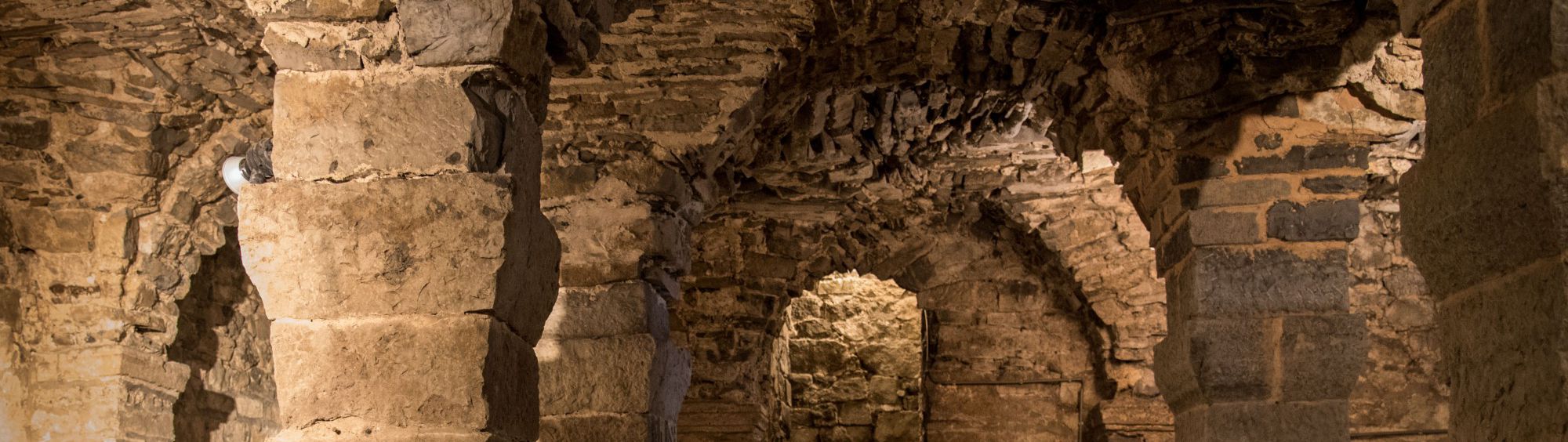
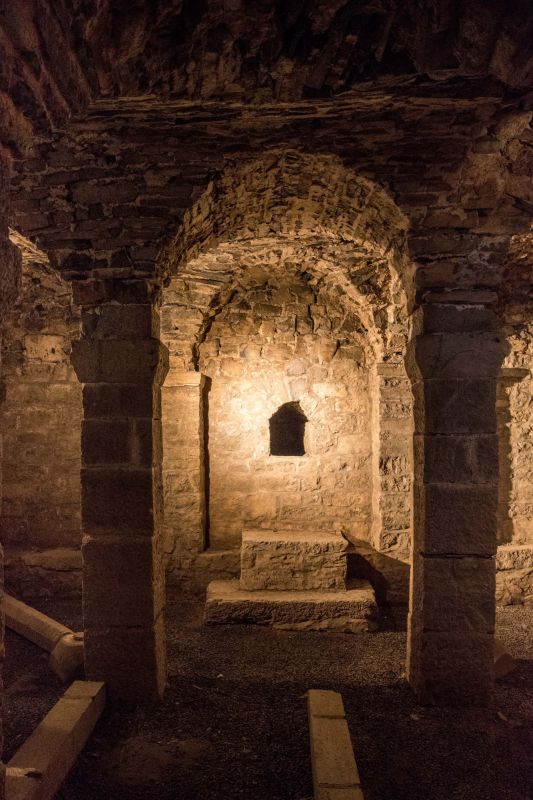
The ribs of the vault are supported by 4 pillars which, in 1595, replaced 4 octagonal marble columns of Ottoman style, one of which can still be admired on the floor. On the eastern wall there is an opening of a deep niche whose dimensions correspond exactly to those of the shrine of Saint Hadelin. The rough finish of the structure at the level of the towers is striking. This is the oldest part of the monument and the northern wall is 1.80 m thick.

The tower
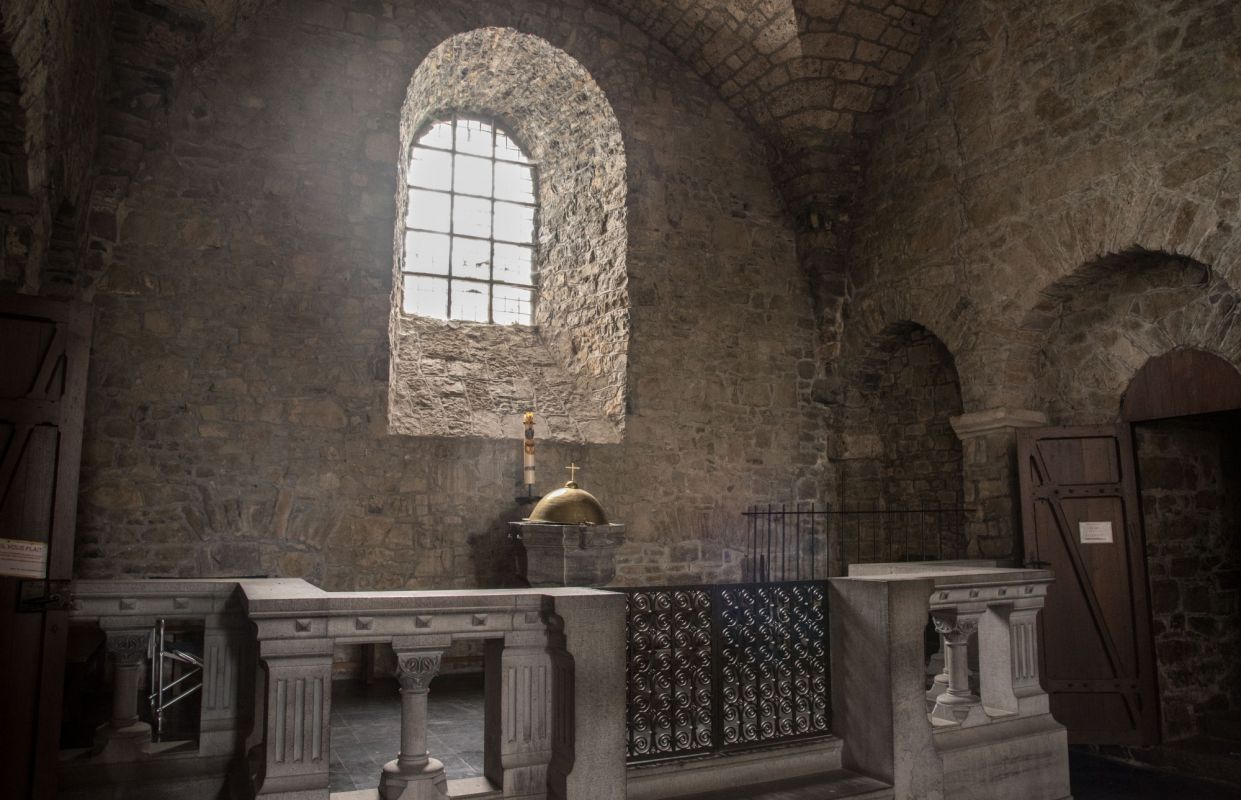
It includes part of the back choir, a balcony, and a third landing, forming what was originally a defensive tower, as shown by its many loopholes. The back choir now serves as a baptistery, with side doors that do not lead to the turrets. The large arch was added in 1868. Above the back choir is a balcony once dedicated to St. Michael, protector against evil; this arch did not exist at first.
The gravestones
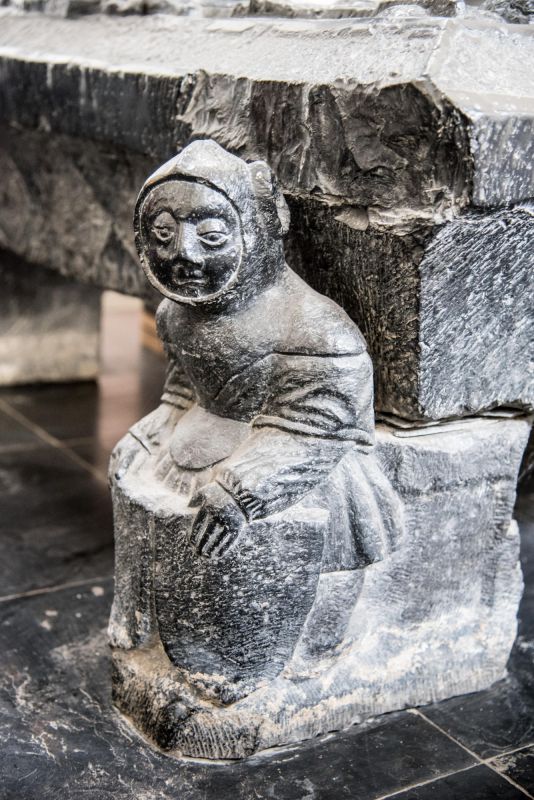
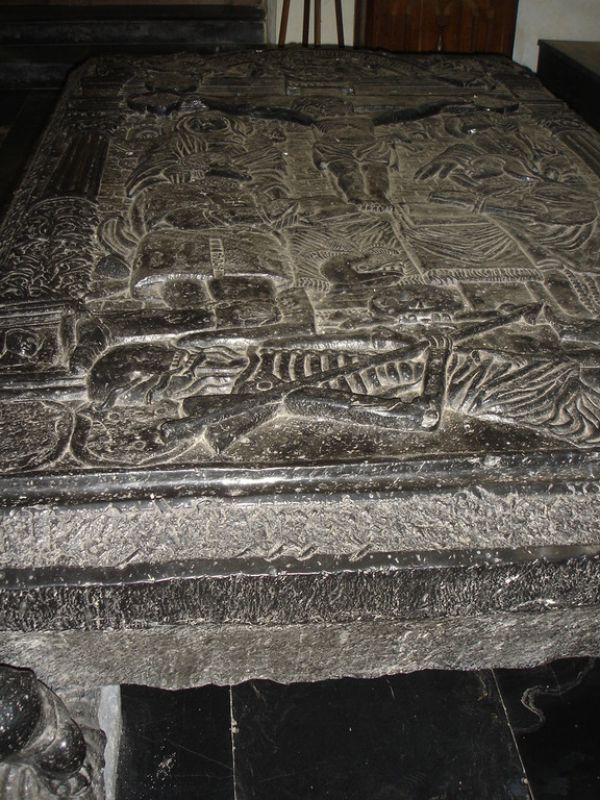
The building contains several tombstones, including a 15th century one set into the wall showing Louis de Beaufort in full armor with his wife Marie de Boulant. Another, set in the floor, is a large black Dinant marble stone supported by four caryatids. It shows Jesus on the Cross, the Virgin touching the deceased Louis de Beaufort on the right, and St. John assisting Marie de Cottereau on the left.
The Eastern Crypt
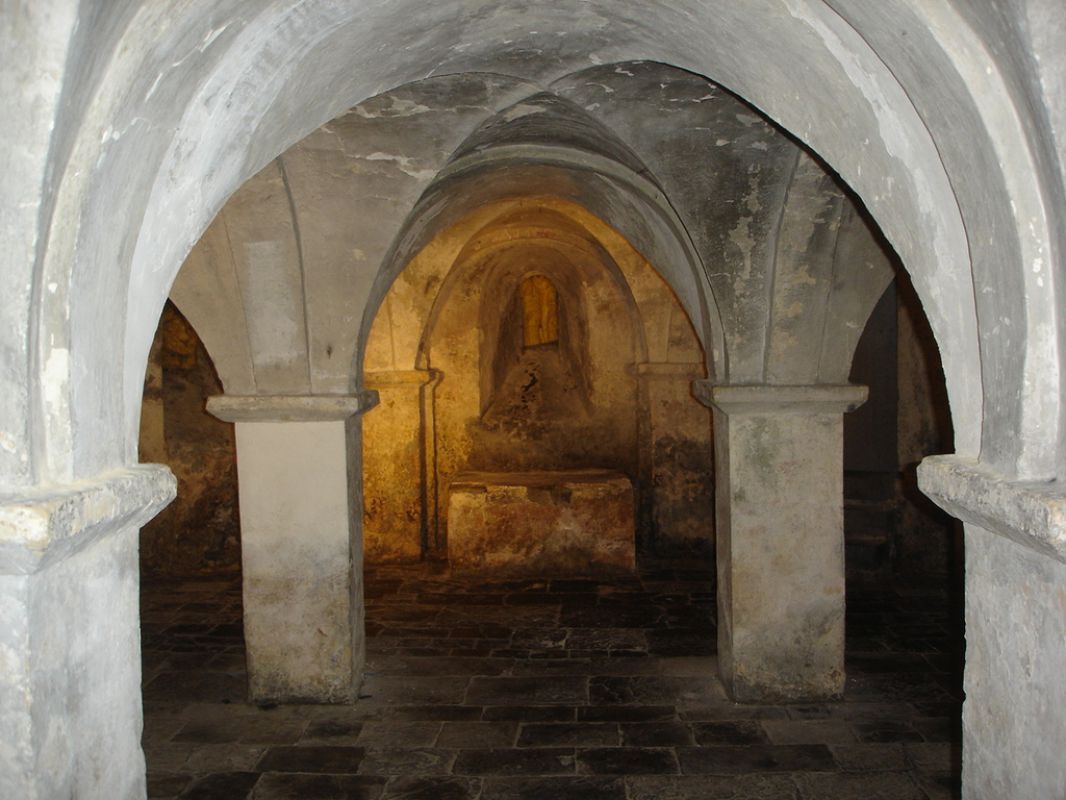
Half buried, it is vaulted with ribs and divided into 3 naves by 4 pilasters and half columns in the walls. It gets light through the loopholes on the level of the cemetery. On the east side there is a rather simple altar. It is here that the pilgrims of the 11th century came to repent.

Statue of Saint Hadelin (15th century)
Saint Hadelin, born in Aquitaine and disciple of Saint Eloi, arrived in Celles in 669 as a missionary monk and founded a monastery. After his death in 690, his body was placed in a shrine in the church’s western crypt. Miracles soon made Celles a pilgrimage site. Nearly 1,000 years ago, his followers built the church we know today. In 1337, the monks fled to Visé due to conflicts with the Lords of Celles.
Nearby



Circuit
Pilgrimages and legends

Detours and other pilgrimages in Namur (loop 5) - This tour takes you in the footsteps of two pilgrimages that were very important at the time: one goes back to the Middle Ages and the other to the 17th century. What do they have in common? The coming of the great ones of this world to pray and meditate.