
Our Lady of Brambles
2 route de Honfleur
14130 Vieux-Bourg
Church | Xe ou XIe - XVIe | Renaissance | Catholic Church


Map
Opening hours
Closed temporarily until 28/02/2027
Description
The first traces of the village of Vieux-Bourg date back to the 12th century. A charter from 1221 mentions the place under the name ‘Sainte-Marie du Vieil Hébertot’. This village quickly became Vieux-Bourg, in reference to an ancient fortified site that no longer exists today. The estate was then given by the Bertran family to the priory of Beaumont-en-Auge.
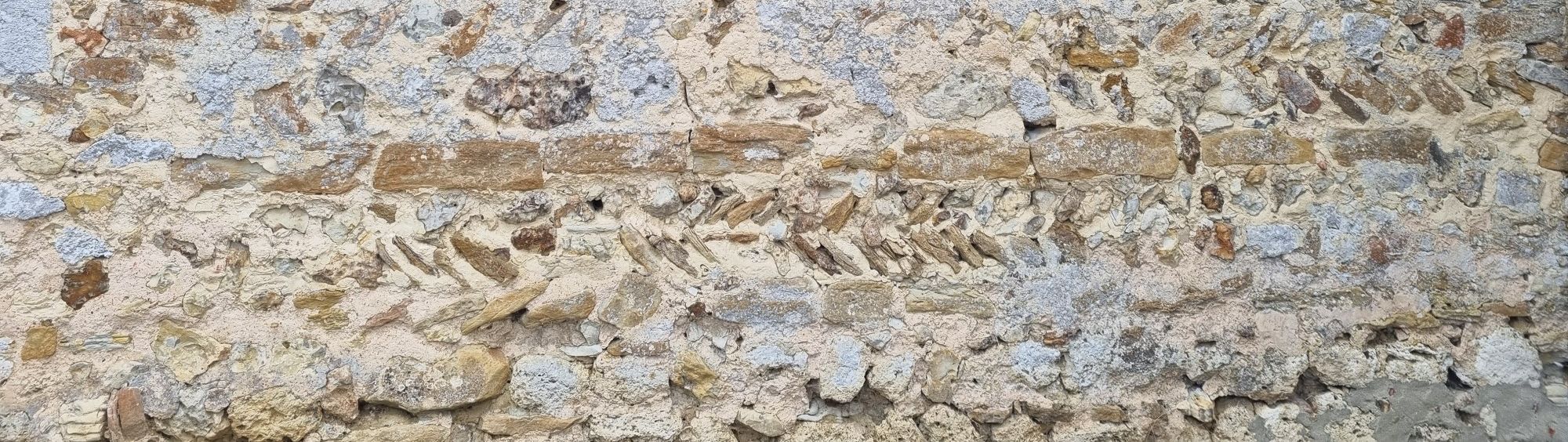
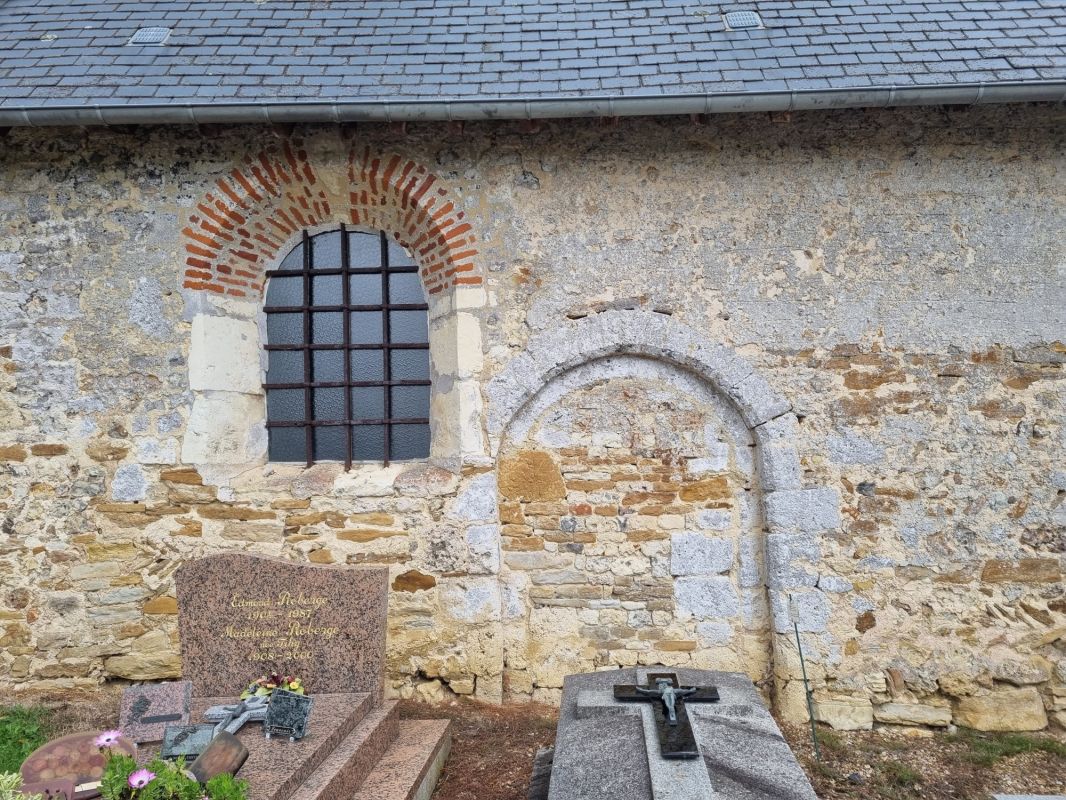
At the heart of the cemetery stands the church of Notre-Dame des Roncettes, whose name recalls that it was once surrounded by brambles. Modest in size, it is representative of the rural churches of the Pays d'Auge, most of which were built during the Romanesque period. The remains of the south wall still bear witness to this: a walled-up door, semi-circular openings and herringbone masonry.
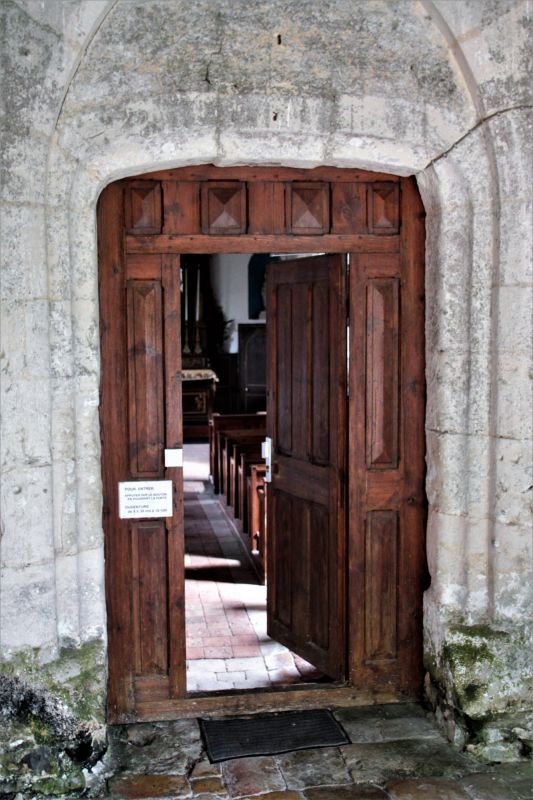
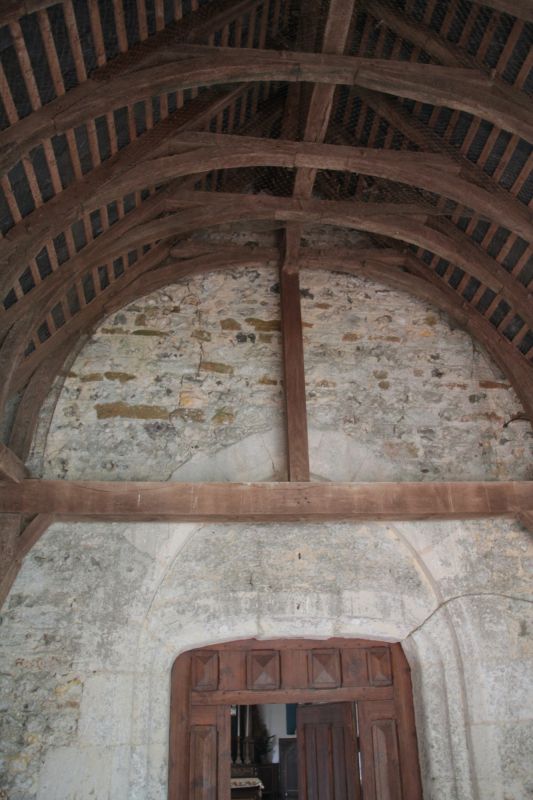
Like many buildings in this area, the church has a simple layout consisting of a single nave and a choir. Later additions enrich the ensemble: in the 16th century, a porch and a Gothic-style chapel were built, recognisable by their ogival openings. At the same time, buttresses were added and some of the openings were remodelled.
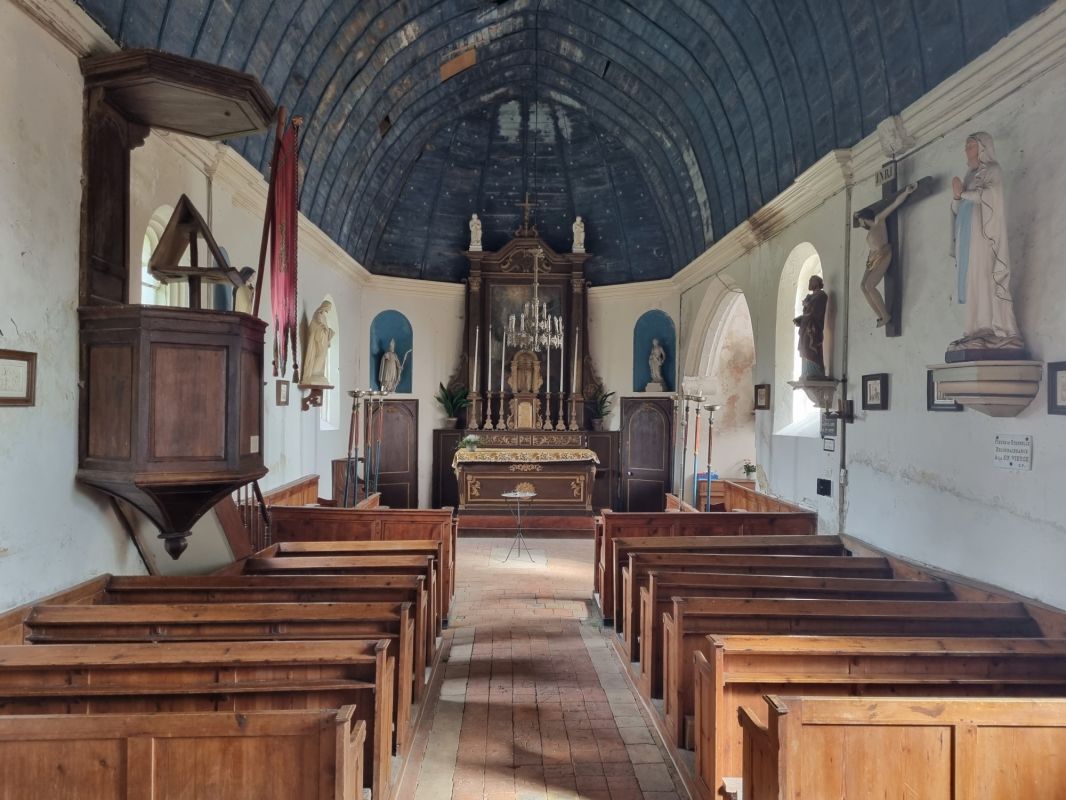
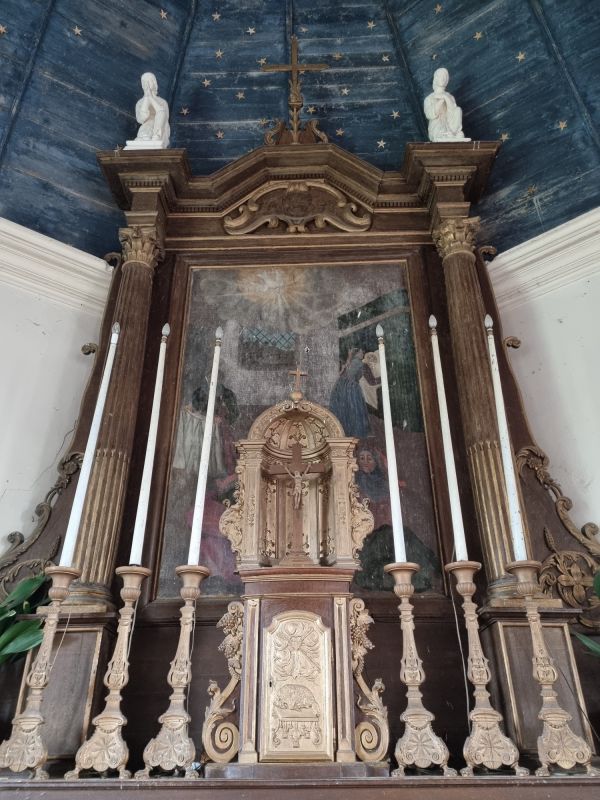
Inside, look up to admire the vaulted ceiling painted with a starry sky. Among the preserved artefacts is a polychrome plaster statue of Saint Erme, recalling the existence, below the church, of a fountain reputed to have miraculous powers to cure eye ailments. Pilgrims would dip a cloth in the water, dab it on their eyes, then light a candle in front of the statue before hanging the cloth on the hedge. Even today, numerous cloths bear witness to this living tradition.
Photos



Remarkable elements

Fishbone wall
The south wall is the oldest part of the church. It can be recognised by its fishbone pattern, in which the bricks, or flat stones, are inclined and change direction with each row.
This technique, using local materials, gave the walls greater stability at lower cost. Although fishbone brickwork is known from Roman times, it was widely used in church construction between the Carolingian and Romanesque periods.

Caquetoire
Most caquetoires date from the 15th or 16th century and are attached to Romanesque churches. This sheltered space was used by parishioners to meet up and exchange news, hence the name derived from the verb caqueter, which means ‘to gossip indiscriminately’.
They are found mainly in villages, particularly in central France, but also in Normandy.

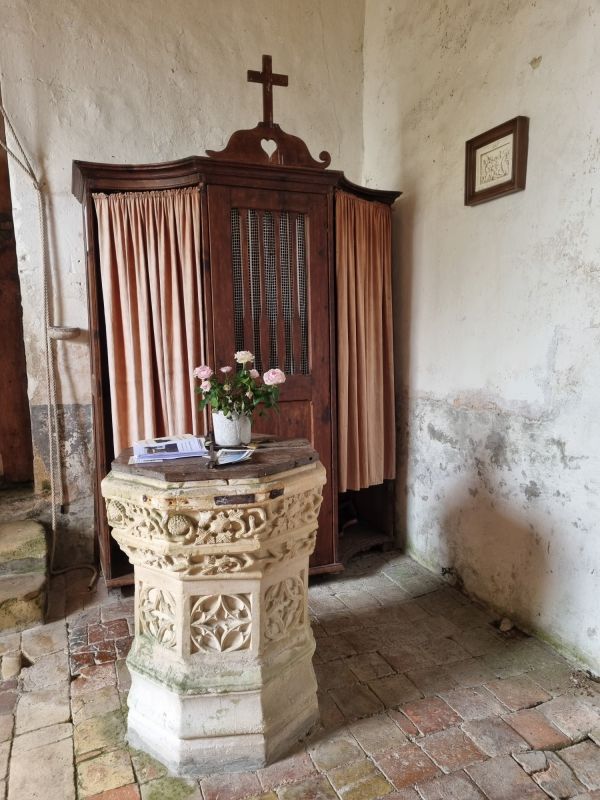
Baptismal font
Dating from the 15th century, these baptismal fonts are protected as Historic Monuments.
They are richly decorated with foliage and bunches of grapes. A child's head is also carved on the base.
The octagonal base is decorated with geometric shapes.

Torch of the Brotherhood of Charity of Vieux-Bourg
The Confraternities of Charity are associations of parishioners who attend funerals on a voluntary basis, accompanying the families and the celebrant.
They are recognisable by their banners, their chaperon (decorated piece of stole), their tintenelles (bells) and their torchères, used to carry the candles.

Altarpiece
The 18th-century polychrome altarpiece will soon be restored, and research has already been carried out into the various layers of polychromy.
The canvas, dated 177, depicts a relatively rare scene: the birth of the Virgin.

Stained glass
A campaign to restore the stained glass windows is currently underway, and funds are being raised to support the commune and the association.
The stained glass windows are the work of master glassmakers from the Gouty workshop in Cormeilles.
The first to be installed was in the chapel of the Virgin. A special feature of the exterior has been preserved: its wooden infill.
Other stained glass windows will be added shortly, illustrating the Baptism of Jesus and the Wedding at Cana.