Saint Nicholas
Rue de l'Eglise
62450 Bapaume
Church | XX | First Reconstruction | Catholic Church


Map
Opening hours
01 May - 30 September
Mon 14.00 - 18.00
Tue -
Wed -
Thu -
Fri 14.00 - 18.00
Sat 14.00 - 18.00
Sun -
Guided tour
Religious offices
Sunday : 11 am
Description
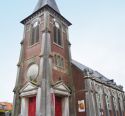
A strategic site on the limits of Artois and Picardy, the town was frequently destroyed during its long history. The present church, rebuilt in 1924, is the fourth on the foundations of the previous churches and some of their remains are to be found within.
Entirely destroyed during the First World War, the church of St. Nicholas is not only a church of the reconstruction among others, but it shows, through the style that was chosen, the various architectural debates of the period between the two wars.
Thanks to the talent of the architect Eugene Bidart, neither a contemporary modern style building, nor an identically rebuilt style was chosen, but an innovating re-interpretation of the former flamboyant gothic baroque (16th and 17th century). It followed the same plan as the previous church but used contemporary materials (reinforced concrete) and traditional materials (white stone and red brick).
Inside, some elements of the old building have been preserved, among which is the statue of Our Lady of Mercy, dating from the 15th century, a classified Historical Monument. It has survived fires, the French Revolution and two world wars, as have two carved panels placed in the sanctuary which come from the vestments cupboard of the old church (14th to 18th century) and found in the ruins in 1917.
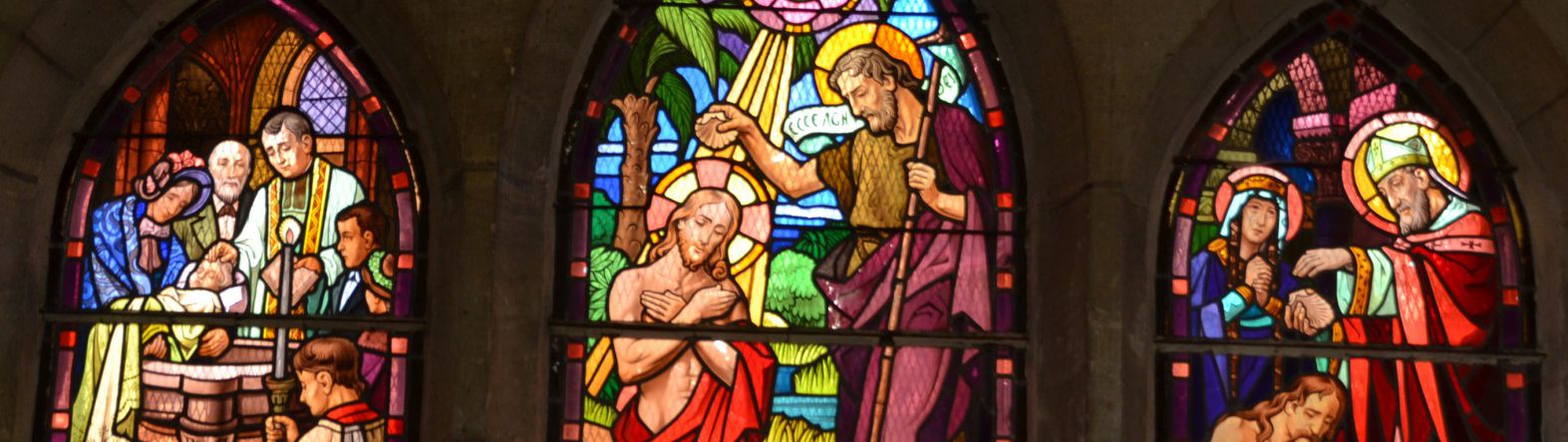
Among contemporary works can be admired the work of two local artists, Daniel and Lucien Langlet, who produced the stained glass windows of the nave, and the « Way of the Cross » for which local inhabitants posed.

Photos


Remarkable elements
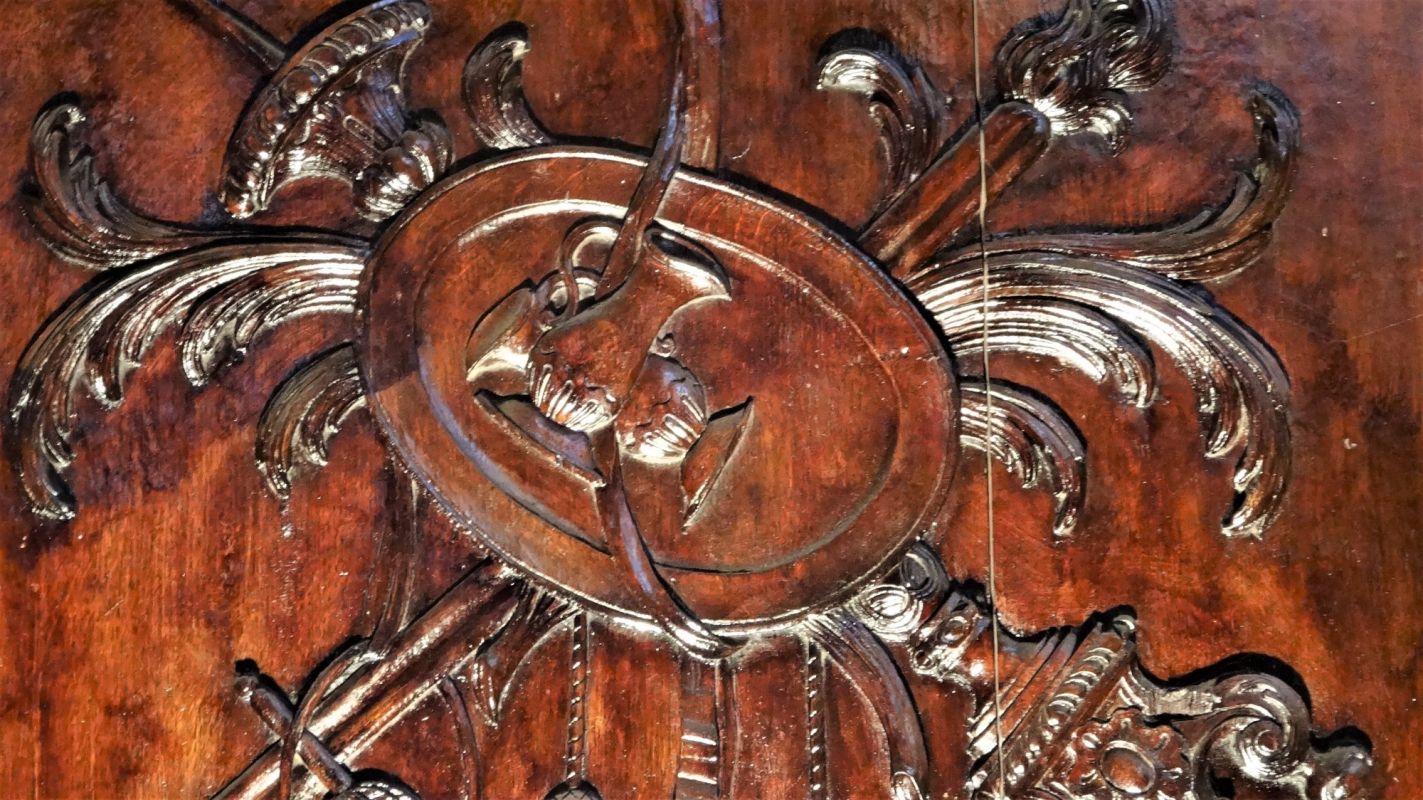
Carved panels depicting religious objects
Placed on the oak panelling in the choir, they decorated the doors of the sacristy vestry in the old church. They are believed to have come from a nearby abbey. The Arras Fine Arts Department removed them from the ruins in 1917 to preserve them before returning them.

Baptismal font
Octagonal in shape, it is made of white marble, soberly carved with rosettes, and comes from the old church.
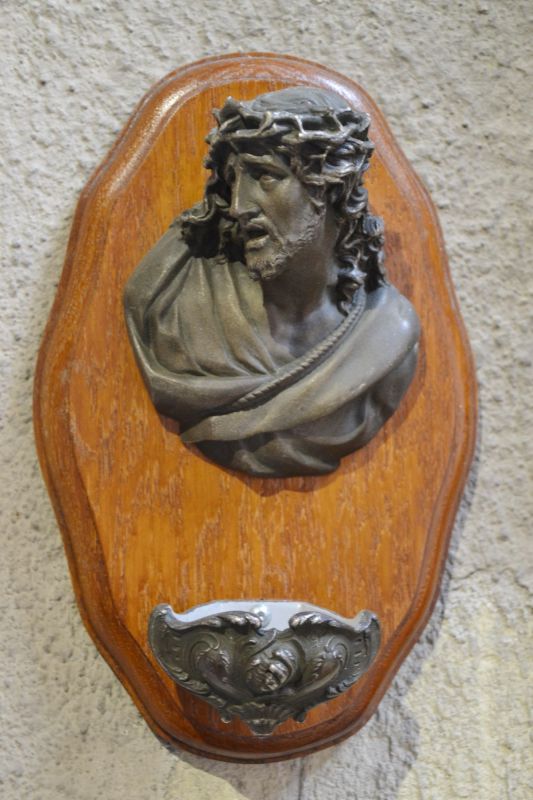
Head of Christ and holy water font
Saved from the ruins of the church in 1918 by an Australian soldier, the ensemble was returned to the parish in 2015 by the family after a very long journey.

The stained glass windows in the choir
There are five of them, dedicated to the main mysteries. The one in the centre is unusual in that it depicts the Holy Spirit in human form.

Chapel of Our Lady of Mercy
Our Lady of Mercy, a miraculous statue 0.90 m high, is carved from a block of hard stone. Its origin is unknown, but it appears to date from the 15th century and has escaped various acts of destruction.

Way of the Cross
Created by the Bapalmois painter D. Langlet, who also painted the tableau dedicated to the civilian and military victims of the Great War, this Art Deco Way of the Cross was inaugurated in 1937.