
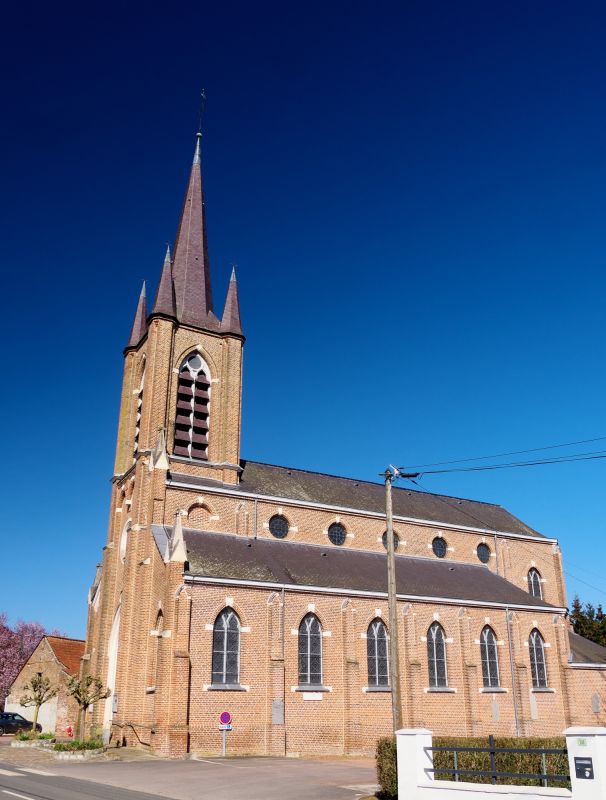
Our Lady of the Assumption
Grande Rue
59870 Warlaing
Church | 1852 | Neogothic | Catholic Church


Map
Opening hours
01 January - 31 December
Mon 10.00 - 17.00
Tue 10.00 - 17.00
Wed 10.00 - 17.00
Thu 10.00 - 17.00
Fri 10.00 - 17.00
Sat 10.00 - 17.00
Sun 10.00 - 17.00
Guided tour
Religious offices
Description
The history of Warlaing is closely linked to that of Alnes, as the two towns merged in the 19th century. Initially dependent on Hamage Abbey, the oldest in the North, the lands were then ceded to the nearby Marchiennes Abbey. The lands of Warlaing became a seigneury under the Landas family before passing to the House of Haynin in the 17th century and then to the House of Nédonchel in the 18th century.
Only a chapel is mentioned for the municipality of Warlaing, which decided to build the Church of Our Lady of the Assumption in the 19th century.
The famous Lille architect Charles Leroy was entrusted with the plans for the town's first parish church.
The architectural design of the church was in keeping with the style of the time: a slender porch tower topped with a spire with four pinnacles opening onto a simple floor plan, all in a perfect neo-Gothic style, sober and elegant, made of brick, slate, Lezennes stone and Soignies stone for the columns.
The church of Warlaing is similar to many other churches in northern France, such as Saint-Martin de Croix, the first church built by Charles Leroy between 1848 and 1851, and the churches of Saint-Quentin d'Avelin and Écourt-Saint-Quentin.
The church was completed in 1854. The work took only two years. Major restoration work was carried out in 2010-2011.


Photos



Remarkable elements

Commemorative plaque marking the foundation of the chapel
Blue stone plaque from the old chapel.
The plaque bears the following Latin inscription, translated here.

Virgin and Child
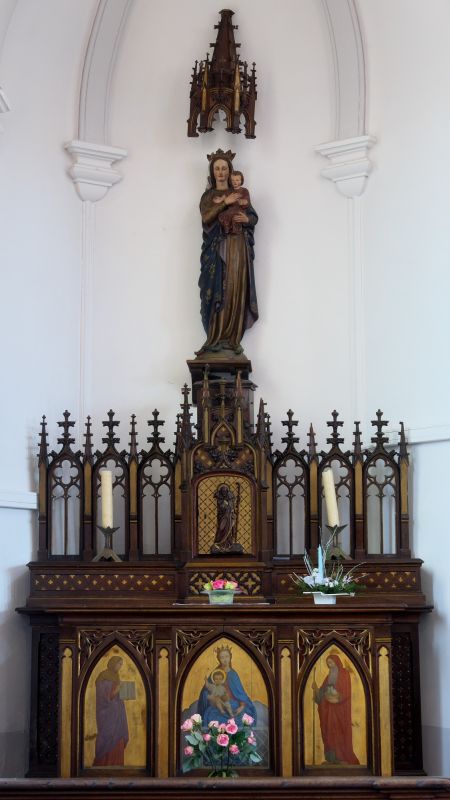
Virgin and Child in polychrome wood. This work comes from the Lille workshops of Charles Buisine-Rigot (1820–1893) and son. They are renowned for their carved woodwork and church furniture. Major figures in neo-Gothic sacred art, they were known for the finesse of their decorations and frequently collaborated with the architect Charles Leroy. Very active in the region, they also made a name for themselves throughout France... and as far afield as Peru.

Neo-Gothic furniture
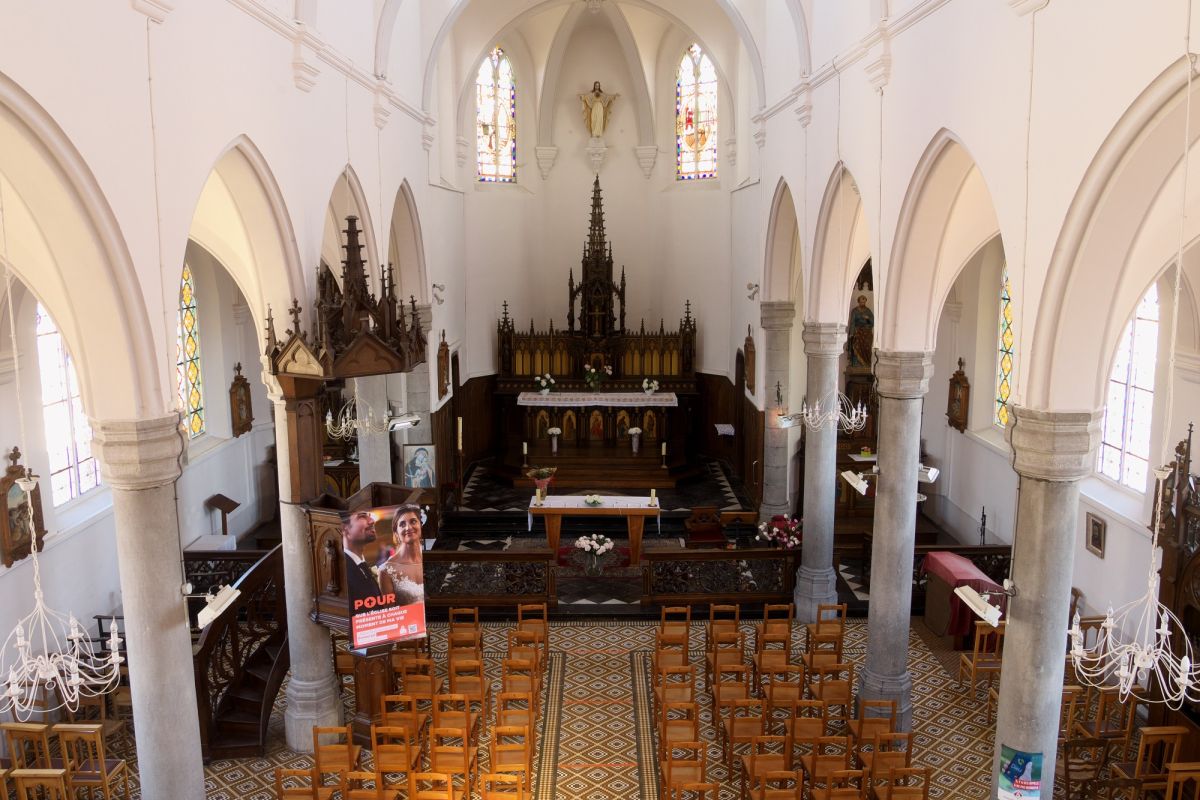
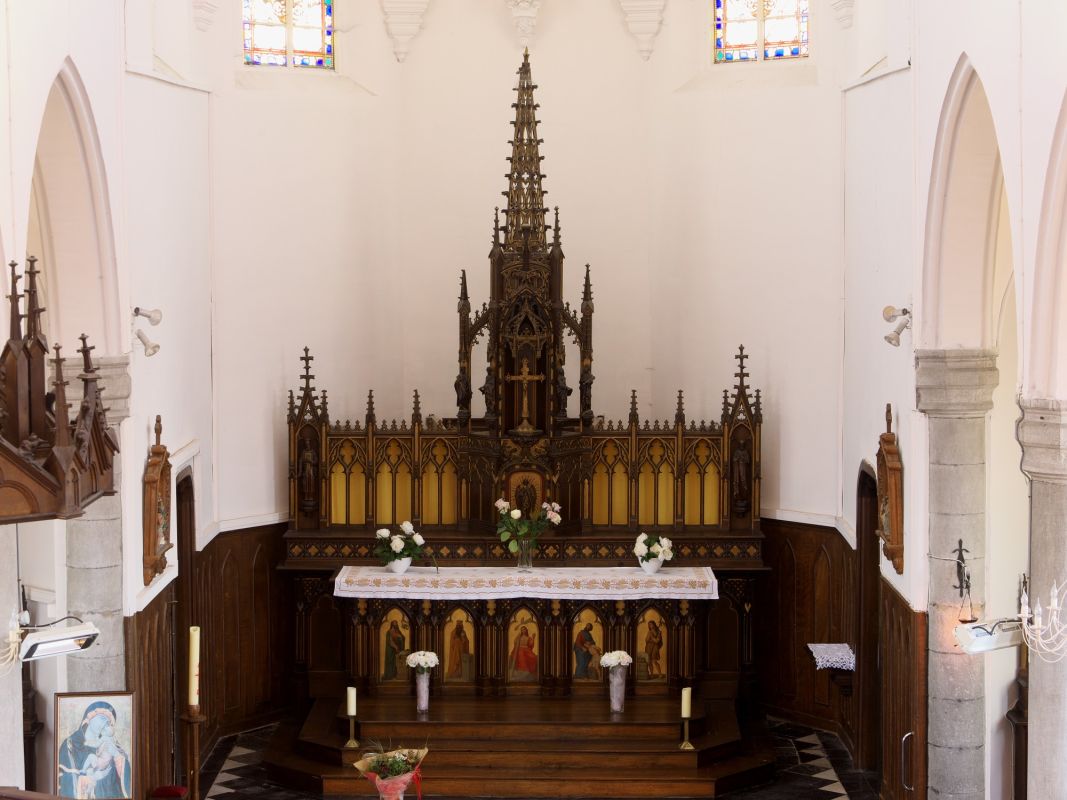
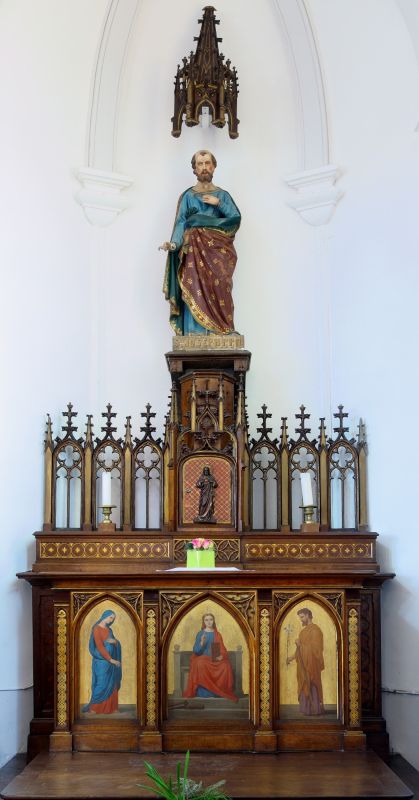
All the furniture, from the side altars to the high altar, confessionals and pulpit, is made in a Neo-Gothic style to provide a coherent whole for the building. Their shapes evoke the Middle Ages, an impression reinforced by the use of oak. This furniture enriches the church's décor without overloading its style.
It also comes from the Buisine-Rigot workshops.

Side altars
Although this furniture is neo-Gothic in style, its decoration is inspired by Oriental art and icons. In the Christian tradition, icons are not painted but written. They are created through meditation, following ancestral rules. The materials used also have strong symbolic value: wood, a living medium; natural pigments, symbols of creation; and gold, a sign of divine light.
One of the altars is dedicated to the Virgin Mary: a representation of the Virgin and Child is surrounded by her parents, Saint Anne and Saint Joachim. The second altar is dedicated to Saint Joseph, with panels depicting the Virgin Mary and Saint Joseph on either side of Christ.