Saint Matthew
Zuidlaan 18
9630 Munkzwalm (Zwalm)
Church | 1875 | | Catholic Church


Map
Opening hours
01 April - 31 October
Mon 9.00 - 18.00
Tue 9.00 - 18.00
Wed 9.00 - 18.00
Thu 9.00 - 18.00
Fri 9.00 - 18.00
Sat 9.00 - 18.00
Sun 9.00 - 18.00
01 November - 31 March
Mon -
Tue -
Wed -
Thu -
Fri -
Sat 9.00 - 17.00
Sun 9.00 - 17.00
Religious offices
No more fixed/weekly (except funerals, weddings,...).
Description
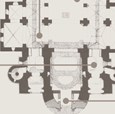
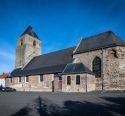
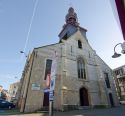
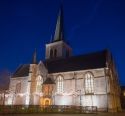
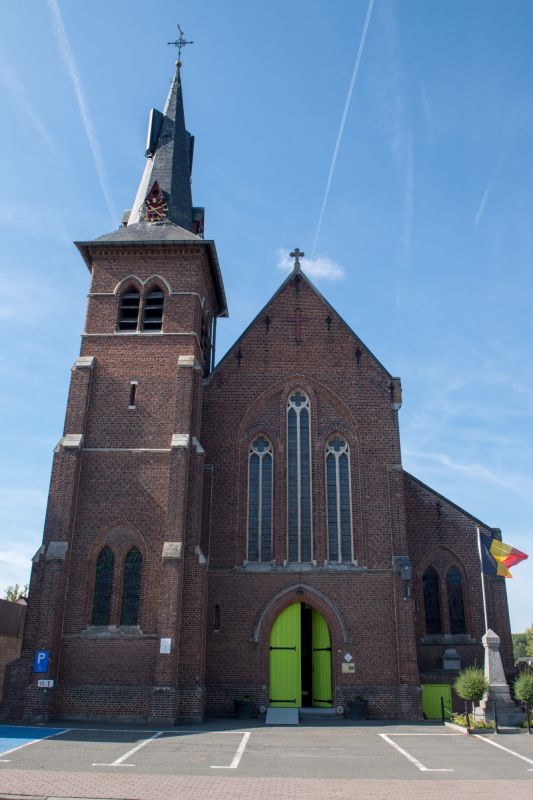
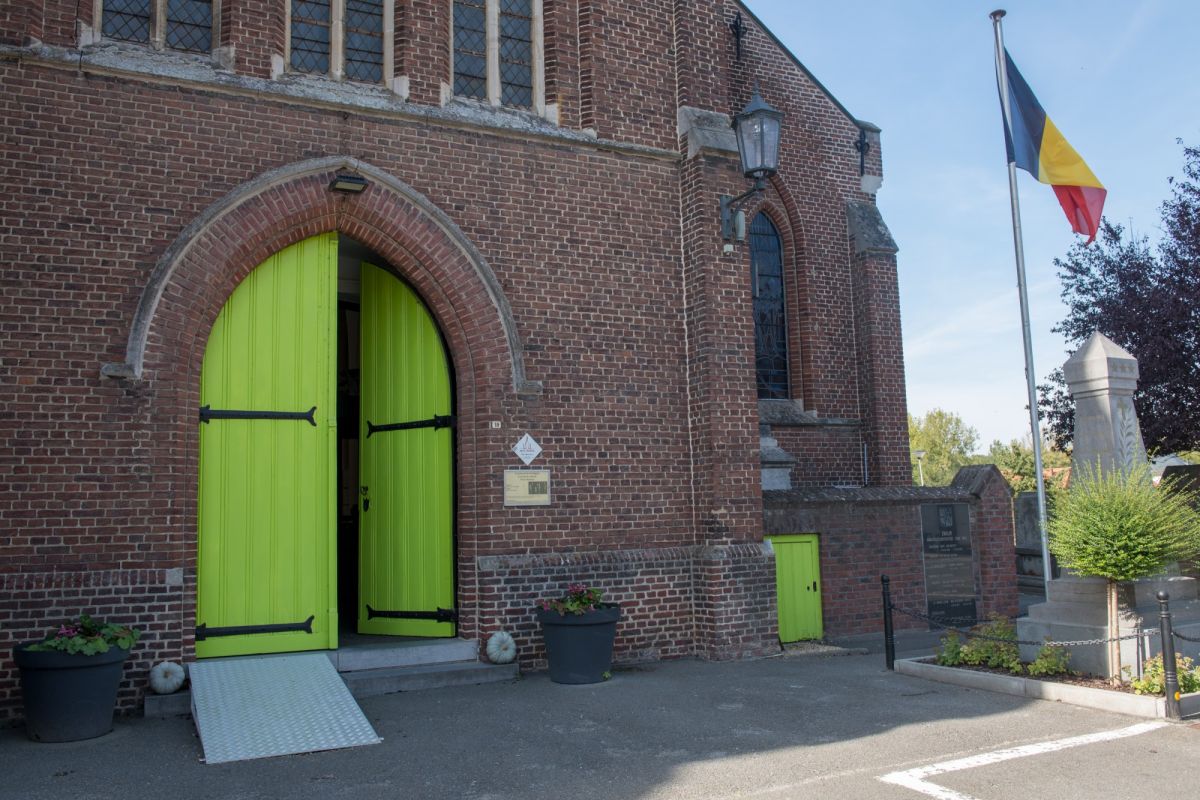
The church with its neo Gothic interior dates from 1875–81 and was designed by architect Van Hoecke Peeters, known both for public buildings and religious projects such as Our Lady of Lourdes in Oostakker. In Munkzwalm he replaced the small, ruinous Romanesque single bay church with a brick three aisled building of four bays, featuring pointed arch windows in neo Gothic tracery.
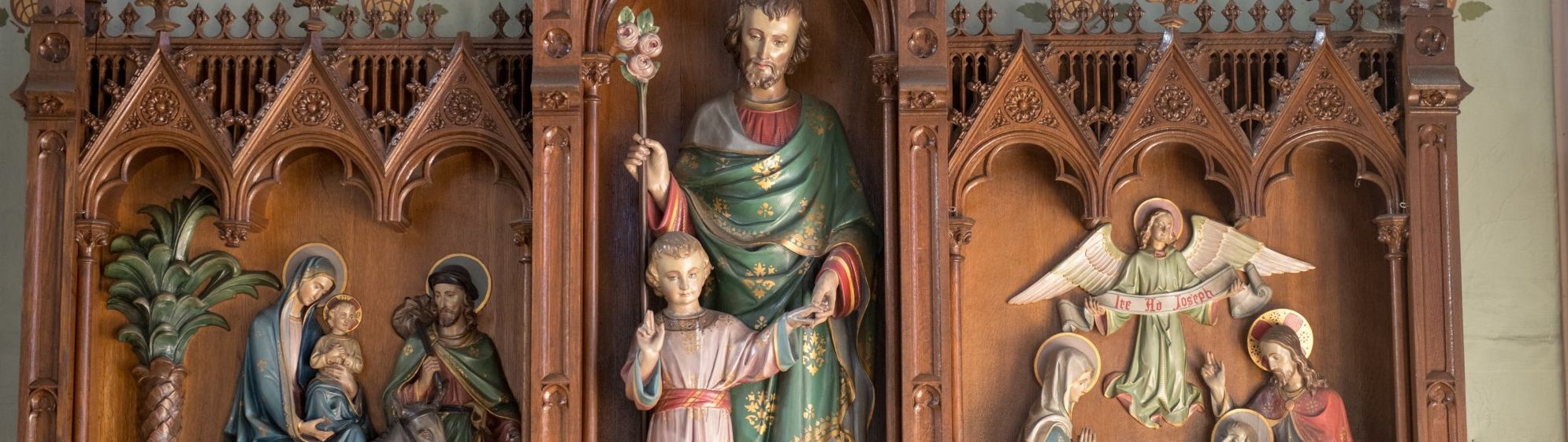
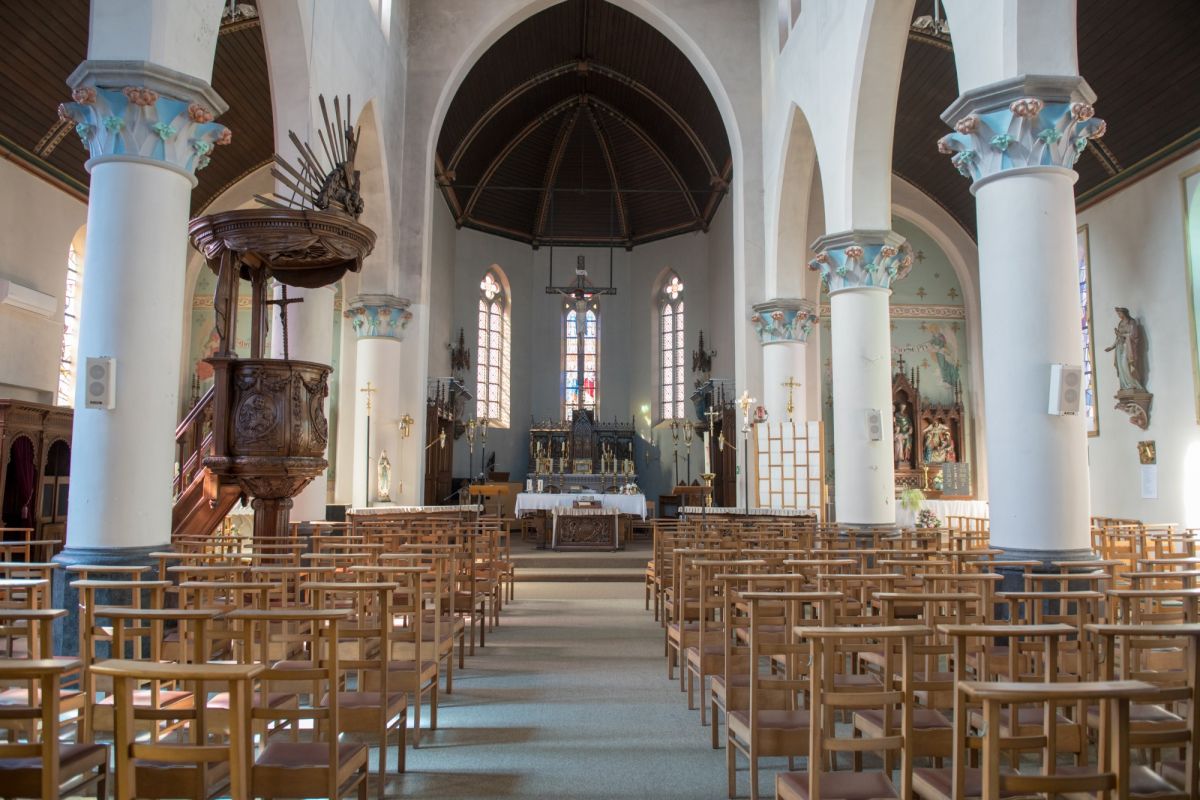
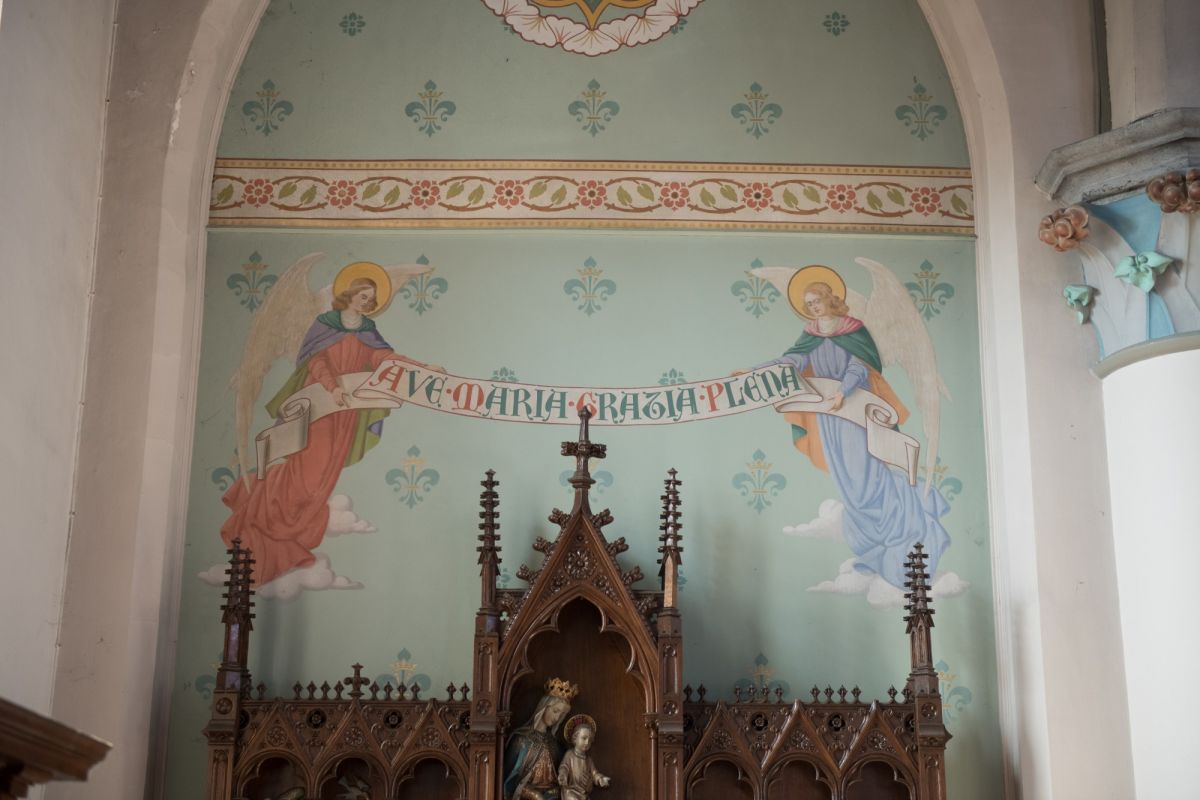
The interior largely dates from the construction period, complemented by a Mechels sculpture of Our Lady with Child (ca. 1600) and a restored oak confessional (ca. 1650). The oak main altar contains polychrome sculptural groups (1900). New murals were added above the two neo Gothic side altars.
Further elements include oak choir stalls, an altar rail and a pulpit in Gothic Revival style. Sixteen of the nineteen stained glass windows were installed in 1983.
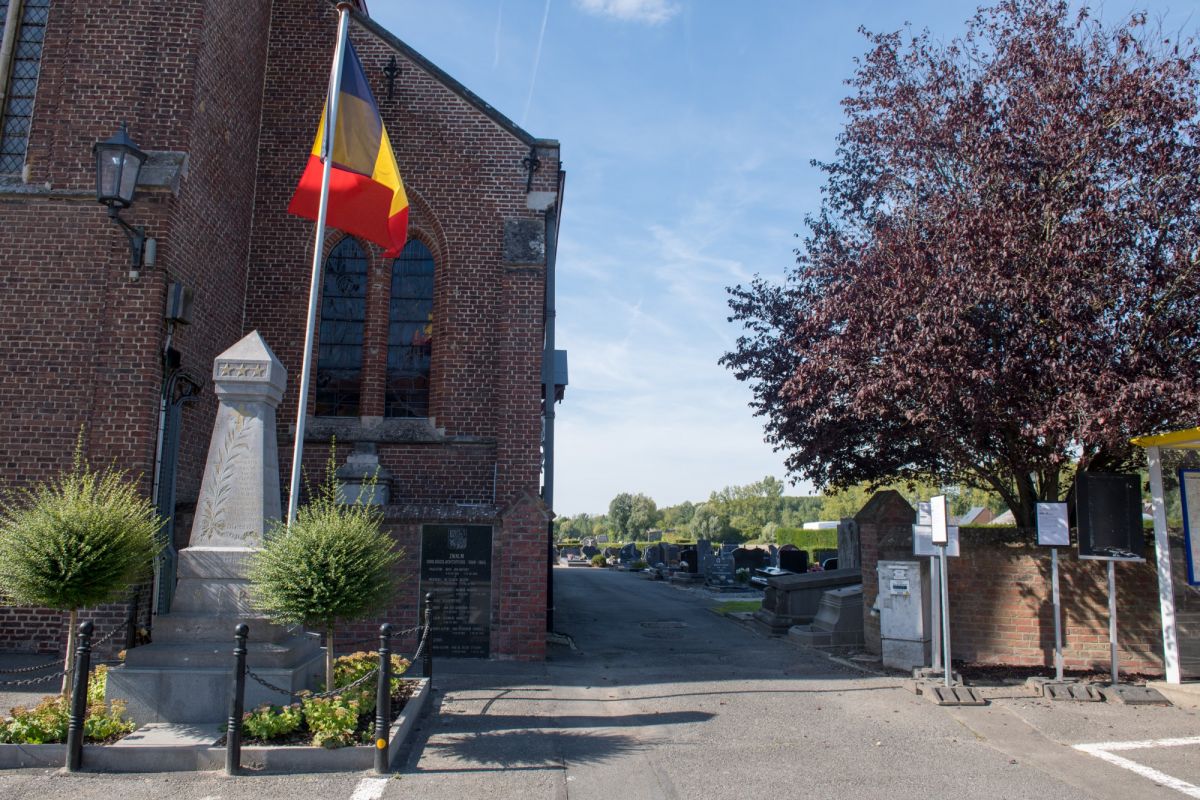
Two bluestone bricks mark the start of construction. A quarrel between the mayor, also chairman of the church council, and priest Verstraete led to the priest’s name being removed from the first stone.
The bishop of Ghent refused to consecrate the church until the name was restored. A compromise followed: a new stone with full inscriptions was placed on the outer façade.
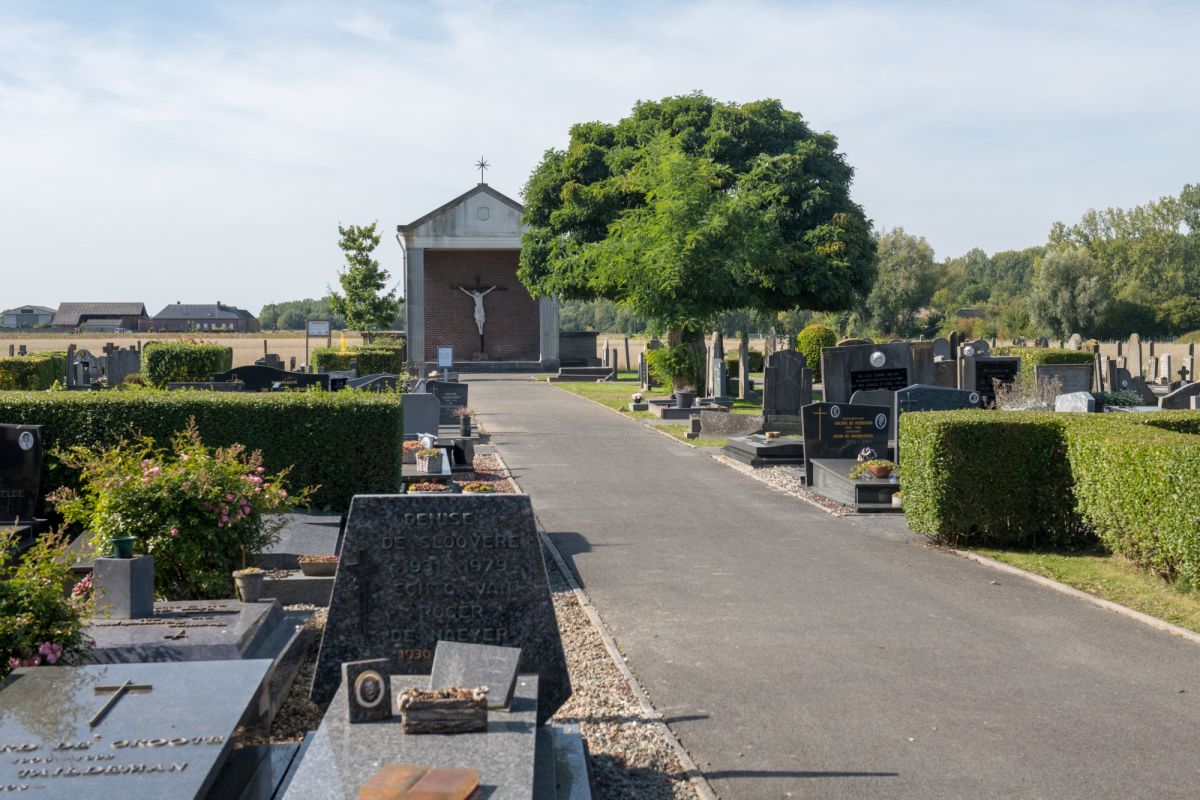
In the surrounding cemetery stands an 18th century tombstone from the earlier church. The Zuidlaan beside the church links the picturesque Zwalm stream to the village. Near the Zwalm mill is the memorial to writer Omer Wattez, who celebrated the region.
Photos



Remarkable elements

Main and side altars
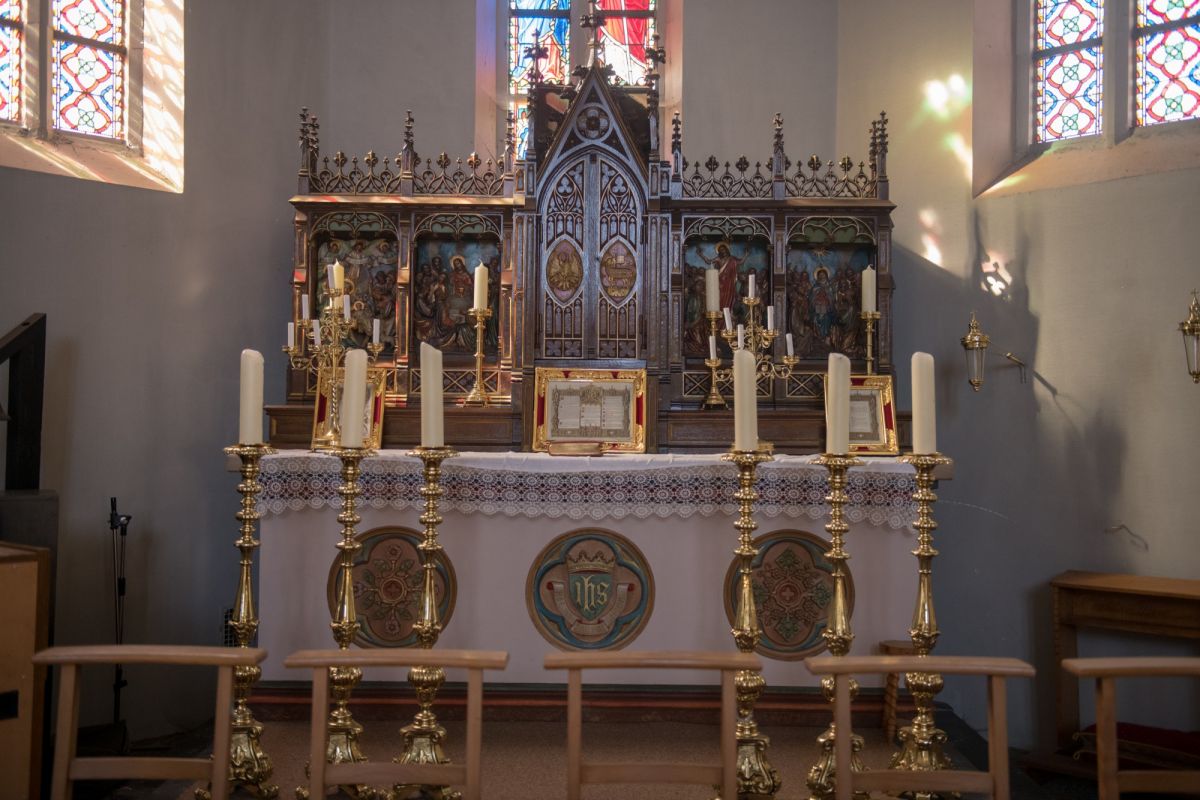
Main altar in oak with polychrome painted sculpture groups by R. Van Caelenbergh from Aalst, from ca. 1900.
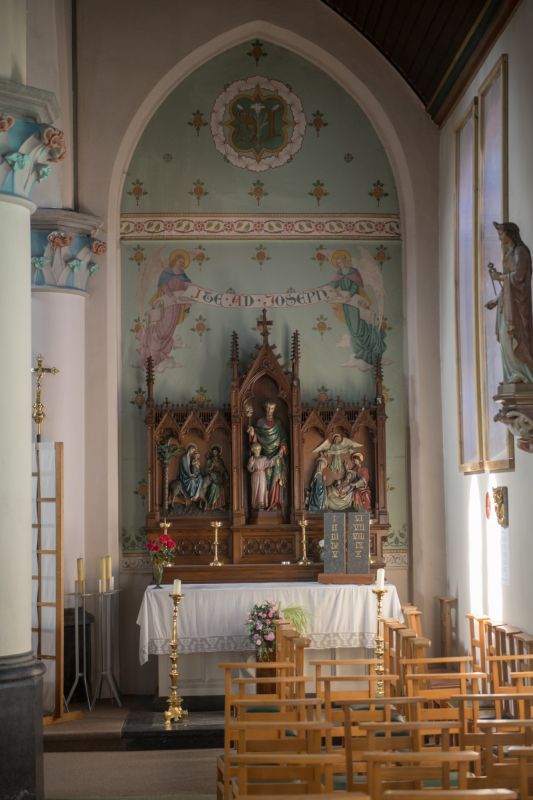
The neo-gothic side altars in oak, dedicated to Our Lady and Saint-Joseph were placed in 1912 by Van den Eynde from the city of Ghent. Above the side altars, one can see neo-gothic painted murals on canvas by R. Goethals and further remnants of the in 1900 applied polychromy.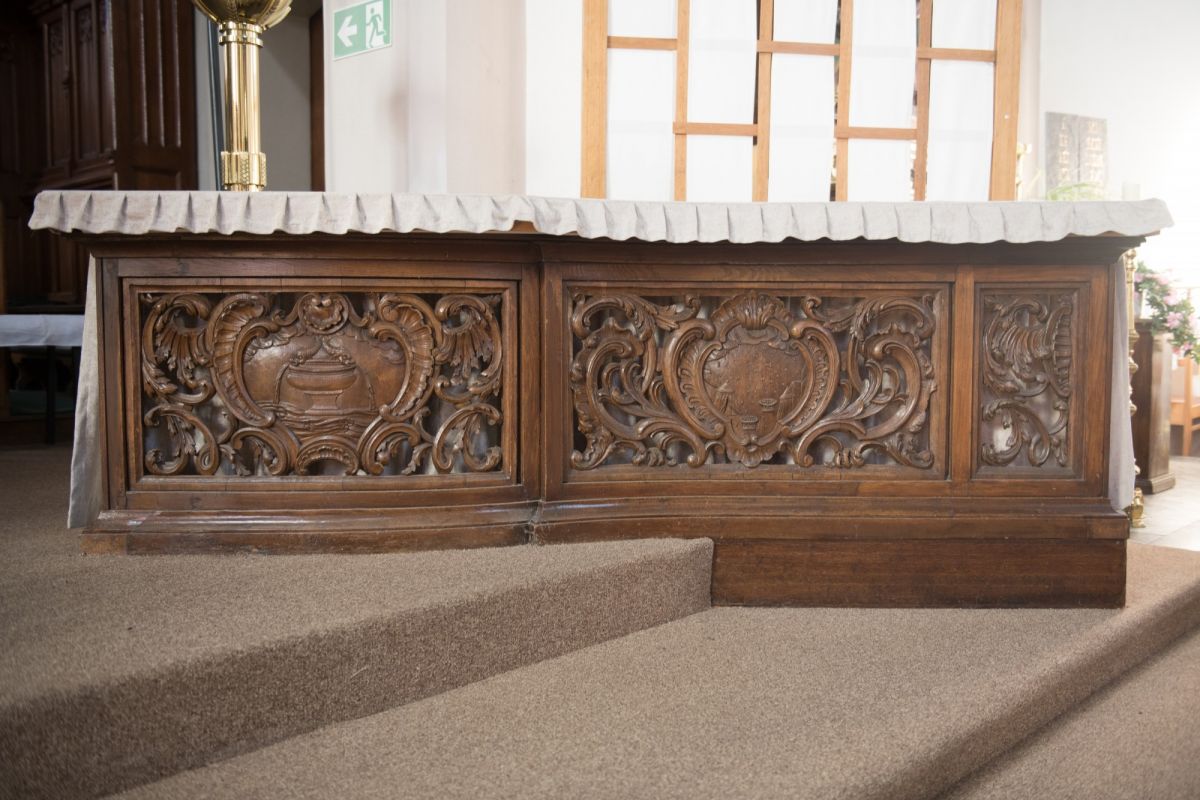
Communion rails
The oak communion rails from the 3rd quarter of the 18th century in Louis XV style were brought over from the old church and restored in 1911-12. There are five openwork rococo panels with a remarkable representation of Old Testament and Eucharistic symbols: the showbread, the fish and the loaves of feeding the multitude, the Lamb of God on the Book with Seven Seals, a fountain with two dolphins, and the manna rain.

Pulpit
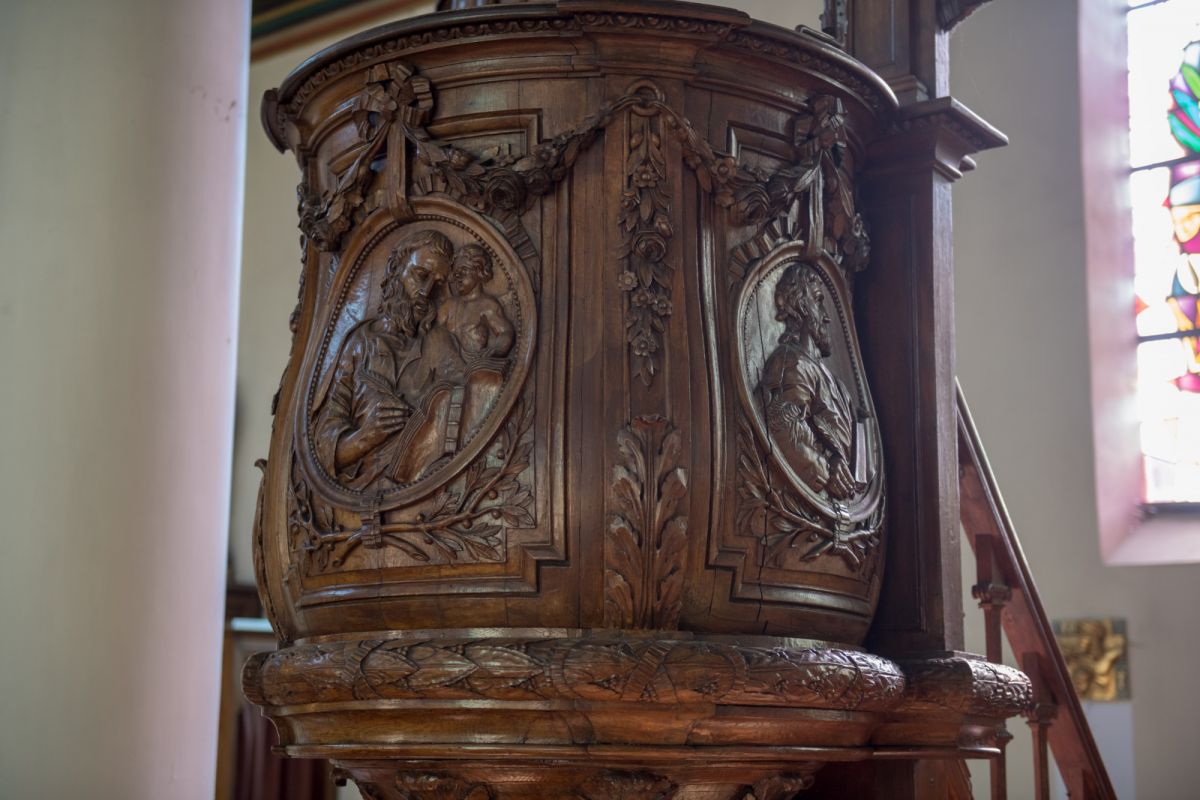
Oak pulpit in Louis XVI style from the mid 18th century, restored and partly renewed by Van den Eynde in 1912. Four slim volutes stand crosswise around the round pedestal. The vaulted base bears a laurel wreath; the four panels show medallions of the Evangelists with leaves, garlands and bows. The sounding board has blockwork, draperies, a trophy with cross and halo, the Tablets of the Law, the Gospel book and two cherubs.
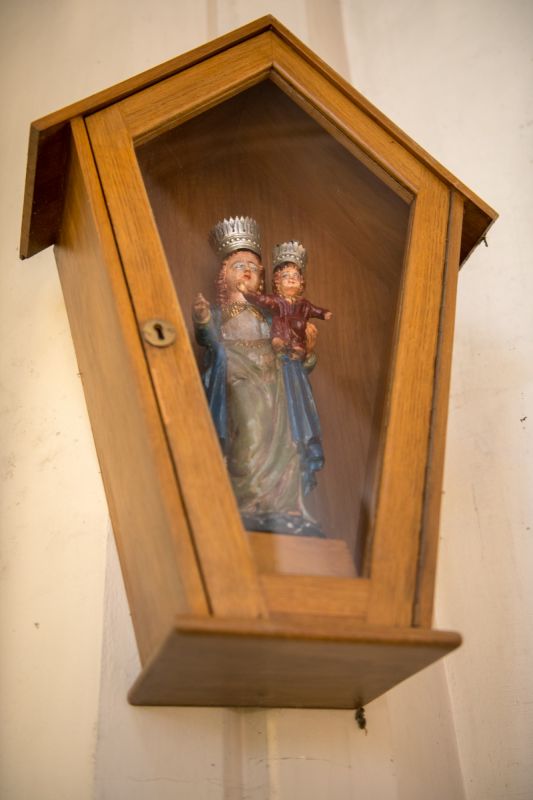
Statue of Our Lady of Consolation
Wooden statue from the city of Mechelen of Our Lady with Child called Our Lady of Consolation, of ca. 1600. It was gilded at the beginning of the 20th century and more recently polychromed. According to the church bills of 1636-1637, the statue was transported along the Scheldt river to the village of Hermelgem.
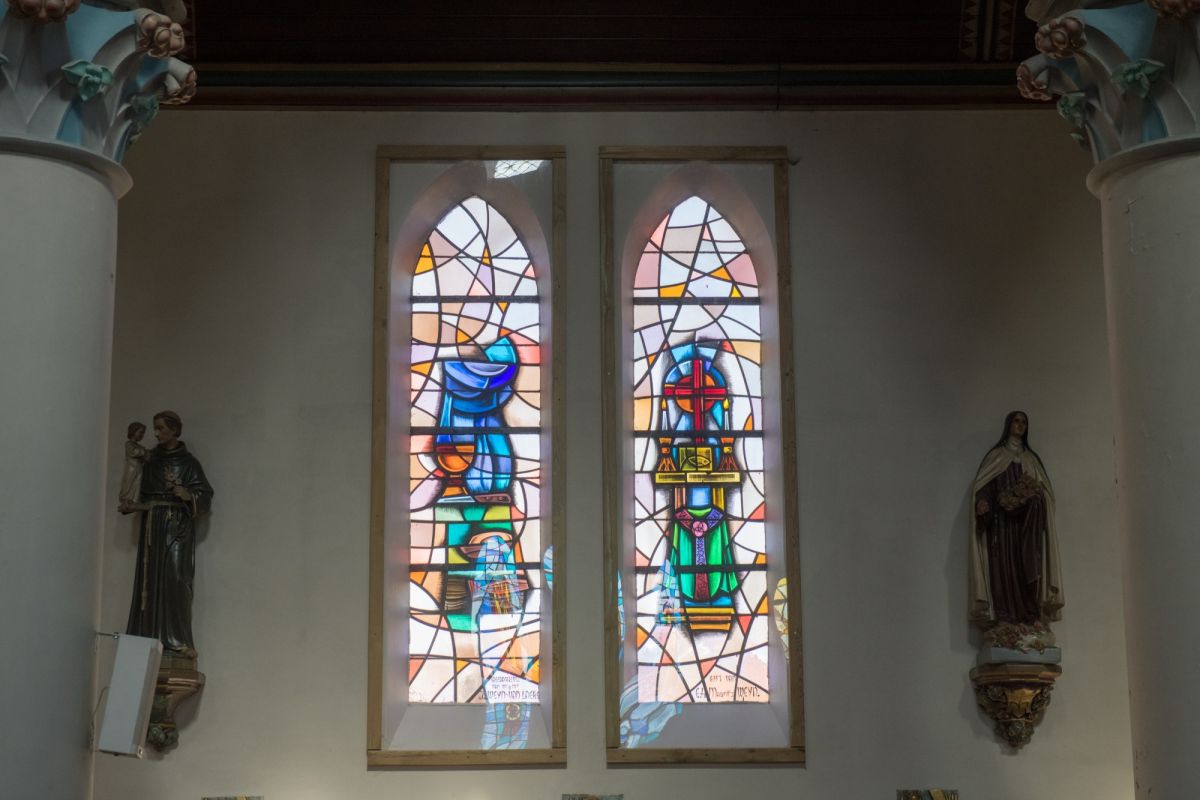
Stained glass windows
The three stained glass windows of ca. 1880 that one can find in the choir created by Coucke from the city of Bruges show Our Lady, Saint Apollonia, and Saint Matthew. The sixteen stained glass windows in the nave from 1938 by G. Dhaeyer and in the baptistery and west facade by G. Minjauwgeven represent allegories of the Sacraments, Evangelist symbols and elements from the Old and New Testament.
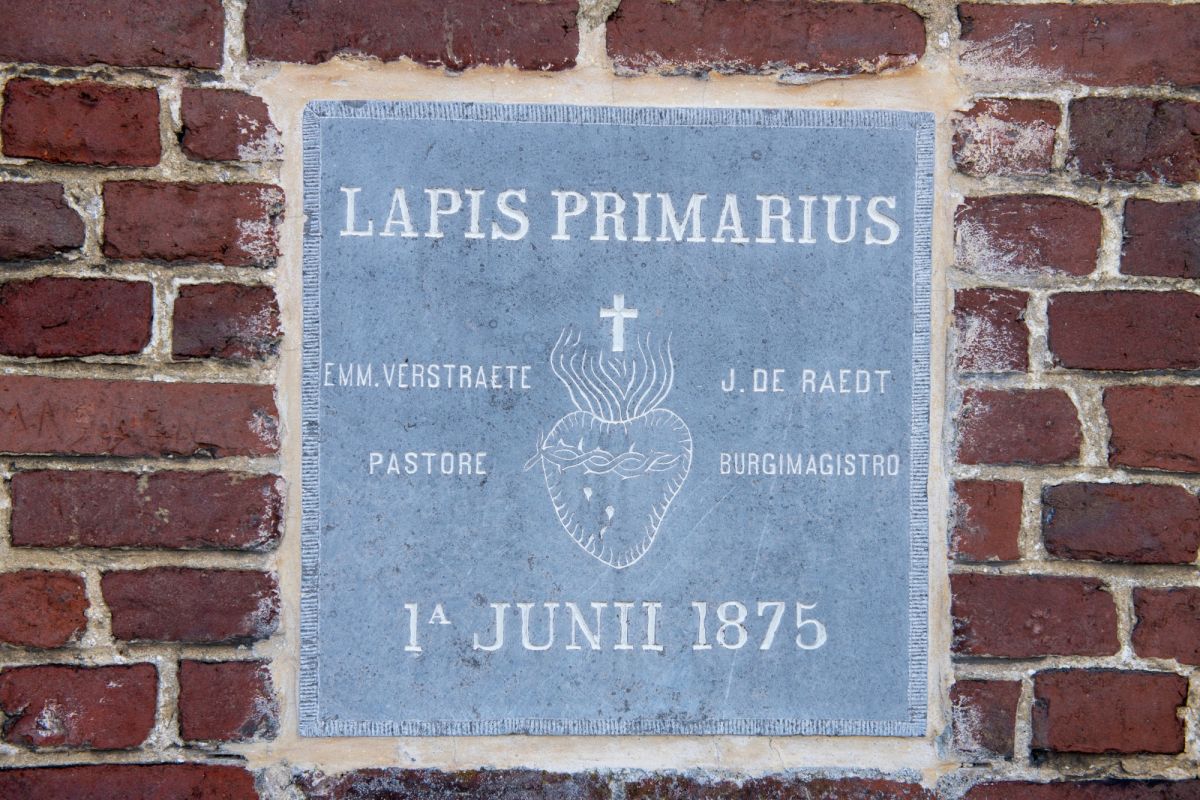
Memorial stone
Bluestone memorial from the foundation stone of June 1, 1875, with a weathered text and a linked anecdote: the day before, Pastor Verstraete’s name was chiseled away, allegedly on mayor Jozef De Raedt’s orders. A second stone was quickly made with Lapis primarius… This “second first stone” was rediscovered in the early 1970s as the capstone of a well in the presbytery.