
Saint Aldegund
Hoogdorpstraat
3570 Alken
Church | ca. 1600 | Gothic | Catholic Church


Map
Opening hours
01 January - 31 December
Mon 8.00 - 18.00
Tue 8.00 - 18.00
Wed 8.00 - 18.00
Thu 8.00 - 18.00
Fri 8.00 - 18.00
Sat 8.00 - 18.00
Sun 8.00 - 18.00
Portal: approx. 8 a.m.-6 p.m., depending on season
Church: only during celebrations and in cooperation with the congregation on special days such as the annual Open Monument Day
Religious offices
Description
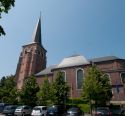
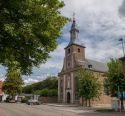
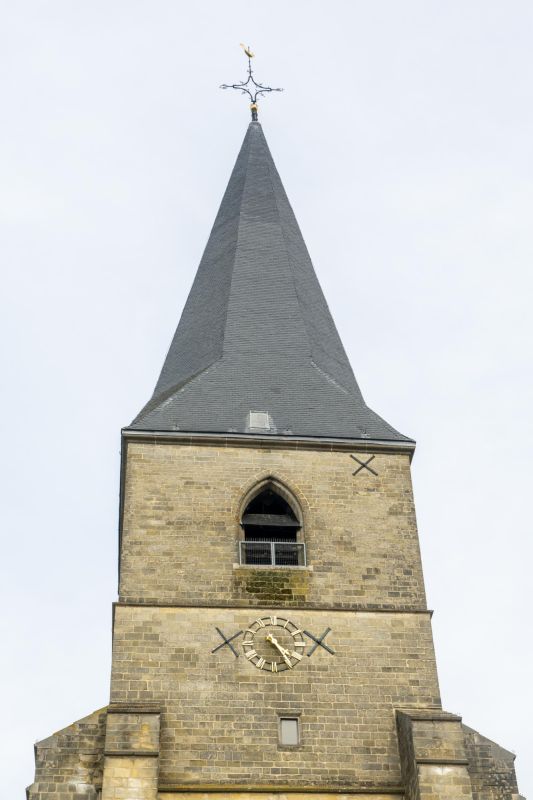
The attached west tower (1385) has five storeys. The first and part of the second floor are made of flint, with limestone corner bands. The others are in marlstone. The portal is neo-Gothic. The tower is topped by a gabled spire and, on the south side, a four-storey polygonal stair turret.
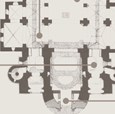
The late Gothic nave (1600s) is built of brick. It is a cruciform church with three naves and a five-sided closed choir. Around 1900, 15th-century wall paintings were discovered, but these disappeared when neo-Gothic paintings were added in 1920.
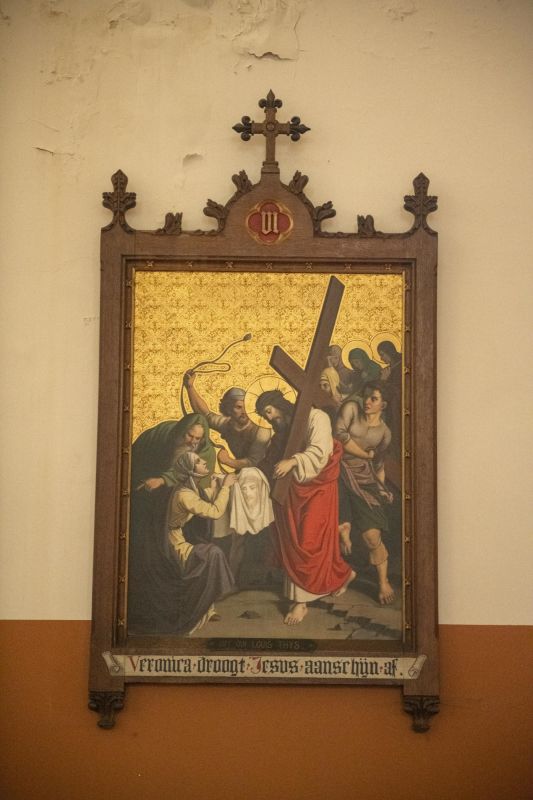
The interior contains a unique 12th-century baptismal font, magnificent statues, notably of St. Roch, and a special calvary. Magnificent stained glass windows create a special atmosphere.
Next to the recently restored, centuries-old church is a small chapel, well-maintained throughout the year. People suffering from ailments or illnesses seek the support of Saint Aldegund here, and have permanent access to the chapel. Celebrations of her feast day take place every year on January 30 and the following Sunday.
Sources: Wikipedia - Immaterieel erfgoed.be
KIKIRPA: Photo-library online

Photos






Remarkable elements

The main and side altars
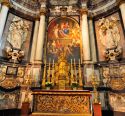
The neo-Gothic main altar (1900) and two side altars (1902) from the Peeters studio in Antwerp show the Offering of Melchizedek, with Cain and Abel on the left and David with the shewbread on the right. The south aisle altar honors Saint Aldegund, the church’s first patron. A Pentecost scene appears in the stained glass, while the north aisle altar depicts Saint Mary and the Nativity.

The pulpit
The homily or sermon is the part of the Eucharistic celebration in which the priest engages in conversation with believers. During the time when electronic amplification of sound didn’t exist yet, the priest would stand among the people, hence the pulpit was placed as well as possible in the middle of the church, oftentimes against one of the pillars. This neo-gothic pulpit (P. Peeters, 1900) was made in solid oak, and depicts the Church Fathers and the Evangelists.

The stained glass windows
The three central stained glass windows, showing the Offering and the Eucharist, were made in the Ladon studios in Ghent. The middle one dates from 1903, the others from 1911 and 1913. They depict Cain and Abel, Abraham and Isaac, Emmaus, the wedding at Cana, and the feeding of the multitude. In the nave, other windows show Alken’s patron saints: Arnold, Hubert, Isidore, and Aldegund.
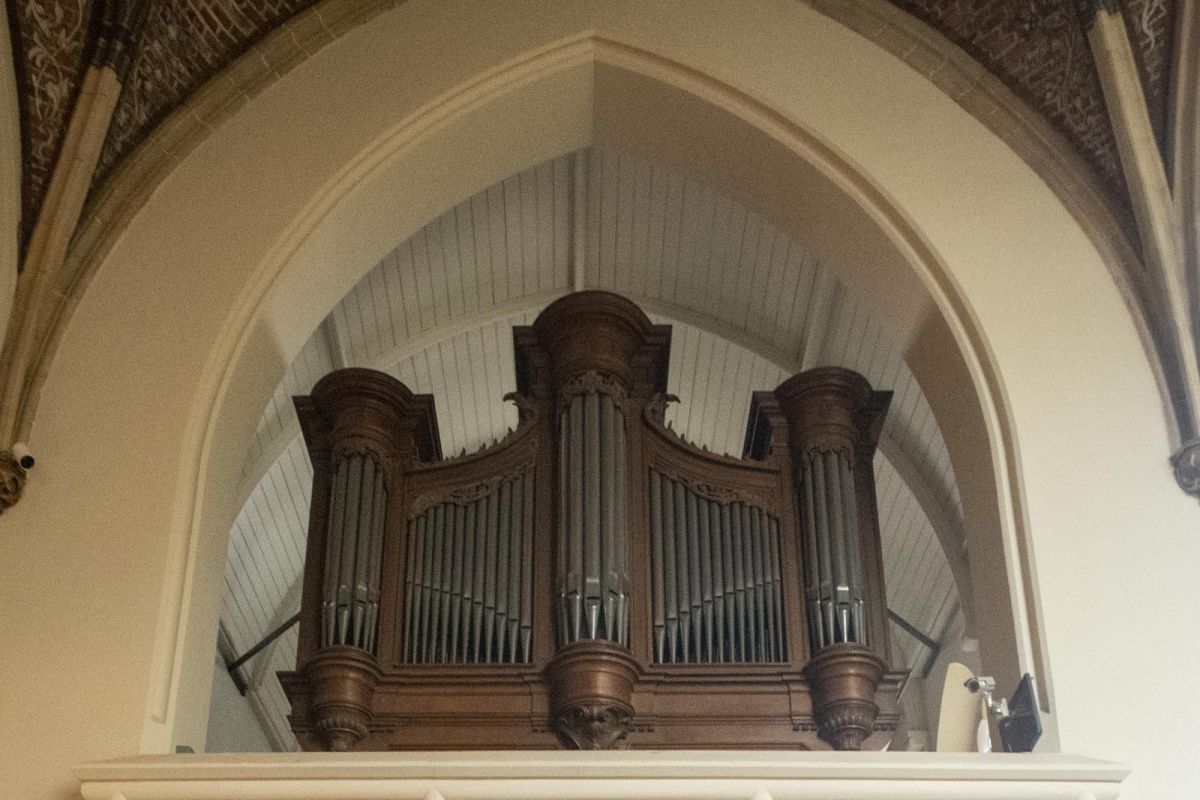
Organ
An organ was installed in 1775 on the west side of the nave. In 1842, Arnold Clerinx became an organ builder in Sint Truiden and in 1859 created a new organ for Alken, reusing the old case. It was moved to the choir loft in 1899. Restorations followed in 1957, 1978, and major repairs in 2003. The organ has 814 pipes and 18 stops. When present, the organist offers tours, and trained musicians may play under supervision.

The tower and the shoemaker’s house
An old passage above the stairwell door was rediscovered in 2019 when plaster fell. The tower can be climbed only with a guide, and the many worn steps make it demanding. The first aisleless church of “Alleke” once stood apart near today’s Laagdorp. Before 1600, the current church and tower were built. A shoemaker lived in the tower for generations, also serving as sexton and bell ringer. His workshop leads to the church attic.
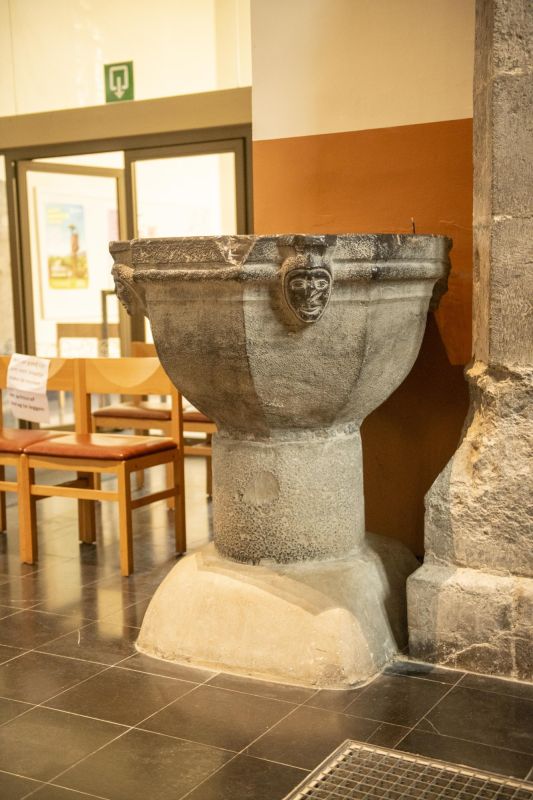
The Holy water stoups
The 2 holy water stoups at the entrance are probably the most ancient artifacts still in use. This church was a baptismal church during the Middle Ages for the surrounding churches in the area.