Saint-Martin
30 rue des Manoirs
62690 Savy-Berlette
Church | XVI | Gothic | Catholic Church


Map
Opening hours
01 May - 30 September
Mon -
Tue -
Wed 9.00 - 18.00
Thu 9.00 - 18.00
Fri 9.00 - 18.00
Sat 10.00 - 12.00
Sun -
22 October - 01 November
Mon 9.00 - 17.00
Tue 9.00 - 17.00
Wed 9.00 - 17.00
Thu 9.00 - 17.00
Fri 9.00 - 17.00
Sat 9.00 - 17.00
Sun 9.00 - 17.00
15 December - 31 December
Mon 9.00 - 12.00 • 14.00 - 17.00
Tue 9.00 - 12.00 • 14.00 - 17.00
Wed 9.00 - 12.00 • 14.00 - 17.00
Thu 9.00 - 12.00 • 14.00 - 17.00
Fri 9.00 - 12.00 • 14.00 - 17.00
Sat 9.00 - 12.00 • 14.00 - 17.00
Sun 9.00 - 12.00 • 14.00 - 17.00
Guided tour
Religious offices
Description
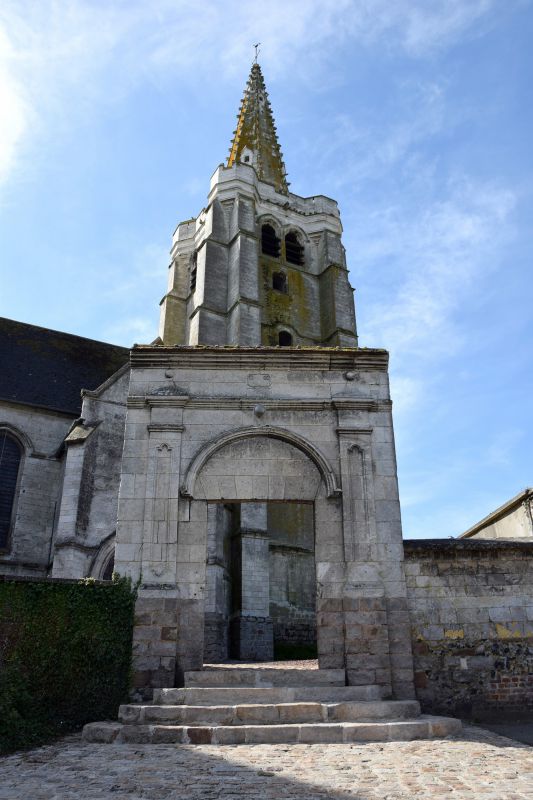
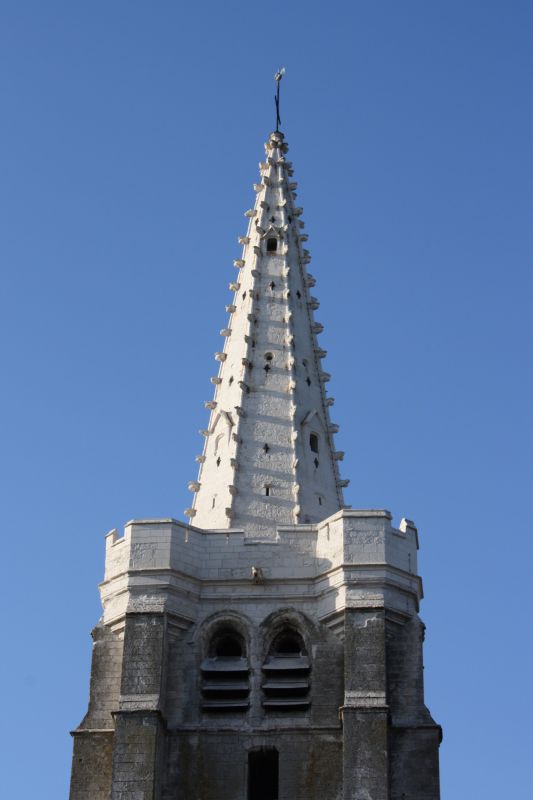
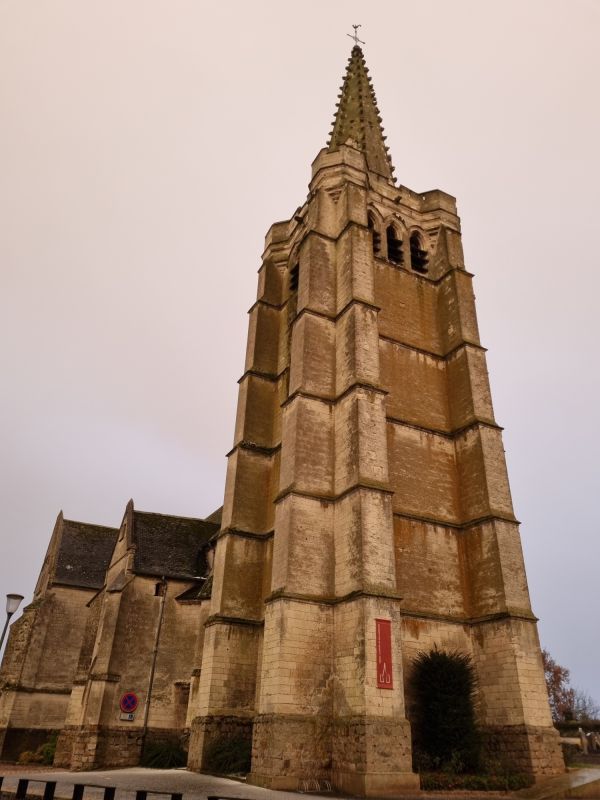
Leaving Arras by the road towards the coast (route de St.Pol) the curious stone spire that crowns the high tower of the church cannot be missed. The village is situated in a hollow, but the church, built on a medieval castle mound dominates the landscape, as does the chimney of the old sugar refinery near-by. The church of Savy is the highest church in the region with a spire having hooks, and is visible more than 10 kilometers away. Spires with hooks are a particularity of the Artois region. It is necessary to look up to appreciate the variety of sculptures which decorate the edges of the hexagonal spire.
Certified as early as the 12th century, the building was rebuilt in the 16th and 17th centuries. It is then that the imposing 5-storey tower is built, crowned by a crenellated terrace with a round path and surmounted by the hooked arrow.
The church is entered through a small porch on the north side of the church, whose vault is decorated with keystones representing the four evangelists and the Pascal Lamb.
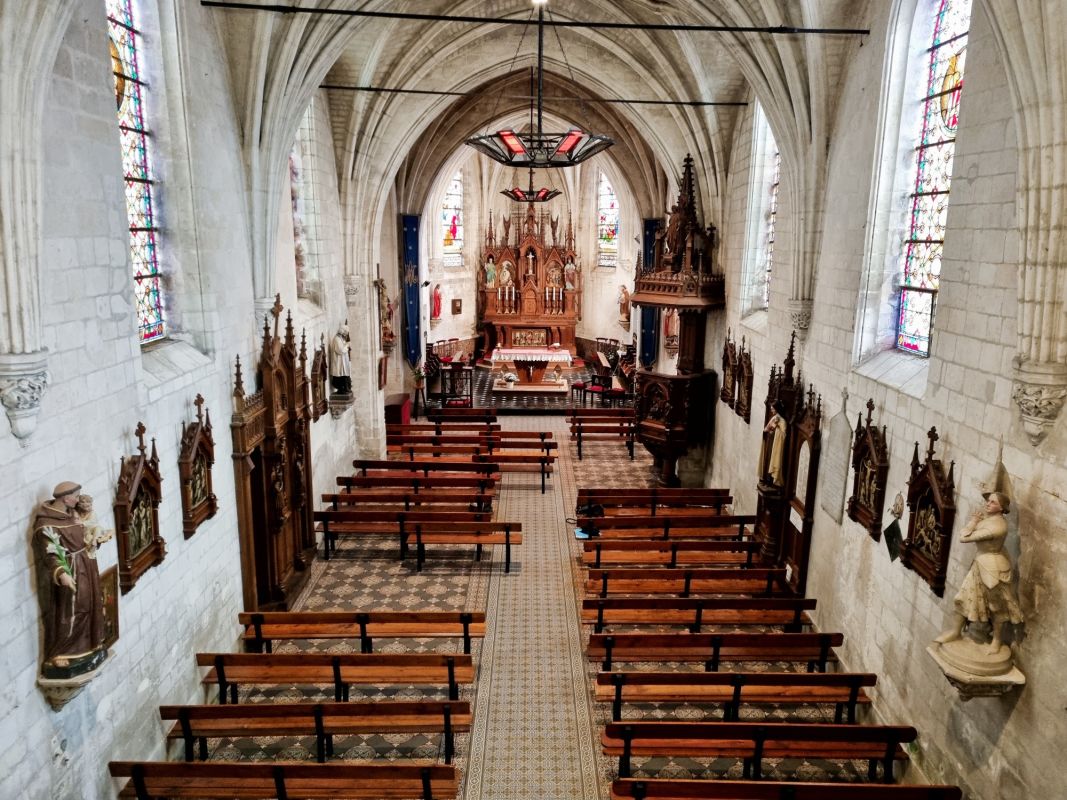
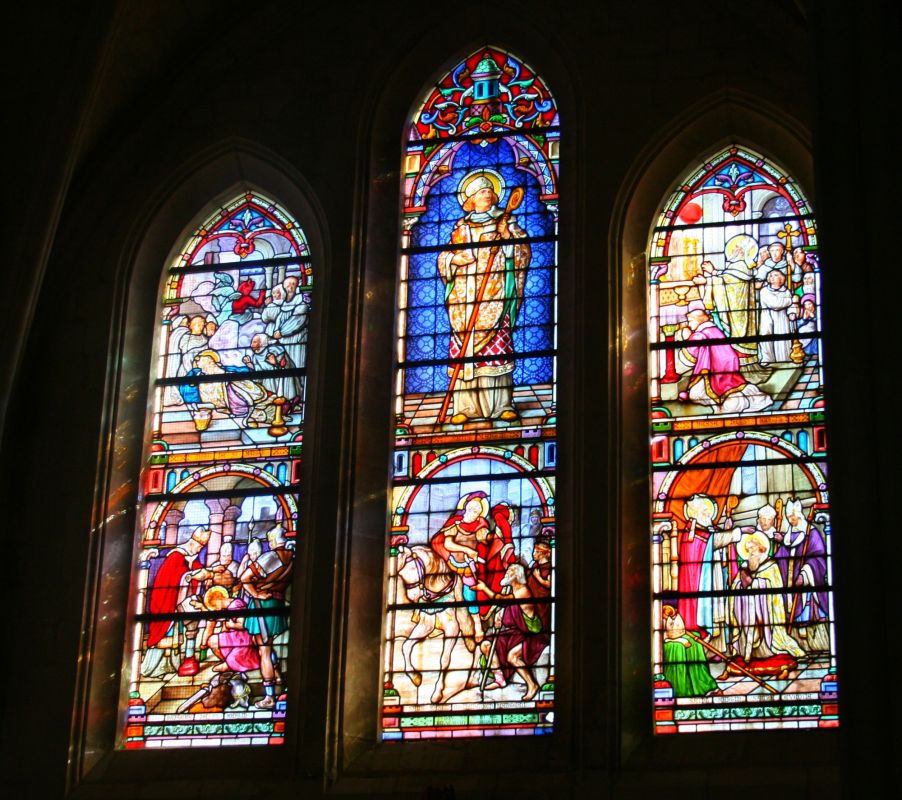
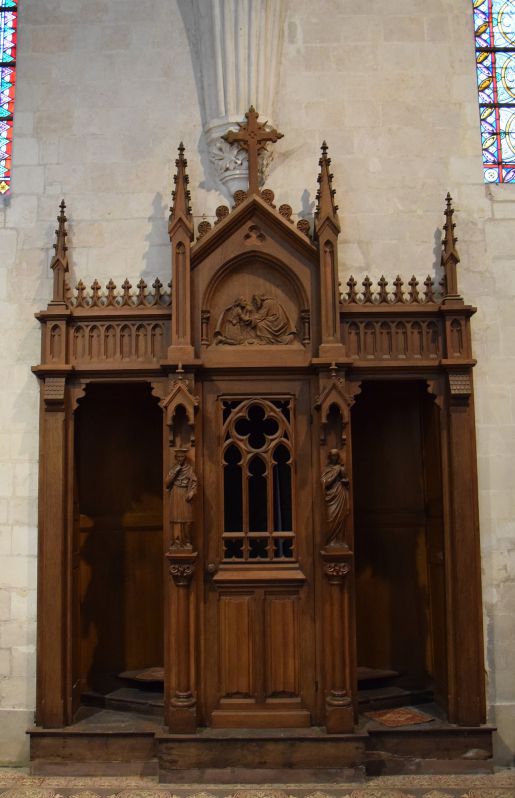
Among the furnishings can be found a confessional with the representation of the father confessor with his finger on his lips symbolising the secret of the confessional. The stained glass windows remind us of the life of St. Martin, evangeliser of the region.
The church of St. Martin is on the supplementary list of Historical Monuments, since 1926, and the village has the label “ Village Patrimoine”.


Photos



Remarkable elements

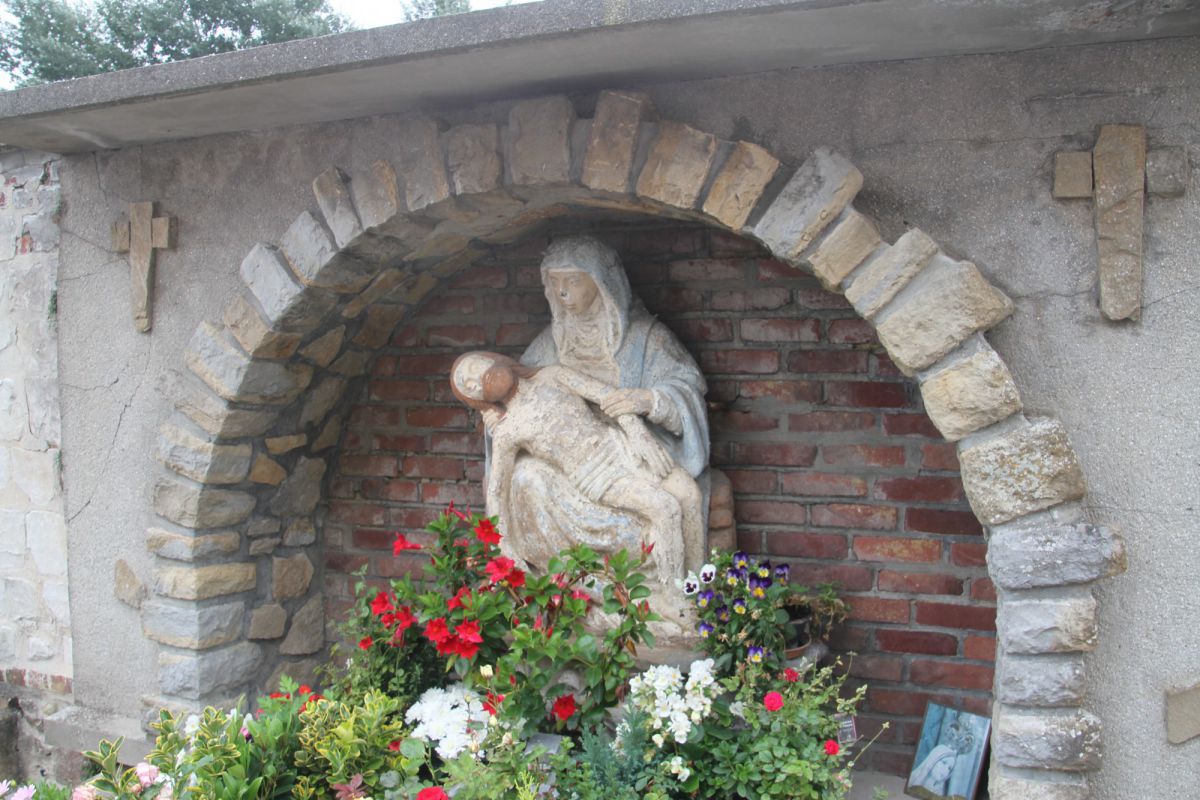
Virgin of Sorrows
This Virgin, probably from a wayside shrine and installed in the church, dates from the 18th century. Standing 77 cm tall, it is made of carved oak and painted white and gold.
Pulpit
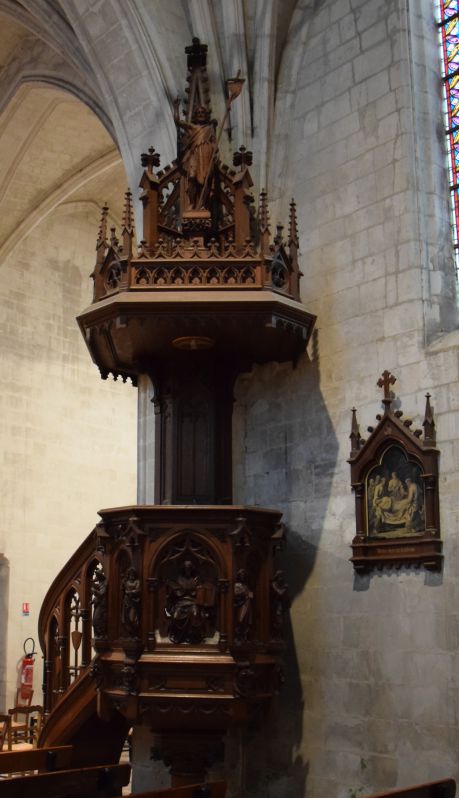
Crafted in pure 19th-century neo-Gothic style, this pulpit features rich oak carvings that highlight the importance of this element for preaching. The central face of the pulpit shows Christ in Majesty, or Christ in Glory: haloed and seated on a throne, he blesses with his right hand and holds the Scriptures in his left hand. He is surrounded by the four evangelists, each holding a book, with their respective symbols at their feet: Mark and the lion, Matthew and the man, John and the eagle, and Luke and the ox. The whole is surmounted by a pinnacle on which rests a statue of St John the Baptist.
Confessional
Built into the wall, the confessional is neo-Gothic in style. Two statuettes frame the door: an abbot reminding us of the secrecy of confession by placing a finger to his lips, and a penitent, Mary Magdalene. The pediment depicts the parable of the prodigal son, where the son is welcomed back by his father.
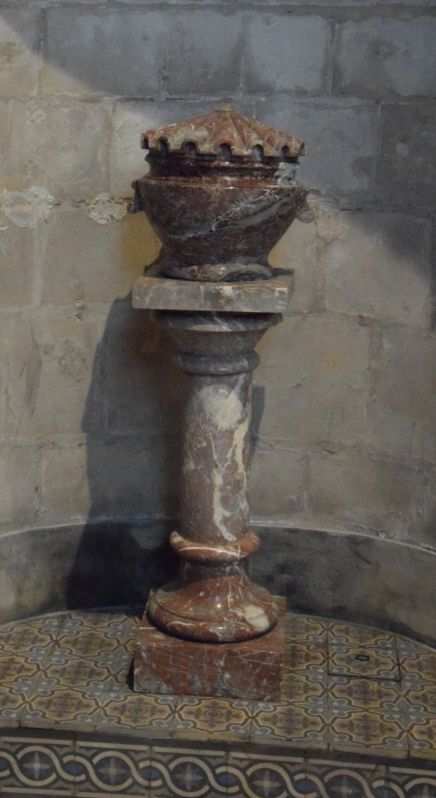
Baptismal Font
Dating from the first quarter of the 19th century, this baptismal font has an unusual shape. Made of red marble veined with white, it rests on a column. The neoclassical basin is topped with a shell-shaped lid.
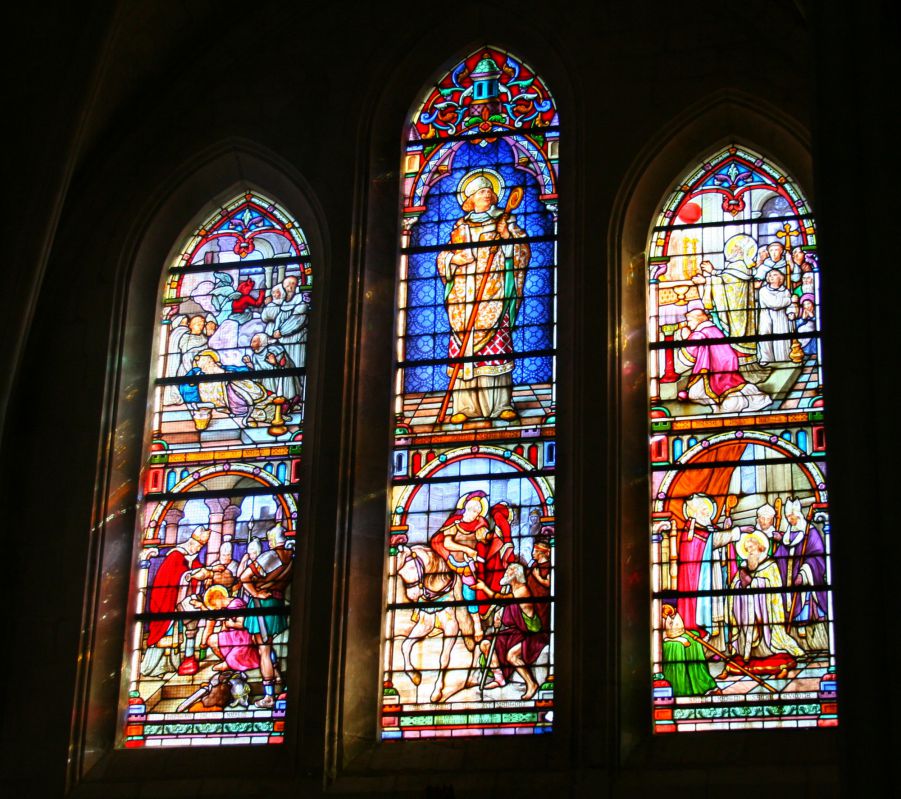
Stained glass windows
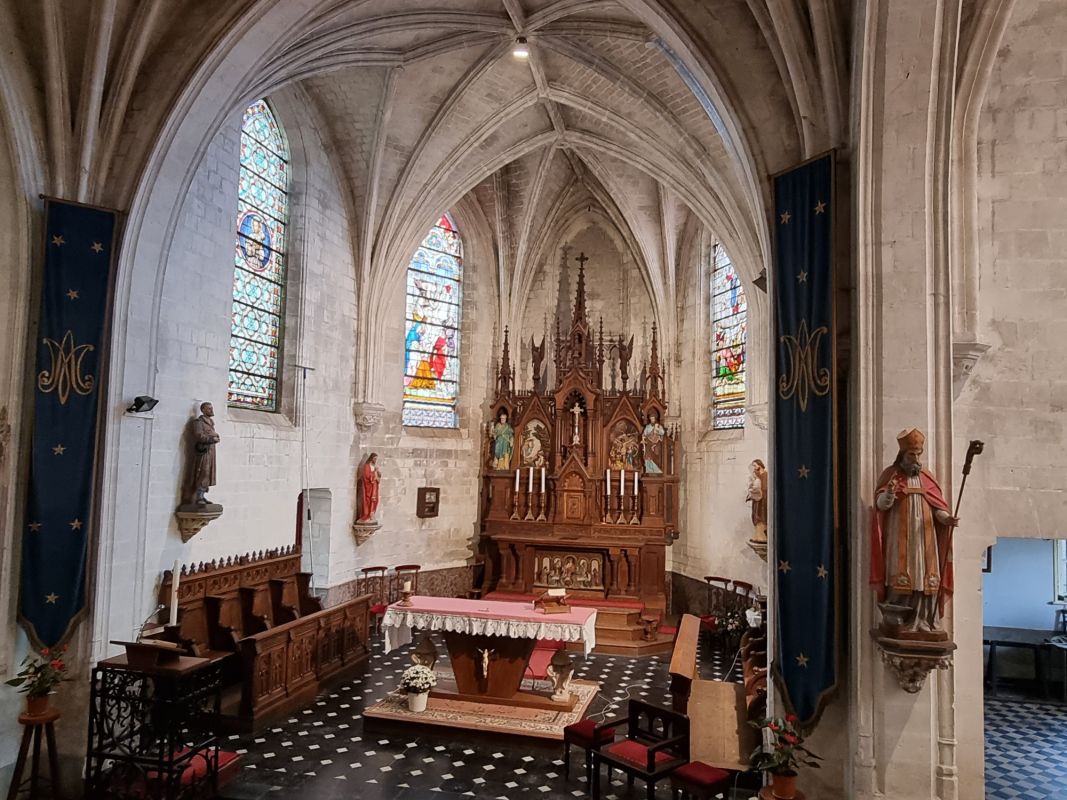
The stained glass windows, dating from 1901, were made by the Latteux-Bazin workshop in Mesnil-Saint-Firmin in the Oise region. In the choir, they depict the Ascension of Christ and the Descent from the Cross. Those in the north transept are dedicated to the life of the Virgin Mary (Assumption, Annunciation, Nativity, Holy Family) and her apparition at Lourdes, while the stained glass windows in the south transept depict the life of Saint Martin. The other windows alternate between various representations of saints: Saint Roch, Saint Barbara, Saint Joseph, Saint Anthony, Saint Eloi, Saint Benoît Labre, Saint Bernard, etc.

Porch
The porch is richly decorated with carvings. At each corner, a figurative corbel supports the vault, where five keystones decorated with figures rest: in the centre, the Paschal Lamb, surrounded by the symbols of the four evangelists: the lion of Saint Mark, the angel of Saint Matthew, the eagle of Saint John and the bull of Saint Luke.