Church of the Carmelites
Avenue de la Toison d'Or 45
1050 Ixelles
Convent | 1860 | Neogothic | Catholic Church


Map
Opening hours
01 January - 31 December
Mon 7.30 - 20.00
Tue 7.30 - 20.00
Wed 7.30 - 20.00
Thu -
Fri 7.30 - 20.00
Sat 7.30 - 20.00
Sun 9.00 - 20.00
Religious offices
Sunday : 10.30
Description
In 1852, the order returned, building a new church on Gulden Vlieslaan with a monastery and large garden. The garden was sold in 1962 for the Porte Louise Gallery, and the monastery itself was later replaced by the Espace Louise Gallery. A smaller monastery was rebuilt behind the church, now enclosed by the commercial complex.
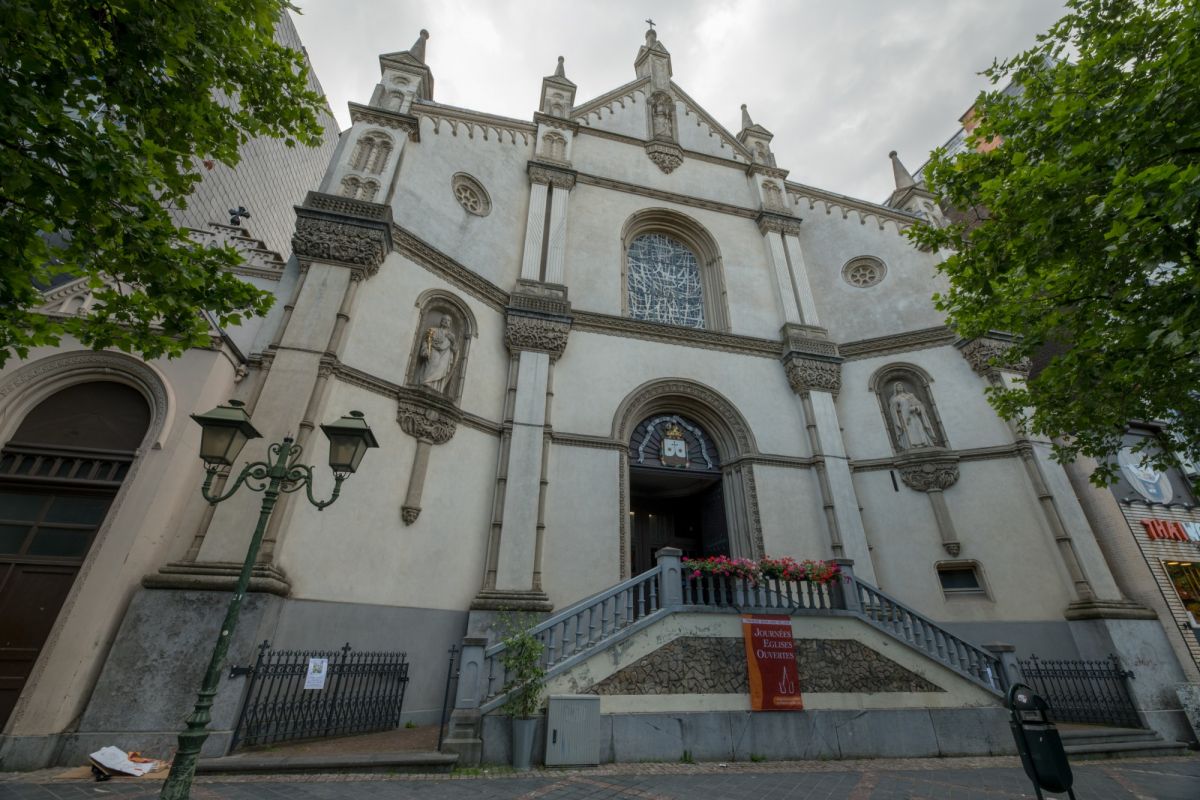
The church, designed in 1860 by architect Menge in Neo-Gothic Lombard style, was constructed between 1861 and 1875, with interiors completed by P. Cuypers. Its facade, restored in 2010, features statues of Our Lady of Mount Carmel, Saint Joseph, and Saint Teresa of Ávila, patrons of the church with chapels dedicated to them.
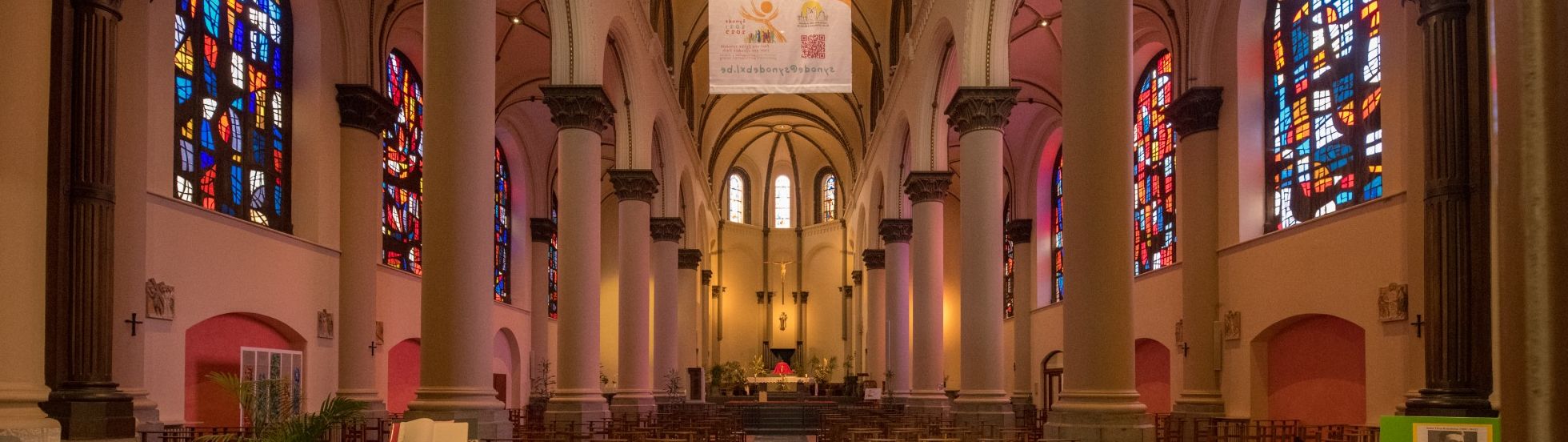
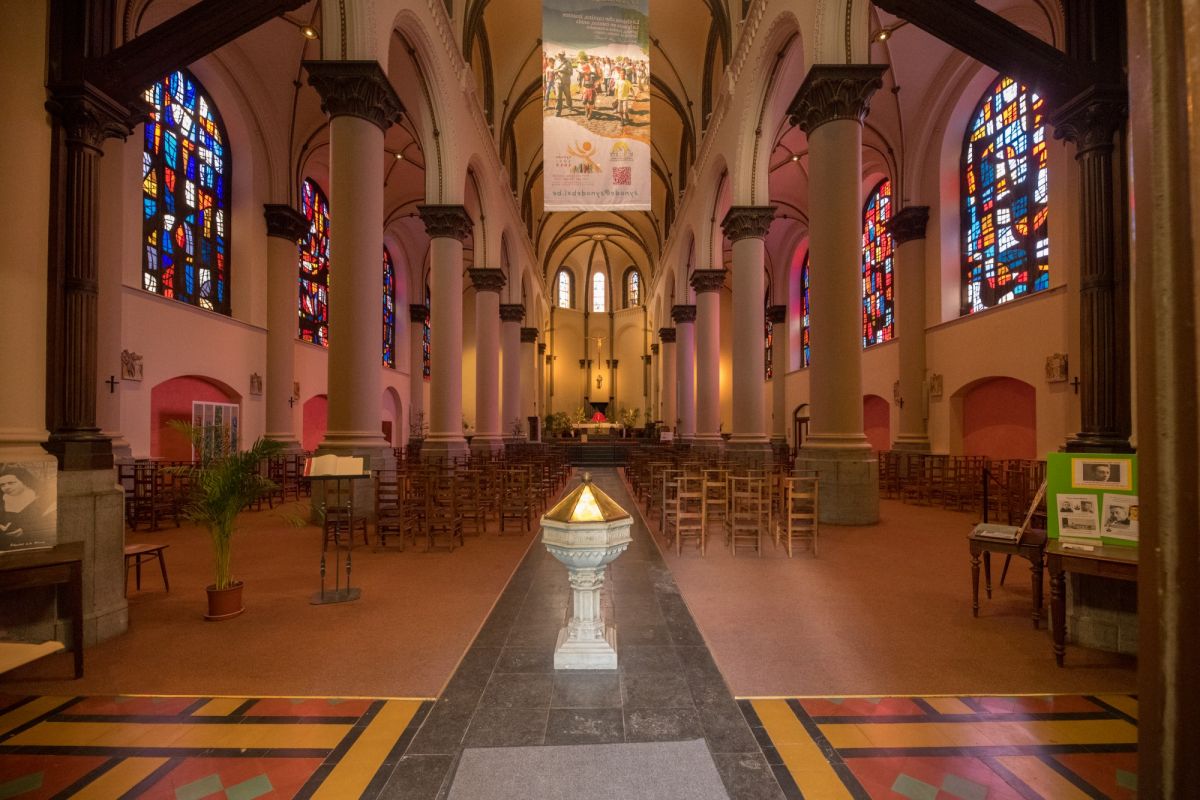
Inside, 19th century stained glass depicts Teresa of Ávila, Our Lady, Saint John of the Cross, and angels referring to Saint Joseph. Side windows of broken glass and concrete were created in 1959 by Benedictine monks of Fleury after drawings by Brother Eloi Devaux. Between 1956 and 1962, the interior was radically renovated.
A 16th century crucifix of Italian or Spanish origin hangs near the altar, symbolizing Christ’s sacrifice and resurrection. In the apse, a statue of Our Lady of Mount Carmel replaces the 14th century polychrome “Seat of Wisdom,” preserved in the monastery.
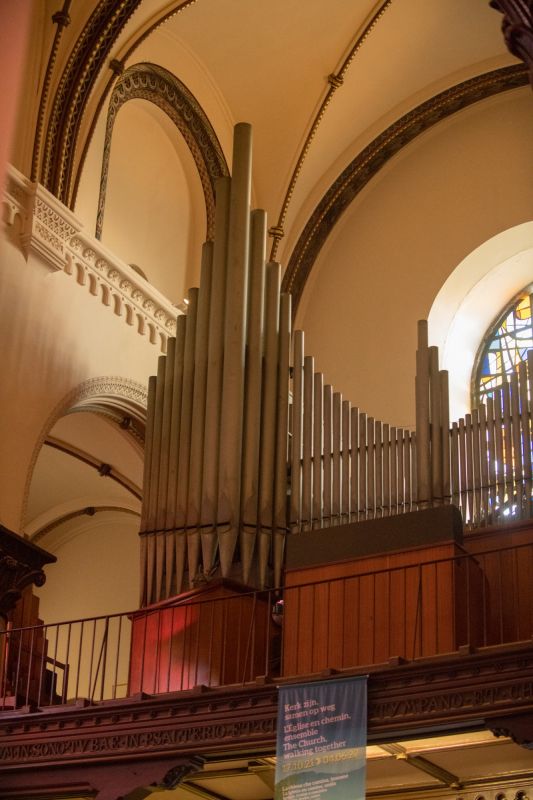
The ceramic Stations of the Cross were made in 2011 by Brother Serafino Melchiorre. The organ, built in 1869 by Merklin Schütze, was restored in 1934 and 1962, expanded by Roethinger, and renovated again in 2000 by Patrick Colon.
Photos
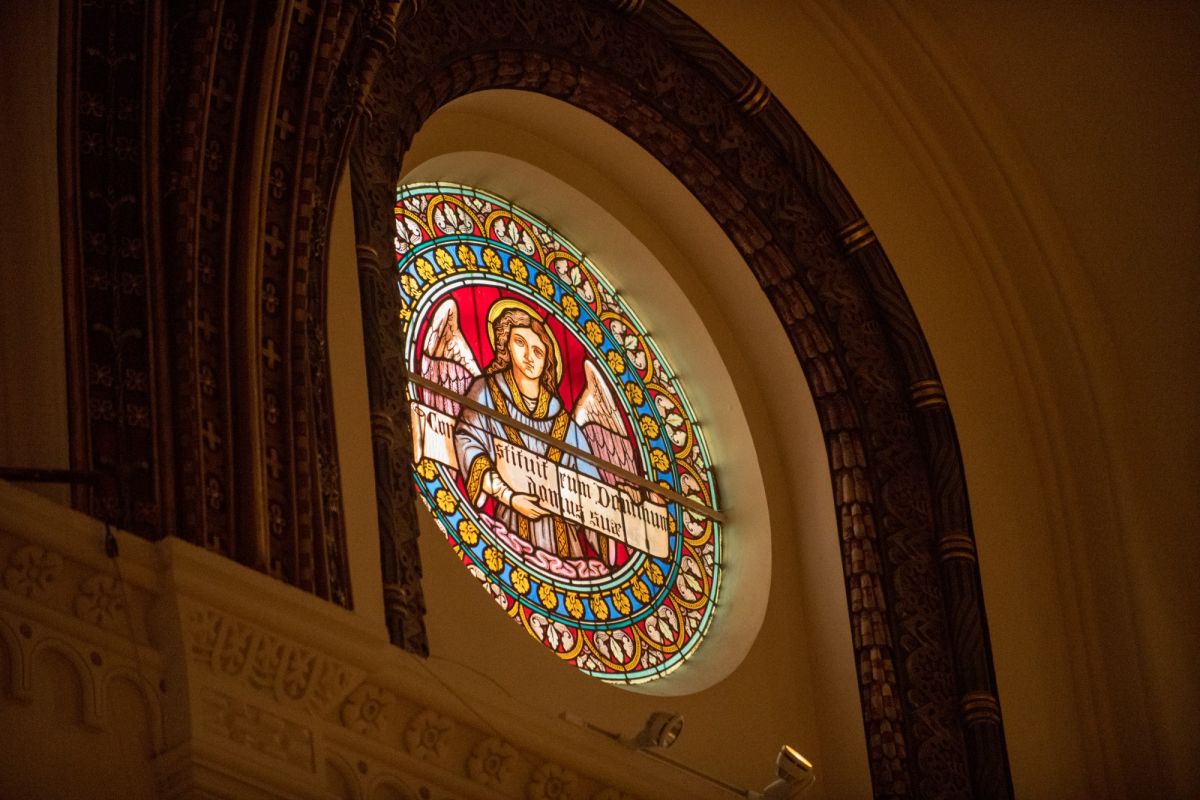
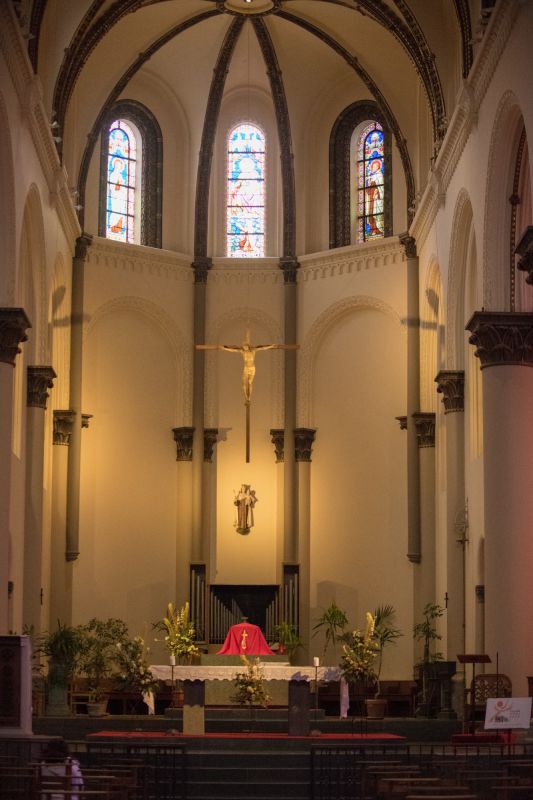

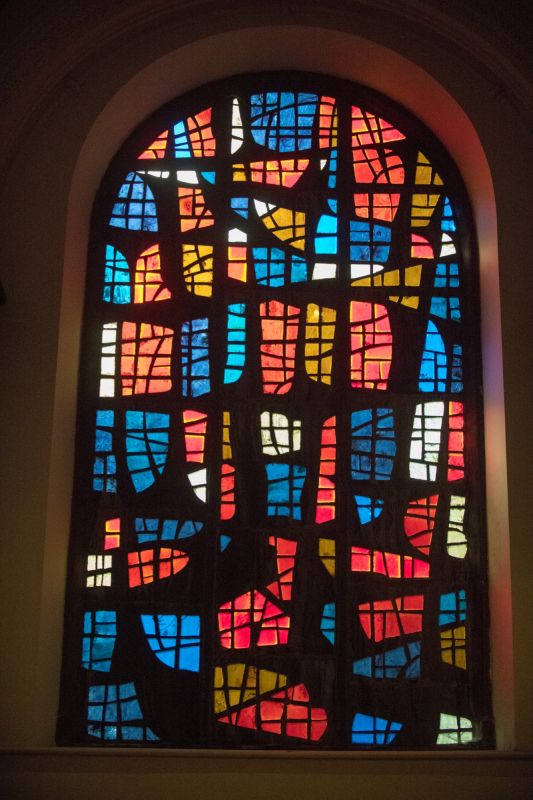
Remarkable elements
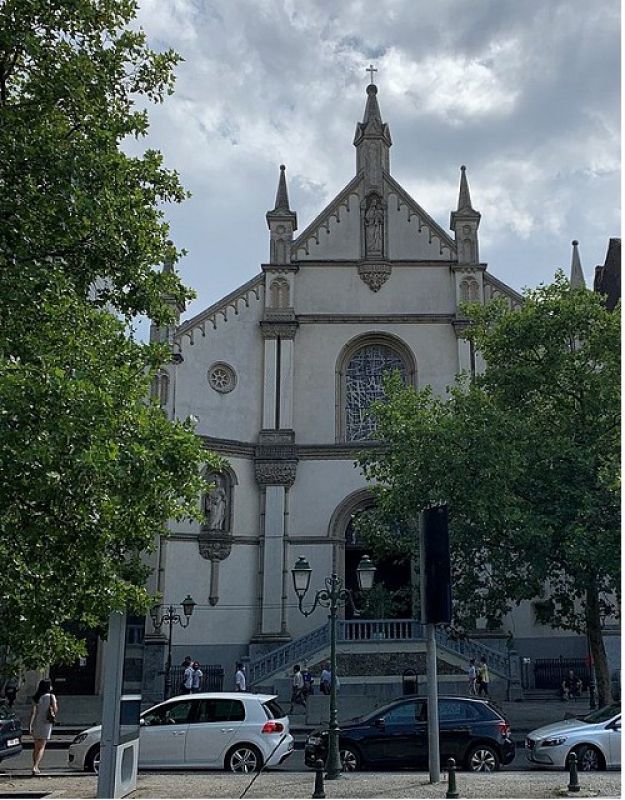
The facade
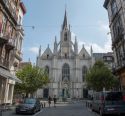
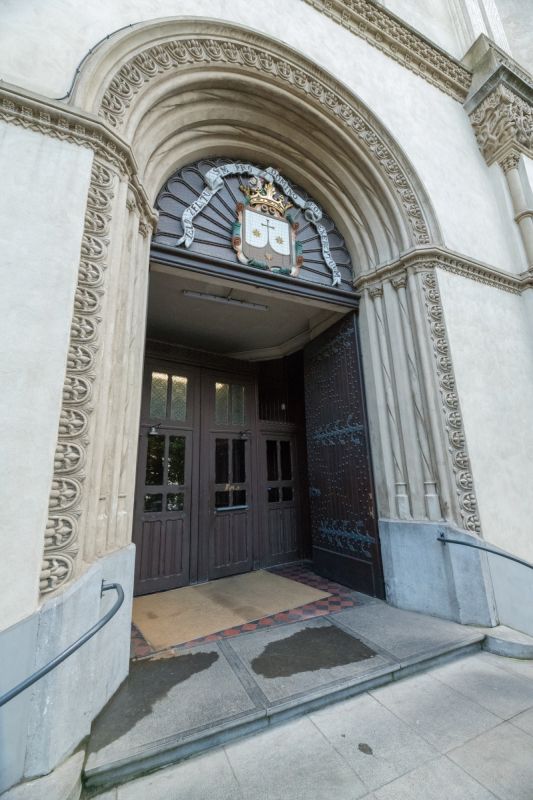
The 19th century church, in Italian Neo Gothic style, features a slightly curved triptych facade with a double staircase leading to a raised portico. Above the entryway stands the polychrome Carmel coat of arms and motto: “With zeal have I been zealous for the Lord.” The ocher facade, adorned with pinnacles, shows three statues: Our Lady of Mount Carmel at the top, and below, Saint Teresa of Ávila and Saint Joseph, patrons of the church.
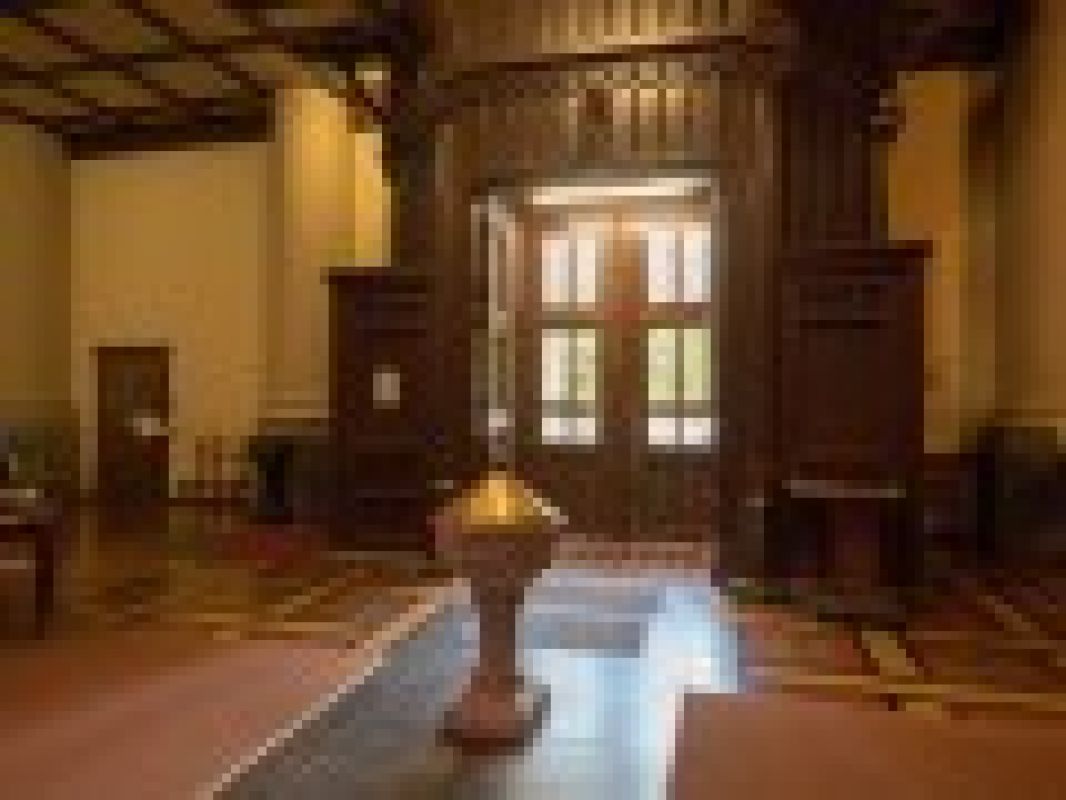
The baptismal chapel
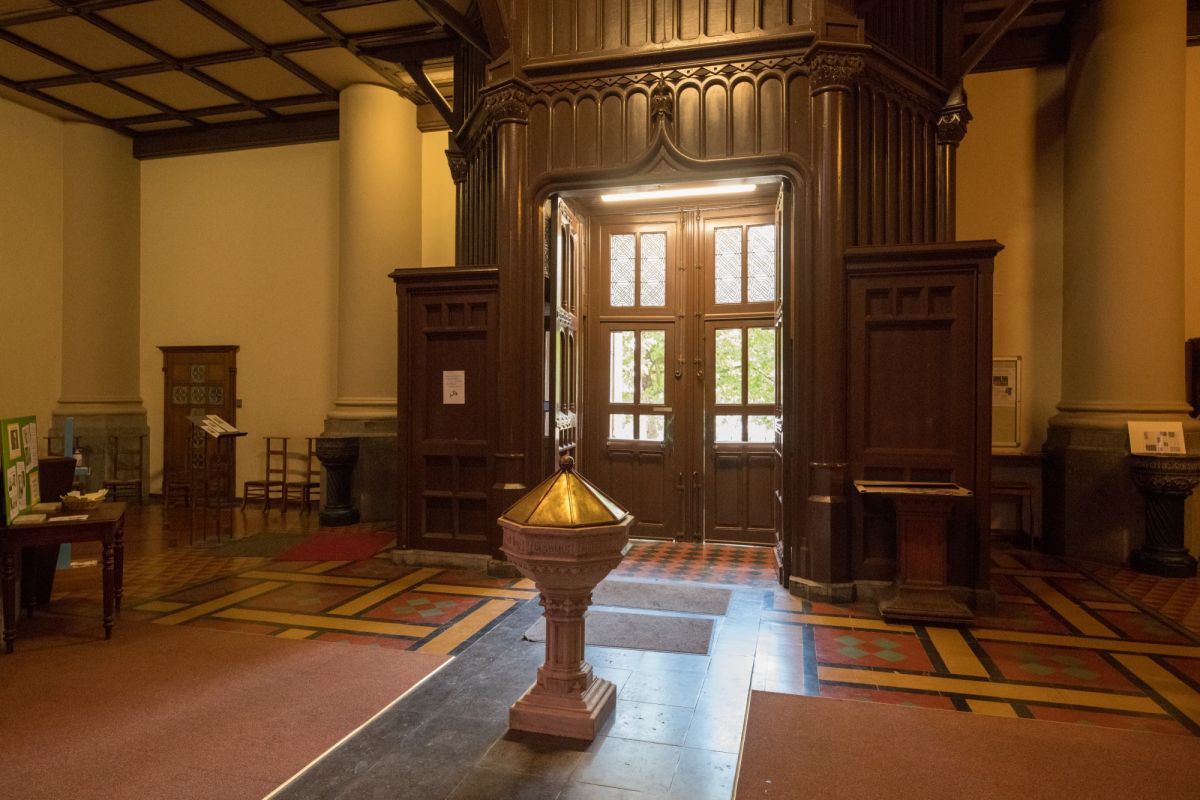
In Neo-Gothic style, the baptismal font of Saint Barbara’s Church in Brussels stands prominently at the entrance of the central aisle leading to the altar, reminding the faithful that baptism is the gateway into the life of the Church. Its square base symbolizes universality, while the octagonal basin recalls the seven days of Creation plus one, sign of new life granted through baptism. The rim bears a Gothic Latin inscription from Mark 16: “Whoever believes and is baptized will be saved.”

The choir
By day, the gaze rests on 19th century stained glass: the Virgin and Child, the Virgin of Carmel handing the scapular to Saint Simon Stock, flanked by Teresa of Ávila and John of the Cross, symbols of Carmelite reform. At night, as windows fade, spotlights reveal the 17th century crucifix: “When I shall be lifted…” Nearby, the long Eucharist table recalls the liturgical renewal of Vatican II (1962 1965).
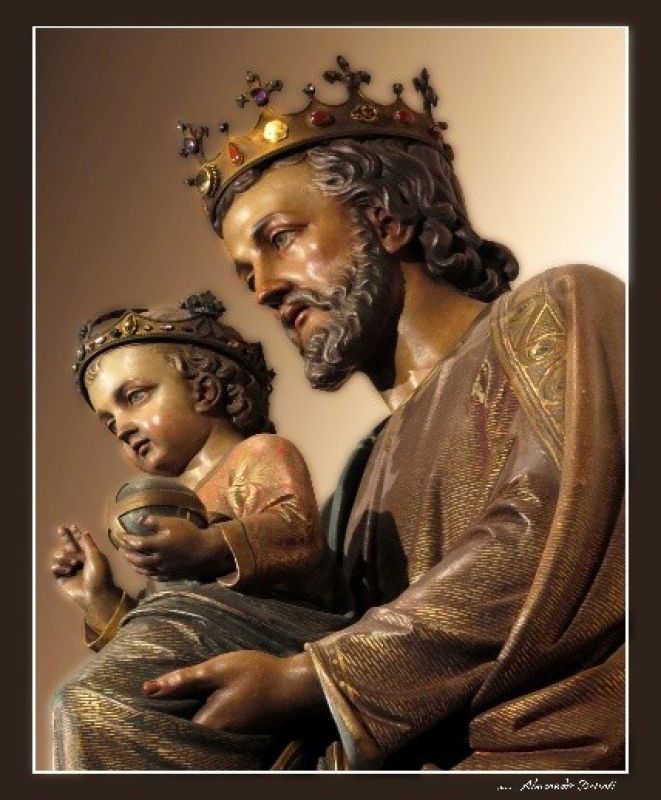
The side altars
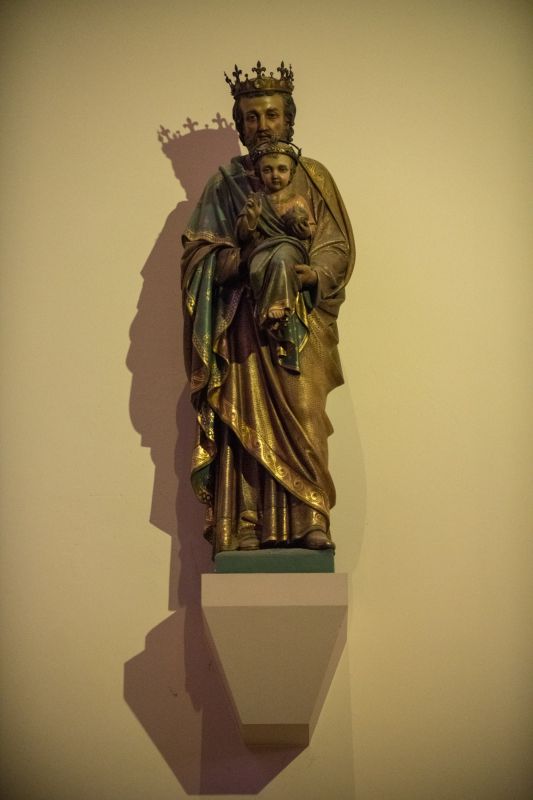
Dedicated to Saint Joseph and Saint Teresa of Ávila, these 19th century statues surprise. Joseph is crowned, symbol of local worship, “God crowning His own gifts”, a rite by papal envoy. Teresa, long before Paul VI’s 1970 recognition, wore the “Doctor of the Church” hat. She holds a book and a flaming arrow as quill, showing divine fire pierced her and is what she seeks to transmit.
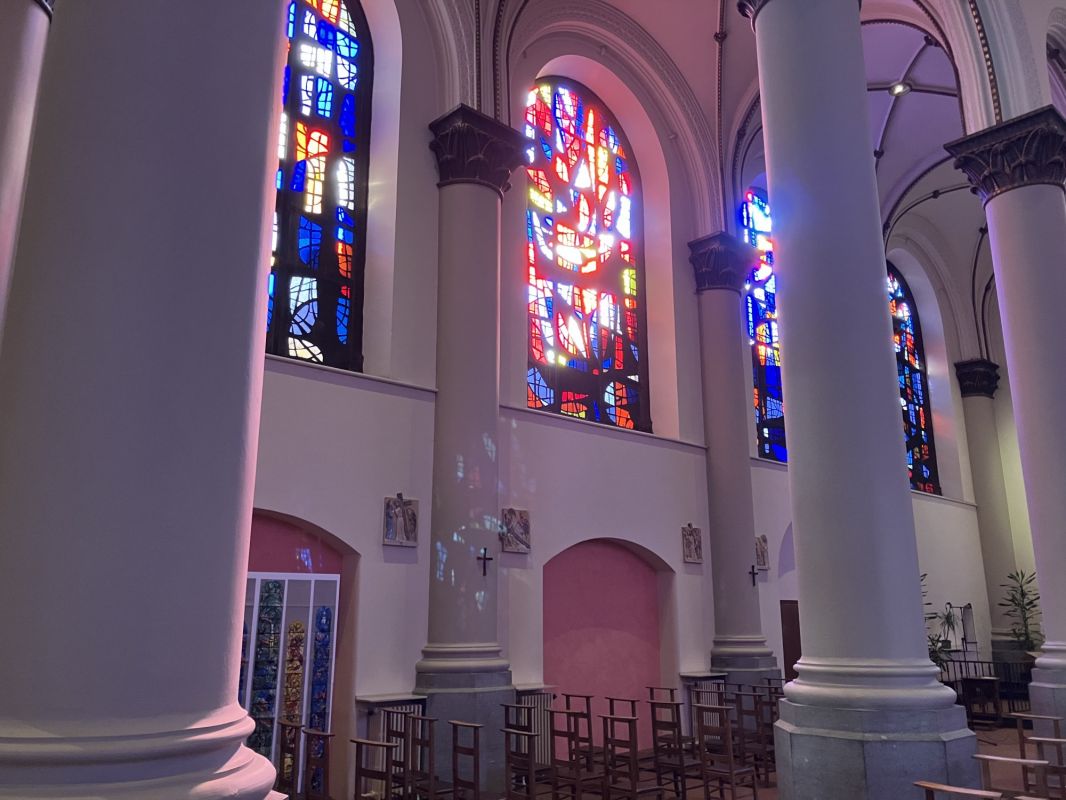
The stained glass windows from the 20th century
Created in 1959 at Saint-Benoît-sur-Loire after drawings by a monk from La-Pierre-qui-Vire, this new process arose in wartime reconstruction. Colored glass sheets are shredded to bend light, then assembled into mosaics and welded with reinforced concrete. The stained glass captures transient light, moving us and inviting a passage from luminous matter to immortal radiance.

The organ
Created in 1869, the organ was enlarged and renovated in 1934, 1962, and 2000. In 1962, the builder merged the “romantic” and “classical” styles. The monumental instrument rests on a Neo-Gothic rood screen. On the balcony frieze appear verses from Psalm 150: “Praise God in his sanctuary, praise him with all instruments…”—what gifted organists have been doing for over 130 years.