Saint Servatius
Kerkplein 1
1850 Grimbergen
Basilica | 1660-1700 | Baroque | Catholic Church


Map
Opening hours
01 January - 31 December
Mon 7.00 - 19.00
Tue 7.00 - 19.00
Wed 7.00 - 19.00
Thu 7.00 - 19.00
Fri 7.00 - 19.00
Sat 7.00 - 19.00
Sun 7.00 - 19.00
Religious offices
Description
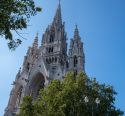
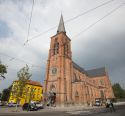
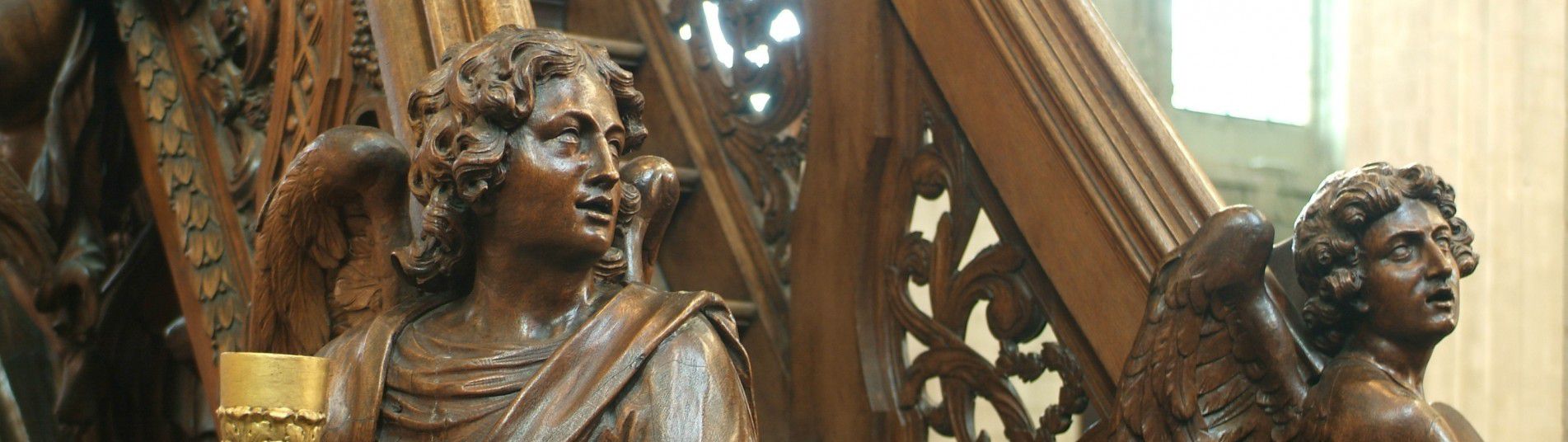
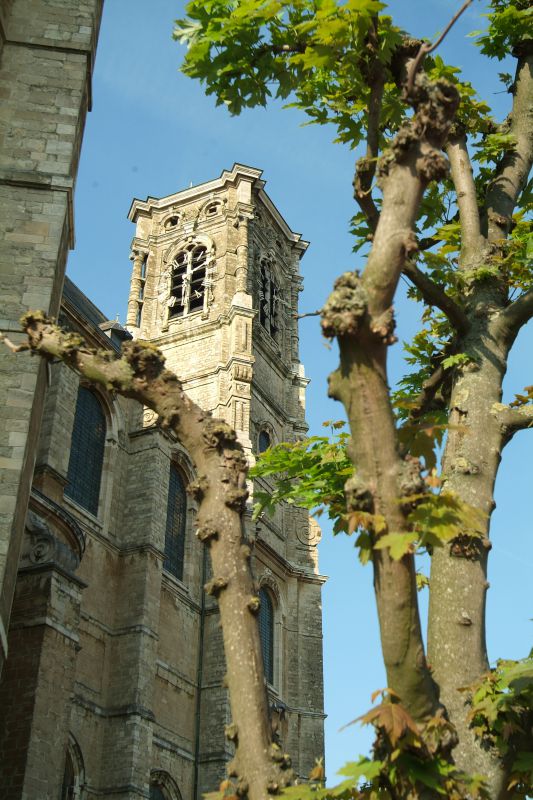
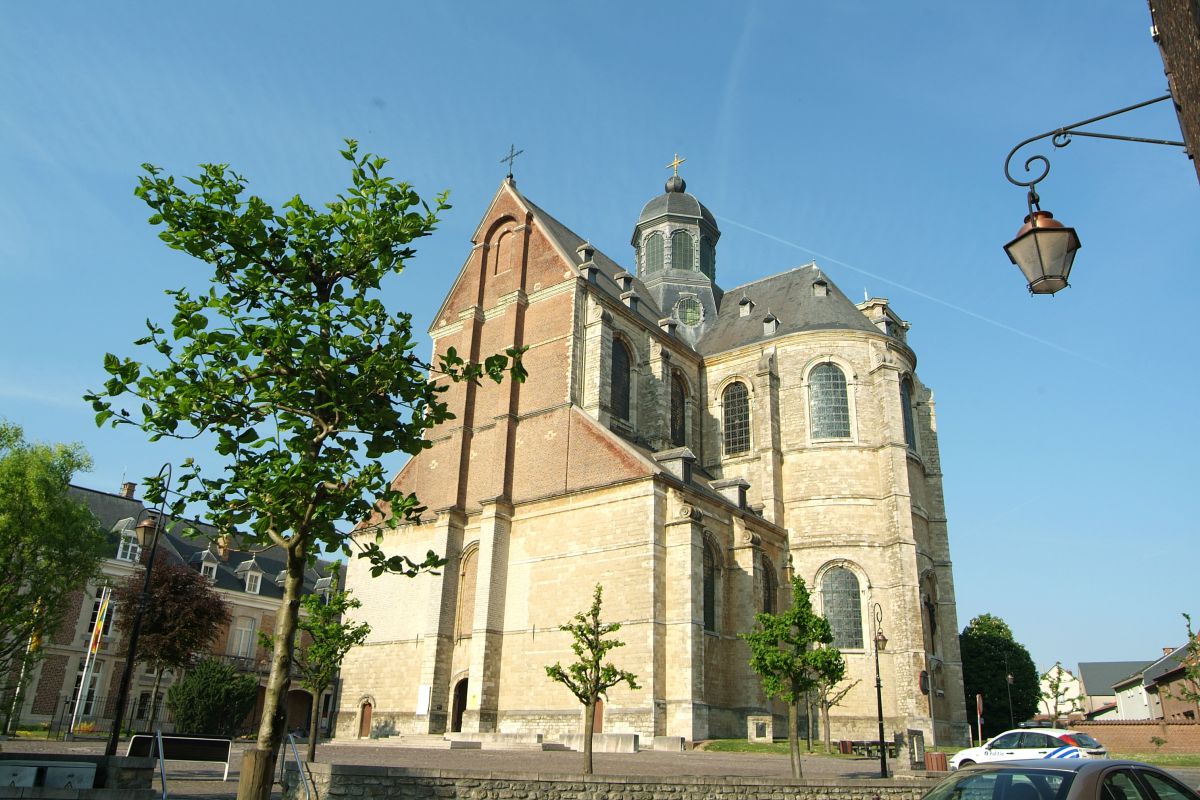
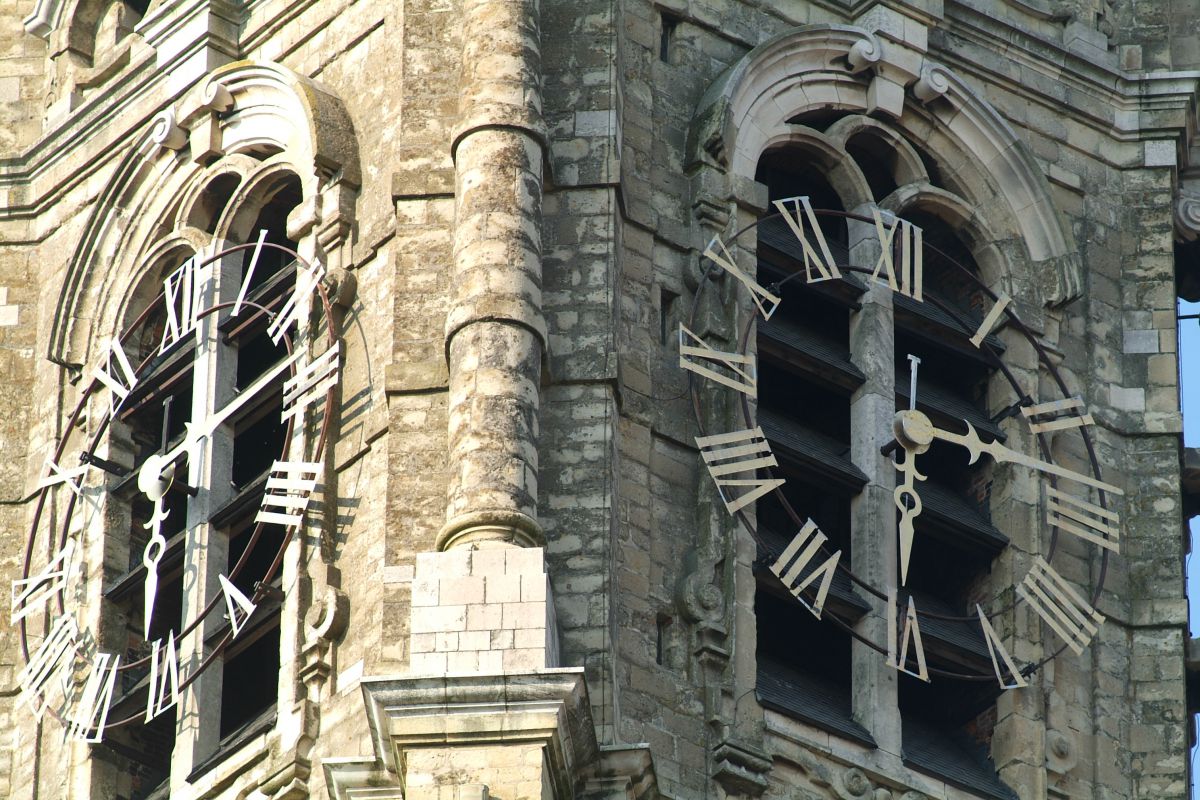
Saint Servatius refers to the parish church, while Saints Peter and Paul refer to the abbey church. The church, built out of white sandstone, dates from 1660-1680. That was the glorious period of the abbey, founded in around 1125. The tower with its 48 bells gives the surrounding area a welcoming note that leaves no one indifferent.
The choir contrasts with the rest of the church due to its large dimensions. The nave has remained incomplete; this is noticeable because of the temporary façade.
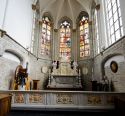
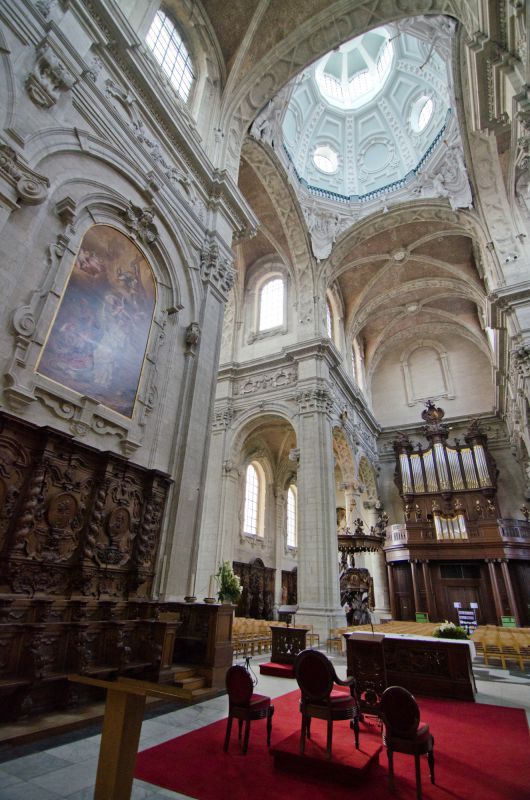
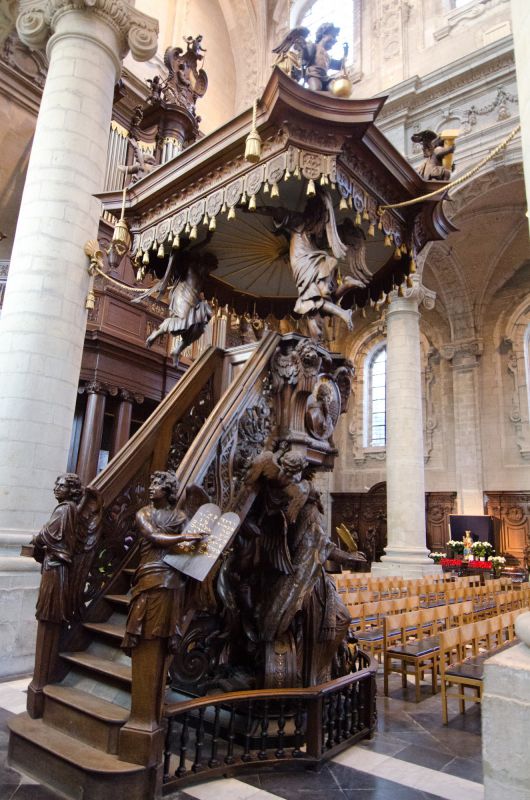
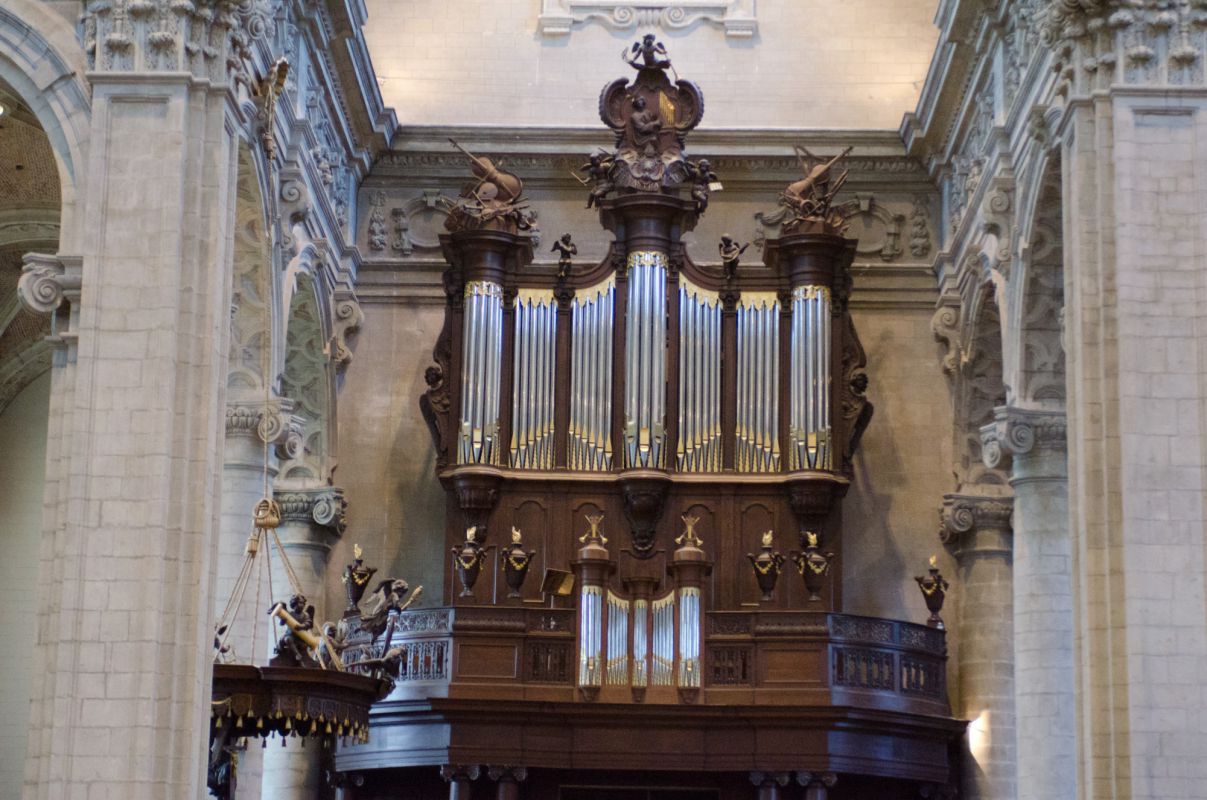
In the interior the walls are highly carved. This decoration, as well as the four magnificent confessionals, the cathedra, the stalls, the altar and the tomb of the Count of Grimbergen, make this interior one of the most beautiful Baroque collections in the country.
In the choir, the observer can admire four paintings of Saint Norbert done by Jan van Orley. Elsewhere are numerous works by De Crayer, van Orley and van Loon.
KIKIRPA : Photo-library online
Take a virtual tour in the church

Photos


Media
Remarkable elements
Confessionals
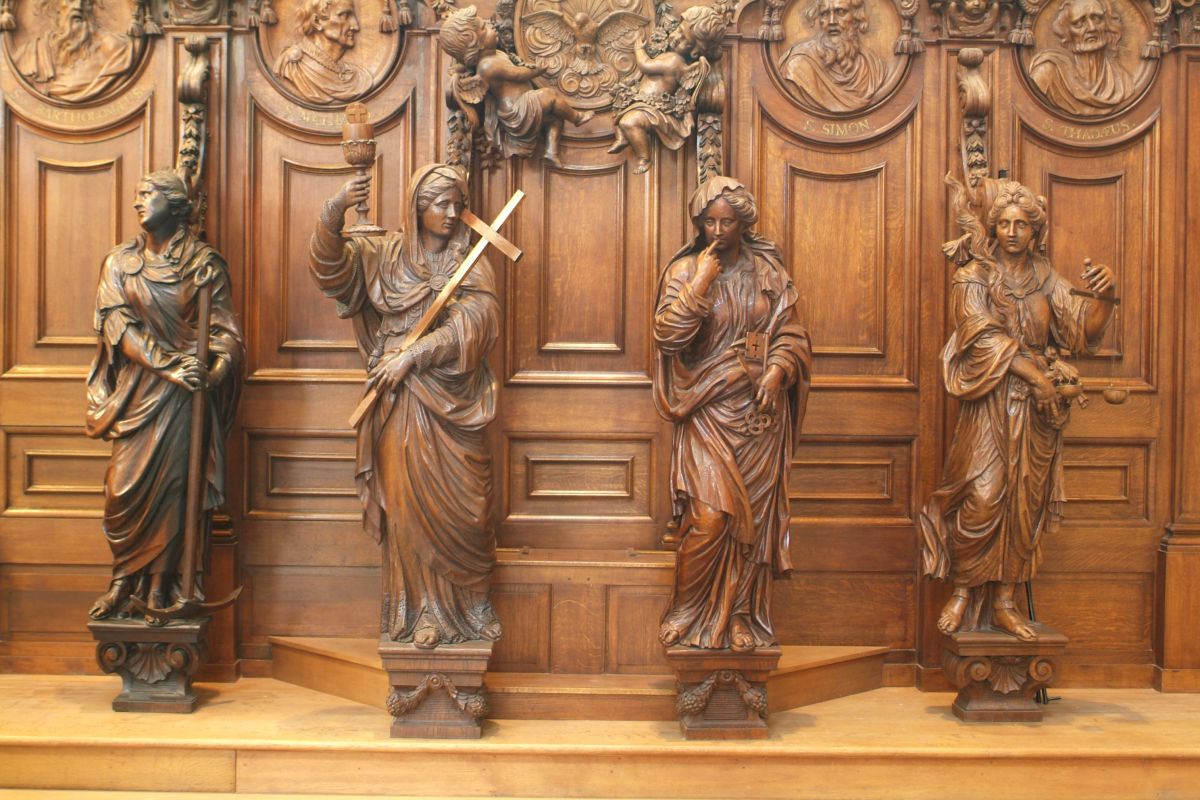
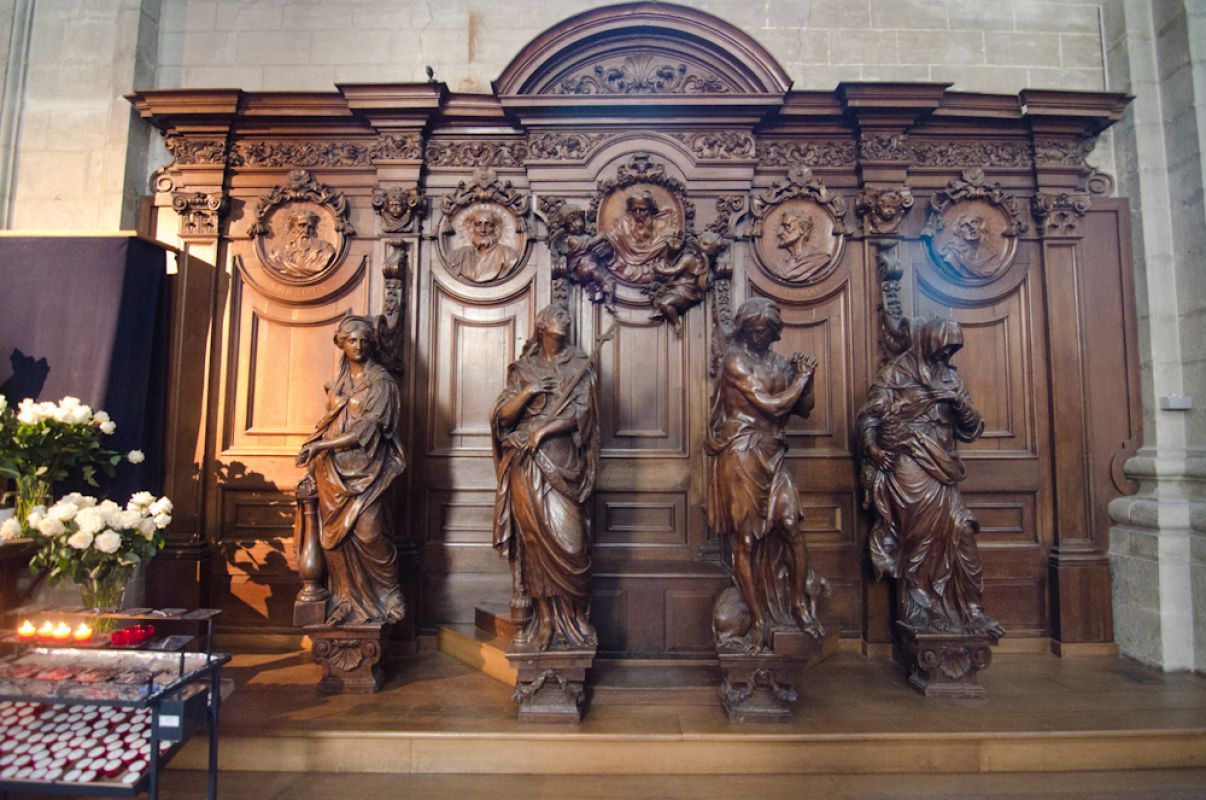
Willem Kerrickx made all the confessionals before 1718. The “open confessional” is an early form of today’s enclosed ones. Each has a large back wall with five medallions of the Twelve Apostles and the names of the Evangelists. They also include symbolic statues. In the rear right confessional, the Holy Spirit appears at the center, surrounded by the Divine Virtues: Hope, Religion, the Seal of Confession, and Justice.

Statue of Our Lady
This statue of Our Lady has been honored since time immemorial: it is a sitting crowned Madonna with baby Jesus on her lap and a dove in her hand. In the vernacular it is known as 'Our Lady under the tower' because it used to be in the centre of the previous church and the tower used to be between the choir and the nave. The statue was lost for years until they found it in 1925 hidden in the vaults. The priest at the time had it restored.
Choir stalls
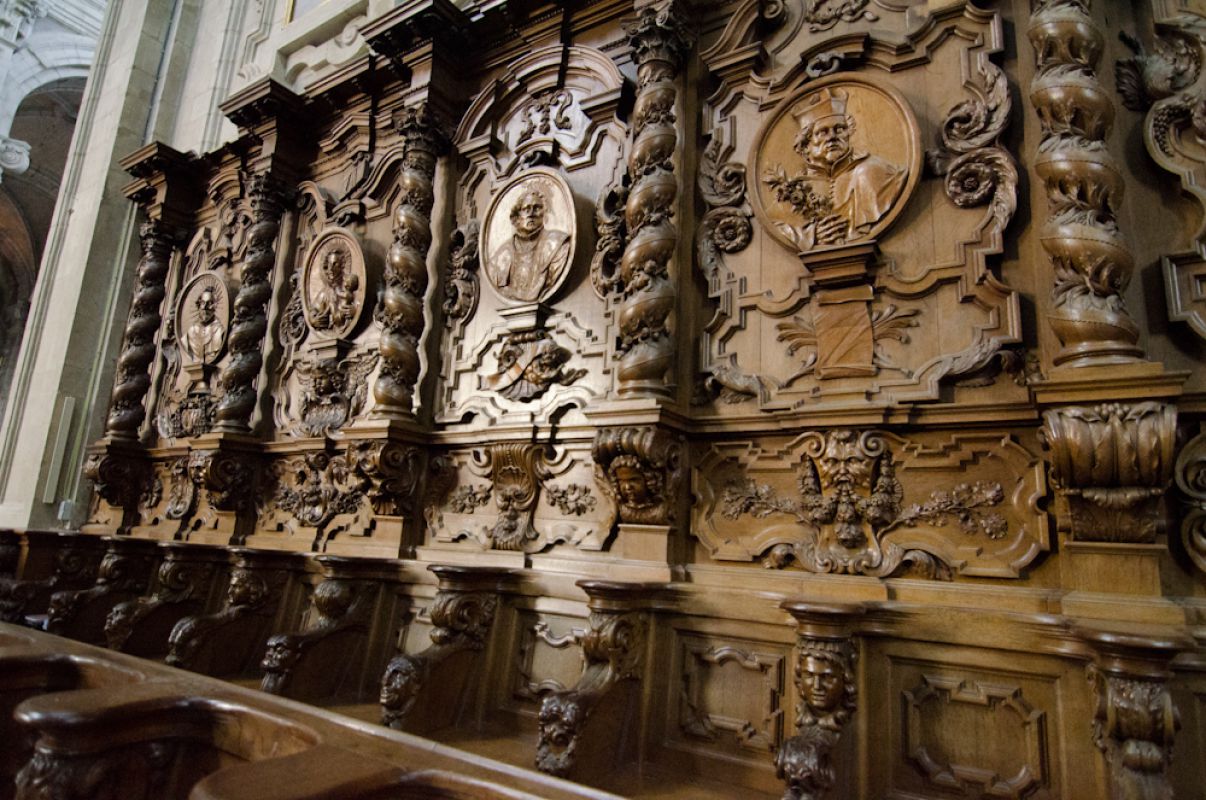
The late baroque choir stalls are richly adorned with columns, frames, leaves, cherubs, small heads, birds, animals, medallions, masks, and foliage. Saints and blessed members of the Norbertine order add to the decoration. Above the stalls hang four works by Richard of Orlet, ordered by Abbot Augustinus van Eeckhout: the Conversion of Saint Norbert, Norbert before Pope Honorius II, Norbert preaching in Antwerp, and his Triumph over Tankelm.
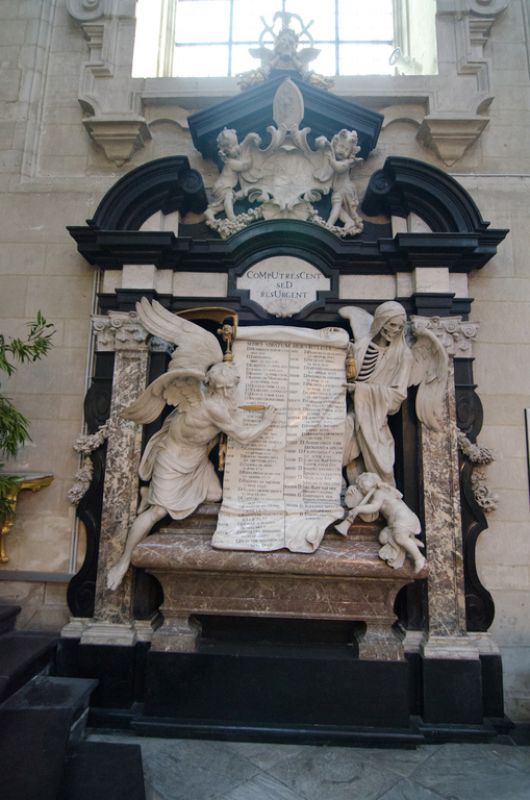
Tombstones
The abbey’s importance appears through the burials of nobles and abbots, halted by Joseph II. The Resurrection monument shows life’s impermanence, listing former abbots and featuring an angel of renewal. Ordered by Herman de Munck, it contrasts with the sober monument of the prince of Grimbergen, a benefactor whose tomb stayed empty after he died in battle.

Sacristy
The sacristy, accessed through a door left of the choir, was enlarged in 1763 by Abbot Jan Baptist Sophie, whose coat of arms appears above it. The largest in the country, it measures 15.5 m by 11 m and 6.8 m high. A fresco shows Saint Norbert ascending to heaven, welcomed by saints and angels bearing his attributes. The anonymous painter drew inspiration from Italian color and perspective.
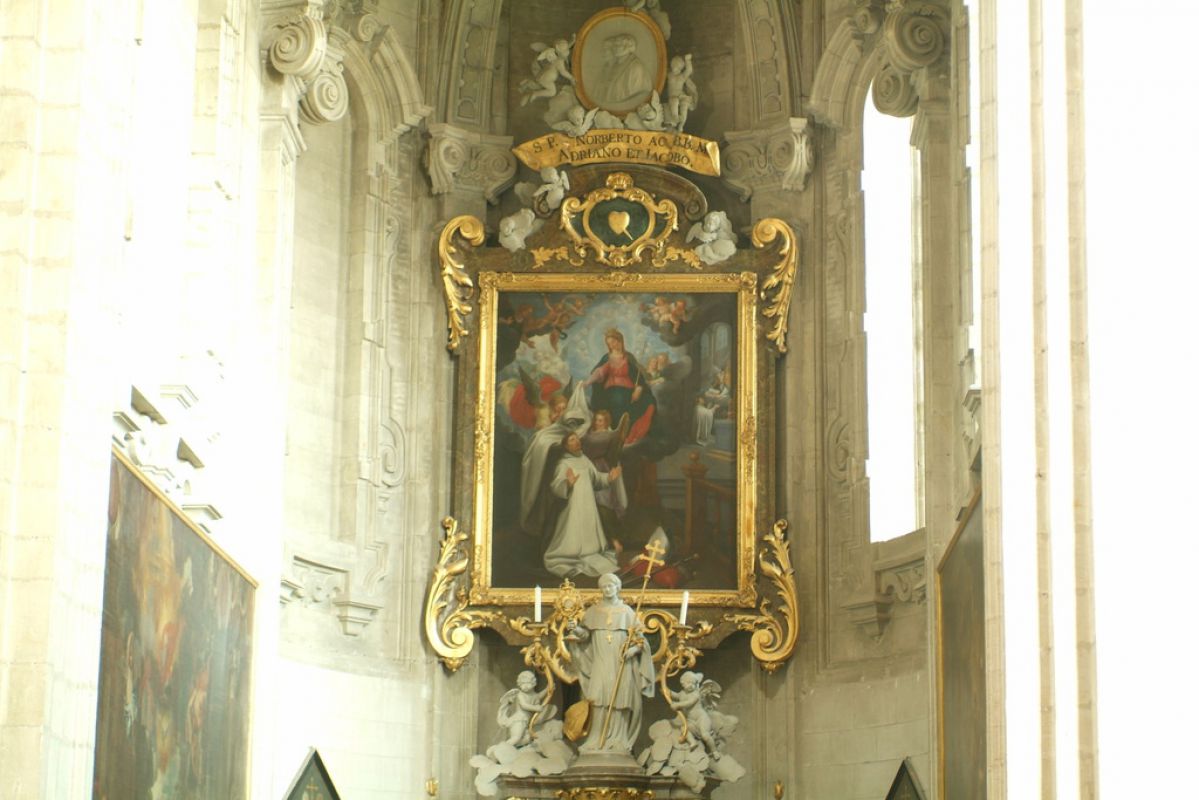
Norbert's altar
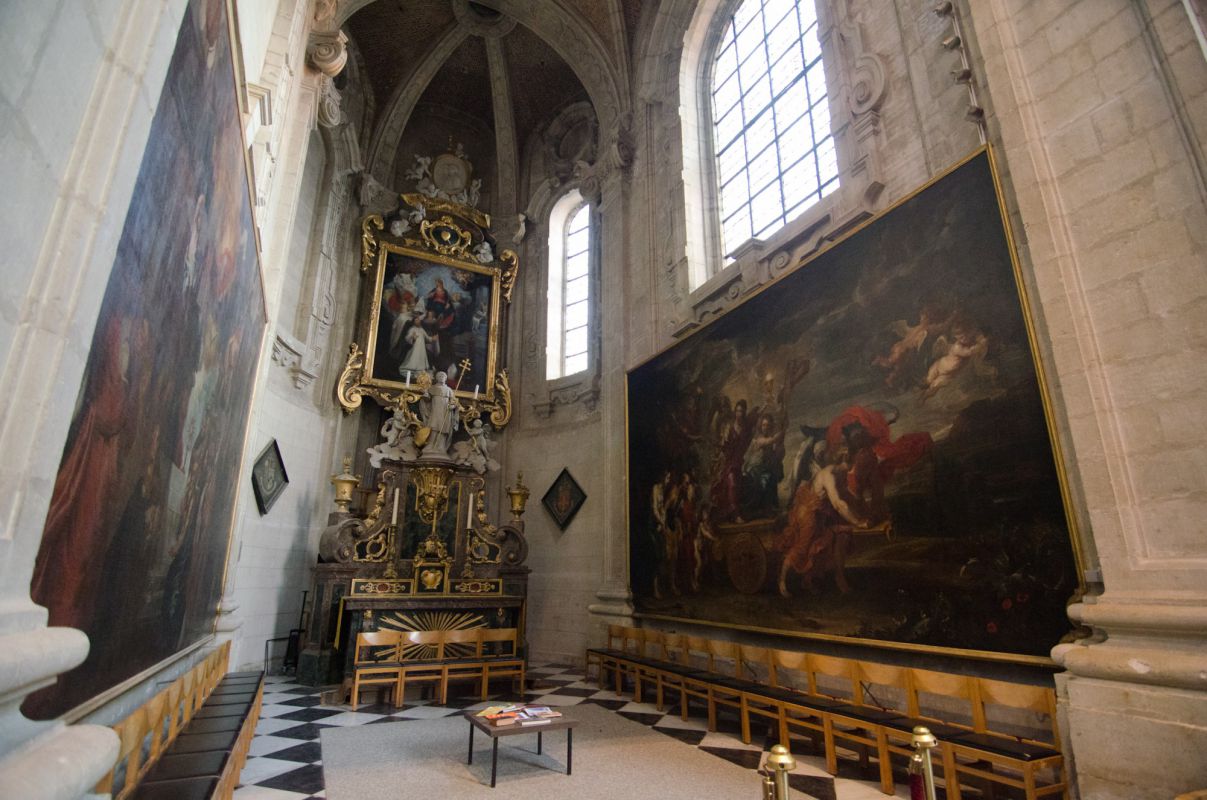
Before the 1993 fire, the church held fifteen Flemish paintings. Above Norbert’s altar hangs the oldest, showing him receiving the white plumage from Mary. Nearby is a rare copy of a Rubens: the Triumph of the Eucharist, with Faith on a chariot drawn by angels and followed by Science, Philosophy, Poetry and Nature. The scene affirms that Jesus is the Savior for all people and for all times.