Saint Martin
Kerkstraat
3640 Kessenich (Kinrooi)
Church | 1898 | Neogothic | Catholic Church


Map
Opening hours
01 January - 31 December
Mon 10.00 - 17.00
Tue 10.00 - 17.00
Wed 10.00 - 17.00
Thu 10.00 - 17.00
Fri 10.00 - 17.00
Sat 10.00 - 17.00
Sun 10.00 - 17.00
Limited access due to a glass ag partition.
Religious offices
Description
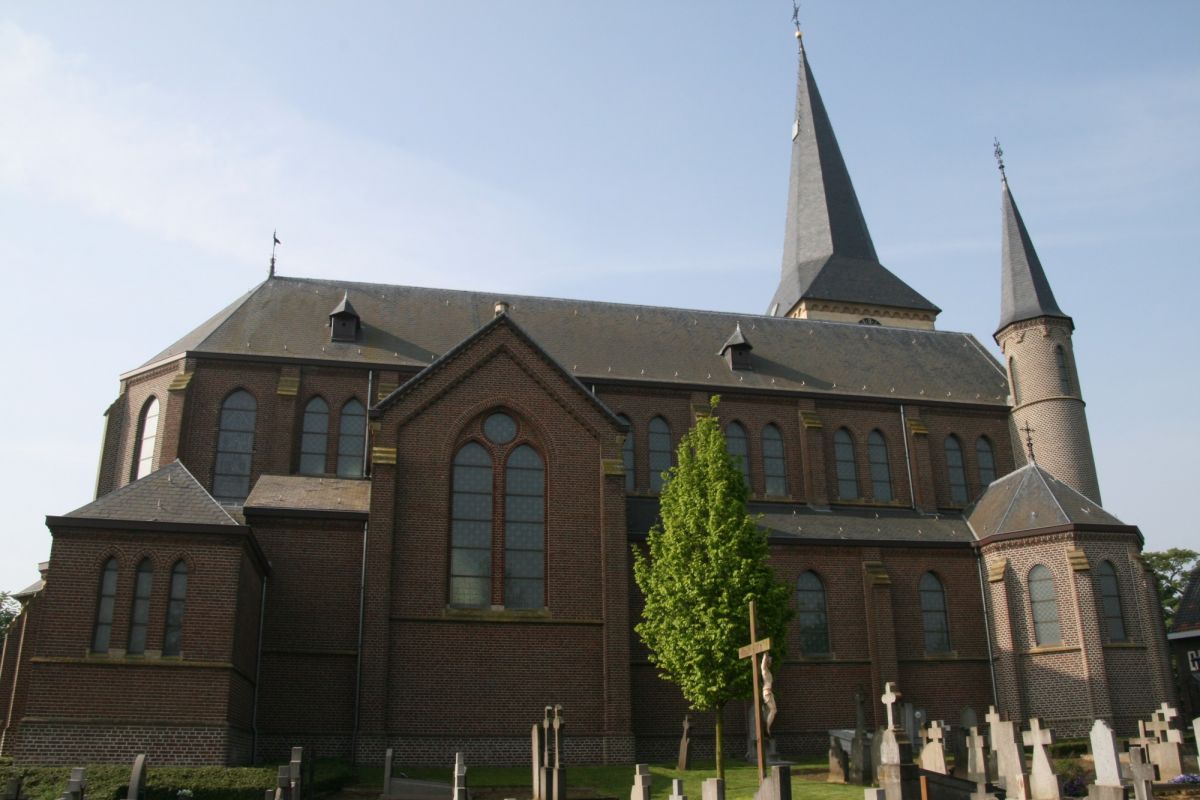
The architect Jos Tonnaer from the village of Thorn designed both the structural work as the interior of the church. The consistent application of this principle led to this church forming a very neat and harmonious whole carried out by capable and renowned artists and artisans. The decoration doesn’t just serve as a mere embellishment of the building, but wants to consciously contribute to the expansion of knowledge and the experience of a greater faith for the churchgoers.
KIKIRPA : Photo-library online

Photos


Remarkable elements
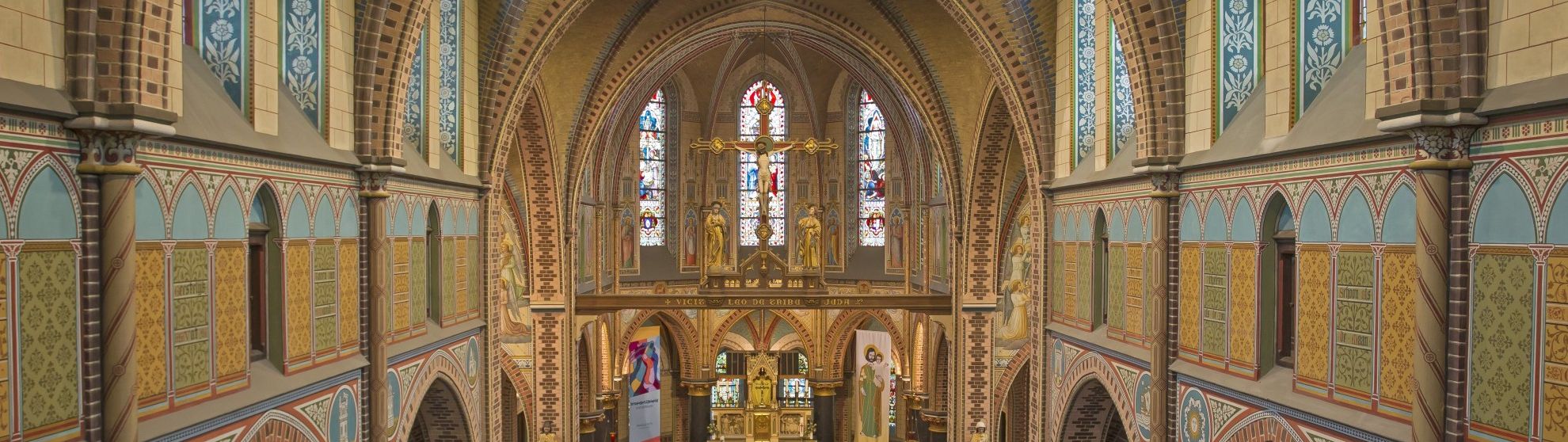
Neo-gothic interior
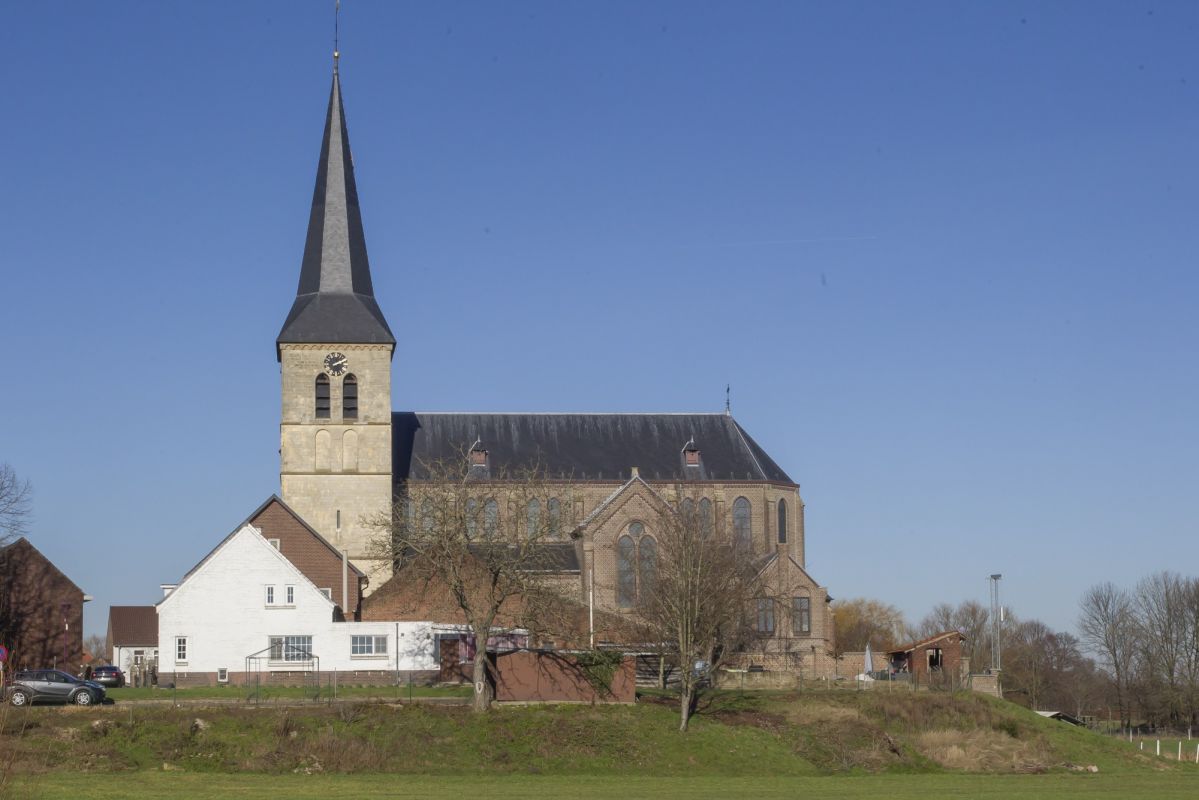
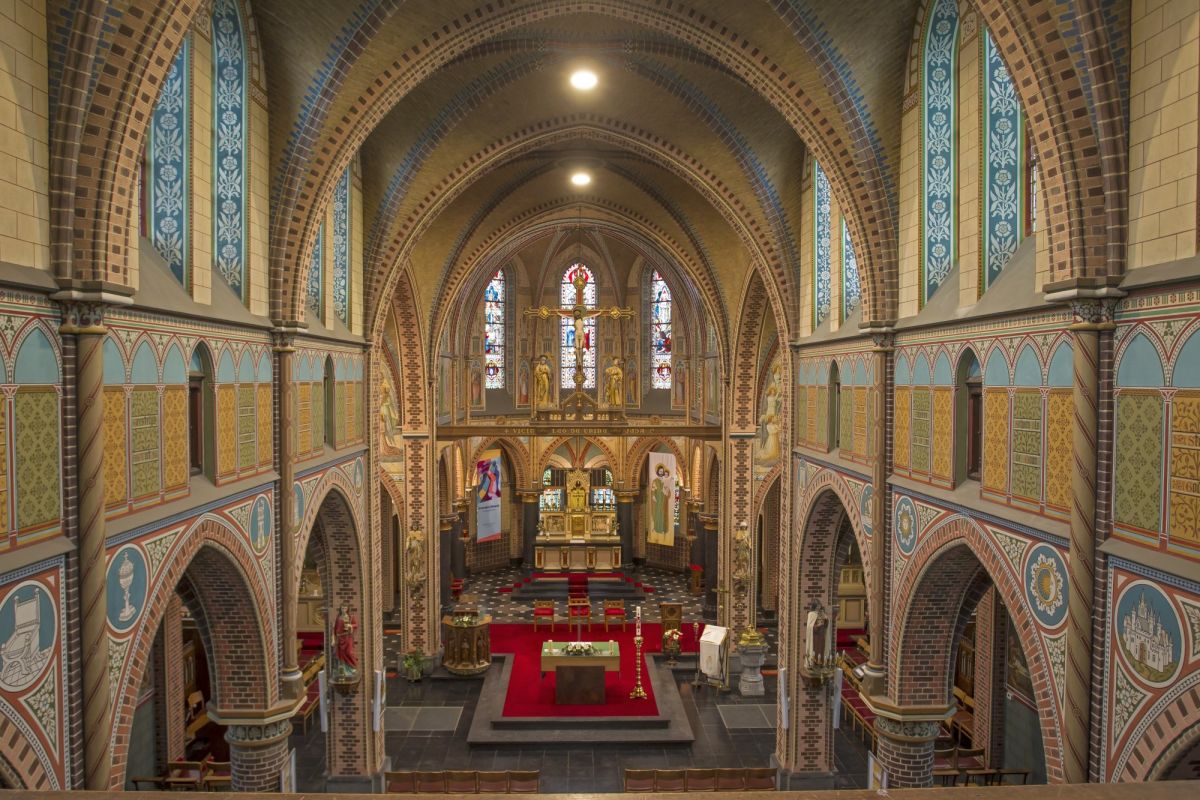
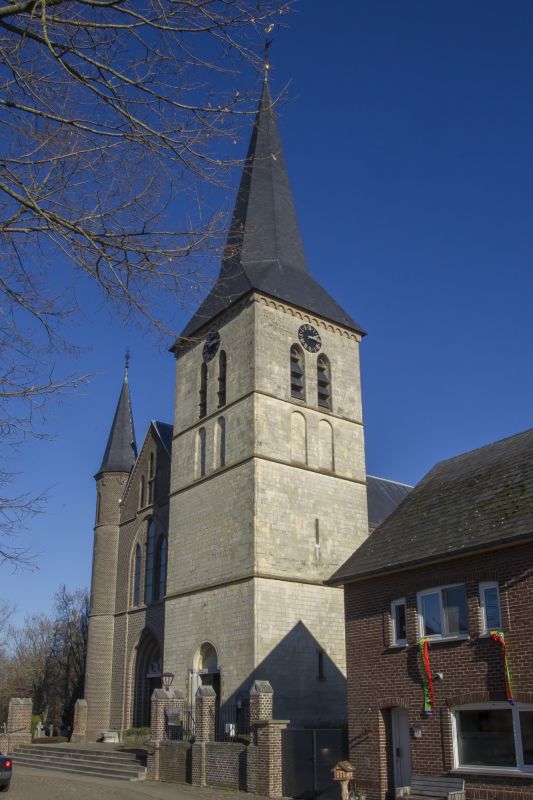
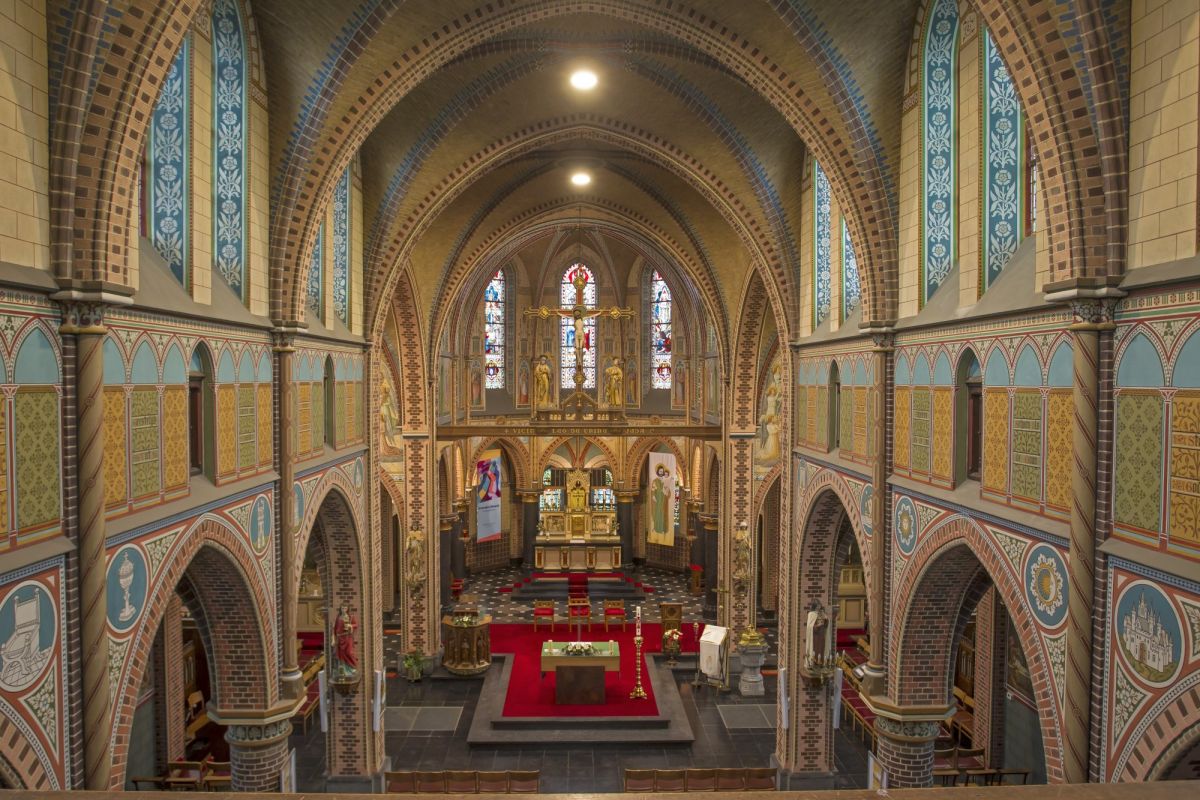
St. Martin’s Church in Kessenich was designed in 1898 by Jos Tonnaer, a student and colleague of Dutch master Pierre Cuypers. Following neo Gothic ideals, Tonnaer created both the structure and the full interior, ensuring a unified and harmonious design executed by skilled artists and craftsmen. This coherence and quality earned the church its nickname: “The pearl of the Meuse.”
Choir with stained glass windows
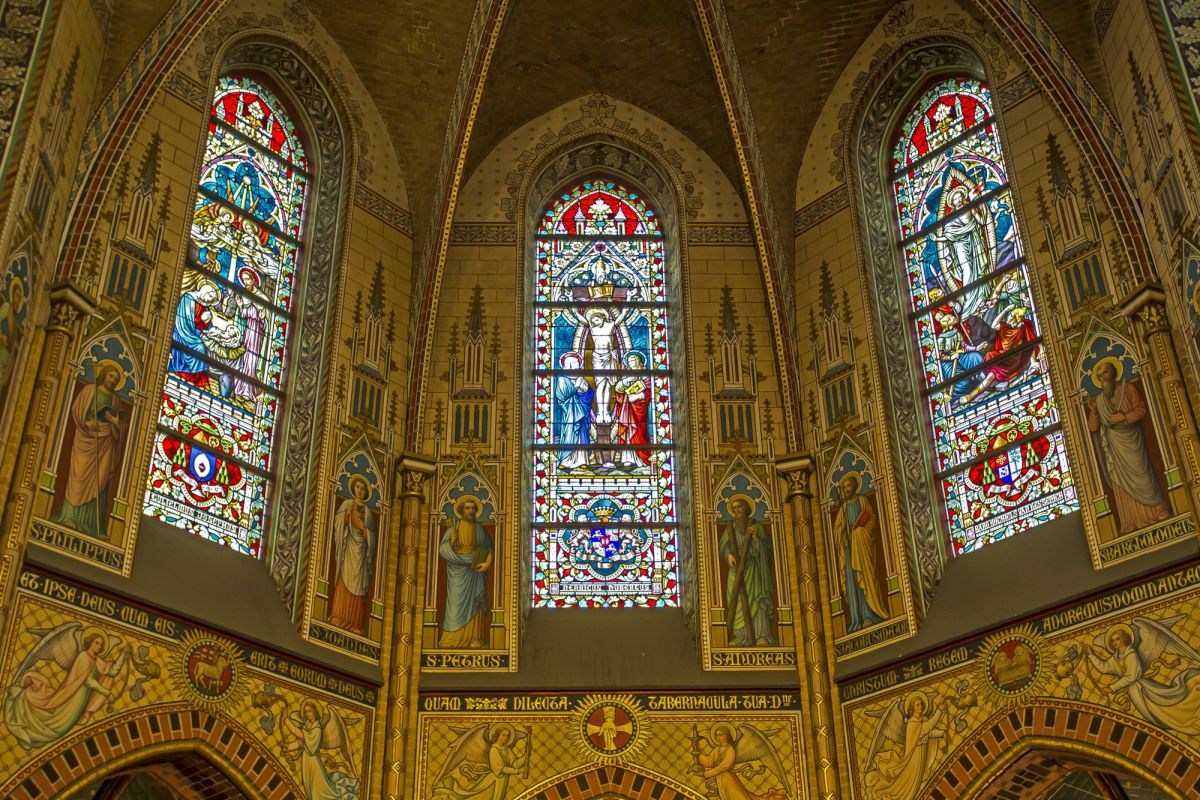
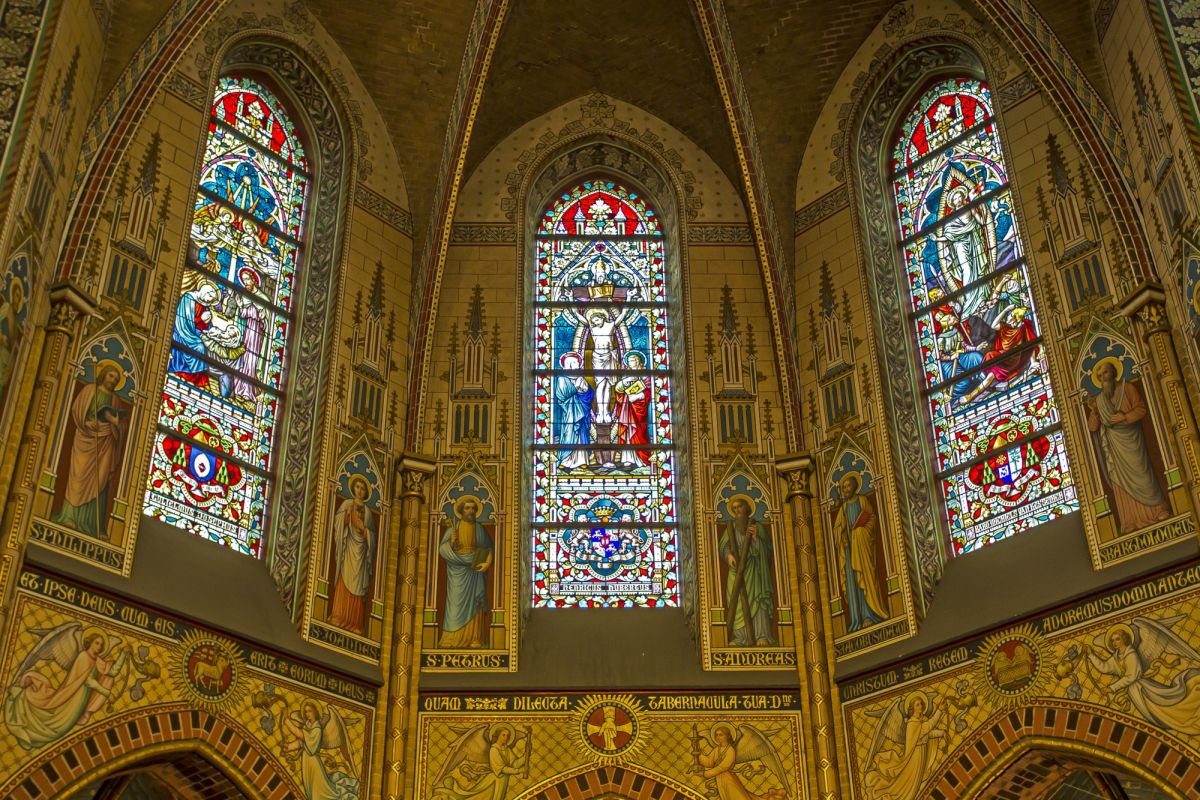
In the three-aisled church, one’s attention immediately goes to the beautiful and abundantly decorated polygonal choir. Six marble columns, topped with gilded capitals, support the vaulted ambulatory, which is a rare thing to see in a small local church.
The stained glass windows were created by studio Dobbelaere from the city of Bruges. The six small stained glass windows refer to the salvation history. The five large stained glass windows refer to passages from the life of Christ.
Paintings
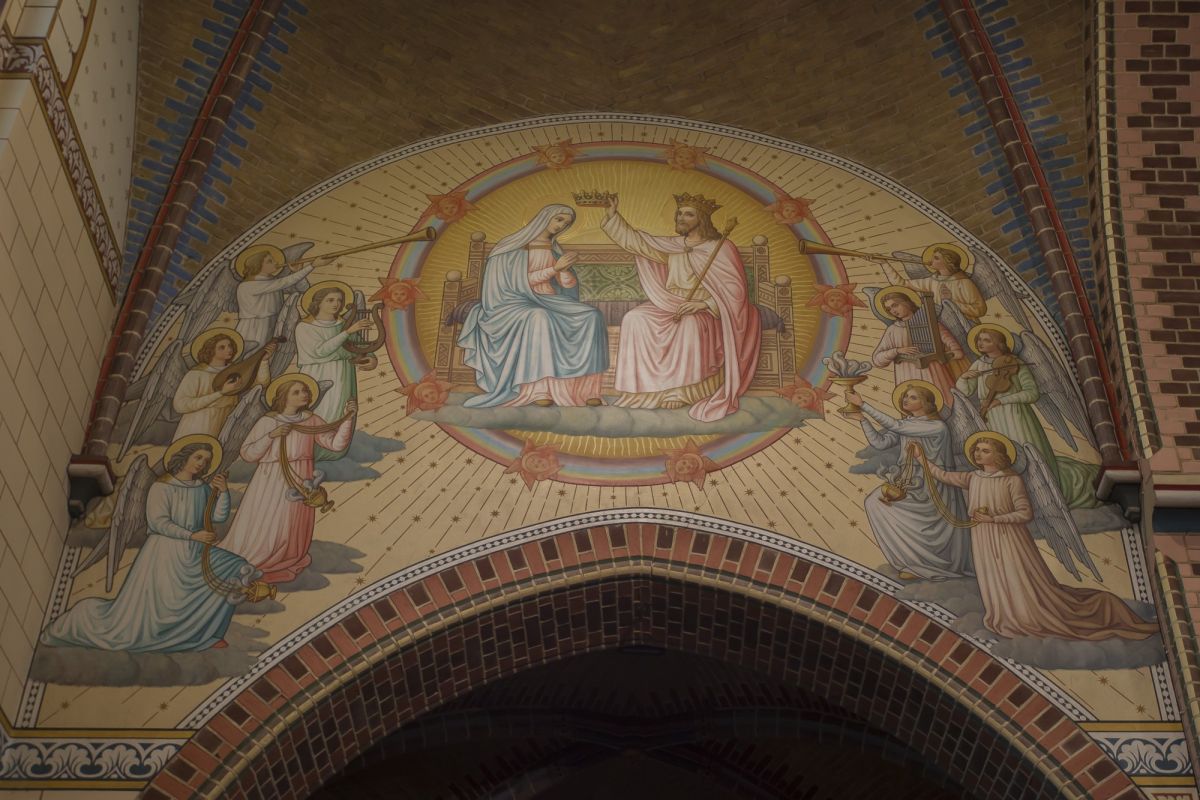
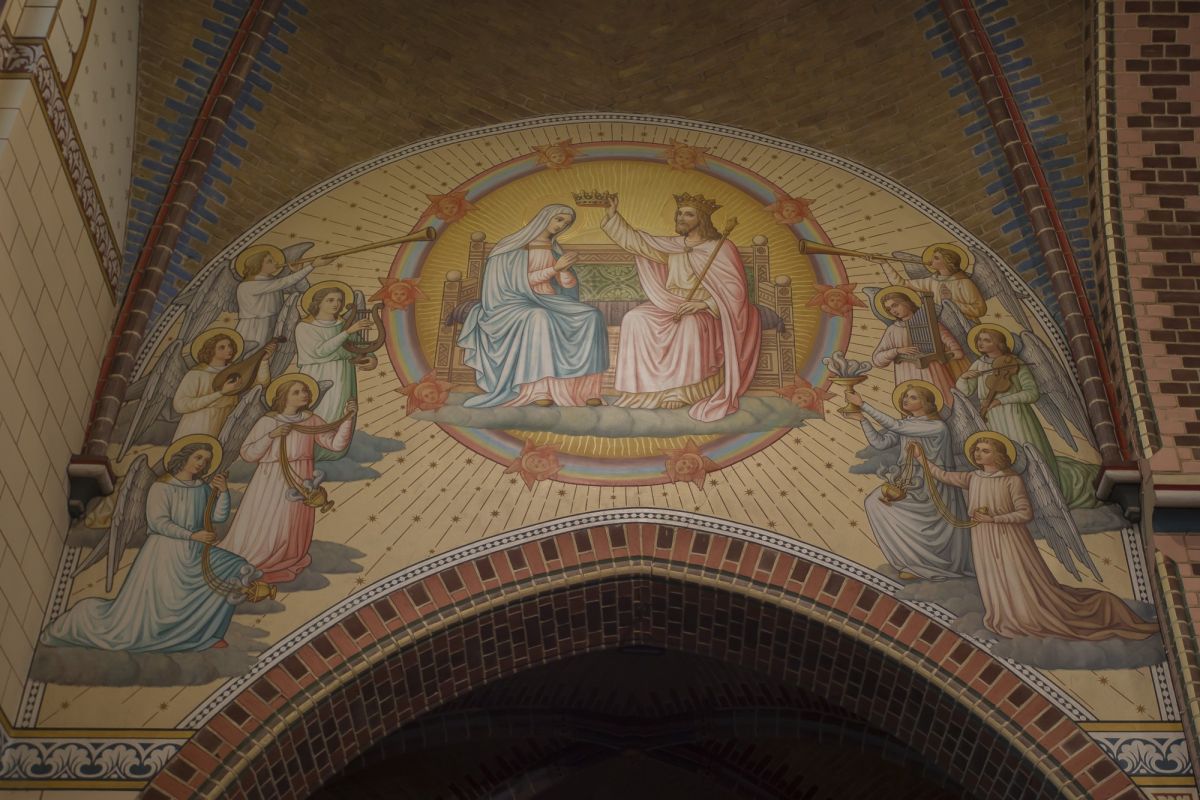
Neo Gothic paintings by the Leo Bressers studio of Ghent depict the twelve apostles and four Church Fathers under ornate baldachins above the choir. They also show the Coronation of Our Lady and the glorification of the Holy Family, each surrounded by music making angels on the transept’s eastern wall, as well as symbols from the Litany of Our Lady beneath the nave windows.

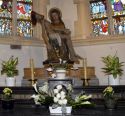
Gothic statue of Our Lady together with Saint Anne and the child Jesus - 16th century
The statue shows links to works from the Master of Elsloo’s studio, seen in the child Jesus’s posture and the hair, though its folds and figures are heavier and more compact. Research by the Royal Institute for Cultural Heritage in 2014 found that while the statue shares this visual language, it is not directly from the Elsloo studio. Similar stylistic traits appear across the region from the Lower Rhine to Maasland.

Tombstone Guido van Malsen and Johanna van Kessenich - 17th century
In the cemetery on the south side of St. Martin’s church, one can find a tombstone of Guido van Malsen and his wife Johanna van Kessenich. Guido van Malsen was the Seigneur of the villages of Broekhuizen, Kessenich, Borgitter and Bronshorn. He died in 1618. On the tombstone, one can still see the outline of the 8 ancestor tables dedicated to Guido van Malsen and the 8 ancestor tables belonging to his wife Johanna van Kessenich.
The tombstone was originally located in the old church of Kessenich.

The Mountain with burial chapel
‘The Mountain’ is a motte in Kessenich, once surrounded by a moat and still showing remains of a medieval keep. The tower, built with Meuse stones, was used until the late 17th century before falling into ruin. In 1825, the Michiels family leveled the top to build a crypt, and in 1899 Baron Hendrik Michiels added the current neo Gothic burial chapel.