Saint Martin
Onkerzelestraat
9500 Onkerzele (Geraardsbergen)
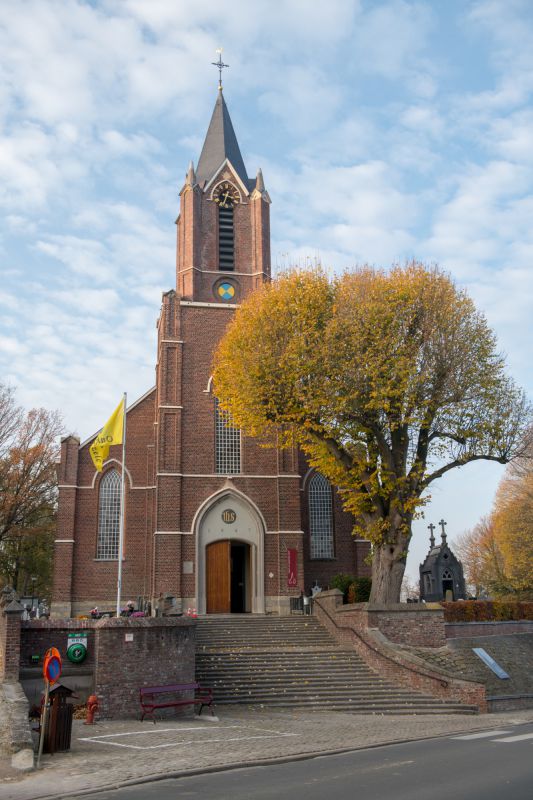
Church | 1847 | Neogothic | Catholic Church


Map
Opening hours
01 January - 31 December
Mon 10.00 - 17.00
Tue 10.00 - 17.00
Wed 10.00 - 17.00
Thu 10.00 - 17.00
Fri 10.00 - 17.00
Sat 10.00 - 17.00
Sun 10.00 - 17.00
Closed until the end 2027 for complete interior restoration and creation of a bicycle museum.
Religious offices
Description
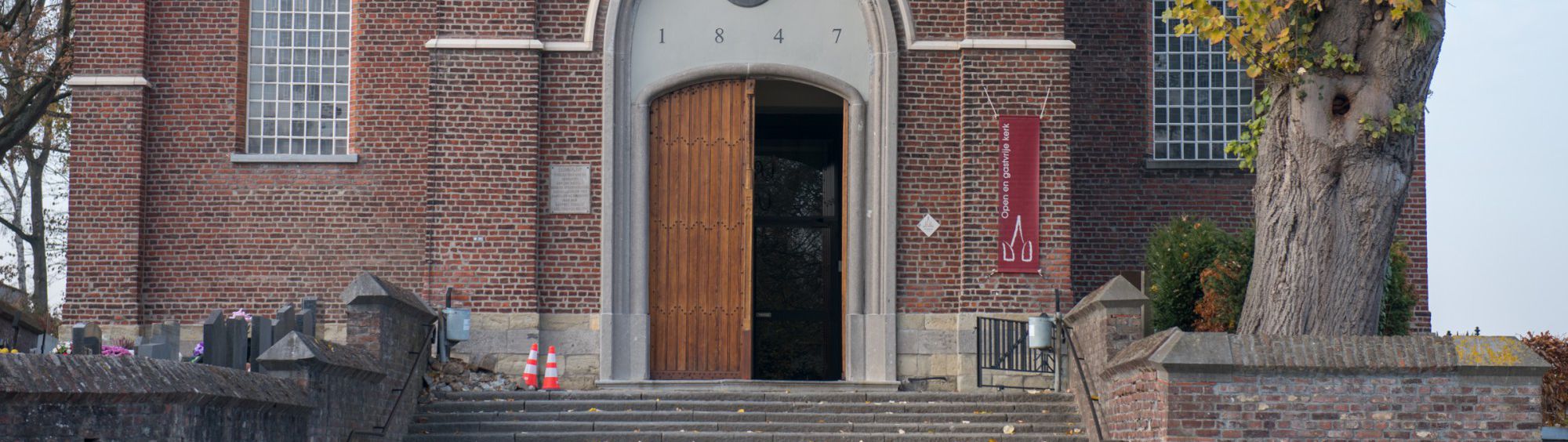
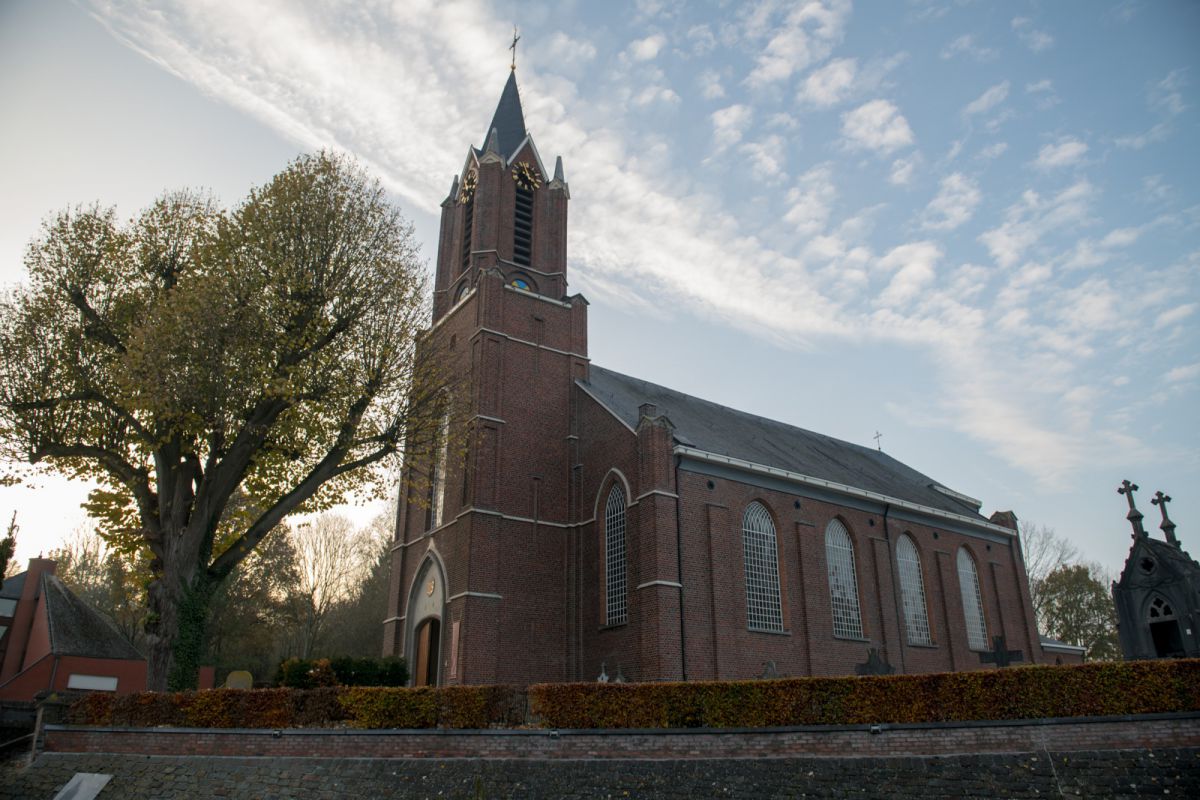
The first church of Onkerzele, mentioned in the 12th century, stood elsewhere, at the corner of Kampstraat and Onkerzelestraat, where a cave and chapel were later built. In 1776 its poor condition led to the decision to build a new church on the ridge, though the French Revolution delayed the project until 1846; construction finished in 1847.
The new neo Gothic church reused many materials from the old building and was consecrated on 4 July 1853. In 2006 stability issues and construction faults appeared, causing stucco to fall from the ceiling.
A thorough exterior restoration followed between 2013 and 2016.
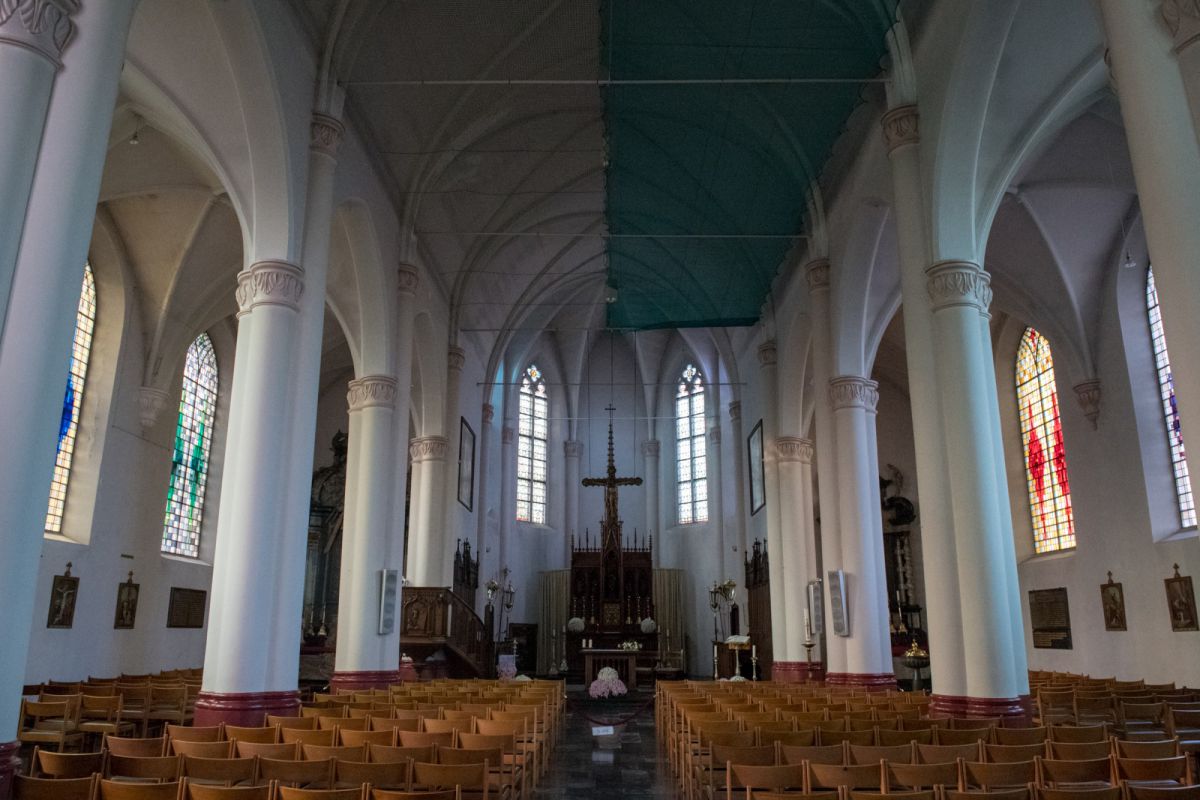
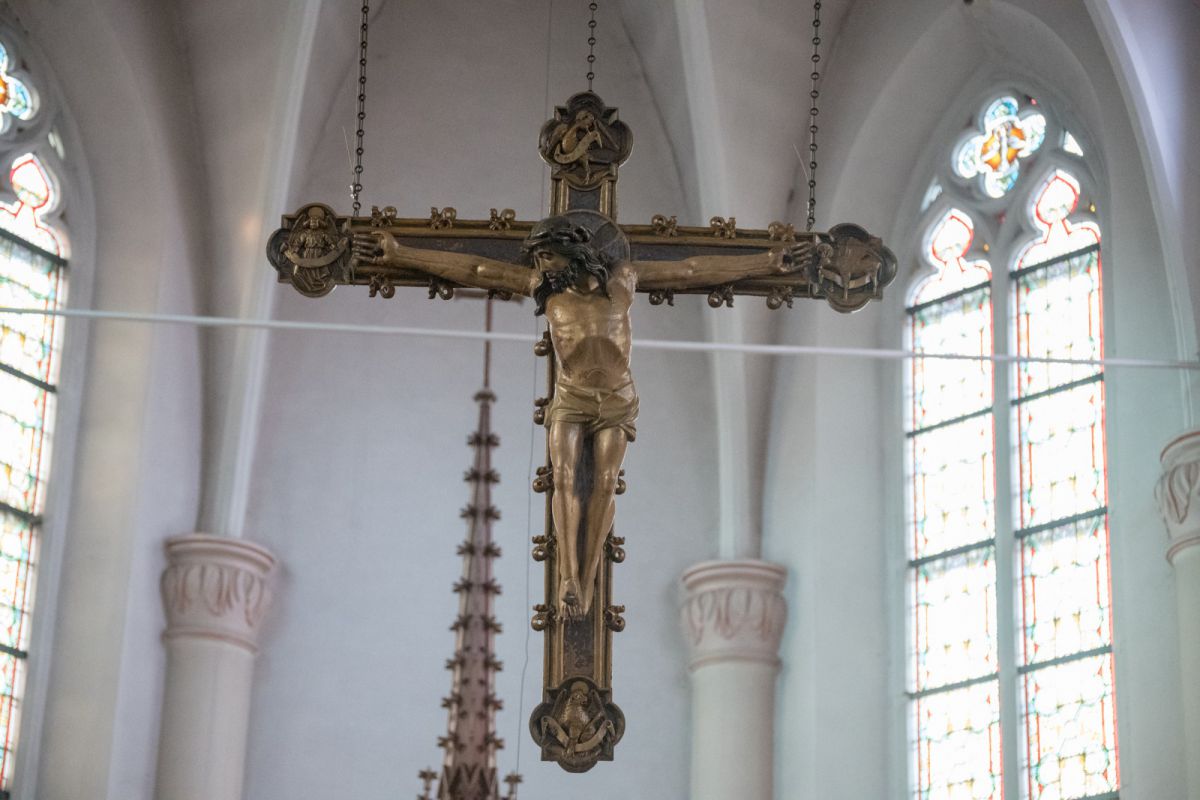
Today the church once again reveals its charm, preserving numerous interior elements from the earlier building, including two baroque side altars from 1694. The main highlights are a late Gothic triumphal cross from the 16th century and three statues of St Martin, the oldest from the 17th century.
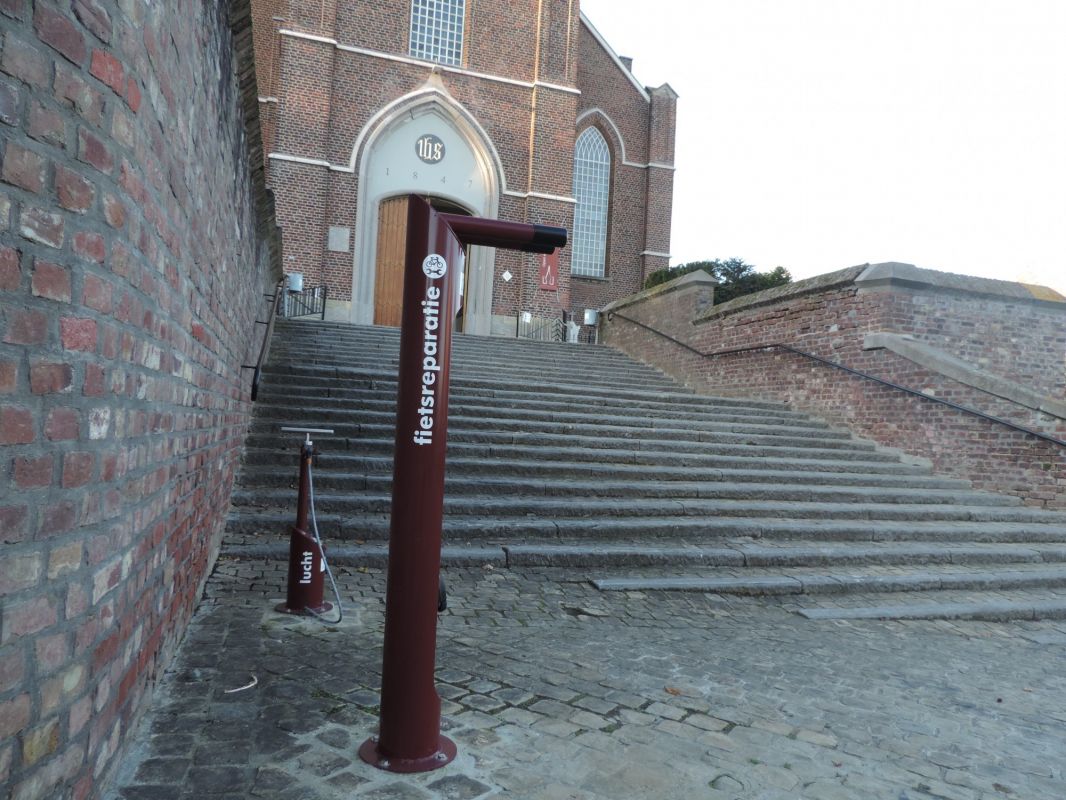
Interior restoration is ongoing, and part of the church will receive a new function as a “bike church”, the second in Belgium. Its location between the famous Wall of Geraardsbergen and the Bosberg, iconic climbs of the Tour of Flanders, makes the choice obvious. Soon visitors will enjoy a recreational cycling experience in and around the church.
KIKIRPA : Photo-library online
www.fietskerk.be
Photos




Media
Remarkable elements
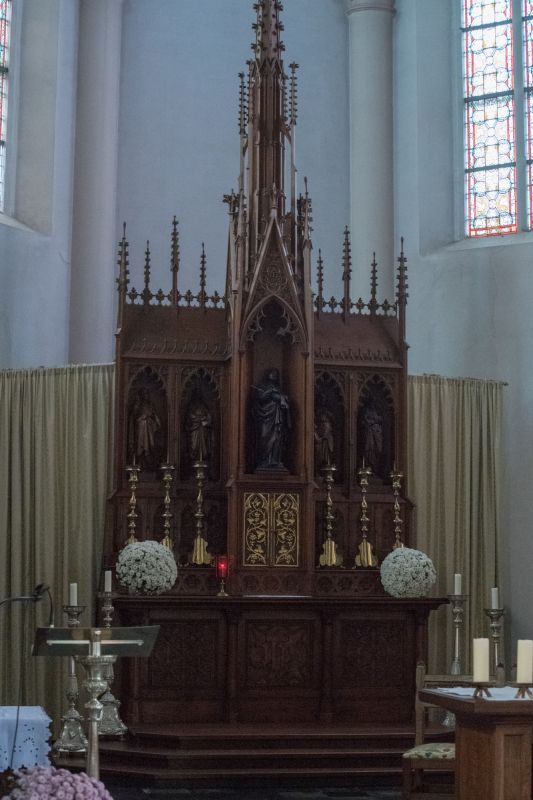
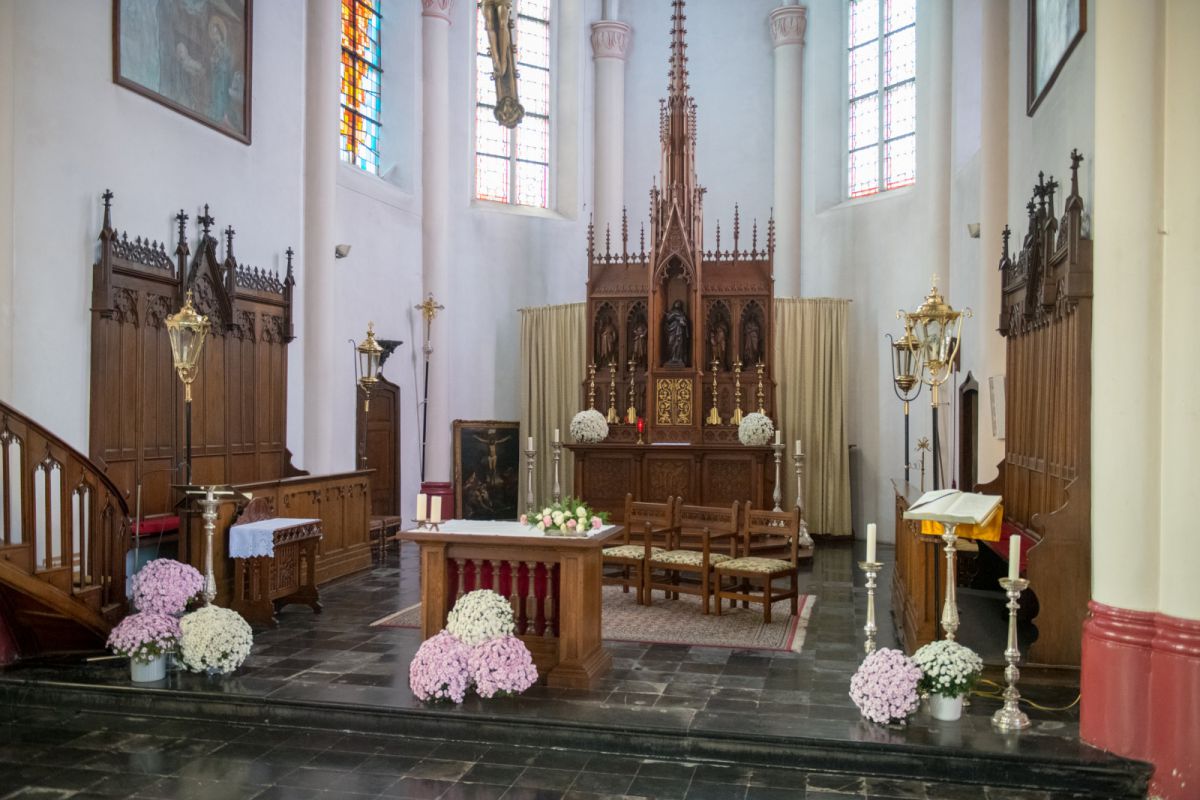
Main altar
The neo Gothic main altar by Frans Delestré was installed in 1878. A small 18 cm wooden Christ statue on a cross once stood on an orange polychrome pedestal, likely made by Gustave Merckaert around 1900 after a 15th century model. The pedestal and cross resurfaced in 2009–2010; the statue is still missing. The center now features a pre 1700 wooden Our Lady of Sorrows flanked by the four evangelists.
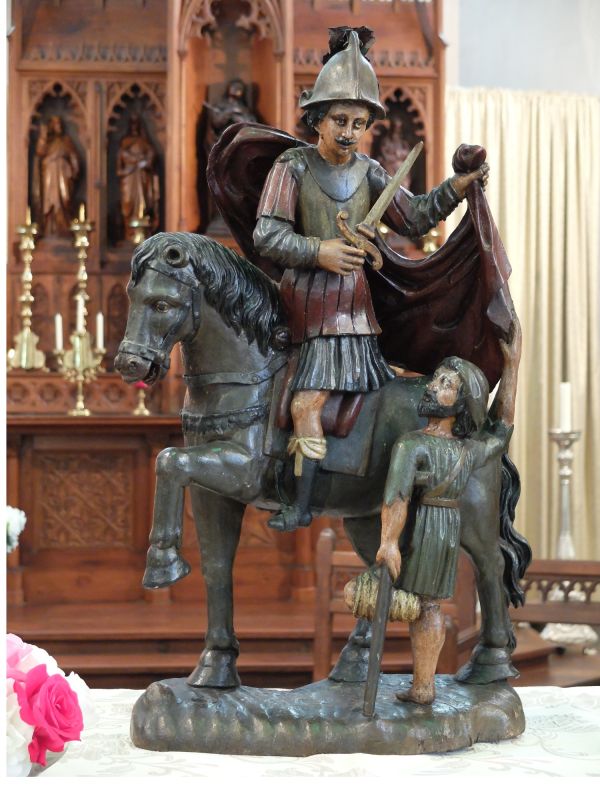
Three statues of Saint Martin
The oldest polychrome wooden equestrian statue of Saint Martin (85 cm) dates from 1621, with some iron parts such as the helmet, now on the pulpit. A large polychrome wooden statue was added in 1857 against the right wall. A smaller 47 cm equestrian statue from the mid 19th century, also with iron elements, now stands above the entrance of the additional sacristy.

Jesus on the cross
From the old church, a single beautiful gothic polychromed wooden crucifix from the 16th century was preserved. This crucifix is decorated with curly kale leaves. The four arms end in a quatrefoil, on which the symbols of the evangelists are depicted. This valuable work of art now hangs above the current altar.
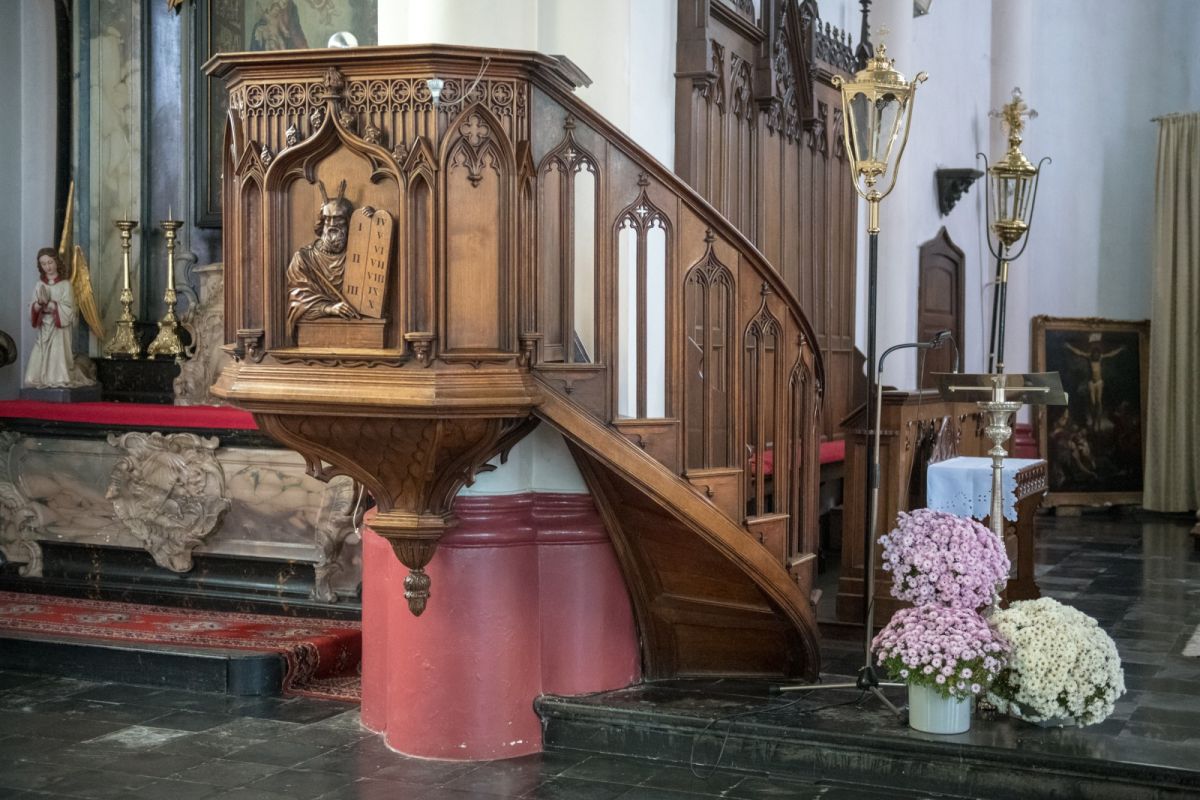
Pulpit
The pulpit from 1740, from the old church, was not transferred to the current church. In 1857, a new pulpit was purchased. This pulpit is by the hand of carpenter Leothier (from the city of Geraardsbergen).
This pulpit had two staircases and a sounding board. On the shell of the pulpit, one can see a representation of Moses with the Tablets of the Law of Sinai (the two stone tablets on which the 10 commandments were written.)

Organ
The neo Gothic organ was built in 1854 by Leonard Lovaert of Ghent. Its front pipes were restored in 1974 by Ghislain Potvlieghe, and full restoration began in 1994 under Studio Dierik Potvlieghe. The organ was solemnly dedicated on 8 September 1996, when the new clocks Mary and Thérèse were also blessed. Protected since 1974, it is noted for its wooden draw stops with copper knobs and its beautiful cornet sound.

Bells
The large Saint Martin bell (1,100 kg) was acquired in 1861. Under pastor Alain Babylon, two smaller bells were added on 8 September 1996, cast earlier that year in Asten. Mary’s 250 kg bell, decorated with acanthus leaves, refers to the local Brotherhood of Our Lady of Seven Sorrows. Saint Thérèse’s 350 kg bell shows playing children, evoking Saint Catherine’s College and the nearby KSA group.