Saint Martin
Berglaan z/n
3600 Genk
Church | 1952 | Modern | Catholic Church


Map
Opening hours
01 June - 30 September
Mon 14.00 - 17.00
Tue 14.00 - 17.00
Wed 14.00 - 17.00
Thu 14.00 - 17.00
Fri 14.00 - 17.00
Sat 14.00 - 17.00
Sun 14.00 - 17.00
Guided tour
On request.
Religious offices
Description
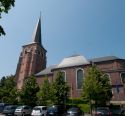
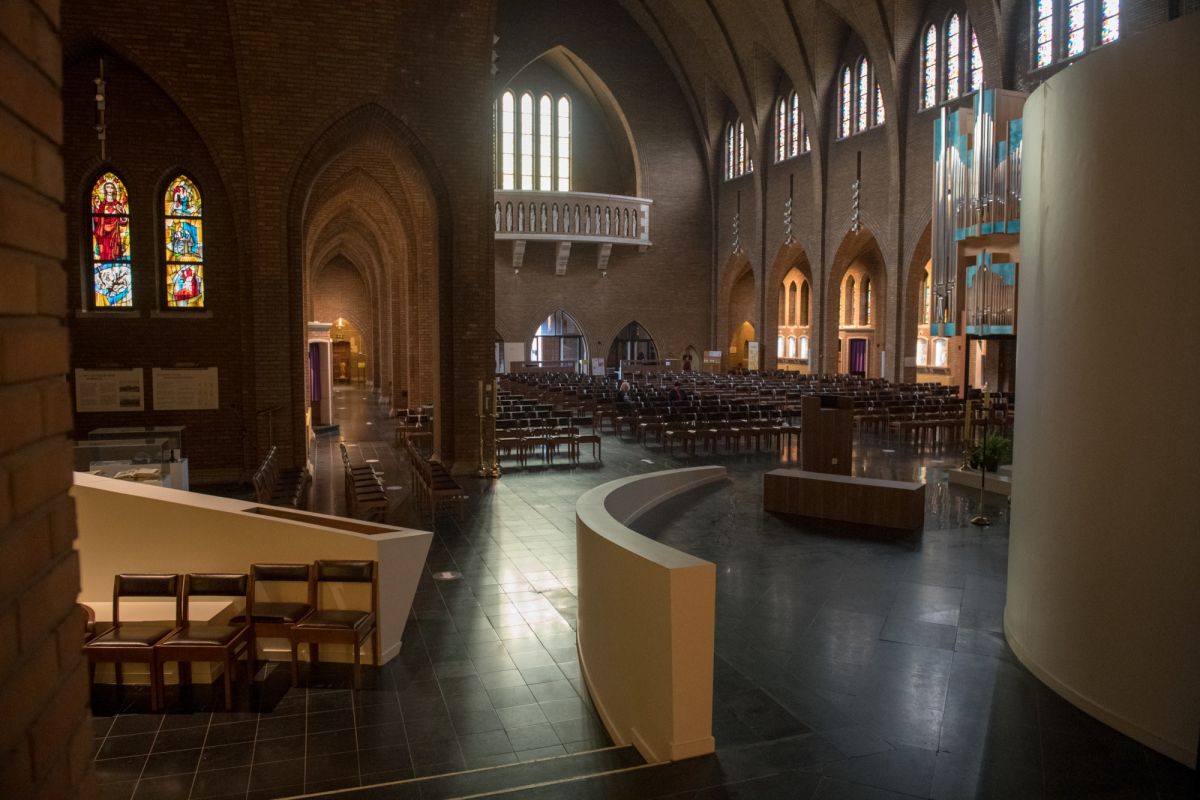
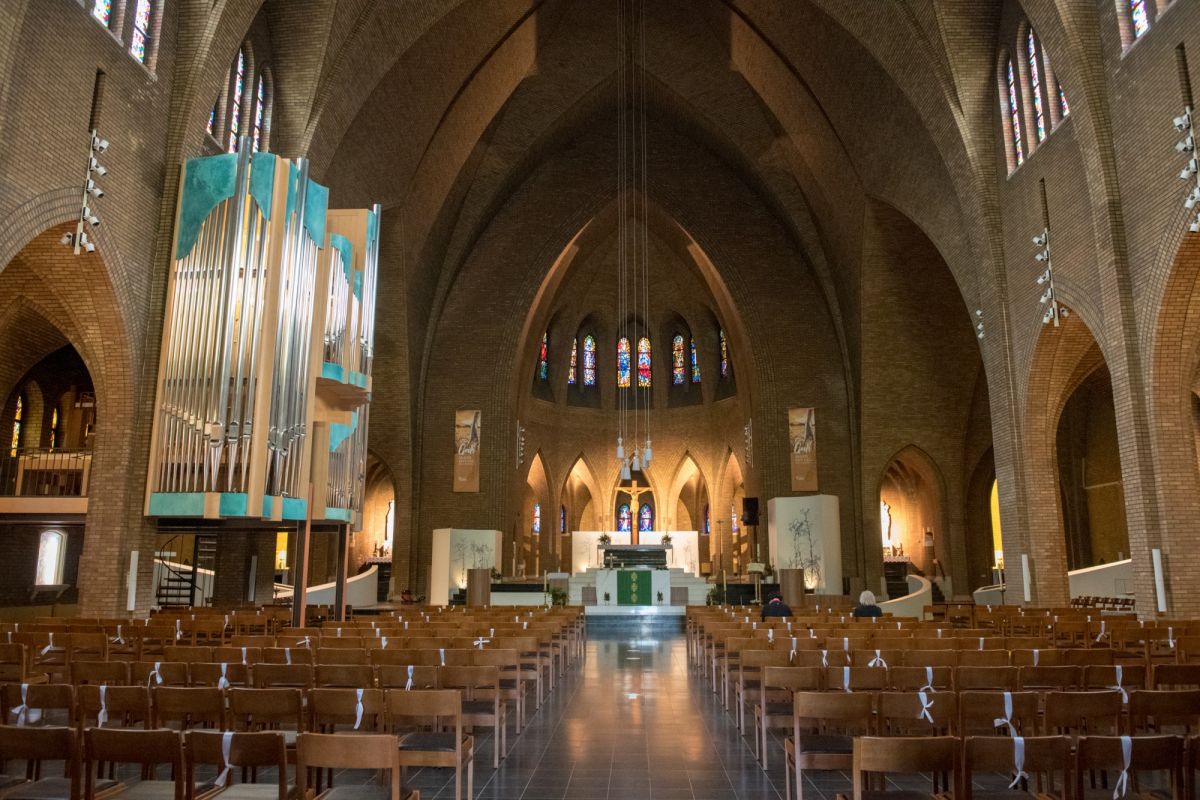
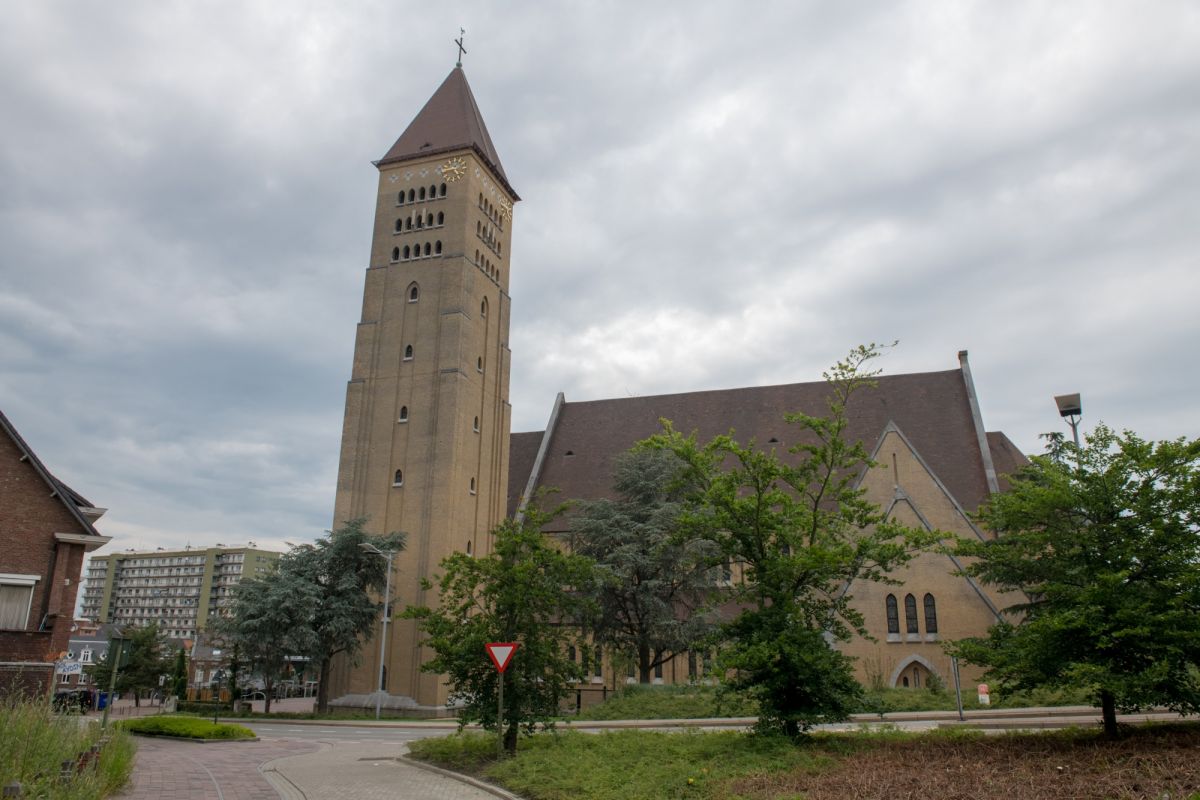
In terms of architectural style, the church combines three historical styles: Roman, Gothic and Modern style, but the whole is mostly to be called Neo-Gothic. Both the interior and exterior walls have been erected out of yellow sanded brick. The roof of the church and the spire were covered in red roof tiles coming from Pottelberg.
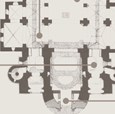
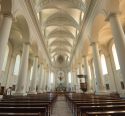
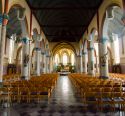
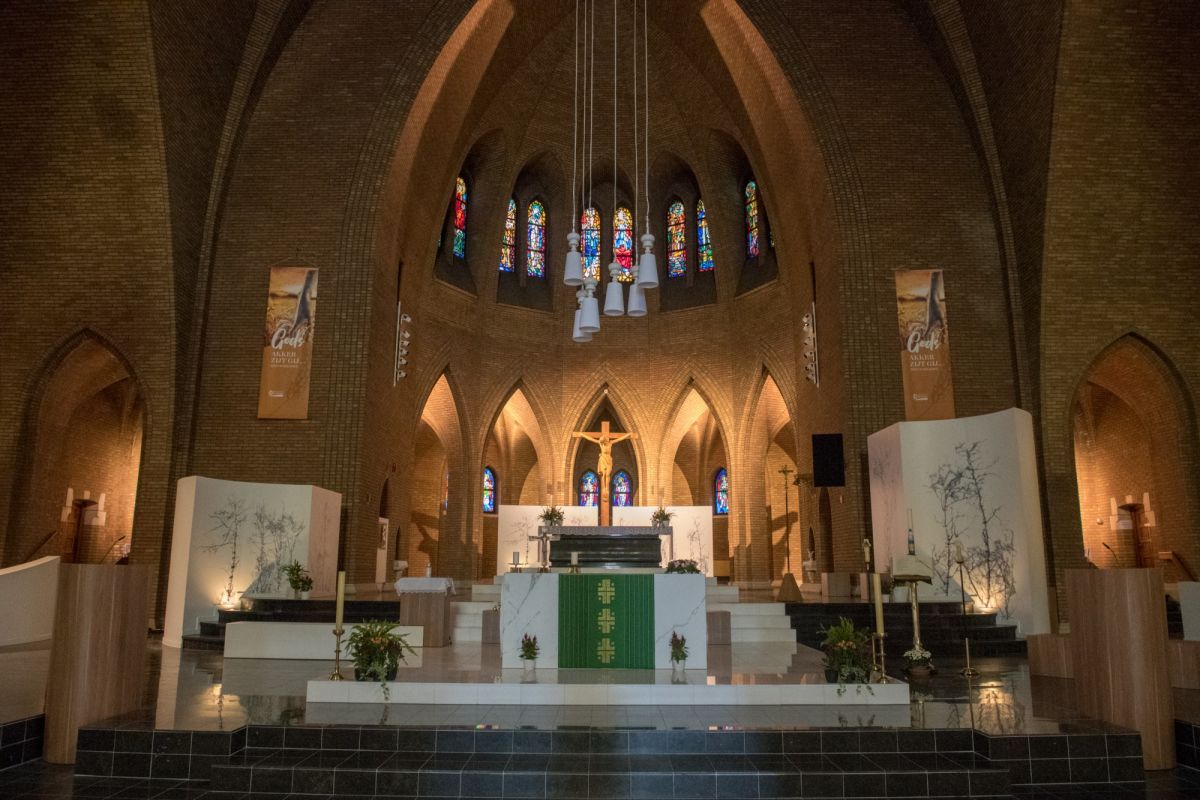
The church is made out of an artful brickwork of arches and vaults. The central nave has two side aisles 40m long and 26m wide. The total length of the church adds up to 60m and the height is 27m for the central nave. The flooring is made of matte bluestone floor tiles.
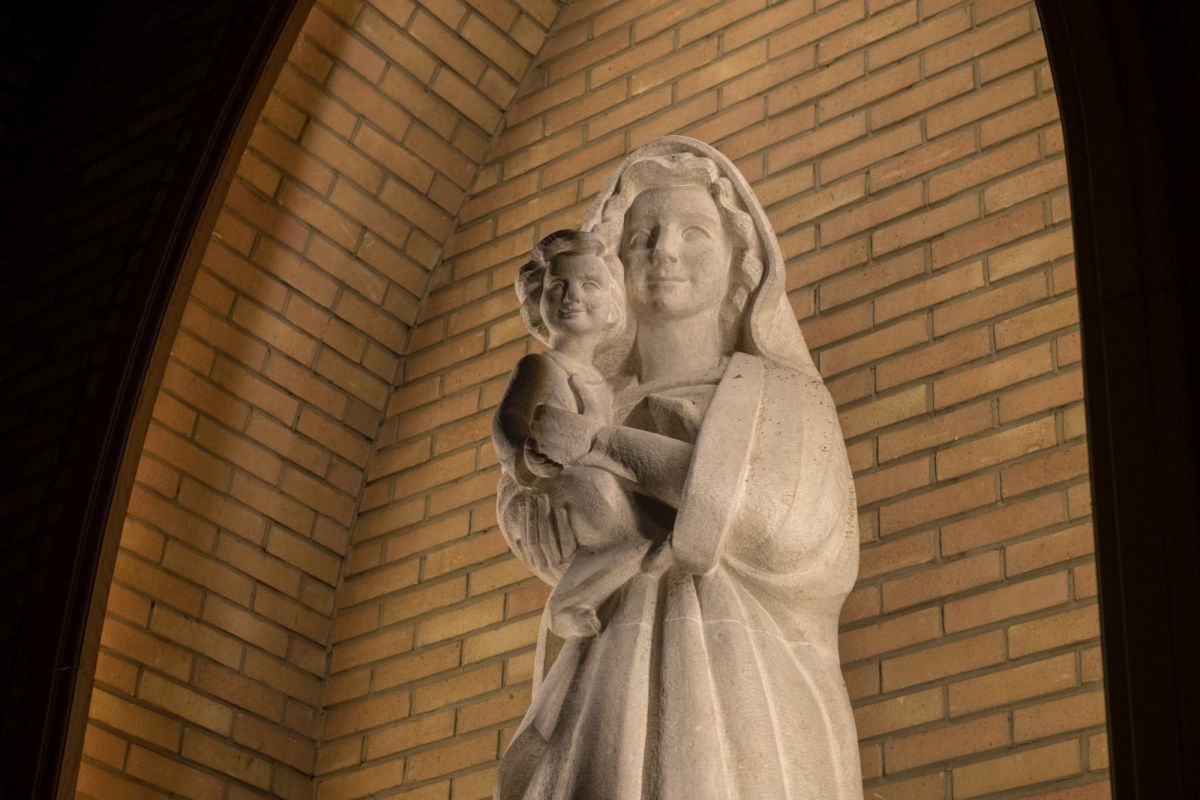
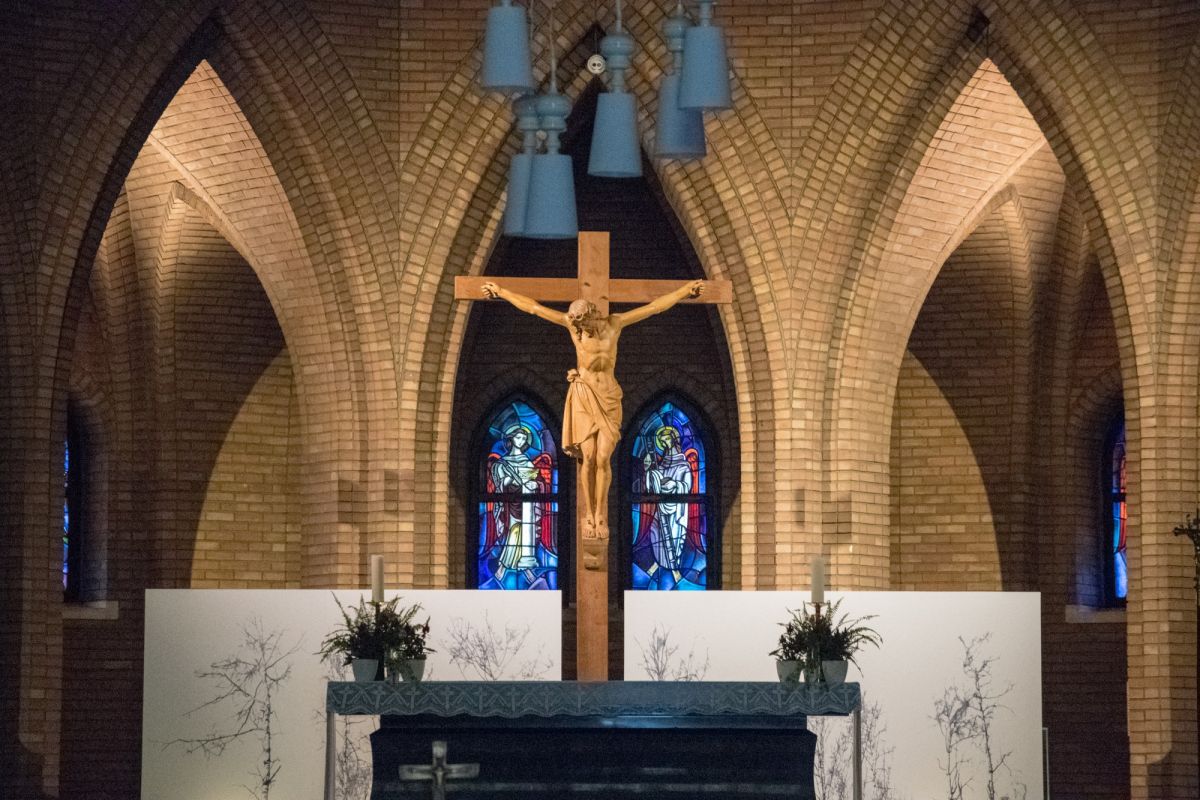
In both transepts, one can find a side altar: to the left, above the altar one can see a smiling statue of Mary with child, and to the right, there’s a statue of the Good Shepherd. At the start of the processional corridor, one can see on both sides an even smaller altar: to the left, with a statue of the Holy Barbara, and to the right with a statue of Saint Martin.
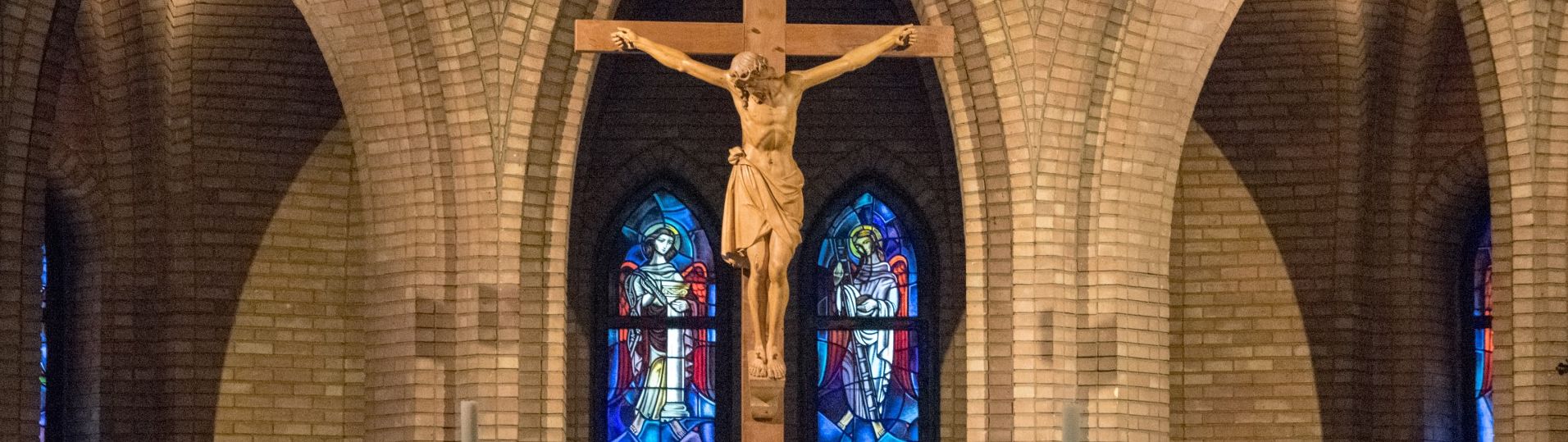
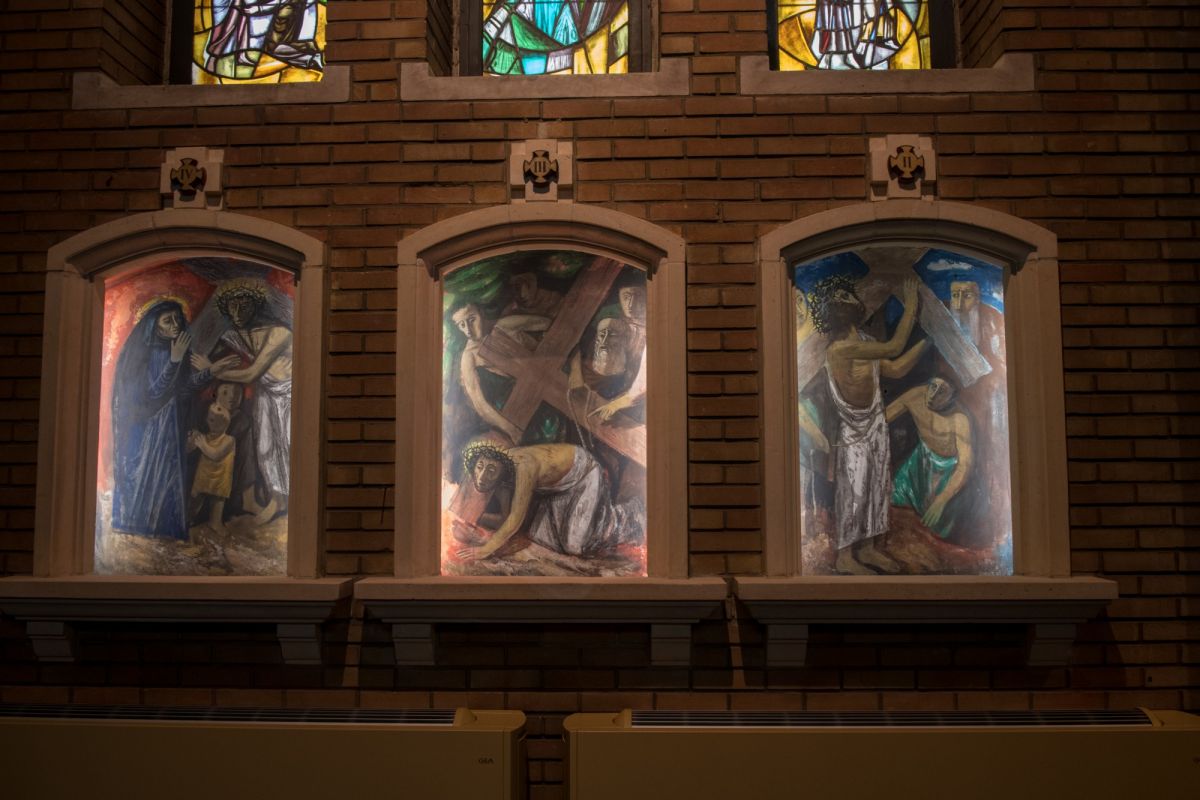
The Apostle bench, consisting of 15 statues, is a work of art by Raf Mailleux. Also, the way of the cross is remarkable: the stations were painted on the wall by the hand of the painter Charles Eijck.
KIKIRPA : photo-library online
Photos

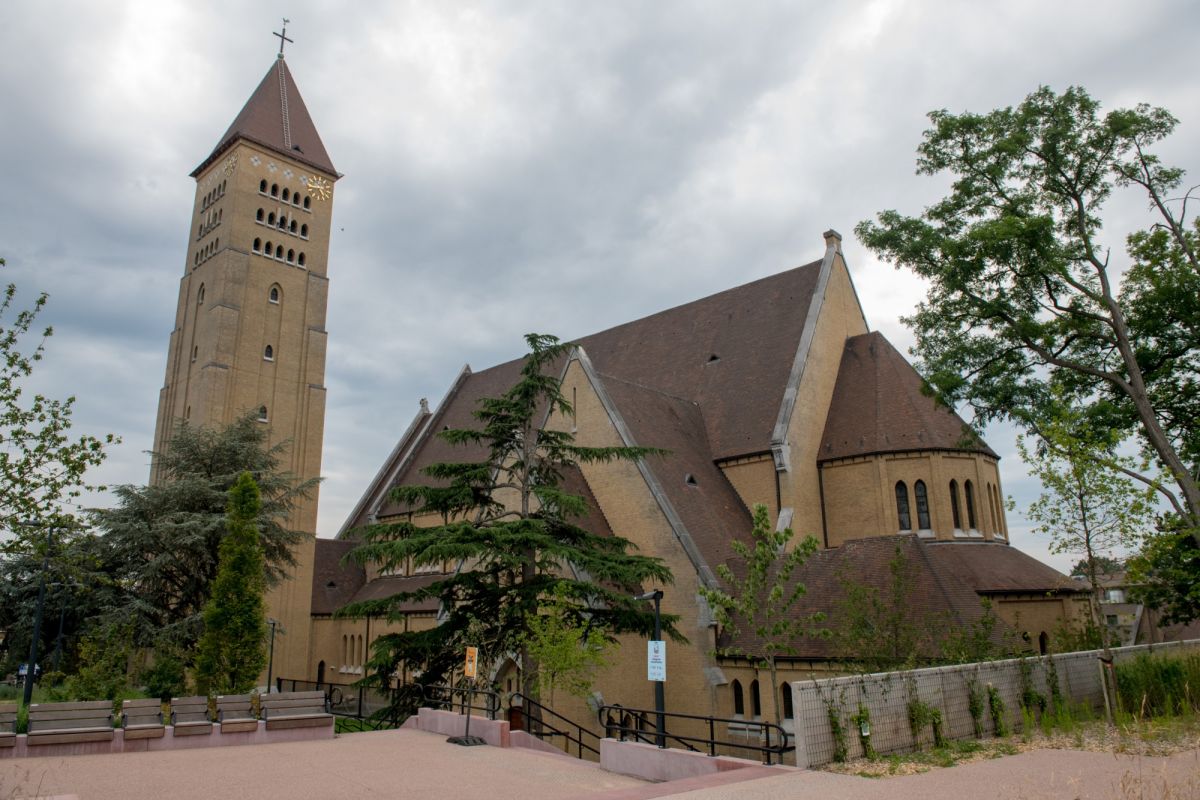
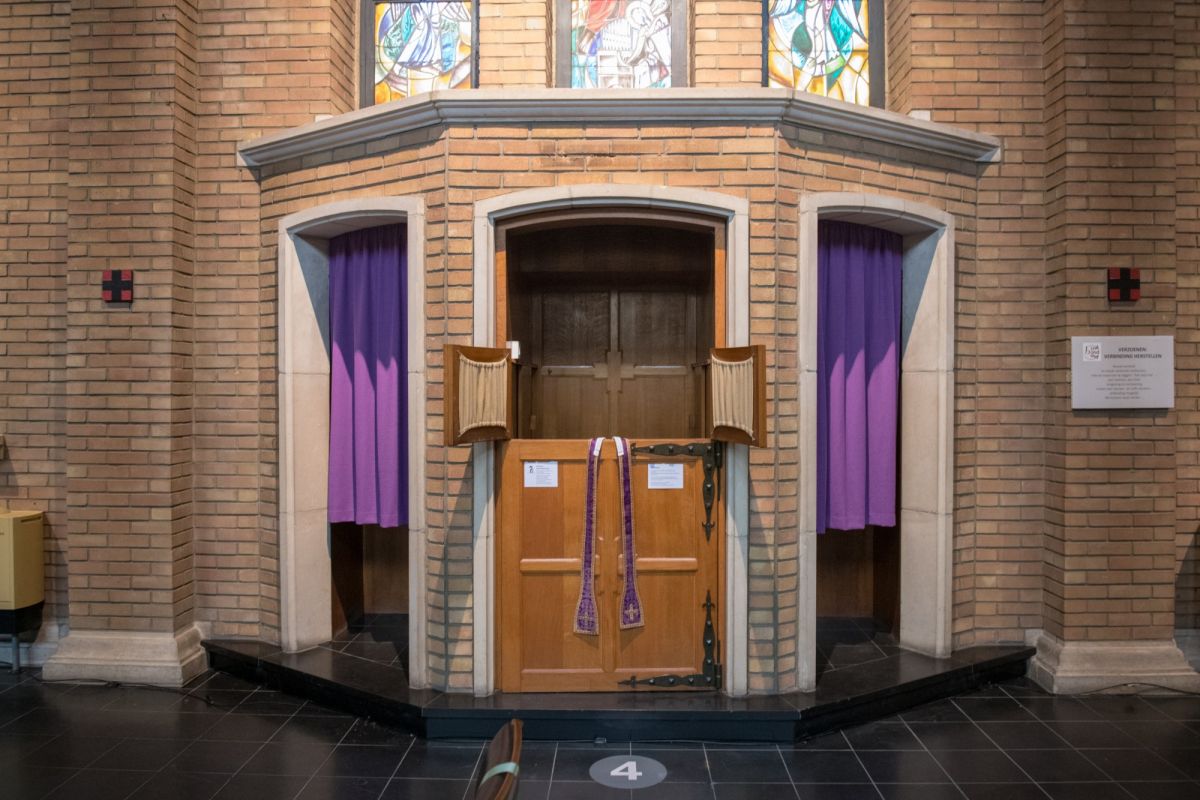
Remarkable elements

Memorial plaque to remind us of the rebuilt on the outside of the church
The city of Genk was bombed on October 10, 1944, partially destroying the church. With American support, it was rebuilt between 1950 and 1953. After its final completion, the church was consecrated on May 14, 1961 by the bishop of Liège, Msgr. Van Zuylen. A ceramic plaque was placed between the coats of arms of Liège and Genk, bearing a Latin inscription.
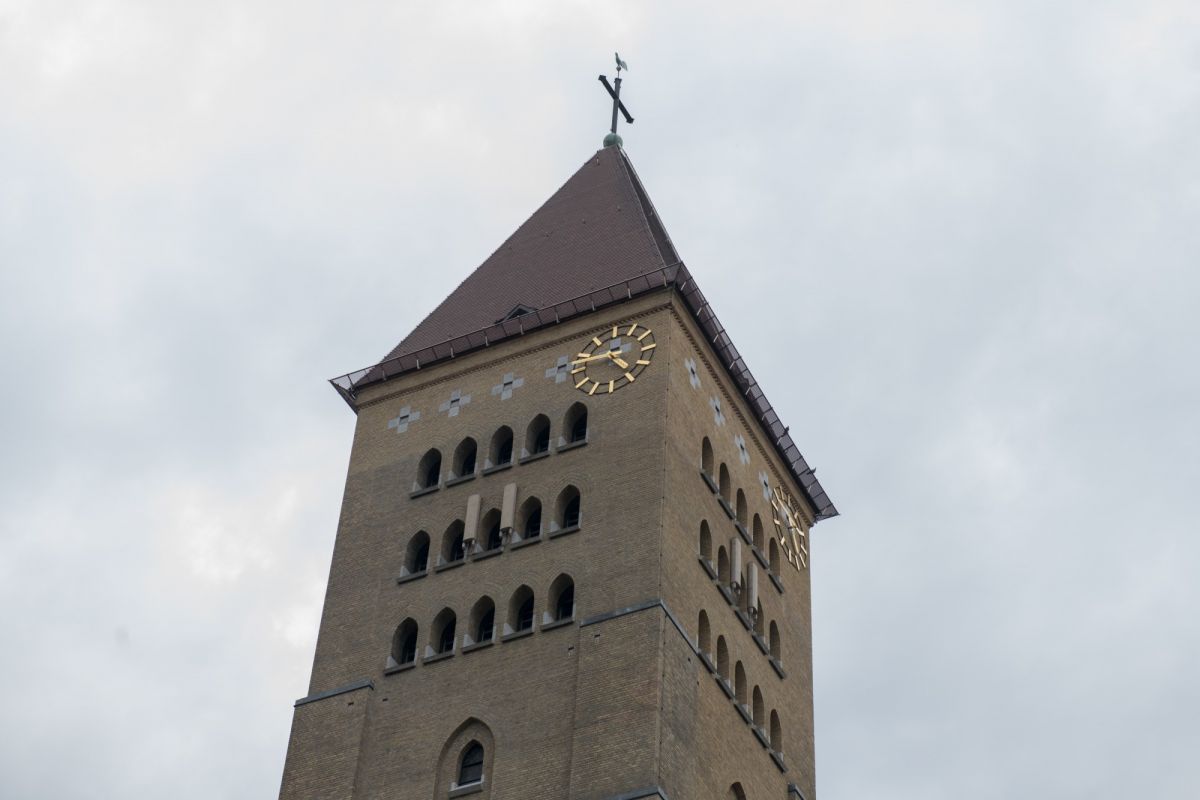
The tower and carillon
The tower is 64m high. Under the spire, one can see 3 rows of 5 sound holes. The carillon consists of 52 bells and is the largest carillon in our province.

The baptistery and the devotional chapel of Saint Joseph's chapel
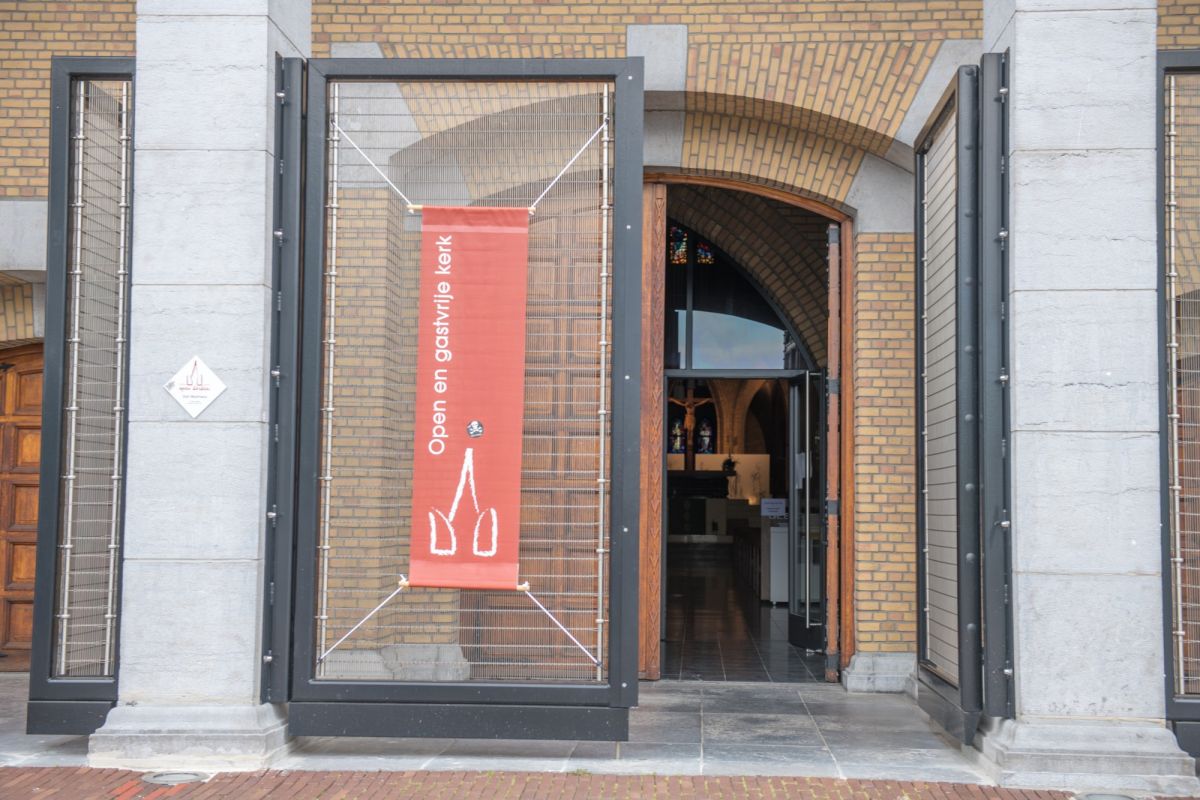
The baptistery lies on the ground floor beneath the tower, linked to the church by a waiting room. Its black marble floor descends three steps to the baptismal pit, centered around the baptismal font. The space will soon serve as an exhibition area. Saint Joseph’s chapel, entered through the left door of the outer portal, contains a large Holy Family statue and remains open for prayer and candle offerings.
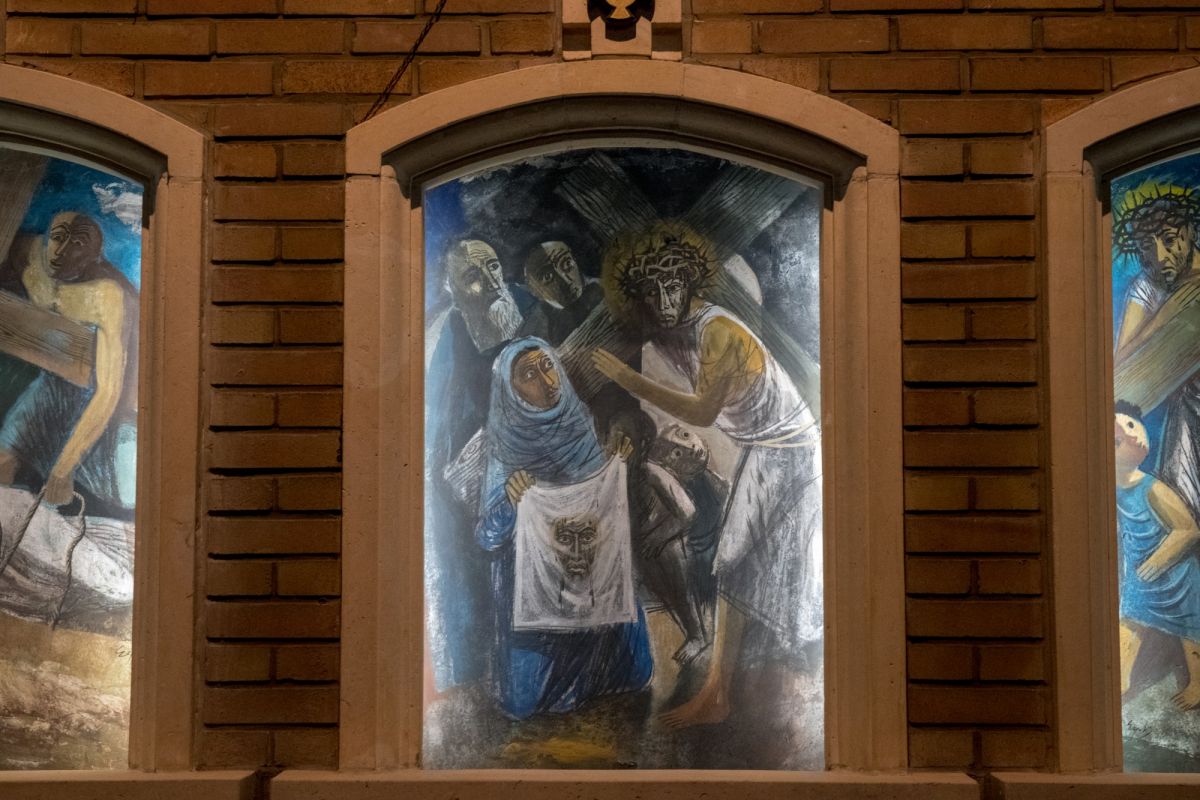
The Way of the Cross
The 14 stations were encapsulated in shallow niches of 1m high by 1m wide with a white stone frame around them. The stations were executed as murals by the painter Charles Eyck in 1961. In 2019, the Way of the Cross was fully restored and equipped with led lighting. A flyer with explanation about the contrast between light and shadow that the painter was able to masterfully convey is available.
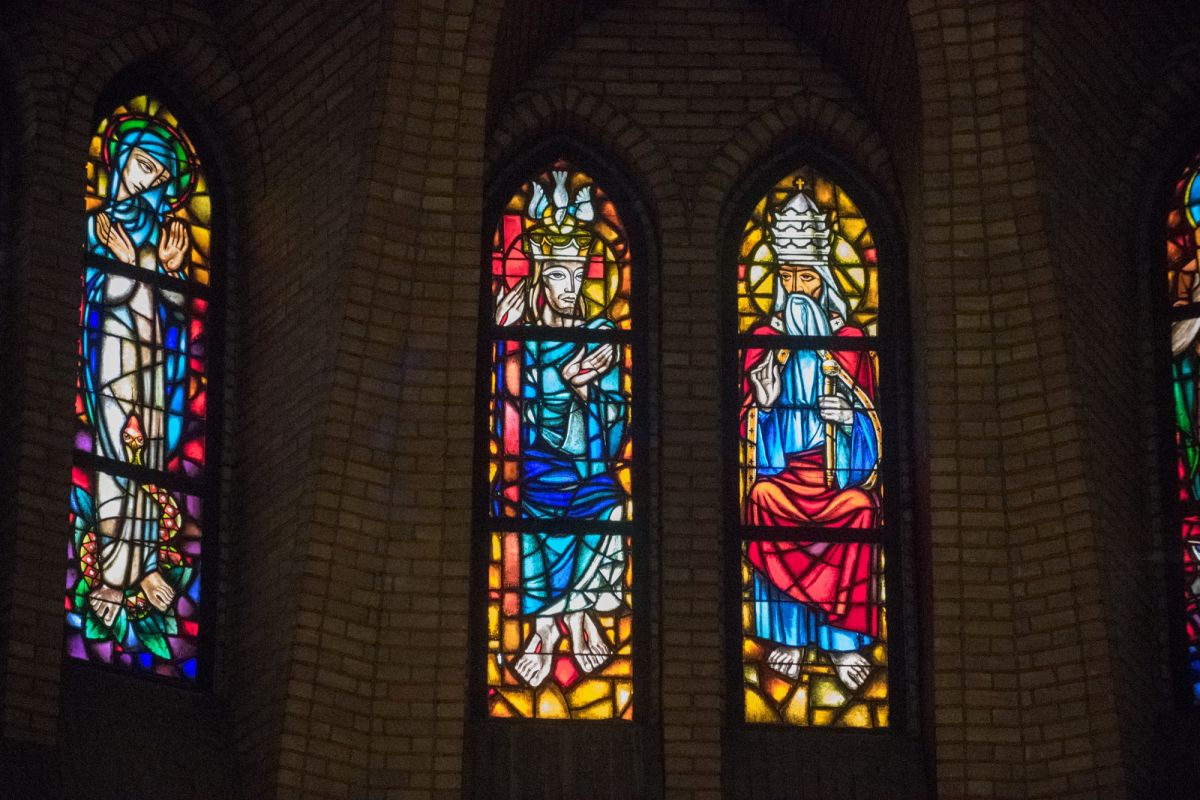
The stained glass windows
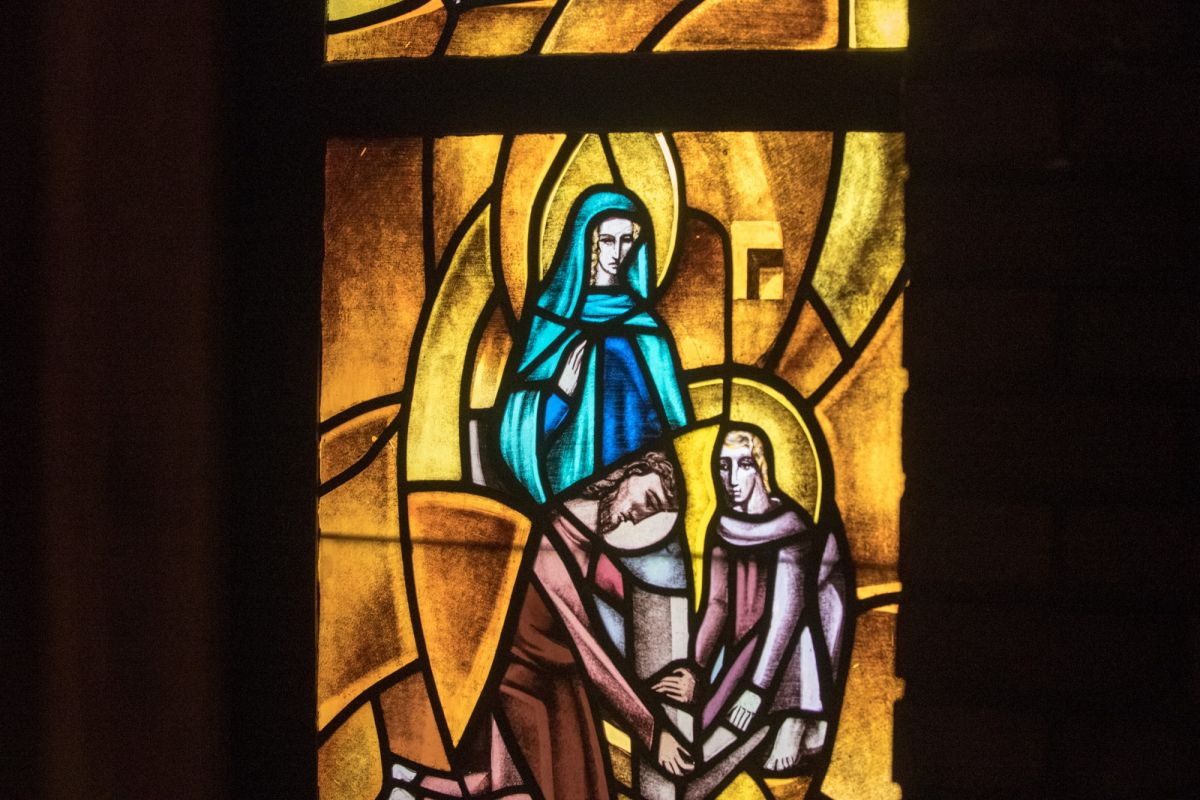
The numerous gorgeous stained glass windows are a design by artist Ro Coëme from the city Sint-Truiden and were created in Les Ateliers Jos Osterrath in Cortil-Tilff.
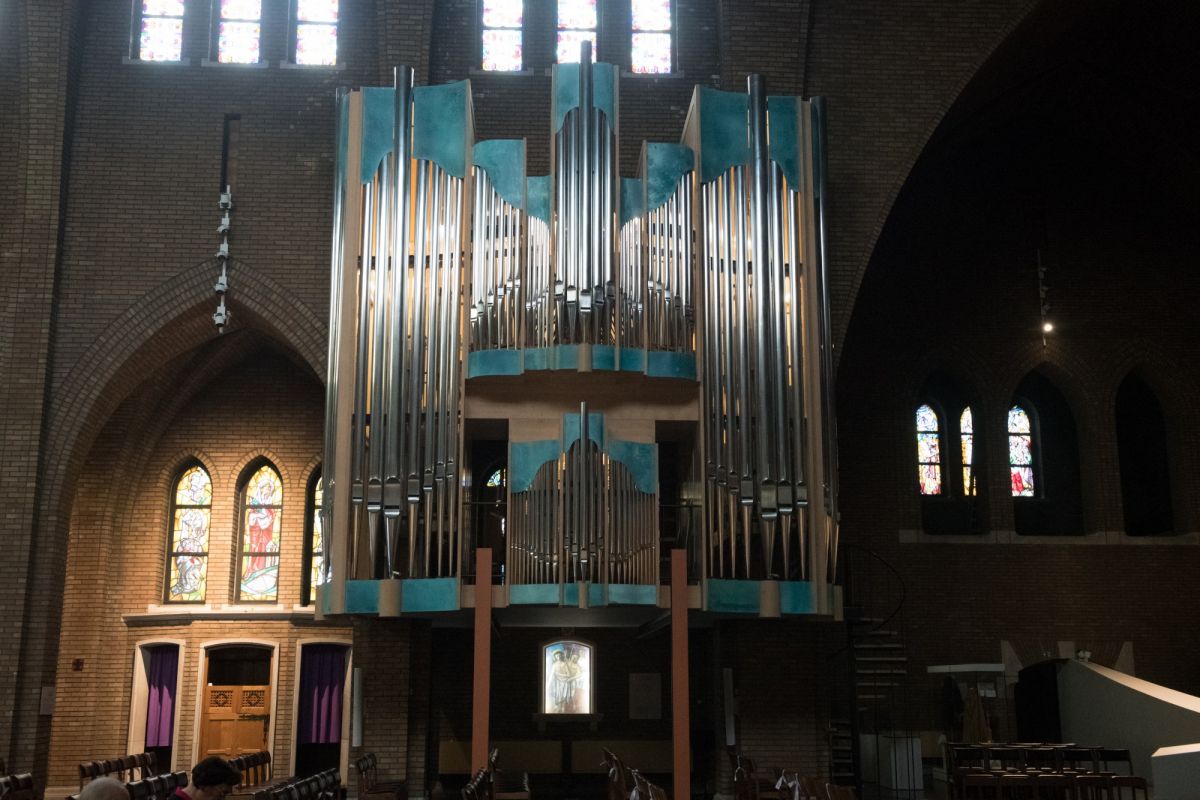
The Schumacher organ
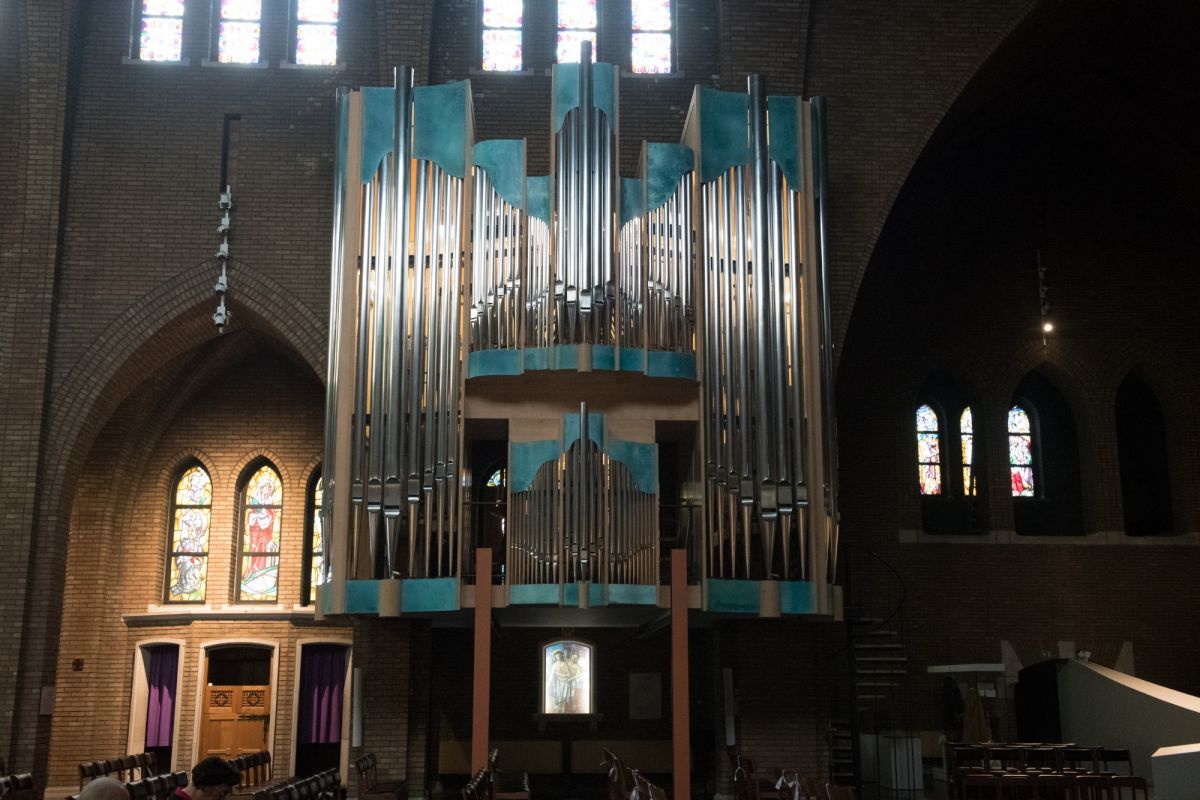
In 2010, the enormous Schumacher organ of 7,5m wide was placed. The inspiration came from Ludwig König from Cologne. The instrument consists of 36 registers and is not only meant for liturgical use, but is also used in concerts.