Saint Catherine
Dorp 47
9185 Wachtebeke
Church | XIII-XVIII | Gothic | Catholic Church


Map
Opening hours
01 January - 31 December
Mon 9.00 - 17.00
Tue 9.00 - 17.00
Wed 9.00 - 17.00
Thu 9.00 - 17.00
Fri 9.00 - 17.00
Sat 9.00 - 17.00
Sun 9.00 - 17.00
Religious offices
Description
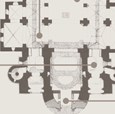
It is unknown when the church of Wachtebeke was founded, but it certainly dates from after 1199. Until at least 1550, a single nave church with a partial left transept stood here.
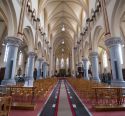
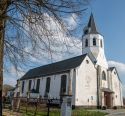
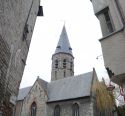
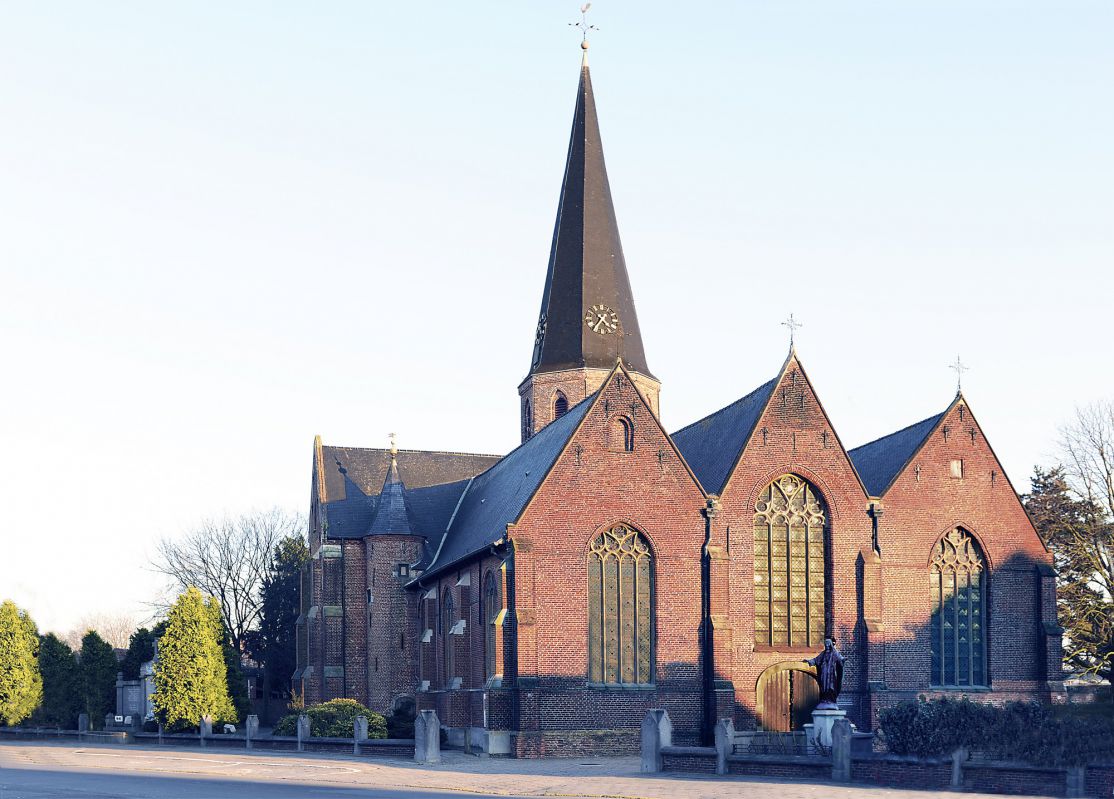
The present Gothic hall church, dedicated to Saint Catherine of Alexandria, largely dates from the 15th and 16th centuries, its exterior shaped by later restorations.
The wide porch with sandstone door frame bears the year 1693 and has a 17th century king post depicting Saint Catherine with palm and torture wheel.
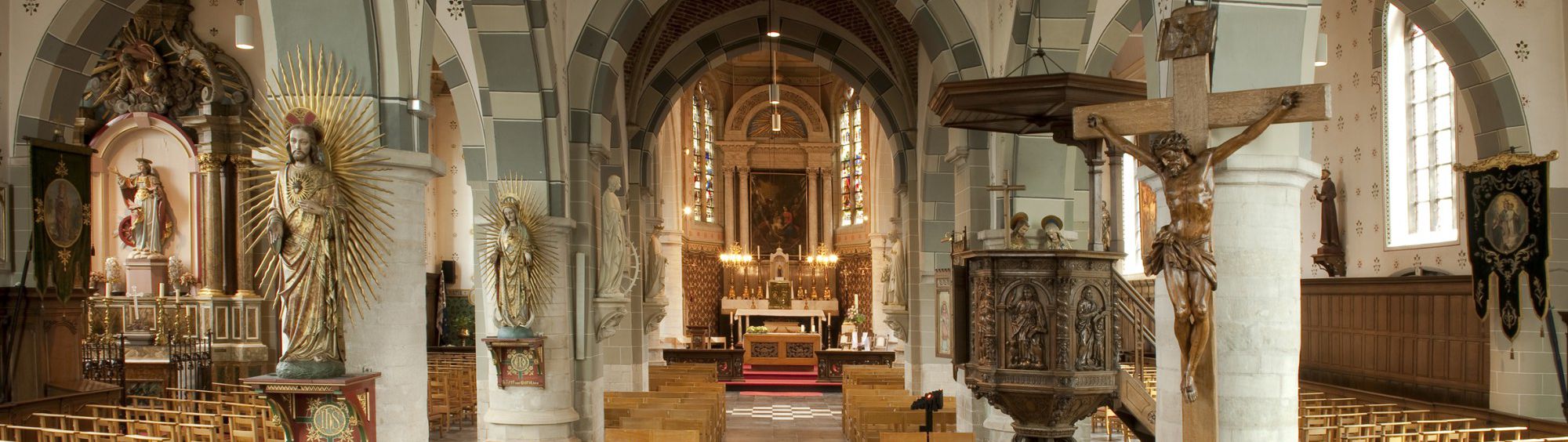
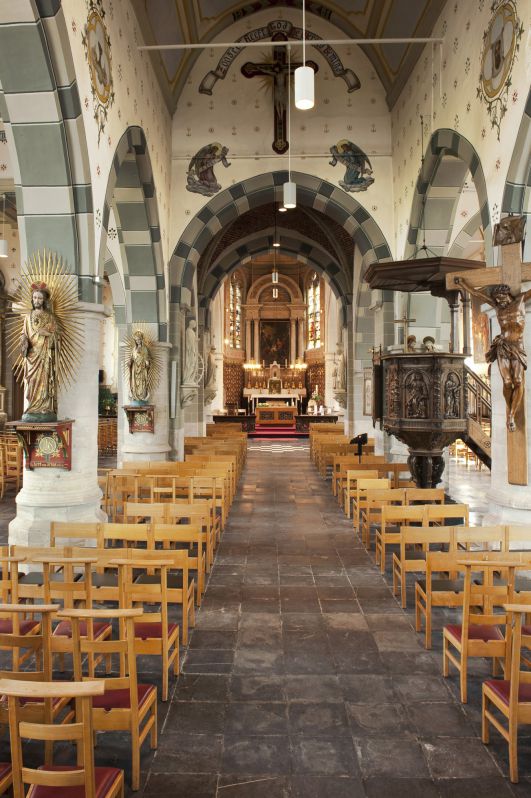
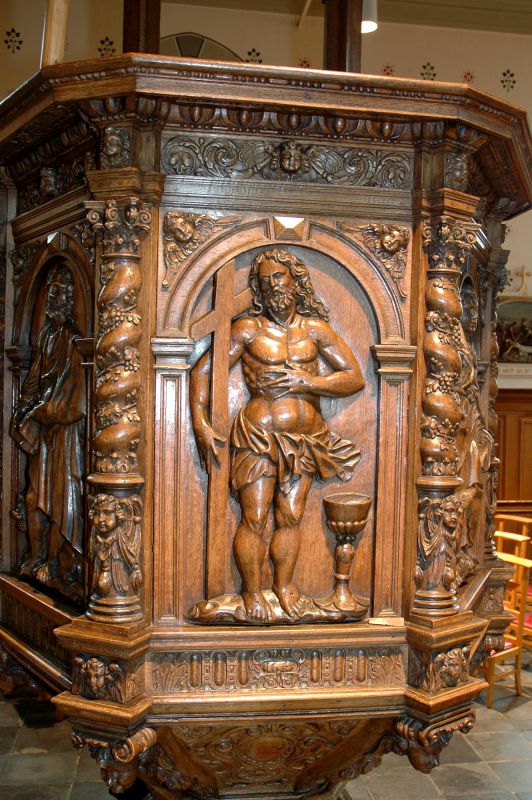
Inside, several furnishings stand out. The oak Baroque pulpit (1649) by Anthon Sauvage shows, at the front, the suffering Christ with cross and chalice, and on the door, Jesus the Saviour with globe and raised hand in blessing.
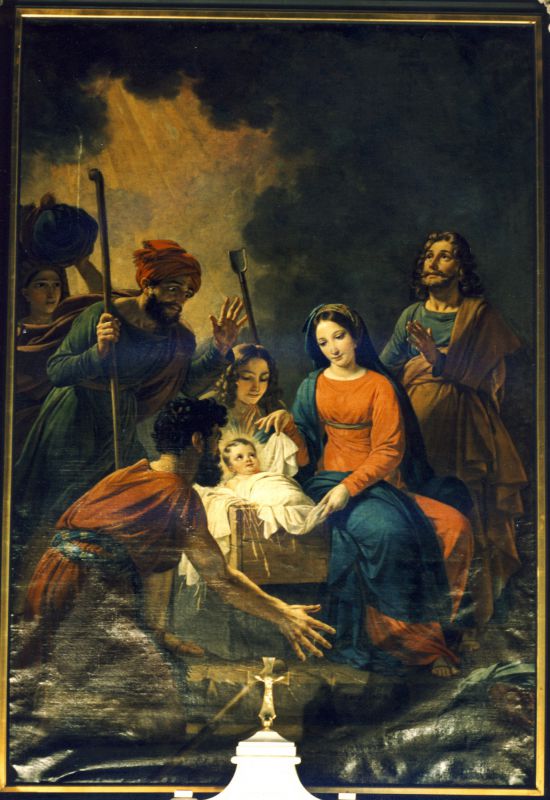
The Baroque side altar (1750 1800) in the left aisle, dedicated to Our Lady, holds a 17th century polychrome statue of the Immaculate with her Child crushing the serpent. Newly baptised children were traditionally dedicated here, under the inscription “those who find Mary will find life”. At the front of the aisles hang four large 17th century paintings by anonymous masters: Our Lady of Assumption, Our Lady of Refuge, the Passion with Thorns, and the Cross.
The church was listed as protected heritage in 1978.
Sources :
Roets A. & A. en R. de Pauw (red.), De Sint-Catharinakerk te Wachtebeke, Oudenaarde 1993 & Lanclus K. & Verbeeck M. 1993: Inventaris van het cultuurbezit in Belgie¨, Architectuur, Provincie Oost- Vlaanderen, Arrondissement Gent, Kantons Evergem - Lochristi, Bouwen door de eeuwen heen in Vlaanderen 12N4, Brussel - Turnhout
KIKIRPA : Photo-library online

Photos

Remarkable elements

Confessionnal
The Pastor Bonus oak confessional dates from the second half of the 18th century. The Renaissance folding doors with fine wooden filigree work come from a 17th-century confessional.

Communion bench
The 18th-century communion bench is a beautifully carved work of art with medallions of the four western church fathers with from left to right: Augustine, Ambrose, Gregory the Great and Jerome.
Painting assumption of Mary
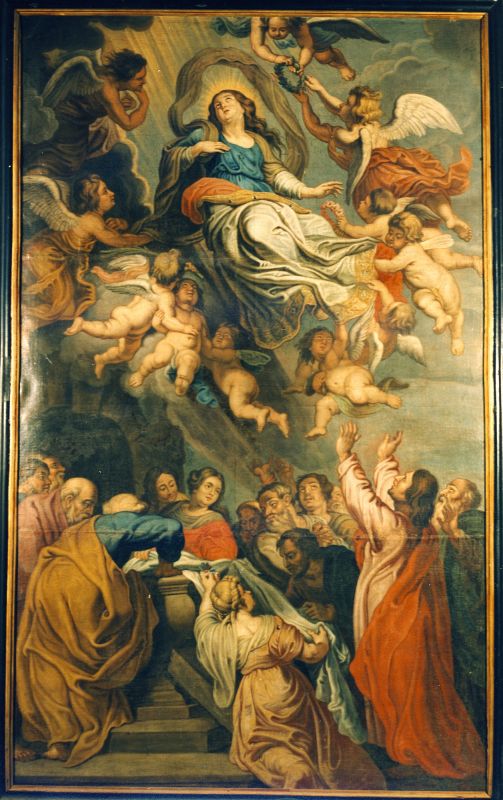
In the front of the side aisles hang four large canvases, probably by 17th-century anonymous masters. One of them is the Assumption of Mary, inspired by the canvas by P.P. Rubens hanging in Antwerp Cathedral.

Crucifix
When entering the church along the nave, a beautiful statue of Christ on the cross immediately attracts attention. The statue is made of lime wood and hung for years outside on the southern wall of the church. Prominent art historians refer to Artus Quellinus the Younger (1625-1700) as the possible creator of the statue. The statue was dated around 1650.

Banner Ambrose
At the back left, against a pillar, hangs the flag of the guild, or confrerie, of Saint Ambrose. This guild was founded in 1754 as an association for beekeepers. It still exists: the (exclusively male) members or "confreers" have their reserved pew, on the west wall opposite the banner.
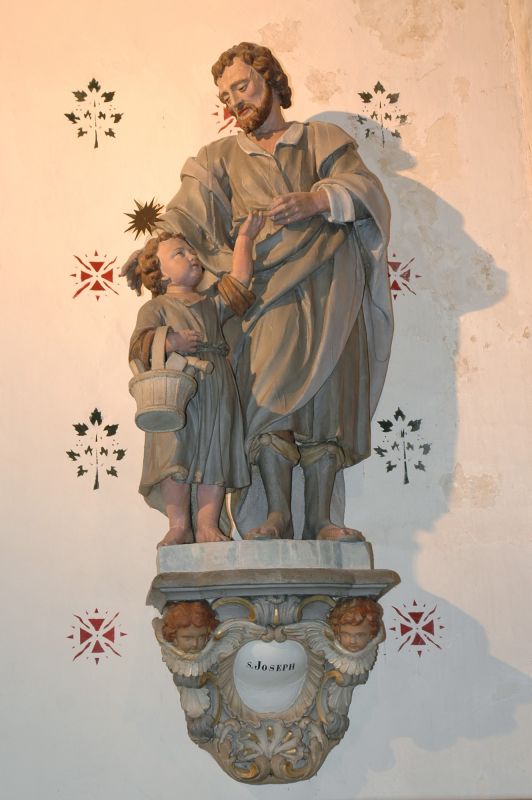
Polychromed statues
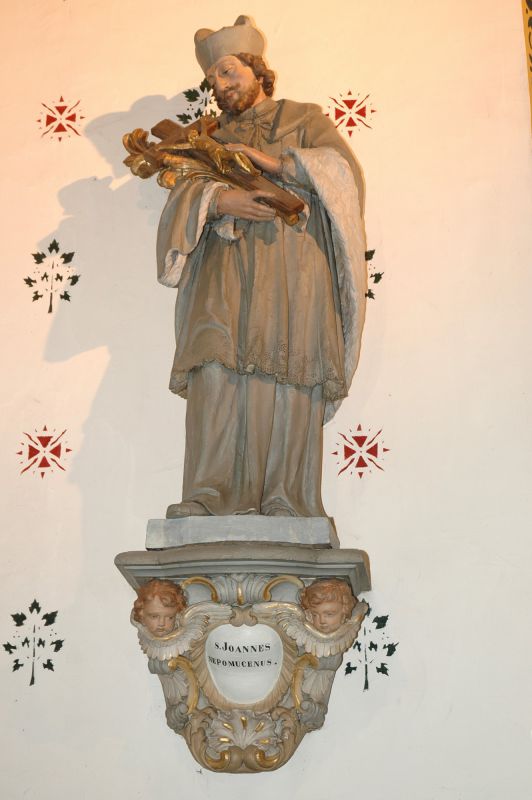
Four polychromed statues from the 17th century are attached to the back wall of the church. The wooden statues, about 1.7 metres high, are worked out in detail and stand on consoles with beautifully sculpted angel heads.
They represent from left to right: Saint John Nepomucenus, Saint Ambrose, Saint Anthony of Padua, Saint Joseph.