
Ours Lady
Place du Cardinal Dubois
72120 Saint-Calais
Church | XVe-XVIe siècle | Gothic, Renaissance | Catholic Church


Map
Opening hours
24 September - 20 March
Mon 9.00 - 17.00
Tue 9.00 - 17.00
Wed 9.00 - 17.00
Thu 9.00 - 17.00
Fri 9.00 - 17.00
Sat 9.00 - 17.00
Sun 9.00 - 17.00
21 March - 23 September
Mon 9.00 - 18.00
Tue 9.00 - 18.00
Wed 9.00 - 18.00
Thu 9.00 - 18.00
Fri 9.00 - 18.00
Sat 9.00 - 18.00
Sun 9.00 - 18.00
Description
From 2016 to 2020, the Church of Notre Dame underwent an ambitious restoration project. The bell tower, spire, roofing, bell turret, forecourt and all the façades were renovated.
This building was listed as a Historic Monument on the first list (Mérimée) in 1840.


Photos


Remarkable elements

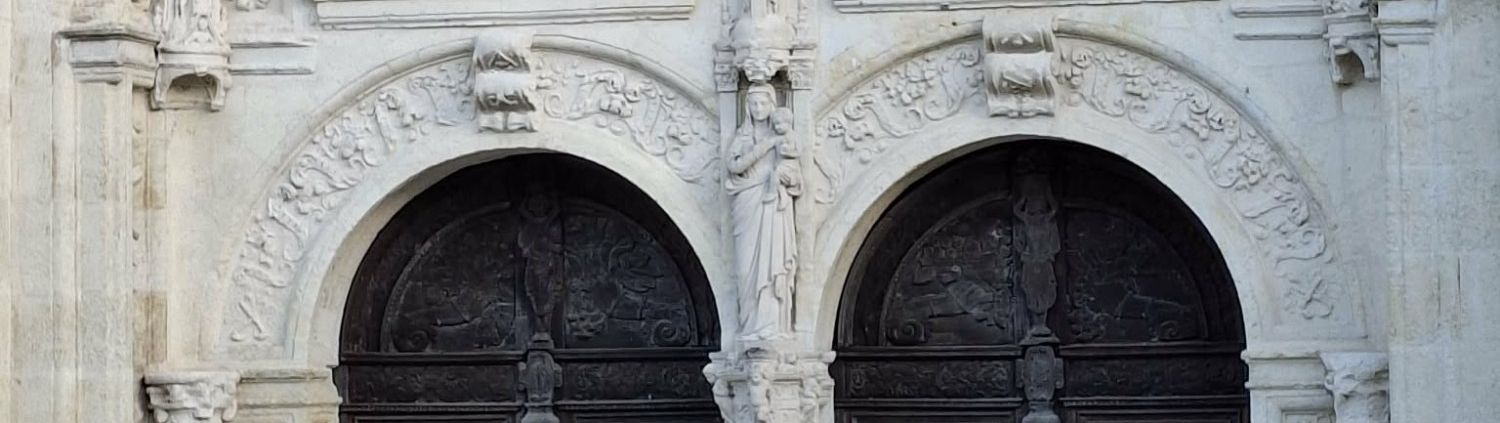
Sculpted façade and doors
The Renaissance-style western façade, built between 1520 and 1550, is notable for its antique decorations, pilasters with Ionic capitals and rich sculptures. It features a 16th-century wooden door depicting four scenes from the life of the Virgin Mary: the Marriage, the Annunciation, the Visitation and the Assumption. These sculptures, attributed to the master Guillaume Le Houx, are recognisable by the garland of holly, the cornucopias and the initials M.G.L.H.

The great organ of Notre Dame
Comprising two instruments from the former abbey of Calais and the parish church, the great organ was installed in 1792 on a specially constructed gallery. Restored from 1845 onwards by Daubelaine and Callinet, it is listed as a historic monument, as are its three-tower case and the instrumental part. The organ has three keyboards, 32 stops and around 2,000 pipes.

The clock
Placed in 1615 in the oculus of the façade of Notre Dame Church, the clock is the work of Guillaume Pelard, master clockmaker of Le Mans. The carillon, which disappeared around 1830, was replaced by a repeating chime for which at least one of the bells cast by Olivier Gaugelin, a bell founder in Le Mans, was used. A modification and/or restoration was probably carried out on it in 1769, the date visible on the dial.

The reliquary of Saint Karileph
Karileph, a hermit from Auvergne, settled on the banks of the Anille in the 6th century to lead a spiritual life and founded the first monastery there. Considered the founder of the town of Saint-Calais, which inherited his name, his relics are kept in a reliquary embedded in a pillar near the entrance. The shroud, made of Sassanian fabric from the 7th century and used to transport them during the Norman invasions, is now kept in the Museum-Library of the cultural centre.

The Virgin worshipped and served by angels, painting
This painting, located on the north side of the nave, next to the organ, is an oil painting by François Claude, better known as Brother Luc. Dating from the 17th century, this work depicts the Virgin surrounded by angels of all sizes, serving her around a laden table.

The altarpiece
The original tuffeau stone altarpiece was removed and replaced by another in gilded wood, with twisted columns and a triangular pediment, into which the small altarpiece from 1643 was set.
Dismantled in 1867, this high altar may be an early 20th-century assembly recomposed from Baroque elements from the former Benedictine abbey of Saint-Calais, which was dismantled during the French Revolution.

