Saints Peter and Paul
Place Félix Gonda
4550 Saint-Séverin (Nandrin)
Church | XII | Romanesque | Catholic Church


Map
Opening hours
01 April - 31 October
Mon 8.00 - 18.00
Tue 8.00 - 18.00
Wed 8.00 - 18.00
Thu 8.00 - 18.00
Fri 8.00 - 18.00
Sat 8.00 - 18.00
Sun 8.00 - 18.00
01 November - 31 March
Mon 8.00 - 17.00
Tue 8.00 - 17.00
Wed 8.00 - 17.00
Thu 8.00 - 17.00
Fri 8.00 - 17.00
Sat 8.00 - 17.00
Sun 8.00 - 17.00
Description
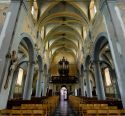
Inside, the visitor is immediately struck by the spaciousness, unity, and simplicity of the whole, as well as the warm stone quarried locally.
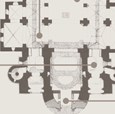
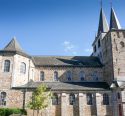
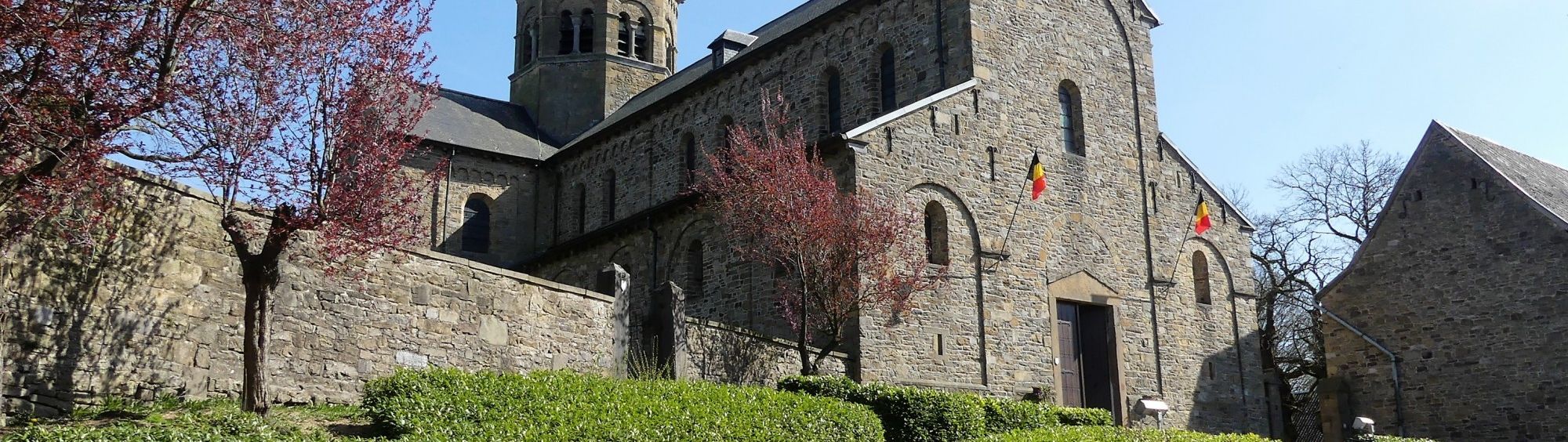
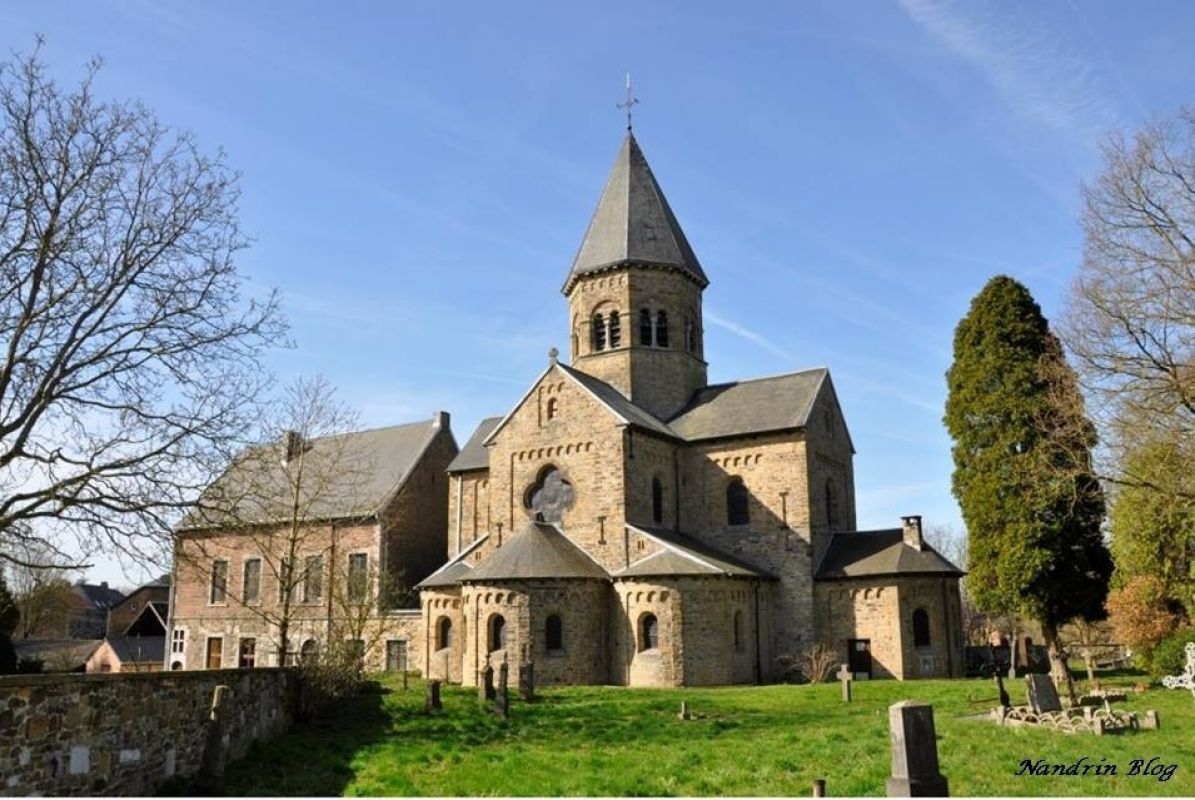
The church stands out from other Romanesque buildings through several features: its central octagonal bell tower with twin bays; its east facing choir; the vaulted side aisles; the alternation of pillars and columns in the nave; the curved, cruciform columns; the unusually low apse; the side chapels with apsidioles opening onto the choir; and the paired and spiral columns above the nave pillars.
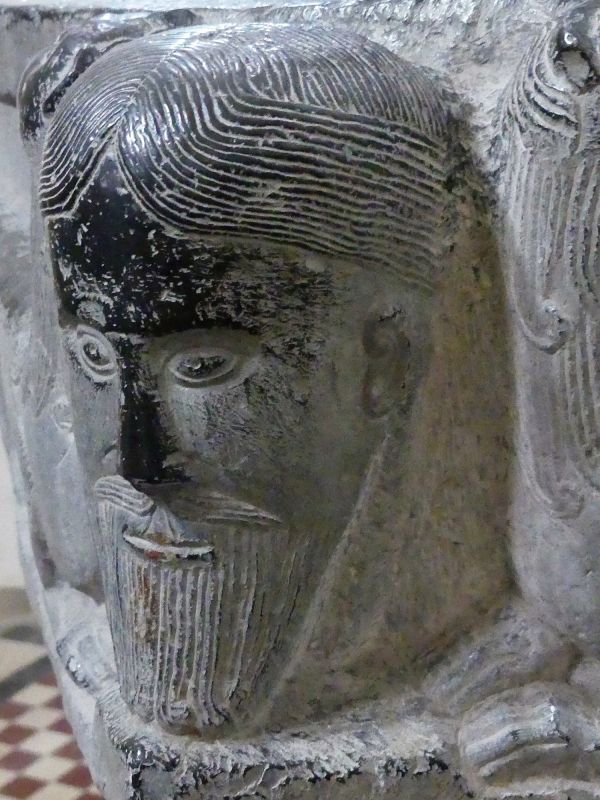
The side aisles contain several sculptures, including three from the 15th and 16th centuries, and a terracotta panel by Jean Rocour (†2005). In the central nave stands a fine 16th century Christ on the cross by Master Balthazar. The remarkable 12th century baptismal fonts in Meuse limestone, carved from a single block and featuring corner figures of Syrian inspiration, are also noteworthy. Ancient tombstones are embedded in the walls and others lie in the old cemetery.
The church is also known for its excellent acoustics and regularly hosts concerts. Nearby stands the former claustral house, now the presbytery, dating from the 16th century under Erard de la Marck (not open to visitors).
In addition, the church has been awarded a star in the Michelin Travel & Culture guide.
KIKIRPA : Photo-library online
Guided tour of the church (FR)

Photos




Remarkable elements
External views
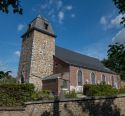
Admire this 12th century Romanesque church, Belgium’s only Cluniac example. View it from the former priory farm porch by walking 20 m up Engihoul Street. From the village square, see it on its hill with its octagonal bell tower and old cemetery. From the “Vôye di mèsse,” follow Rue de l’Eglise along the cemetery wall to the first path for a view of the presbytery garden, pond, and rear façade.

Inside the building
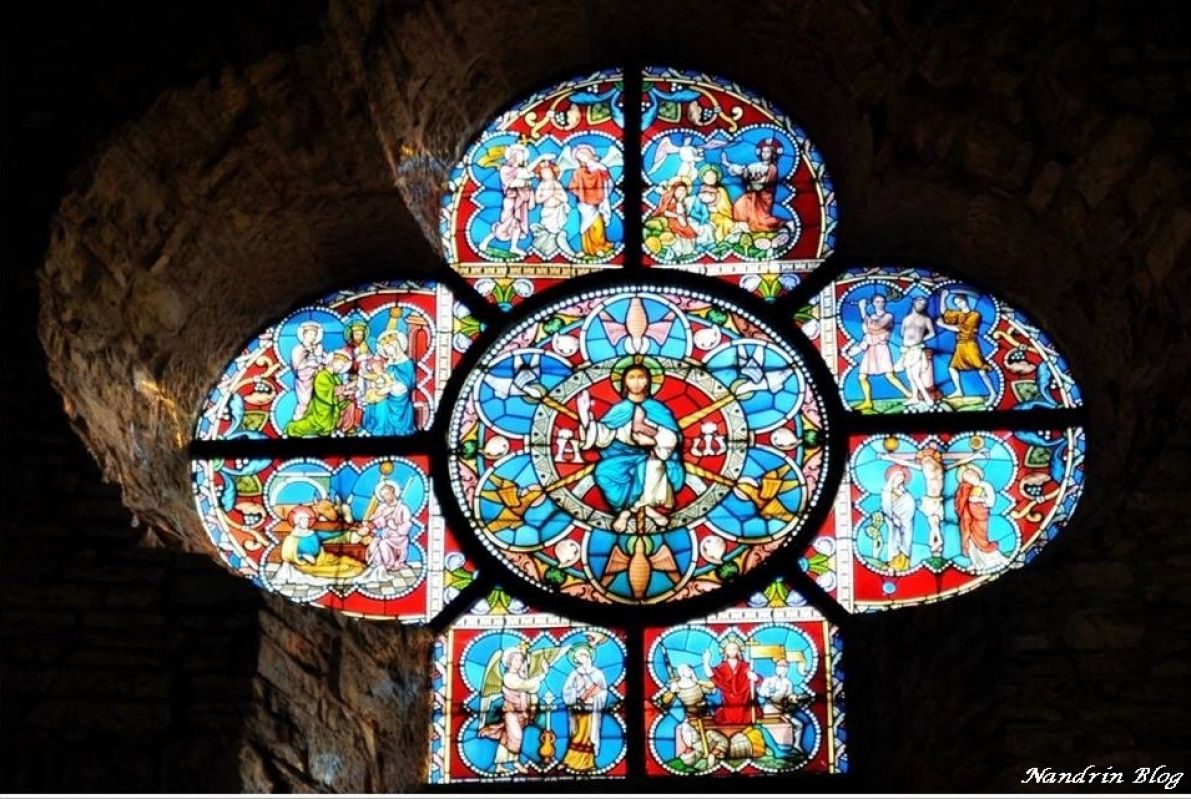
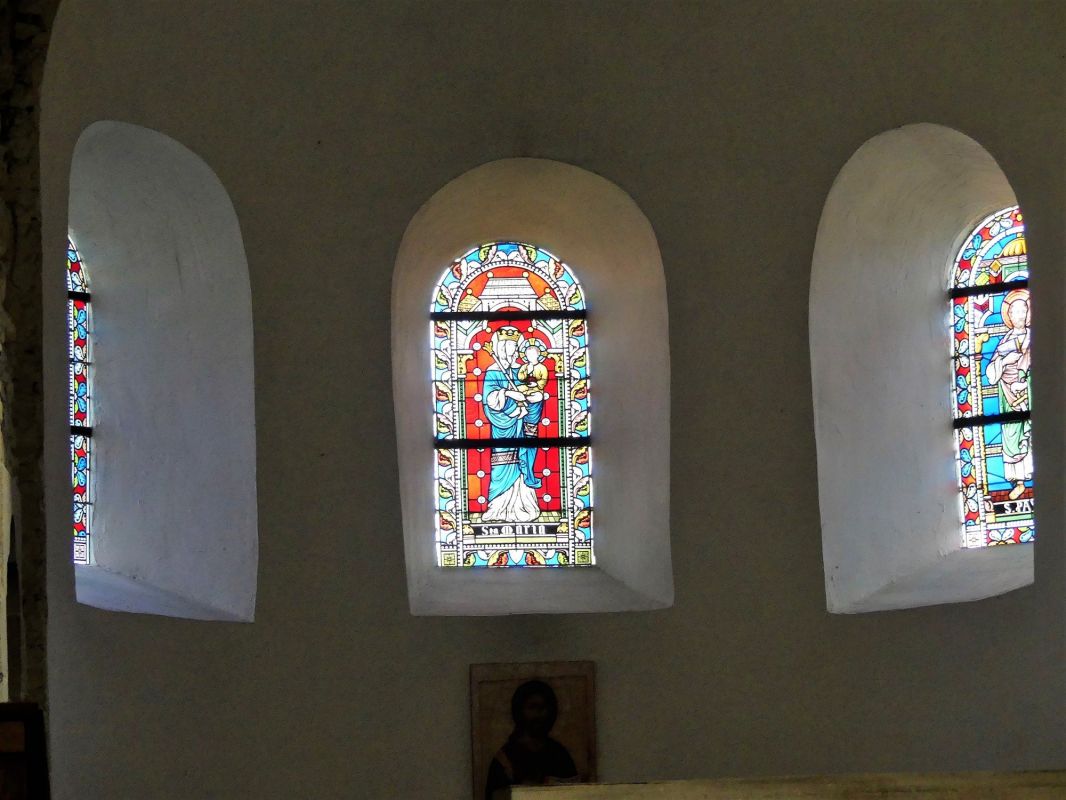
One is struck by the breadth, balance and warmth of the space, lit by the cloverleaf stained glass above the choir (Joseph Osterrath, 1906) and the three coloured windows of the apse. The large nave is separated from the side aisles by square pillars alternating with slimmer supports or clusters of four engaged columns, giving the whole a sense of lightness. Twisted twin columns decorate the stronger pillars.
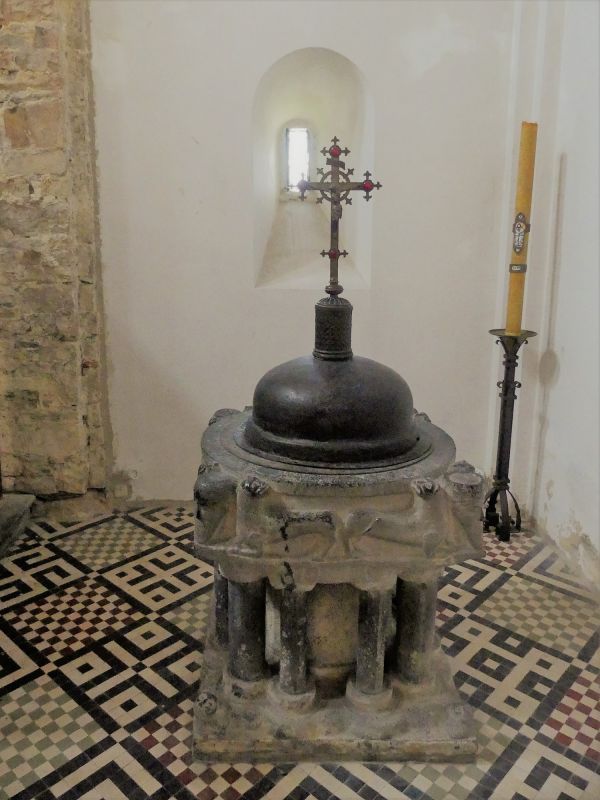
Baptismal fonts (12th century)
Very original, these pieces date from the late 12th century and are carved in Meuse limestone. The basin is unique, resting on 13 supports: a central shaft with 12 small columns. Its square monolithic tank is hollowed into a half sphere. The exterior shows Syrian inspired carvings: pairs of lions on each side and bearded heads at the corners, likely the four rivers of paradise, one crowned. The 17th century copper lid replaces the stolen original cross with one predating 1895.

Christ in cross (16th century)
In the center of the great nave, a Christ all in oak, work by the Liège sculptor Maître Balthazar and painted by "Maître Lambert" (Lombard?), painter of the Prince-Bishop's palace under Erard de la Marck.
Notice the heavy crown of thorns and the loincloth waving in the wind. It belongs to the late Gothic period; the flying garment marks the transition to the Renaissance.
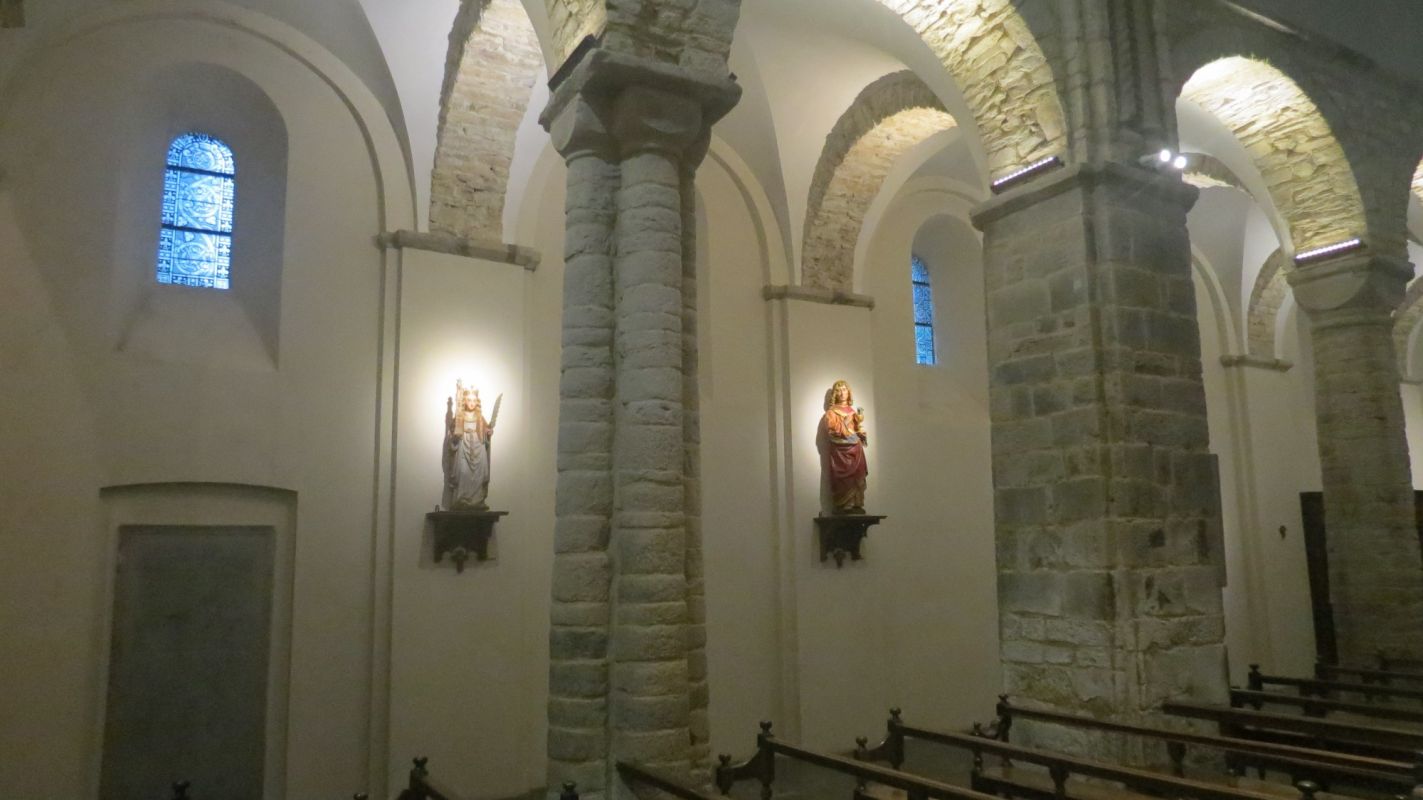
Ancient statues (15th and 16th c.)
In the right nave stand three statues. Saint Catherine of Alexandria (16th c. wood) defeats the crowned emperor with her wisdom, the sword recalling her beheading. St. John the Evangelist (15th c. wood), with wavy hair, blesses as a winged dragon rises from the poisoned cup meant for him. Sainte Barbe (16th c. wood) is identified by her tower with three windows and the palm of martyrdom.
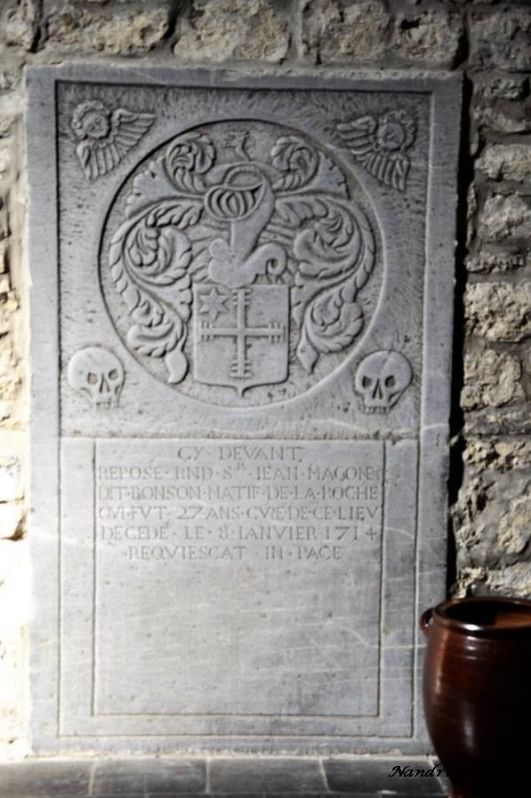
Tombstones
The left transept holds the tomb of Reverend Jean Magonet, parish priest for 27 years, who died on 8 January 1714, and that of Pirlot, alderman of Huy (1508), with a central coat of arms and Gothic inscriptions. In the right transept lies the oldest stone (1300), for Marie (Maroie), wife of Henry de Vill… Nearby is the most recent, in Latin, for Reverend Jean Henri Gérardi, parish priest for 48 years, who died on 24 August 1790.