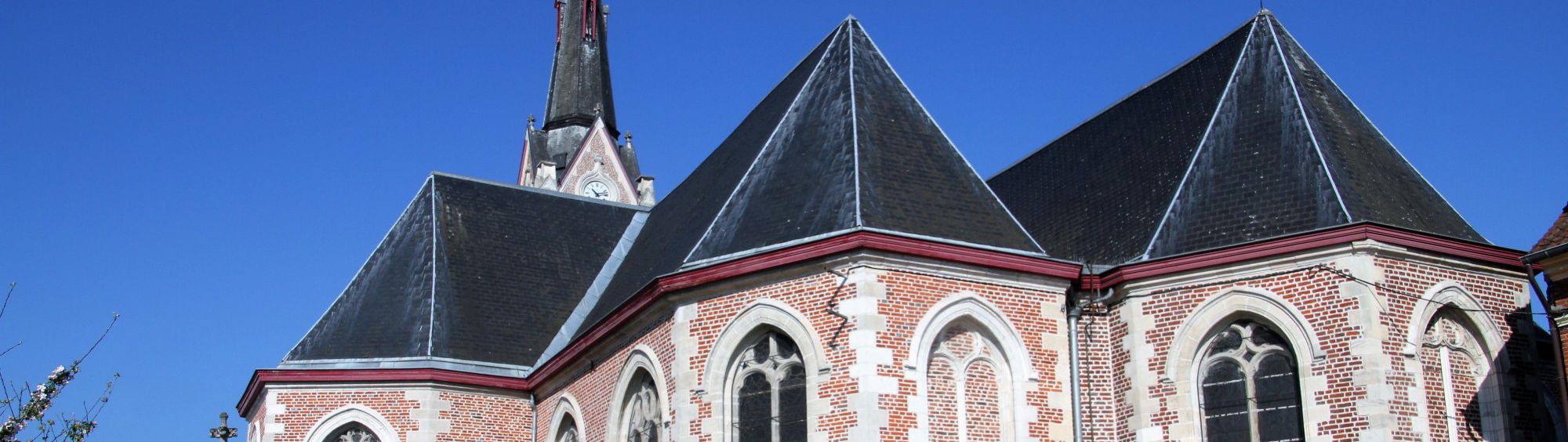
Saint Martin
Place du Général de Gaulle
59166 Bousbecque
Church | XVI | Gothic | Catholic Church


Map
Opening hours
01 January - 31 December
Mon 9.00 - 17.00
Tue 9.00 - 17.00
Wed 9.00 - 17.00
Thu 9.00 - 17.00
Fri 9.00 - 17.00
Sat 9.00 - 17.00
Sun 9.00 - 17.00
Description
A first church was built in the second half of the 15th century (1480) by Gilles Ghiselin, who died in 1514. This noble family strongly influenced the history of Bousbecque. Advisor and chamberlain of the duke of Boulogne, bailiff of the town of Ypres, he also built the castle of Bousbecque. The famous Ogier of Bousbecque was the son of Georges Ghiselin and Catherine Hespiel, and born in 1521/22.
From early times until the 19th century, Bousbecque was a prosperous town, due to the fabrication of linen canvas/cloth, and first producer of this commodity in France until the French Revolution. In the church two 13th century pieces of goldsmith work bear witness to this wealth; an altar cross in niello silver; and a casket of red copper, gilded and decorated with enamel from Limoges.
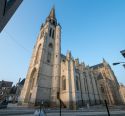
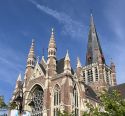
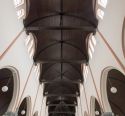
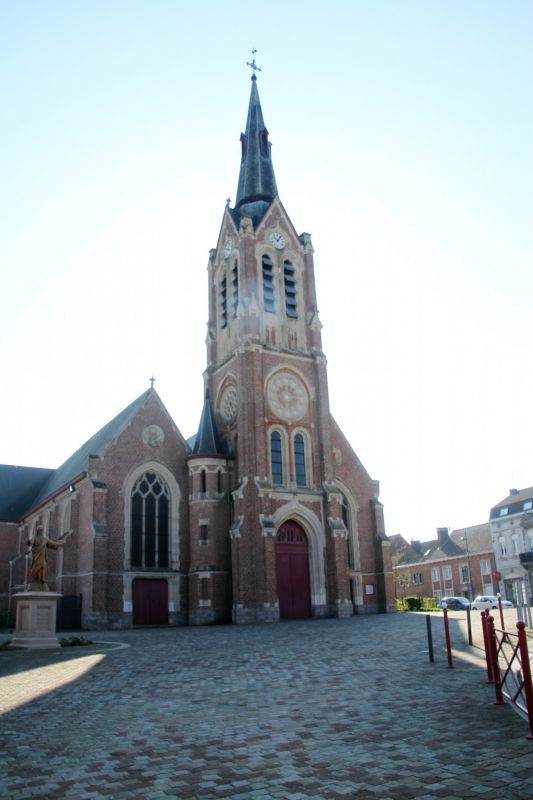
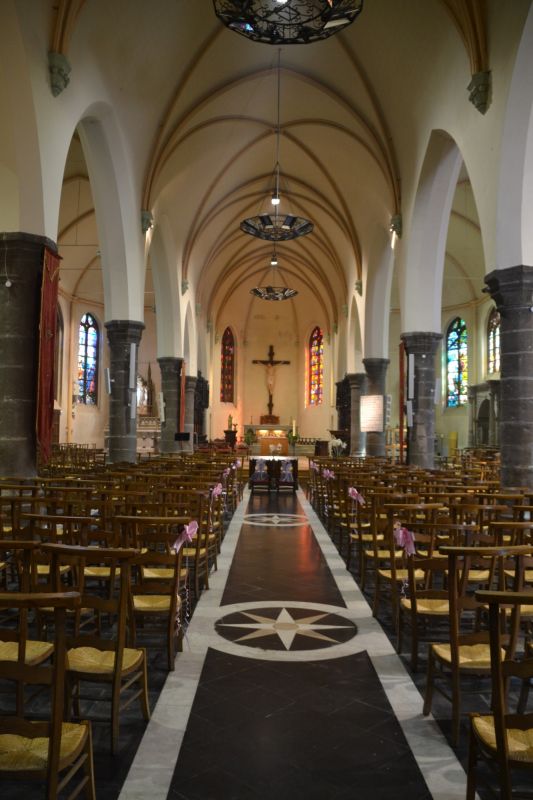
The church of St. Martin is a “hallekerque”, whose three naves are the same height. The five altars of the church were consecrated by the bishop of Tournai on 25th March 1516. The actual building in the Flemish Gothic style of brick and stone, was rebuilt under the direction of the architect Charles Maillard , who added its high, slate covered steeple, in 1874. Within can be found the columns of Artesian sandstone and Tournai stone, which separate the naves and support the vaults.
A mausoleum to the memory of his parents, built by Ogier Ghiselin of Bousbecque, can also be seen, with its monumental facade and carved columns, that has been preserved.

Photos

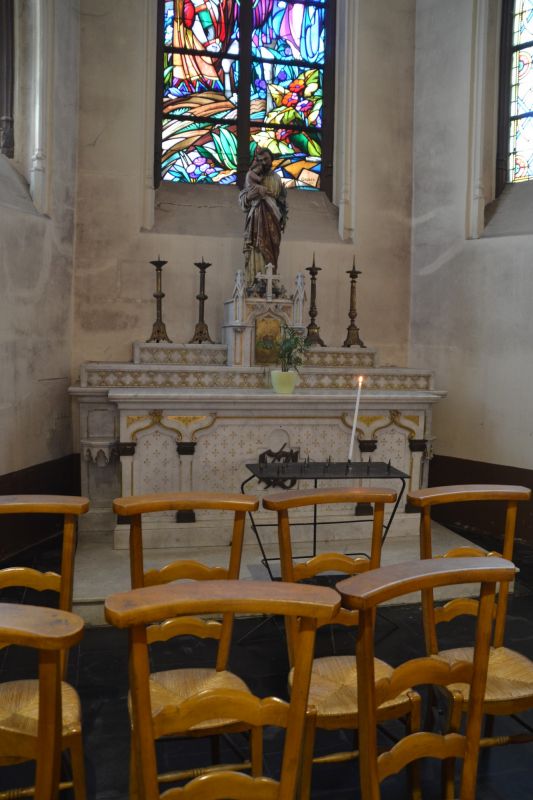
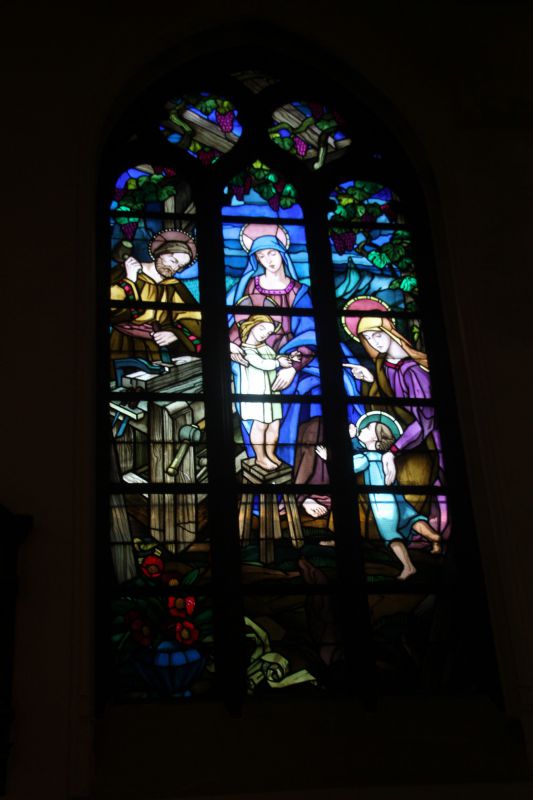
Remarkable elements
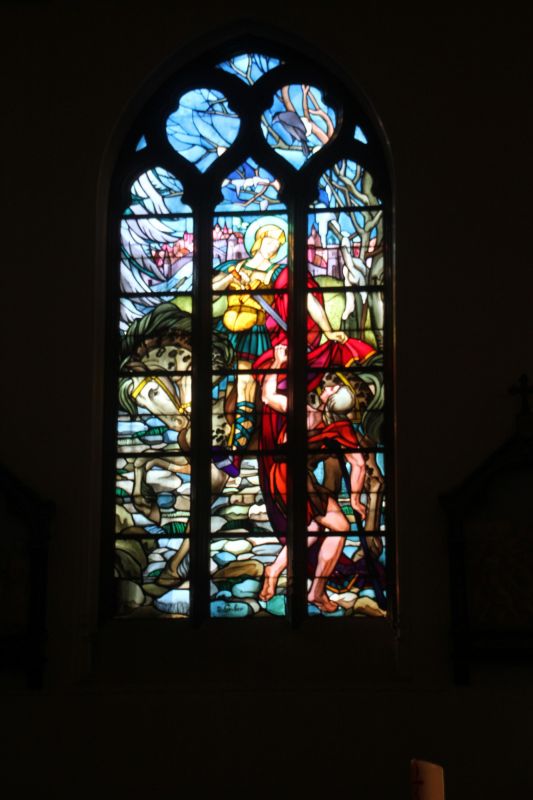
The stained glass windows
The stained glass windows in the nave are by Jacques Grüber, founder of the École de Nancy, master glassmaker and cabinetmaker, and creator of the Villa Majorelle and the stained glass roof of the Galeries Lafayette. Upon his death in 1936, his son Jean-Jacques Grüber completed and signed the last stained glass windows. Those in the choir, dated 1944-1945, are by Mme Capronier-Turpin (Lille).
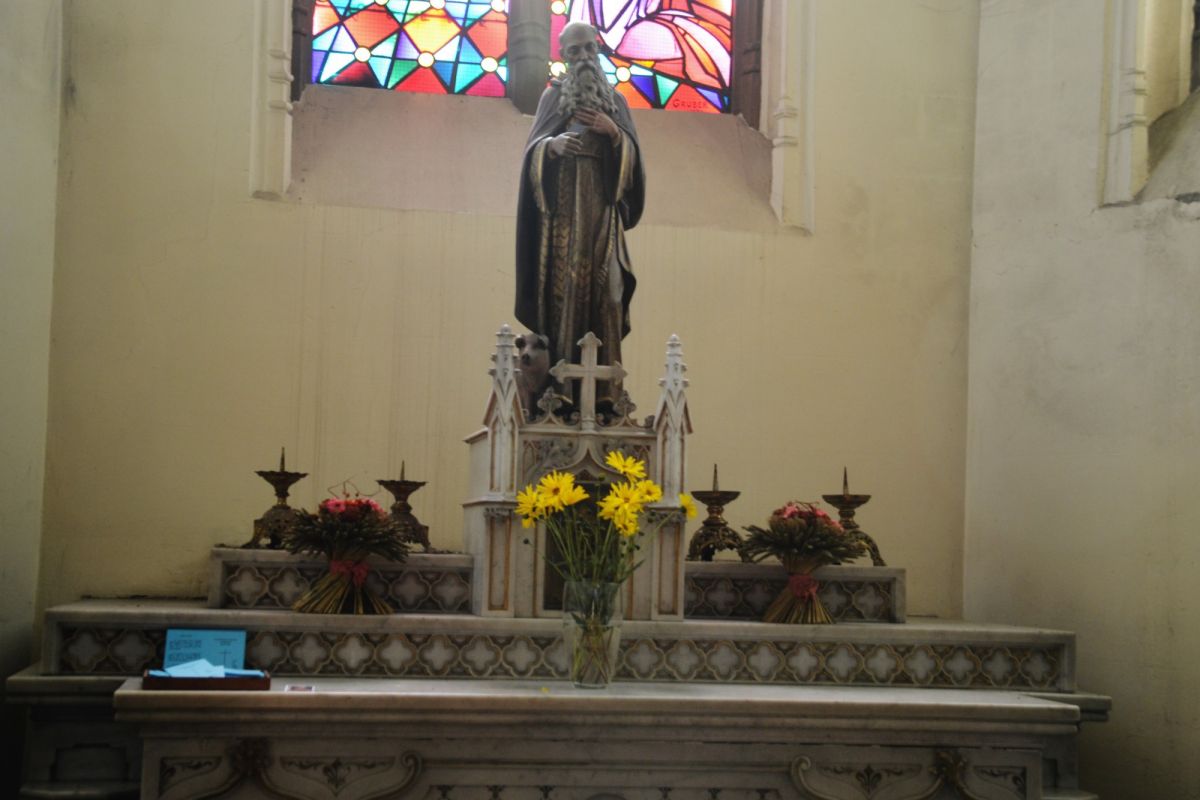
Chapel of Saint Anthony the Great or the Hermit
Saint Anthony is particularly venerated : the faithful from all over the region and Flemish Belgium come to implore his protection for the treatment of skin diseases, particularly shingles. Born around 251 and died around 356 in Egypt, he led a hermit's life before founding a monastery. Celebrated on 17 January, he is represented with a pig with a bell, the emblem of the Antonines, and is the patron saint of the Foreign Legion.
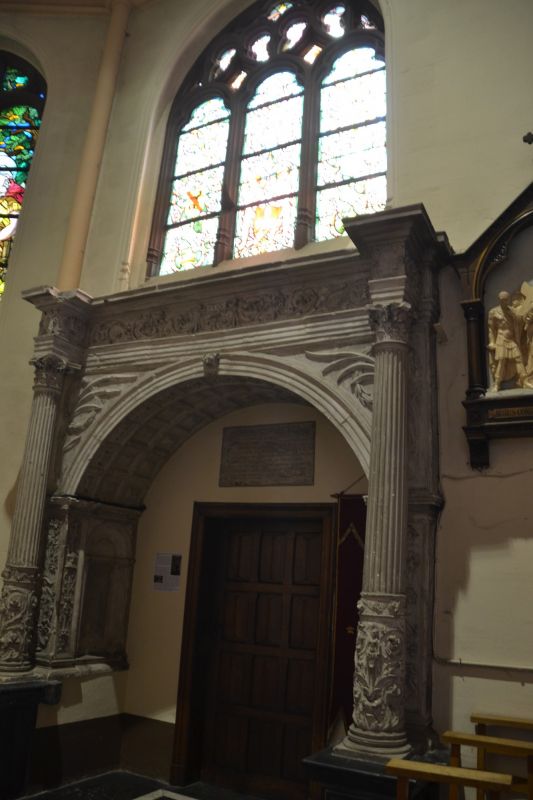
Mausoleum of Ogier de Busbecq
Listed as a ‘Historic Monument’ in 1906
It contains Ogier's heart, encased in a lead box
Built in 1559 to Ogier de Busbecq's plans for his father, who died in 1514, and his mother, who died in 1541
Dating from the Renaissance period, it is certainly the most remarkable in our region.
Built in the antique style in white and black stone, this mausoleum housed the sarcophagus of an armed man lying down, with his wife beside him.

The Baptismal Fonts
The baptistery dates from the 16th century and is built from Tournai stone.
It was recently moved for practical reasons. Its traditional liturgical place is at the entrance to the church, to welcome the newly baptised.
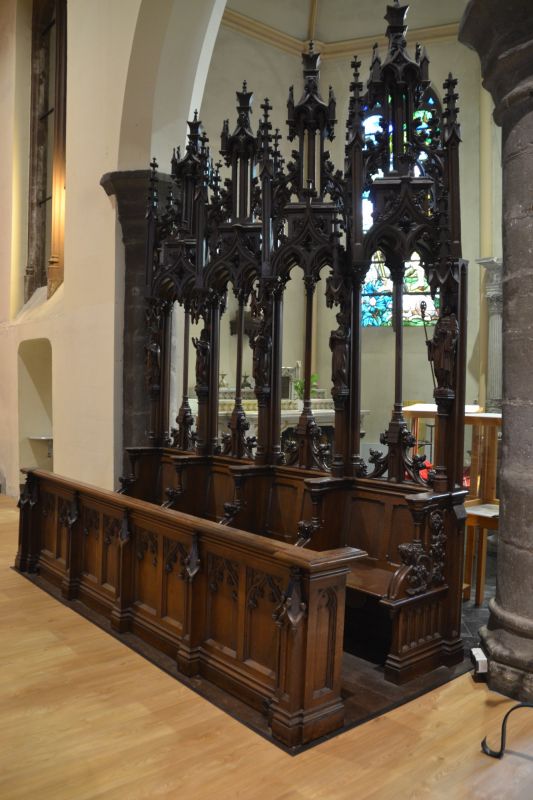
Neo-Gothic furniture
The white stone Stations of the Cross, blessed on 2 June 1887, are by Mr Verlinden.
The confessionals, stalls and Gothic-style oak pulpit, as well as the holy water fonts, are the work of Mr Deberdt de Bailleul (19th century).
The oak rood screen by Mr Leroy was donated by the people of Bousbecq in 1848. Installed in 1857, it has since disappeared.
The organ, dating from 1852, was renovated by the organ builder Bruggeman of Mouscron.
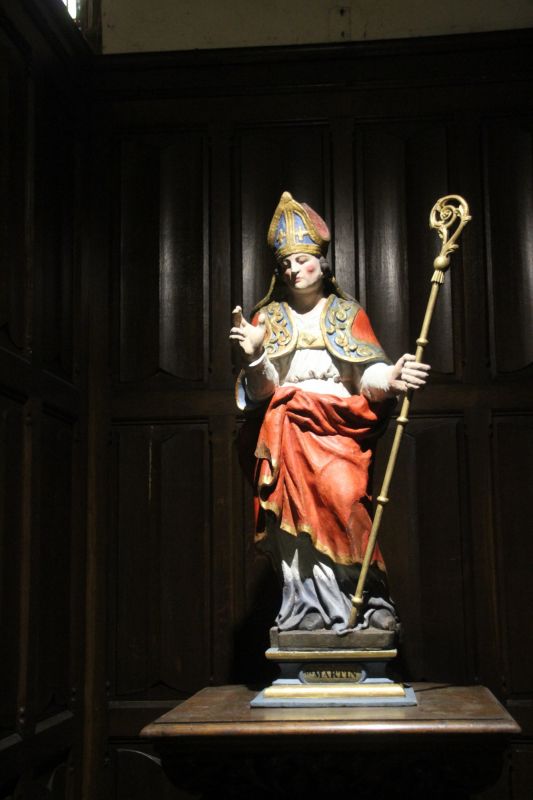
The statue of Saint Martin
Listed as a ‘Historic Monument’, it dates from the 18th century. By an unknown sculptor, it is made of polychrome wood.
It has been restored by Mrs Coquerel to its original colours