Saint Julian
Place de l'Eglise
71240 Sennecey-le-Grand
Church | 1830-1831 | Neoclassical | Catholic Church


Map
Opening hours
01 April - 30 September
Mon -
Tue 9.00 - 19.00
Wed 9.00 - 19.00
Thu 9.00 - 19.00
Fri 9.00 - 19.00
Sat 9.00 - 19.00
Sun 9.00 - 19.00
01 October - 31 March
Mon -
Tue 9.00 - 17.00
Wed 9.00 - 17.00
Thu 9.00 - 17.00
Fri 9.00 - 17.00
Sat 9.00 - 17.00
Sun 9.00 - 17.00
Religious offices
Sunday and holidays : 10.30 am
Description
From this castle, only the common areas now occupied by the town hall and the bastion, the SAS (Special Air Service) International Museum on the east side, and by the parish house, the bastion and the municipal halls on the west side remain. The castle was bought by the commune of Sennecey on 29 August 1824, and in 1825 the central building and chapel were demolished.
The contract for the construction of the new church was signed on July 21, 1826 at the prefecture of Mâcon. The church was consecrated on August 24, 1831 by the Bishop of Autun, Mgr Du Tousset d'Héricourt.
Photos






Remarkable elements

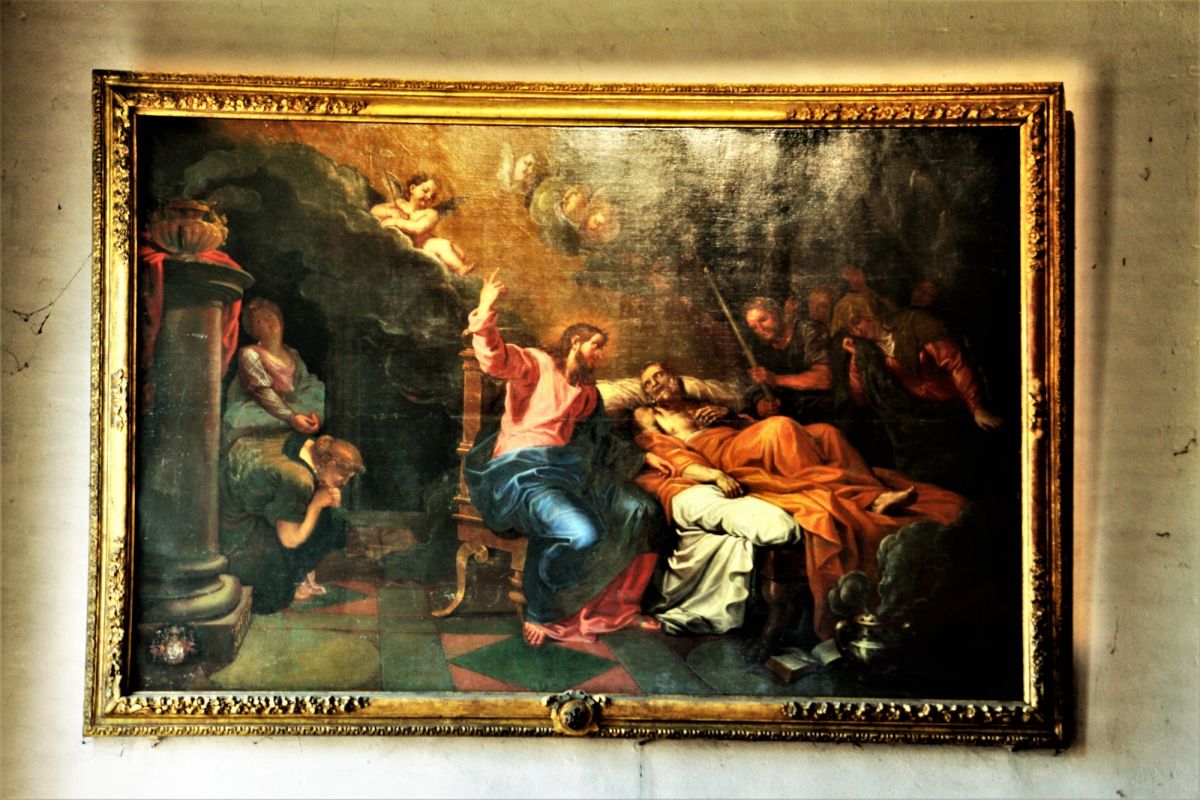
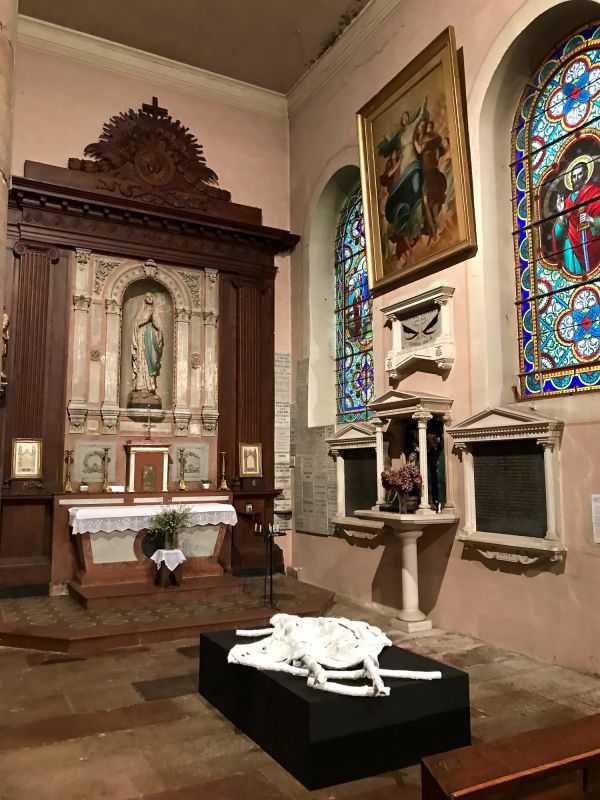
The death of Saint Joseph (anonymous - 17th century)
The scene shows Saint Joseph in agony, looking towards Christ who is pointing to heaven. Surrounded by Mary and his loved ones, he is welcomed by a cloud of angels, a sign of his heavenly reward. The neoclassical furnishings and theatrical gestures, reinforced by a ray of light, are characteristic of French Baroque.

Baptismal font
This font features a double Empire-style porphyry basin supported by three legs evoking the Trinity. Each side is decorated with a torch, symbolising divine light. Beneath the central basin, a snake coiled around a column recalls the defeat of evil by Christ, the new Adam, through baptism.
"Empreinte", work by Jacques Perreaut (2014, fabric, plaster and wood)
This contemporary work evokes the tortured body of Christ through a stretcher marked with his imprint. The luminous fabric heralds the Resurrection, while white, symbolising life, emerges from the darkness. Through the simplicity of its materials, the work invites us to meditate on the mystery of Salvation and Christian hope.
Stained glass windows
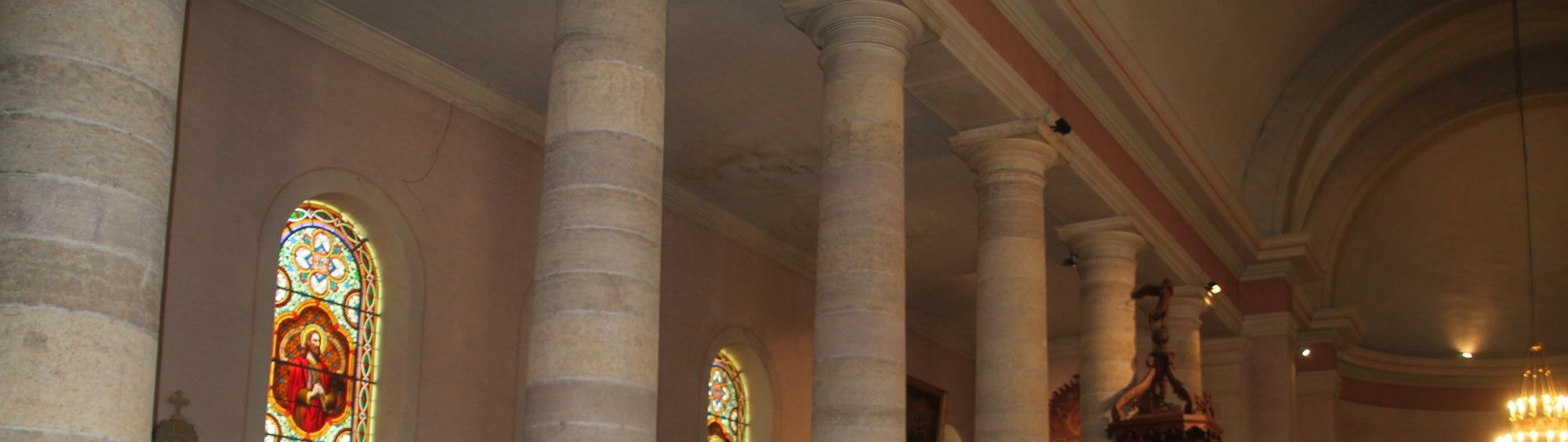
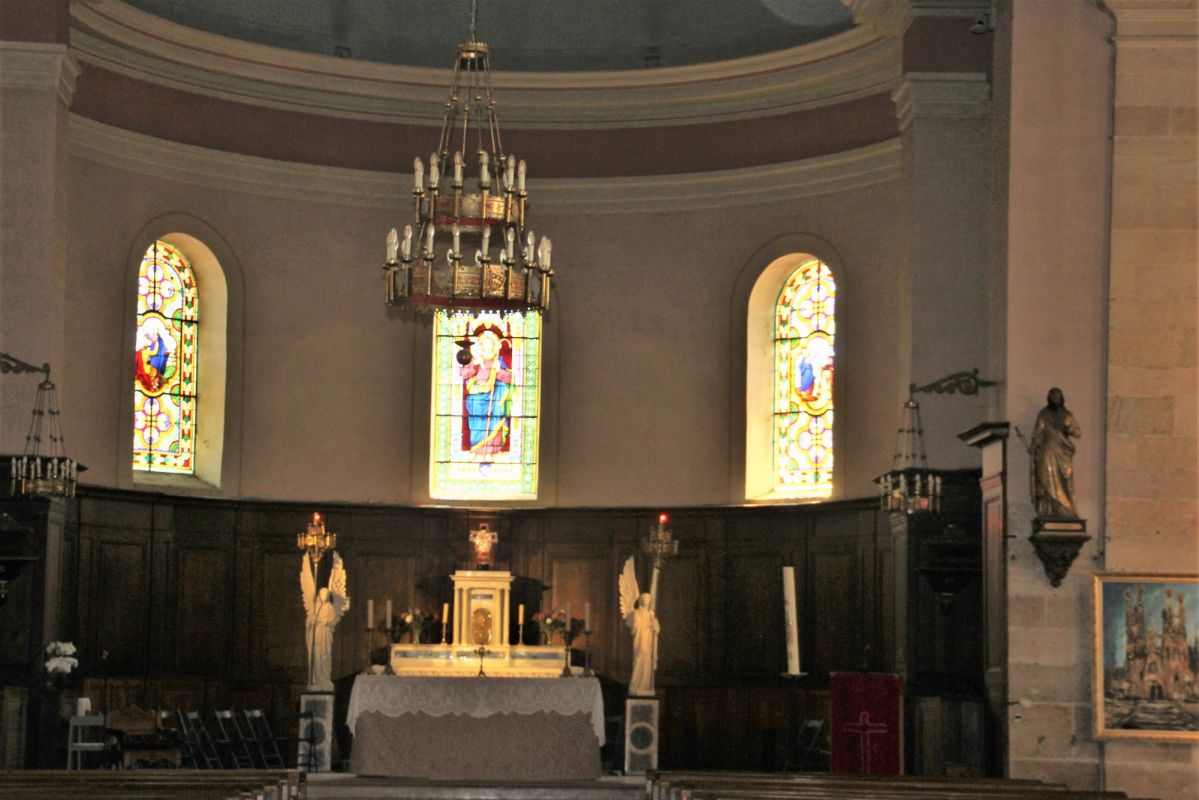
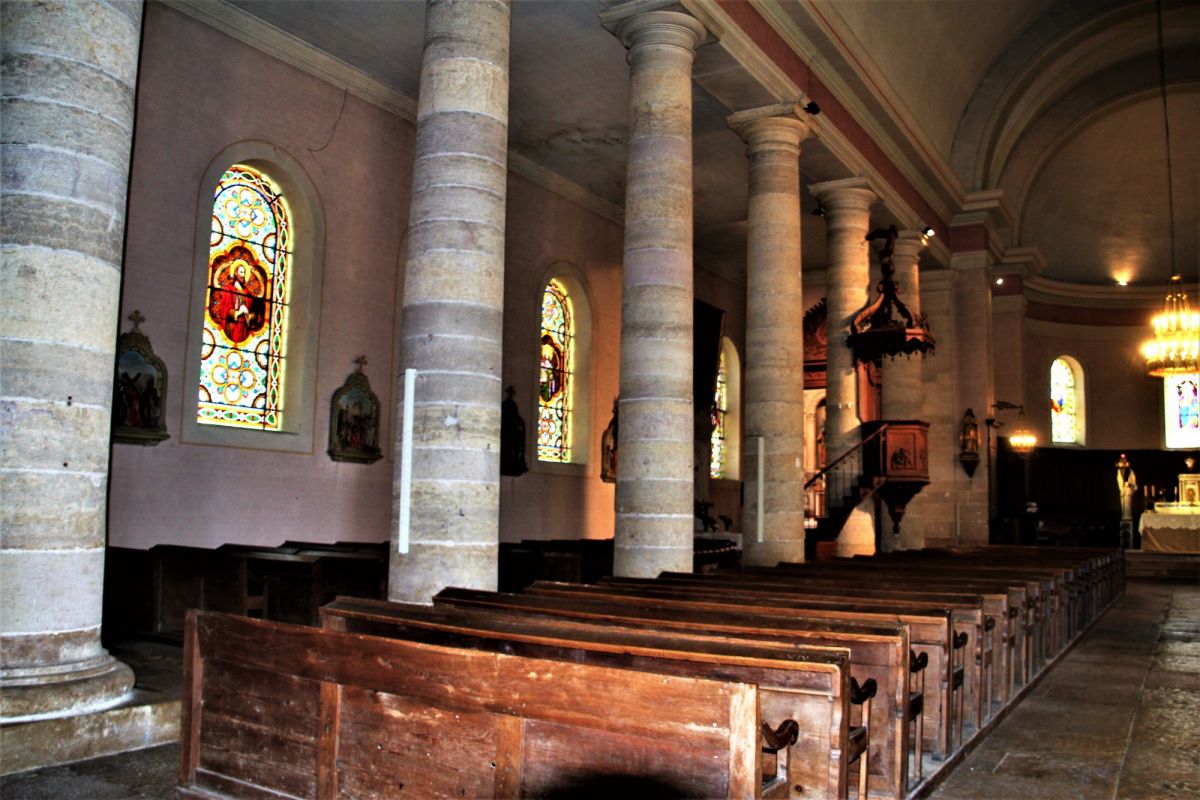
The stained glass windows in the apse illustrate major scenes from the Gospel: the handing over of the keys to Saint Peter, the Good Shepherd and the miraculous catch. Those in the aisles depict the apostles, the Assumption of the Virgin Mary and the martyrdom of Saint Julian, offering a visual journey through the Christian faith.

Pulpit
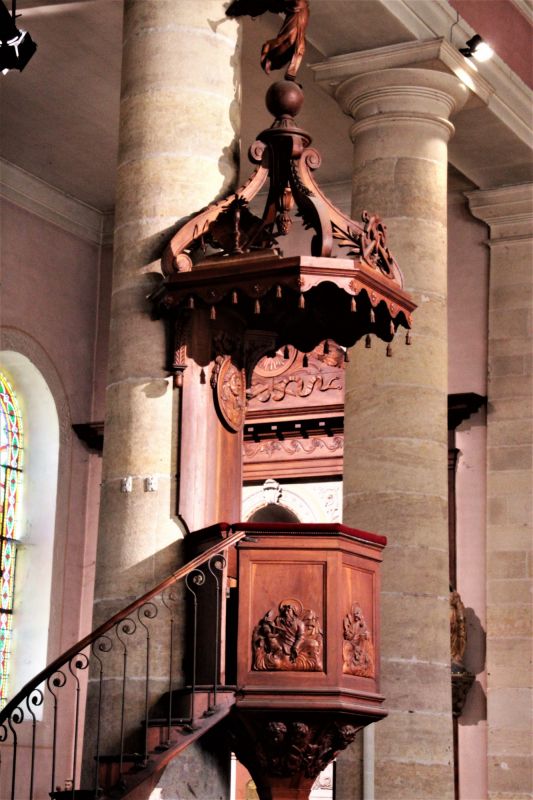
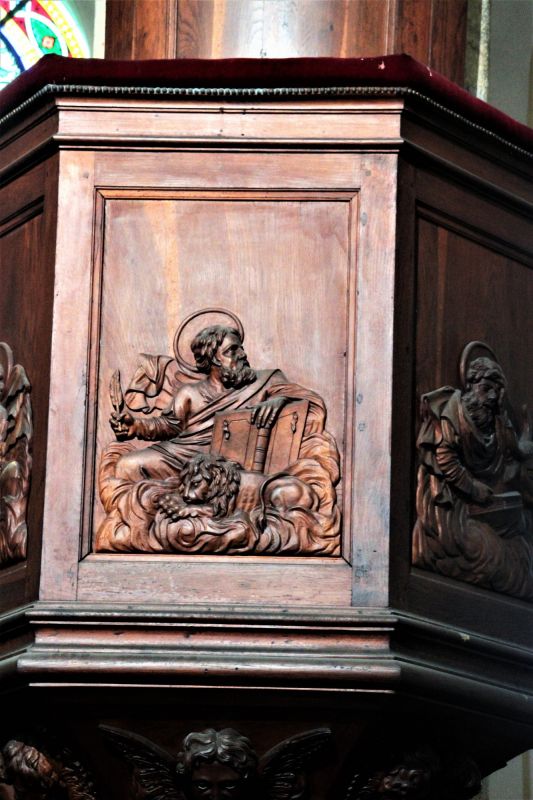
Designed for preaching, the pulpit takes the form of a closed platform. A medallion of Christ adorns the back, reminding us that the homily is given in his name. The sides of the balustrade depict the four evangelists with their symbols, while the angel at the top announces the Good News.

Facade
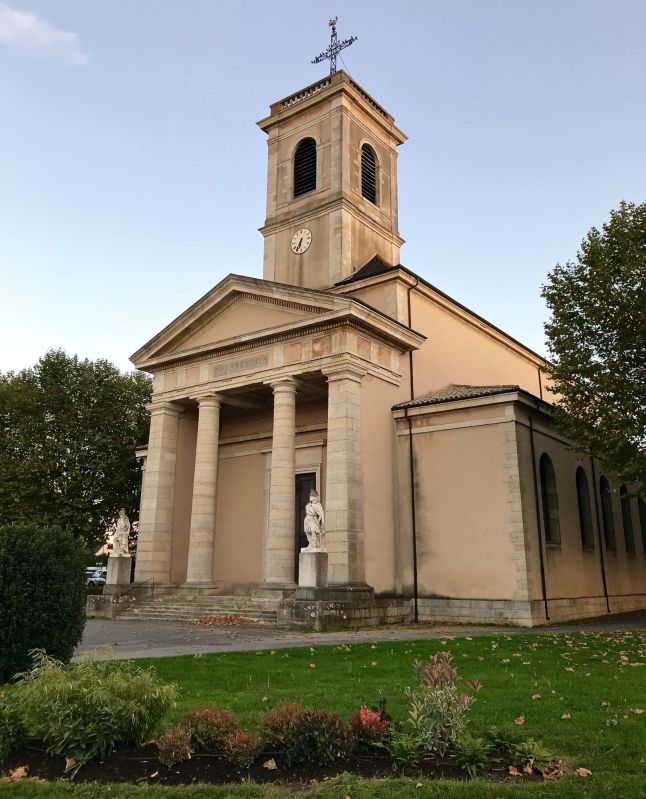
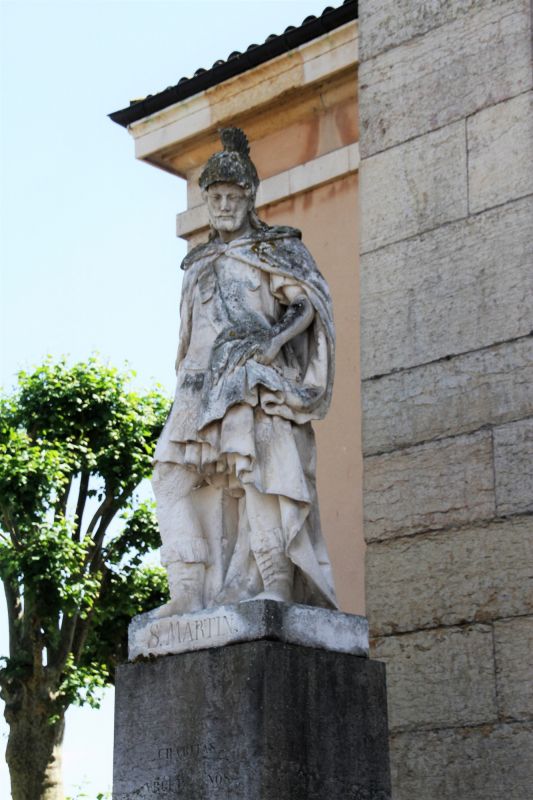
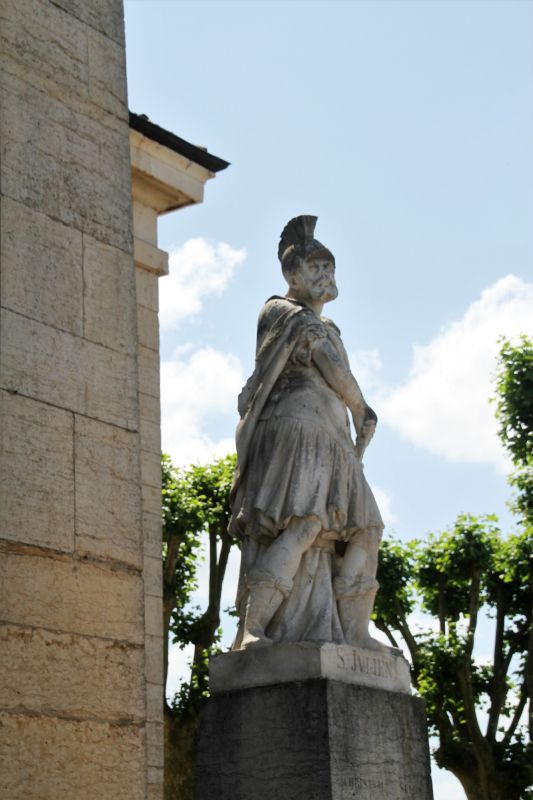
Rare in a region marked by Romanesque art, this monumental façade dates from the first half of the 19th century. The Church of Saint-Julien was built on the site of the former Château de Sennecey between 1826 and 1831. In 1860, two statues of Saint Julien and Saint Martin were added on either side of the façade.