St. John the Baptist
Place de l'Eglise
4650 Herve
Church | XIII-XVII | Gothic, Renaissance | Catholic Church


Map
Opening hours
01 January - 31 December
Mon 9.30 - 17.00
Tue 9.30 - 17.00
Wed 9.30 - 17.00
Thu 9.30 - 17.00
Fri 9.30 - 17.00
Sat 9.30 - 17.00
Sun 9.30 - 17.00
Guided tour
Pastoral Centre +32 87 67 88 80
Description
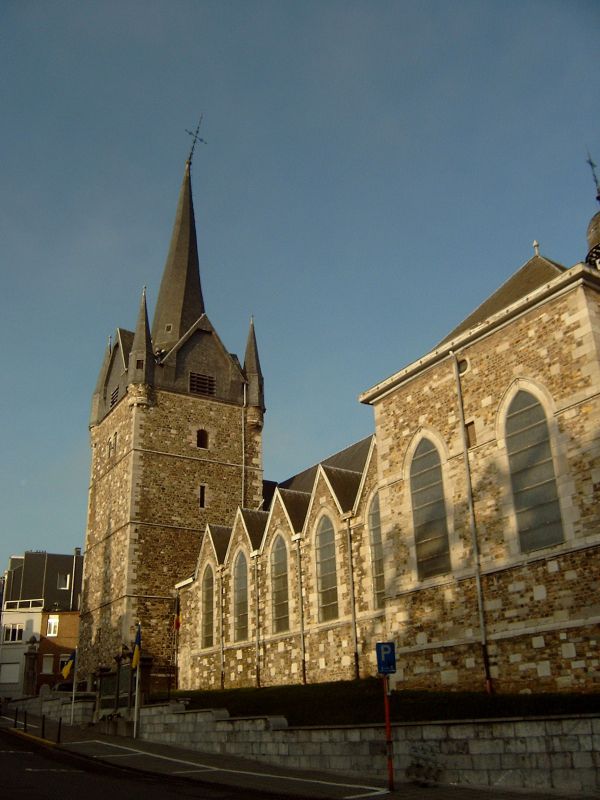
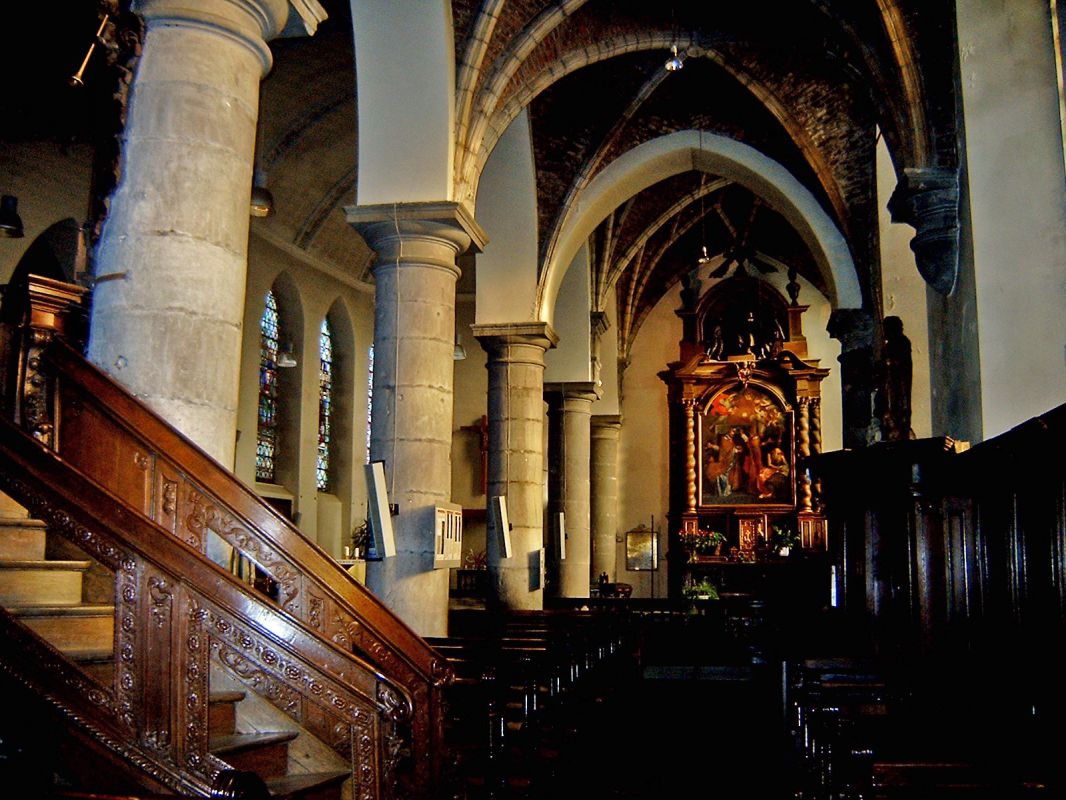
This 17th century Renaissance Gothic church stands in the historic centre of Herve. Its early 13th century Romanesque tower, one of the oldest monuments in the region, recalls the fortified feudal era with its three metre thick walls and loopholes. The 21 metre tower, topped by a 28 metre spiral spire, is flanked by four watchtowers with octagonal spires. A large lily decorated cross from 1805 crowns the steeple.
At the transept crossing rises an octagonal belfry housing a bell from 1518. Guided visits allow access to the fortified tower and steeple. On the ground floor, an oratory contains a reliquary with relics linked to Pope Alexander (105–115) and a parchment from 1145 signed by Abbot Wibald of Stavelot authenticating them.
Construction dates appear on metopes above the windows: side naves (1625–1626), transept and choir (1653). Listed since 1934, the church underwent major exterior restoration in 2010–2011.
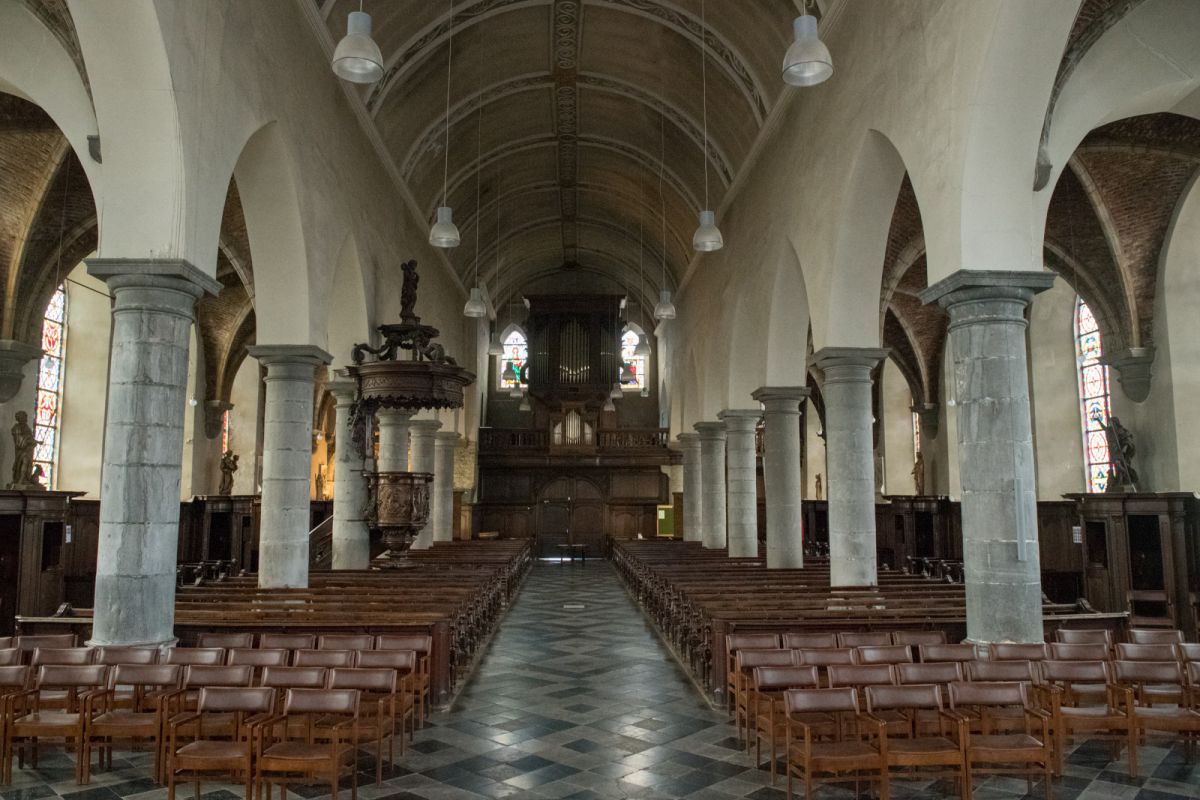
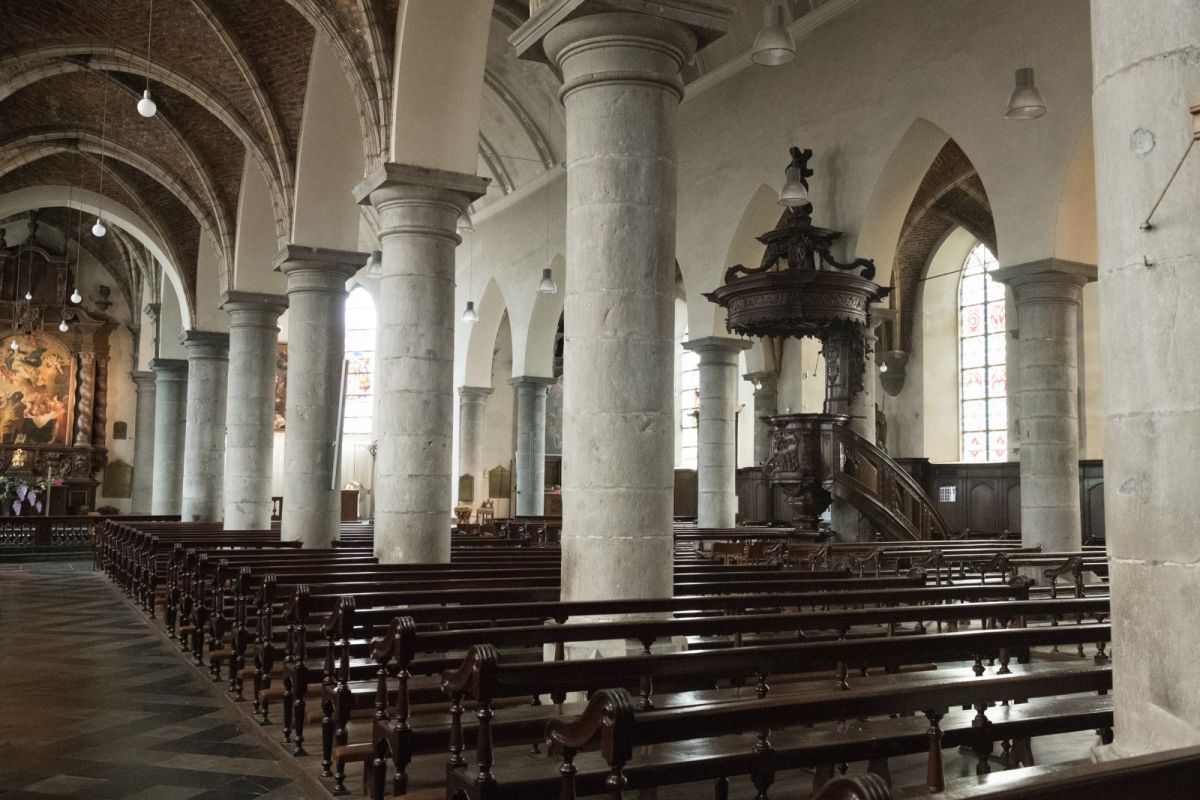
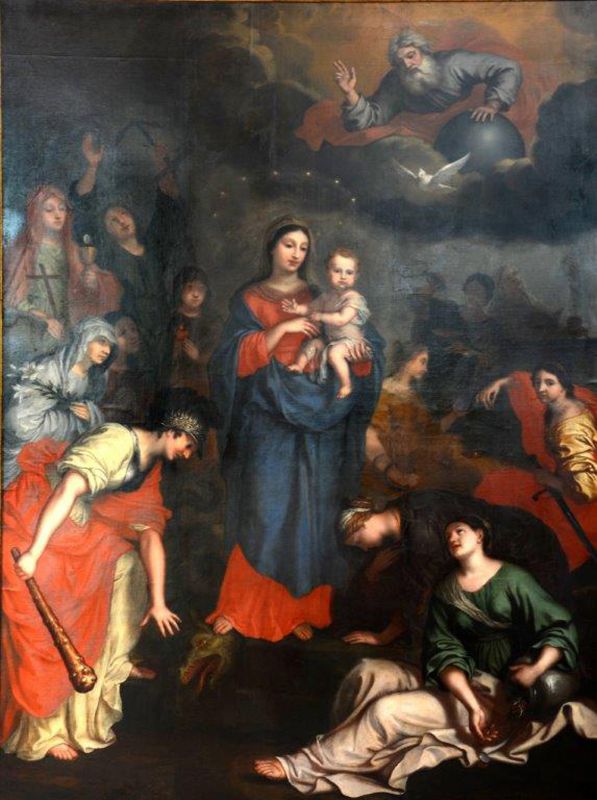
Inside are a 1739 Louis XIV style pulpit from Liège, Meuse style baptismal fonts (1574), 17th century organs, and the painting The Sacred Sacrament Dispute, attributed to Bertolet Flemal (1614–1675). The stained glass windows are rich in symbolism: those in the south nave depict the Eucharist through biblical scenes and hymns, while those in the north nave honour the Virgin Mary with poetic imagery.
Journées des Eglises Ouvertes 2017
KIKIRPA : Photo-library online


Photos




Media
Remarkable elements
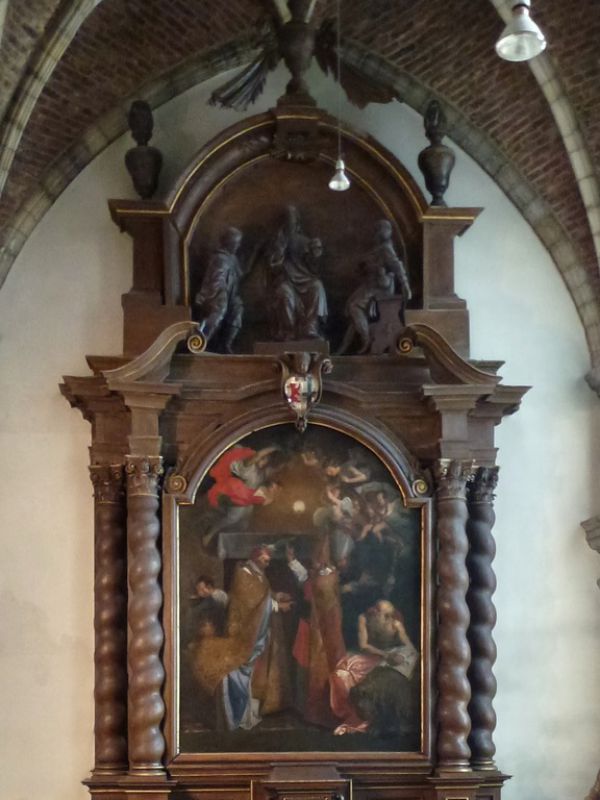
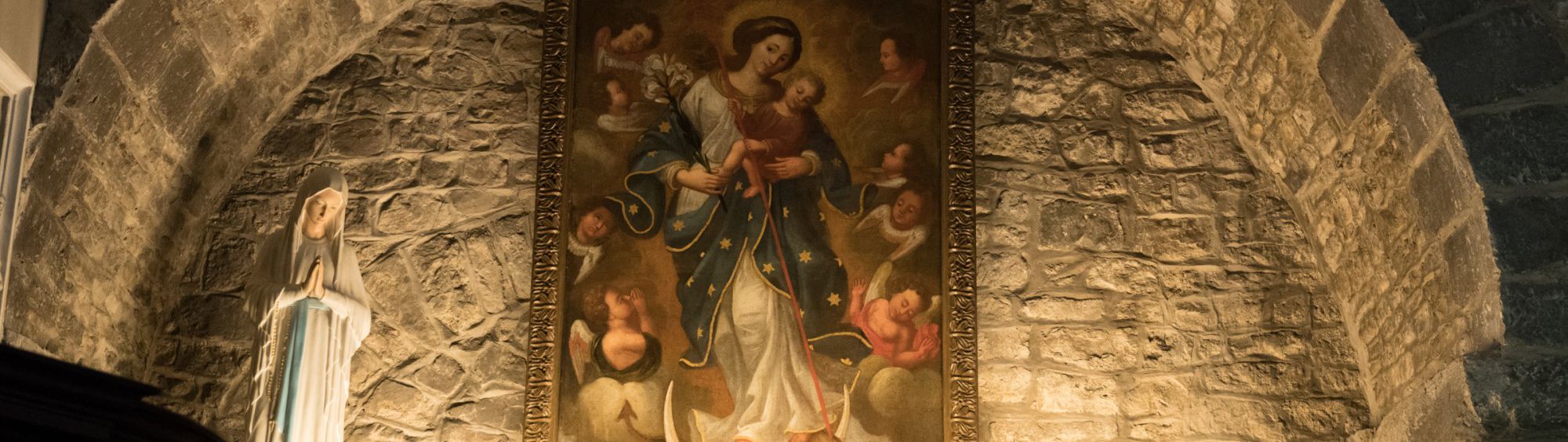
Painting by Bertholet Flémal
Bertholet Flémal’s large painting on the north nave altar, “The Dispute of the Blessed Sacrament,” shows a debate on the Eucharist between Saints Jerome, Ambrose, Augustine and Gregory. It highlights the doctrine of Christ’s real presence, central to disputes with Calvinists. The work uses rationalized chiaroscuro, with the host as the source of its dramatic light.
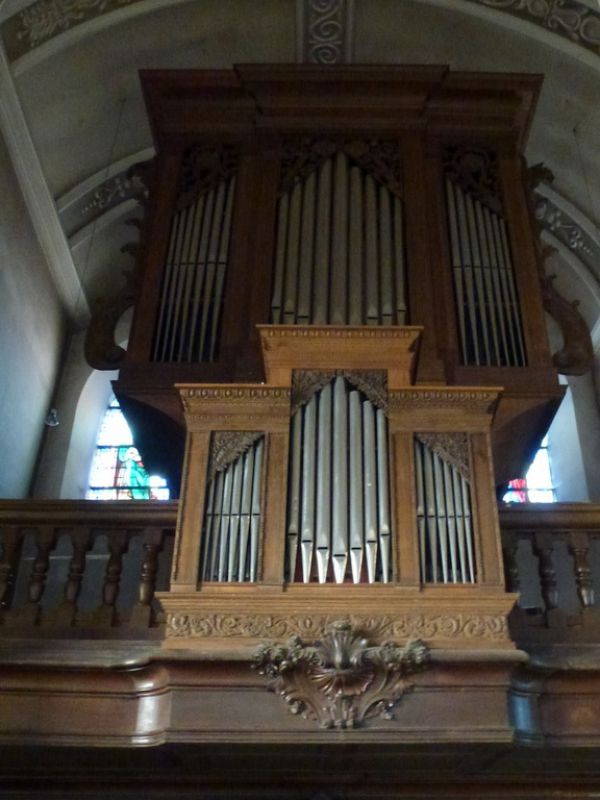
Organ
In 1672, the organ buffet, as well as the "stops," were donated by the former brotherhood of the Blessed Sacrament. Thanks to its exceptional quality, the instrument allows both French classicism and German Baroque. The last restoration was carried out by Georges Westenfelder under the direction of Hubert Schoonbroodt. The acoustics of the church being excellent, the organ concerts organised there are very much appreciated.

The pulpit
Created in 1739 by Aimont de Herve, the pulpit is a Louis XIV–style masterpiece linked to the Liège school of Del Cour. Its carved panels show flowers and festoons, with the central one depicting the Assumption. Near the choir, Saint Peter appears with the keys and the cock recalling his denial. The 1777 confessionals, benches and oak panelling also reflect the Louis XIV style with fleurons, shells and palmettes.

Baptismal fonts
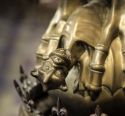
The old baptismal font, placed in the choir, is in the Mosan style. Made of Meuse limestone, they predate the present church: above each head (with the beard and the oriental-influenced crown) which decorates four corners of the octagonal basin, an Arabic numeral is inscribed in a square; the four figures together give the date 1574. The church of Saint-Jean-Baptiste has 21 stained glass windows whose symbolism deserves special attention.
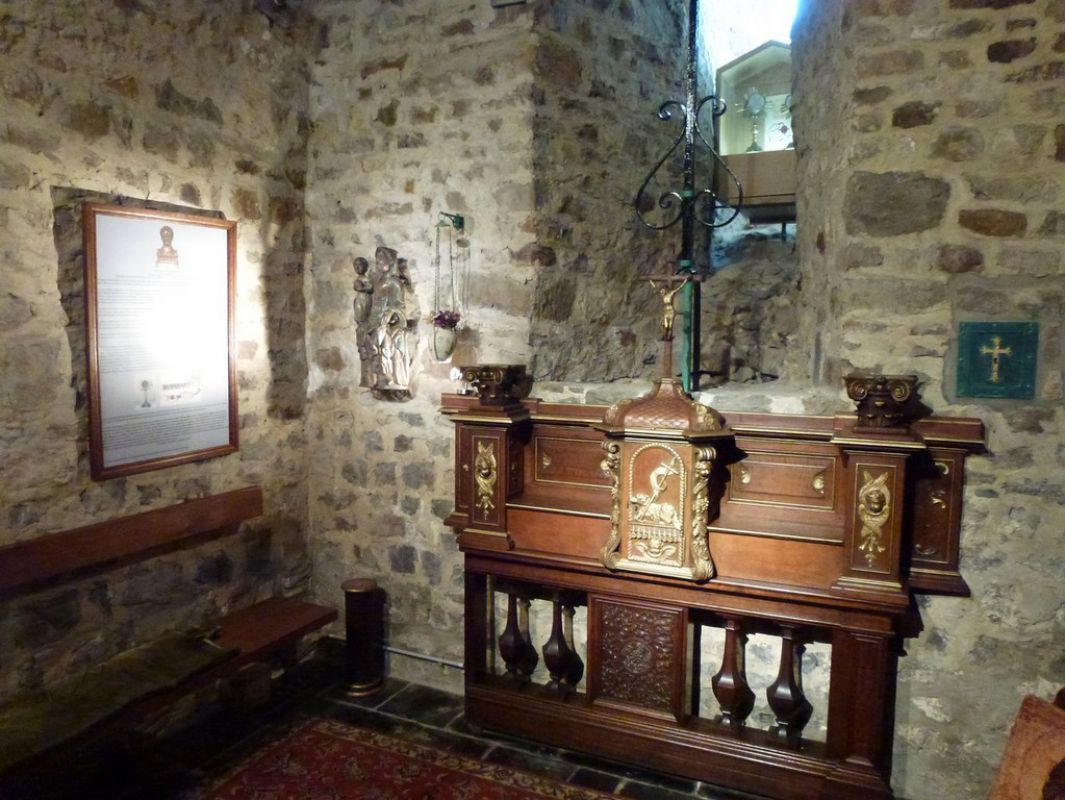
The oratory of the Romanesque tower
The 13th century Romanesque tower has 3 metre thick walls with loopholes. Its twisted bell tower is open to visitors during guided tours. The ground floor oratory holds relics of Pope St. Alexander, authenticated in 1145 by Abbot Wibald of Stavelot. A painting recounts the history of the chief reliquary, a Mosan masterpiece, and the journey of the relics from Stavelot to Xhendelesse and Herve.

The exterior of the church
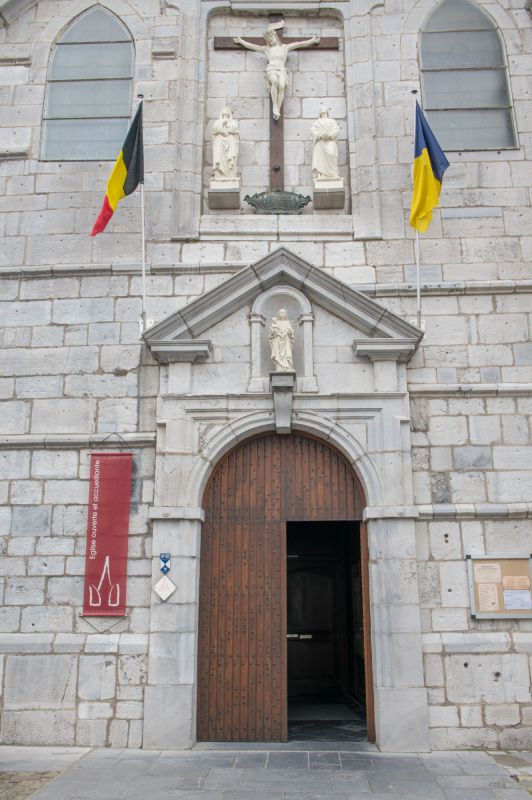
The church’s exterior was fully renovated in 2010–2011. Construction dates appear on the metopes above the windows: 1625–1626 for the side aisles and 1653 for the transept and choir. The twisted bell tower carries a fleur de lis cross dated 1805. At the transept crossing stands an octagonal tower with a bell from 1518. The sandstone rubble walls match the tower, while the base is limestone.
Nearby


Circuit
The Pays de Herve in the 19th century - bicycle
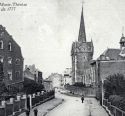
The Verviers revolution at the time of the industrial revolution (bicycle tour) - Just next to industrialized cities such as Verviers and Pepinster, admire the typical grove landscape of this region and its delicacies: Liège syrup, Herve cheese...