
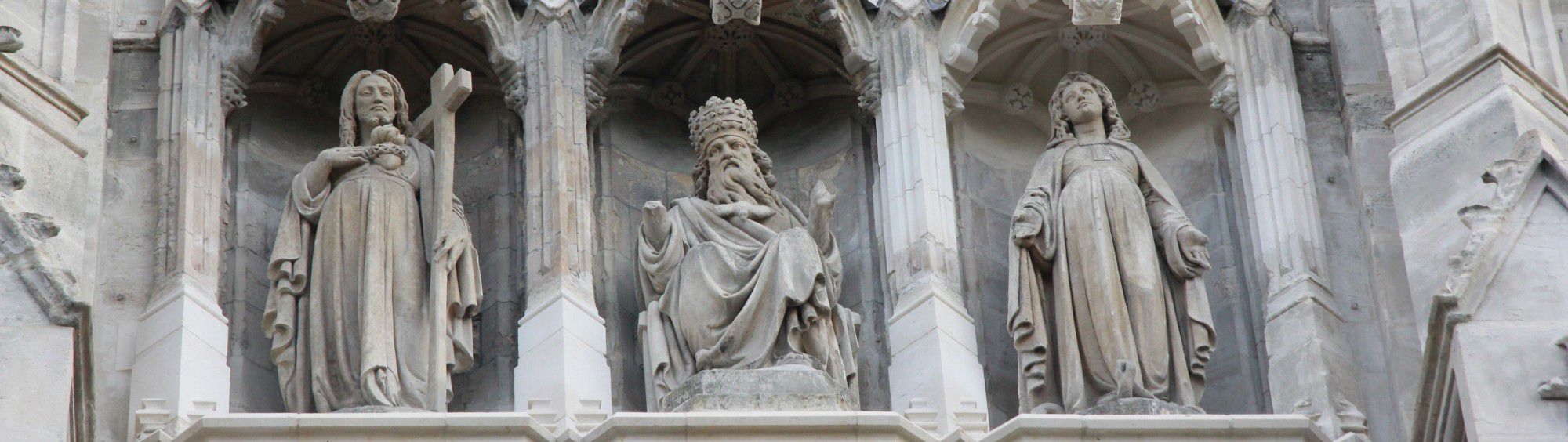
Saint Maurice
Rue Pierre Mauroy
59800 Lille
Church | XIII-XV | Gothic | Catholic Church


Map
Opening hours
01 January - 31 December
Mon 11.00 - 18.00
Tue 11.00 - 18.00
Wed 11.00 - 18.00
Thu 11.00 - 18.00
Fri 11.00 - 18.00
Sat 11.00 - 19.00
Sun 15.00 - 20.00
Religious offices
Monday to Friday : 12.15 am
Sunday : 10.30 am and 6.30 pm
Description
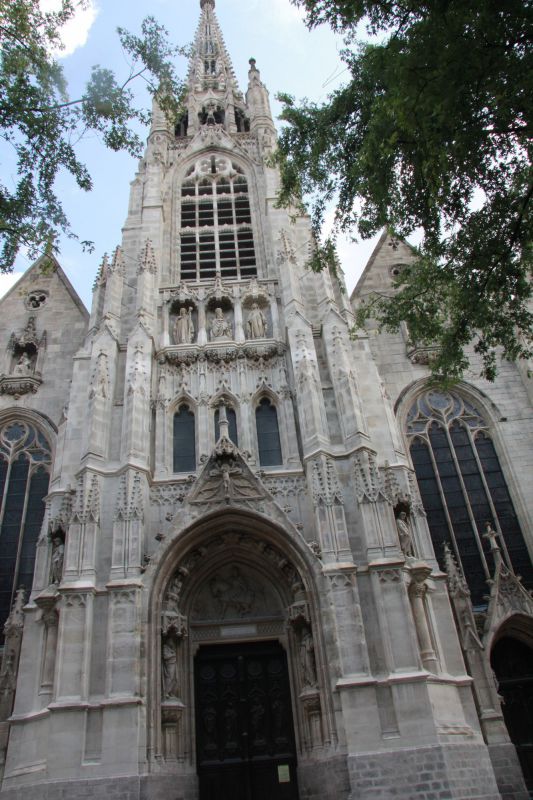
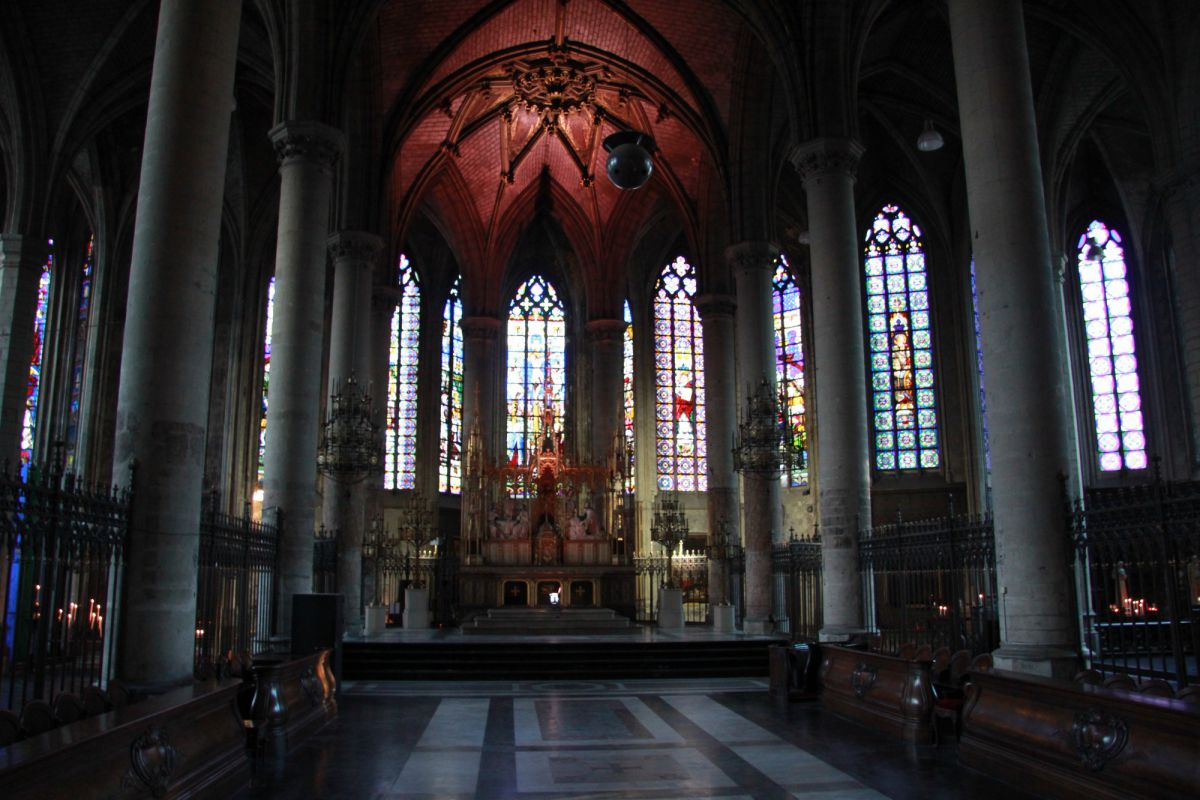
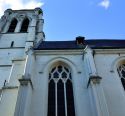
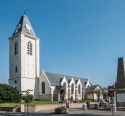
The actual building is a “hallekerque” (church/ market hall) made up of 5 naves of the same width and height, an imposing structure, but giving an impression of lightness.
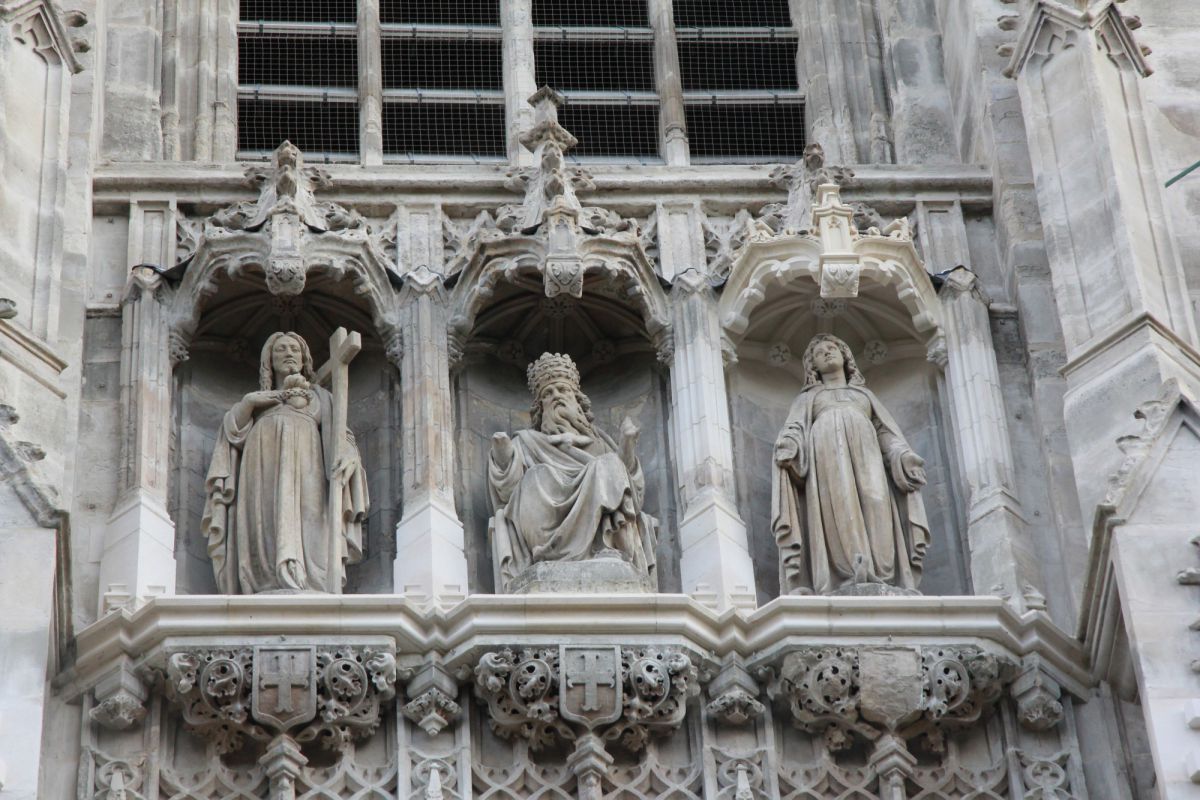
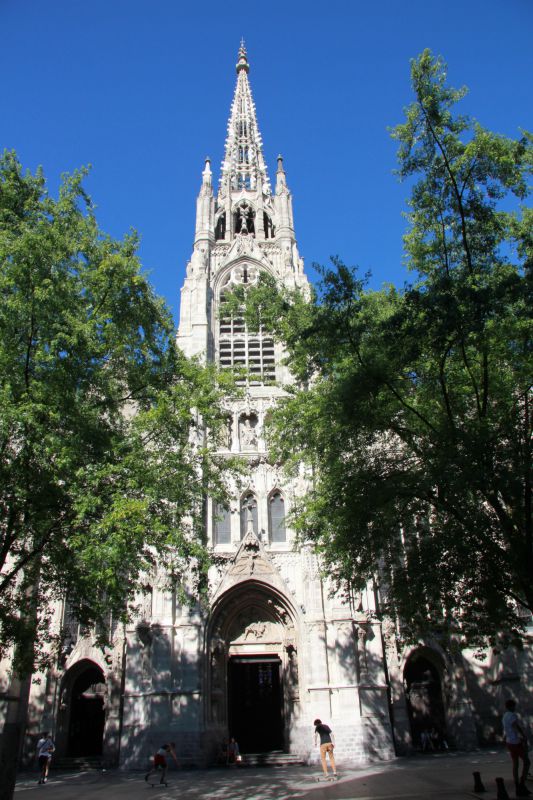
The construction of the actual church took more than 400 years, from the 14th to the 19th centuries, and offers a complete building in the flamboyant gothic and neo-gothic style.
The French revolution marks a pause in the history of the church, which becomes a “Temple of Reason”. All its furnishings are removed , which will be restored in the 19th century.
An ultimate extension of three bays, and the construction of a new belfry, of a height of 68 meters, are done during the 19th century with the objective of making the church a cathedral when the diocese of Lille was created. This project was not finalised as the construction of the actual cathedral Our Lady of the Vineyard was decided.
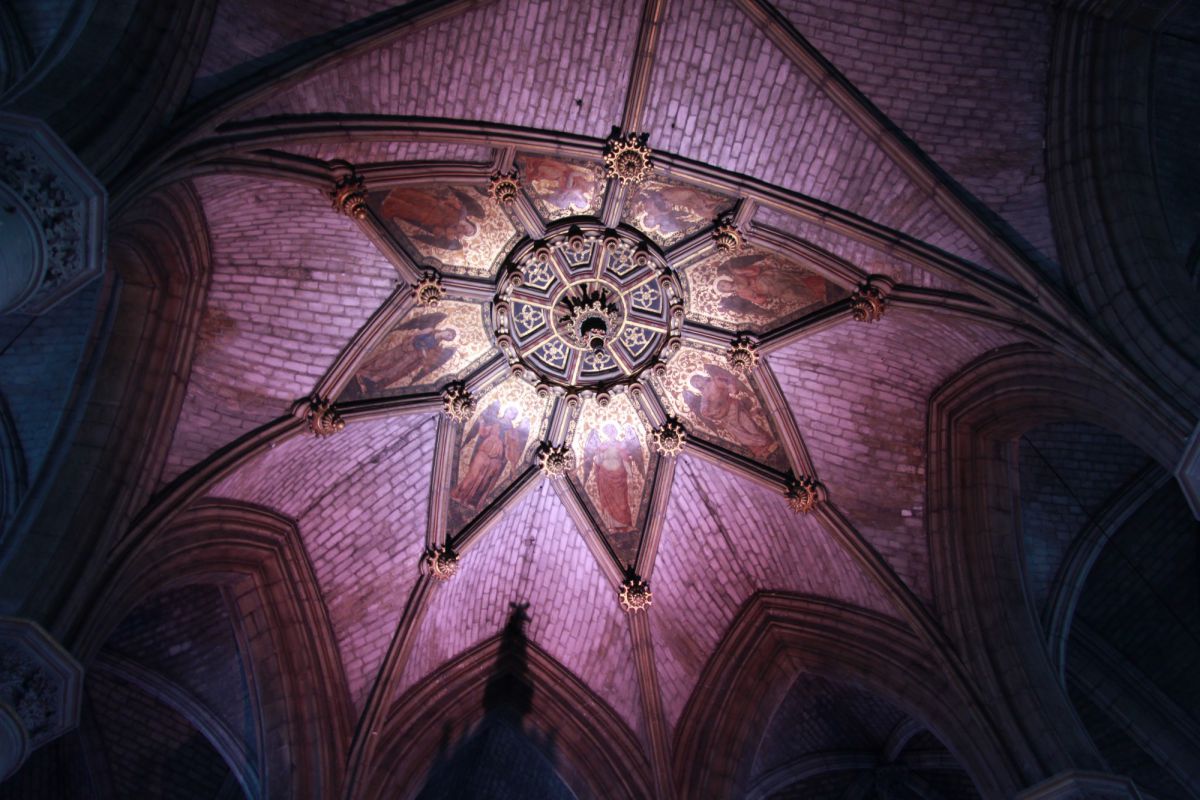
Today the church possesses remarkable furnishings and a rich decoration. It was classified as a Historical Monument in 1914 and has numerous visitors each year. To read its “Livre d’Or” is to go on a world tour, showing the diversity of visitors.


Photos
Remarkable elements
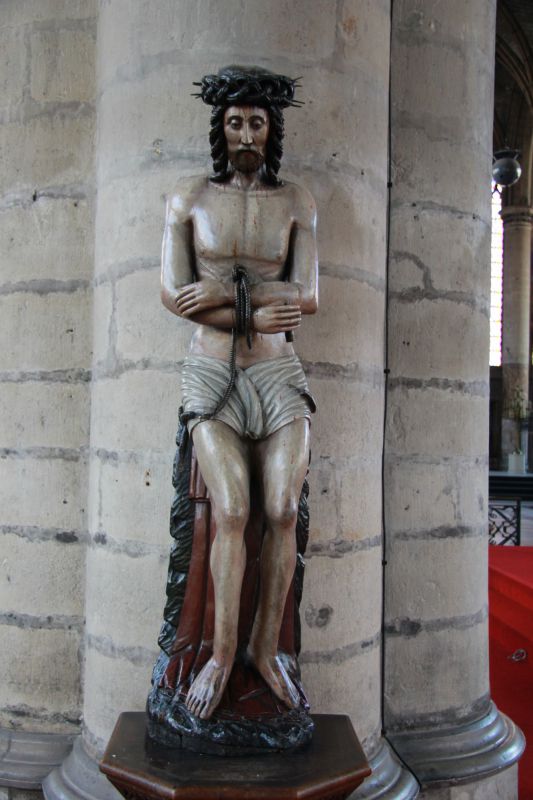
Christ in chains
This iconography, also known as Christ of Pity, is very common in northern and eastern France. It illustrates an episode from the Passion: Christ, seated on a rock, awaiting his punishment. With his feet and hands bound, wearing only a loincloth and a crown of thorns, he embodies suffering and resignation.
The statue is usually placed between Stations X and XI of the Way of the Cross, i.e. between the moment when Christ is stripped of his clothes and the moment when he is nailed to the cross.
Monument to the Duke of Berry
In the north aisle, a high relief catches the eye. It is a monument in honour of Charles-Ferdinand d'Artois, Duke of Berry (1778-1820), son of the future King Charles X and heir to the throne of the House of Bourbon. He was assassinated outside the Paris Opera House during the reign of his uncle Louis XVIII.
In 1815, the duke had expressed his wish that his heart be laid to rest in Lille and his body in the Royal Basilica of Saint-Denis. In the end, his entrails were laid to rest in Lille, while his heart was taken to the chapel of the Château de Rosny.
The creation of a memorial monument within the Church of Saint-Maurice was entrusted to the architect Victor Leplus (1798-1851), who designed the plans, and the sculptor Étienne-Édouard Gois (1765-1836).
Inaugurated in 1822, the monument was dismantled in 1831 following a riot led by the Orléanist clan of Lille. The sculpted group was then broken up and scattered in different locations.
It was not until the early 1980s that the monument was reconstructed, notably with the allegory of Lille seated on the left and that of Religion standing on the right. Today, only the altar and the medallion of the Duke of Berry, which once adorned the pyramid, are still missing.
Paintings by Jacob Van Oost, known as the Younger
The work of the famous Bruges painter, Jacques Van Oost the Younger (1639-1713), is defined by a clear and refined Flemish Baroque style, marked by a sober naturalism and a strong spiritual intensity, typical of the Counter-Reformation. He settled in Lille for many years, where he painted numerous works, including those on display in the building:
• Transverberation of Saint Teresa
• The Flight into Egypt
• The Adoration of the Shepherds
• The Marriage of the Virgin
• The Presentation in the Temple
• Saint Charles Borromeo Praying for the Plague Victims
• Saint Anthony of Padua
• The Vision of Saint John of the Cross
• Glorification of Saint John of the Cross
Scenes from the Passion by Louis Joseph Watteau
The nephew of the famous painter Antoine Watteau, Louis-Joseph Watteau (1731-1798) was originally from Valenciennes but moved to Lille to make a living from his art. He played a decisive role in the creation of the future Museum of Fine Arts.
Between 1767 and 1768, he painted a series on the Passion, four of which can be seen in Saint Maurice Church:
• The Arrest of Christ
• Christ Mocked
• Jesus Falls for the First Time under the Weight of the Cross
• Christ on the Cross
Reliquary statue of Saint Roch
This polychrome wooden statue, dated 1668, depicts Saint Roch, protector and healer against the plague. He is easily recognisable by his pilgrim's clothes – of whom he is the patron saint – and the dog that accompanies him. According to his hagiography, this dog brought him food every day while he was living in seclusion in a forest, struck down by the plague. Eventually, he survived the disease and resumed his life in the service of others. Having studied medicine, he brought relief to many people in the towns he passed through.
An angel also appears in this composition, which is more unusual.
The statue was installed in the church after a plague epidemic struck the parish that same year.
Painting of Saint Maurice and his companions
Dating from the late 16th or early 17th century, this painting is the oldest preserved in a church in Lille.
The scene depicts Saint Maurice and his soldiers and evokes their martyrdom, known as the ‘massacre of the Theban Legion’, which took place in what is now Switzerland. In the 3rd century, a Roman legion of Egyptian origin stationed in the region was led by Saint Maurice of Agaune. The soldiers were ordered to take part in the persecution of Christians. But some of them, who had converted and were supported by their leaders, refused to take part in the oppression. They were then all massacred.
The painting is surmounted by the Latin invocation: ‘Saint Maurice, with your companions, pray for us.’
Nearby


Circuit
In the footsteps of Natalie Doignies

The founder of a religious congregation dedicated to helping the poor out of poverty, she left her mark on the religious buildings of Lille...