Saint Martin
Rue de l'Eglise 210
62370 Audruicq
Church | XVIII | Hallekerque | Catholic Church


Map
Opening hours
01 January - 31 December
Mon 9.30 - 16.30
Tue 9.30 - 16.30
Wed 9.30 - 16.30
Thu 9.30 - 16.30
Fri 9.30 - 16.30
Sat 9.30 - 16.30
Sun -
m
Religious offices
Sunday 11 am
Description
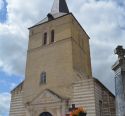
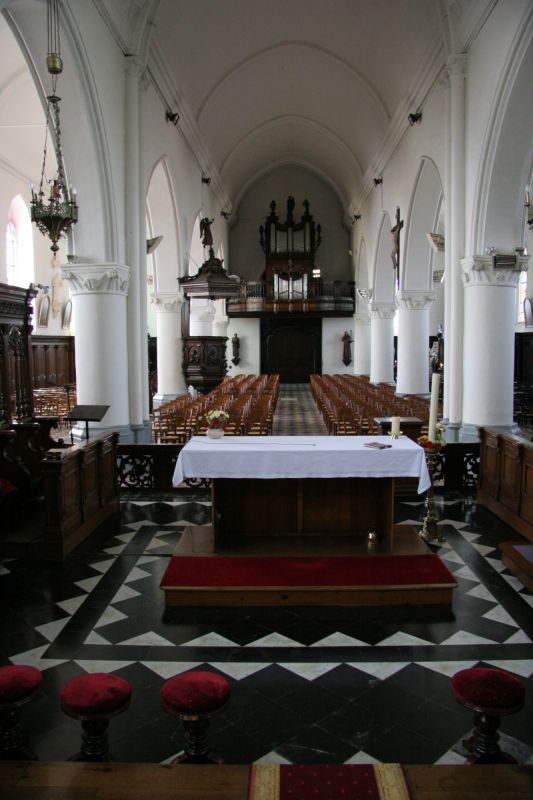
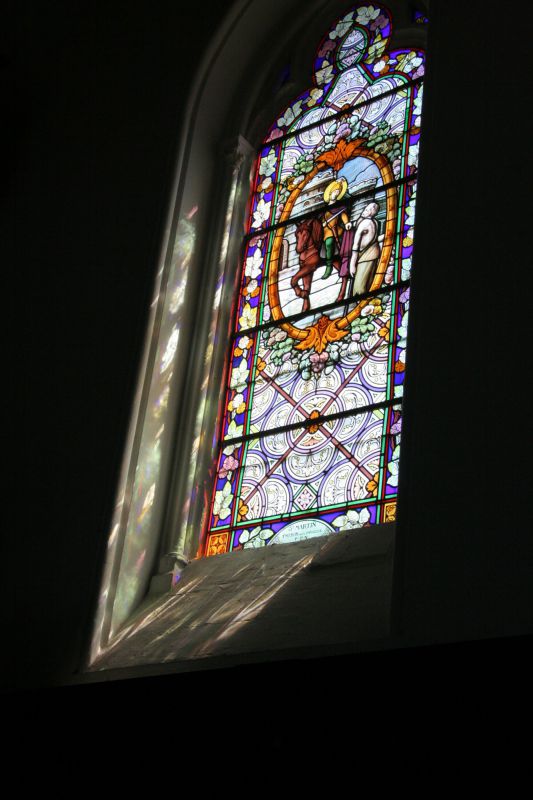
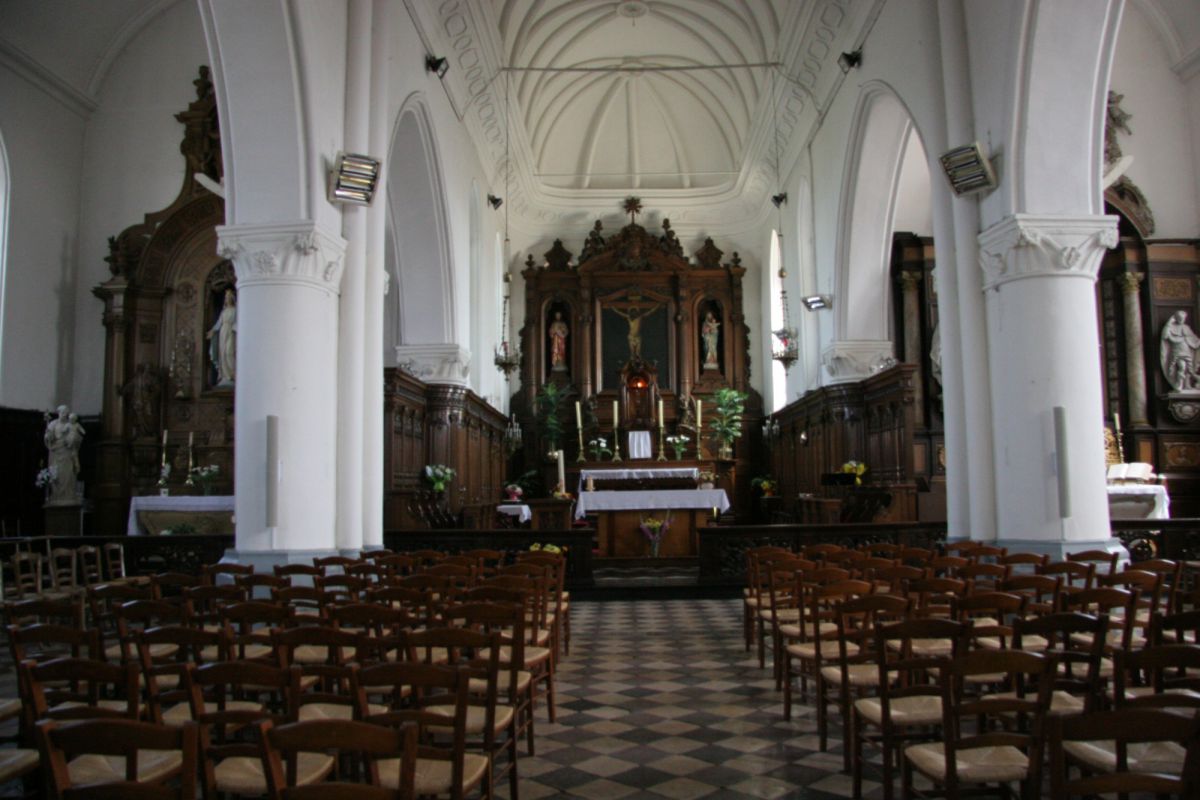
Spared during the French Revolution, the church was used as a warehouse for the production of saltpetre. Today, it still houses a rich collection of 18th-century furnishings, notably a carved wooden pulpit, a side altar adorned with a painting depicting the martyrdom of Saint Blaise, and an organ from the Church of Sainte-Marguerite in Saint-Omer. The chancel houses a high altar and a 19th-century altarpiece, as well as stained-glass windows depicting Saint Patrick and Saint George, donated by British soldiers in 1919 in memory of the military camp established in Audruicq during the First World War.
As the gateway to the Opal Coast, the Audruicq Oye-Plage region offers a chance to explore its unspoilt countryside along the drainage channels, past a chicory drying shed or in the heart of the Platier d’Oye nature reserve.
Translated with www.DeepL.com/Translator (free version)
Photos


Remarkable elements
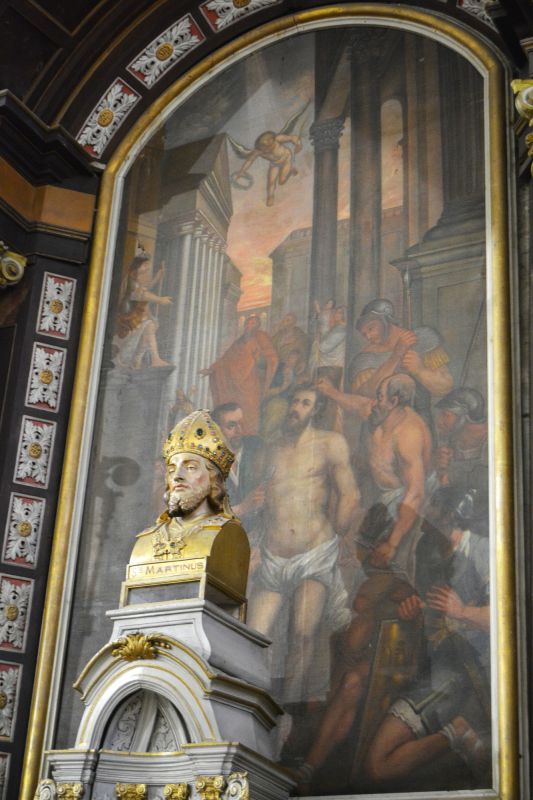
The Martyrdom of Saint Blaise
At the centre of the altarpiece, the painting depicts the martyrdom of Saint Blaise in the 4th century. Bishop of Sebaste in Armenia, he was taken prisoner after fleeing persecution. According to tradition, his flesh was torn with iron combs before he was beheaded. Celebrated on 3 February, he is also invoked against sore throats, in memory of the child he is said to have saved from choking on a fish bone.
Translated with www.DeepL.com/Translator (free version)
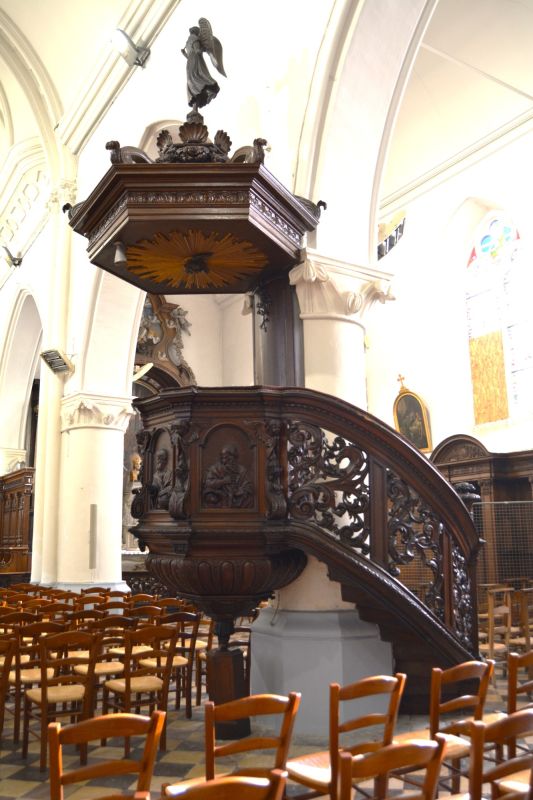
Pulpit from 1718
Angels, foliage motifs, a dove, the Evangelists and Christ: this pulpit is certainly rich in details to admire! However, one question remains: from which workshop does it originate? That of the Piette brothers or the Saint-Omer workshop?
Its striking resemblance to the pulpit in the Church of Saint-Denis in Saint-Omer or that in Guînes might well point to an interesting lead…
Translated with www.DeepL.com/Translator (free version)
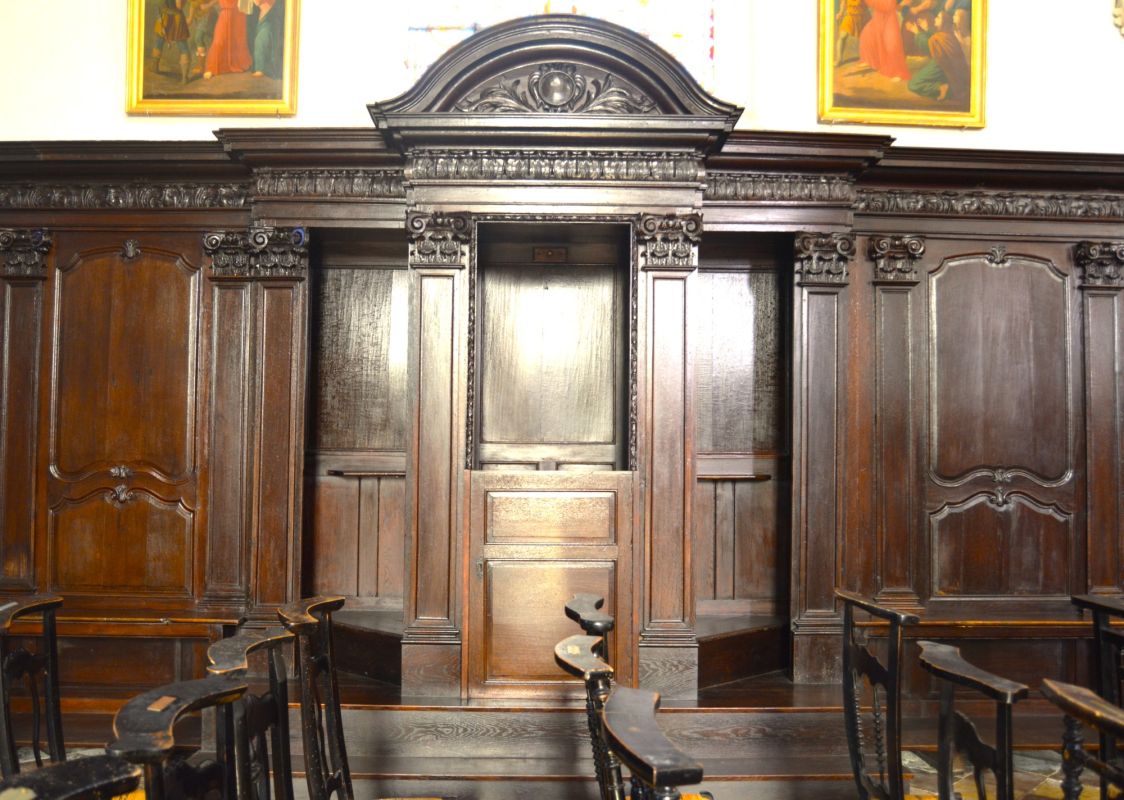
Woodwork dating from 1780
Communion benches, confessionals and door frames are united by a remarkable ensemble of carved and decorated panelling in Danish oak. This woodwork has, however, endured a great deal: successive works carried out on the building have caused it considerable damage. Between 1959 and 1964, Mr Jonès, a cabinetmaker from Saint-Omer, restored them to their former glory, particularly by restoring the western and northern sections.
Translated with www.DeepL.com/Translator (free version)
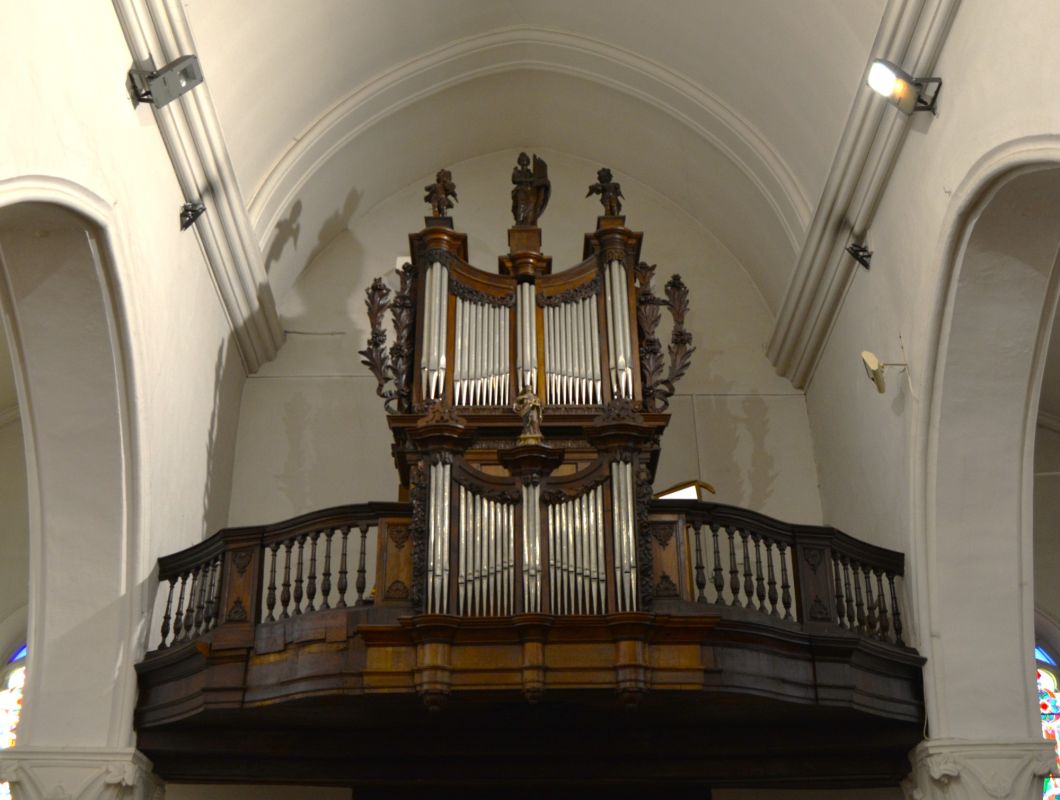
Organ dating from 1780
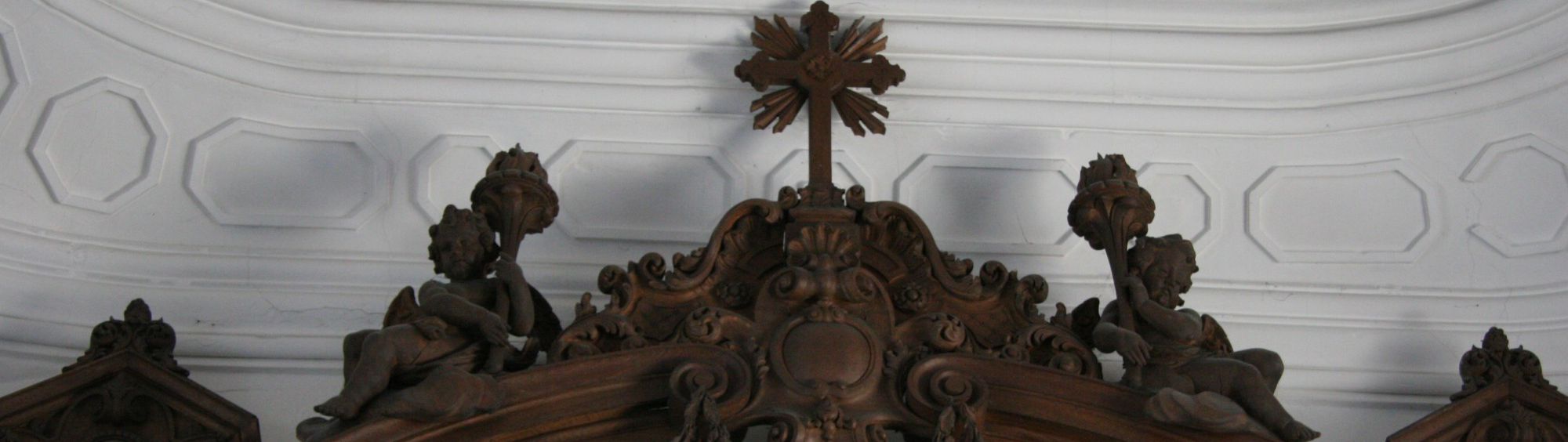
It was brought to Audruicq in 1793 from the Church of Sainte-Marguerite in Saint-Omer. Crafted from carved oak and featuring plant motifs and composite capitals, this monumental organ comprises three semi-circular towers and two flat-fronted sections. The whole is crowned by a statue of Saint Cecilia and her portable organ.
The instrument has undergone numerous alterations over the centuries, and history will chiefly remember its restoration to the 1861 layout by the Millot-Jaccard firm in 1990.
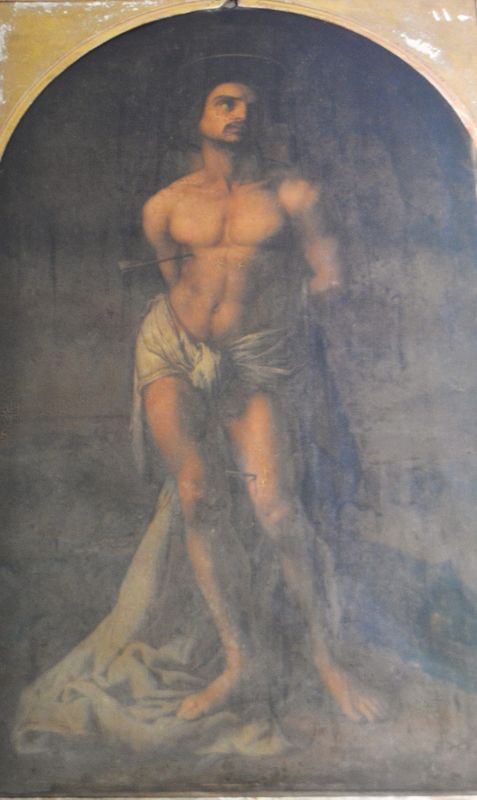
Painting of Saint Sebastian from 1843
Formerly housed in the altarpiece of the south side altar, this Saint Sebastian is depicted curled into an S-shape, in accordance with a well-known iconographic tradition. The work was painted by Antoine-Gaspard Marius Coutel, a pupil of Ingres at the École des Beaux-Arts from 1833. An artist who exhibited at the Paris Salon from 1838 to 1878, his work is also on display at the Perpignan Art Museum, alongside Les Deux Sœurs de charité.
Translated with www.DeepL.com/Translator (free version)