Saint Louis
Place de la Citadelle
62000 Arras
Chapel | 1676 | Classical | Catholic Church


Map
Opening hours
01 January - 31 December
Mon 10.00 - 18.00
Tue 10.00 - 18.00
Wed 10.00 - 18.00
Thu 10.00 - 18.00
Fri 10.00 - 18.00
Sat 10.00 - 18.00
Sun 10.00 - 18.00
Description
It was desecrated between 1830 and 1866 and lost its religious function to be used for military purposes (drill hall, artillery depot, shop).
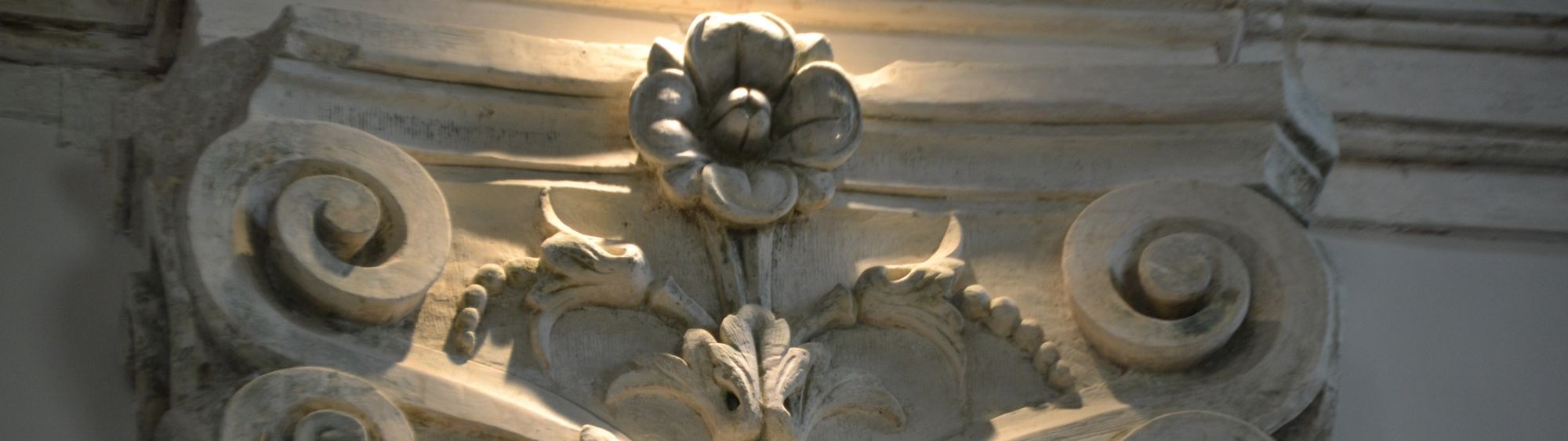
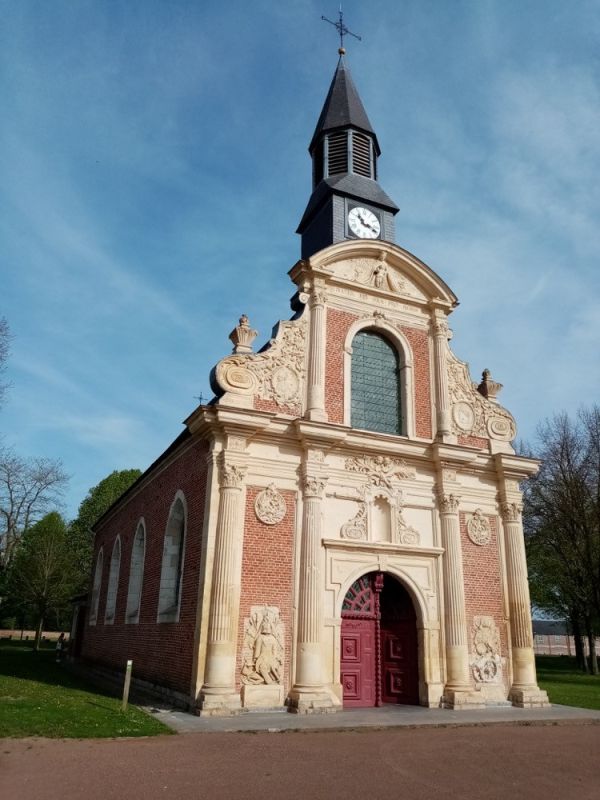
In 1867, Napoleon III had the entire décor altered during a major renovation campaign. A new allegorical and military décor was sculpted in the Flemish style. This profusion of ornamentation (rosettes, trophies, garlands, etc.) contrasted sharply with the sobriety of the original classical style. From then on, the chapel took on a composite appearance.
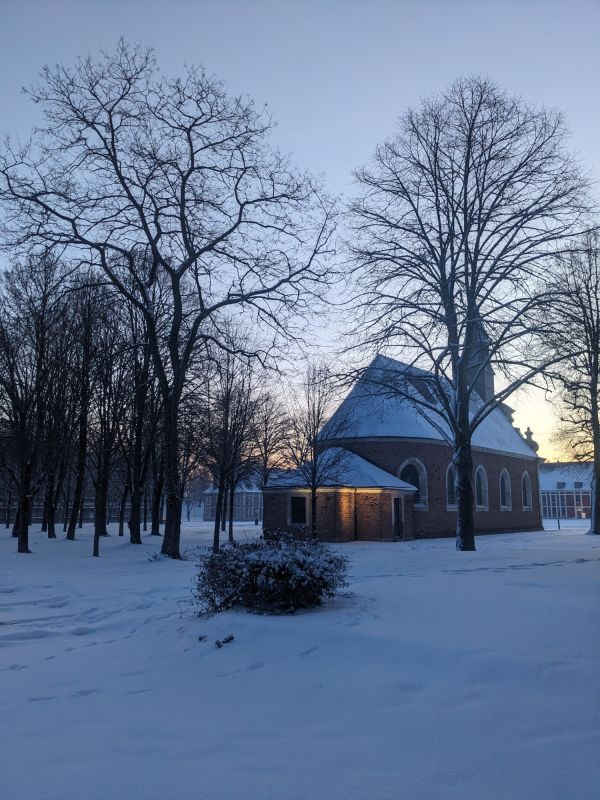
Having suffered during the First World War, it was subsequently restored and became a memorial in honour of the dead of the Engineers. Still consecrated, it has been listed as a historic monument since 1920. The Arras urban community acquired it in June 2010.
Translated with DeepL.com (free version)

Photos
Remarkable elements
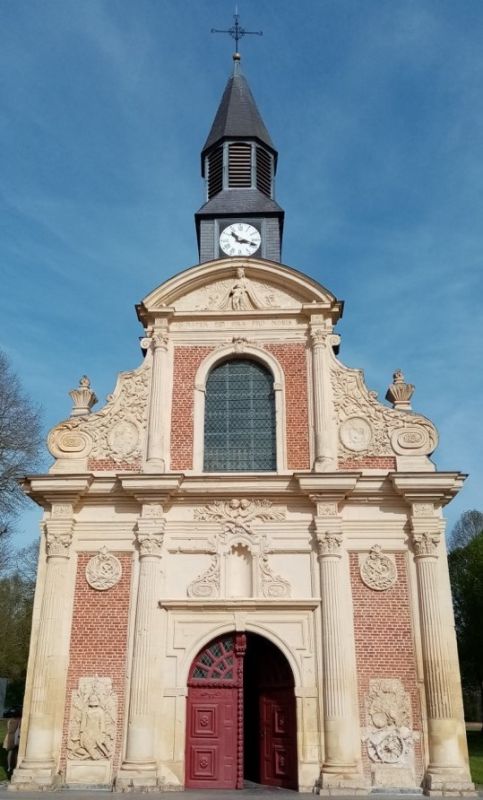
The front
A tall window framed by Corinthian columns supports a curved pediment decorated with a Virgin and Child and the inscription ‘Mater Dei Ora Pro Nobis’. Volutes decorated with foliage bear medallions of Louis XIV and Napoleon III. Religious and military symbols appear beneath the entablature. A central niche once housed a statue of Saint Louis, now lost, while trophies of arms evoke the reigns of Saint Louis and the Second Empire.
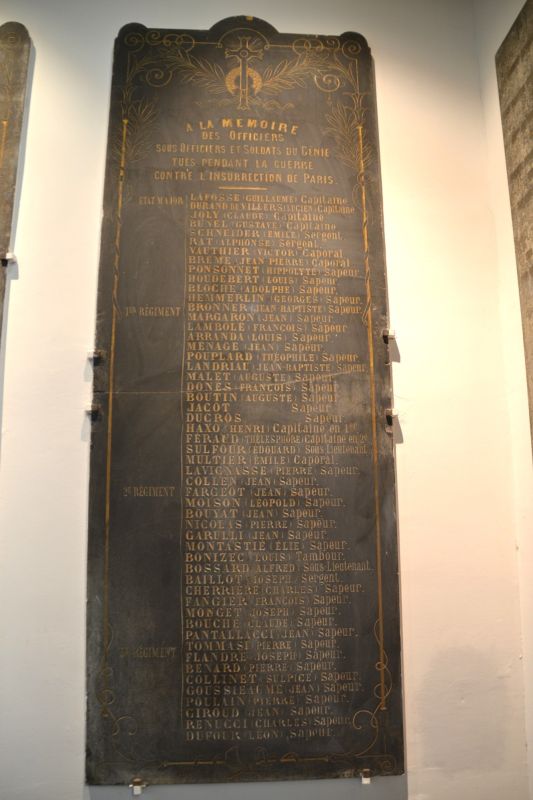
Commemorative plaques
4,000 soldiers' names are engraved on white marble plaques set into the base, making the chapel a true memorial to the dead of the Engineers. A few black marble plaques honour other regiments, those who died in 1870 and the governors of the area.
Translated with www.DeepL.com/Translator (free version)
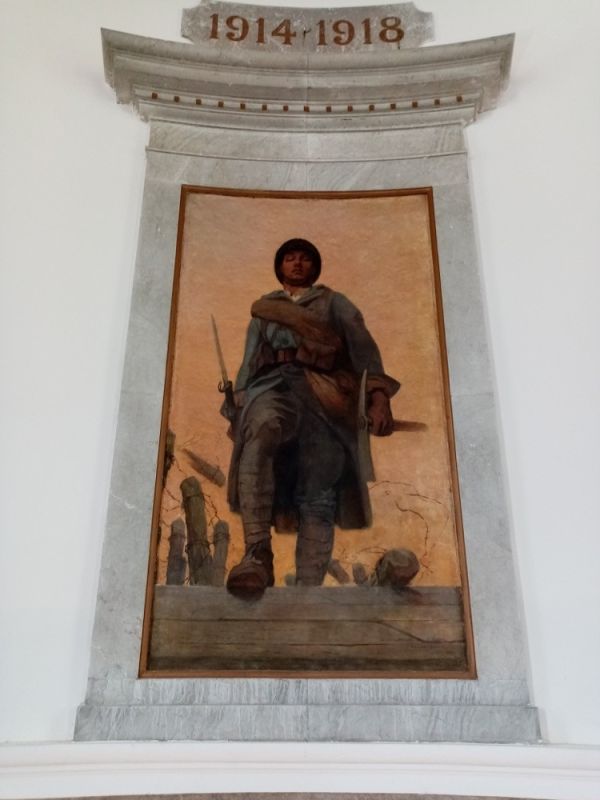
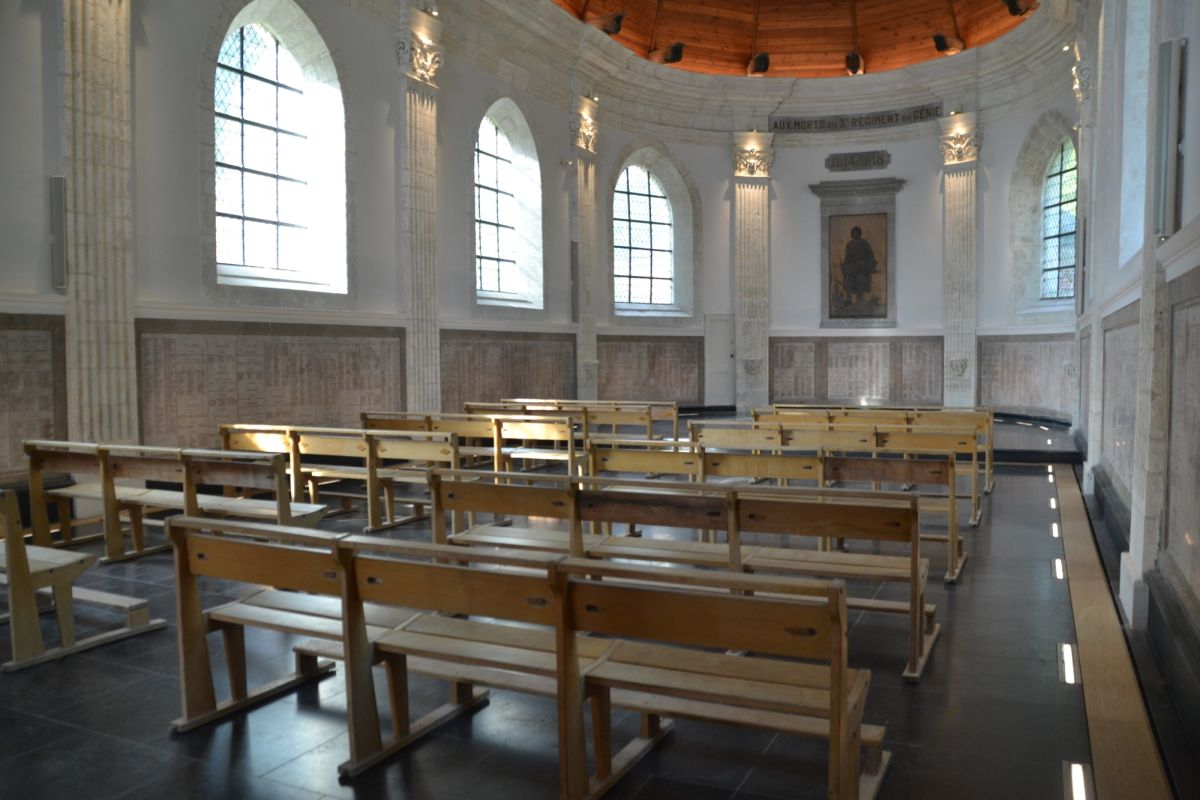
The painting by Lucien-Paul Pouzargues
In the centre of the apse, a painting by Lucien-Paul Pouzargues (1878-1957) depicts a Poilu, a reminder of the sacrifice made by these men during the Great War.
Translated with www.DeepL.com/Translator (free version)
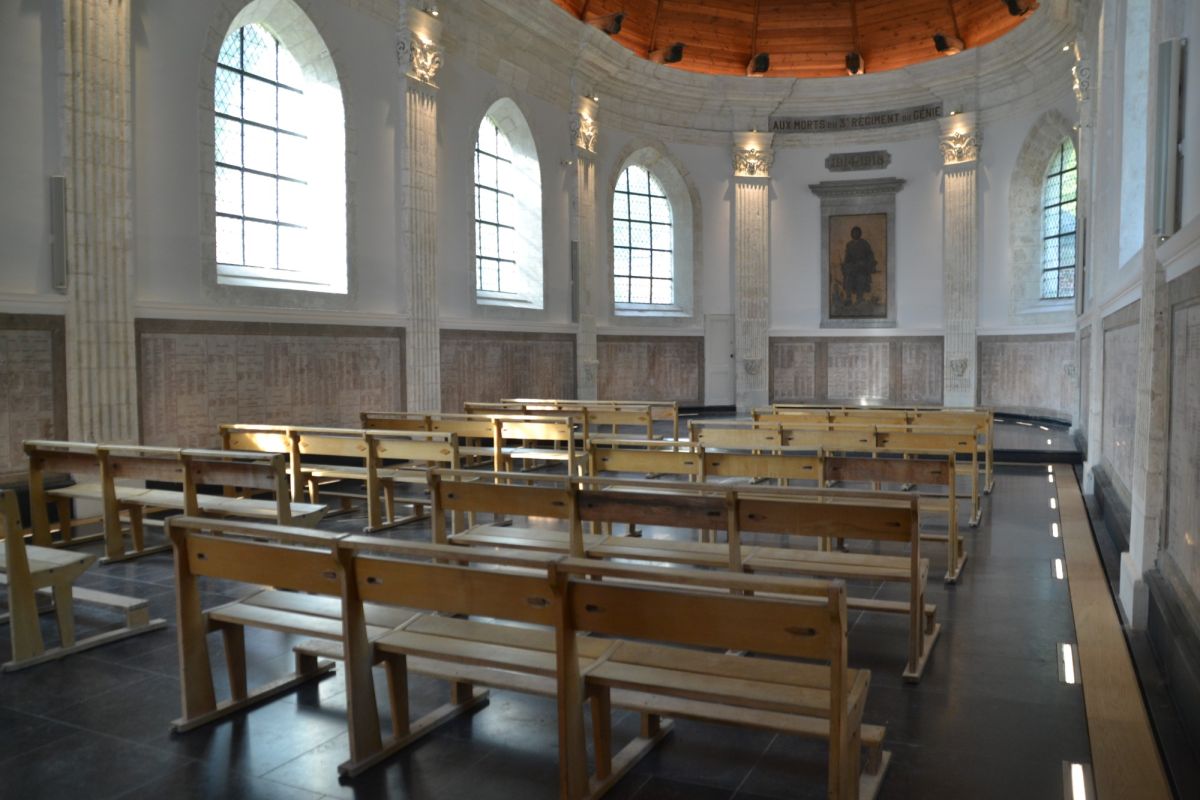
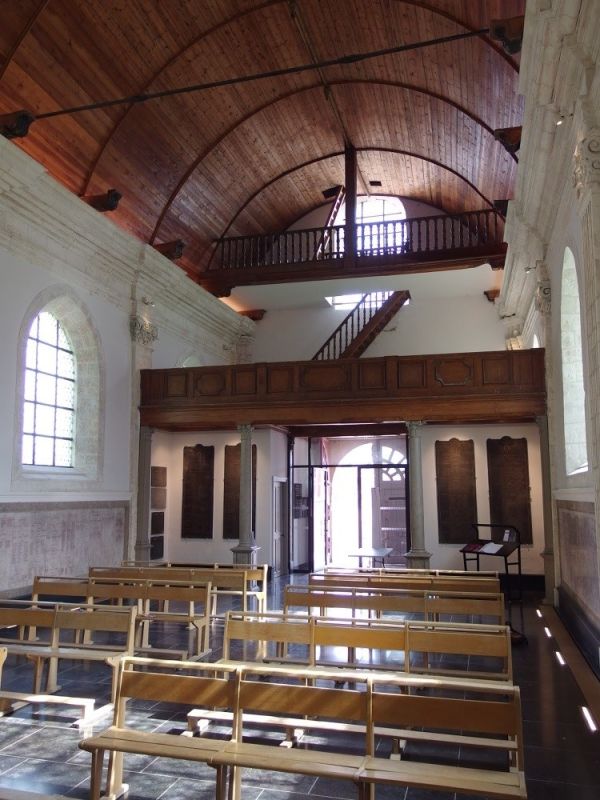
The nave
The rectangular nave, surmounted by a panelled vault, ends in a cul-de-four apse. Neoclassical in style, its walls are punctuated by Corinthian pilasters topped by a straight entablature. These pilasters and the tribune covering the entrance are the only interior ornamentation.
Translated with www.DeepL.com/Translator (free version)