
Our Lady of Mercy
Rue de la Duchesse Anne
44490 Le Croisic
Church | XVI-XVII | Gothic, Renaissance | Catholic Church


Map
Opening hours
01 January - 31 December
Mon 10.00 - 18.00
Tue 10.00 - 18.00
Wed 10.00 - 18.00
Thu 10.00 - 18.00
Fri 10.00 - 18.00
Sat 10.00 - 18.00
Sun 10.00 - 18.00
Guided tour
Description
Inhabited since prehistoric times, the area came under the jurisdiction of the parish of Batz in the Middle Ages. An early chapel dedicated to Notre-Dame de Pitié was built there. In response to the town’s economic and demographic growth, construction of the present church began in 1494. Funded by the ‘droit de billot’, a Breton tax levied on beverages, it was built using local granite.
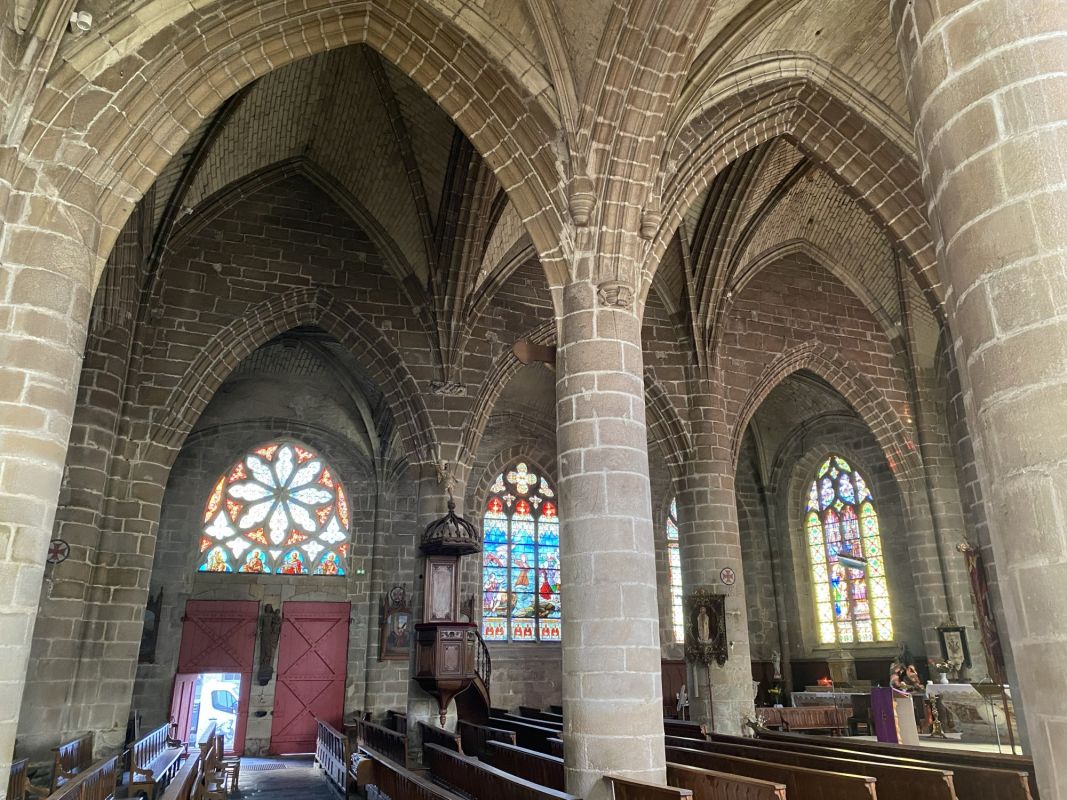
Overlooking the harbour, the Church of Notre-Dame de Pitié is a remarkable example of Breton Flamboyant Gothic architecture. Its vast interior comprises a nave and side aisles, which were extended as construction progressed. The elegant vaults, made of tuffeau—a stone imported from the Loire Valley—bear witness to the town’s prosperity. In the 17th century, a lantern tower, inspired by the one at Batz-sur-Mer, was added to crown the building.
The Revolution brought profound changes to the church: its furnishings were sold off, its bells melted down and its stained-glass windows destroyed; it was successively used as a republican temple, an artillery store and then a stable. Returned to religious use in 1802, it underwent major restoration work between 1839 and 1878, restoring it to its rightful place in the landscape of Le Croisic.
Open to all, the Church of Notre-Dame de Pitié is one of Le Croisic’s must-see attractions, offering visitors the chance to discover a remarkable heritage that bears witness to more than five centuries of history.


Photos





Remarkable elements

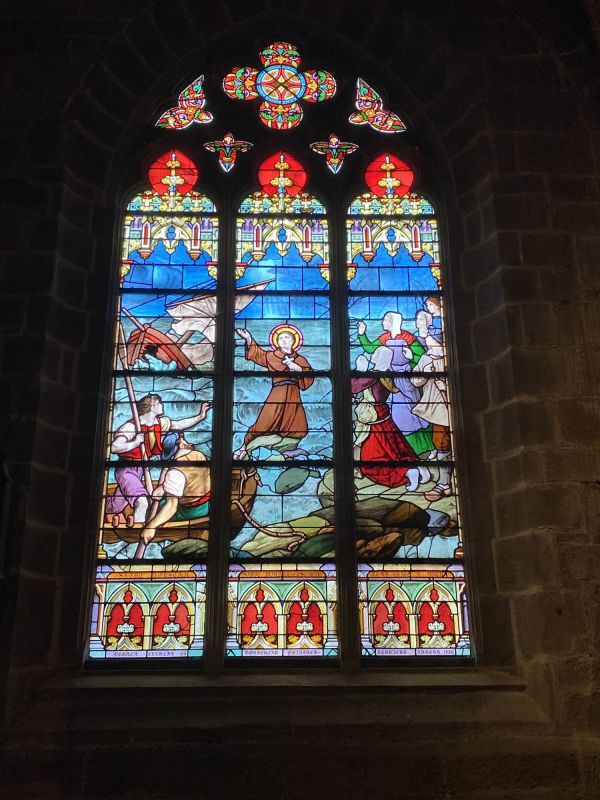
The Stained Glass Windows
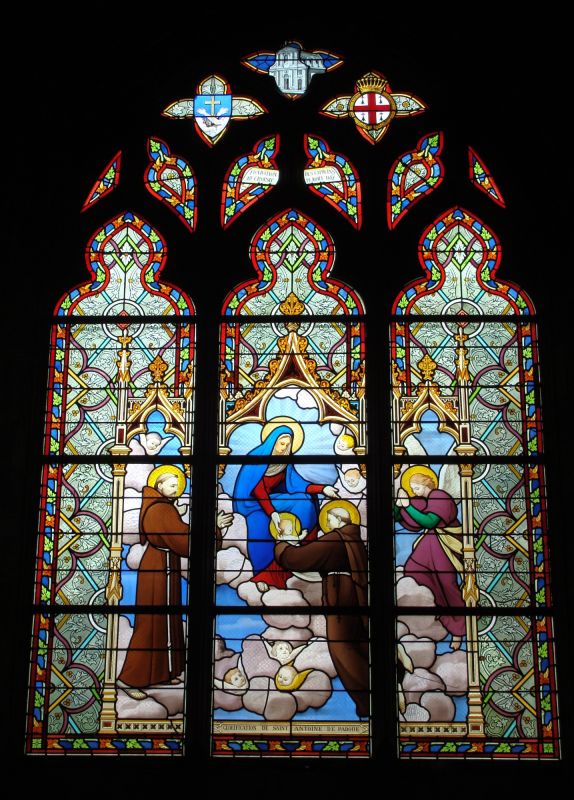
Created between 1860 and 1901 (with the exception of the large stained-glass window from 1967), these windows reflect the evolution of stained-glass art during this period. They were produced by renowned master glassmakers: Lorin of Chartres, Megnen, Clamens and Bordereau of Angers, and Échappé and Denis of Nantes. Their rich iconography depicts biblical scenes as well as major Christian figures and local saints, including Saint Yves, Saint René, Saint Goustan and Saint Félix.

The Vault Paintings
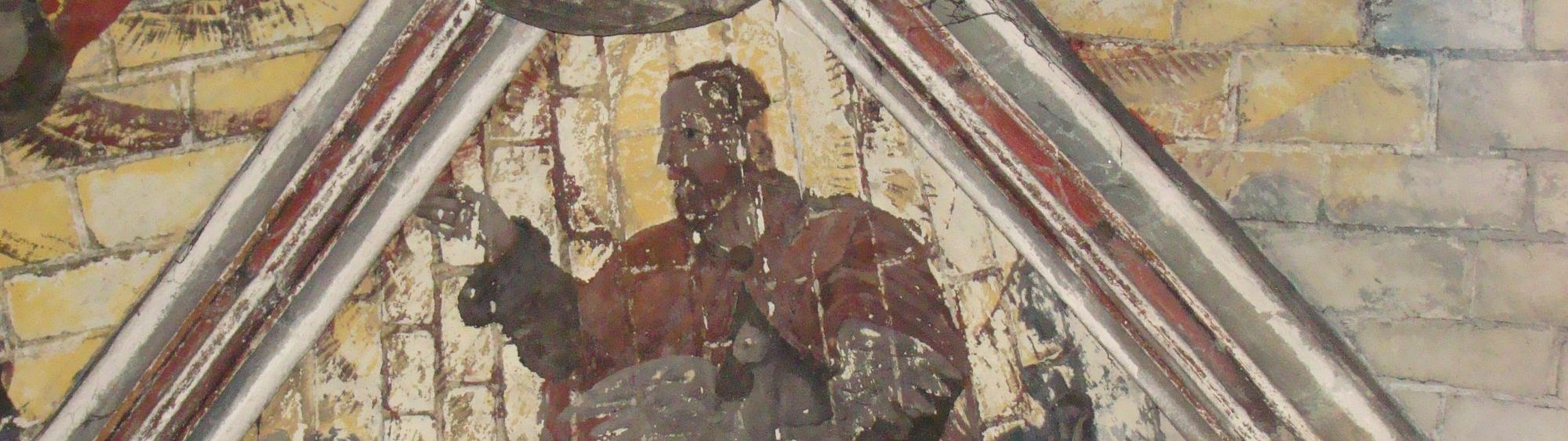
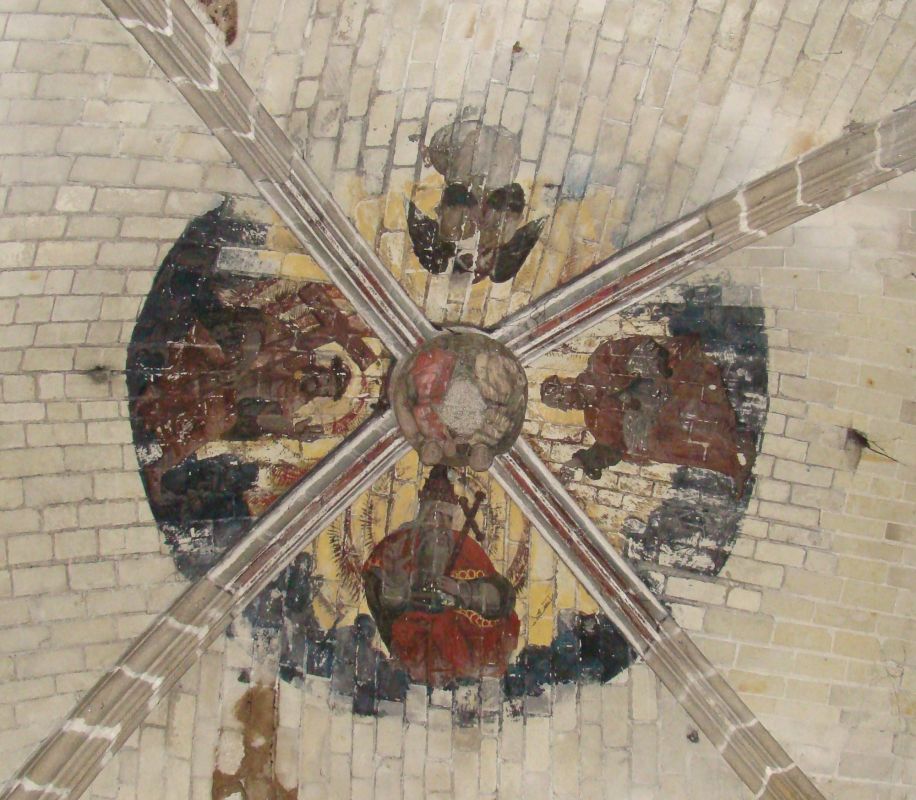
Six of the church's vaults are still decorated with 16th-century wall paintings. They depict biblical scenes, including the Book of Genesis with Adam and Eve, the Four Evangelists, and the Holy Trinity. The latter, located at the end of the nave, is the best preserved. It depicts God the Father, Jesus Christ carrying his cross and showing his wound, and the Holy Spirit symbolised by a dove.

The Statue of Saint James of Compostela
This 17th-century polychrome wooden statue depicts Saint James as a pilgrim, wearing the traditional pilgrim's attire: staff, satchel, cape and hat adorned with a scallop shell. The open book he holds recalls his role as one of Christ's apostles. A hospice dedicated to Saint Julian the Hospitaller once welcomed pilgrims from Brittany and Northern Europe on their way to Santiago de Compostela.

Painting: "The Healing of the Ten Lepers" by Jules-Élie Delaunay
Painted in 1849 by Jules-Élie Delaunay, this work was deposited by the French State between 1850 and 1860 for the hospice chapel. It depicts an episode from the Gospel according to Saint Luke in which Jesus heals ten lepers. Rare in its subject, it is the first major composition by the Nantes-born artist, who later became a member of the Académie des Beaux-Arts. His works also decorate the Palais Garnier, Paris City Hall and the Panthéon.

Painting: "The Crossing of the Red Sea" by Louis Desjardins
This 18th-century oil painting by Louis Desjardins illustrates the Crossing of the Red Sea, as recounted in the Book of Exodus (chapter 14). Moses opens a path for the Israelites by stretching out his hand over the sea, while God drives back the waters through the wind. On the left, the Egyptian army is engulfed by the waves, bringing the pursuit to an end.

The Ex-Voto Ship Models
Two model ships hang in the choir, made around 1850 by the brothers Joseph and Louis Cadin, both long-distance sailors. They are ex-votos, offered in fulfilment of a vow or in thanksgiving. One represents L'Assomption, a three-masted merchant ship recalling vessels that crossed the Atlantic. The other, Le Saint-Pierre, is a three-masted warship equipped with two rows of cannons.