Saint Martin
Kerkplein 16
1930 Zaventem
Church | 1200 | Romanesque | Catholic Church


Map
Opening hours
01 April - 30 September
Mon 9.00 - 18.00
Tue 9.00 - 18.00
Wed 9.00 - 18.00
Thu 9.00 - 18.00
Fri 9.00 - 18.00
Sat 9.00 - 16.30
Sun 9.00 - 16.30
01 October - 31 March
Mon 9.00 - 16.30
Tue 9.00 - 16.30
Wed 9.00 - 16.30
Thu 9.00 - 16.30
Fri 9.00 - 16.30
Sat 9.00 - 16.30
Sun 9.00 - 16.30
Guided tour
Groups can request a guided visit on +32 2 720 75 03 (Jan Soens, chairman of the church wardens).
Via a touch screen, you can read, see and hear explanations about the life of Anthony Van Dyck, the history of his painting 'The Charity of Martinus' and the church and its surroundings.
Religious offices
Description
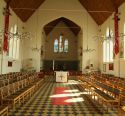
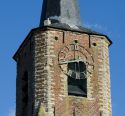
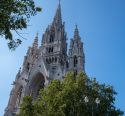
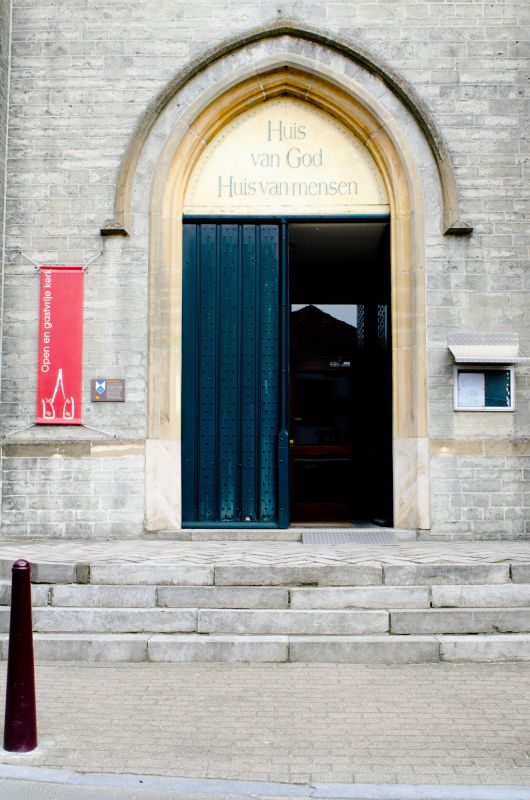
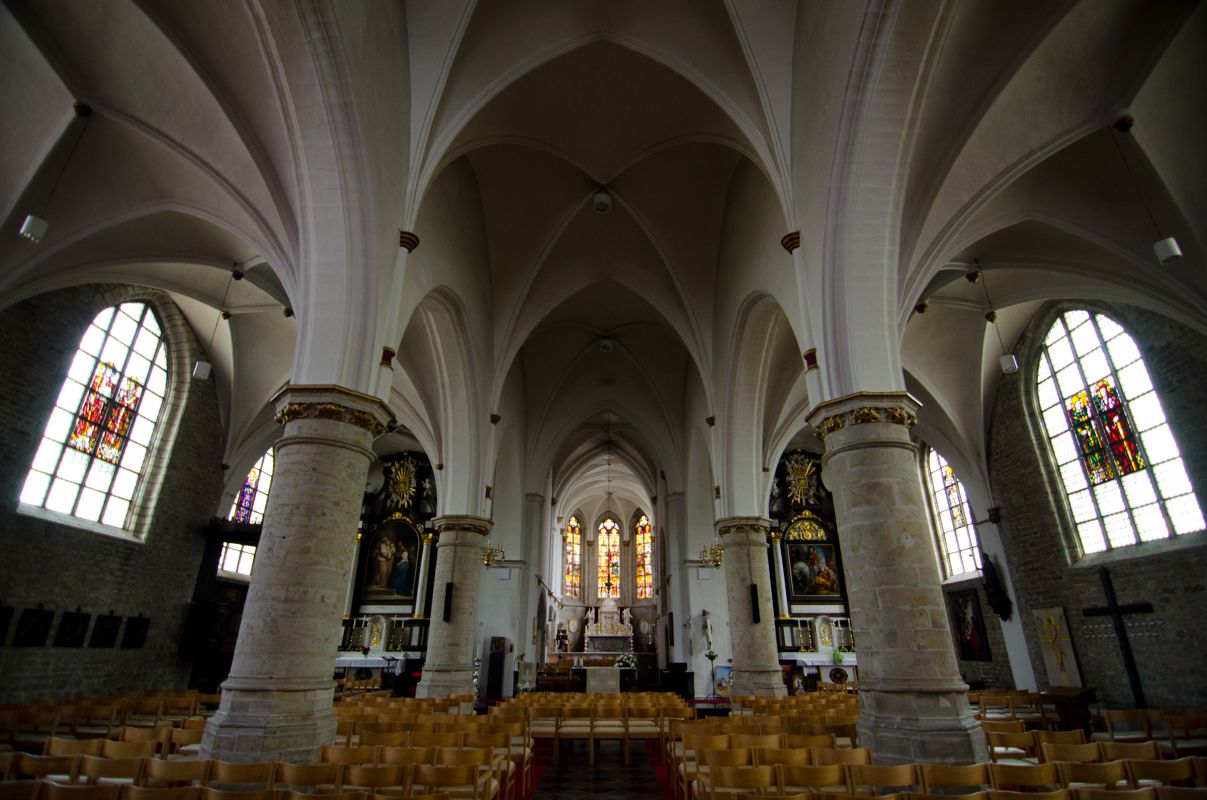
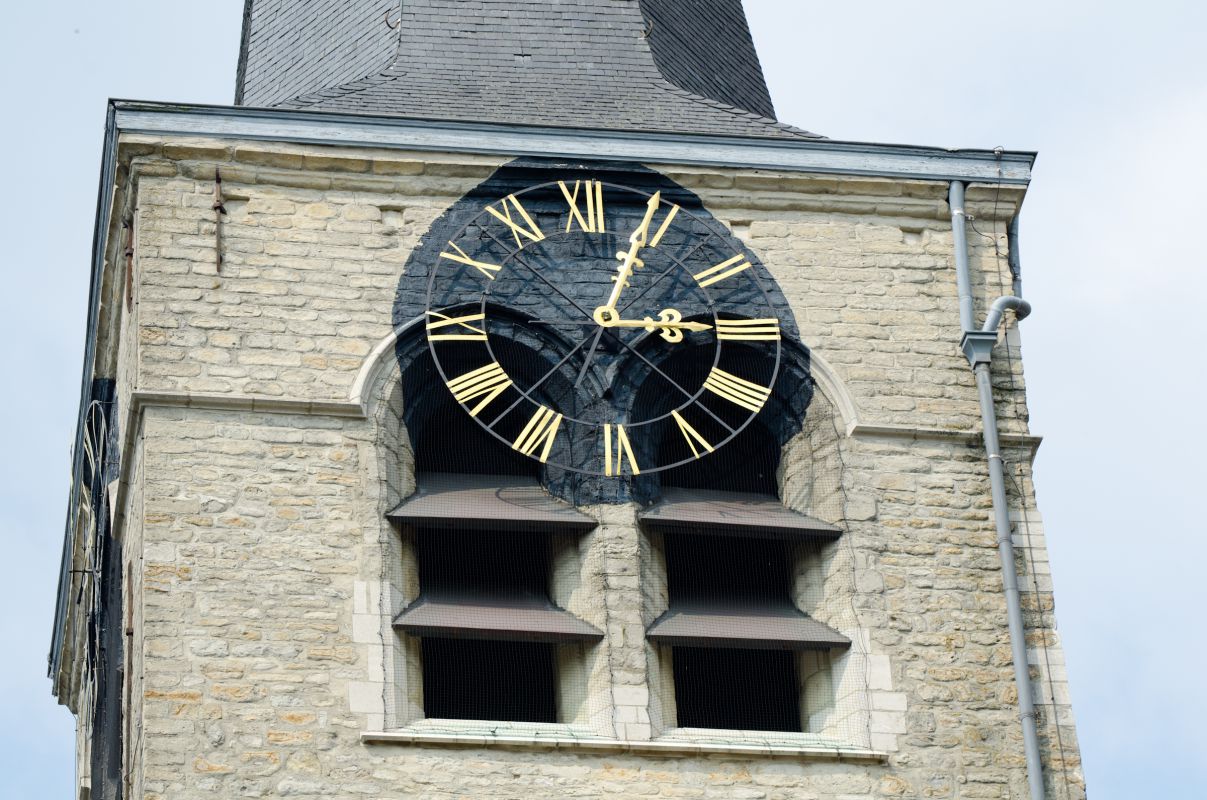
The Gothic church from the 17th century has older foundations underneath the tower that used to belong to a Romanesque church from 1100. There is still a bricked Romanesque entrance in the southern wall. The church was enlarged in the 19th century. It now has a nave, three aisles and one transept. The sacristy was added even later.
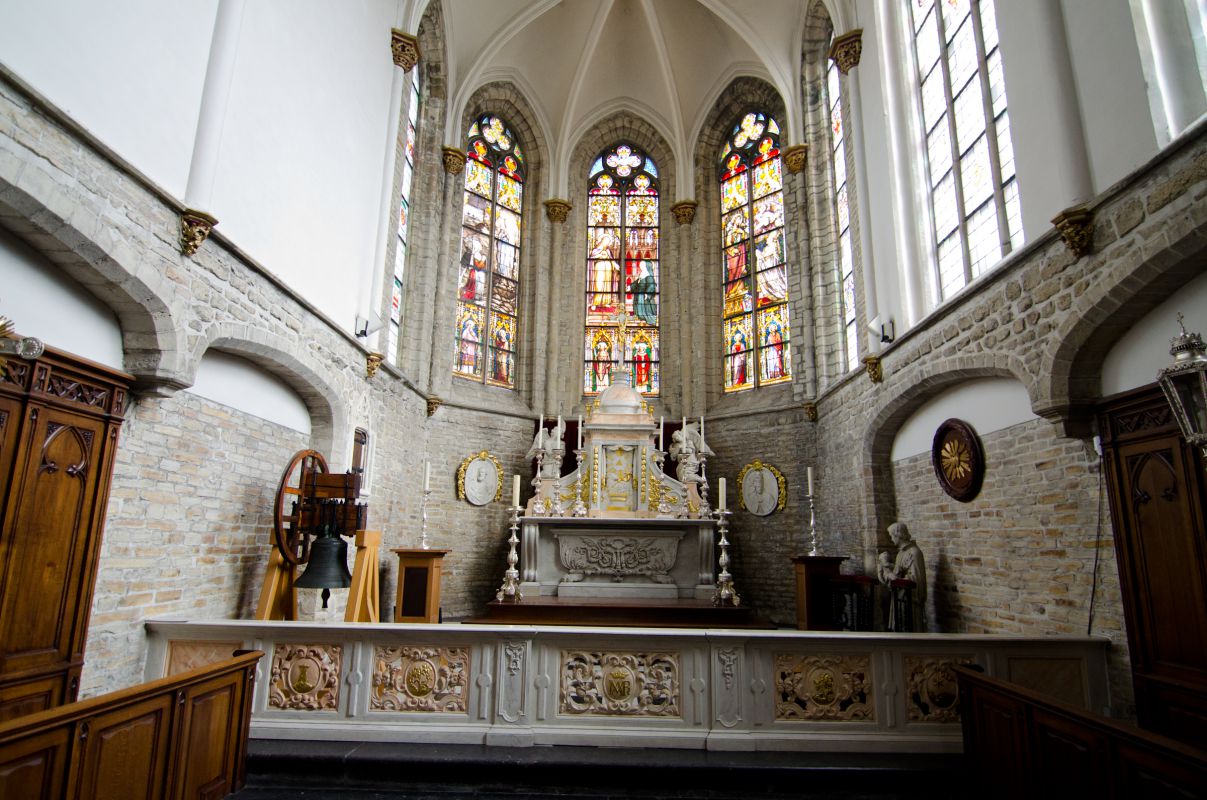
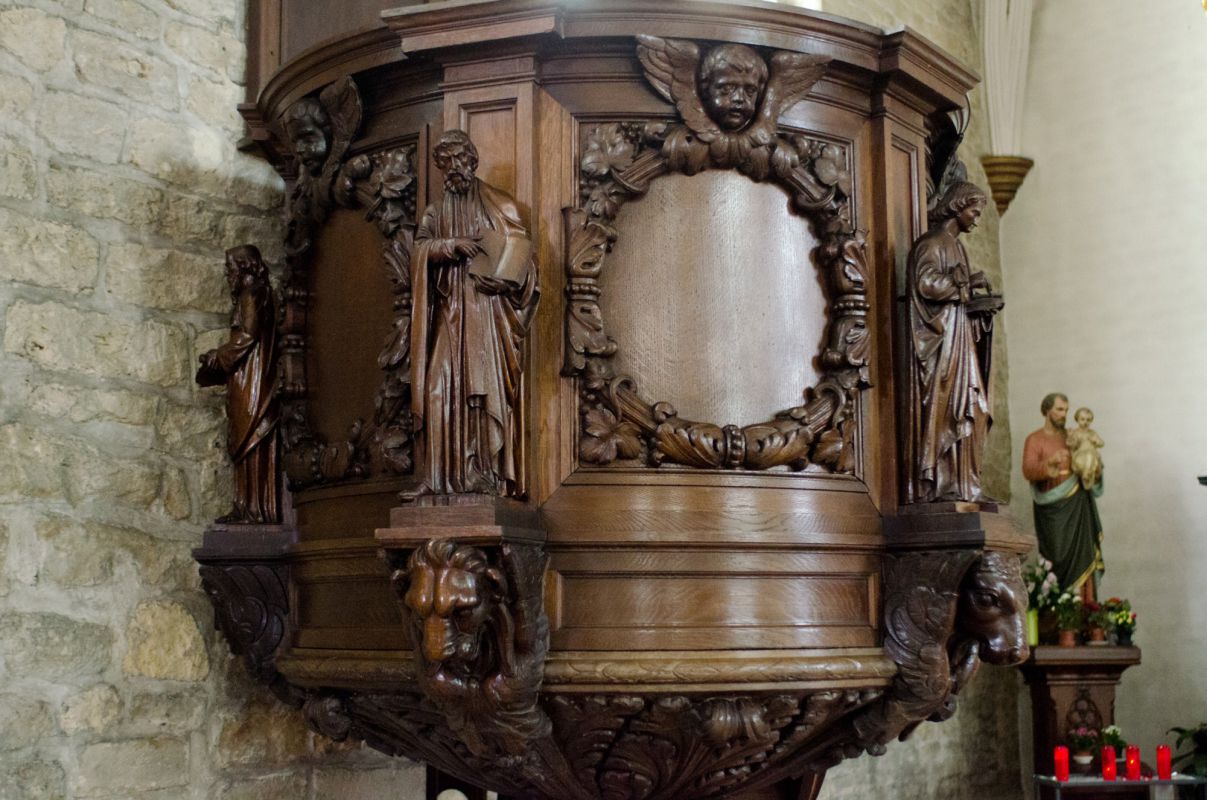
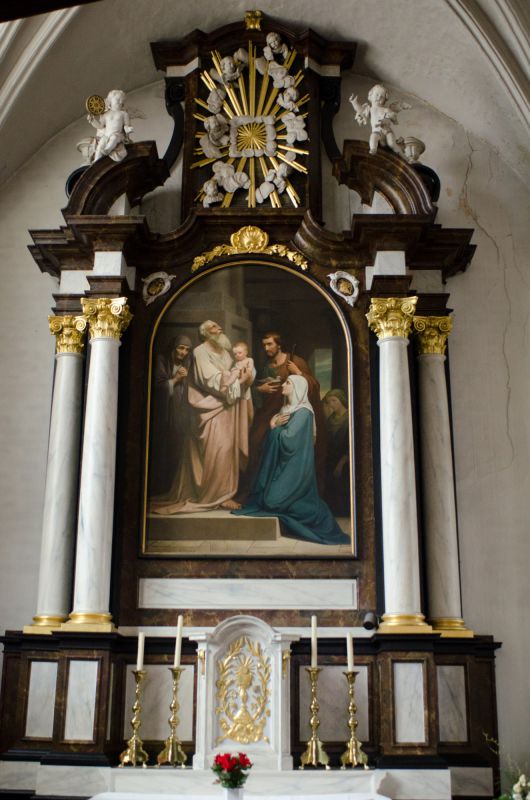
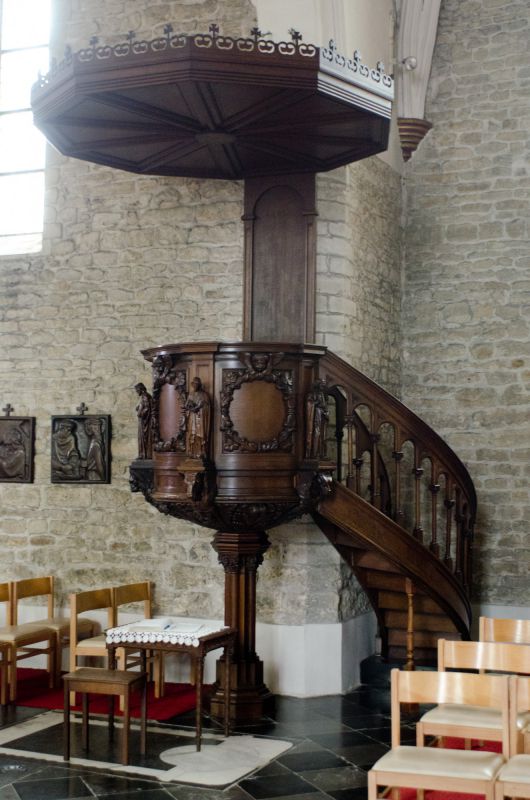
The baroque side altars date back to 1750. Other baroque elements, with the exception of a statue of Saint Ambrose, have been removed. The confessionals, the communion rail, the baptismal font and the organ are from the 17th and 18th century. There are also a couple of tombstones from this period. The main altar is more recent (19th century).
Saint Martin, the patron saint, can be found on the painting by Antoon Van Dijck 'Saint Martin dividing his cloak' (1625 or 28). The artist stayed in the city in 1624 (at the Van Dijck house on the Park lane). The reliquary of Saint Martin was made by Philip Dusart in 1735.
Other paintings in the church are "Mission of Jesus in the temple" by Flix Callut and "Martyrdom of Saint Blaise" by Gaspar de Crayer.
KIKIRPA : Photo-library online

Photos


Remarkable elements

The shrine of Saint Martinus
The gilded wooden reliquary was manufactured in 1735 by Filip Dussart. The gilded figure on top represents Saint Martinus on a horseback as he shares his cloak with a beggar. The image would date from the 17th century. Both in 1735 and the following years the reliquary was carried in the procession during carnival on the first Sunday of June. None of the three previously existing processions still exists.

"The charity of Saint Martinus", painting by Antoon van Dyck (1599-1641)
At 22, Van Dyck painted this remarkable work for Ferdinand de Boisschot, first baron of Zaventem. A later local legend says the artist stopped in Zaventem on his way to Italy, fell in love with the daughter of Drossaard Van Ophem, and during a two month stay created the painting. A nearly identical version is in Windsor Castle, and Van Dyck is known to have painted this theme again before 1621.

The organ
In 1769 a new organ was bought and also most part of the current oak-wooden organ case dates from that time. In the second half of the 19th century, the organ was rebuilt by a Brussels organ builder and a later French citizen, Joseph Merklin (1819-1905). Later, the organ was again thoroughly transformed by the Leuven organ family Van de Loo. Today's pneumatic chests are of relatively recent origin. The organ has two claviers and one pedal.

'Sleeping Christ with frightened apostles in the storm", painting by Felix Tuyaerts (1915-1997)
This painting of the Zaventem artist Tuyaerts is a very important one. The varied coloration stands out very well thanks to the good lightening. The dark colours with which the apostles are painted represent the fear in which they find themselves and the luminous figure of Christ appears as a hopeful light in the storm of life.
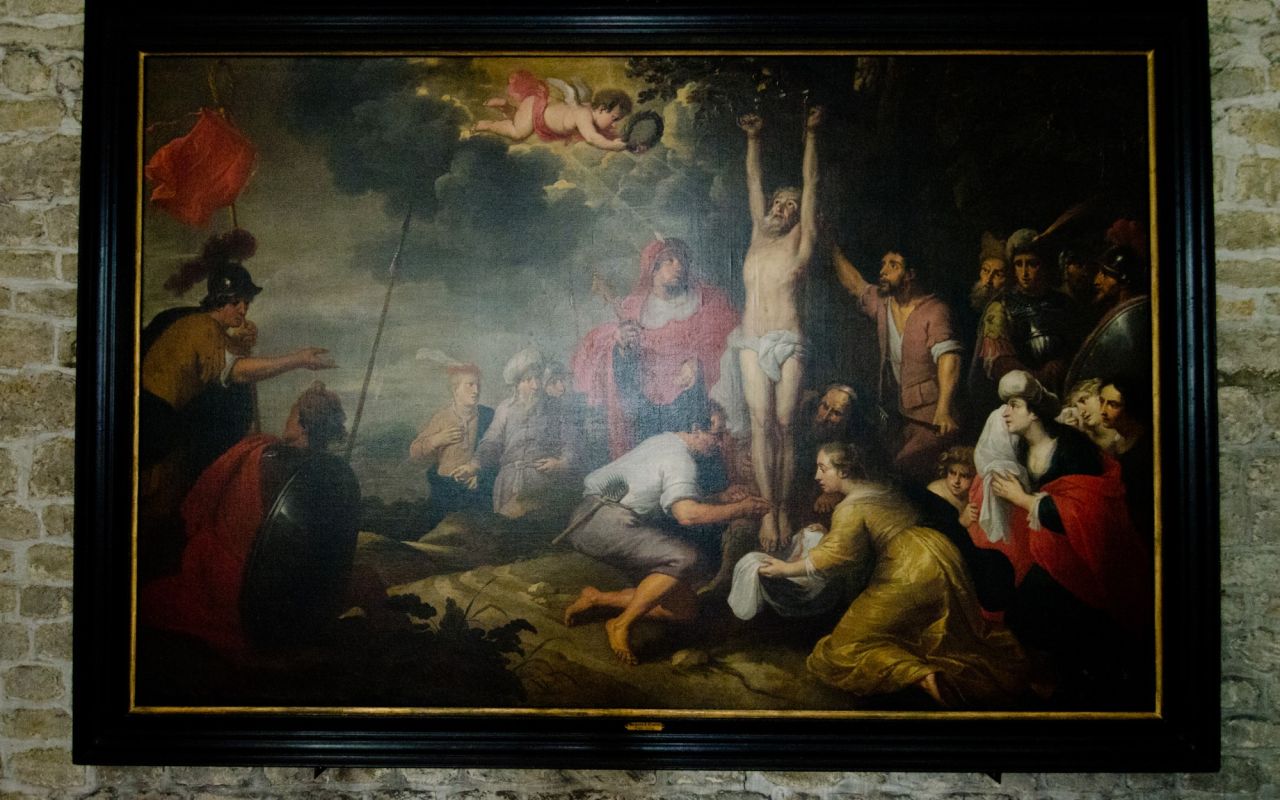
"The martyrdom of St. Blasius”, painting of Kasper de Crayer (1584-1669)
After the death of Rubens in 1640, Kaspar or Gaspar was one of the most important and most influential artists of the Southern Netherlands. He received many commissions and he had a large studio. According to an improbable story Victor Vangramberen (dean of Zaventem from 1927 to 1965) bought the painting from a farmer who had discovered it on his hayloft. Presumably the painting previously belonged to the patrimony of the church and it was hidden during the French rule.

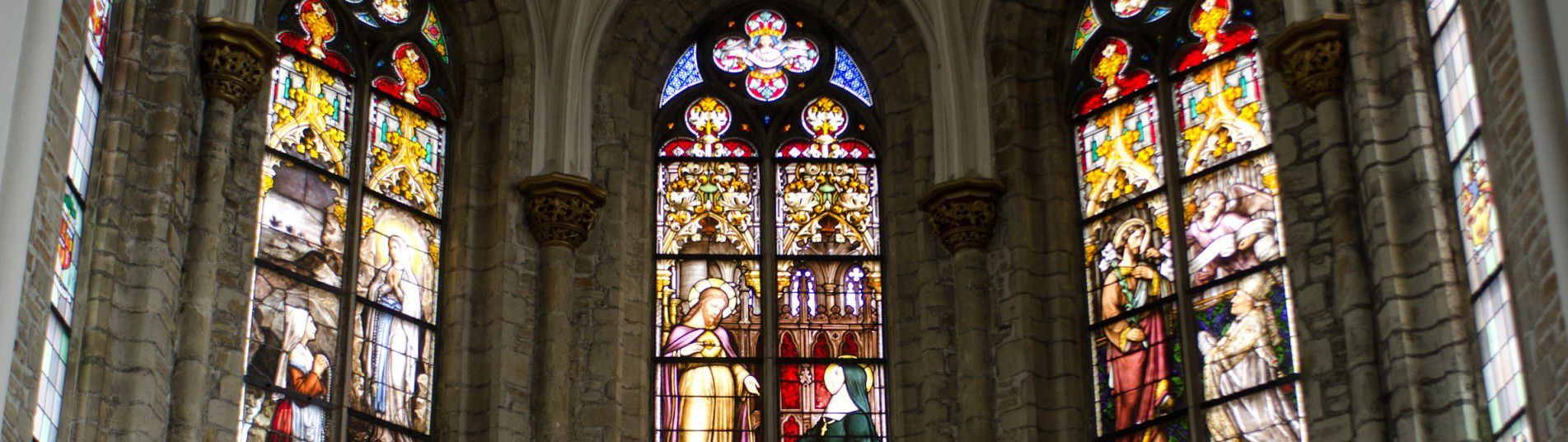
The stained-glass windows by the glazier family Craponnier (1820-1909) from Schaerbeek
Notre-Dame de Lourdes and St. Bernadette appear on the left stained-glass window, with Saints Joachim and Anna below. The central window shows the Sacred Heart of Jesus with St. Margaret Mary Alacoque, and beneath them Saints Blasius and Martinus. The right window features Saint Joseph and Pope Pius X, with apostles Peter and Paul below. The Craponnier family archives are kept at KADOC Leuven.

Stations of the cross in embossed brass by Camille Colruyt (1908-1973)
Copper was the preferred material of the great sacred artist Colruyt. It is clear that the anatomical view and the natural expression are subordinate to the spiritual message in this work. In the museum of Halle hangs a similar Stations of the Cross, from the same period: 1940-1941.
Partners