Saint Clement
Clemensstraat 5
8420 Klemskerke (De Haan)
Church | 1250 | Gothic | Catholic Church


Map
Opening hours
27 March - 05 November
Mon 10.00 - 17.00
Tue 10.00 - 17.00
Wed 10.00 - 17.00
Thu 10.00 - 17.00
Fri 10.00 - 17.00
Sat 10.00 - 17.00
Sun 10.00 - 17.00
From Holy Week until the first week of November
Religious offices
Description
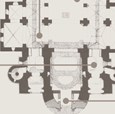
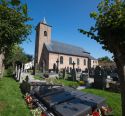
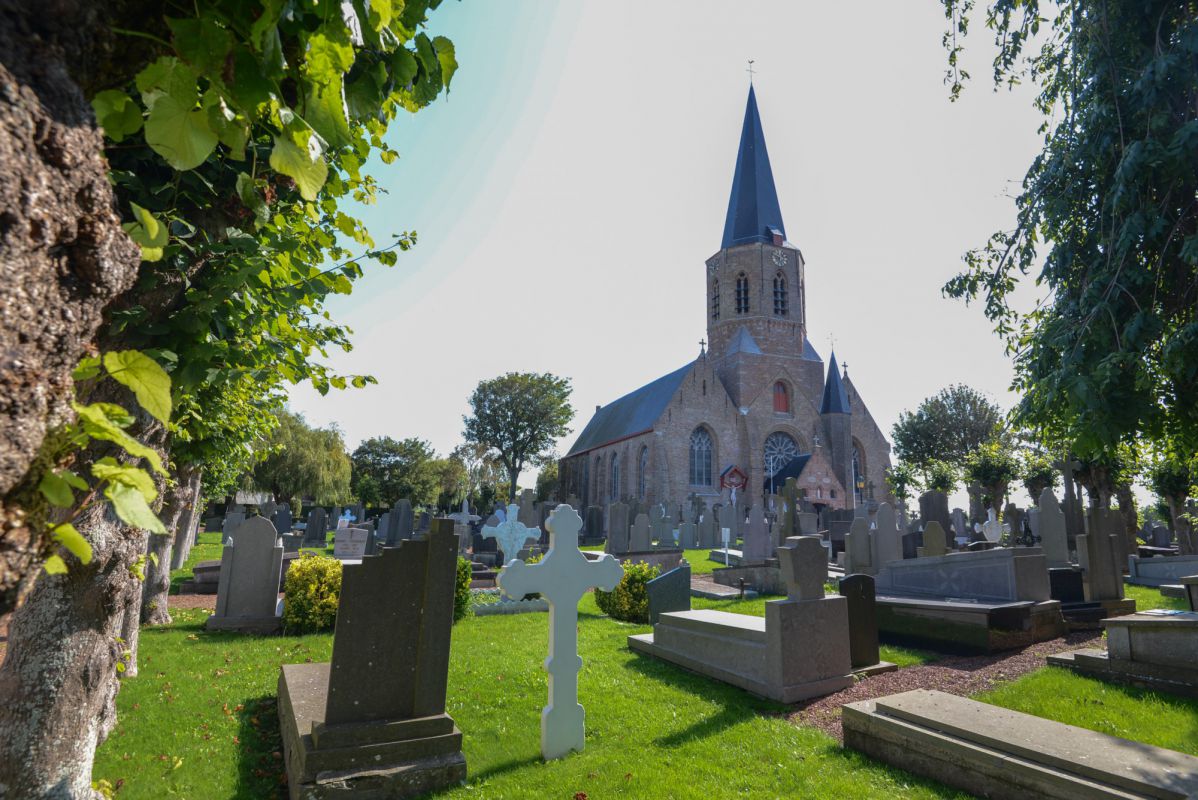
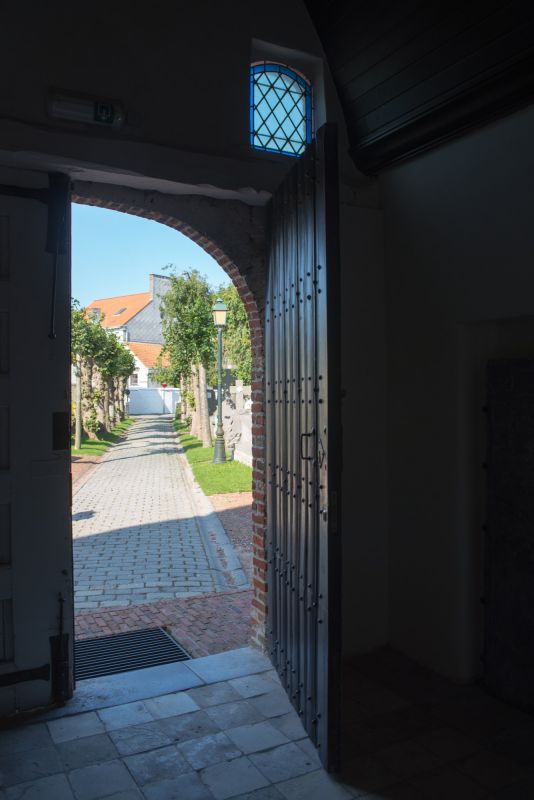
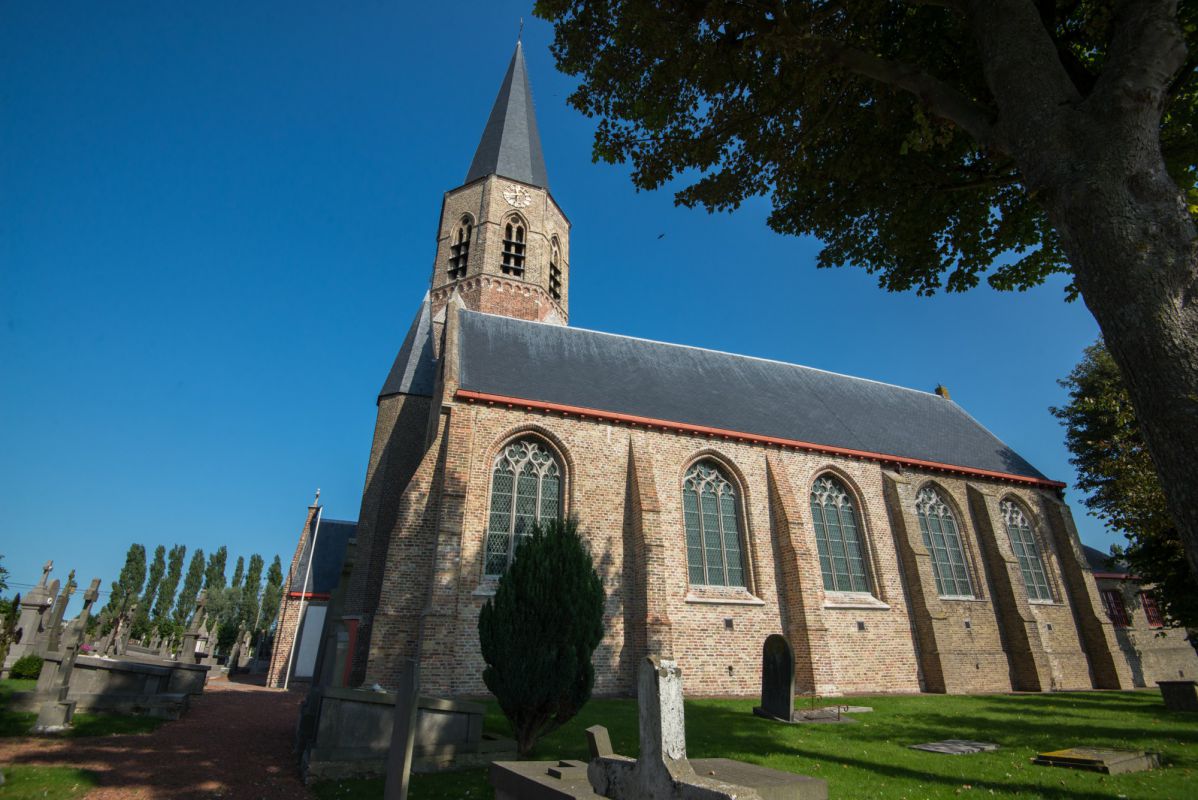
The oldest written document on Klemskerke dates back to 1003, in which the village is called “Clemeskirca”, church of Cleme. The protected church is situated on the east side of this century-old polder village and surrounded by a churchyard with hedges and pollard willows. It is a Hall church with 3 naves and an octagonal tower.
The present church of Saint Clement is built on the remnants of a 13th-14th century church , of which a side chancel and tower foundations (14th century) are preserved. As a result of the ravages of the iconoclasts (end 16th, beginning 17th century), the west part of the nave was pulled down, the original crossing tower thus becoming the front tower of the church.
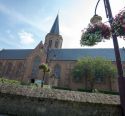
Already in the middle of the 17th century the church was almost completely restored. Three times the spire was damaged by lightning. Because it was an important beacon for the fisherman at sea, it was restored each time, for the last time in 1770.
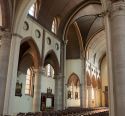
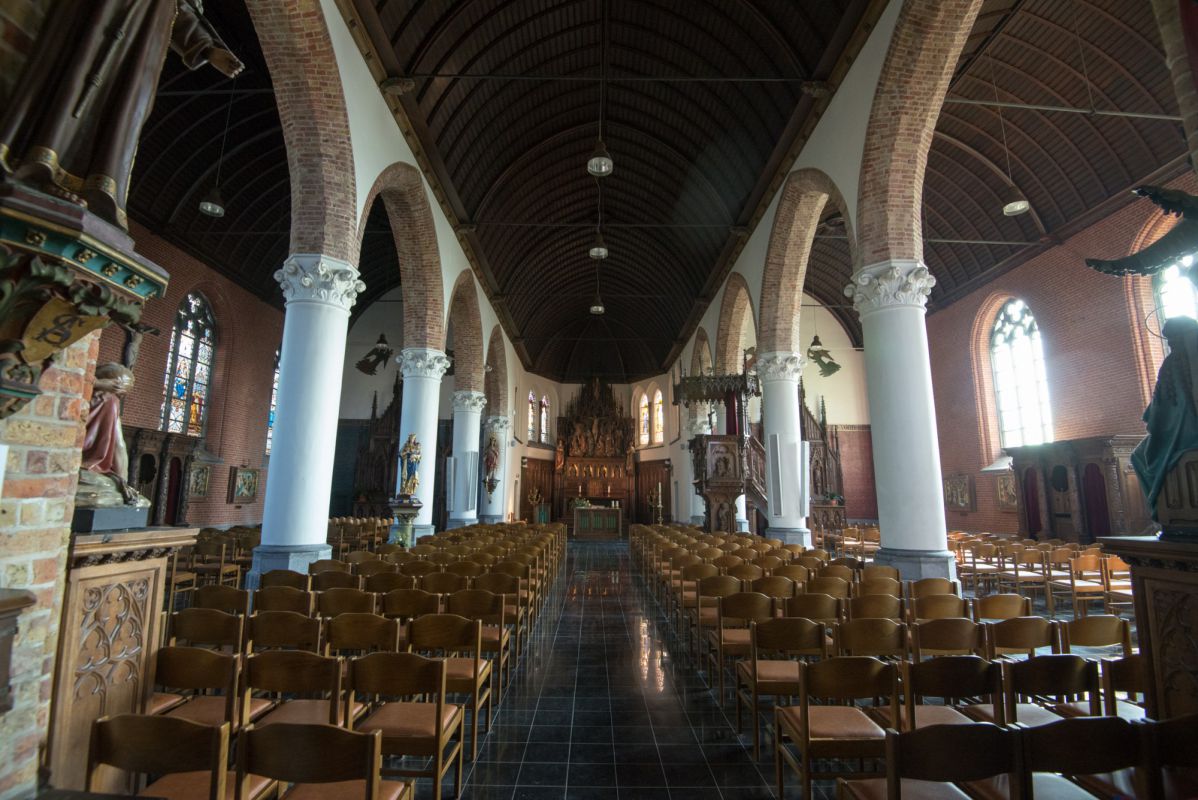
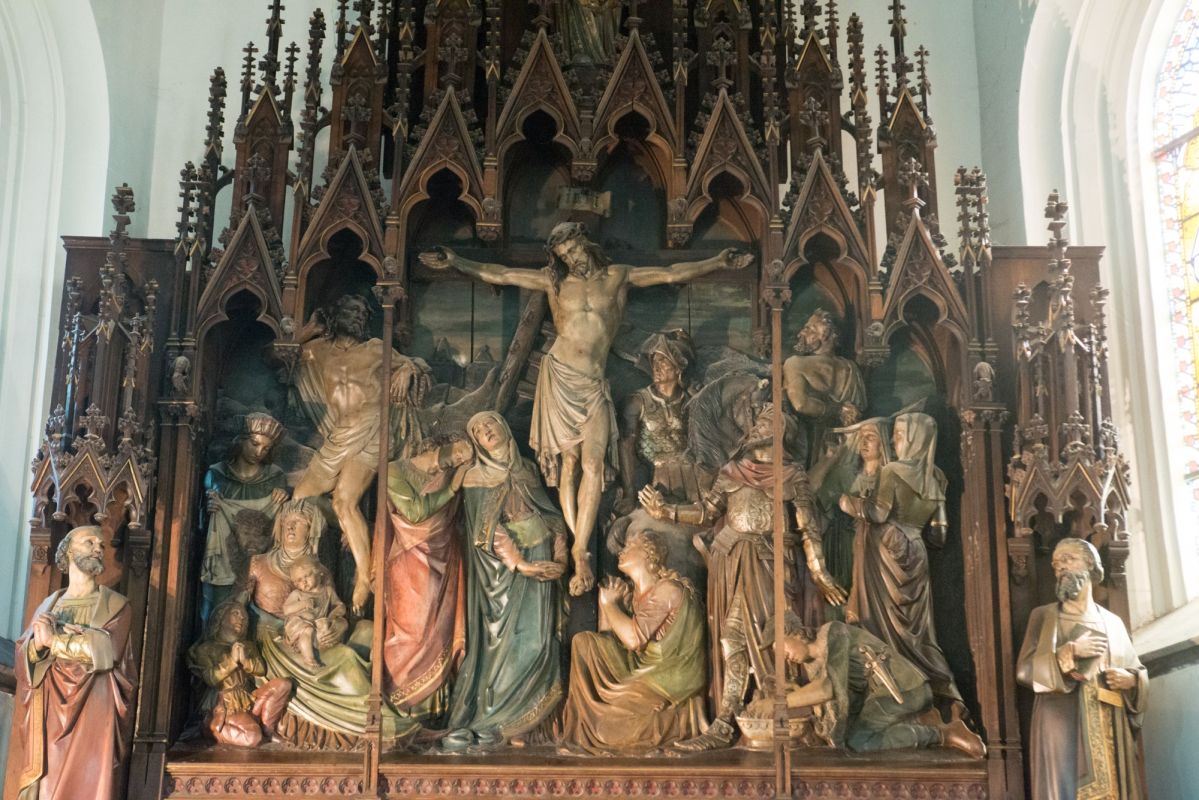
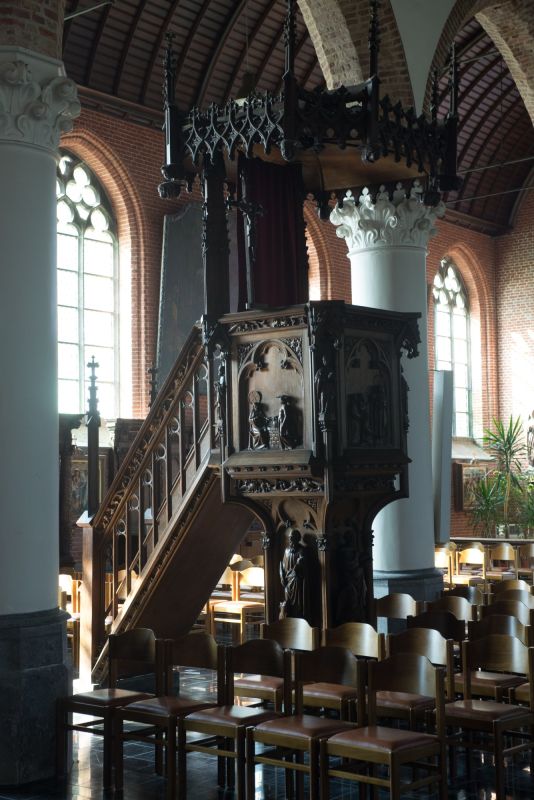
The interior was thoroughly restored in 1890-1895 under the guidance of architect Aumery. From that period stem the neo-gothic elements: the picture of the Cross (main altar), the side altars and the pulpit. The 17th century paintings, furniture and polychrome statues were saved.
In 1902-1903 the exterior was restored and renewed and a rosette window was added above the west entrance.
The church is situated on the bicycle routes “Old dyke route”, “North Sea route LF1” and “Bruges Ommeland route”.
KIKIRPA : Photo-library online

Photos





Remarkable elements

Church spire
The spire of Klemskerke’s church repeatedly caused problems. In February 1696 it was severely damaged by lightning and only restored in 1712. Lightning struck again in 1715, with repairs completed in 1717. In 1770 it was hit once more, prompting the community to consider demolition. The order was withdrawn on 23 September 1770, however, because the spire served as an important beacon for ships to navigate safely and avoid sandbanks.

Interior of the church
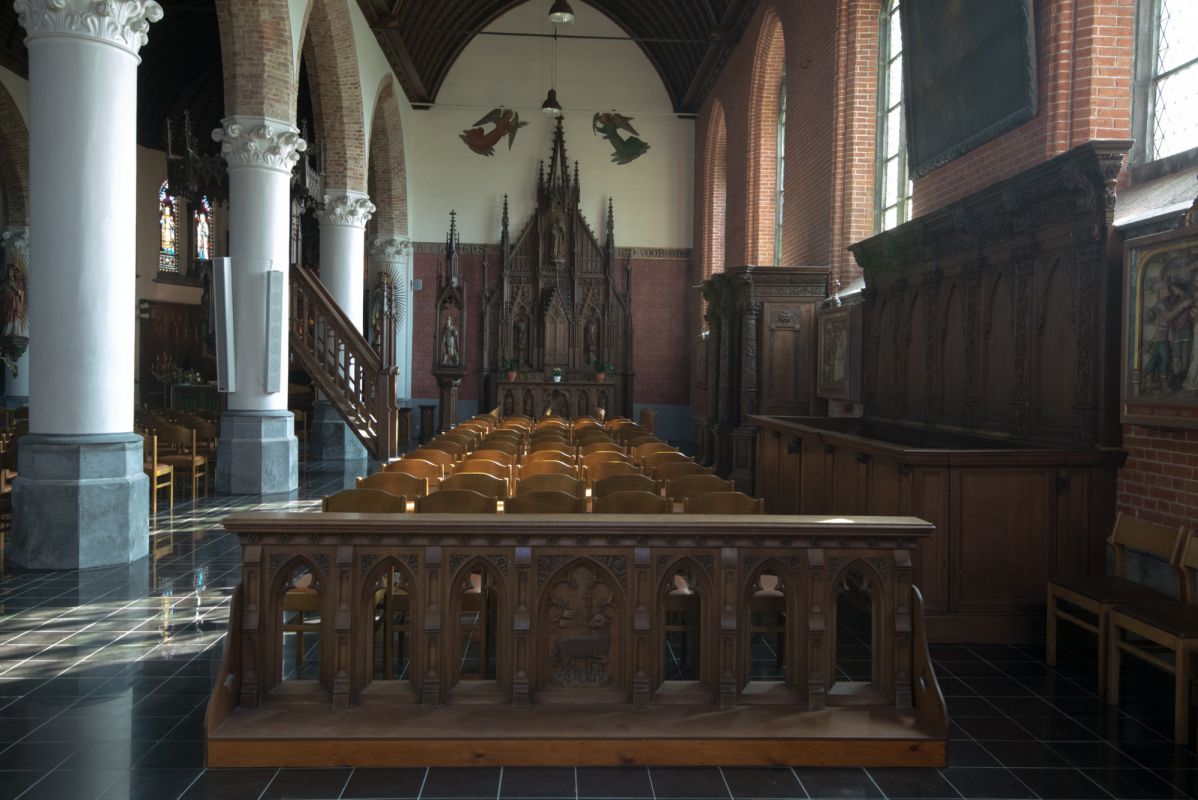
From 1890 to 1895, the church interior was fully restored, including the original pillars with capitals, the wooden ceiling, and wall coverings. The nave has five bays, the chancel one with a three-sided enclosure, the vestry to the south, and the boiler room to the north. The ogive arcade rests on circular plastered pillars with octagonal bluestone bases. Tapering round-arched vaults with ribs span the church, and the brick crossing tower dates from the 12th century.

Organ
In 1832, the church wardens commissioned a new organ from the renowned Ghent builders Pierre-Charles and Lambert-Corneille Van Peteghem. Henri Bosée constructed the organ case, bellows, and reinforced the organ loft. The project cost the community 2,833.28 Belgian francs. At the end of the 19th century, the organ was “romanticized” by Bruges builder Hooghuys. Today it features two keyboards, 34 stops, and 1,500 pipes.
Church furniture
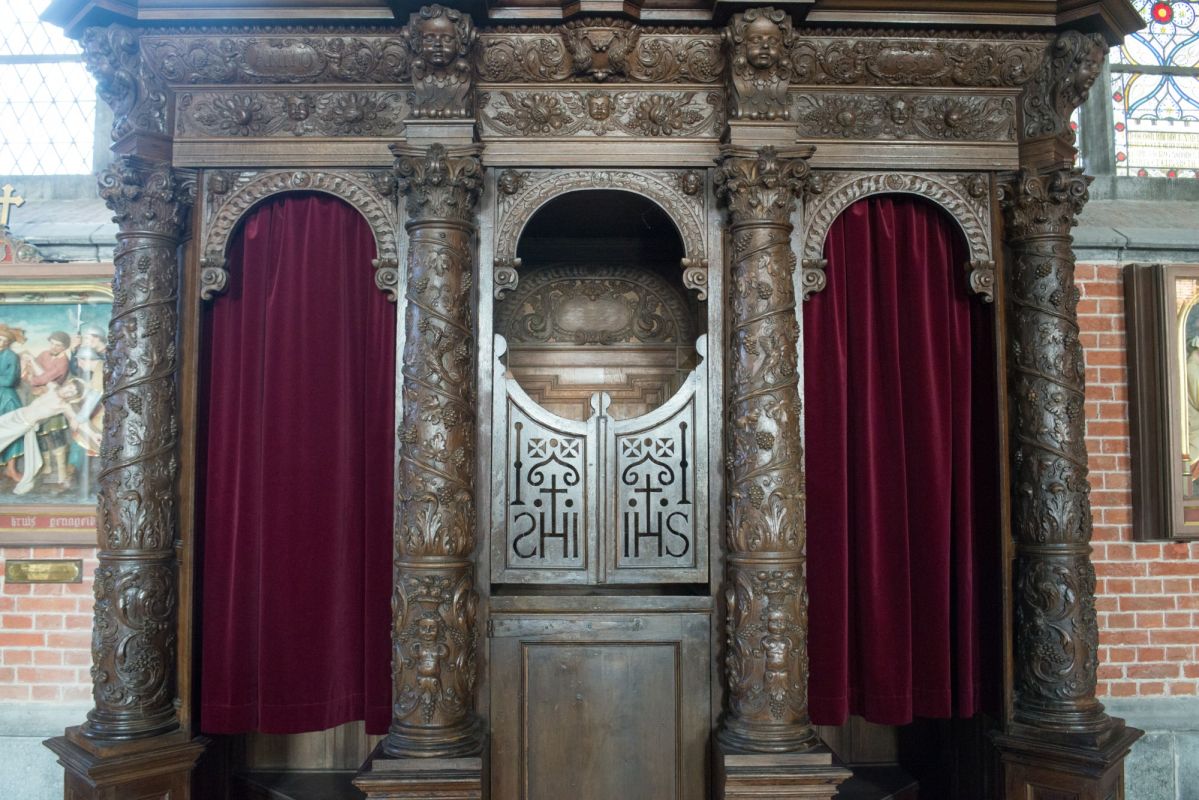
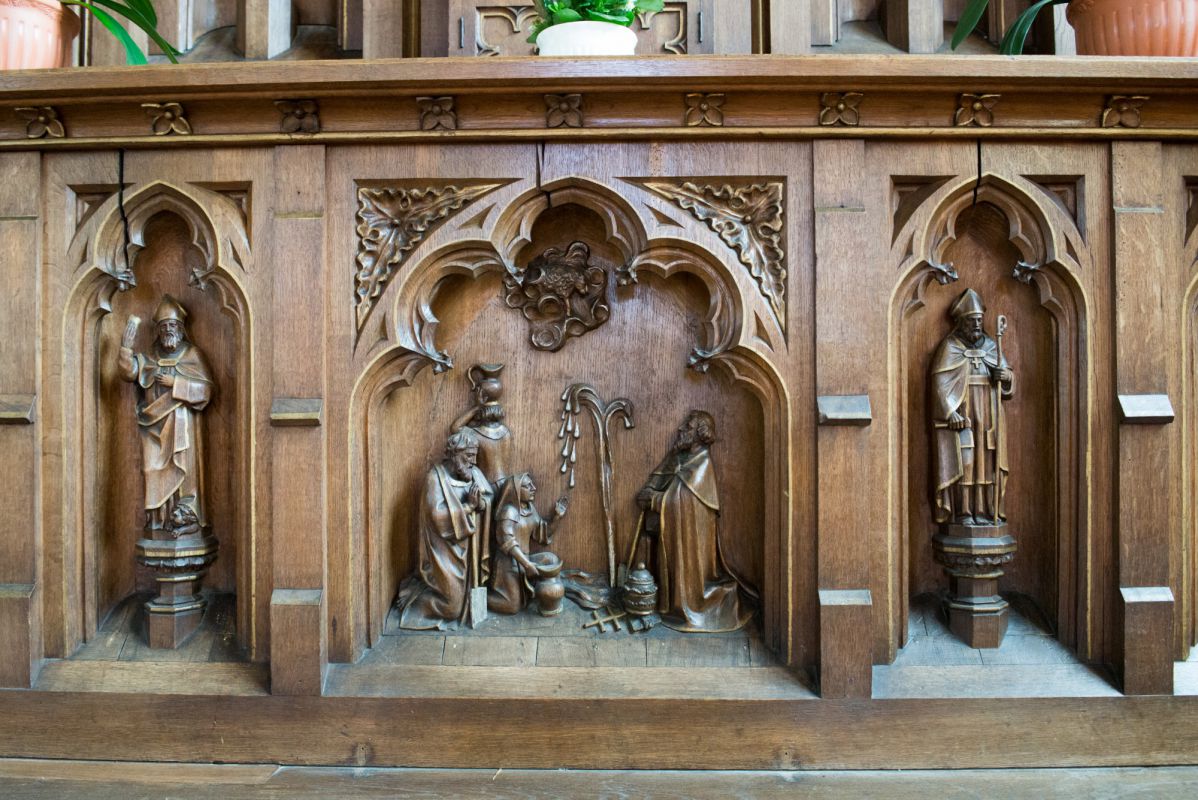
The church houses remarkable furniture, mainly in oak. The 17th-century confessionals and pulpit stand out. The south-aisle confessional was made in 1643 by master joiner Pieter Verheust (or Verreust), while the north-aisle confessional, likely by the same craftsman, dates from 1652. Both feature elegant wood carvings and angel heads on the columns. The churchwardens’ benches were also made by Verheust between 1637–1638, and the pulpit by Cornelis Verlaere dates from 1639–1640.
Paintings and statues
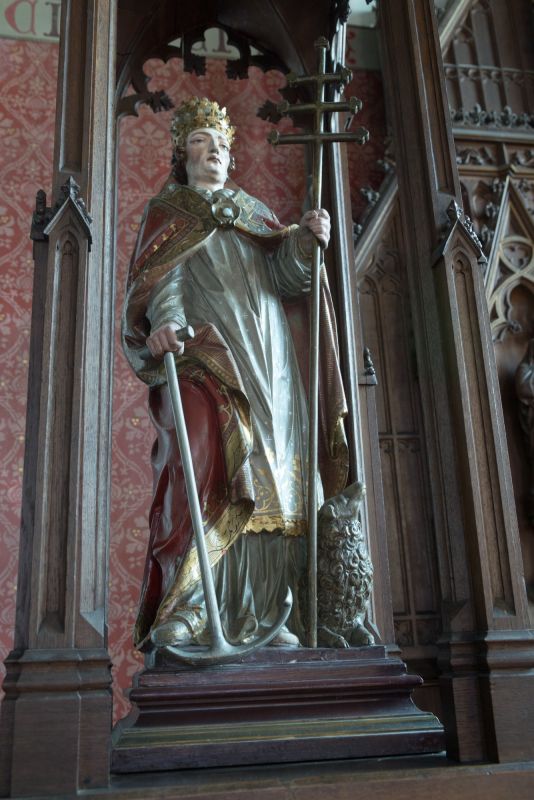
The church contains several 17th-century paintings, including Ordination of Saint Clemens, Crowning with Thorns, and Saint Simon Stock receives the Rosary of Our Lady with Child (1649). These were likely by Jacob van Oost, whose archives include a 1637–1638 bill “for the painting and delivery of a painting,” or by Cornelis Hemmens, who billed in 1645–1646 for a painting “now hanging in the church.” Notable polychromed oak statues include 16th-century Saint Clemens and 18th-century Saint Barbara.

Archeological artifacts
During the last restoration, the church floor was replaced with a new one featuring underfloor heating. The old floor was first lifted, then excavated mechanically to 20 cm and manually to another 20 cm under archaeological supervision, from December 2010 to April 2011. The excavations uncovered several artifacts, including earthenware shards from the 12th–17th centuries, 47 coins (31 datable), a piece of stained glass, and 12 graves (crypts).