
Our Lady
Place de la République
72130 Fresnay-sur-Sarthe
Church | Fin XIIe - Début XIIIe | Romanesque | Catholic Church


Map
Opening hours
01 January - 31 December
Mon 9.00 - 17.00
Tue 9.00 - 17.00
Wed 9.00 - 17.00
Thu 9.00 - 17.00
Fri 9.00 - 17.00
Sat 9.00 - 17.00
Sun 9.00 - 17.00
Religious offices
Description
Notre-Dame Church was built in the second half of the 12th century. Built in the Romanesque style, it originally consisted of a single nave with three bays, ending in an apse. Its highly vaulted ceilings are characteristic of Angevin architecture. It was built using local limestone and red sandstone.
Following a fire that destroyed part of the bell tower, the church was restored and enlarged in 1865, resulting in the demolition of a chapel built as a lean-to on the south side of the nave and the modification of certain openings. A transept with two apsidioles was created, giving it its current Latin cross shape. The north side door leading to a very old cemetery was not cleared until 1925.
At the end of the 19th century, the church was entirely decorated with murals by Louis Renouard and stained glass windows by the Hucher workshop in Le Mans. The choir furniture was made by the famous Sarthe-based cabinetmaking company Reboursier. An organ was installed in the gallery in 1932.


Photos




Remarkable elements
Bell tower
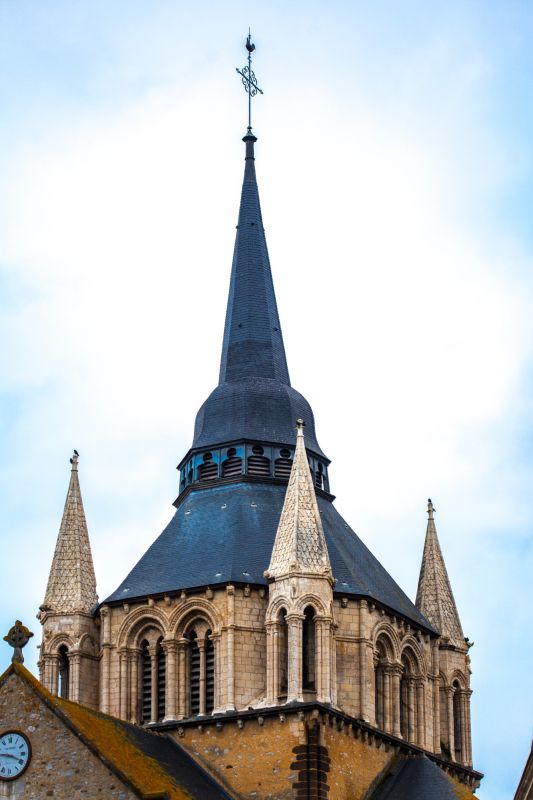
Built on the third bay of the nave at the end of the 12th century, it consists of a square base, topped by an octagonal tower lit by four geminated windows and flanked by four hexagonal openwork bell towers. An eight-sided slate-covered spire crowns the whole, interrupted by a small gallery fitted with roof lights. Its curved shape dates back to the 16th century.
Translated with www.DeepL.com/Translator (free version)
Portal
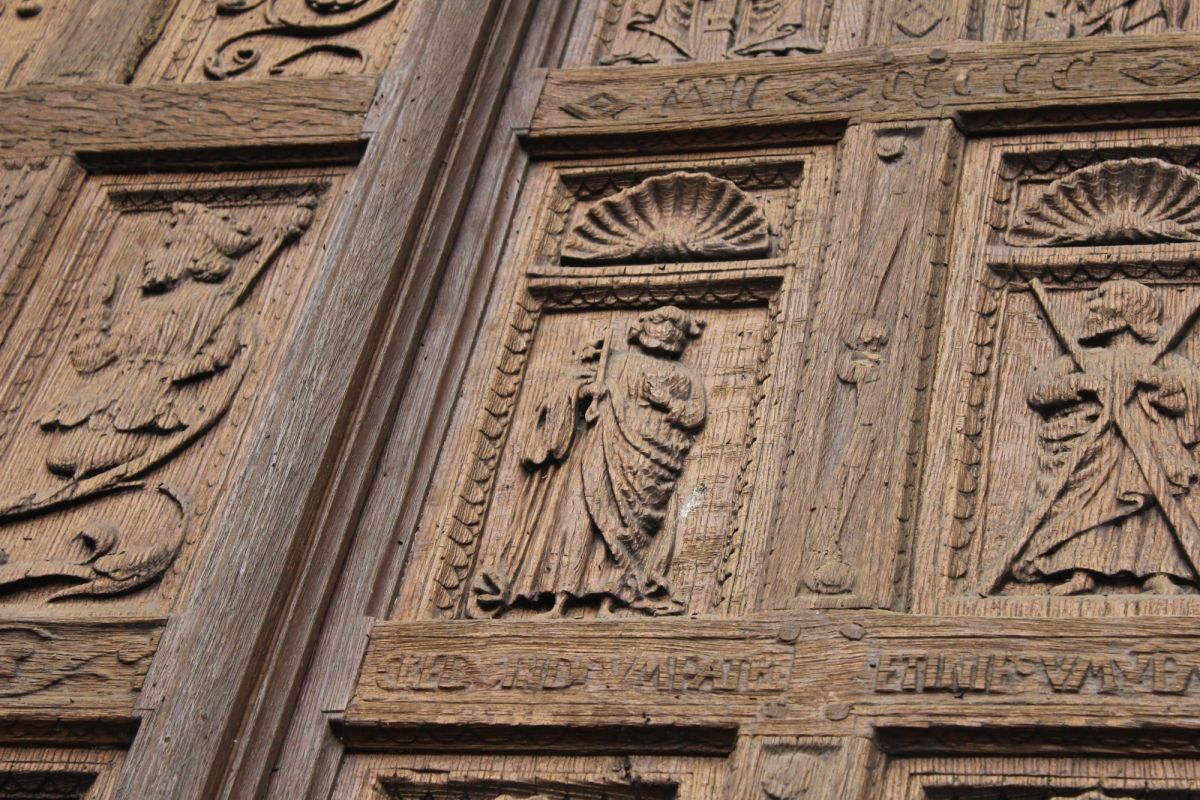
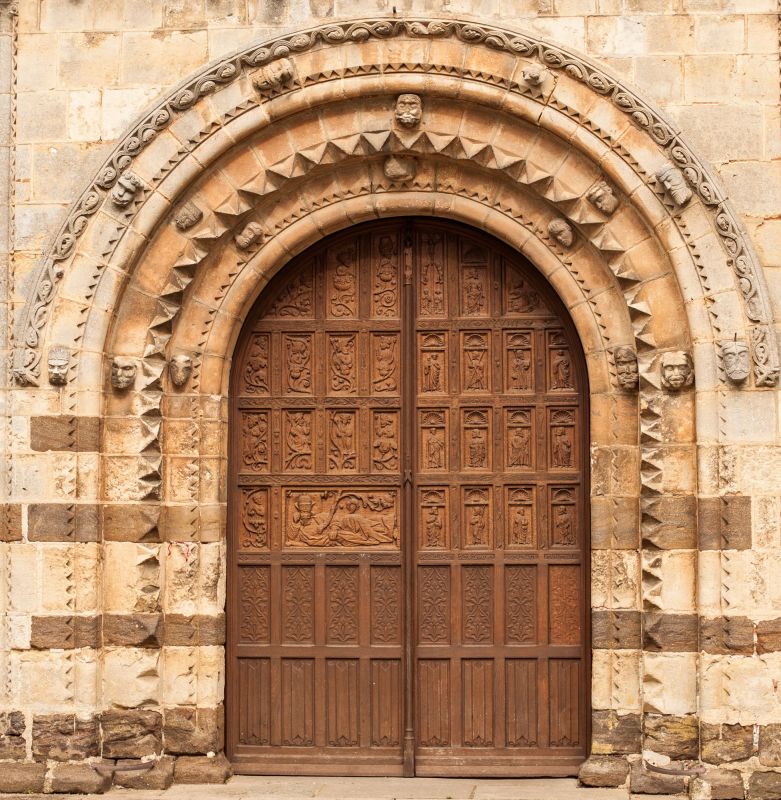
To the west, the Romanesque semi-circular portal is decorated with voussoirs featuring geometric designs, foliage and sculpted heads. It is closed by a carved wooden door dated 1528. The leaf on the left shows the Jesse tree with the kings of Judas, Christ's ancestors; on the right is a Crucifixion, Christ the gardener and the apostles. At the top, a Virgin and Child marks the transition from the Old to the New Testament.
Translated with www.DeepL.com/Translator (free version)

Monument to the Brindeaux family
The two deceased doctors are shown kneeling at the feet of their patron saints, Saint Cosme and Saint Damien. The inscription, in Latin and Gothic letters, refers to the burial of ‘Guillaume and Jean les Brindeaux and their wives, whose bodies lie in this church’. This small limestone bas-relief dates from the 15th century.
Translated with www.DeepL.com/Translator (free version)
Painting the apses
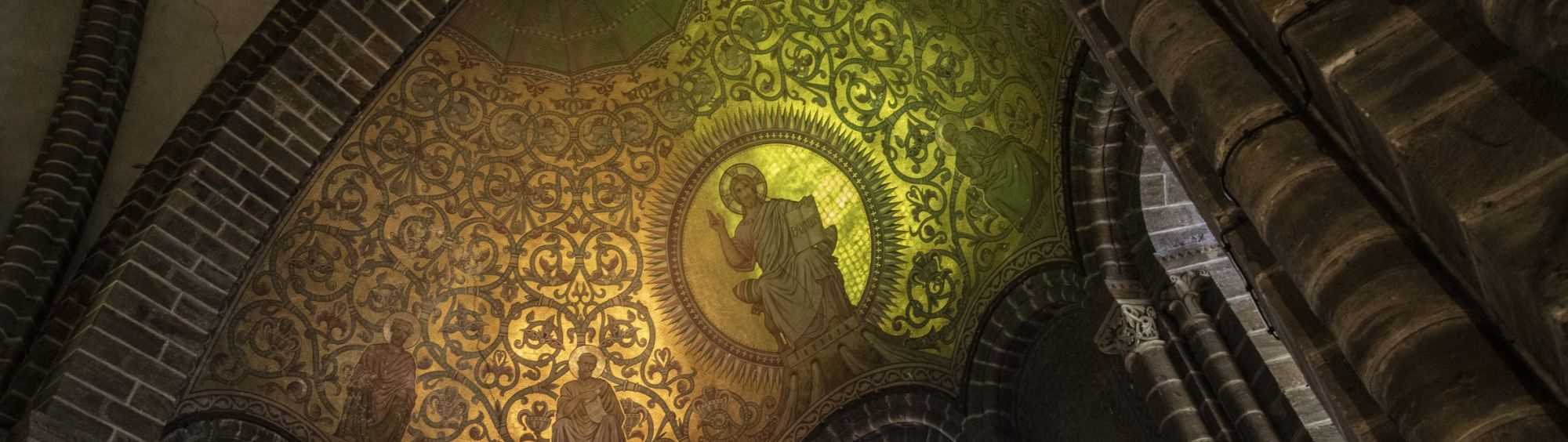
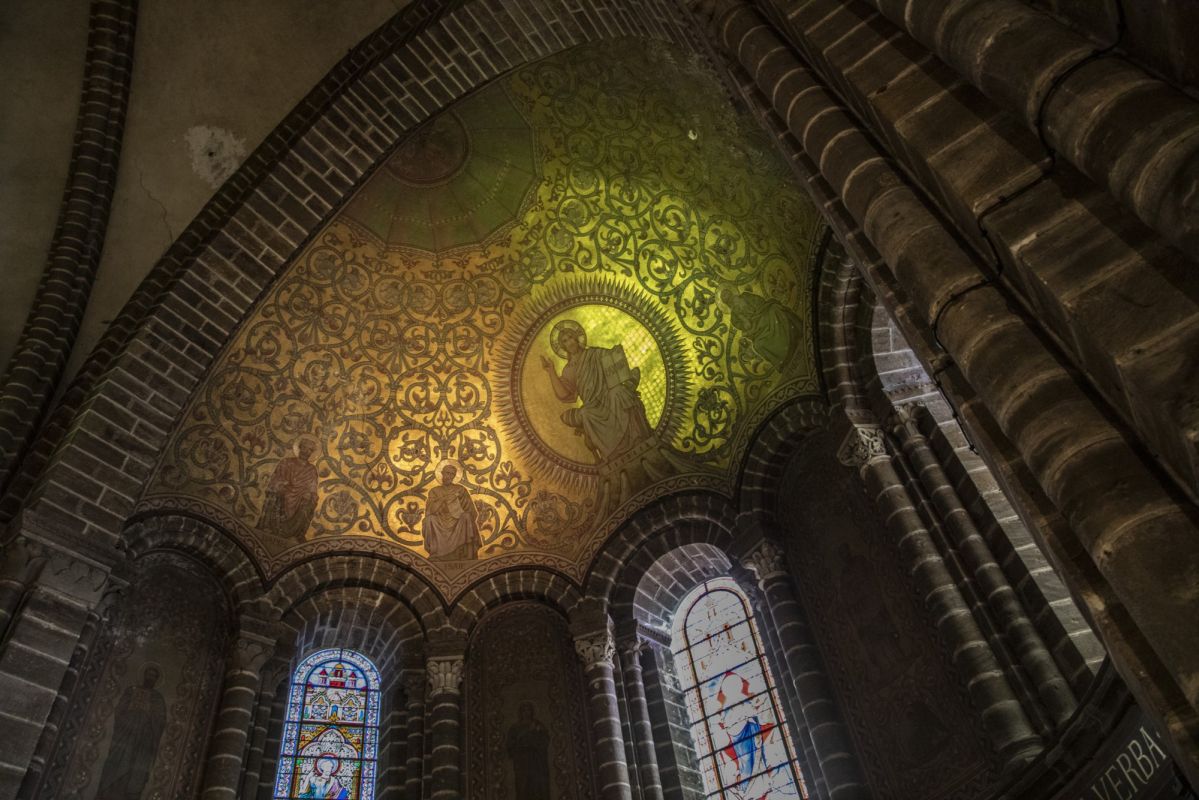
The decoration of the choir vaults and the two chapels was entrusted to a painter from Mance, Louis Renouard, in 1870. In the main apse, rising from a golden background, is a blessing Christ surmounting the four rivers of paradise, surrounded by four prophets and foliage. This painting replaced an earlier one, possibly medieval, whose very poor condition led to its disappearance in 1826.
Translated with www.DeepL.com/Translator (free version)

Marble stoup
At the entrance to the church, there are two monumental fonts on columns; one of the two black marble fonts bears the inscription: ‘bénitier donné par Jean Senault, curé de Notre-Dame de Sablé, natif de cette ville’. They bear the date 1679.
Translated with www.DeepL.com/Translator (free version)

Chair
It is one of the church's rare examples of early furniture. Its hexagonal structure features beautifully carved panels, typical of 18th-century Rococo art: the Paschal Lamb can be seen on the front, and shells and floral motifs on the other panels. Gold highlights add to the preciousness of the whole.
Translated with www.DeepL.com/Translator (free version)
Partners