Saint Martin
Hives
6984 Hives (La Roche-en-Ardenne)
Church | XIX | Classical | Catholic Church

Map
Opening hours
01 June - 30 September
Mon 10.00 - 18.00
Tue -
Wed -
Thu -
Fri 10.00 - 18.00
Sat 10.00 - 18.00
Sun 10.00 - 18.00
Religious offices
Sunday : 11.15 am
Description
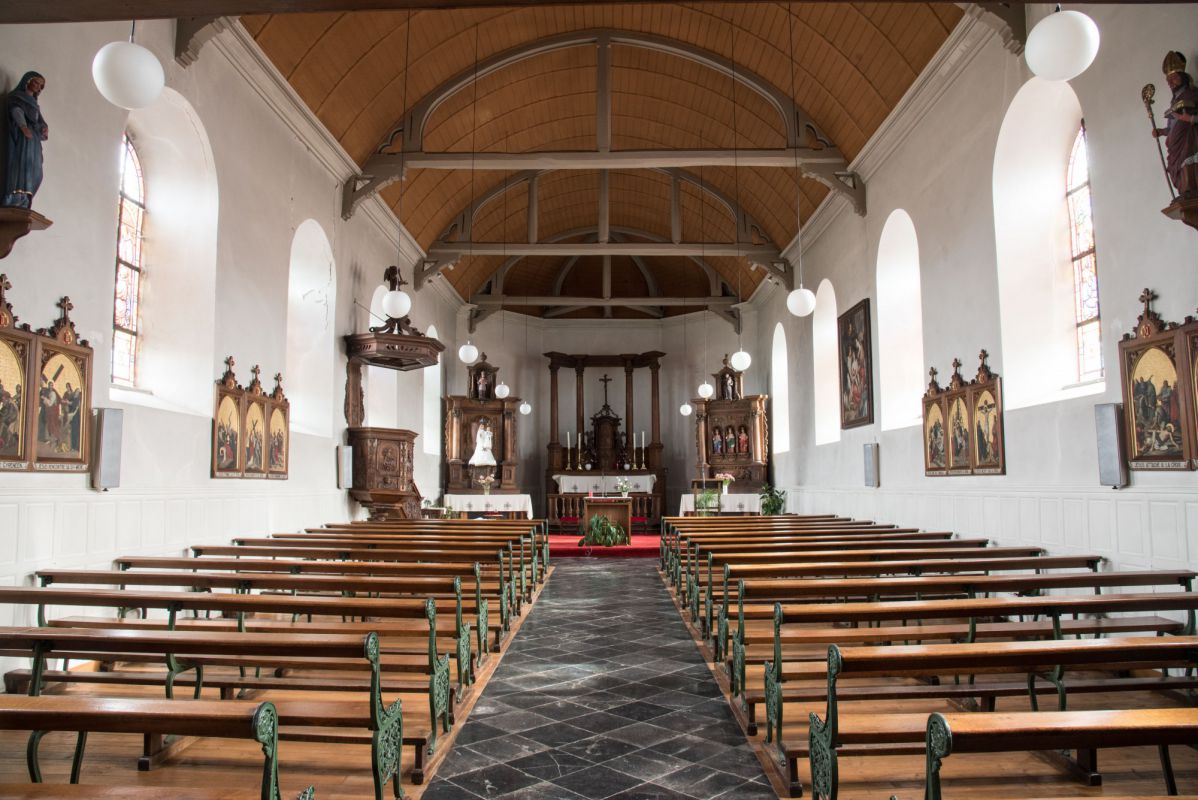
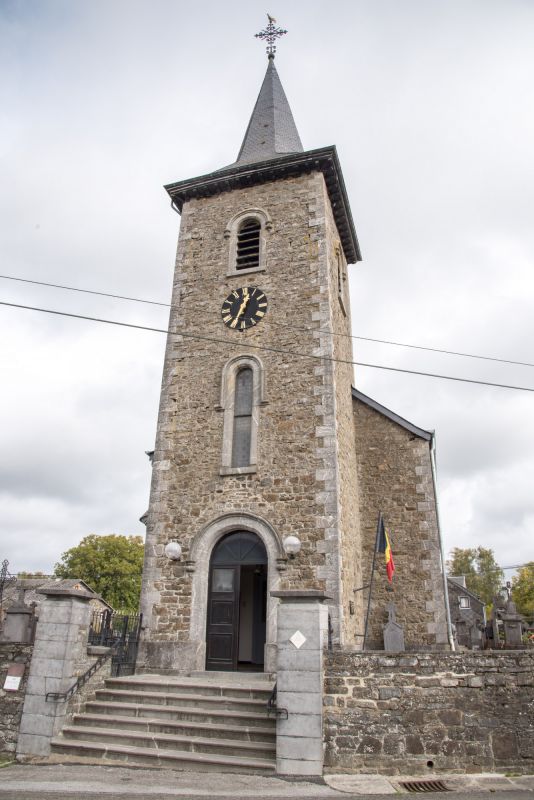
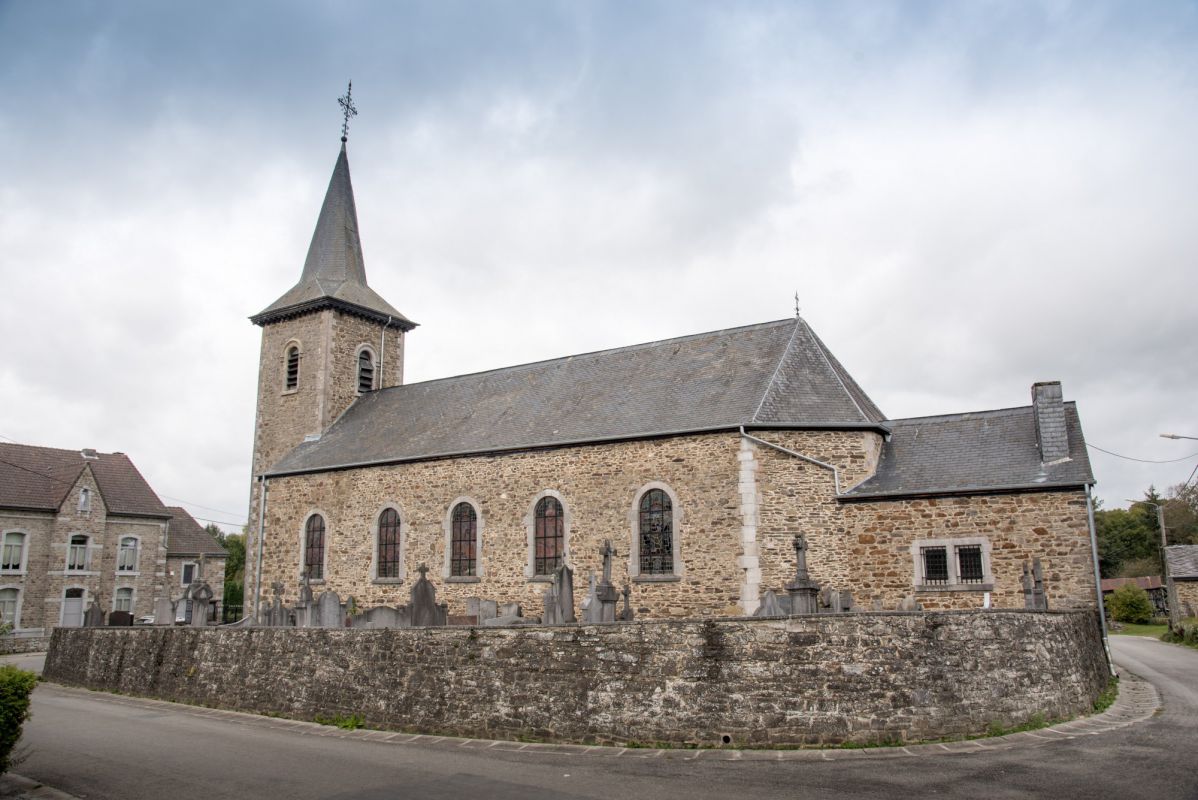
This old church from 1586 was enlarged in 1860 and the tower dates from this period. It was restored in 1887. Inside are considerable 18th century furnishings.
Photos

Remarkable elements

Main altar with retable
This altar, with an altarpiece by an unknown maker (1701–1750) in partially gilded carved oak, displays a “Rubens style” painting brought from Malines in 1812 between two interior Corinthian columns. Purple velvet drapes surrounded the sides, statues rested on cylindrical shafts, and a large triangle with golden rays, symbolizing the Trinity above the painting, was removed during the 1953 restoration.

South altar (right)
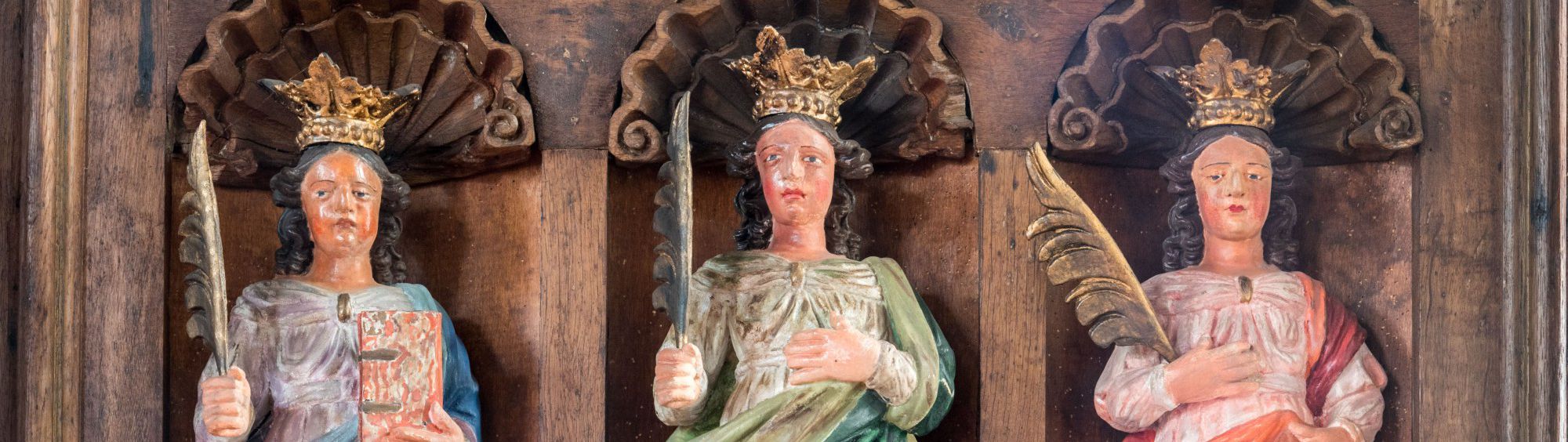
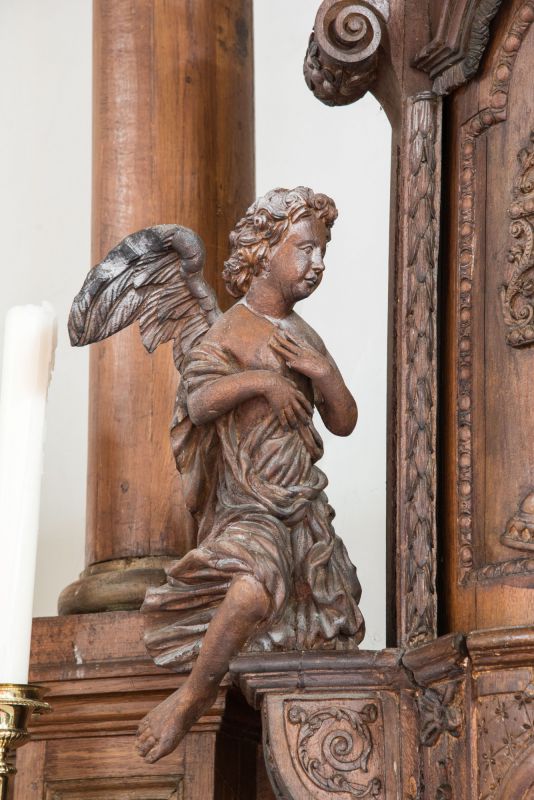
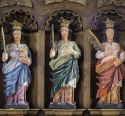
Like the left altar, this one is made of oak, formerly partially gilded, dating from 1700-1750. The altar-portico features three polychrome statues representing the theological virtues - Faith (blue with a book), Hope (green on the heart), and Charity (garnet on the chest) - each 60 cm tall, crowned and holding a feather in their right hand. The altar is crowned by the Franciscan Saint Anthony of Padua holding the Infant Jesus.

North altar (left)
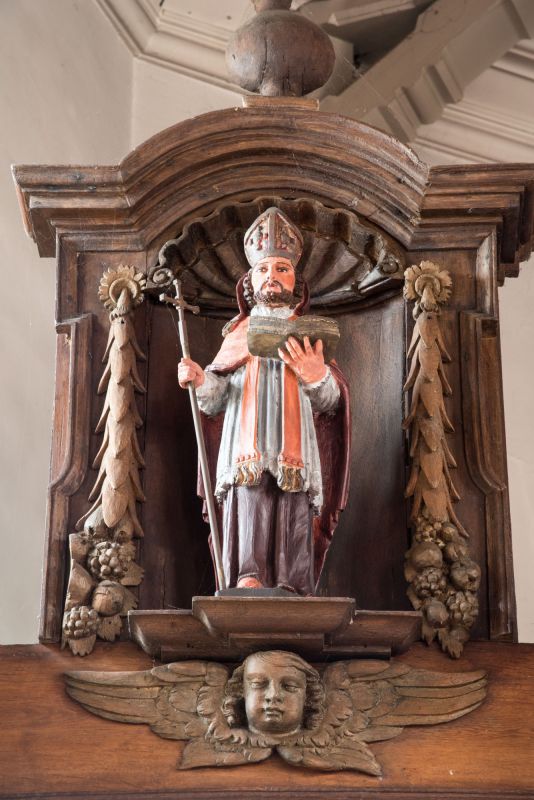
Every year, from Maundy Thursday to the Easter Vigil, the small tabernacle houses the Body of Christ. During these days, the altar was wrapped in large green and red strips of parachute fabric. Above the repository, a niche holds a statue of the Virgin carrying the Infant Jesus, evoking the “little Jesus of Prague.” The upper niche contains a wooden replica of St. Martin, as on the right-hand altar, all from Piconrue, Bastogne.
Communion bench
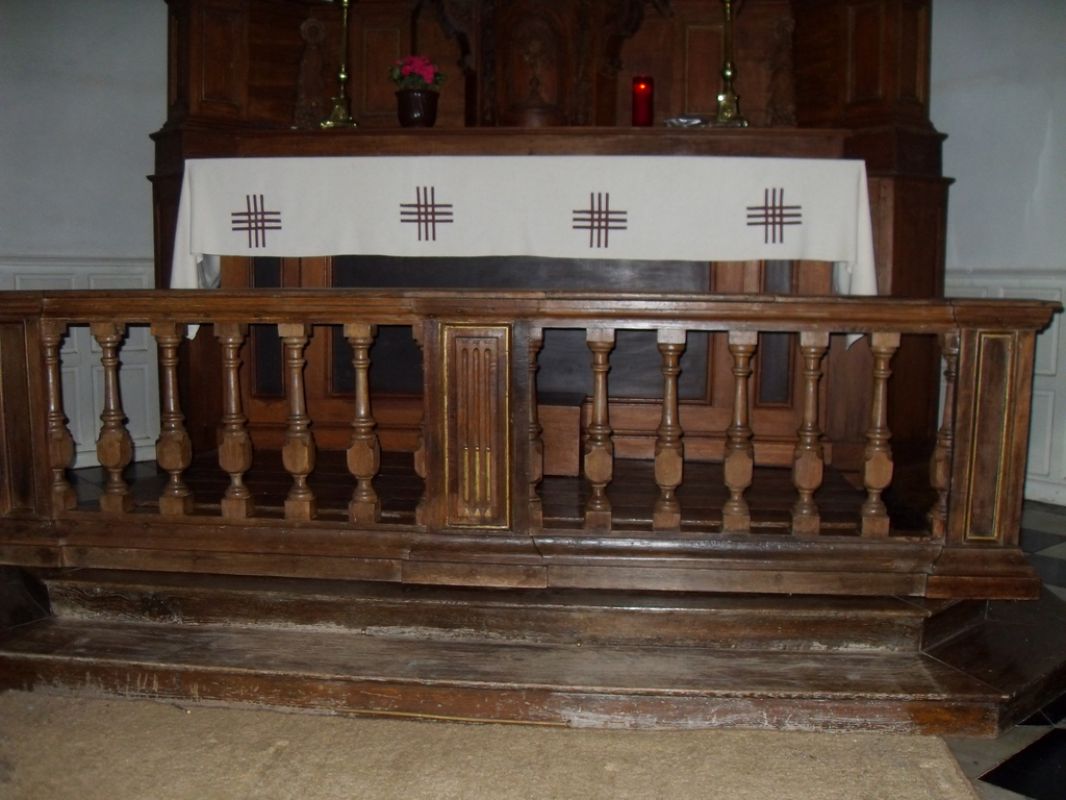
Let's recall its use. On the choir side, a red velvet drapery adorned the small, partially gilded columns. At the start of the Agnus Dei, an acolyte lifted a large white cloth toward the congregation. Kneeling, the faithful received the Body of Christ. Occasionally, it also served as a “time-out” spot for unruly children, brought there by the teacher, or more rarely by the parish priest or a mother frustrated with her child’s behavior.

Rubens Painting
The painting, showing the young Mary with the infant Jesus and her elderly cousin Elizabeth with John the Baptist, was brought from Malines in 1812 to decorate the main altar. Its removal was an unfortunate decision. In many churches, a large, high-quality painting highlights the altar without distracting from prayer. Here, the void does little to enhance the high altar, especially now that it no longer retains its partial gilding.

Pulpit
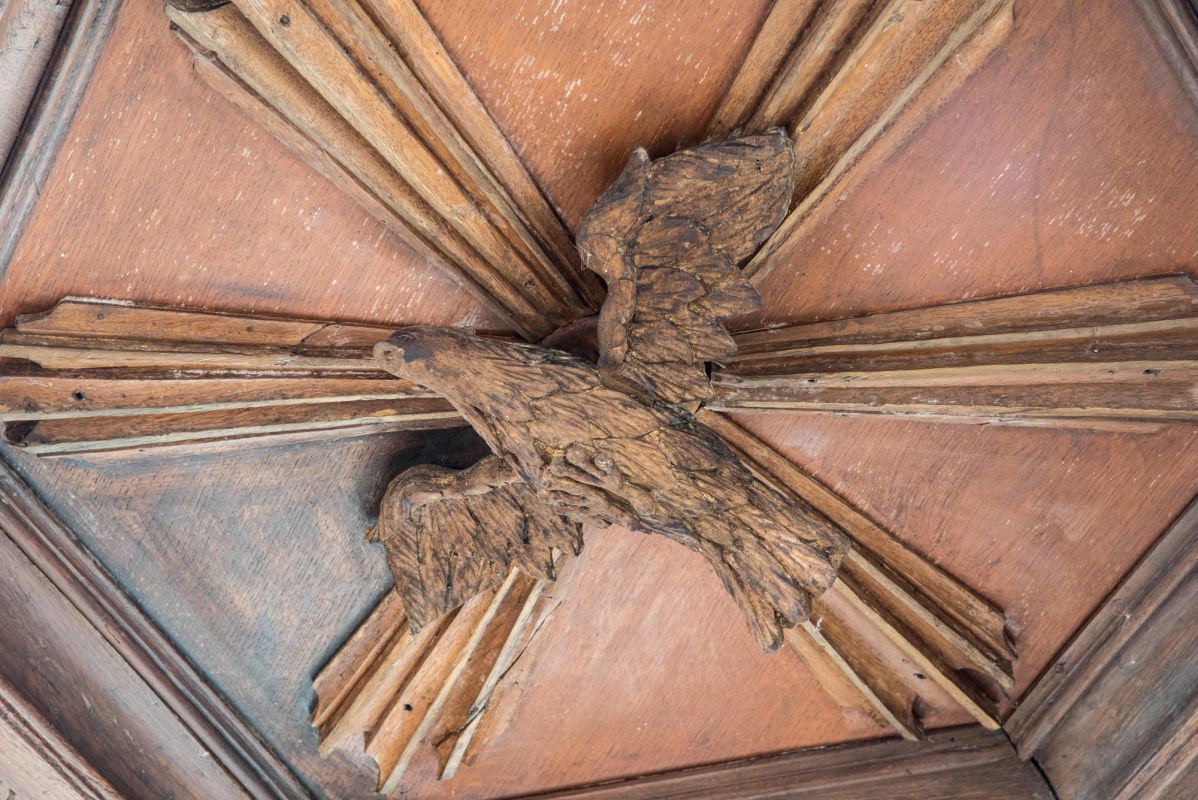
A staircase leads to the hexagonal oak basin, like the rest of the altarpiece. The four outer panels depict the Evangelists with their symbols on fictitious “drawers,” though Mark and Matthew are inverted, while Luke (bull) and John (eagle) follow the conventional order. Under the baldachin, a formerly gilded dove symbolizes the Holy Spirit, inspiring the preacher. Above the lampshade, a musical angel blows a trumpet, proclaiming the Good News.
Nearby

Circuit
Churches of the Ardennes, from century to century
From bell tower to bell tower in the heart of the Ardennes (car 2 route) - Several churches are built on the very site of very old oratories, of which they have preserved traces. Some were destroyed and then rebuilt, especially after the Religious Wars. Others, more recent, testify to the styles in vogue at the time of our (great-)grandparents....
Each village has its own church
Tours "From bell tower to bell tower in the heart of the Ardennes" (bike tour 2) - The first parishes of the Ardennes were far apart. It took miles to get to Mass... Since the end of the 19th century, each village has wanted to build its own church. What an investment for the local community, but what a pride too!